| REPORT ATTRIBUTE | DETAILS |
|---|---|
| Historical Period | 2019-2022 |
| Base Year | 2023 |
| Forecast Period | 2024-2032 |
| Brazil Grid Modernization Market Size 2024 | USD 1,195.06 million |
| Brazil Grid Modernization Market, CAGR | 17.24% |
| Brazil Grid Modernization Market Size 2032 | USD 4,266.90 million |
Market Overview
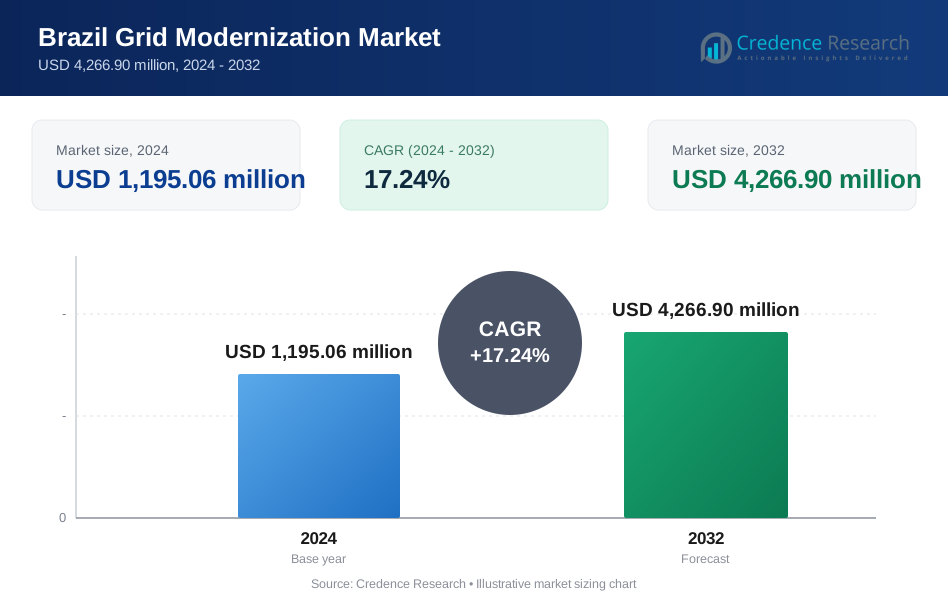
Brazil Grid Modernization Market size was valued at USD 1,195.06 million in 2024 and is anticipated to reach USD 4,266.90 million by 2032, at a CAGR of 17.24% during the forecast period (2024-2032).
The Brazil Grid Modernization market is driven by the increasing demand for efficient, reliable, and sustainable energy systems to support the country's growing energy needs. The government's focus on energy security, coupled with its commitment to reducing greenhouse gas emissions, is spurring investments in modern grid infrastructure. Technological advancements, such as the integration of smart grids, energy storage solutions, and renewable energy sources, are transforming the grid landscape. Additionally, the rising adoption of electric vehicles (EVs) and the need for enhanced grid resilience against natural disasters are fueling the market's growth. Trends indicate a growing emphasis on automation and digitalization, enabling better monitoring, control, and predictive maintenance of grid systems. These innovations are not only optimizing energy distribution but also improving the overall efficiency of power delivery. With ongoing infrastructure development and a favorable regulatory environment, the Brazil Grid Modernization market is poised for substantial expansion during the forecast period.
Brazil’s grid modernization market is witnessing significant advancements across various regions, driven by increasing investments in smart grid infrastructure and renewable energy integration. The Southeast and South regions are leading modernization efforts due to their high energy demand and industrialization, while the Northeast and Midwest regions are rapidly expanding their grid infrastructure to support growing renewable energy projects. The North region, though less developed, is seeing gradual improvements with investments in microgrids and energy storage solutions for remote areas. Key players driving Brazil’s grid modernization include Siemens AG, Schneider Electric SE, ABB Ltd., General Electric Company, Hitachi Energy, WEG S.A., Eaton Corporation, Landis+Gyr, Toshiba Latin America, and S&C Electric. These companies are actively involved in deploying smart grid technologies, automation solutions, and advanced metering infrastructure to enhance energy efficiency and reliability. Continuous technological advancements and strategic collaborations are expected to accelerate grid modernization across the country.
Market Insights
- The Brazil Grid Modernization market was valued at USD 1,195.06 million in 2024 and is projected to reach USD 4,266.90 million by 2032, growing at a CAGR of 17.24% during the forecast period.
- Increasing investments in smart grid infrastructure and renewable energy integration are driving market growth.
- The adoption of advanced metering infrastructure (AMI), grid automation, and energy storage solutions is shaping market trends.
- Major players like Siemens AG, Schneider Electric, ABB Ltd., General Electric, and Hitachi Energy are strengthening their market presence through innovation and strategic partnerships.
- High investment costs and cybersecurity risks pose challenges to the rapid implementation of grid modernization.
- The Southeast and South regions are leading in modernization efforts, while the Northeast and Midwest regions are experiencing rapid infrastructure expansion.
- Government initiatives and private sector collaborations are expected to accelerate grid modernization, ensuring a more efficient and resilient power distribution system.
Market Drivers
Increasing Demand for Reliable Energy Systems
The primary driver for the Brazil Grid Modernization market is the growing demand for reliable and efficient energy systems. Brazil's rapidly expanding urbanization and industrialization have led to an increased need for more robust and stable electricity grids. For instance, the Brazilian Electricity Regulatory Agency (ANEEL) reported that as of May 2024, the number of distributed power generation connections reached 2.61 million with a total capacity of 29,345.5 megawatts. To meet the rising energy consumption, the country must modernize its existing grid infrastructure. This modernization will ensure that power delivery is not only stable but also capable of supporting future energy demands, particularly in key sectors such as manufacturing and services.
Government Initiatives and Regulatory Support
Brazil's government plays a crucial role in the grid modernization process. With an increasing focus on energy security and sustainability, the government has introduced various policies and regulatory frameworks to support the modernization of the energy grid. For instance, the Climate Investment Funds (CIF) endorsed a $70 million plan to support grid flexibility for clean energy integration in Brazil. Programs encouraging renewable energy integration and improving grid infrastructure are pivotal. Additionally, Brazil's commitment to reducing greenhouse gas emissions aligns with the adoption of clean energy solutions and grid upgrades that enable better integration of renewable sources like wind, solar, and hydropower into the national grid.
Technological Advancements in Smart Grid and Automation
Technological innovations, particularly in smart grid solutions, are significantly driving the market. The adoption of smart grids, which use advanced sensors, meters, and real-time monitoring, enhances grid performance by improving reliability and reducing operational costs. For instance, the U.S. Trade and Development Agency (USTDA) awarded a grant to the Brazilian Association of Electricity Distributors (ABRADEE) for technical assistance to enable large-scale smart grid deployment throughout Brazil. Automation and digitalization within the grid are transforming the way energy is distributed and managed. These technologies enable utilities to detect and resolve issues faster, reduce power outages, and improve the overall efficiency of the energy supply chain.
Integration of Renewable Energy and Electric Vehicles
The ongoing transition toward renewable energy and the growing adoption of electric vehicles (EVs) are further propelling Brazil’s grid modernization efforts. The integration of renewable energy sources, such as solar and wind, into the grid necessitates advanced grid systems capable of handling variable energy outputs. Furthermore, as EV adoption increases, the demand for more efficient and flexible grid systems to charge and manage these vehicles becomes essential. Modernizing the grid ensures that these energy sources and technologies are seamlessly integrated, optimizing energy distribution and enhancing grid stability.
Market Trends
Growth of Energy Storage Solutions
Energy storage solutions are rapidly gaining traction as a critical component of Brazil's grid modernization strategy. With an increased reliance on renewable energy sources, which can be intermittent, energy storage systems provide the necessary flexibility to ensure grid stability. For instance, the Climate Investment Funds (CIF) endorsed a $70 million plan to support grid flexibility for clean energy integration in Brazil. Batteries and other energy storage technologies allow excess energy generated during peak production times to be stored and used when demand is higher or generation is lower. This trend is particularly relevant as Brazil continues to invest in large-scale renewable projects and seeks to enhance grid resilience against fluctuating energy supply and demand.
Adoption of Smart Grids
One of the most prominent trends in the Brazil Grid Modernization market is the widespread adoption of smart grid technologies. Smart grids use advanced sensors, meters, and communication systems to enable real-time monitoring and management of electricity distribution. These technologies allow utilities to detect issues, optimize energy flow, and reduce downtime, leading to more reliable and efficient grid operations. Brazil's push toward a smart grid infrastructure is in response to growing energy demands and the need for enhanced grid stability, especially with the integration of renewable energy sources.
Investment in Renewable Energy Integration
The increasing emphasis on renewable energy integration is another key trend shaping the Brazil Grid Modernization market. Brazil has been a pioneer in the adoption of clean energy, particularly through its extensive use of hydroelectric power, and now aims to expand the role of wind and solar energy in the national grid. Modernizing the grid infrastructure is essential for accommodating these intermittent renewable sources. The trend is pushing utilities to invest in advanced technologies such as energy storage systems, demand response mechanisms, and grid balancing tools that enhance the ability to manage variable energy generation and consumption effectively.
Expansion of Electric Vehicle Infrastructure
As the adoption of electric vehicles (EVs) continues to rise globally, Brazil is focusing on upgrading its grid infrastructure to accommodate the growing demand for EV charging stations. The expansion of EV infrastructure is closely tied to grid modernization, as the integration of charging networks requires efficient grid management and additional energy supply to handle the new load. The need for modernized grid systems capable of supporting EVs' energy consumption is becoming a major trend, not only to meet domestic transportation needs but also to align with Brazil’s sustainability goals.
Market Challenges Analysis
High Investment Costs and Infrastructure Limitations
One of the primary challenges in Brazil’s grid modernization efforts is the high investment cost associated with upgrading existing infrastructure. Modernizing the grid requires significant financial resources to deploy advanced technologies, such as smart meters, automation systems, and energy storage solutions. Many utilities and government agencies face budget constraints, making large-scale investments difficult. Additionally, Brazil’s vast geographical size and diverse terrain pose logistical challenges in upgrading power lines and integrating smart grid technologies across urban and remote areas. The financial burden of infrastructure development and maintenance often slows down modernization efforts, limiting the speed at which advanced grid technologies can be implemented.
Cybersecurity Risks and Technical Integration Issues
As Brazil advances its grid modernization initiatives, cybersecurity threats pose a growing concern. The increasing reliance on digital and automated systems exposes the grid to potential cyberattacks, which can disrupt power distribution and compromise sensitive data. Utilities must invest in robust cybersecurity frameworks to protect against hacking attempts and system vulnerabilities, adding to the overall cost of modernization. Furthermore, integrating new technologies with legacy systems remains a significant challenge. For instance, the Brazilian grid system has not fully kept up with the demands of the energy transition, losing about 16% of the power it generates due to historical lack of investment in new grid infrastructure. Many parts of Brazil’s energy grid still rely on outdated infrastructure that is not easily compatible with modern digital solutions. The process of transitioning from conventional grids to smart grids requires careful planning, coordination, and investment in workforce training to ensure seamless integration and efficient operation.
Market Opportunities
Expansion of Renewable Energy Integration
Brazil’s commitment to renewable energy presents a significant opportunity for grid modernization. As the country continues to expand its solar, wind, and hydropower capacity, there is a growing need for advanced grid infrastructure capable of efficiently integrating these variable energy sources. Smart grids, energy storage solutions, and digital monitoring systems can enhance grid reliability and optimize energy distribution. Government policies promoting clean energy investments, along with increasing participation from private sector players, are expected to accelerate modernization efforts. This transition offers opportunities for technology providers, energy companies, and infrastructure developers to contribute to Brazil’s evolving energy landscape.
Growth of Smart Technologies and Digitalization
The increasing adoption of smart technologies presents another opportunity for grid modernization in Brazil. The implementation of advanced metering infrastructure (AMI), artificial intelligence (AI)-driven grid management, and automated demand response systems can significantly improve operational efficiency and reduce energy losses. Additionally, the rise of electric vehicles (EVs) and distributed energy resources creates opportunities for grid enhancements that support vehicle-to-grid (V2G) technology and decentralized energy management. As utilities seek to optimize power distribution and improve customer engagement, investments in data analytics, cybersecurity, and digital transformation will drive growth in the sector. The demand for smart grid solutions, combined with government support and technological advancements, is expected to create a dynamic market landscape, fostering innovation and long-term economic benefits.
Market Segmentation Analysis:
By Component:
The Brazil Grid Modernization market is segmented into hardware, software, and services, each playing a crucial role in the modernization process. The hardware segment holds a significant share, driven by the growing deployment of smart meters, sensors, advanced transmission lines, and energy storage systems. Utilities are investing heavily in upgrading outdated infrastructure with advanced hardware to enhance grid reliability and efficiency. The software segment is also expanding rapidly as digital solutions, such as grid management software, predictive analytics, and AI-powered automation, become essential for optimizing energy distribution. The increasing adoption of cloud-based energy management solutions further accelerates software demand. Additionally, the services segment is gaining traction, as grid modernization requires expert consulting, maintenance, and technical support. Utilities and energy providers are increasingly outsourcing services to specialized firms for efficient grid monitoring and cybersecurity solutions. With continuous advancements in grid technology and increasing investments in digital transformation, all three segments hardware, software, and services are expected to witness substantial growth, shaping Brazil’s modernized energy infrastructure.
By Application:
Brazil’s grid modernization is driven by its application across residential, commercial, and industrial sectors, each with distinct energy demands. The residential segment is witnessing a surge in smart meter installations and energy-efficient solutions to optimize household electricity consumption. Rising consumer awareness about energy conservation and government initiatives promoting smart grid adoption are further accelerating residential grid modernization. The commercial sector is experiencing strong growth due to the increasing need for reliable power supply in office buildings, shopping centers, and data centers. Businesses are investing in energy management systems to reduce operational costs and improve sustainability. Meanwhile, the industrial sector remains a key driver, as manufacturing plants and large-scale industries require stable and efficient power distribution. The demand for grid automation, load management, and predictive maintenance is rising in industries to prevent downtime and enhance productivity. With technological advancements and increasing electricity consumption across all segments, Brazil’s grid modernization market is expected to expand significantly, ensuring a more efficient and resilient energy ecosystem.
Segments:
Based on Component:
- Hardware
- Software
- Services
Based on Application:
- Residential
- Commercial
- Industrial
Based on End-User:
- Utilities
- Independent Power Producers (IPPs)
- Government and Municipalities
Based on the Geography:
- Southeast Region
- South Region
- Northeast Region
- Midwest Region
- North Region
Regional Analysis
Southeast and South Regions
The Southeast region holds the largest market share in Brazil’s grid modernization sector, accounting for over 35% of the total market. As the country’s most industrialized and urbanized region, it has a high electricity demand, driving significant investments in grid infrastructure. Major cities like São Paulo, Rio de Janeiro, and Belo Horizonte are at the forefront of modernization efforts, incorporating smart grids, digital monitoring systems, and energy-efficient solutions. The region’s strong focus on renewable energy, particularly solar and wind integration, further accelerates modernization. The South region follows closely, contributing approximately 22% to the market. States like Paraná, Santa Catarina, and Rio Grande do Sul are making substantial investments in smart grid deployment and automation. The region benefits from a robust energy infrastructure and a growing push for energy storage solutions to support increasing renewable energy adoption. High levels of industrialization and the expansion of electric vehicle (EV) charging networks also contribute to the region’s rapid grid transformation.
Northeast Region
The Northeast region is emerging as a key market for grid modernization, driven by its increasing reliance on renewable energy sources. Holding approximately 18% of the market share, the region has become a major hub for wind and solar energy projects. States like Bahia, Ceará, and Pernambuco are witnessing a surge in grid infrastructure investments to accommodate these renewable sources. However, challenges such as outdated transmission networks and energy distribution inefficiencies remain. Utilities are focusing on deploying advanced energy storage systems, smart meters, and real-time monitoring technologies to enhance grid reliability. Government incentives and private sector partnerships are further promoting modernization initiatives in the region, ensuring that renewable energy integration is both efficient and sustainable. As electricity consumption in residential and commercial sectors rises, demand for modern grid solutions is expected to increase, driving further market expansion.
Midwest Region
The Midwest region, accounting for around 15% of the Brazil Grid Modernization market, is witnessing steady growth due to its strategic importance in agriculture and agribusiness. With major energy-intensive industries such as food processing and biofuels production, there is a pressing need for a more stable and efficient electricity supply. States like Goiás, Mato Grosso, and Mato Grosso do Sul are investing in smart grid technologies to improve energy management and reduce power outages. The increasing adoption of distributed energy resources, including solar farms on agricultural lands, is driving the need for grid automation and digitalization. Utilities are also focusing on enhancing grid security and resilience against extreme weather conditions, which can impact electricity distribution in rural and remote areas. While modernization efforts are progressing, the region still requires greater investment in energy infrastructure upgrades and technology integration to optimize grid performance.
Key Player Analysis
- Siemens AG
- Schneider Electric SE
- ABB Ltd.
- General Electric Company
- Hitachi Energy
- WEG S.A.
- Eaton Corporation
- Landis+Gyr
- Toshiba Latin America
- S&C Electric
Competitive Analysis
The Brazil Grid Modernization market is highly competitive, with key players such as Siemens AG, Schneider Electric SE, ABB Ltd., General Electric Company, Hitachi Energy, WEG S.A., Eaton Corporation, Landis+Gyr, Toshiba Latin America, and S&C Electric driving technological advancements. These companies are actively investing in smart grid solutions, automation, and digital energy management systems to strengthen their market presence. Strategic partnerships, mergers, and acquisitions are common strategies adopted to expand product portfolios and enhance grid efficiency. Companies in the market are focusing on developing innovative solutions, including advanced metering infrastructure (AMI), grid automation, and digital energy management systems, to enhance grid efficiency and reliability. Strategic collaborations, technological innovations, and expansion into emerging regions are key competitive strategies adopted to strengthen market positioning. For instance, Brazil's commitment to reducing greenhouse gas emissions and promoting sustainable energy practices has spurred growth in the renewable energy sector. With the growing integration of renewable energy sources, market participants are prioritizing grid resilience and cybersecurity to prevent disruptions. Investments in energy storage solutions, predictive analytics, and real-time monitoring systems are further intensifying competition. Additionally, regulatory frameworks and government incentives are shaping market dynamics, encouraging companies to align their offerings with sustainability and energy efficiency goals. As the market continues to evolve, continuous technological advancements and infrastructure modernization will be critical for maintaining a competitive edge.
Recent Developments
- In October 2024, Hitachi Energy introduced Grid-enSure in India to advance the country's transition to sustainable energy. The company also announced plans to invest around INR 2,000 crore over the next four to five years in capacity expansion and upgrades for various transformer factories.
- In August 2024, Hitachi Energy called for urgent action to expand global power grids, reduce connection bottlenecks, and accelerate the energy transition. They launched Grid-enSure™ at the CIGRE 2024 Paris Session, a portfolio of solutions to enhance grid flexibility, resilience, and stability.
- In May 2024, Siemens revealed the Gridscale X software, a "co-pilot" for flexible low voltage grid management, aiming to reduce outages by up to 30%.
Market Concentration & Characteristics
The Brazil Grid Modernization market exhibits a moderate to high market concentration, with a mix of established global corporations and regional players competing to enhance grid infrastructure. The market is characterized by technological advancements, regulatory-driven modernization, and increasing investments in smart grid solutions. Companies are focusing on integrating automation, digital monitoring systems, and renewable energy integration to improve grid efficiency and reliability. The presence of stringent regulatory frameworks and government initiatives, such as incentives for smart grid deployment and renewable energy adoption, further shapes market dynamics. The market also reflects a growing emphasis on cybersecurity, energy storage solutions, and advanced metering infrastructure (AMI) to address grid stability and efficiency challenges. The competitive landscape is influenced by strategic partnerships, mergers, and acquisitions, as firms seek to expand their portfolios and geographical reach. Additionally, rising electricity demand, coupled with the need for grid resilience, is driving innovation in transmission and distribution networks. As investments in modernization continue, companies are expected to focus on scalability, cost efficiency, and sustainability, making grid digitalization a key characteristic of the evolving market.
Report Coverage
The research report offers an in-depth analysis based on Component, Application, End-User, and Geography. It details leading market players, providing an overview of their business, product offerings, investments, revenue streams, and key applications. Additionally, the report includes insights into the competitive environment, SWOT analysis, current market trends, as well as the primary drivers and constraints. Furthermore, it discusses various factors that have driven market expansion in recent years. The report also explores market dynamics, regulatory scenarios, and technological advancements that are shaping the industry. It assesses the impact of external factors and global economic changes on market growth. Lastly, it provides strategic recommendations for new entrants and established companies to navigate the complexities of the market.
Future Outlook
- The Brazil Grid Modernization market will continue to grow as the country accelerates its renewable energy adoption.
- Increased investments in smart grid technologies will enhance grid reliability and efficiency.
- Automation and digital monitoring systems will play a key role in improving grid performance and reducing operational costs.
- Government policies and incentives will support grid modernization efforts, driving market expansion.
- Energy storage solutions will become more critical to manage intermittent renewable energy sources.
- The demand for advanced metering infrastructure (AMI) will rise as consumers seek more control over energy consumption.
- Collaboration between public and private sectors will spur innovation in grid technology and infrastructure.
- The integration of electric vehicles (EVs) into the grid will create new opportunities for grid optimization and energy management.
- Cybersecurity will become a top priority to protect modernized grid systems from potential threats.
- As electricity demand grows, the need for grid resilience and modernization will intensify, driving long-term market growth.
Request a Free Sample
Fill in your details and we'll send you a free sample report.
- Sample data tables & charts
- Research methodology
Market Dynamics
Government Initiatives and Regulatory Support
Brazil's government is actively promoting grid modernization through policies, incentives, and regulatory frameworks that encourage investment in smart grid infrastructure and renewable energy integration, accelerating market growth.
Integration of Renewable Energy and Electric Vehicles
The rapid expansion of solar, wind, and hydropower, along with increasing adoption of electric vehicles, is driving the need for advanced grid systems capable of managing variable energy sources and new load demands, pushing utilities to modernize their infrastructure.
Technological Advancements in Smart Grid and Automation
Innovations in smart grid technology, such as advanced metering infrastructure, automation, and digital monitoring, are enabling utilities to improve grid reliability, reduce operational costs, and enhance energy efficiency, fueling market expansion.
Rising Demand for Reliable and Efficient Energy Systems
Urbanization and industrialization in Brazil are increasing electricity consumption, necessitating robust and stable grid infrastructure to ensure reliable power delivery and support economic growth.
Expansion of Energy Storage Solutions
The growing reliance on intermittent renewable energy sources is boosting demand for energy storage systems, which provide grid flexibility and stability, supporting the integration of renewables and enhancing overall grid resilience.
Need a Custom Version of This Report?
Tailor the scope, geography, or segments to your exact requirements.
- Custom geography or segment scope
- Direct access to our analyst team
Frequently Asked Questions
What is the current size of the Brazil Grid Modernization market?
What factors are driving the growth of the Brazil Grid Modernization market?
What are the key segments within the Brazil Grid Modernization market?
What are some challenges faced by the Brazil Grid Modernization market?
Who are the major players in the Brazil Grid Modernization market?
Table of Content
Chapter 1 Market Segmentation
- 1.1 Segmentation Framework
- 1.1.1 Product and Service Classification
- 1.1.2 Application and End-Use Classification
- 1.1.3 Technology and Solution Classification
- 1.1.4 Customer and Distribution Channel Classification
- 1.1.5 Geographic Segmentation
- 1.1.6 Market Segment Definitions and Boundaries
- 1.2 By End-User
- 1.2.1 Utilities
- 1.2.2 Independent Power Producers (IPPs)
- 1.2.3 Government and Municipalities
- 1.3 By Component
- 1.3.1 Hardware
- 1.3.2 Software
- 1.3.3 Services
- 1.4 By Application
- 1.4.1 Residential
- 1.4.2 Commercial
- 1.4.3 Industrial
Chapter 2 Introduction
- 2.1 Report Objectives and Scope
- 2.2 Product Definition and Industry Terminology
- 2.3 Market Inclusions and Exclusions
- 2.4 Research Process
- 2.4.1 Primary Research and Expert Interviews
- 2.4.2 Secondary Research and Source Review
- 2.4.3 Top-Down and Bottom-Up Estimation
- 2.4.4 Data Triangulation and Verification
- 2.5 Market Size Measurement Basis
- 2.5.1 2024: USD 1,195.06 million → 2032: USD 4,266.90 million
- 2.6 Historical and Forecast Reference Periods
- 2.6.1 Base Year: 2024
- 2.6.2 Forecast Period: 2024-2032
- 2.7 Research Assumptions and Limitations
Chapter 3 Executive Summary
- 3.1 Market Snapshot and Key Findings
- 3.2 Base-Year Market Size, 2024
- 3.3 Forecast Market Size, 2032
- 3.4 Revenue and Volume Growth Outlook
- 3.5 Key Demand and Supply Indicators
- 3.6 Leading Market Segments
- 3.7 Fastest-Growing Market Opportunities
- 3.8 Regional Performance Highlights
- 3.9 Technology and Industry Transformation
- 3.10 Competitive Landscape Summary
- 3.11 Analyst View and Strategic Implications
Chapter 4 Brazil Grid Modernization Market Trends and Developments
- 4.1 Historical Industry Development
- 4.2 Recent Market Trends and Developments
- 4.3 Demand and Customer Behavior Trends
- 4.4 Technology and Product Innovation
- 4.5 Artificial Intelligence, Automation and Digitalization
- 4.6 Local Manufacturing and Supply Chain Realignment
- 4.7 Industry Partnerships, Mergers and Acquisitions
- 4.8 Sustainability and Circular Economy Developments
- 4.9 Government and Private Sector Investment Trends
- 4.10 Emerging Business Models and Commercialization
- 4.11 Industry Developments and Announcements
Chapter 5 Brazil Grid Modernization Market Production, Supply and Demand Analysis
- 5.1 Demand Trend and Consumption Analysis
- 5.2 Demand Forecast, 2024-2032
- 5.3 Production and Output Trend
- 5.4 Production and Output Forecast, 2024-2032
- 5.5 Installed Capacity and Capacity Utilization
- 5.6 Company-Wise Production Plants and Statistics
- 5.6.1 Installed Production Capacity
- 5.6.2 Actual Production
- 5.6.3 Planned Capacity and Expansion Targets
- 5.7 Supply Chain Structure and Procurement Trends
- 5.8 Supply-Demand Gap and Bottlenecks
- 5.9 Import Dependence and Sourcing Structure
- 5.10 Contract Manufacturing and Outsourcing
- 5.11 Regional Supply and Demand Concentration
Chapter 6 Brazil Grid Modernization Market Pricing Analysis
- 6.1 Pricing Structure and Measurement
- 6.2 Historical Pricing Trends
- 6.3 Pricing Outlook, 2024-2032
- 6.4 Average Selling Price and Unit Economics
- 6.5 Pricing by Product and Market Segment
- 6.6 Geographic Pricing Differences
- 6.7 Key Input, Energy, Labor and Logistics Costs
- 6.8 Contract Pricing and Purchasing Models
- 6.9 Pricing Sensitivity and Competitive Positioning
- 6.10 Price, Margin and Profitability Implications
Chapter 7 Brazil Grid Modernization Market Dynamics
- 7.1 Market Growth Drivers
- 7.1.1 Demand-Side Drivers
- 7.1.2 Technology and Innovation Drivers
- 7.1.3 Infrastructure and Investment Drivers
- 7.1.4 Regulatory and Policy Drivers
- 7.2 Market Restraints
- 7.2.1 Cost and Affordability Constraints
- 7.2.2 Technology and Adoption Barriers
- 7.2.3 Supply Chain and Operational Constraints
- 7.3 Market Challenges
- 7.3.1 Competitive Pressure and Margin Erosion
- 7.3.2 Skills, Infrastructure and Implementation Gaps
- 7.4 Emerging Market Opportunities
- 7.5 Market Dynamics Impact and Time-Horizon Assessment
Chapter 8 Brazil Grid Modernization Value Chain Analysis
- 8.1 Industry Value Chain Overview
- 8.2 Upstream Suppliers and Critical Inputs
- 8.3 Technology and Component Providers
- 8.4 Manufacturing or Service Delivery
- 8.5 Distribution, Channel Partners and Integrators
- 8.6 Downstream Applications and End Users
- 8.7 Value Addition and Profit Pools
- 8.8 Vertical Integration and Outsourcing
- 8.9 Supplier Concentration and Risk
- 8.10 Supply Chain Localization and Resilience
Chapter 9 Brazil Grid Modernization Market Regulations and Policies
- 9.1 Relevant Laws, Standards and Compliance Frameworks
- 9.2 Product, Service, Safety and Quality Requirements
- 9.3 Government Policies, Incentives and Subsidies
- 9.4 Imports, Exports and Trade Barriers
- 9.5 Public Procurement and Local Content Requirements
- 9.6 Environmental and Sustainability Compliance
- 9.7 Upcoming Policy Changes and Market Implications
Chapter 10 Brazil Grid Modernization Market Hotspots and Opportunities
- 10.1 Market Opportunity Mapping and Growth Hotspots
- 10.2 High-Growth Applications and Customer Groups
- 10.3 Underserved Markets and White-Space Opportunities
- 10.4 Emerging Technology and Product Opportunities
- 10.5 New Capacity and Investment Hotspots
- 10.6 Market Entry and Expansion Opportunities
- 10.7 Distribution and Partnership Opportunities
- 10.8 Near-Term and Long-Term Commercial Potential
- 10.9 Opportunity Attractiveness and Execution Risks
Chapter 11 Brazil Grid Modernization Market Outlook, 2024-2032
- 11.1 Market Size and Analysis
- 11.1.1 Revenue (Market Measurement: 2024: USD 1,195.06 million → 2032: USD 4,266.90 million)
- 11.1.2 Market Volume and Quantity Sold
- 11.1.3 Historical Market Size
- 11.1.4 Base-Year Market Size, 2024
- 11.2 Market Forecast, 2024-2032
- 11.2.1 Revenue Forecast to 2032
- 11.2.2 Volume Forecast to 2032
- 11.2.3 CAGR and Year-on-Year Growth
- 11.2.4 Incremental Revenue Opportunity
- 11.3 Forecast Assumptions and Scenario Analysis
- 11.3.1 Base-Case Forecast
- 11.3.2 Optimistic and Conservative Scenarios
- 11.3.3 Technology, Pricing and Policy Sensitivities
- 11.4 Market Attractiveness and Growth Outlook
Chapter 12 Brazil Grid Modernization Market Segmentation and Outlook
- 12.1 Segmentation Summary and Market Shares, 2024
- 12.2 Largest and Fastest-Growing Segments
- 12.3 By End-User - Market Size and Forecast, 2024-2032
- 12.3.1 Segment Definition and Scope
- 12.3.2 Historical Market Size
- 12.3.3 Revenue Forecast, 2024-2032
- 12.3.4 Volume Forecast, 2024-2032
- 12.3.5 Base-Year Market Share, 2024
- 12.3.6 Segment CAGR and Growth Drivers
- 12.3.7 Subsegment Market Size and Forecast
- 12.3.7.1 Utilities
- 12.3.7.2 Independent Power Producers (IPPs)
- 12.3.7.3 Government and Municipalities
- 12.3.8 Subsegment Pricing and Adoption Trends
- 12.3.9 Leading Suppliers and Competition
- 12.3.10 Regional Demand and Opportunities
- 12.4 By Component - Market Size and Forecast, 2024-2032
- 12.4.1 Segment Definition and Scope
- 12.4.2 Historical Market Size
- 12.4.3 Revenue Forecast, 2024-2032
- 12.4.4 Volume Forecast, 2024-2032
- 12.4.5 Base-Year Market Share, 2024
- 12.4.6 Segment CAGR and Growth Drivers
- 12.4.7 Subsegment Market Size and Forecast
- 12.4.7.1 Hardware
- 12.4.7.2 Software
- 12.4.7.3 Services
- 12.4.8 Subsegment Pricing and Adoption Trends
- 12.4.9 Leading Suppliers and Competition
- 12.4.10 Regional Demand and Opportunities
- 12.5 By Application - Market Size and Forecast, 2024-2032
- 12.5.1 Segment Definition and Scope
- 12.5.2 Historical Market Size
- 12.5.3 Revenue Forecast, 2024-2032
- 12.5.4 Volume Forecast, 2024-2032
- 12.5.5 Base-Year Market Share, 2024
- 12.5.6 Segment CAGR and Growth Drivers
- 12.5.7 Subsegment Market Size and Forecast
- 12.5.7.1 Residential
- 12.5.7.2 Commercial
- 12.5.7.3 Industrial
- 12.5.8 Subsegment Pricing and Adoption Trends
- 12.5.9 Leading Suppliers and Competition
- 12.5.10 Regional Demand and Opportunities
- 12.6 Segment Growth Comparison
- 12.7 Segment Attractiveness and Priority Matrix
Chapter 13 Brazil Grid Modernization End-Use and Application Market Outlook
- 13.1 End-Use Industry and Customer Demand Structure
- 13.2 Leading Applications and Customer Groups
- 13.3 End-Use Market Size, Share and Forecast
- 13.4 Major End-Use Industry Deep Dives
- 13.4.1 Customer Requirements and Use Cases
- 13.4.2 Demand and Replacement Cycles
- 13.4.3 Technical and Regulatory Considerations
- 13.4.4 Purchasing and Procurement Models
- 13.4.5 Leading Vendors and Distribution Channels
- 13.4.6 Forecast and Commercial Opportunities
- 13.5 Emerging Applications and Cross-Segment Demand
- 13.6 End-Use Industry Investment Priorities
Chapter 14 Brazil Grid Modernization Geographic Market Outlook, 2024-2032
- 14.1 Domestic Market Distribution and Demand Clusters
- 14.2 State- or Province-Wise Market Size and Forecast, 2024-2032
- 14.3 City and Metropolitan Market Outlook
- 14.4 Industrial, Manufacturing and Commercial Clusters
- 14.5 Geographic Concentration of Key End Users
- 14.6 Local Pricing and Purchasing Differences
- 14.7 Domestic Production Facilities and Capacity Map
- 14.8 Local Infrastructure and Project Pipeline
- 14.9 State-Level Policy and Incentive Differences
- 14.10 Subnational Investment Hotspots and Opportunities
- 14.11 Distribution and Logistics Networks
- 14.12 Domestic Competitive Footprint
Chapter 15 Brazil Grid Modernization Technology, Innovation and Sustainability Outlook
- 15.1 Technology Landscape and Maturity
- 15.2 Product, Process and Service Innovation
- 15.3 AI, Automation and Digital Tools in the Industry
- 15.4 Technology Adoption and Performance Benchmarking
- 15.5 Innovation Pipeline and R&D Investment
- 15.6 Patent and Intellectual Property Trends
- 15.7 Energy Efficiency and Resource Management
- 15.8 Sustainability, Recycling and Circularity
- 15.9 Technology Roadmap, 2024-2032
- 15.10 Risks of Obsolescence and Technology Substitution
Chapter 16 Brazil Grid Modernization Market Key Strategic Imperatives
- 16.1 Growth and Market Entry Priorities
- 16.2 High-Return Products and Segments
- 16.3 Pricing, Profitability and Cost Optimization
- 16.4 Technology Investment and Product Differentiation
- 16.5 Supply Chain Localization and Resilience
- 16.6 Distribution and Customer Acquisition
- 16.7 Partnership, Acquisition and Capacity Strategy
- 16.8 Regional Expansion Priorities
- 16.9 Short-, Medium- and Long-Term Actions
Chapter 17 Competition Outlook
- 17.1 Industry Competition Characteristics
- 17.2 Market Structure and Concentration
- 17.3 Market Share and Competitive Positioning, 2024
- 17.4 Company-Wise Revenue and Product Benchmarking
- 17.5 Production and Service Capacity Benchmarking
- 17.6 Technology, Pricing and Differentiation
- 17.7 Regional Footprint and Distribution Strength
- 17.8 Mergers, Acquisitions and Strategic Alliances
- 17.9 New Entrants and Competitive Threats
- 17.10 Porter's Five Forces and Industry Attractiveness
- 17.11 Competitive Outlook, 2024-2032
Chapter 18 Company Profiles
- 18.1 Company Coverage and Selection Criteria
- 18.2 Siemens AG
- 18.2.1 Business Description
- 18.2.2 Company Ownership and Geographic Presence
- 18.2.3 Product and Service Portfolio
- 18.2.4 Manufacturing and Operating Footprint
- 18.2.5 Production Capacity and Expansion Plans
- 18.2.6 Financial Performance and Investment
- 18.2.7 Market Share and Competitive Position
- 18.2.8 Technology and Innovation Capabilities
- 18.2.9 Strategic Alliances or Partnerships
- 18.2.10 Recent Developments
- 18.2.11 Growth Strategy and Outlook
- 18.3 Schneider Electric SE
- 18.4 ABB Ltd.
- 18.5 General Electric Company
- 18.6 Hitachi Energy
- 18.7 WEG S.A.
- 18.8 Eaton Corporation
- 18.9 Landis+Gyr
- 18.10 Toshiba Latin America
- 18.11 S&C Electric
- 18.12 Other Relevant Market Participants
Note: Every listed company is profiled on the structure shown under the first company. The company list is preliminary and may change based on research findings, market developments, data availability and client requirements.
Chapter 19 Disclaimer
- 19.1 Research and Forecast Disclaimer
- 19.2 Data Source and Estimation Limitations
Note: The depth of individual sections depends on data availability for this market. Volume, capacity, trade and other unit-based metrics are included where applicable.