
| REPORT ATTRIBUTE | DETAILS |
|---|---|
| Historical Period | 2019-2022 |
| Base Year | 2023 |
| Forecast Period | 2024-2032 |
| Canada Periodontal Disease Market Size 2024 | USD 141.39 million |
| Canada Periodontal Disease Market, CAGR | 5.09% |
| Canada Periodontal Disease Market Size 2032 | USD 225.20 million |
Market Overview
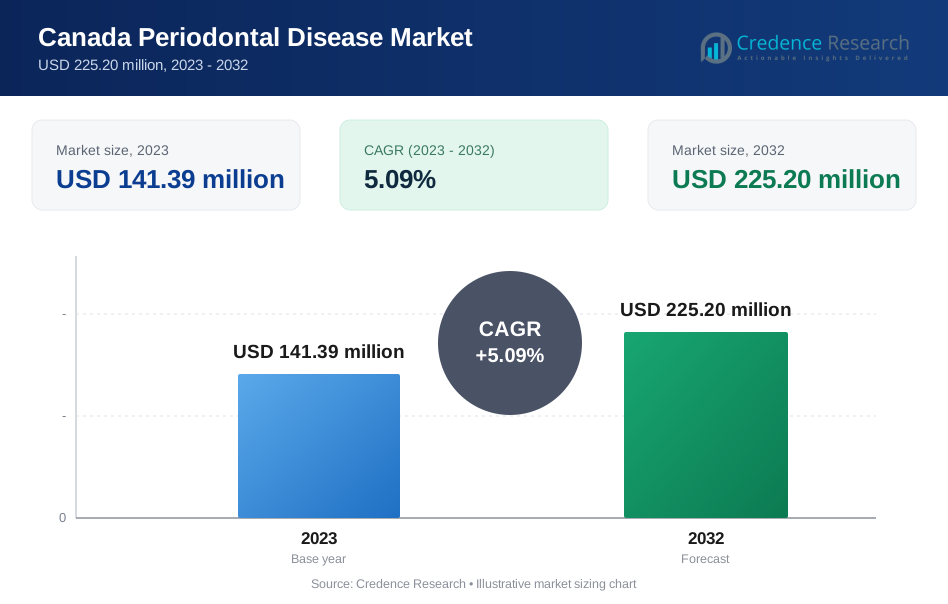
The Canada periodontal disease market is projected to grow from USD 141.39 million in 2023 to USD 225.20 million by 2032, registering a compound annual growth rate (CAGR) of 5.09% during the forecast period.
The Canada periodontal disease market is driven by the rising prevalence of periodontal disorders, fueled by an aging population and increasing awareness of oral health's impact on overall well-being. Advancements in diagnostic technologies and treatment options, such as minimally invasive procedures and regenerative therapies, further support market growth. The increasing adoption of dental insurance plans and government initiatives to enhance oral healthcare access also contribute to the market's expansion. Additionally, growing consumer preference for aesthetic dental solutions drives demand for innovative treatments. Key trends include the integration of artificial intelligence in diagnostic tools and personalized treatment plans, enabling early detection and efficient management of periodontal diseases. Collaboration among dental professionals, researchers, and technology providers is fostering innovation in the field. This dynamic combination of factors positions the market for significant growth, meeting the evolving needs of patients and professionals in Canada’s dental care sector.
The geographical analysis of the Canada periodontal disease market highlights regional variations in access to dental care and the adoption of advanced treatments. Urban regions like Ontario and Quebec are leading due to their well-established healthcare infrastructure, high concentration of dental professionals, and increased awareness of oral health. In contrast, rural and remote areas face challenges such as limited access to specialized periodontal care and a shortage of trained periodontists. However, initiatives like tele-dentistry and mobile clinics are addressing these disparities. Key players driving the market include Bausch Health Companies Inc., Colgate-Palmolive Company, DENTSPLY SIRONA Inc., and Biolase, Inc., among others. These companies are focused on technological advancements, innovative treatment methods, and expanding their presence across underserved areas. Their efforts, combined with public and private initiatives, are shaping the market, improving access to quality care, and promoting better oral health outcomes nationwide.
Market Insights
- The Canada periodontal disease market is valued at USD 141.39 million in 2023 and is projected to reach USD 225.20 million by 2032, with a CAGR of 5.09%.
- Rising awareness of the link between periodontal disease and systemic health is boosting market growth.
- The increasing aging population in Canada is contributing to higher cases of periodontal disease, creating demand for specialized treatments.
- Unhealthy lifestyle factors, such as smoking and poor diet, are significant drivers for the rising prevalence of periodontal conditions.
- High treatment costs and limited insurance coverage remain key barriers, limiting accessibility to care.
- Rural areas in Canada face challenges such as a shortage of periodontists, hindering access to specialized treatments.
- Ontario and Quebec lead the market due to their well-established healthcare systems, while rural areas benefit from emerging tele-dentistry solutions.
Market Drivers
Rising Prevalence of Periodontal Disease
The increasing incidence of periodontal disease in Canada is largely attributed to an aging population, as older individuals are more susceptible to gum-related issues. Poor oral hygiene practices, including irregular brushing and flossing, contribute significantly to the onset and progression of this condition. For instance, a survey by the Canadian Dental Association highlights that older adults are more likely to experience severe periodontal issues due to these combined factors. Additionally, unhealthy lifestyle factors such as smoking, excessive alcohol consumption, and poor dietary habits further exacerbate the prevalence of periodontal disease. Systemic diseases, including diabetes, heart disease, and respiratory conditions, are also linked to periodontal health, often worsening symptoms and complicating treatment outcomes. Together, these factors underline the need for comprehensive prevention and management strategies.
Increased Awareness and Early Detection
Enhanced public awareness of periodontal health, driven by government initiatives and campaigns from dental associations, has significantly improved early detection rates. Public health campaigns emphasize the importance of oral hygiene and highlight the risks associated with untreated periodontal disease. For instance, Health Canada's "Healthy Smiles" campaign has been instrumental in educating the public about the importance of regular dental check-ups. Technological advancements, including intraoral cameras and digital X-rays, have revolutionized early diagnosis, enabling dental professionals to detect periodontal issues more accurately and at earlier stages. These developments empower both patients and practitioners to address the condition proactively, reducing its long-term impact on overall health.
Growing Demand for Aesthetic Dentistry
The rising societal focus on appearance and self-confidence has spurred demand for aesthetic dental procedures, including those addressing periodontal concerns. Social and professional pressures are encouraging individuals to seek cosmetic treatments such as gum contouring, which enhance both functionality and aesthetics. For instance, a report by the Canadian Dental Association notes a significant increase in the number of patients seeking cosmetic periodontal treatments, positioning it as a vital segment in the dental industry. This growing interest in aesthetic dentistry reflects changing consumer preferences and highlights the convergence of periodontal care with cosmetic advancements, positioning it as a vital segment in the dental industry.
Government Policies and Technological Advancements
Supportive government initiatives and favorable healthcare policies are further driving the market. Publicly funded dental insurance programs enhance access to periodontal care, particularly for low-income groups, while reimbursement policies incentivize providers to offer specialized treatments. For example, the Ontario Health Insurance Plan (OHIP) includes coverage for certain periodontal treatments, making them more accessible to a broader population. Technological innovations, such as minimally invasive laser therapies and regenerative techniques like tissue engineering, are transforming periodontal treatment. These advancements improve patient outcomes and underscore the growing importance of specialized care provided by periodontists, addressing complex cases with cutting-edge solutions.
Market Trends
Advancing Awareness and Demand for Aesthetic Dentistry
Rising awareness of periodontal disease, driven by public health campaigns and technological advancements, has significantly improved early detection and treatment. Educational initiatives from government bodies and dental associations emphasize the importance of oral health and highlight the risks of untreated gum disease. These campaigns are complemented by advanced diagnostic tools, such as intraoral cameras and digital X-rays, which enhance the accuracy and timeliness of periodontal disease detection. Meanwhile, the growing societal focus on appearance and self-confidence has led to increased demand for aesthetic dental solutions. Procedures like gum contouring and regenerative treatments not only restore oral health but also address cosmetic concerns, aligning with consumer preferences for holistic care. The integration of periodontal and aesthetic treatments underscores the evolution of dental care, catering to both functional and cosmetic needs.
Technological Innovations and Supportive Healthcare Policies
Technological advancements and government policies are playing pivotal roles in shaping the periodontal disease market. Cutting-edge treatments, such as laser therapy, offer minimally invasive options that improve patient comfort and treatment efficacy. Similarly, regenerative dentistry, including tissue engineering and stem cell therapy, holds promise for repairing and restoring gum tissue, advancing the standard of care. On the policy front, government-funded dental insurance programs have expanded access to periodontal care, particularly for underserved populations. For example, the Canadian Dental Care Plan (CDCP) provides coverage for various dental services, making them more accessible to eligible residents. Favorable reimbursement frameworks further incentivize healthcare providers to adopt innovative treatment methods. Additionally, the growing complexity of periodontal cases has led to increased demand for specialized care, highlighting the critical role of periodontists in delivering tailored and effective treatments. Together, these trends reflect a market poised for growth, driven by innovation and policies that prioritize accessibility and quality.
Market Challenges Analysis
High Treatment Costs and Limited Access to Specialized Care
The high cost of periodontal treatments presents a significant challenge for many Canadians. Advanced procedures, such as periodontal surgery and dental implant placement, are often expensive, making them inaccessible to a large segment of the population. For instance, surgical treatments like soft tissue grafts can range from CAD $800 to $1,600 per tooth, and bone grafting procedures can cost anywhere from CAD $300 to $1,600 per site. This issue is compounded by the lack of comprehensive dental insurance coverage, leaving patients to bear substantial out-of-pocket expenses. Additionally, access to specialized care remains a critical issue, particularly in rural and remote areas where there is a shortage of qualified periodontists. This shortage not only limits the availability of expert care but also results in long wait times for patients requiring specialized periodontal treatments. These barriers hinder timely diagnosis and effective treatment, potentially worsening patient outcomes and increasing the burden of oral health issues across the country.
Awareness Gaps, Regulatory Barriers, and Economic Constraints
Low awareness levels about periodontal disease and its systemic health implications further exacerbate challenges in this market. Many individuals fail to recognize the importance of proper oral hygiene and its role in preventing gum disease. Additionally, the lack of understanding about the connection between periodontal health and conditions like diabetes and heart disease often leads to poor compliance with treatment protocols. Regulatory hurdles also pose significant challenges, as Canada's stringent approval processes can delay the introduction of innovative treatments and technologies, slowing market growth. Economic factors, such as downturns, further impact the market, reducing consumer spending on non-emergency dental care, including periodontal treatments. Together, these challenges create a complex environment that demands strategic interventions to improve awareness, accessibility, and affordability, ensuring better oral health outcomes for Canadians.
Market Opportunities
Expanding Access and Growing Demand for Advanced Treatments
The Canada periodontal disease market presents significant opportunities to improve access to care through expanded dental insurance coverage and government-funded programs. As policymakers increasingly recognize the impact of oral health on overall well-being, initiatives aimed at subsidizing treatment costs could enhance affordability, particularly for underserved populations. Tele-dentistry and mobile clinics also offer innovative solutions to address access challenges in remote and rural areas, connecting patients with specialized care. Furthermore, the growing emphasis on early detection and preventive measures creates opportunities for dental professionals to adopt advanced diagnostic tools, such as digital imaging and AI-based assessment technologies. These advancements not only improve patient outcomes but also streamline workflows for practitioners, driving market expansion.
Innovations in Aesthetic and Regenerative Dentistry
The rising demand for aesthetic dentistry, driven by social and professional pressures, provides a lucrative opportunity for periodontal care providers to offer integrated solutions that combine health and cosmetic benefits. Advanced treatments like laser therapy and regenerative techniques, including tissue engineering and stem cell therapy, are increasingly sought after for their minimally invasive nature and superior outcomes. Additionally, collaborations between dental professionals, technology providers, and research institutions can accelerate innovation, bringing cutting-edge solutions to market. As consumer awareness about the importance of periodontal health continues to grow, investments in education campaigns and training programs for specialists will further strengthen the industry, positioning it to meet the evolving needs of patients across Canada.
Market Segmentation Analysis:
By Type:
The Canada periodontal disease market is segmented by type into gingivitis, chronic periodontal disease, aggressive periodontal disease, type 4, and type 5. Among these, chronic periodontal disease holds a significant share due to its high prevalence, particularly among middle-aged and elderly populations. Gingivitis, the mildest form of periodontal disease, is widespread and often serves as a precursor to more severe conditions if left untreated. Aggressive periodontal disease, though less common, poses challenges due to its rapid progression and the necessity for specialized treatment. Emerging focus on types 4 and 5, potentially encompassing systemic or advanced stages, reflects evolving classifications in line with modern diagnostic and treatment advancements. This segmentation enables targeted approaches to address varying severity levels, enhancing the efficacy of treatment options.
By Application:
Segmentation by application includes non-surgical treatments, surgical treatments, application 3, application 4, and application 5. Non-surgical treatments, such as scaling and root planing, dominate the segment due to their effectiveness in managing early-stage periodontal disease. Surgical treatments, including flap surgery and regenerative procedures, are gaining traction for addressing advanced cases with complex requirements. Applications 3, 4, and 5 likely encompass specialized or emerging therapeutic approaches that cater to niche market demands. This segmentation highlights the growing emphasis on personalized and stage-specific treatment strategies, supported by advancements in minimally invasive techniques and regenerative therapies, driving innovation and improved patient outcomes in the Canadian market.
Segments:
Based on Type:
- Gingivitis
- Chronic Periodontal Disease
- Aggressive Periodontal Disease
- Type 4
- Type 5
Based on Application:
- Non-surgical Treatment
- Surgical Treatment
- Application 3
- Application 4
- Application 5
Based on Therapeutics:
- Systematic Antibiotics
- Local Antibiotics
- Therapeutics 3
- Therapeutics 4
- Therapeutics 5
Based on End Users:
- Hospitals
- Dental Clinic
- Dental Academics
Based on Distribution Channel:
- Distribution Channel 1
- Distribution Channel 2
- Distribution Channel 3
- Distribution Channel 4
- Distribution Channel 5
Based on the Geography:
- Ontario
- Quebec
- Western Canada
- British Columbia
- Atlantic Canada
Regional Analysis
Ontario
Ontario holds the largest share in the Canada periodontal disease market, accounting for over 35% of the total market revenue in 2023. This dominance is attributed to its dense population, well-established healthcare infrastructure, and a high number of dental professionals offering specialized periodontal care. The region benefits from increased awareness initiatives and government-supported dental insurance programs, ensuring broader access to treatment. Ontario’s urban centers, such as Toronto and Ottawa, drive demand for both preventive and advanced periodontal care, fueled by heightened awareness of oral health's role in overall well-being. Additionally, the adoption of advanced technologies, such as laser treatments and AI-driven diagnostics, has enhanced patient outcomes and improved care efficiency. The demand for aesthetic dentistry, particularly in urban areas, further propels growth as consumers seek solutions for both health and cosmetic concerns. Continued investment in healthcare infrastructure and training programs for periodontists is expected to solidify Ontario’s leadership in the market.
Western Canada
Western Canada, comprising Alberta, Saskatchewan, and Manitoba, captures approximately 20% of the market share, making it a growing region in the periodontal disease market. The region’s growth is driven by increasing awareness campaigns and rising adoption of advanced periodontal treatments. Rural areas in Western Canada present unique challenges due to limited access to specialized care and a shortage of periodontists. However, tele-dentistry initiatives and mobile dental clinics are beginning to bridge these gaps, ensuring that underserved communities receive timely treatment. Alberta, in particular, is emerging as a key contributor, with its robust healthcare infrastructure and a growing number of dental clinics adopting innovative technologies like regenerative therapies and minimally invasive surgical procedures. Public-private partnerships aimed at enhancing dental care access are further strengthening the market’s foothold in Western Canada. As awareness about the systemic implications of periodontal health rises, the demand for comprehensive care is expected to grow, positioning this region as a promising market for future investments.
Key Player Analysis
- Bausch Health Companies Inc
- Colgate-Palmolive Company
- Mylan N.V.
- Lyne Laboratories
- WOCKHARDT
- DENTSPLY SIRONA Inc
- 3M
- Amyndas Pharmaceuticals
- Biolase, Inc
- Company 10
- Company 11
- Company 12
- Company 13
- Company 14
Competitive Analysis
The competitive landscape of the Canada periodontal disease market is driven by a mix of established global companies and specialized dental care providers. Leading players in the market include Bausch Health Companies Inc., Colgate-Palmolive Company, Mylan N.V., Lyne Laboratories, WOCKHARDT, DENTSPLY SIRONA Inc., 3M, Amyndas Pharmaceuticals, Biolase, Inc., and others. These companies offer a wide range of periodontal care solutions, including advanced treatment devices, diagnostic tools, and oral hygiene products. These companies compete by offering a variety of periodontal care solutions, including diagnostic tools, advanced treatment options, and oral hygiene products. Leading players differentiate themselves through technological innovation, such as laser therapy and digital diagnostics, which improve treatment outcomes and patient experiences. In addition, companies focus on expanding their market reach by partnering with dental professionals and healthcare providers. They are also increasingly investing in patient education and awareness campaigns to promote the importance of oral health and early detection of periodontal disease. As the demand for advanced periodontal care continues to rise, competition is expected to intensify, with key players seeking to strengthen their product portfolios and improve access to care, particularly in underserved rural and remote regions. The emphasis on non-invasive and minimally painful treatments also drives innovation in the market, presenting new opportunities for growth and improved patient outcomes.
Recent Developments
- In September 2023, Bausch Health Companies Inc. and its oral health care division, OraPharma announced plans to team up with the League of United Latin American Citizens (LULAC), the biggest Hispanic group in the U.S. Their goal is to spread awareness about gum disease among Hispanic communities. This collaboration aims to help Hispanics better understand how to detect and treat gum disease.
- In June 2023, Eli Lilly and Company finalized an agreement to acquire DICE Therapeutics, Inc., a renowned biopharmaceutical firm recognized for its groundbreaking DELSCAPE technology platform. This platform is instrumental in creating novel oral therapeutic candidates, such as oral IL-17 inhibitors, which are presently in clinical development. These treatments are designed to target chronic immune-related diseases.
- In March 2023, Haleon initiated the #BetterOralCareNation campaign in Malaysia to enhance oral health practices across the country. The campaign seeks to raise awareness about the importance of oral hygiene and promote better oral care habits among Malaysians.
- In April 2023, Novo Nordisk collaborated with Aspect Biosystems, a company involved in bioprinting biomaterials, for the development of bioprinted tissue therapeutics for obesity and diabetes.
- In March 2022, Biocomposites signed an agreement with Zimmer Biomet to distribute the new genex Bone Graft Substitute. Genex Bone Graft Substitute is a biphasic composite of exceptional purity specifically formulated to balance osteoconductive scaffold strength and persistence in the body to enable the optimal remodeling of bone architecture.
- In February 2022, Envista Holding Corporation formed a strategic partnership with the Spanish Dental Service Organization- Vitaldent Group. This helps the company to become the preferred supplier of dental implants.
Market Concentration & Characteristics
The market concentration of the Canada periodontal disease sector is moderate, with a mix of global players and regional specialists. While global companies dominate the market in terms of product variety and reach, regional players are increasingly becoming significant contenders by offering specialized services and localized solutions. Large-scale dental product manufacturers focus on oral hygiene products, diagnostics, and treatment technologies, establishing a broad customer base across Canada’s urban and rural regions. In contrast, specialized periodontal clinics and smaller companies focus on delivering personalized care, advanced treatments like laser therapies, and offering expertise in complex periodontal conditions. Market characteristics highlight a growing emphasis on technological advancements and minimally invasive procedures, driving innovation and better patient outcomes. Non-surgical treatments, such as scaling and root planing, continue to be the primary care option for most cases, but the market is witnessing a shift toward surgical interventions in more advanced cases. Increasing awareness of the importance of oral health and its systemic connection to overall well-being is further expanding the market. Additionally, as more patients seek cosmetic dental procedures, such as gum contouring, the market is witnessing a higher demand for aesthetic periodontal treatments. This trend is expected to drive further growth in the market, with continued innovations in both treatment methods and patient care solutions.
Report Coverage
The research report offers an in-depth analysis based on Type, Application, Therapeutics, End Users, Distribution Channel and Geography. It details leading market players, providing an overview of their business, product offerings, investments, revenue streams, and key applications. Additionally, the report includes insights into the competitive environment, SWOT analysis, current market trends, as well as the primary drivers and constraints. Furthermore, it discusses various factors that have driven market expansion in recent years. The report also explores market dynamics, regulatory scenarios, and technological advancements that are shaping the industry. It assesses the impact of external factors and global economic changes on market growth. Lastly, it provides strategic recommendations for new entrants and established companies to navigate the complexities of the market.
Future Outlook
- The Canada periodontal disease market is expected to grow steadily, driven by an aging population and rising awareness of oral health.
- Advances in diagnostic technologies, such as digital X-rays and intraoral cameras, will enable earlier detection and more accurate treatment.
- The demand for minimally invasive treatments, like laser therapy, is anticipated to increase, improving patient comfort and recovery times.
- Growing interest in aesthetic dental procedures, such as gum contouring, will contribute to the market's expansion.
- Public health campaigns and education on the connection between oral health and systemic conditions will drive increased patient engagement and treatment adoption.
- Access to periodontal care in rural and remote areas will improve with the rise of tele-dentistry and mobile dental clinics.
- Government initiatives, including dental insurance programs and favorable reimbursement policies, will enhance access to care for low-income individuals.
- Increased investment in regenerative dental technologies, including stem cell therapies, will open new avenues for treating advanced periodontal disease.
- As more patients seek specialized care, the demand for trained periodontists will rise, driving the need for education and training in the field.
- Competitive pressure among key players will spur innovation, resulting in the development of more effective, cost-efficient treatments for periodontal disease.
Request a Free Sample
Fill in your details and we'll send you a free sample report.
- Sample data tables & charts
- Research methodology
Need a Custom Version of This Report?
Tailor the scope, geography, or segments to your exact requirements.
- Custom geography or segment scope
- Direct access to our analyst team
Frequently Asked Questions
What is the current size of the Canada Periodontal Disease market?
What factors are driving the growth of the Canada Periodontal Disease market?
What are the key segments within the Canada Periodontal Disease market?
What are some challenges faced by the Canada Periodontal Disease market?
Who are the major players in the Canada Periodontal Disease market?
Table of Content
Chapter 1. Report Introduction
- 1.1 Report Description & Purpose
- 1.1.1 Report Title & Market Definition
- 1.1.2 Unique Selling Propositions (USP) & Key Differentiators
- 1.1.3 Value Proposition for Stakeholders
- 1.2 Research Objectives
- 1.2.1 Market Sizing Objectives (Volume & Revenue)
- 1.2.2 Segmentation Objectives
- 1.2.3 Competitive Intelligence Objectives
- 1.2.4 Forecast & Scenario Objectives
- 1.3 Report Scope
- 1.3.1 Canada Periodontal Disease Scope – Types & Subtypes Covered
- 1.3.2 Geographic Scope – Regions & Countries Covered
- 1.3.3 Historical Period, Base Year & Forecast Period (2023; forecast to 2032)
- 1.3.4 Inclusions & Exclusions
- 1.4 HS Code & Classification Framework
- 1.5 Currency, Units & Pricing Basis
- 1.6 Target Stakeholders
- 1.7 Limitations & Assumptions
Chapter 2. Executive Summary
- 2.1 Global Canada Periodontal Disease Market Snapshot
- 2.1.1 Market Size – Historical (2023) & Forecast (2023-2032) (2023: USD 141.39 million → 2032: USD 225.20 million)
- 2.1.2 Volume & Revenue – Global Totals
- 2.1.3 Key Market Highlights – Top Five Facts
- 2.2 Canada Periodontal Disease Market Segmentation Snapshot
- 2.2.1 Market Split by Region – 2023 vs. 2032
- 2.3 Competitive Snapshot
- 2.3.1 Top 10 Players by Revenue Share – 2023
- 2.3.2 Top 10 Players by Volume Share – 2023
- 2.3.3 Recent Strategic Developments (18-Month Summary)
- 2.4 Key Investment Highlights & Strategic Conclusions
Chapter 3. Canada Periodontal Disease Market Dynamics & Industry Analysis
- 3.1 Market Overview & Context
- 3.1.1 Canada Periodontal Disease Market Position in the Broader Automotive Value Chain
- 3.1.2 OEM vs. Replacement Market Dynamics
- 3.1.3 Market Maturity & Development Stage by Region
- 3.2 Canada Periodontal Disease Market Drivers
- 3.3 Canada Periodontal Disease Market Restraints & Challenges
- 3.4 Canada Periodontal Disease Market Opportunities
- 3.5 Porter's Five Forces Analysis
- 3.5.1 Threat of New Entrants
- 3.5.2 Bargaining Power of Suppliers
- 3.5.3 Bargaining Power of Buyers
- 3.5.4 Threat of Substitutes
- 3.5.5 Competitive Rivalry – Intensity Assessment
- 3.6 Canada Periodontal Disease Value Chain Analysis
- 3.6.1 Upstream – Raw Material/Input Suppliers
- 3.6.1.1 Raw Material/Input 1
- 3.6.1.2 Raw Material/Input 2
- 3.6.1.3 Raw Material/Input 3
- 3.6.2 Midstream – Production/Manufacturing/Service Delivery
- 3.6.2.1 Production/Process Overview
- 3.6.2.2 Key Facility Locations & Capacity by Manufacturer
- 3.6.3 Downstream – Distribution & End Consumer
- 3.6.3.1 Primary Channel – B2B/OEM
- 3.6.3.2 Secondary Channels – Dealer, Retail, Online, Direct
- 3.6.4 Value Chain Profitability Analysis
- 3.6.1 Upstream – Raw Material/Input Suppliers
- 3.7 PESTEL Analysis
- 3.7.1 Political Factors
- 3.7.2 Economic Factors
- 3.7.3 Social Factors
- 3.7.4 Technological Factors
- 3.7.5 Environmental Factors
- 3.7.6 Legal Factors
- 3.8 Canada Periodontal Disease Supply Chain Analysis
- 3.8.1 Raw Material/Input Supply Risk Assessment
- 3.8.2 Manufacturing Concentration Risk (Geographic Exposure)
- 3.8.3 Trade Disruption Impact Analysis
- 3.9 Regulatory & Policy Landscape
Note: The regulatory and policy landscape section covers regulations based on their applicability to the market, Canada Periodontal Disease category, geography, and scope of the study. Only regulatory frameworks with a material impact on operations, compliance, trade, sustainability, or market access are analyzed in detail.
Chapter 4. Key Investment Pockets & Opportunity Analysis
- 4.1 Canada Periodontal Disease Market Attractiveness Analysis
- 4.1.1 By Region – Investment Attractiveness Matrix (Volume × CAGR)
- 4.2 Absolute Revenue Growth Opportunity
- 4.2.1 By Region – Absolute USD Growth Through 2032
- 4.3 Incremental Volume Opportunity
- 4.3.1 By Region – Incremental Volume Through 2032
- 4.3.2 Segment – Incremental Volume
- 4.4 Emerging Submarket Opportunity Deep Dive (Subject to Applicability)
- 4.5 Emerging Market Opportunity Scorecards
- 4.5.1 United States
- 4.5.2 Europe
- 4.5.3 Asia
- 4.5.4 Middle East & Africa
Note: Emerging Market Opportunity Scorecards will be included based on relevance and strategic importance. Regions listed are indicative and may vary depending on data availability and market dynamics.
Chapter 5. Canada Periodontal Disease Import-Export Analysis & Trade Flows
- 5.1 Global Trade Overview
- 5.1.1 Global Export Value by Country (2023)
- 5.1.2 Global Export Volume by Country (2023)
- 5.1.3 Global Import Value by Country (2023)
- 5.1.4 Global Import Volume by Country (2023)
- 5.1.5 Net Trade Balance by Country (2023)
- 5.2 Export Analysis – Segment
- 5.2.1 Type 1 (HS Code)
- 5.2.2 Type 2 (HS Code)
- 5.2.3 Type 3 (HS Code)
- 5.2.4 Type 4 (HS Code)
- 5.2.5 Type 5 (HS Code)
- 5.3 Import Analysis – Segment
- 5.3.1 Type 1 (HS Code)
- 5.3.2 Type 2 (HS Code)
- 5.3.3 Type 3 (HS Code)
- 5.3.4 Type 4 (HS Code)
- 5.3.5 Type 5 (HS Code)
- 5.4 Average Unit Trade Prices
- 5.4.1 Average Export Price – Segment & Country
- 5.4.2 Average Import Price – Segment & Source Country
- 5.4.3 Price Trends (2023)
- 5.5 Key Trade Route Analysis
- 5.5.1 Trade Route 1
- 5.5.2 Trade Route 2
- 5.5.3 Trade Route 3
- 5.5.4 Trade Route 4
- 5.5.5 Trade Route 5
- 5.6 Trade Policy Impact Assessment
- 5.6.1 US Anti-Dumping & Section 301 Tariffs
- 5.6.2 EU Customs Union Impact
- 5.6.3 Major Free Trade Agreements
- 5.6.4 USMCA Rules of Origin
Note: Trade policy analysis will be included only where relevant to the Canada Periodontal Disease market.
Chapter 6. Competitive Landscape & Company Benchmarking
- 6.1 Canada Periodontal Disease Market Concentration & Structure
- 6.1.1 Herfindahl-Hirschman Index (HHI) – vs. 2023
- 6.1.2 Tier 1, Tier 2 & Tier 3 Market Structure
- 6.1.3 Global, Regional & Local Player Dynamics
- 6.2 Canada Periodontal Disease Market Share Analysis – 2023
- 6.2.1 Global Revenue Share by Company
- 6.2.2 Global Volume Share by Company
- 6.2.3 Regional Revenue Share
- 6.2.4 Market Share Evolution ( vs. 2023)
- 6.2.5 OEM Segment Share by Company
- 6.2.6 Replacement Segment Share by Company
- 6.3 Production/Delivery Capacity & Facility Analysis
- 6.3.1 Global Installed Capacity
- 6.3.2 Capacity Utilization Rates
- 6.3.3 Production/Output Volume
- 6.3.4 Facility Locations & Capacity Map
- 6.3.5 Planned Capacity Additions
- 6.4 Canada Periodontal Disease Competitive Benchmarking Matrix
- 6.4.1 Revenue, Volume, CAGR & Profitability Comparison
- 6.4.2 Channel Revenue Mix
- 6.4.3 Geographic Revenue Exposure
- 6.4.4 R&D Intensity
- 6.4.5 Sustainability Maturity
- 6.5 Strategic Developments in Canada Periodontal Disease (Last 24 Months)
- 6.5.1 Mergers, Acquisitions & Divestments
- 6.5.2 New Canada Periodontal Disease Launches
- 6.5.3 Facility Expansions
- 6.5.4 Strategic Alliances, Joint Ventures & Partnerships
- 6.5.5 Distribution Expansion & Market Entry
- 6.5.6 Sustainability & ESG Initiatives
- 6.6 Competitive Strategy Mapping
- 6.6.1 Leader, Challenger, Follower & Niche Classification
- 6.6.2 Pricing Strategy Comparison
- 6.6.3 Channel Strategy Matrix
Note: Strategic developments are included based on their materiality and the availability of reliable information.
Chapter 7. Global Canada Periodontal Disease Market – By Distribution Channel
- 7.1 Segment Overview
- 7.1.1 Volume & Revenue Split by Channel (2023 & 2032)
- 7.1.2 Channel Mix Evolution (2023-2032)
Chapter 8. Regional Market Analysis – Global Overview
- 8.1 Global Regional Overview
- 8.1.1 Regional Volume Share
- 8.1.2 Regional Revenue Share
- 8.1.3 Regional Volume by Region
- 8.1.4 Regional Revenue by Region
- 8.1.5 Regional Forecast Through 2032
- 8.2 Cross-Regional Segment Analysis
- 8.2.1 By Distribution Channel
- 8.2.2 By Brand/Price Tier
Chapter 9. North America Canada Periodontal Disease Market
- 9.1 United States
- 9.2 Canada
- 9.3 Mexico
Chapter 10. Europe Canada Periodontal Disease Market
- 10.1 Germany
- 10.2 France
- 10.3 Italy
- 10.4 United Kingdom
- 10.5 Spain
- 10.6 Poland
- 10.7 Russia
- 10.8 Netherlands
- 10.9 Belgium
- 10.10 Sweden
- 10.11 Denmark
- 10.12 Norway
- 10.13 Rest of Europe
Chapter 11. Asia Pacific Canada Periodontal Disease Market
- 11.1 China
- 11.2 India
- 11.3 Japan
- 11.4 South Korea
- 11.5 Thailand
- 11.6 Indonesia
- 11.7 Vietnam
- 11.8 Malaysia
- 11.9 Australia
- 11.10 Rest of Asia Pacific
Chapter 12. Latin America Canada Periodontal Disease Market
- 12.1 Brazil
- 12.2 Argentina
- 12.3 Colombia
- 12.4 Chile
- 12.5 Rest of Latin America
Chapter 13. Middle East Canada Periodontal Disease Market
- 13.1 Saudi Arabia
- 13.2 United Arab Emirates
- 13.3 Turkey
- 13.4 Israel
- 13.5 Iran
- 13.6 Rest of the Middle East
Chapter 14. Africa Canada Periodontal Disease Market
- 14.1 South Africa
- 14.2 Egypt
- 14.3 Nigeria
- 14.4 Morocco
- 14.5 Rest of Africa
Chapter 15. Canada Periodontal Disease Company Profiles
- 15.1 [Company 01]
- 15.1.1 Company Overview
- 15.1.2 Key Management Personnel
- 15.1.3 Products & Services Portfolio
- 15.1.4 Financial Performance
- 15.1.5 Key Market Focus & Geographic Presence
- 15.1.6 Recent Developments & Strategic Initiatives
Note: The company profile list is preliminary and may change based on research findings, market developments, data availability, and client requirements.
Chapter 16. Appendices
- Appendix A – List of Abbreviations & Acronyms
- Appendix B – Industry Classification Code Reference – Full Series
- Appendix C – Production & Capacity Data Tables
- Appendix D – End-Use & Demand Base Tables
- Appendix E – Consumption & Replacement Rate Assumptions
- Appendix F – ASP Reference Tables
- Appendix G – Manufacturing & Facility Database
- Appendix H – Import-Export Data Tables
- Appendix I – Regulatory Summary Tables
- Appendix J – Primary Research Participant List (Anonymized)
- Appendix K – Primary Research Questionnaire Framework
- Appendix L – Data Sources & Bibliography
- Appendix M – Market Size Divergence & Source Comparison
Chapter 17. Research Methodology
- 17.1 Research Framework & Philosophy
- 17.2 Secondary Research – Sources, Hierarchy & Data Extraction
- 17.3 Data Modeling – Bottom-Up & Top-Down Market Sizing
- 17.4 Primary Research – Stakeholder Framework, LOI & Sample Sizes
- 17.5 Forecast Methodology – Regression, Scenario & Sensitivity Analysis
- 17.6 Quality Control – Four-Layer Validation Framework
- 17.7 Limitations & Standard Assumptions
- 17.8 Disclaimer
