
Market Overview:
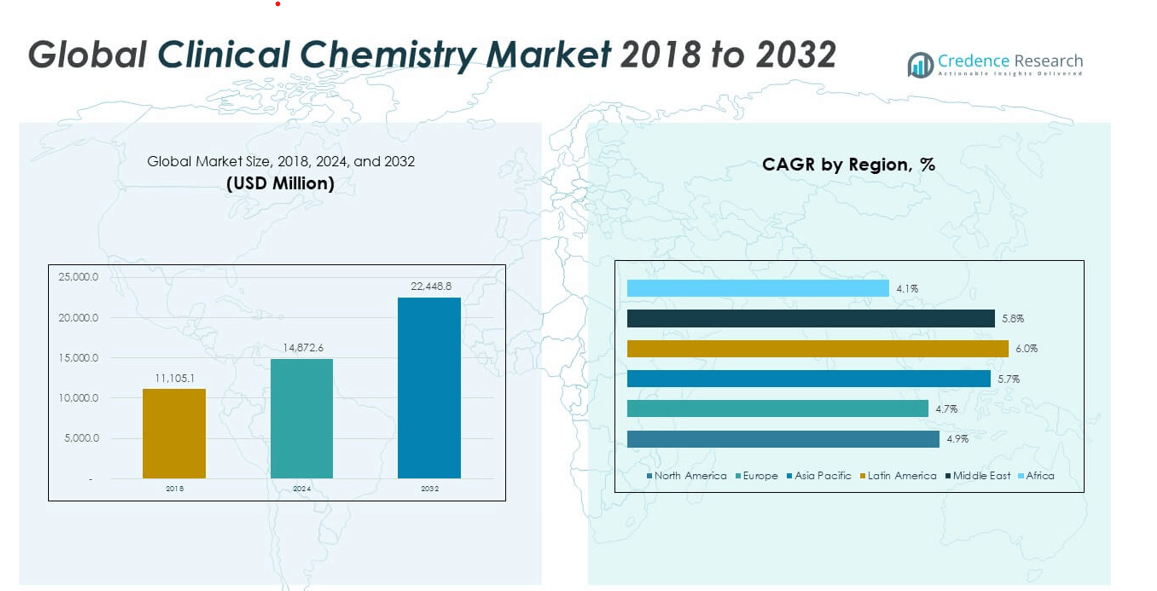
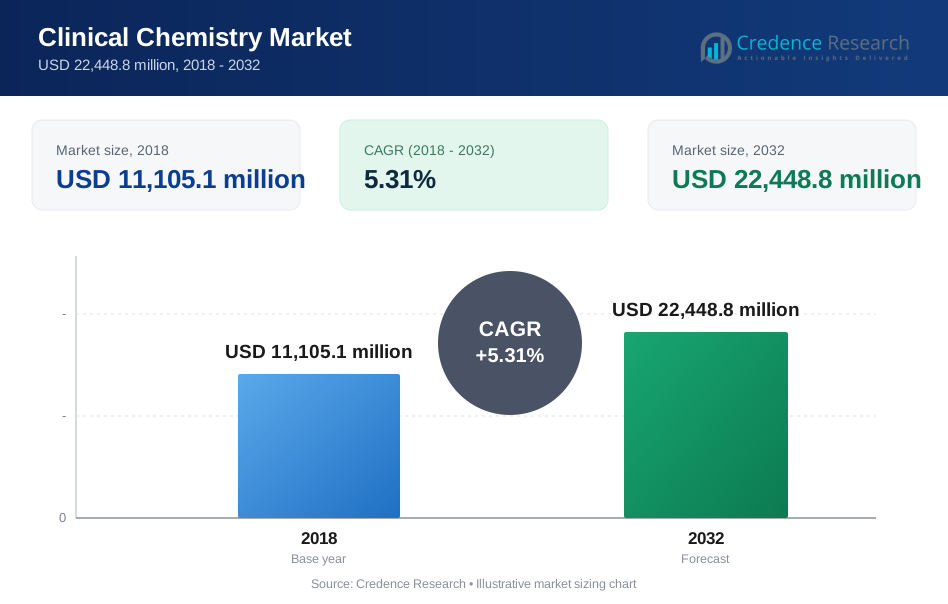
The Global Clinical Chemistry Market size was valued at USD 11,105.1 million in 2018 to USD 14,872.6 million in 2024 and is anticipated to reach USD 22,448.8 million by 2032, at a CAGR of 5.31% during the forecast period.
| REPORT ATTRIBUTE | DETAILS |
|---|---|
| Historical Period | 2020-2023 |
| Base Year | 2024 |
| Forecast Period | 2025-2032 |
| Clinical Chemistry Market Size 2024 | USD 14,872.6 million |
| Clinical Chemistry Market, CAGR | 5.31% |
| Clinical Chemistry Market Size 2032 | USD 22,448.8 million |
Clinical chemistry plays a key role in disease diagnosis, treatment monitoring, and health assessment. Rising cases of chronic diseases such as diabetes, cardiovascular conditions, and kidney disorders are boosting demand for diagnostic testing. Increasing adoption of automated analyzers and point-of-care systems is enhancing testing efficiency and accuracy. Growing awareness of preventive healthcare and technological innovations in biochemical testing are further driving market growth.
North America leads the Global Clinical Chemistry Market due to its advanced healthcare infrastructure and high diagnostic expenditure. Europe follows with strong laboratory automation adoption and government-funded healthcare programs. The Asia-Pacific region is rapidly emerging, driven by expanding healthcare access, rising income levels, and growing investments in clinical diagnostics. Latin America and the Middle East are witnessing gradual adoption through expanding private laboratories and medical modernization efforts.
Market Insights:
- The Global Clinical Chemistry Market was valued at USD 11,105.1 million in 2018, reached USD 14,872.6 million in 2024, and is projected to attain USD 22,448.8 million by 2032, growing at a CAGR of 5.31%.
- Asia Pacific leads with 37% of the market share due to healthcare modernization, strong manufacturing capabilities, and expanding diagnostic networks in China, Japan, and India.
- Europe holds 23% and North America 19% of the total share, driven by advanced diagnostic infrastructure, high adoption of automation, and significant R&D investments.
- Latin America, with 12% share, represents the fastest-growing region, supported by private healthcare investments, urban diagnostic expansion, and preventive testing initiatives.
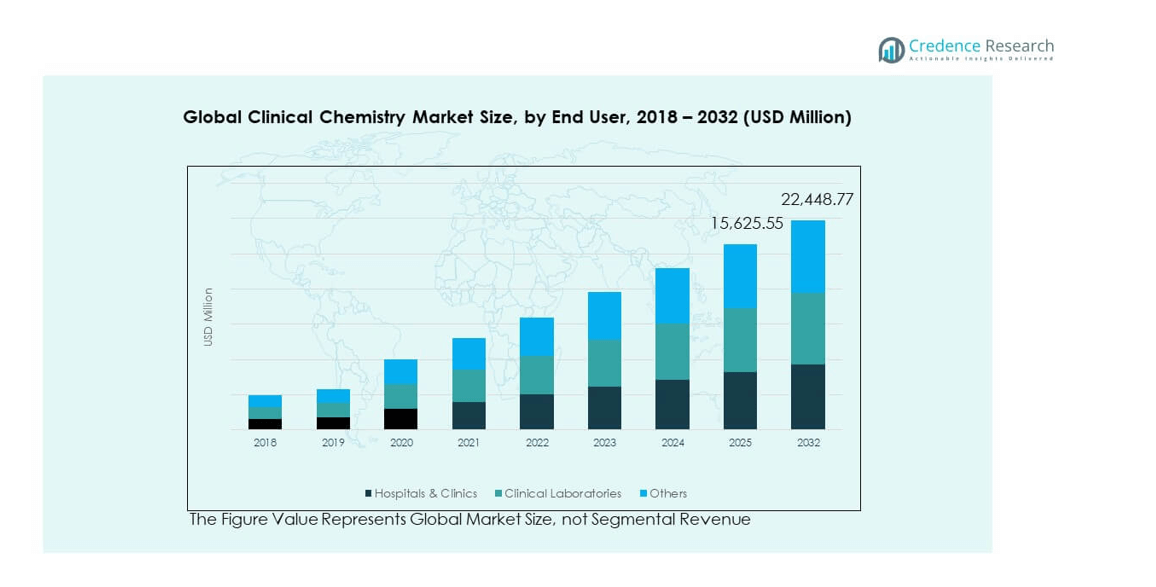
- End-user segmentation shows Hospitals & Clinics accounting for about 45% of the total market, Clinical Laboratories at 40%, and Others at 15%, reflecting strong institutional demand and growing outsourced diagnostic services.
Market Drivers:
Rising Prevalence of Chronic and Lifestyle Diseases Boosting Diagnostic Demand
The Global Clinical Chemistry Market is growing due to a surge in chronic and metabolic disorders. Rising cases of diabetes, cardiovascular diseases, and renal dysfunction have increased the need for biochemical testing. Hospitals and laboratories are expanding test menus to improve early diagnosis. Technological progress in analyzers enables faster and more accurate results, enhancing clinical outcomes. The growing aging population also contributes to higher diagnostic volumes. Preventive health check-ups are becoming routine, strengthening diagnostic infrastructure worldwide. This growth reflects the industry’s shift toward proactive health management.
- For instance, Abbott reported in October 2025 its third-quarter results, delivering strong performance with global sales of $11.4 billion. In the earnings call, the company confirmed that its Alinity clinical chemistry systems are designed for high-throughput diagnostic centers, capable of speeds of up to 1,350 tests per hour, and are used in labs worldwide to detect cardiovascular and metabolic biomarkers.
Technological Advancements in Analyzers and Automation Driving Efficiency
Automation is transforming clinical laboratories by improving accuracy and speed. Automated analyzers reduce manual errors and enhance reproducibility in test results. Integration of artificial intelligence supports predictive diagnostics and real-time monitoring. Laboratories benefit from high-throughput systems capable of handling multiple assays simultaneously. The Global Clinical Chemistry Market benefits from reduced turnaround time and cost-efficient testing. Compact and modular analyzers support flexible laboratory operations across large and small facilities. Continuous innovation encourages wider adoption of advanced testing solutions.
- For instance, Thermo Fisher Scientific announced in September 2025 the deployment of its modular clinical chemistry automation across 25,000+ global lab sites, which has led to up to 30% reduced turnaround time and reproducible precision within 5% coefficient of variation for metabolic panels.
Growing Awareness and Investments in Preventive Healthcare Programs
Preventive healthcare programs are increasing global demand for biochemical testing. Governments and private healthcare institutions are investing in early detection initiatives. Screening programs for cholesterol, glucose, and renal markers are becoming more frequent. The Global Clinical Chemistry Market supports these programs by providing accessible diagnostic platforms. Rising consumer health awareness promotes regular testing and wellness monitoring. Healthcare providers emphasize lifestyle-related disease prevention through routine biochemical evaluations. Insurance coverage expansion is further driving participation in diagnostic programs.
Expanding Role of Point-of-Care Testing and Decentralized Diagnostics
Point-of-care (POC) systems are gaining importance in both developed and emerging economies. They deliver quick results in non-laboratory settings such as clinics and home care. The Global Clinical Chemistry Market benefits from this decentralization, improving accessibility. Portable analyzers enable testing in rural and resource-limited regions. The growing demand for rapid and reliable testing solutions drives POC adoption. Integration with digital health platforms enhances real-time data sharing. This shift supports faster clinical decisions and better patient outcomes.
Market Trends:
Integration of Artificial Intelligence and Machine Learning in Diagnostic Systems
Artificial intelligence is revolutionizing laboratory data interpretation and workflow management. Smart algorithms detect abnormal biochemical patterns with high precision. The Global Clinical Chemistry Market leverages AI to improve diagnostic reliability. Machine learning supports automated calibration, error detection, and predictive analytics. Laboratories benefit from reduced operational time and improved result consistency. AI-driven tools enhance efficiency by minimizing manual intervention. The trend supports the transition toward intelligent diagnostic ecosystems.
- For instance, Danaher Corporation, in partnership with AstraZeneca since May 2025, is developing next-generation AI-powered diagnostic tools for precision medicine. The initial focus is on creating digital and computational pathology products and AI-assisted algorithms to better identify which cancer patients are most likely to benefit from targeted therapies, a project supported by Danaher's subsidiary, Leica Biosystems. The partnership aims to streamline the development and commercialization process for these advanced diagnostic tests.
Growing Shift Toward Personalized and Precision Diagnostics
Healthcare is moving toward individualized treatment approaches based on patient biomarkers. Precision medicine relies heavily on accurate biochemical profiling. The Global Clinical Chemistry Market aligns with this trend by enabling targeted diagnosis. Tests for metabolic, hepatic, and renal biomarkers are customized for personalized treatment. Pharmaceutical research integrates clinical chemistry to monitor drug responses. This trend enhances the connection between diagnostics and therapeutic outcomes. Precision testing tools strengthen clinical decision-making and treatment success.
- For instance, Roche’s 2025 collaboration with Broad Clinical Labs focused on developing pilot applications for its new next-generation sequencing platform, Sequencing by Expansion (SBX), with an initial focus on diagnosing genetic disorders in critically ill newborns rather than daily oncology panels.
Increasing Adoption of Cloud-Based Laboratory Information Systems
Digital transformation is reshaping clinical data management and communication. Cloud-based laboratory information systems (LIS) streamline test result storage and sharing. The Global Clinical Chemistry Market benefits from improved data accessibility and collaboration. Laboratories use cloud integration to manage high testing volumes efficiently. Secure systems allow real-time access for clinicians and patients. This trend supports centralized data analytics and health record synchronization. Cloud platforms promote operational transparency and regulatory compliance.
Emergence of Sustainable and Eco-Efficient Laboratory Practices
Laboratories are adopting eco-friendly materials and energy-efficient analyzers. The Global Clinical Chemistry Market is shifting toward sustainable operations to reduce waste. Manufacturers focus on biodegradable reagents and recyclable consumables. Energy-efficient analyzers lower operational costs while meeting environmental standards. Regulatory frameworks encourage greener diagnostic practices. The movement toward sustainability reflects a responsible approach to healthcare. It improves the sector’s long-term viability and public image.
Market Challenges Analysis:
High Cost of Advanced Diagnostic Instruments and Maintenance Burden
The Global Clinical Chemistry Market faces cost-related challenges limiting widespread adoption. High capital investment for advanced analyzers restricts smaller laboratories. Maintenance, calibration, and reagent costs add financial strain. Resource-limited healthcare facilities in developing regions struggle with affordability. Limited funding reduces access to automation technologies and high-throughput systems. These factors delay modernization and affect testing efficiency. Training and skilled manpower shortages further raise operational expenses. Cost optimization remains a key challenge for sustainable market growth.
Regulatory Barriers and Data Integration Complexities Across Regions
Regulatory differences across countries complicate device approvals and standardization. The Global Clinical Chemistry Market experiences delays in product commercialization due to complex procedures. Data integration from diverse systems challenges interoperability. Laboratories face issues aligning global quality control standards. Ensuring patient data privacy in digital platforms remains a regulatory priority. Limited harmonization slows cross-border diagnostic collaborations. These issues hinder innovation speed and limit technology transfer. Companies must adapt strategies to comply with evolving diagnostic frameworks.
Market Opportunities:
Expansion of Diagnostic Infrastructure in Emerging Economies
Emerging markets present strong growth potential for the Global Clinical Chemistry Market. Rising healthcare investments in Asia-Pacific, Latin America, and Africa are boosting access to diagnostics. Governments are prioritizing laboratory infrastructure development and rural health access. Local production of analyzers and reagents supports cost-efficient testing. Growing middle-class populations demand affordable and rapid healthcare solutions. Partnerships between public and private sectors accelerate diagnostic expansion. This growth opens long-term opportunities for equipment manufacturers and service providers.
Integration of Digital Health and Home-Based Testing Solutions
Digital health innovations are creating new pathways for biochemical testing. The Global Clinical Chemistry Market benefits from telemedicine and home diagnostics integration. Remote sample collection and real-time reporting improve patient engagement. Wearable devices and mobile health apps monitor biochemical indicators effectively. These solutions promote convenience and continuous health monitoring. Startups are developing compact analyzers for consumer use. Expanding connectivity in remote regions supports broader diagnostic adoption.
Market Segmentation Analysis:
By Product
The Global Clinical Chemistry Market is segmented into instruments and reagents and consumables. Instruments include analyzers and automated systems that support large-scale biochemical testing in laboratories and hospitals. It is witnessing rising demand for high-throughput and compact analyzers that improve accuracy and turnaround time. Reagents and consumables dominate revenue share due to their continuous use in routine diagnostic testing. Growing demand for reliable reagents compatible with advanced systems is driving recurring revenue for manufacturers.
- For instance, Siemens Healthineers, through its Diagnostics segment, utilizes its Atellica and ADVIA reagent platforms to provide a comprehensive menu of assay tests worldwide. The company has confirmed that these platforms are designed for batch-level traceability and regulatory-compliant operations, as demonstrated through official regulatory filings. In fiscal year 2024, the Diagnostics segment generated €4.5 billion.
By Application
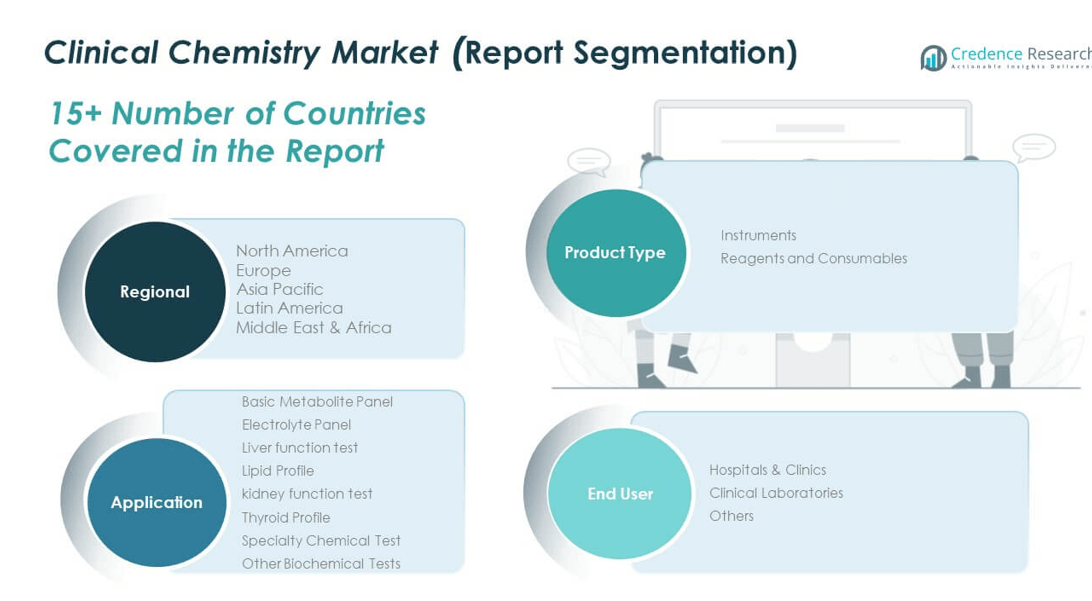
Key application areas include basic metabolite panel, electrolyte panel, liver function test, lipid profile, kidney function test, thyroid profile, specialty chemical test, and other biochemical tests. Each test supports the early detection and management of chronic and metabolic diseases. It benefits from rising emphasis on preventive health screening and disease monitoring. Advancements in reagent sensitivity and assay precision are expanding testing capabilities across hospital and laboratory settings.
- For instance, Sysmex Corporation signed an agreement in September 2025 to acquire JEOL's medical equipment business, which includes the existing BioMajesty™ series of clinical chemistry platforms. The acquisition is expected to be finalized in April 2026. These platforms, which are already known for high-throughput capabilities—such as the JCA-BM6010/C's processing speed of up to 1,200 tests per hour—are used to perform metabolic and hepatic tests. By integrating this technology, Sysmex aims to accelerate its global expansion and strengthen its portfolio in clinical chemistry, thereby increasing throughput for multi-site hospital laboratories.
By End User
End users include hospitals and clinics, clinical laboratories, and others. Hospitals and clinics lead due to high patient volume and integration of diagnostic services. Clinical laboratories are expanding with increasing automation and partnerships for outsourced testing. It benefits from the growing preference for accurate, cost-effective, and rapid diagnostic solutions. The others segment includes academic institutes and research centers adopting biochemical analyzers for experimental and clinical studies.
Segmentation:
By Product:
- Instruments
- Reagents and Consumables
By Application:
- Basic Metabolite Panel
- Electrolyte Panel
- Liver Function Test
- Lipid Profile
- Kidney Function Test
- Thyroid Profile
- Specialty Chemical Test
- Other Biochemical Tests
By End User:
- Hospitals & Clinics
- Clinical Laboratories
- Others
By Region:
- North America
- U.S.
- Canada
- Europe
- Germany
- France
- Italy
- U.K.
- Russia
- Rest of Europe
- Asia-Pacific
- India
- China
- Japan
- Rest of Asia-Pacific
- Latin America
- Brazil
- Mexico
- Rest of Latin America
- Middle East and Africa
- GCC Countries
- South Africa
- Rest of Middle East and Africa
Regional Analysis:
North America
The North America Clinical Chemistry Market size was valued at USD 2,221.02 million in 2018 to USD 2,910.78 million in 2024 and is anticipated to reach USD 4,265.27 million by 2032, at a CAGR of 4.9% during the forecast period. North America accounts for about 19% of the total market share. The region leads the Global Clinical Chemistry Market due to advanced healthcare infrastructure and strong diagnostic adoption. High disease prevalence and increased healthcare spending support market expansion. The U.S. dominates with robust laboratory networks and early adoption of automation. Canada and Mexico follow with growing investments in diagnostic facilities. Continuous R&D in clinical testing and digital integration drives innovation. It benefits from strong presence of key industry players and favorable reimbursement structures that promote regular biochemical testing.
Europe
The Europe Clinical Chemistry Market size was valued at USD 2,751.84 million in 2018 to USD 3,571.98 million in 2024 and is anticipated to reach USD 5,163.22 million by 2032, at a CAGR of 4.7% during the forecast period. Europe holds around 23% of the global market share. The region benefits from a mature healthcare ecosystem and widespread laboratory automation. Germany, the UK, and France lead due to established clinical infrastructure and high diagnostic test volumes. It experiences growing emphasis on preventive diagnostics and chronic disease management. European laboratories are advancing in AI-based analytical systems to enhance accuracy. Government-backed healthcare initiatives ensure accessibility and affordability of biochemical testing. Rising geriatric population drives steady testing demand across hospitals and laboratories.
Asia Pacific
The Asia Pacific Clinical Chemistry Market size was valued at USD 3,886.78 million in 2018 to USD 5,332.90 million in 2024 and is anticipated to reach USD 8,306.04 million by 2032, at a CAGR of 5.7% during the forecast period. Asia Pacific contributes nearly 37% of the global market share, making it the fastest-growing region. Rapid urbanization and healthcare modernization are propelling growth. China and Japan dominate due to strong technological capabilities and expanding hospital networks. India and Southeast Asian countries are witnessing rising diagnostic awareness and infrastructure expansion. It benefits from growing government investments in public health and diagnostics. Increasing adoption of automated analyzers enhances testing quality across the region. The market outlook remains positive due to growing population and economic development.
Latin America
The Latin America Clinical Chemistry Market size was valued at USD 1,184.91 million in 2018 to USD 1,654.47 million in 2024 and is anticipated to reach USD 2,633.24 million by 2032, at a CAGR of 6.0% during the forecast period. Latin America represents about 12% of the global market share. The region is witnessing growing diagnostic awareness and private healthcare investment. Brazil and Mexico are leading markets with expanding laboratory chains. It is experiencing steady adoption of automated testing systems in urban centers. Government programs promoting early disease detection support clinical testing growth. Technological integration and improved healthcare access are strengthening the regional market base. Economic diversification and healthcare reforms further enhance demand across diagnostic segments.
Middle East
The Middle East Clinical Chemistry Market size was valued at USD 566.36 million in 2018 to USD 780.81 million in 2024 and is anticipated to reach USD 1,223.46 million by 2032, at a CAGR of 5.8% during the forecast period. The Middle East holds around 5% of the market share. The region is investing heavily in healthcare infrastructure and diagnostic modernization. GCC countries are leading with state-funded healthcare expansion and advanced laboratory adoption. Israel and Turkey show strong private sector participation and diagnostic innovation. It benefits from increasing awareness about preventive care and chronic disease management. Growing collaborations with global diagnostic firms drive technology transfer. Medical tourism and healthcare digitization are enhancing regional service quality.
Africa
The Africa Clinical Chemistry Market size was valued at USD 494.18 million in 2018 to USD 621.68 million in 2024 and is anticipated to reach USD 857.54 million by 2032, at a CAGR of 4.1% during the forecast period. Africa accounts for nearly 4% of the market share. The region is developing through gradual healthcare improvement and diagnostic awareness. South Africa leads with established laboratory networks and public-private healthcare initiatives. Egypt and Nigeria are emerging with growing urban healthcare demand. It faces challenges such as limited infrastructure and resource availability but shows gradual progress. International aid programs and mobile diagnostics are expanding access in remote areas. Rising population and infectious disease screening contribute to increasing testing volumes.
Key Player Analysis:
- Abbott
- Thermo Fisher Scientific Inc.
- Danaher Corporation
- Hoffmann-La Roche Ltd.
- Siemens Healthineers AG
- HORIBA Ltd.
- Shenzhen Mindray Biomedical Electronic Co., Ltd.
- Sysmex Corporation
- Nova Biomedical
- Bio-Rad Laboratories, Inc.
- Other Key Players
Competitive Analysis:
The Global Clinical Chemistry Market is characterized by strong competition among established diagnostic manufacturers. Key players such as Abbott, Thermo Fisher Scientific, Danaher Corporation, Siemens Healthineers, and F. Hoffmann-La Roche Ltd dominate the landscape with broad product portfolios and continuous R&D investments. It focuses on automation, reagent standardization, and integration of digital diagnostic platforms to enhance testing accuracy and throughput. Emerging regional companies are expanding their presence through cost-effective analyzers and reagent solutions. Market leaders compete through strategic mergers, partnerships, and new product launches to strengthen distribution networks and global reach.
Recent Developments:
- In October 2025, Abbott demonstrated its continued commitment to diagnostics by expanding its portfolio of automated clinical chemistry analyzers, aiming for improved laboratory efficiency and accuracy. The company reported strong growth in its core diagnostics division, reaffirming its leadership in the global clinical chemistry space.
- In October 2025, Thermo Fisher Scientific advanced its market presence through a strategic partnership with AstraZeneca BioVentureHub, focusing on R&D collaboration for clinical chemistry and life sciences. Additionally, in September 2025, Thermo Fisher completed the acquisition of Sanofi’s Ridgefield, New Jersey fill-finish site, further strengthening their pharmaceutical and clinical manufacturing capabilities.
- In March 2025, Nova Biomedical merged with Advanced Instruments, a Patricia Industries portfolio company, forming a newly unified global brand and enhancing product development for clinical chemistry solutions worldwide.
Report Coverage:
The research report offers an in-depth analysis based on product, application, and end user segments. It details leading market players, providing an overview of their business, product offerings, investments, revenue streams, and key applications. Additionally, the report includes insights into the competitive environment, SWOT analysis, current market trends, as well as the primary drivers and constraints. Furthermore, it discusses various factors that have driven market expansion in recent years. The report also explores market dynamics, regulatory scenarios, and technological advancements that are shaping the industry. It assesses the impact of external factors and global economic changes on market growth. Lastly, it provides strategic recommendations for new entrants and established companies to navigate the complexities of the market.
Future Outlook:
- Rising automation and digitalization will enhance diagnostic accuracy and testing throughput.
- Demand for point-of-care and decentralized diagnostics will increase across emerging regions.
- Growing investment in R&D will lead to the development of high-sensitivity assays.
- Integration of artificial intelligence will support real-time data interpretation in laboratories.
- Expansion of preventive healthcare programs will boost routine biochemical testing volumes.
- Collaborations between diagnostic firms and hospitals will improve service accessibility.
- Growth in chronic disease prevalence will sustain long-term testing demand.
- Cloud-based laboratory management systems will drive operational efficiency.
- Sustainability initiatives will promote eco-efficient reagent production.
- Global players will strengthen regional presence through acquisitions and partnerships.
Request a Free Sample
Fill in your details and we'll send you a free sample report.
- Sample data tables & charts
- Research methodology
Need a Custom Version of This Report?
Tailor the scope, geography, or segments to your exact requirements.
- Custom geography or segment scope
- Direct access to our analyst team
Frequently Asked Questions
What is the current market size for Global Clinical Chemistry Market, and what is its projected size in 2032?
At what Compound Annual Growth Rate is the Global Clinical Chemistry Market projected to grow between 2025 and 2032?
Which Global Clinical Chemistry Market segment held the largest share in 2024?
What are the primary factors fueling the growth of the Global Clinical Chemistry Market?
Who are the leading companies in the Global Clinical Chemistry Market?
Who are the major players in this market?
Table of Content
Chapter 1. Report Introduction
- 1.1 Report Description & Purpose
- 1.1.1 Report Title & Market Definition
- 1.1.2 Unique Selling Propositions (USP) & Key Differentiators
- 1.1.3 Value Proposition for Stakeholders
- 1.2 Research Objectives
- 1.2.1 Market Sizing Objectives (Volume & Revenue)
- 1.2.2 Segmentation Objectives
- 1.2.3 Competitive Intelligence Objectives
- 1.2.4 Forecast & Scenario Objectives
- 1.3 Report Scope
- 1.3.1 Clinical Chemistry Scope – Types & Subtypes Covered
- 1.3.2 Geographic Scope – Regions & Countries Covered
- 1.3.3 Historical Period, Base Year & Forecast Period (2018; forecast to 2032)
- 1.3.4 Inclusions & Exclusions
- 1.4 HS Code & Classification Framework
- 1.5 Currency, Units & Pricing Basis
- 1.6 Target Stakeholders
- 1.7 Limitations & Assumptions
Chapter 2. Executive Summary
- 2.1 Global Clinical Chemistry Market Snapshot
- 2.1.1 Market Size – Historical (2018) & Forecast (2018-2032) (2018: USD 11,105.1 million → 2032: USD 22,448.8 million)
- 2.1.2 Volume & Revenue – Global Totals
- 2.1.3 Key Market Highlights – Top Five Facts
- 2.2 Clinical Chemistry Market Segmentation Snapshot
- 2.2.1 Market Split by Region – 2018 vs. 2032
- 2.3 Competitive Snapshot
- 2.3.1 Top 10 Players by Revenue Share – 2018
- 2.3.2 Top 10 Players by Volume Share – 2018
- 2.3.3 Recent Strategic Developments (18-Month Summary)
- 2.4 Key Investment Highlights & Strategic Conclusions
Chapter 3. Clinical Chemistry Market Dynamics & Industry Analysis
- 3.1 Market Overview & Context
- 3.1.1 Clinical Chemistry Market Position in the Broader Automotive Value Chain
- 3.1.2 OEM vs. Replacement Market Dynamics
- 3.1.3 Market Maturity & Development Stage by Region
- 3.2 Clinical Chemistry Market Drivers
- 3.3 Clinical Chemistry Market Restraints & Challenges
- 3.4 Clinical Chemistry Market Opportunities
- 3.5 Porter's Five Forces Analysis
- 3.5.1 Threat of New Entrants
- 3.5.2 Bargaining Power of Suppliers
- 3.5.3 Bargaining Power of Buyers
- 3.5.4 Threat of Substitutes
- 3.5.5 Competitive Rivalry – Intensity Assessment
- 3.6 Clinical Chemistry Value Chain Analysis
- 3.6.1 Upstream – Raw Material/Input Suppliers
- 3.6.1.1 Raw Material/Input 1
- 3.6.1.2 Raw Material/Input 2
- 3.6.1.3 Raw Material/Input 3
- 3.6.2 Midstream – Production/Manufacturing/Service Delivery
- 3.6.2.1 Production/Process Overview
- 3.6.2.2 Key Facility Locations & Capacity by Manufacturer
- 3.6.3 Downstream – Distribution & End Consumer
- 3.6.3.1 Primary Channel – B2B/OEM
- 3.6.3.2 Secondary Channels – Dealer, Retail, Online, Direct
- 3.6.4 Value Chain Profitability Analysis
- 3.6.1 Upstream – Raw Material/Input Suppliers
- 3.7 PESTEL Analysis
- 3.7.1 Political Factors
- 3.7.2 Economic Factors
- 3.7.3 Social Factors
- 3.7.4 Technological Factors
- 3.7.5 Environmental Factors
- 3.7.6 Legal Factors
- 3.8 Clinical Chemistry Supply Chain Analysis
- 3.8.1 Raw Material/Input Supply Risk Assessment
- 3.8.2 Manufacturing Concentration Risk (Geographic Exposure)
- 3.8.3 Trade Disruption Impact Analysis
- 3.9 Regulatory & Policy Landscape
Note: The regulatory and policy landscape section covers regulations based on their applicability to the market, Clinical Chemistry category, geography, and scope of the study. Only regulatory frameworks with a material impact on operations, compliance, trade, sustainability, or market access are analyzed in detail.
Chapter 4. Key Investment Pockets & Opportunity Analysis
- 4.1 Clinical Chemistry Market Attractiveness Analysis
- 4.1.1 By Region – Investment Attractiveness Matrix (Volume × CAGR)
- 4.2 Absolute Revenue Growth Opportunity
- 4.2.1 By Region – Absolute USD Growth Through 2032
- 4.3 Incremental Volume Opportunity
- 4.3.1 By Region – Incremental Volume Through 2032
- 4.3.2 Segment – Incremental Volume
- 4.4 Emerging Submarket Opportunity Deep Dive (Subject to Applicability)
- 4.5 Emerging Market Opportunity Scorecards
- 4.5.1 United States
- 4.5.2 Europe
- 4.5.3 Asia
- 4.5.4 Middle East & Africa
Note: Emerging Market Opportunity Scorecards will be included based on relevance and strategic importance. Regions listed are indicative and may vary depending on data availability and market dynamics.
Chapter 5. Clinical Chemistry Import-Export Analysis & Trade Flows
- 5.1 Global Trade Overview
- 5.1.1 Global Export Value by Country (2018)
- 5.1.2 Global Export Volume by Country (2018)
- 5.1.3 Global Import Value by Country (2018)
- 5.1.4 Global Import Volume by Country (2018)
- 5.1.5 Net Trade Balance by Country (2018)
- 5.2 Export Analysis – Segment
- 5.2.1 Type 1 (HS Code)
- 5.2.2 Type 2 (HS Code)
- 5.2.3 Type 3 (HS Code)
- 5.2.4 Type 4 (HS Code)
- 5.2.5 Type 5 (HS Code)
- 5.3 Import Analysis – Segment
- 5.3.1 Type 1 (HS Code)
- 5.3.2 Type 2 (HS Code)
- 5.3.3 Type 3 (HS Code)
- 5.3.4 Type 4 (HS Code)
- 5.3.5 Type 5 (HS Code)
- 5.4 Average Unit Trade Prices
- 5.4.1 Average Export Price – Segment & Country
- 5.4.2 Average Import Price – Segment & Source Country
- 5.4.3 Price Trends (2018)
- 5.5 Key Trade Route Analysis
- 5.5.1 Trade Route 1
- 5.5.2 Trade Route 2
- 5.5.3 Trade Route 3
- 5.5.4 Trade Route 4
- 5.5.5 Trade Route 5
- 5.6 Trade Policy Impact Assessment
- 5.6.1 US Anti-Dumping & Section 301 Tariffs
- 5.6.2 EU Customs Union Impact
- 5.6.3 Major Free Trade Agreements
- 5.6.4 USMCA Rules of Origin
Note: Trade policy analysis will be included only where relevant to the Clinical Chemistry market.
Chapter 6. Competitive Landscape & Company Benchmarking
- 6.1 Clinical Chemistry Market Concentration & Structure
- 6.1.1 Herfindahl-Hirschman Index (HHI) – vs. 2018
- 6.1.2 Tier 1, Tier 2 & Tier 3 Market Structure
- 6.1.3 Global, Regional & Local Player Dynamics
- 6.2 Clinical Chemistry Market Share Analysis – 2018
- 6.2.1 Global Revenue Share by Company
- 6.2.2 Global Volume Share by Company
- 6.2.3 Regional Revenue Share
- 6.2.4 Market Share Evolution ( vs. 2018)
- 6.2.5 OEM Segment Share by Company
- 6.2.6 Replacement Segment Share by Company
- 6.3 Production/Delivery Capacity & Facility Analysis
- 6.3.1 Global Installed Capacity
- 6.3.2 Capacity Utilization Rates
- 6.3.3 Production/Output Volume
- 6.3.4 Facility Locations & Capacity Map
- 6.3.5 Planned Capacity Additions
- 6.4 Clinical Chemistry Competitive Benchmarking Matrix
- 6.4.1 Revenue, Volume, CAGR & Profitability Comparison
- 6.4.2 Channel Revenue Mix
- 6.4.3 Geographic Revenue Exposure
- 6.4.4 R&D Intensity
- 6.4.5 Sustainability Maturity
- 6.5 Strategic Developments in Clinical Chemistry (Last 24 Months)
- 6.5.1 Mergers, Acquisitions & Divestments
- 6.5.2 New Clinical Chemistry Launches
- 6.5.3 Facility Expansions
- 6.5.4 Strategic Alliances, Joint Ventures & Partnerships
- 6.5.5 Distribution Expansion & Market Entry
- 6.5.6 Sustainability & ESG Initiatives
- 6.6 Competitive Strategy Mapping
- 6.6.1 Leader, Challenger, Follower & Niche Classification
- 6.6.2 Pricing Strategy Comparison
- 6.6.3 Channel Strategy Matrix
Note: Strategic developments are included based on their materiality and the availability of reliable information.
Chapter 7. Global Clinical Chemistry Market – By Distribution Channel
- 7.1 Segment Overview
- 7.1.1 Volume & Revenue Split by Channel (2018 & 2032)
- 7.1.2 Channel Mix Evolution (2018-2032)
Chapter 8. Regional Market Analysis – Global Overview
- 8.1 Global Regional Overview
- 8.1.1 Regional Volume Share
- 8.1.2 Regional Revenue Share
- 8.1.3 Regional Volume by Region
- 8.1.4 Regional Revenue by Region
- 8.1.5 Regional Forecast Through 2032
- 8.2 Cross-Regional Segment Analysis
- 8.2.1 By Distribution Channel
- 8.2.2 By Brand/Price Tier
Chapter 9. North America Clinical Chemistry Market
- 9.1 United States
- 9.2 Canada
- 9.3 Mexico
Chapter 10. Europe Clinical Chemistry Market
- 10.1 Germany
- 10.2 France
- 10.3 Italy
- 10.4 United Kingdom
- 10.5 Spain
- 10.6 Poland
- 10.7 Russia
- 10.8 Netherlands
- 10.9 Belgium
- 10.10 Sweden
- 10.11 Denmark
- 10.12 Norway
- 10.13 Rest of Europe
Chapter 11. Asia Pacific Clinical Chemistry Market
- 11.1 China
- 11.2 India
- 11.3 Japan
- 11.4 South Korea
- 11.5 Thailand
- 11.6 Indonesia
- 11.7 Vietnam
- 11.8 Malaysia
- 11.9 Australia
- 11.10 Rest of Asia Pacific
Chapter 12. Latin America Clinical Chemistry Market
- 12.1 Brazil
- 12.2 Argentina
- 12.3 Colombia
- 12.4 Chile
- 12.5 Rest of Latin America
Chapter 13. Middle East Clinical Chemistry Market
- 13.1 Saudi Arabia
- 13.2 United Arab Emirates
- 13.3 Turkey
- 13.4 Israel
- 13.5 Iran
- 13.6 Rest of the Middle East
Chapter 14. Africa Clinical Chemistry Market
- 14.1 South Africa
- 14.2 Egypt
- 14.3 Nigeria
- 14.4 Morocco
- 14.5 Rest of Africa
Chapter 15. Clinical Chemistry Company Profiles
- 15.1 [Company 01]
- 15.1.1 Company Overview
- 15.1.2 Key Management Personnel
- 15.1.3 Products & Services Portfolio
- 15.1.4 Financial Performance
- 15.1.5 Key Market Focus & Geographic Presence
- 15.1.6 Recent Developments & Strategic Initiatives
Note: The company profile list is preliminary and may change based on research findings, market developments, data availability, and client requirements.
Chapter 16. Appendices
- Appendix A – List of Abbreviations & Acronyms
- Appendix B – Industry Classification Code Reference – Full Series
- Appendix C – Production & Capacity Data Tables
- Appendix D – End-Use & Demand Base Tables
- Appendix E – Consumption & Replacement Rate Assumptions
- Appendix F – ASP Reference Tables
- Appendix G – Manufacturing & Facility Database
- Appendix H – Import-Export Data Tables
- Appendix I – Regulatory Summary Tables
- Appendix J – Primary Research Participant List (Anonymized)
- Appendix K – Primary Research Questionnaire Framework
- Appendix L – Data Sources & Bibliography
- Appendix M – Market Size Divergence & Source Comparison
Chapter 17. Research Methodology
- 17.1 Research Framework & Philosophy
- 17.2 Secondary Research – Sources, Hierarchy & Data Extraction
- 17.3 Data Modeling – Bottom-Up & Top-Down Market Sizing
- 17.4 Primary Research – Stakeholder Framework, LOI & Sample Sizes
- 17.5 Forecast Methodology – Regression, Scenario & Sensitivity Analysis
- 17.6 Quality Control – Four-Layer Validation Framework
- 17.7 Limitations & Standard Assumptions
- 17.8 Disclaimer
