
| REPORT ATTRIBUTE | DETAILS |
|---|---|
| Historical Period | 2019-2022 |
| Base Year | 2023 |
| Forecast Period | 2024-2032 |
| Dental Bone Graft Substitutes and Other Biomaterials Market Size 2024 | USD 1,810 million |
| Dental Bone Graft Substitutes and Other Biomaterials Market, CAGR | 4.3% |
| Dental Bone Graft Substitutes and Other Biomaterials Market Size 2032 | 2,777.78 million |
Market Overview:
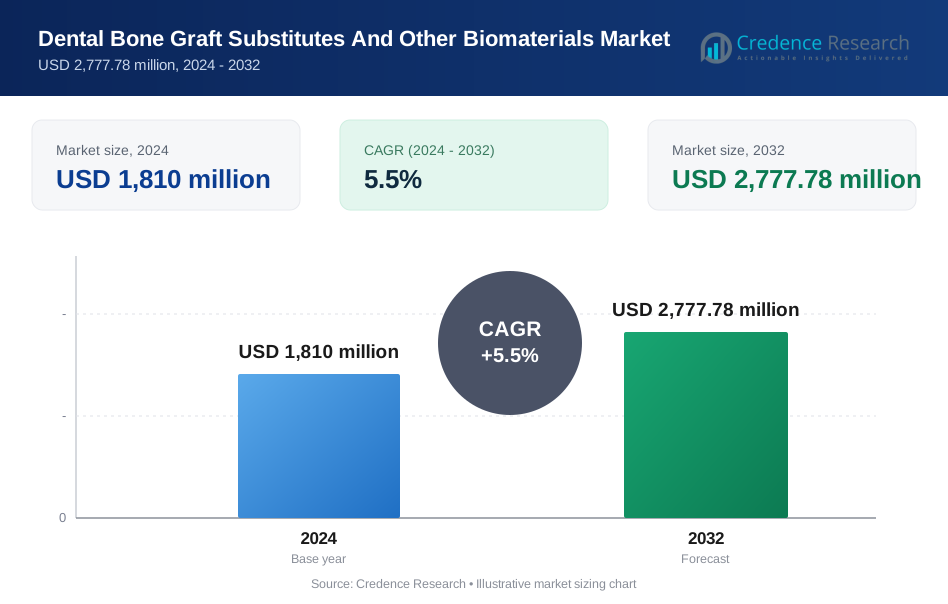
The global Dental Bone Graft Substitutes and Other Biomaterials Market is poised for steady growth, with an estimated value of USD 1,810 million in 2024, projected to reach USD 2,777.78 million by 2032, reflecting a compound annual growth rate (CAGR) of 5.5% over the forecast period. This growth trajectory is largely driven by advancements in dental technologies, rising dental procedure volumes, and increasing awareness of dental health and aesthetics. Bone graft substitutes and biomaterials, essential for supporting bone regeneration and implant integration, are becoming more widely adopted across various dental applications due to their effectiveness in enhancing patient outcomes.
Several factors drive this market expansion. Key among them is the rising prevalence of dental diseases, such as periodontitis and tooth loss, particularly among aging populations. Additionally, the growing acceptance of dental implants as a preferred solution for tooth replacement has amplified the demand for bone graft substitutes and biomaterials. Innovations in biocompatible materials, such as synthetic and xenografts, have furthered their appeal by offering enhanced safety and effectiveness. Increased spending on dental care, coupled with the expanding availability of advanced treatments, supports the adoption of these materials, as both patients and dental practitioners recognize the benefits of improved surgical outcomes and shorter recovery times.
Regionally, North America dominates the Dental Bone Graft Substitutes and Other Biomaterials Market, attributed to a robust dental healthcare infrastructure, higher per capita healthcare spending, and widespread adoption of advanced dental procedures. Europe follows closely, driven by a strong focus on oral health, supportive government initiatives, and an aging population that increasingly requires dental restoration solutions. The Asia-Pacific region is expected to witness the fastest growth, fueled by increasing awareness of oral health, rising disposable income, and a growing number of dental procedures across developing economies. This regional growth highlights the global shift toward enhanced dental care, with biomaterials playing a pivotal role in modern dentistry across diverse markets.
Market Drivers:
Aging Population and Rising Prevalence of Dental Diseases:
A key driver of the Dental Bone Graft Substitutes and Other Biomaterials Market is the aging global population, which faces a higher prevalence of dental diseases, tooth loss, and bone deterioration. According to the World Health Organization, approximately 30% of people aged 65–74 worldwide are edentulous (without natural teeth), highlighting a substantial demand for dental restoration and bone grafting procedures. The increase in age-related conditions like periodontitis and osteoporosis further emphasizes the need for effective dental graft substitutes and biomaterials, especially as populations continue to age rapidly in regions like North America, Europe, and Asia.
Growing Demand for Dental Implants:
Dental implants are increasingly favored over traditional dentures due to their durability and enhanced functionality. For instance, In the U.S., over 500,000 dental implants are placed annually, with a forecasted rise due to high patient satisfaction and clinical success rates. The American Academy of Implant Dentistry reports that dental implant surgeries have a success rate exceeding 95%, driving both patient and practitioner preference. This demand for implants significantly boosts the need for bone grafting procedures and biomaterials to support implant integration, especially as patients seek lasting and aesthetically appealing dental solutions.
Technological Advancements in Biomaterials:
Innovations in biomaterials, particularly in synthetic and xenograft materials, have made dental graft substitutes more effective and widely applicable. Companies like Zimmer Biomet have introduced biomaterials with enhanced biocompatibility, which promote faster healing and integration with the patient’s natural bone. Synthetic grafts, for instance, now offer comparable success rates to traditional allografts, which is shifting the market toward these advanced materials. This technological progress is vital for expanding patient options and addressing the limitations of natural bone graft availability, providing safer, cost-effective alternatives for bone reconstruction in dental procedures.
Increased Government and Private Investments:
Government and private sector investments in dental healthcare are further propelling market growth. For example, the U.S. government allocated over $14 billion for dental healthcare in 2023, which supports infrastructure development, public health awareness, and access to advanced dental treatments. In the European Union, similar funding programs aim to improve oral health services, particularly among older adults and underserved communities. These initiatives not only expand access to dental care but also encourage the adoption of innovative dental graft substitutes and biomaterials, thus supporting market development globally.
Market Trends:
Increasing Demand for Biocompatible Materials:
A significant trend in the dental bone graft substitutes and other biomaterials market is the rising demand for biocompatible materials that promote effective healing and integration with natural bone. As dental professionals and patients become more aware of the advantages of using biocompatible grafts, manufacturers are focusing on developing innovative solutions. For instance, a survey conducted by the American Academy of Implant Dentistry revealed that 78% of dental professionals prefer using biomaterials that exhibit high biocompatibility and osteoconductivity. This preference drives the development of advanced materials that enhance patient outcomes in dental procedures.
Growth of Regenerative Medicine:
The integration of regenerative medicine principles into dental practices is another notable trend. Techniques such as tissue engineering and stem cell therapy are increasingly being explored to improve the efficacy of dental bone graft substitutes. According to a report from the National Institutes of Health, nearly 65% of researchers in the dental field are investigating the potential of regenerative therapies to enhance bone regeneration. This focus on regenerative medicine not only supports the development of innovative biomaterials but also positions the dental bone graft substitutes market at the forefront of technological advancements in dental care.
Rise in Minimally Invasive Procedures:
There is a growing trend towards minimally invasive dental procedures, which is influencing the use of bone graft substitutes and other biomaterials. Dentists are seeking materials that enable less invasive techniques while still achieving optimal results. For instance, A recent survey by the American Dental Association found that 70% of dentists are incorporating minimally invasive approaches in their practices. This shift encourages manufacturers to create biomaterials that are easier to handle and apply, thereby facilitating the adoption of these innovative techniques in clinical settings.
Enhanced Regulatory Scrutiny and Standards:
Enhanced regulatory scrutiny is shaping the dental bone graft substitutes and biomaterials market, as authorities focus on ensuring the safety and efficacy of these products. The U.S. Food and Drug Administration (FDA) has implemented stricter guidelines regarding the approval of biomaterials used in dental applications. A report from the FDA indicated that 85% of manufacturers are adapting their product development strategies to comply with these evolving regulations. This trend underscores the importance of maintaining high standards in product quality, ultimately benefiting patient safety and market credibility.
Market Challenges Analysis:
High Costs of Biomaterials:
One of the primary restraints in the dental bone graft substitutes and other biomaterials market is the high cost associated with advanced biomaterials. Many innovative graft substitutes, particularly those derived from synthetic or xenograft sources, can be significantly more expensive than traditional materials. According to a report by the American Dental Association, nearly 70% of dental practitioners cite cost as a major barrier to the widespread adoption of these advanced materials. This financial concern can limit access for many patients and influence the decision-making process in clinical settings.
Regulatory Challenges:
Navigating the complex regulatory landscape poses another significant challenge for manufacturers in the dental biomaterials market. Regulatory authorities, such as the U.S. Food and Drug Administration (FDA), impose stringent requirements for the approval of new biomaterials. These regulations, while essential for ensuring safety and efficacy, can lead to lengthy approval processes that delay product launches. A survey conducted by the Medical Device Manufacturers Association found that 60% of companies experience significant delays due to regulatory hurdles, which can stifle innovation and increase costs for manufacturers.
Limited Awareness and Education:
Limited awareness and understanding of dental bone graft substitutes among dental professionals and patients can impede market growth. Many practitioners may not be fully informed about the benefits and applications of newer biomaterials, leading to underutilization in clinical practice. A study by the American Academy of Periodontology indicated that approximately 55% of dentists feel inadequately trained in the latest biomaterial technologies. This knowledge gap highlights the need for enhanced educational initiatives to promote the advantages of modern dental grafting solutions.
Variability in Patient Outcomes:
Finally, variability in patient outcomes associated with different dental biomaterials presents a challenge for the market. Factors such as individual healing responses and the complexity of dental procedures can lead to inconsistent results. According to research published in the Journal of Oral Implantology, approximately 25% of patients may experience complications when using certain graft substitutes. This variability can affect clinician confidence in recommending specific products, ultimately influencing market dynamics.
Market Segmentation Analysis:
By Type
This segment includes allografts, xenografts, synthetic grafts, and autografts. Allografts and xenografts account for a significant portion of the market due to their ready availability and ease of use, especially in regions with advanced healthcare systems. Synthetic grafts are also gaining popularity due to improvements in biocompatibility and regenerative properties, which make them attractive alternatives for patients and practitioners.
By Technology
The market is divided into traditional and advanced grafting technologies, with advanced techniques—including growth factor-enhanced grafts and stem cell therapy—gaining traction. Growth factor-enhanced grafts are particularly notable for promoting rapid bone regeneration, providing enhanced healing properties that appeal to patients seeking faster recovery. Stem cell-based grafts, though emerging, show high potential in regenerative dentistry, marking an innovative shift towards biologically engineered grafts.
By End User
Key end-users include hospitals, dental clinics, and academic & research institutions. Dental clinics hold the largest share in this segment due to the high frequency of outpatient dental procedures requiring bone grafts. Hospitals also play a substantial role, especially in complex or high-risk cases requiring surgical environments. Academic and research institutions contribute to the market by advancing knowledge and technology in dental graft substitutes and biomaterials, driving future innovation in this field.
Segmentations:
By Material Type
- Autograft
- Allograft
- Demineralized Bone Matrix
- Others
- Xenograft
- Synthetic
By Application
- Ridge Augmentation
- Sinus lift
- Periodontal Defect Regeneration
- Implant Bone Regeneration
- Socket Preservation
By End-user
- Hospitals
- Dental Clinics
By Geography
- North America
- U.S.
- Canada
- Mexico
- Europe
- Germany
- France
- U.K.
- Italy
- Spain
- Rest of Europe
- Asia Pacific
- China
- Japan
- India
- South Korea
- South-east Asia
- Rest of Asia Pacific
- Latin America
- Brazil
- Argentina
- Rest of Latin America
- Middle East & Africa
- GCC Countries
- South Africa
- Rest of the Middle East and Africa
Regional Analysis:
North America
North America holds the largest market share, accounting for approximately 35% of the global Dental Bone Graft Substitutes and Other Biomaterials Market. This dominance is driven by advanced healthcare infrastructure, a high prevalence of dental procedures, and a significant aging population. The U.S., in particular, contributes strongly due to increased dental implant adoption and extensive insurance coverage for dental treatments. Additionally, the presence of major players and ongoing R&D investments in biomaterials support market growth in North America. The region’s emphasis on minimally invasive procedures further fuels demand for innovative bone graft substitutes that align with patient preferences.
Europe
Europe follows closely, holding around 30% of the global market share. The region benefits from well-established healthcare policies, a strong focus on dental health, and supportive government initiatives aimed at improving oral health. Germany, France, and the United Kingdom are key markets, with high adoption rates for dental implants and bone graft substitutes. Europe’s strict regulatory framework for medical products, including biomaterials, drives demand for high-quality and safe products. Additionally, an aging population and a strong inclination towards advanced dental technologies position Europe as a crucial market for dental graft substitutes and biomaterials.
Asia-Pacific
Asia-Pacific is anticipated to experience the highest growth rate, capturing approximately 20% of the global market share. Rising disposable incomes, urbanization, and increasing awareness of dental health contribute to the expanding market in this region. China, Japan, South Korea, and India are prominent contributors, with growing demand for premium dental treatments and implants. The market's growth in Asia-Pacific is further fueled by the expansion of dental tourism, especially in countries like Thailand and India, where high-quality dental care is offered at competitive costs. Additionally, government initiatives to improve healthcare accessibility and quality, particularly in rural areas, are likely to further drive growth in this region.
Latin America
Latin America holds a smaller share, around 10%, but shows steady growth potential. Brazil and Mexico are key markets in the region, supported by an increasing focus on dental health and expanding dental tourism. Limited access to high-end dental technologies has historically restrained market growth; however, rising private investments in healthcare and greater awareness of dental procedures are gradually expanding the region's market share.
Middle East & Africa
The Middle East & Africa account for approximately 5% of the global market, with growth driven primarily by urban areas with higher income levels, such as the UAE, Saudi Arabia, and South Africa. Increasing healthcare investments, coupled with growing awareness of dental health, are contributing to market expansion. However, limited access to advanced dental care in certain areas and economic constraints remain challenges for growth in this region.
Key Player Analysis:
- Geistlich Pharma AG
- Zimmer Biomet Holdings, Inc.
- Dentsply Sirona Inc.
- Institut Straumann AG
- Medtronic plc
- BioHorizons IPH, Inc.
- ACE Surgical Supply Company, Inc.
- RTI Surgical Holdings, Inc.
- Botiss Biomaterials GmbH
- NovaBone Products, LLC
Competitive Analysis:
The Dental Bone Graft Substitutes and Other Biomaterials Market is highly competitive, driven by key players focusing on innovation, product differentiation, and strategic partnerships to expand their market presence. Companies like Geistlich Pharma AG, Zimmer Biomet, and Dentsply Sirona lead the market through comprehensive product portfolios and significant investment in research and development, particularly in biocompatible and regenerative materials. These established players benefit from robust distribution networks and longstanding relationships with healthcare providers, strengthening their positions. Meanwhile, companies such as Botiss Biomaterials and NovaBone Products focus on specialized biomaterials, gaining traction in niche segments with innovative offerings. Strategic mergers and acquisitions are common, allowing companies to expand geographically and access new technologies. The competitive landscape is characterized by the emphasis on technological advancements, meeting regulatory standards, and addressing the increasing demand for minimally invasive and biocompatible dental solutions, making adaptability crucial for sustained market positioning.
Recent Developments:
- In October 2022, Geistlich Pharma acquired Lynch Biologics, LLC, aiming to strengthen its portfolio by adding Lynch Biologics' leading product, GEM 21S, worldwide.
- In April 2023, ZimVie introduced two new dental biomaterials, RegenerOss CC Allograft Particulate and RegenerOss Bone Graft Plug, to complement their existing portfolio.
- In October 2023, Orthofix announced the 510(k) approval and full commercial launch of OsteoCove, an innovative bioactive synthetic graft.
- In March 2022, Molecular Matrix announced the commercial launch of Osteo-P Synthetic Bone Graft Substitute for use in the musculoskeletal system.
Market Concentration & Characteristics:
The Dental Bone Graft Substitutes and Other Biomaterials Market is moderately concentrated, with a few major players holding substantial market share alongside smaller regional and specialized companies. Key players like Geistlich Pharma AG, Zimmer Biomet, and Dentsply Sirona drive the market through expansive product portfolios, strong distribution networks, and significant investments in R&D, particularly in biocompatible and regenerative materials. The market is characterized by high product differentiation, as companies focus on developing innovative materials such as synthetic, xenograft, and allograft options to meet the diverse requirements of dental procedures. Strategic partnerships, mergers, and acquisitions are prevalent as companies aim to expand their geographic reach and technological capabilities. The emphasis on meeting regulatory standards, especially in regions like North America and Europe, further defines this market, where continuous advancements in biomaterials and patient-focused solutions play a pivotal role in maintaining competitive advantage.
Report Coverage:
The research report offers an in-depth analysis based on Material Type, Application, End-user, and Geography. It details leading market players, providing an overview of their business, product offerings, investments, revenue streams, and key applications. Additionally, the report includes insights into the competitive environment, SWOT analysis, current market trends, as well as the primary drivers and constraints. Furthermore, it discusses various factors that have driven market expansion in recent years. The report also explores market dynamics, regulatory scenarios, and technological advancements that are shaping the industry. It assesses the impact of external factors and global economic changes on market growth. Lastly, it provides strategic recommendations for new entrants and established companies to navigate the complexities of the market.
Future Outlook:
- Demand for dental bone graft substitutes is expected to increase as aging populations and dental health awareness grow globally.
- Technological advancements in biomaterials, including regenerative and bioactive grafts, are projected to expand application potential and improve patient outcomes.
- Minimally invasive procedures will likely become more common, driving demand for graft substitutes that support efficient recovery and reduced patient discomfort.
- The use of synthetic grafts is anticipated to rise due to enhanced biocompatibility and availability, offering viable alternatives to natural graft materials.
- Mergers, acquisitions, and partnerships will continue as key players seek to expand their market presence and access new technologies.
- North America and Europe are expected to maintain significant market shares, driven by advanced healthcare infrastructure and high adoption rates of innovative dental treatments.
- Asia-Pacific is forecasted to see the highest growth, fueled by rising disposable incomes, urbanization, and expanding dental care access in emerging economies.
- Dental tourism in regions like Asia-Pacific and Latin America is likely to boost demand for affordable, high-quality dental graft solutions.
- The trend toward personalized dental solutions may prompt more customized grafting materials, aligning with patient-specific treatment needs.
- Increased investment in R&D for biocompatible materials and enhanced product efficacy is anticipated to remain crucial for competitive advantage and market evolution.
Request a Free Sample
Fill in your details and we'll send you a free sample report.
- Sample data tables & charts
- Research methodology
Need a Custom Version of This Report?
Tailor the scope, geography, or segments to your exact requirements.
- Custom geography or segment scope
- Direct access to our analyst team
Frequently Asked Questions
What is the current size of the Dental Bone Graft Substitutes and Other Biomaterials Market?
What factors are driving the growth of the Dental Bone Graft Substitutes and Other Biomaterials Market?
What are some challenges faced by the Dental Bone Graft Substitutes and Other Biomaterials Market?
Who are the major players in the Dental Bone Graft Substitutes and Other Biomaterials Market?
Which segment is leading the market share?
Table of Content
Chapter 1. Report Introduction
- 1.1 Report Description & Purpose
- 1.1.1 Report Title & Market Definition
- 1.1.2 Unique Selling Propositions (USP) & Key Differentiators
- 1.1.3 Value Proposition for Stakeholders
- 1.2 Research Objectives
- 1.2.1 Market Sizing Objectives (Volume & Revenue)
- 1.2.2 Segmentation Objectives
- 1.2.3 Competitive Intelligence Objectives
- 1.2.4 Forecast & Scenario Objectives
- 1.3 Report Scope
- 1.3.1 Dental Bone Graft Substitutes And Other Biomaterials Scope – Types & Subtypes Covered
- 1.3.2 Geographic Scope – Regions & Countries Covered
- 1.3.3 Historical Period, Base Year & Forecast Period (2024; forecast to 2032)
- 1.3.4 Inclusions & Exclusions
- 1.4 HS Code & Classification Framework
- 1.5 Currency, Units & Pricing Basis
- 1.6 Target Stakeholders
- 1.7 Limitations & Assumptions
Chapter 2. Executive Summary
- 2.1 Global Dental Bone Graft Substitutes And Other Biomaterials Market Snapshot
- 2.1.1 Market Size – Historical (2024) & Forecast (2024-2032) (2024: USD 1,810 million → 2032: USD 2,777.78 million)
- 2.1.2 Volume & Revenue – Global Totals
- 2.1.3 Key Market Highlights – Top Five Facts
- 2.2 Dental Bone Graft Substitutes And Other Biomaterials Market Segmentation Snapshot
- 2.2.1 Market Split by Region – 2024 vs. 2032
- 2.3 Competitive Snapshot
- 2.3.1 Top 10 Players by Revenue Share – 2024
- 2.3.2 Top 10 Players by Volume Share – 2024
- 2.3.3 Recent Strategic Developments (18-Month Summary)
- 2.4 Key Investment Highlights & Strategic Conclusions
Chapter 3. Dental Bone Graft Substitutes And Other Biomaterials Market Dynamics & Industry Analysis
- 3.1 Market Overview & Context
- 3.1.1 Dental Bone Graft Substitutes And Other Biomaterials Market Position in the Broader Automotive Value Chain
- 3.1.2 OEM vs. Replacement Market Dynamics
- 3.1.3 Market Maturity & Development Stage by Region
- 3.2 Dental Bone Graft Substitutes And Other Biomaterials Market Drivers
- 3.3 Dental Bone Graft Substitutes And Other Biomaterials Market Restraints & Challenges
- 3.4 Dental Bone Graft Substitutes And Other Biomaterials Market Opportunities
- 3.5 Porter's Five Forces Analysis
- 3.5.1 Threat of New Entrants
- 3.5.2 Bargaining Power of Suppliers
- 3.5.3 Bargaining Power of Buyers
- 3.5.4 Threat of Substitutes
- 3.5.5 Competitive Rivalry – Intensity Assessment
- 3.6 Dental Bone Graft Substitutes And Other Biomaterials Value Chain Analysis
- 3.6.1 Upstream – Raw Material/Input Suppliers
- 3.6.1.1 Raw Material/Input 1
- 3.6.1.2 Raw Material/Input 2
- 3.6.1.3 Raw Material/Input 3
- 3.6.2 Midstream – Production/Manufacturing/Service Delivery
- 3.6.2.1 Production/Process Overview
- 3.6.2.2 Key Facility Locations & Capacity by Manufacturer
- 3.6.3 Downstream – Distribution & End Consumer
- 3.6.3.1 Primary Channel – B2B/OEM
- 3.6.3.2 Secondary Channels – Dealer, Retail, Online, Direct
- 3.6.4 Value Chain Profitability Analysis
- 3.6.1 Upstream – Raw Material/Input Suppliers
- 3.7 PESTEL Analysis
- 3.7.1 Political Factors
- 3.7.2 Economic Factors
- 3.7.3 Social Factors
- 3.7.4 Technological Factors
- 3.7.5 Environmental Factors
- 3.7.6 Legal Factors
- 3.8 Dental Bone Graft Substitutes And Other Biomaterials Supply Chain Analysis
- 3.8.1 Raw Material/Input Supply Risk Assessment
- 3.8.2 Manufacturing Concentration Risk (Geographic Exposure)
- 3.8.3 Trade Disruption Impact Analysis
- 3.9 Regulatory & Policy Landscape
Note: The regulatory and policy landscape section covers regulations based on their applicability to the market, Dental Bone Graft Substitutes And Other Biomaterials category, geography, and scope of the study. Only regulatory frameworks with a material impact on operations, compliance, trade, sustainability, or market access are analyzed in detail.
Chapter 4. Key Investment Pockets & Opportunity Analysis
- 4.1 Dental Bone Graft Substitutes And Other Biomaterials Market Attractiveness Analysis
- 4.1.1 By Region – Investment Attractiveness Matrix (Volume × CAGR)
- 4.2 Absolute Revenue Growth Opportunity
- 4.2.1 By Region – Absolute USD Growth Through 2032
- 4.3 Incremental Volume Opportunity
- 4.3.1 By Region – Incremental Volume Through 2032
- 4.3.2 Segment – Incremental Volume
- 4.4 Emerging Submarket Opportunity Deep Dive (Subject to Applicability)
- 4.5 Emerging Market Opportunity Scorecards
- 4.5.1 United States
- 4.5.2 Europe
- 4.5.3 Asia
- 4.5.4 Middle East & Africa
Note: Emerging Market Opportunity Scorecards will be included based on relevance and strategic importance. Regions listed are indicative and may vary depending on data availability and market dynamics.
Chapter 5. Dental Bone Graft Substitutes And Other Biomaterials Import-Export Analysis & Trade Flows
- 5.1 Global Trade Overview
- 5.1.1 Global Export Value by Country (2024)
- 5.1.2 Global Export Volume by Country (2024)
- 5.1.3 Global Import Value by Country (2024)
- 5.1.4 Global Import Volume by Country (2024)
- 5.1.5 Net Trade Balance by Country (2024)
- 5.2 Export Analysis – Segment
- 5.2.1 Type 1 (HS Code)
- 5.2.2 Type 2 (HS Code)
- 5.2.3 Type 3 (HS Code)
- 5.2.4 Type 4 (HS Code)
- 5.2.5 Type 5 (HS Code)
- 5.3 Import Analysis – Segment
- 5.3.1 Type 1 (HS Code)
- 5.3.2 Type 2 (HS Code)
- 5.3.3 Type 3 (HS Code)
- 5.3.4 Type 4 (HS Code)
- 5.3.5 Type 5 (HS Code)
- 5.4 Average Unit Trade Prices
- 5.4.1 Average Export Price – Segment & Country
- 5.4.2 Average Import Price – Segment & Source Country
- 5.4.3 Price Trends (2024)
- 5.5 Key Trade Route Analysis
- 5.5.1 Trade Route 1
- 5.5.2 Trade Route 2
- 5.5.3 Trade Route 3
- 5.5.4 Trade Route 4
- 5.5.5 Trade Route 5
- 5.6 Trade Policy Impact Assessment
- 5.6.1 US Anti-Dumping & Section 301 Tariffs
- 5.6.2 EU Customs Union Impact
- 5.6.3 Major Free Trade Agreements
- 5.6.4 USMCA Rules of Origin
Note: Trade policy analysis will be included only where relevant to the Dental Bone Graft Substitutes And Other Biomaterials market.
Chapter 6. Competitive Landscape & Company Benchmarking
- 6.1 Dental Bone Graft Substitutes And Other Biomaterials Market Concentration & Structure
- 6.1.1 Herfindahl-Hirschman Index (HHI) – vs. 2024
- 6.1.2 Tier 1, Tier 2 & Tier 3 Market Structure
- 6.1.3 Global, Regional & Local Player Dynamics
- 6.2 Dental Bone Graft Substitutes And Other Biomaterials Market Share Analysis – 2024
- 6.2.1 Global Revenue Share by Company
- 6.2.2 Global Volume Share by Company
- 6.2.3 Regional Revenue Share
- 6.2.4 Market Share Evolution ( vs. 2024)
- 6.2.5 OEM Segment Share by Company
- 6.2.6 Replacement Segment Share by Company
- 6.3 Production/Delivery Capacity & Facility Analysis
- 6.3.1 Global Installed Capacity
- 6.3.2 Capacity Utilization Rates
- 6.3.3 Production/Output Volume
- 6.3.4 Facility Locations & Capacity Map
- 6.3.5 Planned Capacity Additions
- 6.4 Dental Bone Graft Substitutes And Other Biomaterials Competitive Benchmarking Matrix
- 6.4.1 Revenue, Volume, CAGR & Profitability Comparison
- 6.4.2 Channel Revenue Mix
- 6.4.3 Geographic Revenue Exposure
- 6.4.4 R&D Intensity
- 6.4.5 Sustainability Maturity
- 6.5 Strategic Developments in Dental Bone Graft Substitutes And Other Biomaterials (Last 24 Months)
- 6.5.1 Mergers, Acquisitions & Divestments
- 6.5.2 New Dental Bone Graft Substitutes And Other Biomaterials Launches
- 6.5.3 Facility Expansions
- 6.5.4 Strategic Alliances, Joint Ventures & Partnerships
- 6.5.5 Distribution Expansion & Market Entry
- 6.5.6 Sustainability & ESG Initiatives
- 6.6 Competitive Strategy Mapping
- 6.6.1 Leader, Challenger, Follower & Niche Classification
- 6.6.2 Pricing Strategy Comparison
- 6.6.3 Channel Strategy Matrix
Note: Strategic developments are included based on their materiality and the availability of reliable information.
Chapter 7. Global Dental Bone Graft Substitutes And Other Biomaterials Market – By Distribution Channel
- 7.1 Segment Overview
- 7.1.1 Volume & Revenue Split by Channel (2024 & 2032)
- 7.1.2 Channel Mix Evolution (2024-2032)
Chapter 8. Regional Market Analysis – Global Overview
- 8.1 Global Regional Overview
- 8.1.1 Regional Volume Share
- 8.1.2 Regional Revenue Share
- 8.1.3 Regional Volume by Region
- 8.1.4 Regional Revenue by Region
- 8.1.5 Regional Forecast Through 2032
- 8.2 Cross-Regional Segment Analysis
- 8.2.1 By Distribution Channel
- 8.2.2 By Brand/Price Tier
Chapter 9. North America Dental Bone Graft Substitutes And Other Biomaterials Market
- 9.1 United States
- 9.2 Canada
- 9.3 Mexico
Chapter 10. Europe Dental Bone Graft Substitutes And Other Biomaterials Market
- 10.1 Germany
- 10.2 France
- 10.3 Italy
- 10.4 United Kingdom
- 10.5 Spain
- 10.6 Poland
- 10.7 Russia
- 10.8 Netherlands
- 10.9 Belgium
- 10.10 Sweden
- 10.11 Denmark
- 10.12 Norway
- 10.13 Rest of Europe
Chapter 11. Asia Pacific Dental Bone Graft Substitutes And Other Biomaterials Market
- 11.1 China
- 11.2 India
- 11.3 Japan
- 11.4 South Korea
- 11.5 Thailand
- 11.6 Indonesia
- 11.7 Vietnam
- 11.8 Malaysia
- 11.9 Australia
- 11.10 Rest of Asia Pacific
Chapter 12. Latin America Dental Bone Graft Substitutes And Other Biomaterials Market
- 12.1 Brazil
- 12.2 Argentina
- 12.3 Colombia
- 12.4 Chile
- 12.5 Rest of Latin America
Chapter 13. Middle East Dental Bone Graft Substitutes And Other Biomaterials Market
- 13.1 Saudi Arabia
- 13.2 United Arab Emirates
- 13.3 Turkey
- 13.4 Israel
- 13.5 Iran
- 13.6 Rest of the Middle East
Chapter 14. Africa Dental Bone Graft Substitutes And Other Biomaterials Market
- 14.1 South Africa
- 14.2 Egypt
- 14.3 Nigeria
- 14.4 Morocco
- 14.5 Rest of Africa
Chapter 15. Dental Bone Graft Substitutes And Other Biomaterials Company Profiles
- 15.1 [Company 01]
- 15.1.1 Company Overview
- 15.1.2 Key Management Personnel
- 15.1.3 Products & Services Portfolio
- 15.1.4 Financial Performance
- 15.1.5 Key Market Focus & Geographic Presence
- 15.1.6 Recent Developments & Strategic Initiatives
Note: The company profile list is preliminary and may change based on research findings, market developments, data availability, and client requirements.
Chapter 16. Appendices
- Appendix A – List of Abbreviations & Acronyms
- Appendix B – Industry Classification Code Reference – Full Series
- Appendix C – Production & Capacity Data Tables
- Appendix D – End-Use & Demand Base Tables
- Appendix E – Consumption & Replacement Rate Assumptions
- Appendix F – ASP Reference Tables
- Appendix G – Manufacturing & Facility Database
- Appendix H – Import-Export Data Tables
- Appendix I – Regulatory Summary Tables
- Appendix J – Primary Research Participant List (Anonymized)
- Appendix K – Primary Research Questionnaire Framework
- Appendix L – Data Sources & Bibliography
- Appendix M – Market Size Divergence & Source Comparison
Chapter 17. Research Methodology
- 17.1 Research Framework & Philosophy
- 17.2 Secondary Research – Sources, Hierarchy & Data Extraction
- 17.3 Data Modeling – Bottom-Up & Top-Down Market Sizing
- 17.4 Primary Research – Stakeholder Framework, LOI & Sample Sizes
- 17.5 Forecast Methodology – Regression, Scenario & Sensitivity Analysis
- 17.6 Quality Control – Four-Layer Validation Framework
- 17.7 Limitations & Standard Assumptions
- 17.8 Disclaimer
