
| REPORT ATTRIBUTE | DETAILS |
|---|---|
| Historical Period | 2019-2022 |
| Base Year | 2023 |
| Forecast Period | 2024-2032 |
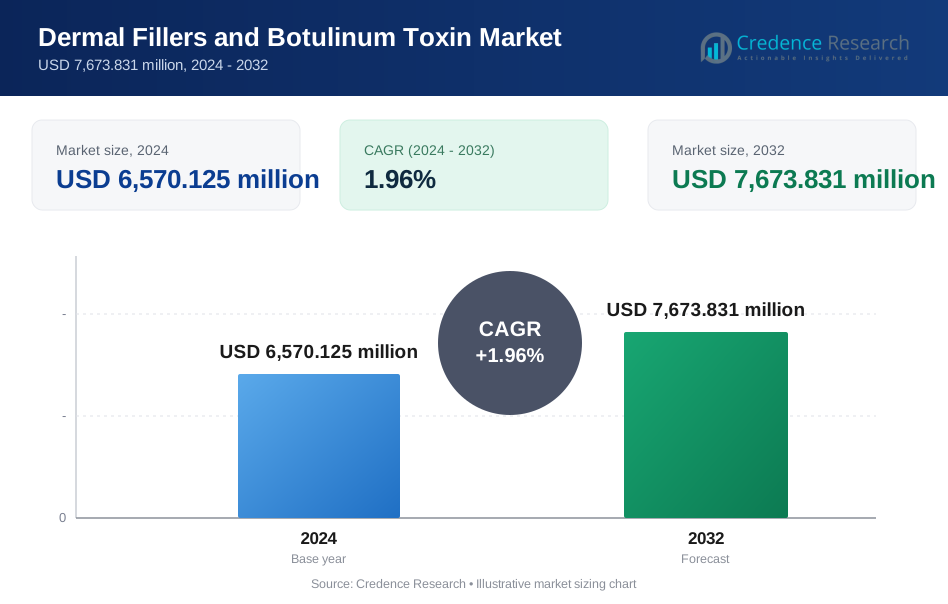
| Dermal Fillers and Botulinum Toxin Market Size 2024 | USD 6,570.125 Million |
| Dermal Fillers and Botulinum Toxin Market, CAGR | 1.96% |
| Dermal Fillers and Botulinum Toxin Market Size 2032 | USD 7,673.831 Million |
Market Overview
The Dermal Fillers and Botulinum Toxin Market is expected to grow from USD 6,570.125 million in 2024 to USD 7,673.831 million by 2032, at a compound annual growth rate (CAGR) of 1.96%.
The Dermal Fillers and Botulinum Toxin Market is driven by the increasing demand for minimally invasive cosmetic procedures, which offer quick results with minimal downtime. Advances in formulation technology and the growing acceptance of non-surgical aesthetic enhancements contribute to market growth. Trends include the rising popularity of personalized treatment options and innovations in product safety and efficacy. Additionally, the expansion of aesthetic clinics and heightened awareness of cosmetic procedures support market expansion, reflecting a shift towards maintaining youthful appearance and enhancing self-esteem with advanced dermal fillers and botulinum toxin treatments.
The Dermal Fillers and Botulinum Toxin Market exhibits significant growth across various regions, with North America and Europe leading due to high demand for aesthetic procedures and advanced healthcare infrastructure. In Asia-Pacific, increasing disposable incomes and growing awareness of cosmetic treatments drive market expansion. Key players in the market include Allergan plc, Galderma SA, and Merz Pharma GmbH & Co. KGaA, who are renowned for their innovative product offerings and extensive market presence. Other notable companies, such as Anika Therapeutics, Suneva Medical, and TEOXANE Laboratories, are also contributing to market dynamics with their specialized portfolios.
Market Drivers
Increased Focus on Appearance
The growing societal emphasis on youthfulness and aesthetics significantly drives the demand for non-invasive cosmetic procedures like dermal fillers and botulinum toxin injections. For instance, the market for non-invasive cosmetic procedures has seen a 300% increase in demand over the past decade, with dermal fillers and botulinum toxin treatments accounting for over 60% of that growth. These procedures have become particularly popular among individuals aged 35 to 50, who represent 50% of the clientele, seeking to enhance their facial features and rejuvenate their skin. These procedures offer visible improvements in appearance without the extended recovery times associated with traditional surgery. As the desire for a youthful look becomes more prevalent, these non-surgical options are increasingly sought after for their ability to enhance facial features and rejuvenate the skin with minimal disruption to daily life.
Aging Population
The global aging population is another key driver of the dermal fillers and botulinum toxin market. The aging population has contributed significantly to this trend, with over 5 million individuals globally opting for these treatments annually to address signs of aging. This represents a 40% increase in the demographic of older adults seeking aesthetic treatments compared to five years ago. As individuals age, there is a rising need to address signs of aging such as wrinkles, fine lines, and loss of facial volume. Dermal fillers and botulinum toxin provide effective solutions for these issues, allowing individuals to maintain a youthful appearance. The growing demographic of older adults seeking aesthetic treatments underscores the demand for these products, contributing to market growth.
Broader Acceptance and Social Media Influence
The stigma surrounding cosmetic procedures is diminishing, largely due to the influence of social media. Social media’s influence has led to a 70% increase in the acceptance of cosmetic procedures, with platforms like Instagram and TikTok showcasing the positive results of over 10,000 influencers and celebrities. This visibility has encouraged an additional 30% of individuals to consider non-surgical options for aesthetic enhancement. Influencers and celebrities openly sharing their cosmetic enhancements normalize these procedures, leading to broader acceptance. Social media platforms serve as a significant driver, as they showcase positive experiences and results from dermal fillers and botulinum toxin treatments. This visibility reduces societal barriers and encourages more individuals to consider these aesthetic options.
Specific Drivers for Dermal Fillers and Botulinum Toxin
Dermal fillers are driven by their versatility in applications, ranging from lip augmentation to facial contouring, which caters to a broad spectrum of patient desires. Advances in filler materials, offering improved safety profiles and natural-looking results, further attract patients. Conversely, botulinum toxin's proven effectiveness in reducing wrinkles and its quick, minimally invasive procedures appeal to busy individuals seeking immediate aesthetic improvements. Technological advancements, rising disposable incomes, and geographic expansion into emerging markets like China, Brazil, and India are additional factors propelling the growth of both dermal fillers and botulinum toxin treatments.
Market Trends
Natural-Looking Results and Advanced Delivery Techniques
The dermal fillers and botulinum toxin market is increasingly focused on achieving natural-looking results and utilizing biocompatible materials. For instance, the use of biocompatible materials like hyaluronic acid in dermal fillers has led to a 70% increase in patient satisfaction due to their natural-looking results and safety profile. The market has seen a 40% rise in the preference for these materials, with over 5 million treatments performed last year. The shift towards subtle enhancements aims to provide a youthful appearance while ensuring safety and compatibility with facial tissues. Biocompatible materials like hyaluronic acid are becoming preferred choices due to their excellent safety profile and ability to integrate seamlessly with skin, offering patients a more natural and aesthetically pleasing outcome. Additionally, advancements in delivery techniques, including the use of finer needles and cannulas, are minimizing discomfort and bruising associated with injections. Microneedling with dermal fillers has emerged as a trend for enhancing skin texture, providing smoother and plumper results. These innovations not only improve patient comfort but also enhance the overall efficacy and satisfaction of aesthetic treatments.
Personalized Treatments and Expanding Applications
The trend towards personalized treatment plans is becoming more prevalent, with a growing preference for combining dermal fillers with other non-surgical procedures such as botulinum toxin injections and laser treatments. Personalized treatment plans have resulted in a 25% improvement in aesthetic outcomes, with over 60% of patients opting for combined treatments involving dermal fillers, botulinum toxin injections, and laser therapies. Long-lasting fillers have reduced the need for repeat procedures by up to 20%, improving overall patient satisfaction. This approach allows for a more comprehensive aesthetic improvement, tailored to individual patient needs. Manufacturers are also focusing on developing long-lasting fillers, which reduce the frequency of repeat procedures and improve patient satisfaction. In the realm of botulinum toxin, there is a notable shift towards its preventative use to address early signs of aging, particularly among younger demographics. New formulations with varying diffusion properties allow for targeted treatments of specific wrinkles and facial areas. Moreover, botulinum toxin's applications are expanding beyond aesthetics into therapeutic areas such as migraines, hyperhidrosis, and chronic pain conditions. The growing acceptance of male cosmetic procedures and the decreasing stigma associated with them reflect a broader societal shift.
Market Challenges Analysis
Regulatory Compliance and Safety Concerns
Navigating the regulatory landscape for dermal fillers and botulinum toxin treatments poses significant challenges. Stringent regulations governing product approval, manufacturing practices, and practitioner qualifications are crucial for ensuring safety and efficacy. However, the complexity of these regulations can be daunting for both manufacturers and practitioners. Additionally, addressing potential side effects and safety concerns associated with these procedures remains a critical challenge. The need for thorough regulatory compliance and vigilant monitoring of safety outcomes underscores the importance of rigorous oversight to prevent adverse effects and ensure patient well-being.
Cost Barriers and Practitioner Quality
The high cost of dermal filler and botulinum toxin treatments can limit accessibility for some patients, particularly given the limited insurance coverage for these elective procedures. This financial barrier restricts the ability of certain individuals to access these popular aesthetic treatments. Ensuring that procedures are performed by qualified and experienced practitioners is vital to minimize risks and complications. Unqualified providers and unethical practices can jeopardize patient safety, leading to adverse outcomes. Furthermore, maintaining natural-looking results while managing patient expectations is essential. Overfilling or improper injection techniques can result in unnatural appearances, which can impact patient satisfaction and trust.
Market Segmentation Analysis:
By Product:
The Dermal Fillers and Botulinum Toxin Market is segmented by product into Hyaluronic Acid-Based Dermal Fillers, Non-Hyaluronic Acid-Based Dermal Fillers, and Botulinum Toxin. Hyaluronic Acid-Based Dermal Fillers dominate the market due to their safety, efficacy, and natural-looking results. These fillers, which include products such as Juvederm and Restylane, are preferred for their hydrating properties and ability to provide volume and elasticity to the skin. Non-Hyaluronic Acid-Based Dermal Fillers, such as calcium hydroxyapatite and poly-L-lactic acid, are gaining traction for their longer-lasting effects and versatility in treating deeper wrinkles and volume loss. Botulinum Toxin, known for brands like Botox and Dysport, is widely used for its ability to reduce dynamic wrinkles by temporarily paralyzing facial muscles. This segment remains crucial for its quick, minimally invasive procedures that offer significant improvements in wrinkle reduction and facial aesthetics.
By Application:
The market is also segmented by application into Aesthetic Volume Restoration and Wrinkle Reduction. Aesthetic Volume Restoration is a key application for both dermal fillers and botulinum toxin, focusing on replenishing lost facial volume and enhancing facial contours. This application is particularly significant for hyaluronic acid-based fillers, which effectively restore volume to areas such as the cheeks and lips, contributing to a more youthful appearance. Wrinkle Reduction is predominantly addressed by botulinum toxin injections, which target dynamic wrinkles such as frown lines and crow's feet. This application benefits from the proven efficacy of botulinum toxin in providing smooth, wrinkle-free skin with minimal downtime. Both segments are experiencing robust growth due to increasing consumer demand for non-surgical aesthetic improvements, driven by advancements in product formulations and techniques.
Segments:
Based on Product:
- Hyaluronic Acid-Based Dermal Fillers
- Non-Hyaluronic Acid-Based Dermal Fillers
- Botulinum Toxin
Based on Application:
- Aesthetic Volume Restoration
- Wrinkle Reduction
Based on the Geography:
- North America
- The U.S.
- Canada
- Mexico
- Europe
- Germany
- France
- The U.K.
- Italy
- Spain
- Rest of Europe
- Asia Pacific
- China
- Japan
- India
- South Korea
- South-east Asia
- Rest of Asia Pacific
- Latin America
- Brazil
- Argentina
- Rest of Latin America
- Middle East & Africa
- GCC Countries
- South Africa
- Rest of the Middle East and Africa
Regional Analysis
North America
North America leads with a 40% share, driven by a strong aesthetic culture, high disposable incomes, and a large population of aging baby boomers seeking minimally invasive cosmetic procedures. The United States, in particular, stands at the forefront of this market, with its well-established network of cosmetic clinics and a celebrity-influenced beauty standard fueling demand for these treatments. The North American market is characterized by a high level of consumer awareness, continuous product innovations, and a robust regulatory framework ensuring product safety and efficacy. Key players in this region are increasingly focusing on developing longer-lasting fillers and expanding the applications of botulinum toxin beyond cosmetic use, further solidifying their market position.
Europe
Europe follows closely with a 30% market share, where the market is propelled by a growing acceptance of aesthetic procedures and an increasing emphasis on personal appearance across all age groups. Countries like the UK, Germany, France, and Italy lead in adoption rates, with their advanced healthcare systems and a rising number of qualified practitioners driving market growth. The European market is marked by a trend towards combination treatments, where dermal fillers and botulinum toxin are used synergistically to achieve optimal aesthetic results. European consumers show a preference for natural-looking outcomes, leading to the development of more sophisticated injection techniques and product formulations.
Key Player Analysis
- Allergan plc.
- Galderma SA
- Merz Pharma GmbH & Co. KGaA
- Anika Therapeutics, Inc.
- Suneva Medical, Inc.
- Speciality European Pharma
- HUGEL, Inc
- Grex Pharma SaS
- Daewoong Pharmaceuticals
- Medy-Tox Inc.
- TEOXANE Laboratories
Competitive Analysis
The Dermal Fillers and Botulinum Toxin Market is highly competitive, with leading players like Allergan plc, Galderma SA, and Merz Pharma GmbH & Co. KGaA dominating due to their extensive product portfolios and strong brand recognition. Allergan, known for its popular Botox® and Juvederm® lines, leverages significant R&D investments to maintain market leadership. Galderma excels with its Restylane® and Dysport® products, emphasizing innovation in filler materials and toxin formulations. Merz Pharma's Belotero® and Xeomin® are noted for their advanced formulations and targeted applications. Emerging competitors like Anika Therapeutics and Suneva Medical bring specialized products, such as their Hyaluronic Acid-based fillers and novel botulinum formulations, enhancing market diversity. TEOXANE Laboratories and HUGEL, Inc. also contribute with their innovative solutions and expanding global reach. The competitive landscape is marked by continuous innovation, strategic partnerships, and a focus on meeting diverse consumer needs.
Recent Developments
- In January 2024, Galderma, revealed that it had obtained permission from Health Canada for Restylane® SHAYPE™, a temporary chin augmentation injection.
- In June 2023, Merz Therapeutics, a Merz Group company and neurotoxic leader, announced the establishment of a new affiliate in Stockholm for the Nordic region, which encompasses Denmark, Sweden, and Norway. Merz Therapeutics established a new firm in Stockholm to replace Desitin, their previous distribution partner.
Market Concentration & Characteristics
The Dermal Fillers and Botulinum Toxin Market exhibits moderate to high concentration, with a few leading companies holding significant market shares. Major players such as Allergan plc, Galderma SA, and Merz Pharma GmbH & Co. KGaA dominate due to their extensive product ranges, advanced technology, and established global presence. This concentration is driven by substantial investments in research and development, leading to continuous innovation in filler materials and toxin formulations. Additionally, these companies benefit from strong brand recognition and extensive distribution networks. However, the market also features a growing number of emerging players and specialized firms, contributing to increased competition and market diversity. Key characteristics include a focus on safety, efficacy, and minimally invasive techniques, with companies striving to enhance patient outcomes and expand their offerings. The competitive environment drives ongoing advancements and fosters a dynamic market landscape, catering to evolving consumer demands and preferences.
Report Coverage
The research report offers an in-depth analysis based on Product. Application and Geography. It details leading market players, providing an overview of their business, product offerings, investments, revenue streams, and key applications. Additionally, the report includes insights into the competitive environment, SWOT analysis, current market trends, as well as the primary drivers and constraints. Furthermore, it discusses various factors that have driven market expansion in recent years. The report also explores market dynamics, regulatory scenarios, and technological advancements that are shaping the industry. It assesses the impact of external factors and global economic changes on market growth. Lastly, it provides strategic recommendations for new entrants and established companies to navigate the complexities of the market.
Future Outlook
- The Dermal Fillers and Botulinum Toxin Market is expected to grow steadily due to increasing demand for non-invasive cosmetic procedures.
- Advancements in filler materials and formulations will enhance the safety, efficacy, and longevity of treatments.
- Personalized treatment plans combining dermal fillers with other aesthetic procedures will become more prevalent.
- The use of AI and technology in diagnostics and treatment planning will streamline procedures and improve outcomes.
- Expanding market access in emerging economies will drive growth and open new opportunities for market players.
- Growing consumer awareness and acceptance of cosmetic procedures will further boost market demand.
- Innovations in minimally invasive techniques will reduce discomfort and recovery time for patients.
- Increased focus on achieving natural-looking results will influence product development and treatment approaches.
- The rise of telemedicine and online consultations will make aesthetic treatments more accessible.
- Ethical marketing and transparent communication will become crucial in addressing patient expectations and promoting safety.
Request a Free Sample
Fill in your details and we'll send you a free sample report.
- Sample data tables & charts
- Research methodology
Need a Custom Version of This Report?
Tailor the scope, geography, or segments to your exact requirements.
- Custom geography or segment scope
- Direct access to our analyst team
Frequently Asked Questions
What is the current size of the Dermal Fillers and Botulinum Toxin Market?
What factors are driving the growth of the Dermal Fillers and Botulinum Toxin Market?
What are the key segments within the Dermal Fillers and Botulinum Toxin Market?
What are some challenges faced by the Dermal Fillers and Botulinum Toxin Market?
Who are the major players in the Dermal Fillers and Botulinum Toxin Market?
Which segment is leading the market share?
Table of Content
Chapter 1. Report Introduction
- 1.1 Report Description & Purpose
- 1.1.1 Report Title & Market Definition
- 1.1.2 Unique Selling Propositions (USP) & Key Differentiators
- 1.1.3 Value Proposition for Stakeholders
- 1.2 Research Objectives
- 1.2.1 Market Sizing Objectives (Volume & Revenue)
- 1.2.2 Segmentation Objectives
- 1.2.3 Competitive Intelligence Objectives
- 1.2.4 Forecast & Scenario Objectives
- 1.3 Report Scope
- 1.3.1 Dermal Fillers and Botulinum Toxin Scope – Types & Subtypes Covered
- 1.3.2 Geographic Scope – Regions & Countries Covered
- 1.3.3 Historical Period, Base Year & Forecast Period (2024; forecast to 2032)
- 1.3.4 Inclusions & Exclusions
- 1.4 HS Code & Classification Framework
- 1.5 Currency, Units & Pricing Basis
- 1.6 Target Stakeholders
- 1.7 Limitations & Assumptions
Chapter 2. Executive Summary
- 2.1 Global Dermal Fillers and Botulinum Toxin Market Snapshot
- 2.1.1 Market Size – Historical (2024) & Forecast (2024-2032) (2024: USD 6,570.125 million → 2032: USD 7,673.831 million)
- 2.1.2 Volume & Revenue – Global Totals
- 2.1.3 Key Market Highlights – Top Five Facts
- 2.2 Dermal Fillers and Botulinum Toxin Market Segmentation Snapshot
- 2.2.1 Market Split by Region – 2024 vs. 2032
- 2.3 Competitive Snapshot
- 2.3.1 Top 10 Players by Revenue Share – 2024
- 2.3.2 Top 10 Players by Volume Share – 2024
- 2.3.3 Recent Strategic Developments (18-Month Summary)
- 2.4 Key Investment Highlights & Strategic Conclusions
Chapter 3. Dermal Fillers and Botulinum Toxin Market Dynamics & Industry Analysis
- 3.1 Market Overview & Context
- 3.1.1 Dermal Fillers and Botulinum Toxin Market Position in the Broader Automotive Value Chain
- 3.1.2 OEM vs. Replacement Market Dynamics
- 3.1.3 Market Maturity & Development Stage by Region
- 3.2 Dermal Fillers and Botulinum Toxin Market Drivers
- 3.3 Dermal Fillers and Botulinum Toxin Market Restraints & Challenges
- 3.4 Dermal Fillers and Botulinum Toxin Market Opportunities
- 3.5 Porter's Five Forces Analysis
- 3.5.1 Threat of New Entrants
- 3.5.2 Bargaining Power of Suppliers
- 3.5.3 Bargaining Power of Buyers
- 3.5.4 Threat of Substitutes
- 3.5.5 Competitive Rivalry – Intensity Assessment
- 3.6 Dermal Fillers and Botulinum Toxin Value Chain Analysis
- 3.6.1 Upstream – Raw Material/Input Suppliers
- 3.6.1.1 Raw Material/Input 1
- 3.6.1.2 Raw Material/Input 2
- 3.6.1.3 Raw Material/Input 3
- 3.6.2 Midstream – Production/Manufacturing/Service Delivery
- 3.6.2.1 Production/Process Overview
- 3.6.2.2 Key Facility Locations & Capacity by Manufacturer
- 3.6.3 Downstream – Distribution & End Consumer
- 3.6.3.1 Primary Channel – B2B/OEM
- 3.6.3.2 Secondary Channels – Dealer, Retail, Online, Direct
- 3.6.4 Value Chain Profitability Analysis
- 3.6.1 Upstream – Raw Material/Input Suppliers
- 3.7 PESTEL Analysis
- 3.7.1 Political Factors
- 3.7.2 Economic Factors
- 3.7.3 Social Factors
- 3.7.4 Technological Factors
- 3.7.5 Environmental Factors
- 3.7.6 Legal Factors
- 3.8 Dermal Fillers and Botulinum Toxin Supply Chain Analysis
- 3.8.1 Raw Material/Input Supply Risk Assessment
- 3.8.2 Manufacturing Concentration Risk (Geographic Exposure)
- 3.8.3 Trade Disruption Impact Analysis
- 3.9 Regulatory & Policy Landscape
Note: The regulatory and policy landscape section covers regulations based on their applicability to the market, Dermal Fillers and Botulinum Toxin category, geography, and scope of the study. Only regulatory frameworks with a material impact on operations, compliance, trade, sustainability, or market access are analyzed in detail.
Chapter 4. Key Investment Pockets & Opportunity Analysis
- 4.1 Dermal Fillers and Botulinum Toxin Market Attractiveness Analysis
- 4.1.1 By Region – Investment Attractiveness Matrix (Volume × CAGR)
- 4.2 Absolute Revenue Growth Opportunity
- 4.2.1 By Region – Absolute USD Growth Through 2032
- 4.3 Incremental Volume Opportunity
- 4.3.1 By Region – Incremental Volume Through 2032
- 4.3.2 Segment – Incremental Volume
- 4.4 Emerging Submarket Opportunity Deep Dive (Subject to Applicability)
- 4.5 Emerging Market Opportunity Scorecards
- 4.5.1 United States
- 4.5.2 Europe
- 4.5.3 Asia
- 4.5.4 Middle East & Africa
Note: Emerging Market Opportunity Scorecards will be included based on relevance and strategic importance. Regions listed are indicative and may vary depending on data availability and market dynamics.
Chapter 5. Dermal Fillers and Botulinum Toxin Import-Export Analysis & Trade Flows
- 5.1 Global Trade Overview
- 5.1.1 Global Export Value by Country (2024)
- 5.1.2 Global Export Volume by Country (2024)
- 5.1.3 Global Import Value by Country (2024)
- 5.1.4 Global Import Volume by Country (2024)
- 5.1.5 Net Trade Balance by Country (2024)
- 5.2 Export Analysis – Segment
- 5.2.1 Type 1 (HS Code)
- 5.2.2 Type 2 (HS Code)
- 5.2.3 Type 3 (HS Code)
- 5.2.4 Type 4 (HS Code)
- 5.2.5 Type 5 (HS Code)
- 5.3 Import Analysis – Segment
- 5.3.1 Type 1 (HS Code)
- 5.3.2 Type 2 (HS Code)
- 5.3.3 Type 3 (HS Code)
- 5.3.4 Type 4 (HS Code)
- 5.3.5 Type 5 (HS Code)
- 5.4 Average Unit Trade Prices
- 5.4.1 Average Export Price – Segment & Country
- 5.4.2 Average Import Price – Segment & Source Country
- 5.4.3 Price Trends (2024)
- 5.5 Key Trade Route Analysis
- 5.5.1 Trade Route 1
- 5.5.2 Trade Route 2
- 5.5.3 Trade Route 3
- 5.5.4 Trade Route 4
- 5.5.5 Trade Route 5
- 5.6 Trade Policy Impact Assessment
- 5.6.1 US Anti-Dumping & Section 301 Tariffs
- 5.6.2 EU Customs Union Impact
- 5.6.3 Major Free Trade Agreements
- 5.6.4 USMCA Rules of Origin
Note: Trade policy analysis will be included only where relevant to the Dermal Fillers and Botulinum Toxin market.
Chapter 6. Competitive Landscape & Company Benchmarking
- 6.1 Dermal Fillers and Botulinum Toxin Market Concentration & Structure
- 6.1.1 Herfindahl-Hirschman Index (HHI) – vs. 2024
- 6.1.2 Tier 1, Tier 2 & Tier 3 Market Structure
- 6.1.3 Global, Regional & Local Player Dynamics
- 6.2 Dermal Fillers and Botulinum Toxin Market Share Analysis – 2024
- 6.2.1 Global Revenue Share by Company
- 6.2.2 Global Volume Share by Company
- 6.2.3 Regional Revenue Share
- 6.2.4 Market Share Evolution ( vs. 2024)
- 6.2.5 OEM Segment Share by Company
- 6.2.6 Replacement Segment Share by Company
- 6.3 Production/Delivery Capacity & Facility Analysis
- 6.3.1 Global Installed Capacity
- 6.3.2 Capacity Utilization Rates
- 6.3.3 Production/Output Volume
- 6.3.4 Facility Locations & Capacity Map
- 6.3.5 Planned Capacity Additions
- 6.4 Dermal Fillers and Botulinum Toxin Competitive Benchmarking Matrix
- 6.4.1 Revenue, Volume, CAGR & Profitability Comparison
- 6.4.2 Channel Revenue Mix
- 6.4.3 Geographic Revenue Exposure
- 6.4.4 R&D Intensity
- 6.4.5 Sustainability Maturity
- 6.5 Strategic Developments in Dermal Fillers and Botulinum Toxin (Last 24 Months)
- 6.5.1 Mergers, Acquisitions & Divestments
- 6.5.2 New Dermal Fillers and Botulinum Toxin Launches
- 6.5.3 Facility Expansions
- 6.5.4 Strategic Alliances, Joint Ventures & Partnerships
- 6.5.5 Distribution Expansion & Market Entry
- 6.5.6 Sustainability & ESG Initiatives
- 6.6 Competitive Strategy Mapping
- 6.6.1 Leader, Challenger, Follower & Niche Classification
- 6.6.2 Pricing Strategy Comparison
- 6.6.3 Channel Strategy Matrix
Note: Strategic developments are included based on their materiality and the availability of reliable information.
Chapter 7. Global Dermal Fillers and Botulinum Toxin Market – By Distribution Channel
- 7.1 Segment Overview
- 7.1.1 Volume & Revenue Split by Channel (2024 & 2032)
- 7.1.2 Channel Mix Evolution (2024-2032)
Chapter 8. Regional Market Analysis – Global Overview
- 8.1 Global Regional Overview
- 8.1.1 Regional Volume Share
- 8.1.2 Regional Revenue Share
- 8.1.3 Regional Volume by Region
- 8.1.4 Regional Revenue by Region
- 8.1.5 Regional Forecast Through 2032
- 8.2 Cross-Regional Segment Analysis
- 8.2.1 By Distribution Channel
- 8.2.2 By Brand/Price Tier
Chapter 9. North America Dermal Fillers and Botulinum Toxin Market
- 9.1 United States
- 9.2 Canada
- 9.3 Mexico
Chapter 10. Europe Dermal Fillers and Botulinum Toxin Market
- 10.1 Germany
- 10.2 France
- 10.3 Italy
- 10.4 United Kingdom
- 10.5 Spain
- 10.6 Poland
- 10.7 Russia
- 10.8 Netherlands
- 10.9 Belgium
- 10.10 Sweden
- 10.11 Denmark
- 10.12 Norway
- 10.13 Rest of Europe
Chapter 11. Asia Pacific Dermal Fillers and Botulinum Toxin Market
- 11.1 China
- 11.2 India
- 11.3 Japan
- 11.4 South Korea
- 11.5 Thailand
- 11.6 Indonesia
- 11.7 Vietnam
- 11.8 Malaysia
- 11.9 Australia
- 11.10 Rest of Asia Pacific
Chapter 12. Latin America Dermal Fillers and Botulinum Toxin Market
- 12.1 Brazil
- 12.2 Argentina
- 12.3 Colombia
- 12.4 Chile
- 12.5 Rest of Latin America
Chapter 13. Middle East Dermal Fillers and Botulinum Toxin Market
- 13.1 Saudi Arabia
- 13.2 United Arab Emirates
- 13.3 Turkey
- 13.4 Israel
- 13.5 Iran
- 13.6 Rest of the Middle East
Chapter 14. Africa Dermal Fillers and Botulinum Toxin Market
- 14.1 South Africa
- 14.2 Egypt
- 14.3 Nigeria
- 14.4 Morocco
- 14.5 Rest of Africa
Chapter 15. Dermal Fillers and Botulinum Toxin Company Profiles
- 15.1 [Company 01]
- 15.1.1 Company Overview
- 15.1.2 Key Management Personnel
- 15.1.3 Products & Services Portfolio
- 15.1.4 Financial Performance
- 15.1.5 Key Market Focus & Geographic Presence
- 15.1.6 Recent Developments & Strategic Initiatives
Note: The company profile list is preliminary and may change based on research findings, market developments, data availability, and client requirements.
Chapter 16. Appendices
- Appendix A – List of Abbreviations & Acronyms
- Appendix B – Industry Classification Code Reference – Full Series
- Appendix C – Production & Capacity Data Tables
- Appendix D – End-Use & Demand Base Tables
- Appendix E – Consumption & Replacement Rate Assumptions
- Appendix F – ASP Reference Tables
- Appendix G – Manufacturing & Facility Database
- Appendix H – Import-Export Data Tables
- Appendix I – Regulatory Summary Tables
- Appendix J – Primary Research Participant List (Anonymized)
- Appendix K – Primary Research Questionnaire Framework
- Appendix L – Data Sources & Bibliography
- Appendix M – Market Size Divergence & Source Comparison
Chapter 17. Research Methodology
- 17.1 Research Framework & Philosophy
- 17.2 Secondary Research – Sources, Hierarchy & Data Extraction
- 17.3 Data Modeling – Bottom-Up & Top-Down Market Sizing
- 17.4 Primary Research – Stakeholder Framework, LOI & Sample Sizes
- 17.5 Forecast Methodology – Regression, Scenario & Sensitivity Analysis
- 17.6 Quality Control – Four-Layer Validation Framework
- 17.7 Limitations & Standard Assumptions
- 17.8 Disclaimer
