
| REPORT ATTRIBUTE | DETAILS |
|---|---|
| Historical Period | 2019-2022 |
| Base Year | 2023 |
| Forecast Period | 2024-2032 |
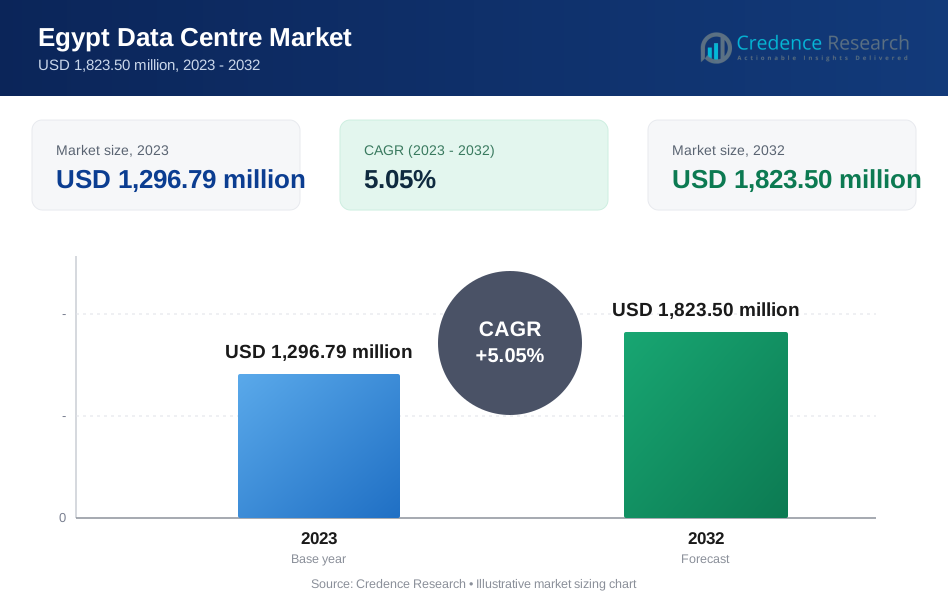
| Egypt Data Centre Market Size 2023 | USD 1,296.79 million |
| Egypt Data Centre Market, CAGR | 5.05% |
| Egypt Data Centre Market Size 2032 | USD 1,823.50 million |
Market Overview
The Egypt Data Centre Market is projected to grow from USD 1,296.79 million in 2023 to USD 1,823.50 million by 2032, at a compound annual growth rate (CAGR) of 5.05%.
The Egypt Data Centre Market is experiencing growth driven by increasing digitalization and the adoption of cloud services across various sectors. Government initiatives to promote digital transformation, along with investments in IT infrastructure, are further propelling the market. The rising demand for data storage and processing capabilities due to the expansion of e-commerce, IoT applications, and big data analytics is creating a need for robust data centre solutions. Additionally, the emphasis on cybersecurity and disaster recovery is pushing for the development of advanced and secure data centres, ensuring that Egypt remains competitive in the regional digital economy.
The Egypt Data Centre Market is predominantly concentrated in major urban centers such as Cairo and Alexandria, which collectively account for a substantial portion of the market share. Cairo, as the capital city, benefits from its status as an economic and political hub, hosting numerous multinational corporations and government entities that demand robust data infrastructure. Alexandria's strategic location on the Mediterranean and its growing tech industry also make it a key player in the market. Leading companies such as Africa Data Centers (Cassava Technologies), Etisalat, and Khazna Data Center are driving growth by leveraging advanced technologies and expanding their data centre capabilities to meet increasing demand.
Market Drivers
Government Support and Cybersecurity Focus
The Egyptian government’s commitment to digital transformation plays a crucial role in the development of the data centre market. Government initiatives aimed at promoting digital infrastructure are creating a supportive environment for data centre investments. For instance, the Ministry of Communications and Information Technology has launched the “Digital Egypt” initiative to transform the country into a digital society. Additionally, growing concerns about cybersecurity are driving the need for secure and resilient data centres. As digital threats become more sophisticated, the importance of protecting sensitive data has never been greater. The government’s focus on enhancing cybersecurity measures ensures that data centres in Egypt are equipped to handle these challenges, thereby building trust among businesses and consumers.
Cloud Computing and Connectivity Enhancements
The increasing popularity of cloud computing services is significantly impacting the demand for data centres in Egypt. As businesses and individuals rely more on cloud-based applications, the need for data centres that can provide reliable data storage and processing capabilities grows. For instance, Egypt has launched its first government data and cloud computing center to serve as a central repository for all ministry data. The expansion of fiber-optic networks across Egypt has also improved connectivity, making the country an attractive location for data centre operations. Enhanced connectivity not only facilitates quicker and more reliable access to cloud services but also aligns with the rising internet penetration rate, expanding the market for data centre services. These improvements in infrastructure are crucial for supporting the continued growth of the digital economy in Egypt.
Economic Growth and Foreign Investment
Egypt's economic growth, driven by rapid industrialization and urbanization, is significantly boosting demand for data centre services. As the country continues to expand its economic activities, there is an increasing need for robust digital infrastructure to support business operations. This demand is further amplified by Egypt's favorable investment climate, which has attracted numerous foreign companies. These companies require reliable and secure data centre infrastructure to handle their data management needs. The influx of foreign direct investment is spurring the development of the data centre market, positioning Egypt as a strategic hub for digital and technological growth in the region.
E-commerce Expansion and Digital Payments
The rise of e-commerce in Egypt is another key driver of data centre market growth. As more consumers turn to online platforms for shopping, the need for secure and efficient data centres to handle online transactions and customer data becomes paramount. The increasing adoption of digital payments also contributes to this demand, as these transactions require reliable data processing and storage capabilities. As e-commerce continues to grow, the infrastructure to support these digital activities must scale accordingly, driving the expansion of data centre facilities across the country.
Market Trends
Sustainability, Energy Efficiency, and Hyperscale Expansion
In the Egypt Data Centre Market, there is a strong emphasis on sustainability and energy efficiency, reflecting a global shift towards environmentally responsible operations. Data centre operators are increasingly focusing on building green data centres designed to minimize environmental impact. This involves the adoption of renewable energy sources such as solar and wind power to reduce the carbon footprint of these facilities. The integration of energy-efficient technologies not only aligns with global sustainability goals but also helps in reducing long-term operational costs, making it a strategic priority for many operators. For instance, Khazna Data Centres is planning to set up Egypt’s first hyperscale data centre with an expected capacity of 25 MW of IT load. Concurrently, the growing demand for cloud services is driving significant investments in hyperscale data centres. These large-scale facilities, primarily developed by major cloud providers, are essential to accommodate the vast data storage and processing needs of businesses and consumers. Hyperscale data centres are strategically located in regions with abundant energy resources and strong connectivity, ensuring efficient operations while providing rapid access to data. This dual focus on sustainability and scalability is shaping the future of the data centre market in Egypt, balancing operational demands with environmental stewardship.
Edge Computing Adoption and Focus on Security and Resilience
The rise of edge computing is another key trend transforming the Egypt Data Centre Market, driving demand for micro data centres that are situated closer to end-users. These decentralized facilities help reduce latency and improve the efficiency of data processing, which is critical for real-time, data-intensive applications such as IoT, AI, and virtual reality. By positioning data centres closer to the data sources, companies can ensure faster and more reliable service delivery, enhancing the overall user experience. In addition to the adoption of edge computing, there is a heightened focus on security and resilience in data centre operations. As cyber threats become more sophisticated, data centre operators are heavily investing in advanced cybersecurity measures to protect sensitive data. This focus on security is further complemented by efforts to build data centres that can withstand natural disasters and other disruptions, ensuring continuous service availability. The increased emphasis on resilience is crucial for maintaining trust in digital infrastructure, supporting the needs of businesses and consumers, and fostering a stable and secure digital economy in Egypt.
Market Challenges Analysis
Challenges in Land Acquisition, Energy Costs, and Sustainability
One of the primary challenges facing the Egypt Data Centre Market is the difficulty of acquiring suitable land for large-scale data centre projects, particularly in urban areas. For instance, zoning restrictions and high competition for available land make land acquisition a complex and costly process. High land prices in prime locations can significantly inflate project costs, impacting the financial feasibility of new developments. These challenges are compounded by the rising costs of energy, a critical concern for data centres that are highly energy-intensive. The increasing price of energy directly affects operating expenses, prompting data centre operators to explore more sustainable energy solutions. However, achieving sustainability goals is made more difficult by stringent environmental regulations aimed at reducing carbon emissions. These regulations necessitate the adoption of green technologies and renewable energy sources, which often require substantial upfront investments and technological adjustments, making it challenging to balance economic efficiency with environmental responsibility.
Infrastructure Constraints, Talent Shortages, and Regulatory Uncertainties
Infrastructure constraints also pose significant challenges to the expansion of the data centre market in Egypt. Limited grid capacity in certain regions can restrict the scalability of data centres, affecting their ability to meet growing demand. Ensuring robust connectivity, including the deployment of comprehensive fiber-optic networks, is crucial but can be challenging, particularly in less developed areas. This can lead to connectivity issues, impacting the overall effectiveness and reliability of data centres. In addition to infrastructure constraints, the market faces a shortage of specialized talent. Data centre operations require specific skills in design, operations, and maintenance, and competition for these skilled workers is intense, particularly in high-demand regions. This talent shortage can slow down development and affect operational efficiency. Furthermore, the regulatory and policy environment in Egypt is characterized by uncertainty, with frequent changes in government policies, such as tax incentives and planning regulations, creating a volatile investment climate. Bureaucratic hurdles can add layers of complexity to project approvals, causing delays and increasing costs. These regulatory and policy uncertainties require data centre operators and investors to be adaptable and strategically prepared to navigate the complex landscape of the Egyptian data centre market.
Market Segmentation Analysis:
By Type:
The Egypt Data Centre Market is segmented into several types, including Enterprise, Edge, Colocation, Hyperscale, Managed, and Modular data centres. Enterprise data centres cater to the needs of large organizations requiring dedicated infrastructure for their IT operations. Edge data centres are smaller facilities positioned closer to end-users, offering low latency and supporting real-time applications, which are crucial for services like IoT and AI. Colocation centres provide shared space, power, and cooling, making them a cost-effective option for businesses looking to outsource their data management needs. Hyperscale data centres, driven by the growing demand for cloud services, are large-scale facilities used by major cloud providers to handle massive data volumes. Managed data centres offer third-party management of IT infrastructure, allowing businesses to focus on their core operations. Modular data centres provide flexible and scalable solutions that can be rapidly deployed and adapted to meet the evolving needs of businesses, ensuring agility in a dynamic market environment.
By Component:
The market is also segmented based on components, including Hardware, Data Centre Infrastructure Management Software, and Services. The Hardware segment includes critical components such as Power Systems, Cooling Systems, Racks, Servers, Networking Devices, and other essential equipment that ensure the efficient operation of data centres. Data Centre Infrastructure Management Software is divided into Cloud-based and On-premises solutions, providing flexibility and control over data centre operations. The Services segment encompasses a range of offerings, including Professional Services, Integration & Implementation, Consulting, Support & Maintenance, and Managed Services. These services are vital for the planning, deployment, and maintenance of data centre facilities, ensuring optimal performance and security. This comprehensive segmentation allows the Egypt Data Centre Market to cater to diverse business requirements, providing tailored solutions that enhance data management, operational efficiency, and security in a rapidly evolving digital landscape.
Segments:
Based on Type:
- Enterprise
- Edge
- Colocation
- Hyperscale
- Managed
- Modular
Based on Component:
- Hardware
- Power Systems
- Cooling Systems
- Racks
- Servers
- Networking Devices
- Others
- Egypt Data Centre Infrastructure Management Software
- Cloud-based
- On-premises
- Service
- Professional Services
- Integration & Implementation
- Consulting
- Support & Maintenance
- Managed Services
Based on Size:
- Small
- Mid-Sized
- Large
Based on Tire:
- Tier 1
- Tier 2
- Tier 3
- Tier 4
Based on Industry:
- IT & Telecom
- BFSI
- Manufacturing
- Healthcare
- Government
- Others
Based on the Geography:
- Greater Cairo region
- Delta region
- Alexandria and the Mediterranean coast
- Upper Egypt region
Regional Analysis
Cairo
Cairo, Egypt's capital and largest city, holds a significant share of the Egypt Data Centre Market, accounting for approximately 50% of the market. As the political, economic, and cultural hub of the country, Cairo is home to a large number of multinational corporations, financial institutions, and government agencies, all of which drive the demand for robust data centre services. The city’s well-developed infrastructure, including its extensive telecommunications network and reliable power supply, makes it an ideal location for large-scale data centre operations. Cairo's strategic position offers excellent connectivity to other major cities in Egypt and international markets, facilitating efficient data exchange and communication. The presence of a skilled workforce and a favorable business environment further enhances Cairo's attractiveness for data centre investments, supporting ongoing development and expansion in the sector. These factors make Cairo a key player in the Egypt Data Centre Market, underpinning its role in the country's digital transformation.
Alexandria
Alexandria, Egypt's second-largest city and a major economic centre, holds about 20% of the market share in the Egypt Data Centre Market. Known for its historical significance and strategic location on the Mediterranean coast, Alexandria serves as a critical gateway for international trade and commerce. The city's growing role as a tech hub, combined with its port facilities and proximity to major undersea cable landing stations, makes it a strategic location for data centre investments. Alexandria's infrastructure is being upgraded to support the increasing demand for digital services, with improvements in fiber-optic connectivity and power supply. The city offers a competitive advantage with relatively lower land and operational costs compared to Cairo, making it an attractive alternative for businesses seeking cost-effective solutions for their data management needs. Alexandria’s role in the data centre market is poised to grow as it continues to attract investments and enhance its digital infrastructure, supporting Egypt’s broader ambitions for digital and economic development.
Key Player Analysis
- Africa Data Centers (Cassava Technologies)
- Bynet Data Communications Ltd
- EdgeConneX Inc.
- Electronia
- Etihad Etisalat Company (Mobily)
- Etisalat
- Gulf Data Hub
- HostGee Cloud Hosting Inc.
- Injazat
- Khazna Data Center
- MEEZA
Competitive Analysis
In the Egypt Data Centre Market, leading players such as Africa Data Centers (Cassava Technologies), Etisalat, and Khazna Data Center dominate the competitive landscape. These companies are leveraging their extensive infrastructure, strategic locations, and technological expertise to provide comprehensive data centre solutions. Africa Data Centers focuses on scalability and reliability, offering high-capacity facilities that cater to both local and international clients. Etisalat, with its strong telecommunications background, integrates robust connectivity solutions with its data centre offerings, ensuring seamless data management and communication services. Khazna Data Center emphasizes security and energy efficiency, aiming to meet the growing demand for sustainable and resilient data infrastructure. The competition among these players is intensified by their continuous efforts to expand capacity, innovate through advanced technology integration, and enhance their service offerings to address the evolving needs of businesses in Egypt's digital economy. This competitive environment drives innovation and quality, ensuring that Egypt remains a key data centre hub in the region.
Recent Developments
- In June 2024, EdgeConneX won the DataCloud 2024 Global Data Centre of the Year Award for sustainable innovation and rapid global expansion. The company has expanded into new markets, including the Middle East.
- In April 2024, Egypt launched its biggest Data and Cloud Computing Center (P1) on the Ain Sokhna highway, establishing a pioneering hub for large-scale data analysis and artificial intelligence (AI) in Egypt and North Africa.
- In July 2023, The Egypt data centre market witnessed significant investments, driven by Etisalat, GPX Global Systems, Orange Business Services, Raya Data Center, and Telecom Egypt.
- In May 2023, Injazat partnered with Oracle to create an Oracle Cloud Infrastructure Dedicated Region within Injazat’s data centres, providing the UAE’s federal government and Abu Dhabi’s local government entities access to Oracle Cloud Applications and Infrastructure services.
Market Concentration & Characteristics
The Egypt Data Centre Market exhibits moderate to high market concentration, with a few key players, such as Africa Data Centers (Cassava Technologies), Etisalat, and Khazna Data Center, holding significant market shares. These companies benefit from their substantial investments in infrastructure, strategic partnerships, and advanced technological capabilities, allowing them to offer comprehensive and reliable data centre services. The market is characterized by high entry barriers, including the need for significant capital investment, technical expertise, and compliance with stringent regulatory requirements. These factors limit the number of new entrants, consolidating the market among established players. Additionally, the market is shaped by a strong focus on scalability, security, and energy efficiency, as operators invest in state-of-the-art facilities that support cloud computing, big data analytics, and other advanced digital services. The emphasis on sustainability and resilience is crucial for maintaining competitiveness, as the market evolves to meet the growing demands of Egypt's digital economy.
Report Coverage
The research report offers an in-depth analysis based on Type, Component, Size, Tire, Industry and Geography. It details leading market players, providing an overview of their business, product offerings, investments, revenue streams, and key applications. Additionally, the report includes insights into the competitive environment, SWOT analysis, current market trends, as well as the primary drivers and constraints. Furthermore, it discusses various factors that have driven market expansion in recent years. The report also explores market dynamics, regulatory scenarios, and technological advancements that are shaping the industry. It assesses the impact of external factors and global economic changes on market growth. Lastly, it provides strategic recommendations for new entrants and established companies to navigate the complexities of the market.
Future Outlook
- The Egypt Data Centre Market is expected to continue growing due to increasing digitalization across various sectors.
- Expansion of cloud computing services will drive demand for more advanced and scalable data centre infrastructure.
- There will be a greater focus on sustainability, with more data centres adopting renewable energy sources and energy-efficient technologies.
- Investments in edge computing will rise to support low-latency applications and closer proximity to end-users.
- Enhanced cybersecurity measures will become increasingly crucial as data security concerns grow.
- Government support and favorable policies will attract more foreign direct investment in data centre development.
- Modular and prefabricated construction methods will be adopted more frequently for faster deployment and flexibility.
- The expansion of fiber-optic networks will improve connectivity, making Egypt a more attractive location for data centre operations.
- Competition will increase as more regional and international players enter the market.
- Integration of artificial intelligence and automation will improve data centre management efficiency and reduce operational costs.
Request a Free Sample
Fill in your details and we'll send you a free sample report.
- Sample data tables & charts
- Research methodology
Need a Custom Version of This Report?
Tailor the scope, geography, or segments to your exact requirements.
- Custom geography or segment scope
- Direct access to our analyst team
Frequently Asked Questions
What is the current size of the Egypt Data Centre Market?
What factors are driving the growth of the Egypt Data Centre Market?
What are the key segments within the Egypt Data Centre Market?
Who are the major players in the Egypt Data Centre Market?
Table of Content
Chapter 1. Report Introduction
- 1.1 Report Description & Purpose
- 1.1.1 Report Title & Market Definition
- 1.1.2 Unique Selling Propositions (USP) & Key Differentiators
- 1.1.3 Value Proposition for Stakeholders
- 1.2 Research Objectives
- 1.2.1 Market Sizing Objectives (Volume & Revenue)
- 1.2.2 Segmentation Objectives
- 1.2.3 Competitive Intelligence Objectives
- 1.2.4 Forecast & Scenario Objectives
- 1.3 Report Scope
- 1.3.1 Egypt Data Centre Scope – Types & Subtypes Covered
- 1.3.2 Geographic Scope – Regions & Countries Covered
- 1.3.3 Historical Period, Base Year & Forecast Period (2023; forecast to 2032)
- 1.3.4 Inclusions & Exclusions
- 1.4 HS Code & Classification Framework
- 1.5 Currency, Units & Pricing Basis
- 1.6 Target Stakeholders
- 1.7 Limitations & Assumptions
Chapter 2. Executive Summary
- 2.1 Global Egypt Data Centre Market Snapshot
- 2.1.1 Market Size – Historical (2023) & Forecast (2023-2032) (2023: USD 1,296.79 million → 2032: USD 1,823.50 million)
- 2.1.2 Volume & Revenue – Global Totals
- 2.1.3 Key Market Highlights – Top Five Facts
- 2.2 Egypt Data Centre Market Segmentation Snapshot
- 2.2.1 Market Split by Region – 2023 vs. 2032
- 2.3 Competitive Snapshot
- 2.3.1 Top 10 Players by Revenue Share – 2023
- 2.3.2 Top 10 Players by Volume Share – 2023
- 2.3.3 Recent Strategic Developments (18-Month Summary)
- 2.4 Key Investment Highlights & Strategic Conclusions
Chapter 3. Egypt Data Centre Market Dynamics & Industry Analysis
- 3.1 Market Overview & Context
- 3.1.1 Egypt Data Centre Market Position in the Broader Automotive Value Chain
- 3.1.2 OEM vs. Replacement Market Dynamics
- 3.1.3 Market Maturity & Development Stage by Region
- 3.2 Egypt Data Centre Market Drivers
- 3.3 Egypt Data Centre Market Restraints & Challenges
- 3.4 Egypt Data Centre Market Opportunities
- 3.5 Porter's Five Forces Analysis
- 3.5.1 Threat of New Entrants
- 3.5.2 Bargaining Power of Suppliers
- 3.5.3 Bargaining Power of Buyers
- 3.5.4 Threat of Substitutes
- 3.5.5 Competitive Rivalry – Intensity Assessment
- 3.6 Egypt Data Centre Value Chain Analysis
- 3.6.1 Upstream – Raw Material/Input Suppliers
- 3.6.1.1 Raw Material/Input 1
- 3.6.1.2 Raw Material/Input 2
- 3.6.1.3 Raw Material/Input 3
- 3.6.2 Midstream – Production/Manufacturing/Service Delivery
- 3.6.2.1 Production/Process Overview
- 3.6.2.2 Key Facility Locations & Capacity by Manufacturer
- 3.6.3 Downstream – Distribution & End Consumer
- 3.6.3.1 Primary Channel – B2B/OEM
- 3.6.3.2 Secondary Channels – Dealer, Retail, Online, Direct
- 3.6.4 Value Chain Profitability Analysis
- 3.6.1 Upstream – Raw Material/Input Suppliers
- 3.7 PESTEL Analysis
- 3.7.1 Political Factors
- 3.7.2 Economic Factors
- 3.7.3 Social Factors
- 3.7.4 Technological Factors
- 3.7.5 Environmental Factors
- 3.7.6 Legal Factors
- 3.8 Egypt Data Centre Supply Chain Analysis
- 3.8.1 Raw Material/Input Supply Risk Assessment
- 3.8.2 Manufacturing Concentration Risk (Geographic Exposure)
- 3.8.3 Trade Disruption Impact Analysis
- 3.9 Regulatory & Policy Landscape
Note: The regulatory and policy landscape section covers regulations based on their applicability to the market, Egypt Data Centre category, geography, and scope of the study. Only regulatory frameworks with a material impact on operations, compliance, trade, sustainability, or market access are analyzed in detail.
Chapter 4. Key Investment Pockets & Opportunity Analysis
- 4.1 Egypt Data Centre Market Attractiveness Analysis
- 4.1.1 By Region – Investment Attractiveness Matrix (Volume × CAGR)
- 4.2 Absolute Revenue Growth Opportunity
- 4.2.1 By Region – Absolute USD Growth Through 2032
- 4.3 Incremental Volume Opportunity
- 4.3.1 By Region – Incremental Volume Through 2032
- 4.3.2 Segment – Incremental Volume
- 4.4 Emerging Submarket Opportunity Deep Dive (Subject to Applicability)
- 4.5 Emerging Market Opportunity Scorecards
- 4.5.1 United States
- 4.5.2 Europe
- 4.5.3 Asia
- 4.5.4 Middle East & Africa
Note: Emerging Market Opportunity Scorecards will be included based on relevance and strategic importance. Regions listed are indicative and may vary depending on data availability and market dynamics.
Chapter 5. Egypt Data Centre Import-Export Analysis & Trade Flows
- 5.1 Global Trade Overview
- 5.1.1 Global Export Value by Country (2023)
- 5.1.2 Global Export Volume by Country (2023)
- 5.1.3 Global Import Value by Country (2023)
- 5.1.4 Global Import Volume by Country (2023)
- 5.1.5 Net Trade Balance by Country (2023)
- 5.2 Export Analysis – Segment
- 5.2.1 Type 1 (HS Code)
- 5.2.2 Type 2 (HS Code)
- 5.2.3 Type 3 (HS Code)
- 5.2.4 Type 4 (HS Code)
- 5.2.5 Type 5 (HS Code)
- 5.3 Import Analysis – Segment
- 5.3.1 Type 1 (HS Code)
- 5.3.2 Type 2 (HS Code)
- 5.3.3 Type 3 (HS Code)
- 5.3.4 Type 4 (HS Code)
- 5.3.5 Type 5 (HS Code)
- 5.4 Average Unit Trade Prices
- 5.4.1 Average Export Price – Segment & Country
- 5.4.2 Average Import Price – Segment & Source Country
- 5.4.3 Price Trends (2023)
- 5.5 Key Trade Route Analysis
- 5.5.1 Trade Route 1
- 5.5.2 Trade Route 2
- 5.5.3 Trade Route 3
- 5.5.4 Trade Route 4
- 5.5.5 Trade Route 5
- 5.6 Trade Policy Impact Assessment
- 5.6.1 US Anti-Dumping & Section 301 Tariffs
- 5.6.2 EU Customs Union Impact
- 5.6.3 Major Free Trade Agreements
- 5.6.4 USMCA Rules of Origin
Note: Trade policy analysis will be included only where relevant to the Egypt Data Centre market.
Chapter 6. Competitive Landscape & Company Benchmarking
- 6.1 Egypt Data Centre Market Concentration & Structure
- 6.1.1 Herfindahl-Hirschman Index (HHI) – vs. 2023
- 6.1.2 Tier 1, Tier 2 & Tier 3 Market Structure
- 6.1.3 Global, Regional & Local Player Dynamics
- 6.2 Egypt Data Centre Market Share Analysis – 2023
- 6.2.1 Global Revenue Share by Company
- 6.2.2 Global Volume Share by Company
- 6.2.3 Regional Revenue Share
- 6.2.4 Market Share Evolution ( vs. 2023)
- 6.2.5 OEM Segment Share by Company
- 6.2.6 Replacement Segment Share by Company
- 6.3 Production/Delivery Capacity & Facility Analysis
- 6.3.1 Global Installed Capacity
- 6.3.2 Capacity Utilization Rates
- 6.3.3 Production/Output Volume
- 6.3.4 Facility Locations & Capacity Map
- 6.3.5 Planned Capacity Additions
- 6.4 Egypt Data Centre Competitive Benchmarking Matrix
- 6.4.1 Revenue, Volume, CAGR & Profitability Comparison
- 6.4.2 Channel Revenue Mix
- 6.4.3 Geographic Revenue Exposure
- 6.4.4 R&D Intensity
- 6.4.5 Sustainability Maturity
- 6.5 Strategic Developments in Egypt Data Centre (Last 24 Months)
- 6.5.1 Mergers, Acquisitions & Divestments
- 6.5.2 New Egypt Data Centre Launches
- 6.5.3 Facility Expansions
- 6.5.4 Strategic Alliances, Joint Ventures & Partnerships
- 6.5.5 Distribution Expansion & Market Entry
- 6.5.6 Sustainability & ESG Initiatives
- 6.6 Competitive Strategy Mapping
- 6.6.1 Leader, Challenger, Follower & Niche Classification
- 6.6.2 Pricing Strategy Comparison
- 6.6.3 Channel Strategy Matrix
Note: Strategic developments are included based on their materiality and the availability of reliable information.
Chapter 7. Global Egypt Data Centre Market – By Distribution Channel
- 7.1 Segment Overview
- 7.1.1 Volume & Revenue Split by Channel (2023 & 2032)
- 7.1.2 Channel Mix Evolution (2023-2032)
Chapter 8. Regional Market Analysis – Global Overview
- 8.1 Global Regional Overview
- 8.1.1 Regional Volume Share
- 8.1.2 Regional Revenue Share
- 8.1.3 Regional Volume by Region
- 8.1.4 Regional Revenue by Region
- 8.1.5 Regional Forecast Through 2032
- 8.2 Cross-Regional Segment Analysis
- 8.2.1 By Distribution Channel
- 8.2.2 By Brand/Price Tier
Chapter 9. North America Egypt Data Centre Market
- 9.1 United States
- 9.2 Canada
- 9.3 Mexico
Chapter 10. Europe Egypt Data Centre Market
- 10.1 Germany
- 10.2 France
- 10.3 Italy
- 10.4 United Kingdom
- 10.5 Spain
- 10.6 Poland
- 10.7 Russia
- 10.8 Netherlands
- 10.9 Belgium
- 10.10 Sweden
- 10.11 Denmark
- 10.12 Norway
- 10.13 Rest of Europe
Chapter 11. Asia Pacific Egypt Data Centre Market
- 11.1 China
- 11.2 India
- 11.3 Japan
- 11.4 South Korea
- 11.5 Thailand
- 11.6 Indonesia
- 11.7 Vietnam
- 11.8 Malaysia
- 11.9 Australia
- 11.10 Rest of Asia Pacific
Chapter 12. Latin America Egypt Data Centre Market
- 12.1 Brazil
- 12.2 Argentina
- 12.3 Colombia
- 12.4 Chile
- 12.5 Rest of Latin America
Chapter 13. Middle East Egypt Data Centre Market
- 13.1 Saudi Arabia
- 13.2 United Arab Emirates
- 13.3 Turkey
- 13.4 Israel
- 13.5 Iran
- 13.6 Rest of the Middle East
Chapter 14. Africa Egypt Data Centre Market
- 14.1 South Africa
- 14.2 Egypt
- 14.3 Nigeria
- 14.4 Morocco
- 14.5 Rest of Africa
Chapter 15. Egypt Data Centre Company Profiles
- 15.1 [Company 01]
- 15.1.1 Company Overview
- 15.1.2 Key Management Personnel
- 15.1.3 Products & Services Portfolio
- 15.1.4 Financial Performance
- 15.1.5 Key Market Focus & Geographic Presence
- 15.1.6 Recent Developments & Strategic Initiatives
Note: The company profile list is preliminary and may change based on research findings, market developments, data availability, and client requirements.
Chapter 16. Appendices
- Appendix A – List of Abbreviations & Acronyms
- Appendix B – Industry Classification Code Reference – Full Series
- Appendix C – Production & Capacity Data Tables
- Appendix D – End-Use & Demand Base Tables
- Appendix E – Consumption & Replacement Rate Assumptions
- Appendix F – ASP Reference Tables
- Appendix G – Manufacturing & Facility Database
- Appendix H – Import-Export Data Tables
- Appendix I – Regulatory Summary Tables
- Appendix J – Primary Research Participant List (Anonymized)
- Appendix K – Primary Research Questionnaire Framework
- Appendix L – Data Sources & Bibliography
- Appendix M – Market Size Divergence & Source Comparison
Chapter 17. Research Methodology
- 17.1 Research Framework & Philosophy
- 17.2 Secondary Research – Sources, Hierarchy & Data Extraction
- 17.3 Data Modeling – Bottom-Up & Top-Down Market Sizing
- 17.4 Primary Research – Stakeholder Framework, LOI & Sample Sizes
- 17.5 Forecast Methodology – Regression, Scenario & Sensitivity Analysis
- 17.6 Quality Control – Four-Layer Validation Framework
- 17.7 Limitations & Standard Assumptions
- 17.8 Disclaimer
