
| REPORT ATTRIBUTE | DETAILS |
|---|---|
| Historical Period | 2020-2023 |
| Base Year | 2024 |
| Forecast Period | 2025-2032 |
| Europe Safety Eyewear Market Size 2024 | USD 1,118.89 million |
| Europe Safety Eyewear Market, CAGR | 5.34% |
| Europe Safety Eyewear Market Size 2032 | USD 1,696.12 million |
Market Overview
The Europe Safety Eyewear market size was valued at USD 1,118.89 million in 2024 and is anticipated to reach USD 1,696.12 million by 2032, at a CAGR of 5.34% during the forecast period (2024-2032).
Stringent workplace safety regulations across construction, manufacturing, and healthcare drive growth in the Europe Safety Eyewear market, prompting companies to invest in advanced protective lenses and durable frames. Rising awareness of occupational hazards leads procurement managers to prioritize anti-fog, anti-scratch, and impact-resistant coatings, enhancing user comfort and compliance. Technological innovations, including smart eyewear with integrated heads-up displays and sensors, further shape product development, meeting demands for multifunctionality. E-commerce expansion improves accessibility, allowing small businesses and individual consumers to source certified safety eyewear through online platforms. Sustainability trends push manufacturers toward eco-friendly materials and reusable designs, reducing environmental footprint and appealing to green-conscious buyers. Demographic shifts such as an aging workforce-underscore the need for ergonomic, lightweight eyewear that minimizes fatigue during prolonged use. The rise in remote and hybrid work models also fosters demand for safety eyewear in home-based workshops and DIY projects. Together, these drivers and emerging trends support steady market expansion and encourage ongoing product innovation.
In geographic analysis, Germany functions as a primary hub due to its automotive and manufacturing sectors, while the United Kingdom and France host extensive construction and oil and gas operations. Italy and Spain contribute significantly through metalworking and renewable energy projects, while Nordic countries like Sweden and Denmark drive demand through public sector mining applications. Eastern European markets such as Poland and Russia exhibit growth through expanding industrial output. Central European nations, including Austria, Belgium and the Netherlands, maintain stable demand with stringent safety regulations. The Europe Safety Eyewear Market reflects a complex regulatory environment and varied end-user requirements across the region. Leading suppliers include Kimberly-Clark Corp., MCR Safety, Honeywell International, 3M, Radians, Bolle Safety and Pyramex Safety Products. These companies invest in product innovation, distribution and sustainable materials to address local nuances in compliance. Strategic partnerships and localized production help them optimize supply chains and customer support.
Market Insights
- Europe Safety Eyewear market valued at USD 1,118.89 million in 2024 and projected to reach USD 1,696.12 million by 2032 at a compound annual growth rate of 5.34%.
- The Global Safety Eyewear Market was valued at USD 4,244.64 million in 2024 and is projected to reach USD 6,806.27 million by 2032, growing at a CAGR of 6.08% during the forecast period.
- Strict workplace safety mandates across construction, manufacturing, and healthcare spur investment in high-performance protective eyewear that meets CE and EN166 standards, driving procurement of advanced lenses and frames among European enterprises to ensure compliance and employee well-being.
- Integration of heads-up displays, environmental sensors, and Bluetooth connectivity into safety eyewear enhances hazard detection and data communication capabilities, enabling real-time monitoring of impact, particulate levels, and user compliance on industrial sites and supporting safety audits.
- Growing demand for eco-friendly and reusable designs drives adoption of recycled plastics and bio-based polymers, while take-back programs and cradle-to-cradle approaches support circular lifecycle management and reduce environmental footprint across end-user industries. It aligns with corporate ESG objectives and investor expectations.
- Market shows moderate concentration with leading companies Kimberly-Clark, MCR Safety, Honeywell, and 3M competing through product innovation, strategic alliances, and targeted acquisitions to expand technology portfolios and geographic reach and streamline production costs.
- High unit prices for advanced eyewear, coupled with limited safety budgets among small and medium enterprises, hinder widespread adoption of premium models, prompting some buyers to opt for lower-cost, lower-performance alternatives and affecting profit margins.
- Germany, the United Kingdom, and France drive regional demand through strong industrial, construction, and oil and gas sectors while emerging Eastern markets-Poland, Russia, and the Rest of Europe offer growth potential supported by rising manufacturing and infrastructure investments and targeted government incentives.
Report Scope
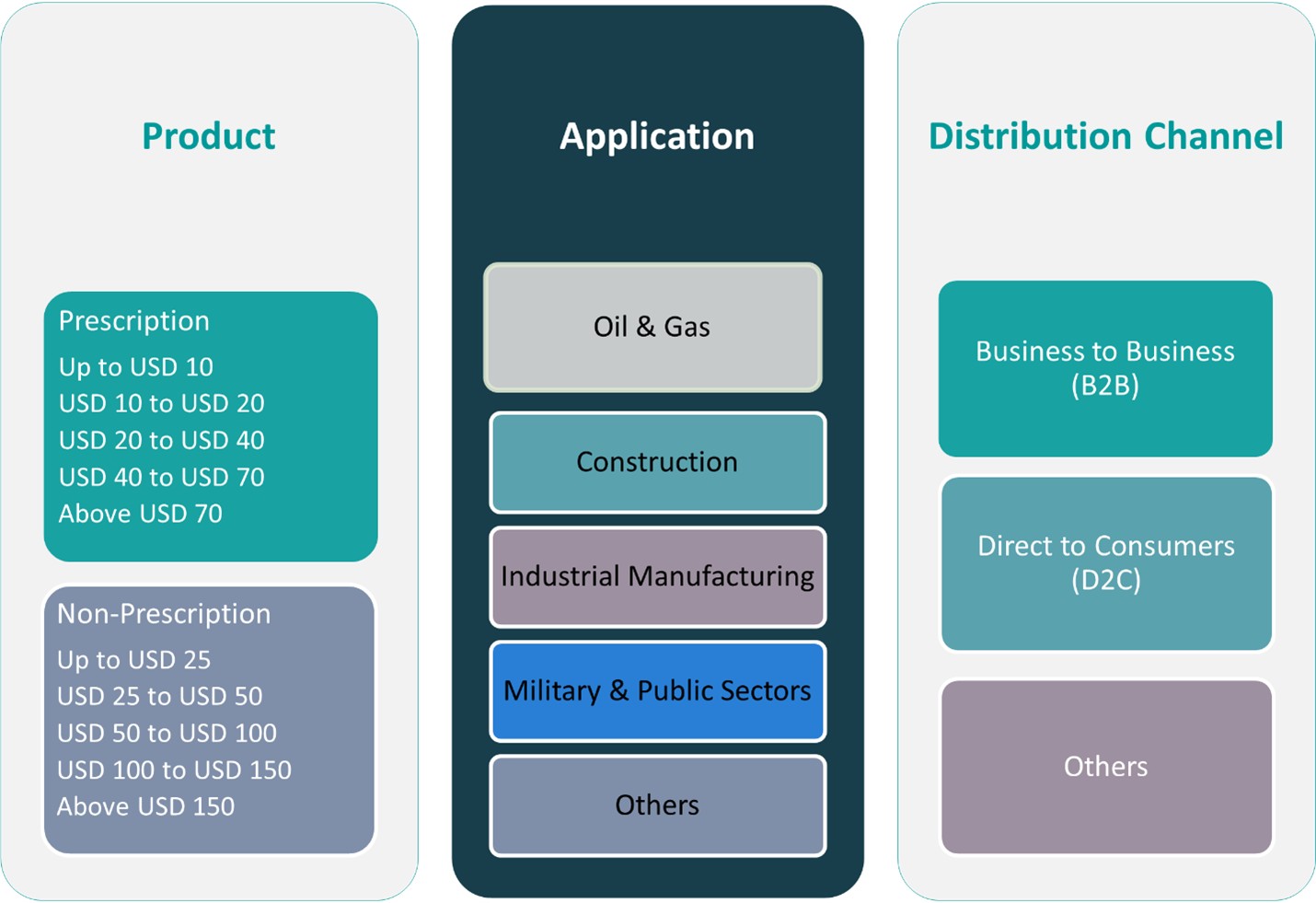
This report segments the Europe Safety Eyewear Market as follows:
Market Drivers
Stringent Occupational Safety Regulations Shape Market Growth
Strict rules from the European Union and national bodies enforce rigorous eye protection standards in heavy industries. Regulatory agencies inspect worksites and penalize noncompliance. This enforcement leads firms to procure certified eyewear for employee safety. The Europe Safety Eyewear Market benefits from mandatory certifications such as CE and EN166 that set quality benchmarks. Firms allocate greater budget for protective gear to meet audit requirements. Worker safety committees demand performance features such as impact resistance and anti-fog coatings. National bodies update regulations to address emerging occupational risks.
- For instance, regulatory bodies across the EU have tightened compliance mandates for on-site safety, leading employers to prioritize investment in certified eye protection solutions that meet EN166 standards.
Expanding Distribution Channels Boost Market Reach
Growth of e-commerce platforms enables small firms and individual consumers to access certified safety eyewear across Europe. Industrial distributors offer bundled safety solutions that include training and compliance support. The Europe Safety Eyewear Market leverages omnichannel strategies to increase market penetration. It invests in digital marketing and virtual fitting tools to enhance customer experience. Trade fairs and industry expos provide networking opportunities that solidify supplier-client relationships. Regional partnerships with local vendors support rapid delivery and after-sales service. Enhanced distribution networks drive consistent revenue growth and improve market resilience.
- For instance, the Europe Safety Eyewear Market is leveraging omnichannel strategies to increase market penetration, including digital marketing and virtual fitting tools.
Technological Innovation Drives Product Differentiation
Emerging lens materials and frame designs deliver stronger protection with lighter weight. Suppliers integrate heads-up displays and biometric sensors to support specialized tasks. The Europe Safety Eyewear Market embraces digital integration that improves worker productivity and hazard awareness. It encourages partnerships between manufacturers and tech firms to co-develop advanced solutions. Research centers trial adaptive tinted lenses that adjust to light levels in real time. Such collaborations accelerate time to market and expand product portfolios. Customers value multifunctional eyewear that supports vision correction and safety in a single unit.
Sustainability Trends Influence Material Selection
Brands face pressure to reduce environmental impact by using recycled polymers and bio-based materials. Green-conscious buyers review product lifecycle assessments before procurement. The Europe Safety Eyewear Market responds with reusable designs and take-back schemes that lengthen product lifespan. It lowers waste management costs for end users and strengthens corporate social responsibility credentials. Industry consortia develop standards for eco-friendly manufacturing processes. Suppliers that achieve environmental certifications gain a competitive edge. This shift promotes long-term cost savings and aligns with broader sustainability goals.
Market Trends
Personalized Fit and Ergonomic Design Attract End Users
Providers employ 3D scanning and digital modeling to tailor frames for individual users. It reduces pressure points and encourages prolonged use without fatigue. Companies test lightweight polymers and tension-adjustable straps for secure wear. The Europe Safety Eyewear Market features collaborations with design studios to refine style and function. Ergonomic improvements include nose pad adjustments and temple-flex hinges for unique head shapes. Buyers respond to eyewear that balances protection with comfort and fashion.
- For instance, eyewear brands are increasingly offering integrated prescription lenses, enhanced visual clarity, and lightweight materials to promote continuous wear without discomfort.
Expansion of Omnichannel Distribution Broadens Market Access
Online platforms host verified retailers and facilitate quick order placement across Europe. It enables small enterprises to source certified eyewear without lengthy vendor contracts. Suppliers launch virtual fitting rooms that guide users through frame selection via smartphone. The Europe Safety Eyewear Market sees growth in direct-to-consumer portals offering customized bundles and subscription services. Trade associations endorse digital catalogs to verify compliance credentials. Warehouses use automated picking systems to shorten delivery times.
- For instance, the Europe Safety Eyewear Market is leveraging omnichannel strategies to increase market penetration, including digital marketing and virtual fitting tools.
Integration of Digital Technologies Enhances Protective Capabilities
Companies integrate heads-up displays and environment sensors to detect hazards in real time. It supports tasks requiring heightened situational awareness. Manufacturers embed Bluetooth modules to relay data to supervisors. The Europe Safety Eyewear Market responds to demand for wearable technology that complements protective functions. Suppliers partner with software firms to deliver firmware updates and secure connectivity. Users appreciate eyewear that communicates alerts for impact or chemical exposure.
Commitment to Sustainability and Circular Lifecycle Management
Manufacturers adopt recycled plastics and bio-based polymers to lower carbon output. It aligns with stringent environmental regulations and corporate sustainability goals. The Europe Safety Eyewear Market introduces take-back initiatives that refurbish and redistribute used frames. Suppliers certify products under eco-label schemes to validate responsible production. Companies trial cradle-to-cradle design that simplifies disassembly and material reuse. End users view certified eco-products as part of corporate social responsibility programs.
Market Challenges Analysis
High Costs and Budget Constraints Stall Market Expansion
Companies face pressure to balance protective equipment costs with operational budgets. The Europe Safety Eyewear Market experiences pressure from cost concerns. Procurement teams in small and medium enterprises allocate limited funds across multiple safety needs. This budget challenge delays purchase approvals and reduces order volumes. Advanced lens coatings and durable frames command higher prices that deter price-sensitive buyers. It forces some firms to choose basic models that offer minimal protection. Appearance of counterfeit products also undermines trust in recognized brands.
- For instance, procurement teams in small and medium enterprises across Europe allocate limited funds across multiple safety needs, delaying purchase approvals and reducing order volumes.
Complex Regulatory Landscape and Supply Chain Disruptions
Navigating diverse national regulations increases complexity for manufacturers and distributors. Manufacturers must comply with standards such as EN166, national safety codes, and certification procedures. This fragmented landscape extends approval timelines and raises legal risks for noncompliance. It compels suppliers to monitor regulatory updates across multiple jurisdictions. Cross-border transport delays and raw material shortages heighten supply chain volatility. Logistics setbacks disrupt delivery schedules and strain inventory management. The Europe Safety Eyewear Market must adapt to raw material export restrictions and shipping constraints.
Market Opportunities
Integration of Smart Technology in Eye Protection Equipment Across Industrial Environments
The Europe Safety Eyewear Market can capitalize on the rising demand for IoT-enabled protective gear. Manufacturers install sensors that detect impact, dust levels, and chemical exposure. It delivers real-time alerts and reduces the need for manual inspections. Partnerships between eyewear makers and software firms accelerate firmware development. End users benefit from detailed safety analytics that support compliance audits. Adoption of smart features sets premium products apart in the automotive and construction sectors.
Expansion of Custom Online Solutions and Sustainable Material Adoption
The Europe Safety Eyewear Market can leverage online platforms that offer custom eyewear options. Customers demand precise frame measurements and lens prescriptions delivered to their doorstep. It justifies investment in virtual fitting tools and enhanced 3D design software. Adoption of recycled plastics and bio-based polymers helps brands meet environmental targets. Manufacturers establish take-back and refurbishment programs for retired frames. Partnerships with material specialists can yield innovative, low-carbon solutions. This focus on customization and sustainability positions companies for enduring success.
Market Segmentation Analysis:
By Product:
By product, the prescription category divides into five price tiers: up to USD 10 holds niche volume among budget projects, USD 10–20 and USD 20–40 capture bulk demand from entry-level safety eyewear users, USD 40–70 meets elevated comfort and optical clarity requirements, and above USD 70 serves premium applications with specialized coatings. The non-prescription segment offers five tiers: up to USD 25 appeals to low-cost bulk purchases, USD 25–50 commands the largest volume across general industries, USD 50–100 and USD 100–150 address professionals who seek higher durability, and above USD 150 caters to sectors with extreme safety needs.
By Application:
Based on application, construction and industrial manufacturing account for the largest share due to regulatory mandates. Oil & Gas and Military & Public Sectors show strong growth in premium tiers. Others include laboratories and renewable energy facilities.
By Distribution Channel:
Distribution channels break down into Business to Business (B2B), which leads with corporate contracts, Direct to Consumer (D2C), which expands via digital platforms, and Others, comprised of safety distributors and retail partners. Europe Safety Eyewearmarket leverages this granular segmentation to tailor product offerings and optimize channel strategies. It supports targeted marketing efforts and inventory planning to align with diverse customer requirements.
Segments:
Based on Product:
- Prescription
- Up to USD 10
- USD 10 to USD 20
- USD 20 to USD 40
- USD 40 to USD 70
- Above USD 70
- Non-Prescription
- Up to USD 25
- USD 25 to USD 50
- USD 50 to USD 100
- USD 100 to USD 150
- Above USD 150
Based on Application:
- Oil & Gas
- Construction
- Industrial Manufacturing
- Military & Public Sectors
- Others
Based on Distribution Channel:
- Business to Business (B2B)
- Direct to Consumers (D2C)
- Others
Based on the Geography:
- UK
- France
- Germany
- Italy
- Spain
- Russia
- Belgium
- Netherlands
- Austria
- Sweden
- Poland
- Denmark
- Switzerland
- Rest of Europe
Regional Analysis
UK, Germany, and France
The Europe Safety Eyewear Market exhibits strong demand across major economies including the UK, Germany, and France. The UK accounts for a significant market share due to stringent workplace safety regulations and increased adoption in construction and manufacturing industries. Germany follows closely, supported by its robust industrial base and high awareness of occupational safety standards. France also holds a notable share, driven by government initiatives focused on worker protection. These countries lead the regional market, supported by strong compliance frameworks and established distribution networks. Together, they contribute over 45% of the regional revenue.
Italy, Spain, and Russia
Italy, Spain, and Russia represent emerging opportunities within the Europe Safety Eyewear Market. Italy and Spain benefit from steady investments in healthcare and infrastructure, increasing the use of personal protective equipment. Russia, despite regulatory differences, has shown consistent uptake in industrial zones and energy sectors. Market penetration in these areas is improving with the entry of international brands and partnerships with local distributors. Demand in these countries is also influenced by growing awareness of eye safety in hazardous work environments. Their combined market share accounts for approximately 25% of the regional total.
Belgium, the Netherlands, Austria, Sweden, Poland, Denmark, and Switzerland
Other European countries, including Belgium, the Netherlands, Austria, Sweden, Poland, Denmark, and Switzerland, contribute the remaining share of the Europe Safety Eyewear Market. It shows steady demand from small and mid-sized enterprises complying with EU safety directives. Northern and Central European countries emphasize advanced product features, such as anti-fog and impact resistance, supporting premium segment growth. The Rest of Europe, though fragmented, benefits from increasing safety audits and employer-driven safety programs. Demand is further supported by the rising presence of e-commerce channels and distributor-led promotions. These regions together hold roughly 30% of the market share.
Key Player Analysis
- Kimberly-Clark Corp.
- MCR Safety
- Honeywell International, Inc.
- 3M
- Radians, Inc.
- Bolle Safety (Bolle Brands Group) (A&M Capital Europe)
- Pyramex Safety Products, LLC
Competitive Analysis
The Europe Safety Eyewear Market features a competitive landscape dominated by key players such as Kimberly-Clark Corp., MCR Safety, Honeywell International, Inc., 3M, Radians, Inc., Bolle Safety (Bolle Brands Group) (A&M Capital Europe), and Pyramex Safety Products, LLC. These companies compete on product innovation, compliance with EU safety standards, and strong distribution networks across industrial and commercial sectors. They focus on delivering advanced features such as anti-scratch lenses, UV protection, and ergonomic designs to meet the diverse needs of users in manufacturing, healthcare, and construction. Leading players maintain their market position through continuous investment in R&D and strategic partnerships with safety equipment distributors. They also engage in targeted marketing campaigns and product customization to align with regional preferences and occupational safety regulations. The presence of well-established supply chains enables them to serve a wide customer base efficiently across Western and Central Europe. As workplace safety regulations evolve, these companies adapt quickly, offering certified and high-performance products. Their competitive edge also stems from brand trust, technological expertise, and the ability to scale production based on fluctuating demand, allowing them to retain a substantial share in the Europe Safety Eyewear Market.
Recent Developments
- In April 2024, Popticals, a premium eyewear brand, launched the POPZULU Ops Edition, a line of ballistic glasses and safety eyewear. POPZULU is designed for tactical and industrial environments, offering full-scale defense with lenses engineered to shield and a frame that can collapse into a pocket-sized hard-shell case. The POPZULU sunglasses feature an innovative frame design and patented FL2 Micro-Rail System technology for collapsibility. They are crafted using high-quality materials like Hydrophobic Ri-Pel coating, Grilamid TR90 for lightweight and durability, and Impacto lenses from Carl Zeiss Vision that are 5X more resistant to hits and stresses than polycarbonate.
- In April 2024, Innovative Eyewear, Inc. announced filing two new U.S. patent applications related to its new Lucyd Armor smart safety glasses product, which is planned for introduction in mid-2024. The utility patent application covers the product's functional aspects, while the design patent application covers its ornamental design.
- In March 2024, Protective Industrial Products (PIP), a leader in personal protective equipment, acquired Scope Optics Pty Ltd., a safety eyewear company based in Australia. By incorporating Scope Optics' safety eyewear into its existing portfolio of eye protection brands, PIP is adding a wider selection of premium designs, advanced lens technologies, and exceptional value to serve its customers better. The acquisition of Scope Optics is another example of PIP's proven acquisition strategy to strengthen its portfolio of head-to-toe PPE solutions.
Market Concentration & Characteristics
Europe Safety EyewearMarket features moderate concentration with a handful of global players that account for the majority of revenue. It displays an oligopolistic structure among established manufacturers that invest heavily in research and development to enhance lens performance and frame durability. Smaller regional suppliers compete through specialized products and competitive pricing. The market divides across prescription and non-prescription segments, each with distinct price tiers that reflect differing customer requirements. Major distributors maintain strong B2B and D2C networks that ensure broad product availability. Regulatory compliance and certification standards raise entry barriers and protect incumbent firms. Price competition remains intense in lower-tier segments while premium tiers yield higher margins. Diversified channel strategies and strategic partnerships with technology providers drive operational efficiency and market reach.
Report Coverage
The research report offers an in-depth analysis based on Product, Application, Distribution Channel and Geography. It details leading market players, providing an overview of their business, product offerings, investments, revenue streams, and key applications. Additionally, the report includes insights into the competitive environment, SWOT analysis, current market trends, as well as the primary drivers and constraints. Furthermore, it discusses various factors that have driven market expansion in recent years. The report also explores market dynamics, regulatory scenarios, and technological advancements that are shaping the industry. It assesses the impact of external factors and global economic changes on market growth. Lastly, it provides strategic recommendations for new entrants and established companies to navigate the complexities of the market.
Future Outlook
- Europe Safety Eyewear Market will integrate more IoT-enabled features to improve hazard awareness.
- Manufacturers will embed AI-driven sensors for real-time impact and chemical exposure alerts.
- Workers will prefer lightweight frames with ergonomic adjustments for prolonged comfort.
- Brands will adopt recycled and bio-based materials to meet sustainability targets.
- Virtual fitting tools will streamline custom eyewear orders via online platforms.
- Demand for prescription safety eyewear with digital heads-up displays will grow.
- Suppliers will expand direct-to-consumer channels to reach small enterprises.
- Technology partnerships will accelerate development of multifunctional protective gear.
- Training modules will integrate eyewear data for live safety performance feedback.
- Regulations will evolve to set standards for connected and smart safety eyewear.

Request a Free Sample
Fill in your details and we'll send you a free sample report.
- Sample data tables & charts
- Research methodology
Market Dynamics
Stringent Occupational Safety Regulations
The enforcement of rigorous EU and national workplace safety standards, such as CE and EN166 certifications, compels companies in construction, manufacturing, and healthcare to invest in certified safety eyewear, driving consistent market demand.
Technological Innovation and Smart Features
Integration of heads-up displays, environmental sensors, and Bluetooth connectivity into safety eyewear enhances hazard detection and compliance monitoring, prompting enterprises to adopt advanced, multifunctional protective gear.
Expansion of E-commerce and Omnichannel Distribution
The growth of digital platforms and virtual fitting tools enables small businesses and individual consumers to access certified safety eyewear easily, broadening market reach and supporting steady revenue growth.
Sustainability and Eco-friendly Materials
Increasing pressure from corporate ESG goals and green-conscious buyers is pushing manufacturers to adopt recycled plastics, bio-based polymers, and reusable designs, which not only reduce environmental impact but also appeal to a growing segment of the market.
Demographic Shifts and Ergonomic Demands
An aging workforce and the rise of remote and hybrid work models are increasing demand for lightweight, ergonomic eyewear that minimizes fatigue and supports prolonged use, expanding the market into home-based workshops and DIY applications.
Need a Custom Version of This Report?
Tailor the scope, geography, or segments to your exact requirements.
- Custom geography or segment scope
- Direct access to our analyst team
Frequently Asked Questions
What is the current size of the Europe Safety Eyewear market?
What factors are driving the growth of the Europe Safety Eyewear market?
What are some challenges faced by the Europe Safety Eyewear market?
Who are the major players in the Europe Safety Eyewear market?
Table of Content
Chapter 1 Market Segmentation
- 1.1 Segmentation Framework
- 1.1.1 Product and Service Classification
- 1.1.2 Application and End-Use Classification
- 1.1.3 Technology and Solution Classification
- 1.1.4 Customer and Distribution Channel Classification
- 1.1.5 Geographic Segmentation
- 1.1.6 Market Segment Definitions and Boundaries
- 1.2 By Product
- 1.2.1 Prescription (Up to USD 10, USD 10 to USD 20, USD 20 to USD 40, USD 40 to USD 70, Above USD 70)
- 1.2.2 Non-Prescription (Up to USD 25, USD 25 to USD 50, USD 50 to USD 100, USD 100 to USD 150, Above USD 150)
- 1.3 By Application
- 1.3.1 Construction
- 1.3.2 Industrial Manufacturing
- 1.3.3 Oil & Gas
- 1.3.4 Military & Public Sectors
- 1.3.5 Others (Laboratories, Renewable Energy Facilities)
Chapter 2 Introduction
- 2.1 Report Objectives and Scope
- 2.2 Product Definition and Industry Terminology
- 2.3 Market Inclusions and Exclusions
- 2.4 Research Process
- 2.4.1 Primary Research and Expert Interviews
- 2.4.2 Secondary Research and Source Review
- 2.4.3 Top-Down and Bottom-Up Estimation
- 2.4.4 Data Triangulation and Verification
- 2.5 Market Size Measurement Basis
- 2.5.1 2024: USD 1,118.89 million → 2032: USD 1,696.12 million
- 2.6 Historical and Forecast Reference Periods
- 2.6.1 Base Year: 2024
- 2.6.2 Forecast Period: 2024-2032
- 2.7 Research Assumptions and Limitations
Chapter 3 Executive Summary
- 3.1 Market Snapshot and Key Findings
- 3.2 Base-Year Market Size, 2024
- 3.3 Forecast Market Size, 2032
- 3.4 Revenue and Volume Growth Outlook
- 3.5 Key Demand and Supply Indicators
- 3.6 Leading Market Segments
- 3.7 Fastest-Growing Market Opportunities
- 3.8 Regional Performance Highlights
- 3.9 Technology and Industry Transformation
- 3.10 Competitive Landscape Summary
- 3.11 Analyst View and Strategic Implications
Chapter 4 Europe Safety Eyewear Market Trends and Developments
- 4.1 Historical Industry Development
- 4.2 Recent Market Trends and Developments
- 4.3 Demand and Customer Behavior Trends
- 4.4 Technology and Product Innovation
- 4.5 Artificial Intelligence, Automation and Digitalization
- 4.6 Local Manufacturing and Supply Chain Realignment
- 4.7 Industry Partnerships, Mergers and Acquisitions
- 4.8 Sustainability and Circular Economy Developments
- 4.9 Government and Private Sector Investment Trends
- 4.10 Emerging Business Models and Commercialization
- 4.11 Industry Developments and Announcements
Chapter 5 Europe Safety Eyewear Market Production, Supply and Demand Analysis
- 5.1 Demand Trend and Consumption Analysis
- 5.2 Demand Forecast, 2024-2032
- 5.3 Production and Output Trend
- 5.4 Production and Output Forecast, 2024-2032
- 5.5 Installed Capacity and Capacity Utilization
- 5.6 Company-Wise Production Plants and Statistics
- 5.6.1 Installed Production Capacity
- 5.6.2 Actual Production
- 5.6.3 Planned Capacity and Expansion Targets
- 5.7 Supply Chain Structure and Procurement Trends
- 5.8 Supply-Demand Gap and Bottlenecks
- 5.9 Import Dependence and Sourcing Structure
- 5.10 Contract Manufacturing and Outsourcing
- 5.11 Regional Supply and Demand Concentration
Chapter 6 Europe Safety Eyewear Market Pricing Analysis
- 6.1 Pricing Structure and Measurement
- 6.2 Historical Pricing Trends
- 6.3 Pricing Outlook, 2024-2032
- 6.4 Average Selling Price and Unit Economics
- 6.5 Pricing by Product and Market Segment
- 6.6 Geographic Pricing Differences
- 6.7 Key Input, Energy, Labor and Logistics Costs
- 6.8 Contract Pricing and Purchasing Models
- 6.9 Pricing Sensitivity and Competitive Positioning
- 6.10 Price, Margin and Profitability Implications
Chapter 7 Europe Safety Eyewear Market Dynamics
- 7.1 Market Growth Drivers
- 7.1.1 Demand-Side Drivers
- 7.1.2 Technology and Innovation Drivers
- 7.1.3 Infrastructure and Investment Drivers
- 7.1.4 Regulatory and Policy Drivers
- 7.2 Market Restraints
- 7.2.1 Cost and Affordability Constraints
- 7.2.2 Technology and Adoption Barriers
- 7.2.3 Supply Chain and Operational Constraints
- 7.3 Market Challenges
- 7.3.1 Competitive Pressure and Margin Erosion
- 7.3.2 Skills, Infrastructure and Implementation Gaps
- 7.4 Emerging Market Opportunities
- 7.5 Market Dynamics Impact and Time-Horizon Assessment
Chapter 8 Europe Safety Eyewear Value Chain Analysis
- 8.1 Industry Value Chain Overview
- 8.2 Upstream Suppliers and Critical Inputs
- 8.3 Technology and Component Providers
- 8.4 Manufacturing or Service Delivery
- 8.5 Distribution, Channel Partners and Integrators
- 8.6 Downstream Applications and End Users
- 8.7 Value Addition and Profit Pools
- 8.8 Vertical Integration and Outsourcing
- 8.9 Supplier Concentration and Risk
- 8.10 Supply Chain Localization and Resilience
Chapter 9 Europe Safety Eyewear Market Regulations and Policies
- 9.1 Relevant Laws, Standards and Compliance Frameworks
- 9.2 Product, Service, Safety and Quality Requirements
- 9.3 Government Policies, Incentives and Subsidies
- 9.4 Imports, Exports and Trade Barriers
- 9.5 Public Procurement and Local Content Requirements
- 9.6 Environmental and Sustainability Compliance
- 9.7 Upcoming Policy Changes and Market Implications
Chapter 10 Europe Safety Eyewear Market Hotspots and Opportunities
- 10.1 Market Opportunity Mapping and Growth Hotspots
- 10.2 High-Growth Applications and Customer Groups
- 10.3 Underserved Markets and White-Space Opportunities
- 10.4 Emerging Technology and Product Opportunities
- 10.5 New Capacity and Investment Hotspots
- 10.6 Market Entry and Expansion Opportunities
- 10.7 Distribution and Partnership Opportunities
- 10.8 Near-Term and Long-Term Commercial Potential
- 10.9 Opportunity Attractiveness and Execution Risks
Chapter 11 Europe Safety Eyewear Market Outlook, 2024-2032
- 11.1 Market Size and Analysis
- 11.1.1 Revenue (Market Measurement: 2024: USD 1,118.89 million → 2032: USD 1,696.12 million)
- 11.1.2 Market Volume and Quantity Sold
- 11.1.3 Historical Market Size
- 11.1.4 Base-Year Market Size, 2024
- 11.2 Market Forecast, 2024-2032
- 11.2.1 Revenue Forecast to 2032
- 11.2.2 Volume Forecast to 2032
- 11.2.3 CAGR and Year-on-Year Growth
- 11.2.4 Incremental Revenue Opportunity
- 11.3 Forecast Assumptions and Scenario Analysis
- 11.3.1 Base-Case Forecast
- 11.3.2 Optimistic and Conservative Scenarios
- 11.3.3 Technology, Pricing and Policy Sensitivities
- 11.4 Market Attractiveness and Growth Outlook
Chapter 12 Europe Safety Eyewear Market Segmentation and Outlook
- 12.1 Segmentation Summary and Market Shares, 2024
- 12.2 Largest and Fastest-Growing Segments
- 12.3 By Product - Market Size and Forecast, 2024-2032
- 12.3.1 Segment Definition and Scope
- 12.3.2 Historical Market Size
- 12.3.3 Revenue Forecast, 2024-2032
- 12.3.4 Volume Forecast, 2024-2032
- 12.3.5 Base-Year Market Share, 2024
- 12.3.6 Segment CAGR and Growth Drivers
- 12.3.7 Subsegment Market Size and Forecast
- 12.3.7.1 Prescription (Up to USD 10, USD 10 to USD 20, USD 20 to USD 40, USD 40 to USD 70, Above USD 70)
- 12.3.7.2 Non-Prescription (Up to USD 25, USD 25 to USD 50, USD 50 to USD 100, USD 100 to USD 150, Above USD 150)
- 12.3.8 Subsegment Pricing and Adoption Trends
- 12.3.9 Leading Suppliers and Competition
- 12.3.10 Regional Demand and Opportunities
- 12.4 By Application - Market Size and Forecast, 2024-2032
- 12.4.1 Segment Definition and Scope
- 12.4.2 Historical Market Size
- 12.4.3 Revenue Forecast, 2024-2032
- 12.4.4 Volume Forecast, 2024-2032
- 12.4.5 Base-Year Market Share, 2024
- 12.4.6 Segment CAGR and Growth Drivers
- 12.4.7 Subsegment Market Size and Forecast
- 12.4.7.1 Construction
- 12.4.7.2 Industrial Manufacturing
- 12.4.7.3 Oil & Gas
- 12.4.7.4 Military & Public Sectors
- 12.4.7.5 Others (Laboratories, Renewable Energy Facilities)
- 12.4.8 Subsegment Pricing and Adoption Trends
- 12.4.9 Leading Suppliers and Competition
- 12.4.10 Regional Demand and Opportunities
- 12.5 Segment Growth Comparison
- 12.6 Segment Attractiveness and Priority Matrix
Chapter 13 Europe Safety Eyewear End-Use and Application Market Outlook
- 13.1 End-Use Industry and Customer Demand Structure
- 13.2 Leading Applications and Customer Groups
- 13.3 End-Use Market Size, Share and Forecast
- 13.4 Major End-Use Industry Deep Dives
- 13.4.1 Customer Requirements and Use Cases
- 13.4.2 Demand and Replacement Cycles
- 13.4.3 Technical and Regulatory Considerations
- 13.4.4 Purchasing and Procurement Models
- 13.4.5 Leading Vendors and Distribution Channels
- 13.4.6 Forecast and Commercial Opportunities
- 13.5 Emerging Applications and Cross-Segment Demand
- 13.6 End-Use Industry Investment Priorities
Chapter 14 Europe Safety Eyewear Geographic Market Outlook, 2024-2032
- 14.1 Regional Market Size and Country-Level Shares, 2024
- 14.2 Country Market Size Comparison, 2024
- 14.3 Country Market Forecasts, 2024-2032
- 14.4 Subregional Industrial and Demand Clusters
- 14.5 Intra-Regional Pricing and Cost Differences
- 14.6 Cross-Border Trade and Supply Networks
- 14.7 Regional Supply and Demand Balances
- 14.8 Country Opportunity Comparison and Prioritization
Note: Every listed country is covered on the structure shown under the first country.
Chapter 15 Europe Safety Eyewear Technology, Innovation and Sustainability Outlook
- 15.1 Technology Landscape and Maturity
- 15.2 Product, Process and Service Innovation
- 15.3 AI, Automation and Digital Tools in the Industry
- 15.4 Technology Adoption and Performance Benchmarking
- 15.5 Innovation Pipeline and R&D Investment
- 15.6 Patent and Intellectual Property Trends
- 15.7 Energy Efficiency and Resource Management
- 15.8 Sustainability, Recycling and Circularity
- 15.9 Technology Roadmap, 2024-2032
- 15.10 Risks of Obsolescence and Technology Substitution
Chapter 16 Europe Safety Eyewear Market Key Strategic Imperatives
- 16.1 Growth and Market Entry Priorities
- 16.2 High-Return Products and Segments
- 16.3 Pricing, Profitability and Cost Optimization
- 16.4 Technology Investment and Product Differentiation
- 16.5 Supply Chain Localization and Resilience
- 16.6 Distribution and Customer Acquisition
- 16.7 Partnership, Acquisition and Capacity Strategy
- 16.8 Regional Expansion Priorities
- 16.9 Short-, Medium- and Long-Term Actions
Chapter 17 Competition Outlook
- 17.1 Industry Competition Characteristics
- 17.2 Market Structure and Concentration
- 17.3 Market Share and Competitive Positioning, 2024
- 17.4 Company-Wise Revenue and Product Benchmarking
- 17.5 Production and Service Capacity Benchmarking
- 17.6 Technology, Pricing and Differentiation
- 17.7 Regional Footprint and Distribution Strength
- 17.8 Mergers, Acquisitions and Strategic Alliances
- 17.9 New Entrants and Competitive Threats
- 17.10 Porter's Five Forces and Industry Attractiveness
- 17.11 Competitive Outlook, 2024-2032
Chapter 18 Company Profiles
- 18.1 Company Coverage and Selection Criteria
- 18.2 Kimberly-Clark Corp.
- 18.2.1 Business Description
- 18.2.2 Company Ownership and Geographic Presence
- 18.2.3 Product and Service Portfolio
- 18.2.4 Manufacturing and Operating Footprint
- 18.2.5 Production Capacity and Expansion Plans
- 18.2.6 Financial Performance and Investment
- 18.2.7 Market Share and Competitive Position
- 18.2.8 Technology and Innovation Capabilities
- 18.2.9 Strategic Alliances or Partnerships
- 18.2.10 Recent Developments
- 18.2.11 Growth Strategy and Outlook
- 18.3 MCR Safety
- 18.4 Honeywell International, Inc.
- 18.5 3M
- 18.6 Radians, Inc.
- 18.7 Bolle Safety (Bolle Brands Group)
- 18.8 Pyramex Safety Products, LLC
- 18.9 Uvex Safety Group
- 18.10 Protective Industrial Products (PIP)
- 18.11 Delta Plus Group
- 18.12 Other Relevant Market Participants
Note: Every listed company is profiled on the structure shown under the first company. The company list is preliminary and may change based on research findings, market developments, data availability and client requirements.
Chapter 19 Disclaimer
- 19.1 Research and Forecast Disclaimer
- 19.2 Data Source and Estimation Limitations
Note: The depth of individual sections depends on data availability for this market. Volume, capacity, trade and other unit-based metrics are included where applicable.

