
Market Overview
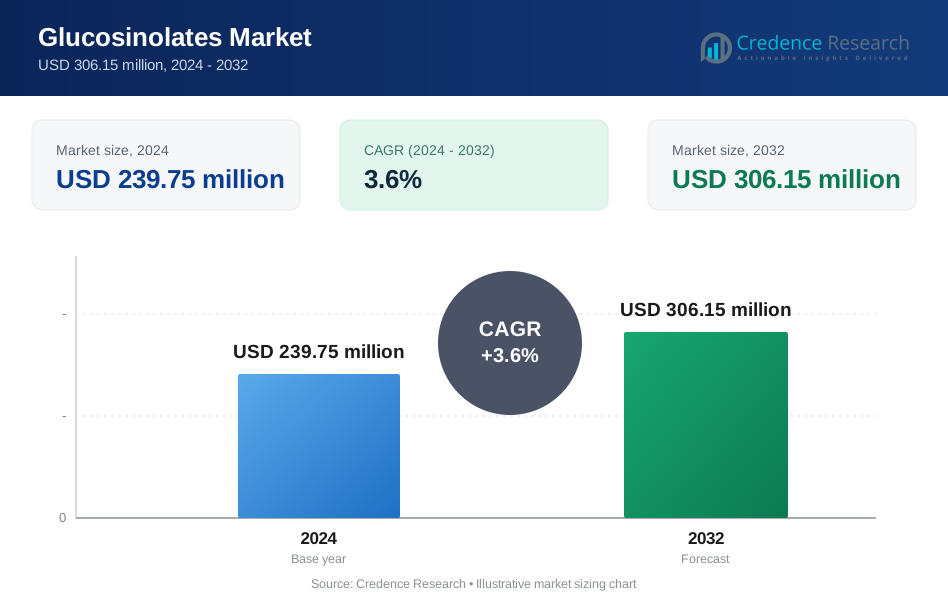
The glucosinolates market size was valued at USD 239.75 million in 2024 and is anticipated to reach USD 306.15 million by 2032, at a CAGR of 3.6% during the forecast period.
| REPORT ATTRIBUTE | DETAILS |
|---|---|
| Historical Period | 2020-2023 |
| Base Year | 2024 |
| Forecast Period | 2025-2032 |
| Glucosinolates Market Size 2024 | USD 239.75 Million |
| Glucosinolates Market, CAGR | 3.6% |
| Glucosinolates Market Size 2032 | USD 306.15 Million |
The glucosinolates market is led by prominent companies including Brightol, Incbel, Jarrow Formulas GmbH, Native Extracts, Nutra Canada, Xian Yuensun Biological Co. Ltd, Seagate Products, Kirkman Group, Interherb Ltd., and NutraValley, which drive growth through innovation, strategic partnerships, and global distribution networks. North America dominates the market with approximately 32% share, supported by high consumer awareness and strong adoption of functional foods and nutraceuticals. Europe follows closely at 28%, fueled by regulatory support and preference for natural, plant-based ingredients. Asia-Pacific holds around 25%, reflecting rising health consciousness and expanding functional food sectors in China, Japan, and India. Latin America and the Middle East & Africa account for 10% and 5% respectively, presenting emerging opportunities for market expansion. Collectively, these regions and players shape a competitive and rapidly evolving global glucosinolates landscape.
Market Insights
- The global glucosinolates market was valued at USD 239.75 million in 2024 and is projected to reach USD 306.15 million by 2032, growing at a CAGR of 3.6%.
- Market growth is driven by increasing consumer awareness of health benefits, including antioxidant, anti-inflammatory, and anticancer properties, which boosts demand in functional foods, nutraceuticals, and dietary supplements.
- Key trends include rising adoption in functional foods, nutraceuticals, and personal care products, as well as the integration of glucosinolates in plant-based and clean-label formulations. Aliphatic glucosinolates dominate the type segment, while cruciferous vegetables lead the source segment.
- The competitive landscape features major players such as Brightol, Incbel, Jarrow Formulas GmbH, Native Extracts, Nutra Canada, and others, focusing on R&D, product innovation, and strategic partnerships to strengthen their market positions.
- Regionally, North America holds 32% market share, Europe 28%, Asia-Pacific 25%, Latin America 10%, and Middle East & Africa 5%, reflecting varying consumer awareness, regulatory support, and industry adoption across segments.
Market Segmentation Analysis:
By Source
The glucosinolates market is primarily segmented by source, including cruciferous vegetables, seeds, fruits, herbs and spices, and other plant sources. Cruciferous vegetables dominate this segment, holding the largest market share due to their high glucosinolate content and widespread consumption in diets worldwide. The growing consumer preference for natural, plant-based compounds and health-conscious foods drives demand. Seeds and herbs are emerging sub-segments, benefiting from their concentrated glucosinolate levels, which are increasingly utilized in supplements, functional foods, and nutraceutical formulations, supporting overall market expansion.
- For instance, in a study of 80 broccoli genotypes, the total glucosinolate content in florets ranged from 0.467 to 57.156 µmol/g dry weight, with the highest content being approximately 122-fold higher than the lowest.
By Application
In terms of application, glucosinolates are extensively used in the food and beverage industry, pharmaceuticals, cosmetics and personal care products, animal feed additives, and functional foods and nutraceuticals. The food and beverage industry is the dominant sub-segment, accounting for the highest market share, driven by the rising demand for natural antioxidants, flavor enhancers, and health-promoting ingredients. The pharmaceutical and nutraceutical sectors are also growing rapidly, leveraging glucosinolates for their potential anti-cancer, anti-inflammatory, and metabolic health benefits, which strengthens their adoption across functional product lines.
- For instance, Mustard seeds are a rich source of glucosinolates, which contribute to the pungent flavor in mustard condiments, but mustard seed oil is a poor source of these compounds, which are largely left behind in the meal after oil extraction.
By Type
The market by type includes aliphatic, aromatic, indolic, and sulfur-containing glucosinolates. Aliphatic glucosinolates hold the largest share within this segment, attributed to their high prevalence in commonly consumed cruciferous vegetables such as broccoli, cabbage, and kale. Their strong antioxidant and detoxification properties drive extensive use in functional foods, supplements, and nutraceutical products. Indolic and sulfur-containing glucosinolates are gaining traction for specialized health applications, particularly in cancer prevention and metabolic regulation, contributing to diversification of product offerings and furthering market growth.
Key Growth Drivers
Rising Consumer Awareness of Health Benefits
Growing awareness of the health-promoting properties of glucosinolates is a primary driver of market growth. Consumers increasingly seek natural compounds with potential antioxidant, anti-inflammatory, and anticancer benefits, creating robust demand in functional foods, nutraceuticals, and dietary supplements. This trend is particularly evident in developed regions where preventive healthcare practices are widely adopted. The incorporation of glucosinolates in food and beverage products allows manufacturers to market products with added health value, encouraging repeat purchases and brand loyalty. Additionally, the surge in lifestyle-related diseases has prompted healthcare professionals and nutritionists to recommend glucosinolate-rich diets, further reinforcing consumer adoption and expanding the market globally.
- For instance, Arjuna Natural Extracts Ltd., an Indian company, did develop the patented curcumin formulation known as BCM-95 (also sold as Curcugreen). This formulation is widely used in dietary supplements and research indicates it has enhanced anti-inflammatory and antioxidant properties.
Expansion of Functional Foods and Nutraceuticals
The growth of the functional foods and nutraceutical segment serves as a key catalyst for glucosinolate adoption. Manufacturers increasingly incorporate glucosinolates into products such as dietary supplements, fortified beverages, and meal replacements due to their bioactive properties. Rising consumer demand for immunity-boosting and metabolism-supporting products has led to a surge in R&D investment for glucosinolate-enriched formulations. Regulatory support for plant-derived bioactive ingredients in many regions has also encouraged product innovation. The ability of glucosinolates to enhance nutritional profiles while maintaining taste and safety makes them highly attractive for product differentiation in a competitive food and supplement market.
- For instance, A study by the USDA Agricultural Research Service found that mild, short-term heating of broccoli using methods like microwaving or steaming can increase the yield and bioavailability of sulforaphane, a compound formed from glucoraphanin upon cell damage, which is associated with anti-cancer effects. Another USDA-funded study found that the human gut microbiome can help convert glucoraphanin to sulforaphane, with highly variable efficiency across individuals.
Technological Advancements in Extraction and Formulation
Innovations in extraction, purification, and formulation technologies are accelerating market growth. Modern techniques, including enzymatic extraction, supercritical fluid extraction, and microencapsulation, enable higher yield, stability, and bioavailability of glucosinolates in final products. These advancements allow manufacturers to develop powders, liquids, capsules, and granules that retain active compounds for longer shelf life. Additionally, the improved solubility and incorporation into diverse food matrices facilitate use in beverages, functional foods, and cosmetics. Such technological developments reduce production costs and expand market accessibility, fostering adoption across various industries while supporting large-scale commercialization of glucosinolate-based products.
Key Trends & Opportunities
Integration into Sustainable and Plant-Based Products
A significant trend in the glucosinolates market is their integration into sustainable and plant-based food and personal care products. Manufacturers are increasingly using glucosinolate-rich extracts from cruciferous vegetables, seeds, and herbs to develop vegan supplements, natural cosmetics, and eco-friendly nutraceuticals. The rising consumer preference for clean-label, non-GMO, and environmentally responsible products presents a lucrative opportunity. By positioning glucosinolate-based products as both health-promoting and sustainable, companies can appeal to environmentally conscious consumers while tapping into rapidly growing plant-based product segments across food, beverage, and personal care markets.
- For instance, Arjuna Natural Extracts Ltd., an Indian company specializing in plant-based active compounds, has developed BCM-95, a patented formulation of curcumin, which is widely used in dietary supplements for its anti-inflammatory properties.
Growth in Preventive Healthcare and Personalized Nutrition
The trend toward preventive healthcare and personalized nutrition is creating strong opportunities for glucosinolates. Consumers increasingly seek tailored dietary solutions targeting immunity, metabolic health, and chronic disease prevention. Glucosinolate-enriched functional foods, supplements, and beverages align with these needs, enabling personalized health management. This trend has encouraged partnerships between nutraceutical companies and research institutions to develop evidence-based formulations. The combination of scientific validation, consumer education, and technology-driven product customization is expected to expand market adoption and reinforce glucosinolates as a key ingredient in next-generation health solutions.
- For instance, Sigma-Tau, the Italian pharmaceutical company that preceded Leadiant Biosciences, had a portfolio of more than 100 products. Its product range covered a broad array of therapeutic areas, including cardiometabolic, orthopedic, rheumatologic, and gastroenterology disorders, as well as oncology, infectious diseases, and rare diseases. Leadiant Biosciences, the successor company, now focuses exclusively on the development and distribution of therapies for rare diseases.
Rising Demand in Cosmetic and Personal Care Applications
Glucosinolates are increasingly incorporated into cosmetic and personal care products due to their antioxidant and detoxifying properties. Consumers demand products that protect skin from oxidative stress, reduce inflammation, and enhance overall appearance using natural ingredients. This trend creates opportunities for glucosinolates in creams, serums, lotions, and hair care products, particularly within premium and natural product segments. As awareness of plant-based bioactives grows, companies can differentiate products and target niche markets by highlighting glucosinolate benefits, driving innovation and premium pricing in the personal care industry.
Key Challenges
Limited Awareness in Emerging Markets
Despite rising global interest, limited awareness of glucosinolates and their health benefits in emerging markets remains a key challenge. Consumers in these regions often lack knowledge about bioactive compounds, leading to slower adoption of functional foods and nutraceuticals. Additionally, cultural dietary habits and limited access to fortified products hinder market penetration. Companies must invest in consumer education, awareness campaigns, and collaborations with healthcare professionals to build trust and highlight the benefits of glucosinolate-rich products, which can require significant marketing expenditure and long-term commitment.
Regulatory and Standardization Barriers
Regulatory challenges and lack of standardized guidelines for glucosinolate content in products pose hurdles for manufacturers. Variations in permissible concentrations across countries and the absence of uniform labeling standards complicate product development and cross-border trade. Compliance with stringent regulations for health claims, safety, and efficacy testing increases operational costs and limits rapid market expansion. These challenges necessitate continuous research, documentation, and quality control measures, making it essential for companies to navigate complex regulatory frameworks while maintaining product consistency and consumer trust.
Regional Analysis
North America
North America holds the largest share of the global glucosinolates market, accounting for approximately 32%. The United States dominates the region due to high consumer awareness of health benefits, strong adoption of functional foods, and supportive regulatory frameworks for plant-based bioactives. Rising demand for preventive healthcare products and natural dietary supplements drives market growth. Manufacturers in food and beverage, pharmaceuticals, and personal care sectors increasingly incorporate glucosinolates into their offerings. Continuous innovation in extraction and formulation technologies strengthens product availability, making North America a hub for both market expansion and premium product development.
Europe
Europe represents roughly 28% of the global glucosinolates market. Germany, France, and the UK lead consumption, fueled by a preference for natural, plant-derived functional ingredients and stringent health and safety regulations. Aliphatic glucosinolates dominate the market, primarily used in nutraceuticals and functional foods. Consumer interest in preventive healthcare, clean-label products, and personalized nutrition supports adoption. Investments in R&D and advanced formulation technologies enhance product quality, helping European manufacturers maintain a competitive edge. The region’s strong regulatory framework and health-conscious population drive consistent market growth and innovation.
Asia-Pacific
Asia-Pacific holds an estimated 25% market share and is the fastest-growing region due to increasing health awareness, rising disposable incomes, and adoption of functional foods. China, Japan, and India dominate consumption because of traditional diets rich in cruciferous vegetables and urbanization-driven lifestyle changes. The food, beverage, and pharmaceutical sectors are major contributors to growth, while research collaborations enhance product development. Expansion of e-commerce and health-focused marketing accelerates market penetration. Asia-Pacific offers high potential for long-term growth, driven by a large population base and increasing interest in natural health-promoting ingredients.
Latin America
Latin America accounts for around 10% of the global glucosinolates market. Brazil and Mexico drive consumption, supported by the growth of functional foods and nutraceuticals. Increasing awareness of health benefits, preventive healthcare adoption, and organic dietary solutions contribute to market expansion. Challenges such as limited distribution infrastructure and low consumer knowledge are gradually addressed through government initiatives, partnerships with international manufacturers, and educational campaigns. The market presents opportunities for growth through awareness-building, product innovation, and improved access to glucosinolate-enriched products.
Middle East & Africa
The Middle East & Africa represents approximately 5% of the global glucosinolates market. Countries like the UAE, Saudi Arabia, and South Africa show rising demand for functional foods, nutraceuticals, and personal care products enriched with glucosinolates. Urbanization, increasing health consciousness, and higher disposable incomes drive gradual adoption. However, regulatory variations, high product costs, and limited consumer awareness hinder rapid market growth. Companies are focusing on awareness campaigns, strategic partnerships, and product innovation to capture emerging opportunities and strengthen their presence in this developing region.
Market Segmentations:
By Source
- Cruciferous Vegetables
- Seeds
- Fruits
- Herbs and Spices
- Other Plant Sources
By Application
- Food and Beverage Industry
- Pharmaceuticals
- Cosmetics and Personal Care Products
- Animal Feed Additives
- Functional Foods and Nutraceuticals
By Type
- Aliphatic Glucosinolates
- Aromatic Glucosinolates
- Indolic Glucosinolates
- Sulfur-containing Glucosinolates
By End User
- Food and Beverage Manufacturers
- Pharmaceutical Companies
- Research Institutions
- Cosmetics Manufacturers
- Healthcare Providers
By Formulation
- Liquid
- Powder
- Capsules and Tablets
- Granules
- Emulsions
By Geography
- North America
- U.S.
- Canada
- Mexico
- Europe
- Germany
- France
- U.K.
- Italy
- Spain
- Rest of Europe
- Asia Pacific
- China
- Japan
- India
- South Korea
- South-east Asia
- Rest of Asia Pacific
- Latin America
- Brazil
- Argentina
- Rest of Latin America
- Middle East & Africa
- GCC Countries
- South Africa
- Rest of the Middle East and Africa
Competitive Landscape
The glucosinolates market is moderately fragmented, with key players focusing on product innovation, strategic partnerships, and geographic expansion to strengthen their market positions. Leading companies such as Brightol, Incbel, Jarrow Formulas GmbH, Native Extracts, Nutra Canada, Xian Yuensun Biological Co. Ltd, Seagate Products, Kirkman Group, Interherb Ltd., and NutraValley are actively investing in research and development to enhance extraction efficiency, bioavailability, and formulation versatility of glucosinolate-based products. These players are also expanding distribution networks across North America, Europe, and Asia-Pacific to capture growing demand in functional foods, nutraceuticals, pharmaceuticals, and personal care segments. Additionally, mergers, acquisitions, and collaborations with research institutions enable companies to develop high-quality, standardized products while meeting regulatory requirements. Competitive pricing, quality differentiation, and brand recognition remain critical factors in driving market share and sustaining growth in this dynamic industry.
Key Player Analysis
- Brightol
- Incbel
- Interherb Ltd.
- Jarrow Formulas GmbH
- Kirkman Group
- Native Extracts
- Nutra Canada
- NutraValley
- Seagate Products
- Xian Yuensun Biological Co. Ltd
Report Coverage
The research report offers an in-depth analysis based on Source, Application, Type, End-User, Formulation and Geography. It details leading market players, providing an overview of their business, product offerings, investments, revenue streams, and key applications. Additionally, the report includes insights into the competitive environment, SWOT analysis, current market trends, as well as the primary drivers and constraints. Furthermore, it discusses various factors that have driven market expansion in recent years. The report also explores market dynamics, regulatory scenarios, and technological advancements that are shaping the industry. It assesses the impact of external factors and global economic changes on market growth. Lastly, it provides strategic recommendations for new entrants and established companies to navigate the complexities of the market.
Future Outlook
- Demand for glucosinolates is expected to grow steadily due to rising health awareness.
- Functional foods and nutraceuticals will remain the primary growth drivers.
- Increasing adoption in personal care and cosmetic products will expand market applications.
- Aliphatic glucosinolates are likely to maintain dominance in the type segment.
- Cruciferous vegetables will continue to be the leading source of glucosinolates.
- Technological advancements in extraction and formulation will improve product quality and stability.
- Emerging markets in Asia-Pacific and Latin America will offer significant growth opportunities.
- Collaboration between manufacturers and research institutions will accelerate innovation.
- Regulatory support for natural and plant-based ingredients will facilitate market expansion.
- Clean-label, sustainable, and plant-based product trends will influence future product development and consumer adoption.
Request a Free Sample
Fill in your details and we'll send you a free sample report.
- Sample data tables & charts
- Research methodology
Need a Custom Version of This Report?
Tailor the scope, geography, or segments to your exact requirements.
- Custom geography or segment scope
- Direct access to our analyst team
Frequently Asked Questions
What is the current market size for the Glucosinolates market, and what is its projected size in 2032?
At what Compound Annual Growth Rate is the Glucosinolates market projected to grow between 2025 and 2032?
Which Glucosinolates market segment held the largest share in 2024?
What are the primary factors fueling the growth of the Glucosinolates market?
Who are the leading companies in the Glucosinolates market?
Which region commanded the largest share of the Glucosinolates market in 2024?
Table of Content
Chapter 1. Report Introduction
- 1.1 Report Description & Purpose
- 1.1.1 Report Title & Market Definition
- 1.1.2 Unique Selling Propositions (USP) & Key Differentiators
- 1.1.3 Value Proposition for Stakeholders
- 1.2 Research Objectives
- 1.2.1 Market Sizing Objectives (Volume & Revenue)
- 1.2.2 Segmentation Objectives
- 1.2.3 Competitive Intelligence Objectives
- 1.2.4 Forecast & Scenario Objectives
- 1.3 Report Scope
- 1.3.1 Glucosinolates Scope – Types & Subtypes Covered
- 1.3.2 Geographic Scope – Regions & Countries Covered
- 1.3.3 Historical Period, Base Year & Forecast Period (2024; forecast to 2032)
- 1.3.4 Inclusions & Exclusions
- 1.4 HS Code & Classification Framework
- 1.5 Currency, Units & Pricing Basis
- 1.6 Target Stakeholders
- 1.7 Limitations & Assumptions
Chapter 2. Executive Summary
- 2.1 Global Glucosinolates Market Snapshot
- 2.1.1 Market Size – Historical (2024) & Forecast (2024-2032) (2024: USD 239.75 million → 2032: USD 306.15 million)
- 2.1.2 Volume & Revenue – Global Totals
- 2.1.3 Key Market Highlights – Top Five Facts
- 2.2 Glucosinolates Market Segmentation Snapshot
- 2.2.1 Market Split by Region – 2024 vs. 2032
- 2.3 Competitive Snapshot
- 2.3.1 Top 10 Players by Revenue Share – 2024
- 2.3.2 Top 10 Players by Volume Share – 2024
- 2.3.3 Recent Strategic Developments (18-Month Summary)
- 2.4 Key Investment Highlights & Strategic Conclusions
Chapter 3. Glucosinolates Market Dynamics & Industry Analysis
- 3.1 Market Overview & Context
- 3.1.1 Glucosinolates Market Position in the Broader Automotive Value Chain
- 3.1.2 OEM vs. Replacement Market Dynamics
- 3.1.3 Market Maturity & Development Stage by Region
- 3.2 Glucosinolates Market Drivers
- 3.3 Glucosinolates Market Restraints & Challenges
- 3.4 Glucosinolates Market Opportunities
- 3.5 Porter's Five Forces Analysis
- 3.5.1 Threat of New Entrants
- 3.5.2 Bargaining Power of Suppliers
- 3.5.3 Bargaining Power of Buyers
- 3.5.4 Threat of Substitutes
- 3.5.5 Competitive Rivalry – Intensity Assessment
- 3.6 Glucosinolates Value Chain Analysis
- 3.6.1 Upstream – Raw Material/Input Suppliers
- 3.6.1.1 Raw Material/Input 1
- 3.6.1.2 Raw Material/Input 2
- 3.6.1.3 Raw Material/Input 3
- 3.6.2 Midstream – Production/Manufacturing/Service Delivery
- 3.6.2.1 Production/Process Overview
- 3.6.2.2 Key Facility Locations & Capacity by Manufacturer
- 3.6.3 Downstream – Distribution & End Consumer
- 3.6.3.1 Primary Channel – B2B/OEM
- 3.6.3.2 Secondary Channels – Dealer, Retail, Online, Direct
- 3.6.4 Value Chain Profitability Analysis
- 3.6.1 Upstream – Raw Material/Input Suppliers
- 3.7 PESTEL Analysis
- 3.7.1 Political Factors
- 3.7.2 Economic Factors
- 3.7.3 Social Factors
- 3.7.4 Technological Factors
- 3.7.5 Environmental Factors
- 3.7.6 Legal Factors
- 3.8 Glucosinolates Supply Chain Analysis
- 3.8.1 Raw Material/Input Supply Risk Assessment
- 3.8.2 Manufacturing Concentration Risk (Geographic Exposure)
- 3.8.3 Trade Disruption Impact Analysis
- 3.9 Regulatory & Policy Landscape
Note: The regulatory and policy landscape section covers regulations based on their applicability to the market, Glucosinolates category, geography, and scope of the study. Only regulatory frameworks with a material impact on operations, compliance, trade, sustainability, or market access are analyzed in detail.
Chapter 4. Key Investment Pockets & Opportunity Analysis
- 4.1 Glucosinolates Market Attractiveness Analysis
- 4.1.1 By Region – Investment Attractiveness Matrix (Volume × CAGR)
- 4.2 Absolute Revenue Growth Opportunity
- 4.2.1 By Region – Absolute USD Growth Through 2032
- 4.3 Incremental Volume Opportunity
- 4.3.1 By Region – Incremental Volume Through 2032
- 4.3.2 Segment – Incremental Volume
- 4.4 Emerging Submarket Opportunity Deep Dive (Subject to Applicability)
- 4.5 Emerging Market Opportunity Scorecards
- 4.5.1 United States
- 4.5.2 Europe
- 4.5.3 Asia
- 4.5.4 Middle East & Africa
Note: Emerging Market Opportunity Scorecards will be included based on relevance and strategic importance. Regions listed are indicative and may vary depending on data availability and market dynamics.
Chapter 5. Glucosinolates Import-Export Analysis & Trade Flows
- 5.1 Global Trade Overview
- 5.1.1 Global Export Value by Country (2024)
- 5.1.2 Global Export Volume by Country (2024)
- 5.1.3 Global Import Value by Country (2024)
- 5.1.4 Global Import Volume by Country (2024)
- 5.1.5 Net Trade Balance by Country (2024)
- 5.2 Export Analysis – Segment
- 5.2.1 Type 1 (HS Code)
- 5.2.2 Type 2 (HS Code)
- 5.2.3 Type 3 (HS Code)
- 5.2.4 Type 4 (HS Code)
- 5.2.5 Type 5 (HS Code)
- 5.3 Import Analysis – Segment
- 5.3.1 Type 1 (HS Code)
- 5.3.2 Type 2 (HS Code)
- 5.3.3 Type 3 (HS Code)
- 5.3.4 Type 4 (HS Code)
- 5.3.5 Type 5 (HS Code)
- 5.4 Average Unit Trade Prices
- 5.4.1 Average Export Price – Segment & Country
- 5.4.2 Average Import Price – Segment & Source Country
- 5.4.3 Price Trends (2024)
- 5.5 Key Trade Route Analysis
- 5.5.1 Trade Route 1
- 5.5.2 Trade Route 2
- 5.5.3 Trade Route 3
- 5.5.4 Trade Route 4
- 5.5.5 Trade Route 5
- 5.6 Trade Policy Impact Assessment
- 5.6.1 US Anti-Dumping & Section 301 Tariffs
- 5.6.2 EU Customs Union Impact
- 5.6.3 Major Free Trade Agreements
- 5.6.4 USMCA Rules of Origin
Note: Trade policy analysis will be included only where relevant to the Glucosinolates market.
Chapter 6. Competitive Landscape & Company Benchmarking
- 6.1 Glucosinolates Market Concentration & Structure
- 6.1.1 Herfindahl-Hirschman Index (HHI) – vs. 2024
- 6.1.2 Tier 1, Tier 2 & Tier 3 Market Structure
- 6.1.3 Global, Regional & Local Player Dynamics
- 6.2 Glucosinolates Market Share Analysis – 2024
- 6.2.1 Global Revenue Share by Company
- 6.2.2 Global Volume Share by Company
- 6.2.3 Regional Revenue Share
- 6.2.4 Market Share Evolution ( vs. 2024)
- 6.2.5 OEM Segment Share by Company
- 6.2.6 Replacement Segment Share by Company
- 6.3 Production/Delivery Capacity & Facility Analysis
- 6.3.1 Global Installed Capacity
- 6.3.2 Capacity Utilization Rates
- 6.3.3 Production/Output Volume
- 6.3.4 Facility Locations & Capacity Map
- 6.3.5 Planned Capacity Additions
- 6.4 Glucosinolates Competitive Benchmarking Matrix
- 6.4.1 Revenue, Volume, CAGR & Profitability Comparison
- 6.4.2 Channel Revenue Mix
- 6.4.3 Geographic Revenue Exposure
- 6.4.4 R&D Intensity
- 6.4.5 Sustainability Maturity
- 6.5 Strategic Developments in Glucosinolates (Last 24 Months)
- 6.5.1 Mergers, Acquisitions & Divestments
- 6.5.2 New Glucosinolates Launches
- 6.5.3 Facility Expansions
- 6.5.4 Strategic Alliances, Joint Ventures & Partnerships
- 6.5.5 Distribution Expansion & Market Entry
- 6.5.6 Sustainability & ESG Initiatives
- 6.6 Competitive Strategy Mapping
- 6.6.1 Leader, Challenger, Follower & Niche Classification
- 6.6.2 Pricing Strategy Comparison
- 6.6.3 Channel Strategy Matrix
Note: Strategic developments are included based on their materiality and the availability of reliable information.
Chapter 7. Global Glucosinolates Market – By Distribution Channel
- 7.1 Segment Overview
- 7.1.1 Volume & Revenue Split by Channel (2024 & 2032)
- 7.1.2 Channel Mix Evolution (2024-2032)
Chapter 8. Regional Market Analysis – Global Overview
- 8.1 Global Regional Overview
- 8.1.1 Regional Volume Share
- 8.1.2 Regional Revenue Share
- 8.1.3 Regional Volume by Region
- 8.1.4 Regional Revenue by Region
- 8.1.5 Regional Forecast Through 2032
- 8.2 Cross-Regional Segment Analysis
- 8.2.1 By Distribution Channel
- 8.2.2 By Brand/Price Tier
Chapter 9. North America Glucosinolates Market
- 9.1 United States
- 9.2 Canada
- 9.3 Mexico
Chapter 10. Europe Glucosinolates Market
- 10.1 Germany
- 10.2 France
- 10.3 Italy
- 10.4 United Kingdom
- 10.5 Spain
- 10.6 Poland
- 10.7 Russia
- 10.8 Netherlands
- 10.9 Belgium
- 10.10 Sweden
- 10.11 Denmark
- 10.12 Norway
- 10.13 Rest of Europe
Chapter 11. Asia Pacific Glucosinolates Market
- 11.1 China
- 11.2 India
- 11.3 Japan
- 11.4 South Korea
- 11.5 Thailand
- 11.6 Indonesia
- 11.7 Vietnam
- 11.8 Malaysia
- 11.9 Australia
- 11.10 Rest of Asia Pacific
Chapter 12. Latin America Glucosinolates Market
- 12.1 Brazil
- 12.2 Argentina
- 12.3 Colombia
- 12.4 Chile
- 12.5 Rest of Latin America
Chapter 13. Middle East Glucosinolates Market
- 13.1 Saudi Arabia
- 13.2 United Arab Emirates
- 13.3 Turkey
- 13.4 Israel
- 13.5 Iran
- 13.6 Rest of the Middle East
Chapter 14. Africa Glucosinolates Market
- 14.1 South Africa
- 14.2 Egypt
- 14.3 Nigeria
- 14.4 Morocco
- 14.5 Rest of Africa
Chapter 15. Glucosinolates Company Profiles
- 15.1 [Company 01]
- 15.1.1 Company Overview
- 15.1.2 Key Management Personnel
- 15.1.3 Products & Services Portfolio
- 15.1.4 Financial Performance
- 15.1.5 Key Market Focus & Geographic Presence
- 15.1.6 Recent Developments & Strategic Initiatives
Note: The company profile list is preliminary and may change based on research findings, market developments, data availability, and client requirements.
Chapter 16. Appendices
- Appendix A – List of Abbreviations & Acronyms
- Appendix B – Industry Classification Code Reference – Full Series
- Appendix C – Production & Capacity Data Tables
- Appendix D – End-Use & Demand Base Tables
- Appendix E – Consumption & Replacement Rate Assumptions
- Appendix F – ASP Reference Tables
- Appendix G – Manufacturing & Facility Database
- Appendix H – Import-Export Data Tables
- Appendix I – Regulatory Summary Tables
- Appendix J – Primary Research Participant List (Anonymized)
- Appendix K – Primary Research Questionnaire Framework
- Appendix L – Data Sources & Bibliography
- Appendix M – Market Size Divergence & Source Comparison
Chapter 17. Research Methodology
- 17.1 Research Framework & Philosophy
- 17.2 Secondary Research – Sources, Hierarchy & Data Extraction
- 17.3 Data Modeling – Bottom-Up & Top-Down Market Sizing
- 17.4 Primary Research – Stakeholder Framework, LOI & Sample Sizes
- 17.5 Forecast Methodology – Regression, Scenario & Sensitivity Analysis
- 17.6 Quality Control – Four-Layer Validation Framework
- 17.7 Limitations & Standard Assumptions
- 17.8 Disclaimer
