
Market Overview
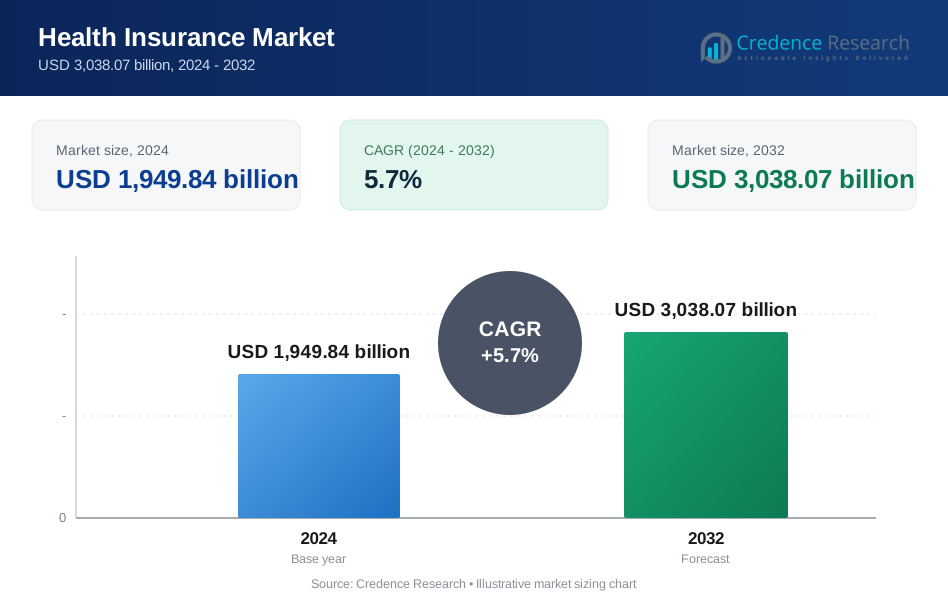
The global health insurance market reached USD 1,949.84 billion in 2024 and is projected to grow to USD 3,038.07 billion by 2032, reflecting a CAGR of 5.7% during the forecast period.
| REPORT ATTRIBUTE | DETAILS |
|---|---|
| Historical Period | 2020-2023 |
| Base Year | 2024 |
| Forecast Period | 2025-2032 |
| Health Insurance Market Size 2024 | USD 1,949.84 billion |
| Health Insurance Market, CAGR | 5.7% |
| Health Insurance MarketSize 2032 | USD 3,038.07 billion |
The health insurance market is driven by major players such as UnitedHealth Group, Anthem, Aetna (CVS Health), Cigna Corporation, Humana Inc., Kaiser Permanente, Bupa, Allianz, AXA, and Aviva, all of which expand their reach through diverse plan offerings, strong hospital networks, and advanced digital platforms. These companies enhance competitiveness by investing in telehealth services, data-driven underwriting, and personalized coverage models. Regionally, North America leads the market with 35% share, supported by high healthcare spending and strong private insurance adoption. Europe follows with 28% share, driven by robust public–private coverage systems and rising supplemental insurance demand across key countries.
Market Insights
- The health insurance market reached USD 1,949.84 billion in 2024 and will grow at a CAGR of 5.7% through 2032, driven by rising medical costs and expanding coverage needs.
- Key drivers include increasing chronic disease cases, higher hospitalization expenses, and strong government initiatives encouraging public and private insurance adoption across major economies.
- Major trends include digital claim processing, telemedicine integration, wellness-based insurance models, and technology-driven underwriting adopted by leading players such as UnitedHealth Group, Aetna, Cigna, and Allianz.
- Market restraints arise from high premiums, low penetration in developing regions, and rising fraud-related claim losses that pressure insurer profitability and pricing strategies.
- Regionally, North America leads with 35% share, followed by Europe at 28% and Asia Pacific at 27%. Segment-wise, medical insurance accounts for 58% share, life-time coverage holds 52%, and private insurers lead with 61% of the overall market.
Market Segmentation Analysis:
By Insurance Type
Medical insurance leads the segment with 58% share, driven by rising chronic disease cases, higher hospitalization costs, and the need for comprehensive coverage across outpatient and inpatient care. Consumers prefer medical insurance because it offers broad protection, cashless treatment options, and access to extensive hospital networks. Critical illness insurance grows steadily as more individuals seek financial protection against high-cost diseases, while disability and income protection plans expand with rising workplace risk awareness. Increasing lifestyle-related health issues, greater awareness campaigns, and government support for wider coverage continue to strengthen demand across all insurance types.
- For instance, UnitedHealth Group leverages extensive data analytics and AI-driven tools to enhance claims processing efficiency and improve the healthcare experience for the more than 50 million people it serves.
By Coverage Type
Life-time coverage dominates the market with 52% share, supported by long-term financial protection, continuous medical support, and increasing consumer preference for policies that remain active without renewal complexity. Term coverage remains popular for its affordability, especially among young policyholders seeking essential protection. HMO plans gain attention due to cost control and coordinated care models, while PPO plans grow with rising demand for flexible provider choice. Growing healthcare costs, rising hospitalization rates, and the need for uninterrupted coverage continue to push life-time plans as the strongest segment within the health insurance market.
- For instance, Kaiser Permanente expanded its connected care network to 12.6 million members, supported by 24,000 physicians delivering coordinated lifetime coverage.
By Provider
Private health insurance providers lead the market with 61% share, driven by faster claim processing, broader plan customization, and wider hospital networks offering cashless treatment. Private insurers attract high enrollment due to flexible premium options and enhanced wellness benefits. Public health insurance providers remain vital, especially in low-income groups, offering subsidized or government-funded coverage that expands healthcare access. The segment benefits from rising public–private partnerships, digital claim systems, and growing awareness of structured health coverage. As medical costs rise and consumers seek more comprehensive protection, private insurers continue to hold a dominant position in the market.
Key Growth Driver
Rising Healthcare Costs and Growing Medical Burden
Healthcare expenses continue to increase, pushing individuals and employers toward structured health insurance plans. Rising hospitalization rates, expensive diagnostic procedures, and growing chronic disease cases increase the need for comprehensive financial protection. Consumers prefer insurance policies that offer cashless treatment, broader coverage, and faster claim settlement. Governments also promote wider insurance adoption through subsidies and awareness programs. As medical inflation accelerates across major economies, demand for health insurance strengthens, positioning cost escalation as a major long-term growth driver.
- For instance, Cigna's Evernorth platform supported over one billion pharmacy benefit transactions annually using advanced analytics to manage chronic care needs.
Increased Awareness and Government Support Programs
Governments play a key role in expanding health insurance coverage by launching public schemes, tax benefits, and digital enrollment platforms. Awareness campaigns encourage individuals and families to prioritize financial protection and preventive healthcare. Employers also offer group insurance plans to support workforce well-being and compliance needs. Rising digital literacy and simpler claim processing encourage more people to adopt insurance policies. As universal health coverage becomes a strategic national priority, enrollment in both public and private health insurance programs continues to rise.
- For instance, Aviva paid out over £29.3 billion in benefits and claims to customers in 2024 across its entire range of insurance products, leveraging enhanced online systems that simplify enrollment and policy servicing.
Digital Transformation and Technology Integration
Technology adoption reshapes the health insurance market through online policy purchase, telemedicine integration, AI-driven risk assessment, and app-based claim processing. Digital platforms improve transparency and encourage faster decision-making for users. Insurers use analytics to personalize coverage, detect fraud, and automate approvals. Virtual health services strengthen policy value by offering remote consultations and preventive care. As digital ecosystems expand across healthcare and insurance sectors, technology-driven models help providers reduce costs, improve customer experience, and scale enrollment efficiently.
Key Trend & Opportunity
Expansion of Preventive Health and Wellness Programs
Health insurers increasingly offer wellness benefits, annual check-ups, fitness rewards, and chronic disease management tools to promote preventive care. These programs reduce long-term claim costs and improve customer retention. Digital health tracking, wearable devices, and mobile health apps help insurers monitor lifestyle patterns and tailor coverages. The shift from treatment-focused models to prevention-centered insurance creates strong opportunities for differentiation. As consumers prioritize healthier living and long-term well-being, demand for wellness-integrated insurance plans continues to grow across global markets.
- For instance, the independent non-profit network Humana People to People reaches over 17.9 million people annually across 46 countries with a variety of community development programs, which include health promotion activities.
Growth of Tailored and Value-Based Insurance Plans
Personalized insurance plans gain traction as consumers seek coverage that matches their health needs, age groups, and risk levels. Insurers introduce disease-specific plans, maternity cover, senior citizen packages, and low-premium products for young adults. Value-based insurance models reward healthy behavior and encourage preventive care through reduced premiums or added benefits. Rising adoption of telehealth, remote monitoring, and smart diagnostics supports this shift. As healthcare becomes more patient-centric, tailored and performance-linked insurance offerings create new growth opportunities for insurers.
- For instance, Kaiser Permanente supported personalised care through 32 million telehealth visits, enabling targeted health planning.
Key Challenge
Rising Claim Costs and Fraudulent Activities
Rising hospitalization costs, expensive treatments, and increasing claim frequency put pressure on insurer profitability. Fraudulent claims, inflated bills, and misuse of health benefits add further financial strain. Insurers must invest in advanced analytics, better verification systems, and hospital audits to control losses. High claim ratios reduce margins and force insurers to adjust premiums. Ensuring fair pricing while maintaining service quality becomes a major challenge, especially as healthcare inflation continues to rise across global markets.
Limited Accessibility and Low Penetration in Developing Regions
Many developing regions face low insurance penetration due to affordability issues, lack of awareness, and limited access to healthcare services. Rural populations struggle with enrollment challenges, inconsistent digital access, and fewer hospital networks offering cashless treatment. Public schemes attempt to bridge these gaps but face funding and operational constraints. Insurers must invest in simplified products, micro-insurance models, and outreach programs to expand coverage. Overcoming accessibility barriers remains essential for the health insurance market to achieve broader and more inclusive growth.
Regional Analysis
North America
North America leads the health insurance market with 35% share, driven by high healthcare costs, strong demand for private coverage, and widespread employer-sponsored plans. The United States dominates the region due to extensive commercial insurance networks and rising enrollment under public programs. Growth in digital health tools, telemedicine adoption, and preventive care benefits further strengthens market expansion. Canada contributes through government-supported coverage combined with growing supplemental insurance demand. Strong regulatory frameworks, advanced healthcare infrastructure, and rising chronic disease cases continue to support the region’s strong position in the global health insurance market.
Europe
Europe holds 28% share, supported by a well-established healthcare infrastructure and widespread public insurance systems. Countries like Germany, France, and the United Kingdom drive demand with mixed public–private models that support broad coverage. Rising lifestyle-related diseases and increased healthcare spending encourage consumers to adopt supplemental insurance plans. Digital health platforms and fast-growing teleconsultation services improve accessibility and user engagement. Regulatory reforms and investments in cross-border healthcare systems enhance service efficiency. Europe maintains steady growth as public and private insurers collaborate to improve affordability and expand preventive health programs.
Asia Pacific
Asia Pacific commands 27% share, propelled by expanding middle-class populations, rising healthcare awareness, and rapid urbanization. China and India drive strong demand due to government-led insurance schemes and rising private insurance adoption among working populations. Growing hospitalization costs and increased chronic disease prevalence fuel market growth. Insurers expand digital offerings, low-cost plans, and micro-insurance models to improve accessibility. Southeast Asia sees rising enrollment as employers strengthen health benefits. Infrastructure upgrades, telehealth adoption, and supportive reforms position Asia Pacific as one of the fastest-growing regions in the global health insurance landscape.
Latin America
Latin America accounts for 6% share, driven by rising healthcare spending, expanding coverage programs, and increased demand for private insurance options. Brazil and Mexico dominate the region due to growing employer-sponsored plans and government reforms improving healthcare access. Urbanization and lifestyle-related health risks encourage individuals to seek structured financial protection. Despite economic volatility and affordability challenges, digital insurance platforms improve customer reach and streamline policy enrollment. Expanding hospital networks, rising medical costs, and the need for efficient reimbursement systems continue to drive adoption across major Latin American markets.
Middle East & Africa
The Middle East and Africa hold 4% share, supported by growing investments in healthcare infrastructure and expanding mandatory health insurance programs. Gulf countries such as the UAE and Saudi Arabia lead adoption due to employer-driven coverage and strong regulatory frameworks. Africa experiences gradual growth as governments introduce public schemes and private insurers expand low-cost plans. Rising chronic disease cases, medical tourism growth, and increasing private sector participation strengthen market potential. Although infrastructure and affordability challenges persist, ongoing reforms and digital health initiatives support long-term health insurance expansion across the region.
Market Segmentations:
By Insurance Type
- Medical Insurance
- Critical Illness Insurance
- Disability Insurance
- Income Protection Insurance
By Coverage Type
- Life-Time Coverage
- Term Coverage
- Health Maintenance Organization (HMO) Plans
- Preferred Provider Organization (PPO) Plans
By Provider
- Public Health Insurance Providers
- Private Health Insurance Providers
By End User
- Individuals
- Corporates
- Families
- Senior Citizens
By Geography
- North America
- U.S.
- Canada
- Mexico
- Europe
- Germany
- France
- U.K.
- Italy
- Spain
- Rest of Europe
- Asia Pacific
- China
- Japan
- India
- South Korea
- South-east Asia
- Rest of Asia Pacific
- Latin America
- Brazil
- Argentina
- Rest of Latin America
- Middle East & Africa
- GCC Countries
- South Africa
- Rest of the Middle East and Africa
Competitive Landscape
Competitive landscape analysis shows a strong presence of major players such as UnitedHealth Group, Anthem, Aetna (CVS Health), Cigna Corporation, Humana Inc., Kaiser Permanente, Bupa, Allianz, AXA, and Aviva. These companies strengthen their market position through extensive provider networks, diverse plan offerings, and strong investments in digital health platforms. Leading insurers focus on enhancing customer engagement through telemedicine, wellness programs, AI-driven claim management, and personalized policy structures. Expansion into preventive care services, chronic disease management, and value-based insurance models supports long-term competitiveness. Mergers, acquisitions, and strategic partnerships remain common as insurers broaden their coverage portfolios and enter new regional markets. As healthcare costs rise and consumer expectations shift, competitive differentiation increasingly depends on pricing flexibility, service quality, technological innovation, and strong regulatory compliance.
Key Player Analysis
- UnitedHealth Group
- Anthem, Inc.
- Aetna (CVS Health)
- Cigna Corporation
- Humana Inc.
- Kaiser Permanente
- Bupa
- Allianz
- AXA
- Aviva
Recent Developments
- In May 2025, UnitedHealth Group - through its insurer arm UnitedHealthcare - was the subject of a media report by The Guardian which alleged the firm secretly paid nursing homes bonuses to deny hospital transfers.
- In March 2025, Cigna Group completed sale of its Medicare Advantage, supplemental benefits, and Medicare Part D business to Health Care Service Corporation (HCSC).
- In October 2024, UnitedHealthcare announced it would introduce 140 new insurance plans for 2025, expanding coverage options including dental, hearing, and vision benefits.
Report Coverage
The research report offers an in-depth analysis based on Insurance Type, Coverage Type, Provider, End User and Geography. It details leading market players, providing an overview of their business, product offerings, investments, revenue streams, and key applications. Additionally, the report includes insights into the competitive environment, SWOT analysis, current market trends, as well as the primary drivers and constraints. Furthermore, it discusses various factors that have driven market expansion in recent years. The report also explores market dynamics, regulatory scenarios, and technological advancements that are shaping the industry. It assesses the impact of external factors and global economic changes on market growth. Lastly, it provides strategic recommendations for new entrants and established companies to navigate the complexities of the market.
Future Outlook
- The market will expand as healthcare awareness and insurance adoption increase across all regions.
- Digital health platforms will improve claim processing speed and enhance customer experience.
- Telemedicine integration will strengthen policy value by supporting remote consultations and preventive care.
- Personalized and disease-specific insurance plans will gain traction among diverse age groups.
- Wellness programs and reward-based models will encourage healthier lifestyles and reduce long-term claim costs.
- Public–private partnerships will expand coverage access in developing regions.
- AI-driven underwriting will improve risk assessment and reduce fraudulent claims.
- Senior citizen insurance demand will rise with aging populations and higher medical needs.
- More insurers will invest in value-based care models to improve treatment outcomes.
- Global insurers will expand their networks to support cross-border healthcare and international coverage.
Request a Free Sample
Fill in your details and we'll send you a free sample report.
- Sample data tables & charts
- Research methodology
Need a Custom Version of This Report?
Tailor the scope, geography, or segments to your exact requirements.
- Custom geography or segment scope
- Direct access to our analyst team
Frequently Asked Questions
What is the current market size for Health Insurance market, and what is its projected size in 2032?
At what Compound Annual Growth Rate is the Health Insurance market projected to grow between 2025 and 2032?
Who are the major players in the global Health Insurance Market?
What are the major market drivers of the Health Insurance industry?
What are the major market restraints of the Health Insurance industry?
What are the major market opportunities of the Health Insurance industry?
Who are the leading companies in the Health Insurance market?
Table of Content
Chapter 1. Report Introduction
- 1.1 Report Description & Purpose
- 1.1.1 Report Title & Market Definition
- 1.1.2 Unique Selling Propositions (USP) & Key Differentiators
- 1.1.3 Value Proposition for Stakeholders
- 1.2 Research Objectives
- 1.2.1 Market Sizing Objectives (Volume & Revenue) (Volume Where Applicable)
- 1.2.2 Segmentation Objectives
- 1.2.3 Competitive Intelligence Objectives
- 1.2.4 Forecast & Scenario Objectives
- 1.3 Report Scope
- 1.3.1 Health Insurance Scope – Segments & Subsegments Covered
- 1.3.2 Geographic Scope – Regions & Countries Covered
- 1.3.3 Historical Period, Base Year & Forecast Period (2024; forecast to 2032)
- 1.3.4 Inclusions & Exclusions
- 1.4 Industry Classification & Applicable Codes
- 1.5 Currency, Measurement Units & Valuation Basis
- 1.6 Target Stakeholders
- 1.7 Limitations & Assumptions
Chapter 2. Executive Summary
- 2.1 Global Health Insurance Market Snapshot
- 2.1.1 Market Size – Historical (2024) & Forecast (2024-2032) (2024: USD 1,949.84 billion → 2032: USD 3,038.07 billion)
- 2.1.2 Volume & Revenue – Global Totals (Volume Where Applicable)
- 2.1.3 Key Market Highlights – Top Five Facts
- 2.2 Health Insurance Market Segmentation Snapshot
- 2.2.1 Market Split by Region – 2024 vs. 2032
- 2.3 Competitive Snapshot
- 2.3.1 Top 10 Players by Revenue Share – 2024
- 2.3.2 Top 10 Players by Volume Share – 2024 (Volume Where Applicable)
- 2.3.3 Recent Strategic Developments (18-Month Summary)
- 2.4 Key Investment Highlights & Strategic Conclusions
Chapter 3. Health Insurance Market Dynamics & Industry Analysis
- 3.1 Market Overview & Context
- 3.1.1 Health Insurance Market Position in the Broader Industry Value Chain
- 3.1.2 Demand Structure & Purchasing Dynamics
- 3.1.3 Market Maturity & Development Stage by Region
- 3.2 Health Insurance Market Drivers
- 3.3 Health Insurance Market Restraints & Challenges
- 3.4 Health Insurance Market Opportunities
- 3.5 Porter's Five Forces Analysis
- 3.5.1 Threat of New Entrants
- 3.5.2 Bargaining Power of Suppliers
- 3.5.3 Bargaining Power of Buyers
- 3.5.4 Threat of Substitutes
- 3.5.5 Competitive Rivalry – Intensity Assessment
- 3.6 Health Insurance Value Chain Analysis
- 3.6.1 Upstream – Key Inputs, Resources & Suppliers
- 3.6.1.1 Key Input/Resource 1
- 3.6.1.2 Key Input/Resource 2
- 3.6.1.3 Key Input/Resource 3
- 3.6.2 Midstream – Core Operations & Value Creation
- 3.6.2.1 Operating Model & Process Overview
- 3.6.2.2 Key Operating Locations & Capabilities by Company
- 3.6.3 Downstream – Market Channels & End Users
- 3.6.3.1 Direct Sales & Customer Engagement Channels
- 3.6.3.2 Indirect Sales, Intermediaries & Partner Channels
- 3.6.4 Value Chain Profitability Analysis
- 3.6.1 Upstream – Key Inputs, Resources & Suppliers
- 3.7 PESTEL Analysis
- 3.7.1 Political Factors
- 3.7.2 Economic Factors
- 3.7.3 Social Factors
- 3.7.4 Technological Factors
- 3.7.5 Environmental Factors
- 3.7.6 Legal Factors
- 3.8 Health Insurance Supply Chain Analysis
- 3.8.1 Critical Input & Resource Availability Risk Assessment
- 3.8.2 Supplier & Operational Concentration Risk (Geographic Exposure)
- 3.8.3 Supply & Service Disruption Impact Analysis
- 3.9 Regulatory & Policy Landscape
Note: The regulatory and policy landscape section covers regulations based on their applicability to the market, Health Insurance category, geography, and scope of the study. Only regulatory frameworks with a material impact on operations, compliance, trade, sustainability, or market access are analyzed in detail.
Chapter 4. Key Investment Pockets & Opportunity Analysis
- 4.1 Health Insurance Market Attractiveness Analysis
- 4.1.1 By Region – Investment Attractiveness Matrix (Market Size × CAGR)
- 4.2 Absolute Revenue Growth Opportunity
- 4.2.1 By Region – Absolute Revenue Growth Through 2032
- 4.3 Incremental Demand Opportunity
- 4.3.1 By Region – Incremental Demand Through 2032
- 4.3.2 Segment – Incremental Demand
- 4.4 Emerging Submarket Opportunity Deep Dive (Subject to Applicability)
- 4.5 Priority Market Opportunity Scorecards
- 4.5.1 United States
- 4.5.2 Europe
- 4.5.3 Asia
- 4.5.4 Middle East & Africa
Note: Priority market opportunity scorecards reflect the geographic scope and strategic relevance of the study. Listed markets are indicative and may be adapted to the industry.
Chapter 5. Health Insurance Cross-Border Trade & Market Access Analysis
- 5.1 International Trade & Cross-Border Activity Overview
- 5.1.1 Global Export Value by Country (2024)
- 5.1.2 Global Export Volume by Country (2024) (Volume Where Applicable)
- 5.1.3 Global Import Value by Country (2024)
- 5.1.4 Global Import Volume by Country (2024) (Volume Where Applicable)
- 5.1.5 Net Trade Balance by Country (2024)
- 5.2 Export Analysis – Segment
- 5.2.1 Category 1 (Applicable Classification Code)
- 5.2.2 Category 2 (Applicable Classification Code)
- 5.2.3 Category 3 (Applicable Classification Code)
- 5.2.4 Category 4 (Applicable Classification Code)
- 5.2.5 Category 5 (Applicable Classification Code)
- 5.3 Import Analysis – Segment
- 5.3.1 Category 1 (Applicable Classification Code)
- 5.3.2 Category 2 (Applicable Classification Code)
- 5.3.3 Category 3 (Applicable Classification Code)
- 5.3.4 Category 4 (Applicable Classification Code)
- 5.3.5 Category 5 (Applicable Classification Code)
- 5.4 Cross-Border Pricing & Transaction Benchmarks
- 5.4.1 Export Pricing – Segment & Country
- 5.4.2 Import Pricing – Segment & Source Country
- 5.4.3 Price Trends (2024)
- 5.5 Key Cross-Border Trade & Delivery Routes
- 5.5.1 Cross-Border Trade/Delivery Route 1
- 5.5.2 Cross-Border Trade/Delivery Route 2
- 5.5.3 Cross-Border Trade/Delivery Route 3
- 5.5.4 Cross-Border Trade/Delivery Route 4
- 5.5.5 Cross-Border Trade/Delivery Route 5
- 5.6 Trade Policy & Market Access Impact Assessment
- 5.6.1 Tariff & Non-Tariff Barriers
- 5.6.2 Regional Trade & Economic Integration Frameworks
- 5.6.3 Bilateral & Multilateral Trade Agreements
- 5.6.4 Cross-Border Operating, Licensing & Localization Requirements
Note: This chapter applies where cross-border trade or delivery is relevant to Health Insurance. Goods, services, and digital offerings are assessed using applicable classifications and transaction measures. Import-export volumes, trade balances, and route analyses are included only where meaningful to the market.
Chapter 6. Competitive Landscape & Company Benchmarking
- 6.1 Health Insurance Market Concentration & Structure
- 6.1.1 Herfindahl-Hirschman Index (HHI) – vs. 2024
- 6.1.2 Leading, Mid-Sized & Emerging Player Structure
- 6.1.3 Global, Regional & Local Player Dynamics
- 6.2 Health Insurance Market Share Analysis – 2024
- 6.2.1 Global Revenue Share by Company
- 6.2.2 Global Volume Share by Company (Volume Where Applicable)
- 6.2.3 Regional Revenue Share
- 6.2.4 Market Share Evolution ( vs. 2024)
- 6.2.5 Company Market Share by Key Segment
- 6.2.6 Company Market Share by Customer Group
- 6.3 Operating Scale, Capacity & Infrastructure Analysis
- 6.3.1 Global Operating Scale & Supply Capacity
- 6.3.2 Resource Utilization & Operating Efficiency
- 6.3.3 Output, Service Delivery & Activity Metrics
- 6.3.4 Operating Footprint & Infrastructure Map
- 6.3.5 Planned Operational & Capacity Expansion
- 6.4 Health Insurance Competitive Benchmarking Matrix
- 6.4.1 Revenue, Growth, Profitability & Operating Metric Comparison
- 6.4.2 Channel Revenue Mix
- 6.4.3 Geographic Revenue Exposure
- 6.4.4 R&D Intensity
- 6.4.5 Sustainability Maturity
- 6.5 Strategic Developments in Health Insurance (Last 24 Months)
- 6.5.1 Mergers, Acquisitions & Divestments
- 6.5.2 New Products, Services & Solutions in Health Insurance
- 6.5.3 Operational & Infrastructure Expansions
- 6.5.4 Strategic Alliances, Joint Ventures & Partnerships
- 6.5.5 Distribution Expansion & Market Entry
- 6.5.6 Sustainability & ESG Initiatives
- 6.6 Competitive Strategy Mapping
- 6.6.1 Leader, Challenger, Follower & Niche Classification
- 6.6.2 Pricing Strategy Comparison
- 6.6.3 Channel Strategy Matrix
Note: Strategic developments are included based on their materiality and the availability of reliable information.
Chapter 7. Global Health Insurance Market – By Sales & Delivery Channel
- 7.1 Segment Overview
- 7.1.1 Volume & Revenue Split by Channel (2024 & 2032) (Volume Where Applicable)
- 7.1.2 Channel Mix Evolution (2024-2032)
Chapter 8. Regional Market Analysis – Global Overview
- 8.1 Global Regional Overview
- 8.1.1 Regional Volume Share (Volume Where Applicable)
- 8.1.2 Regional Revenue Share
- 8.1.3 Regional Volume by Region (Volume Where Applicable)
- 8.1.4 Regional Revenue by Region
- 8.1.5 Regional Forecast Through 2032
- 8.2 Cross-Regional Segment Analysis
- 8.2.1 By Sales & Delivery Channel
- 8.2.2 By Competitive Positioning & Price Tier
Chapter 9. North America Health Insurance Market
- 9.1 United States
- 9.2 Canada
- 9.3 Mexico
Chapter 10. Europe Health Insurance Market
- 10.1 Germany
- 10.2 France
- 10.3 Italy
- 10.4 United Kingdom
- 10.5 Spain
- 10.6 Poland
- 10.7 Russia
- 10.8 Netherlands
- 10.9 Belgium
- 10.10 Sweden
- 10.11 Denmark
- 10.12 Norway
- 10.13 Rest of Europe
Chapter 11. Asia Pacific Health Insurance Market
- 11.1 China
- 11.2 India
- 11.3 Japan
- 11.4 South Korea
- 11.5 Thailand
- 11.6 Indonesia
- 11.7 Vietnam
- 11.8 Malaysia
- 11.9 Australia
- 11.10 Rest of Asia Pacific
Chapter 12. Latin America Health Insurance Market
- 12.1 Brazil
- 12.2 Argentina
- 12.3 Colombia
- 12.4 Chile
- 12.5 Rest of Latin America
Chapter 13. Middle East Health Insurance Market
- 13.1 Saudi Arabia
- 13.2 United Arab Emirates
- 13.3 Turkey
- 13.4 Israel
- 13.5 Iran
- 13.6 Rest of the Middle East
Chapter 14. Africa Health Insurance Market
- 14.1 South Africa
- 14.2 Egypt
- 14.3 Nigeria
- 14.4 Morocco
- 14.5 Rest of Africa
Chapter 15. Health Insurance Company Profiles
- 15.1 [Company 01]
- 15.1.1 Company Overview
- 15.1.2 Key Management Personnel
- 15.1.3 Products & Services Portfolio
- 15.1.4 Financial Performance
- 15.1.5 Key Market Focus & Geographic Presence
- 15.1.6 Recent Developments & Strategic Initiatives
Note: The company profile list is preliminary and may change based on research findings, market developments, data availability, and client requirements.
Chapter 16. Appendices
- Appendix A – List of Abbreviations & Acronyms
- Appendix B – Industry Classification Code Reference – Full Series
- Appendix C – Supply, Output & Operating Capacity Data Tables
- Appendix D – End-Use & Demand Base Tables
- Appendix E – Demand, Adoption & Usage Assumptions
- Appendix F – Pricing & Revenue Metric Reference Tables
- Appendix G – Company Operations & Infrastructure Database
- Appendix H – Cross-Border Trade & Activity Data Tables (Where Applicable)
- Appendix I – Regulatory Summary Tables
- Appendix J – Primary Research Participant List (Anonymized)
- Appendix K – Primary Research Questionnaire Framework
- Appendix L – Data Sources & Bibliography
- Appendix M – Market Size Divergence & Source Comparison
Chapter 17. Research Methodology
- 17.1 Research Framework & Philosophy
- 17.2 Secondary Research – Sources, Hierarchy & Data Extraction
- 17.3 Data Modeling – Bottom-Up & Top-Down Market Sizing
- 17.4 Primary Research – Stakeholder Framework, LOI & Sample Sizes
- 17.5 Forecast Methodology – Regression, Scenario & Sensitivity Analysis
- 17.6 Quality Control – Four-Layer Validation Framework
- 17.7 Limitations & Standard Assumptions
- 17.8 Disclaimer
