Home » Medical Devices » Hernia Repair Devices Market

Hernia Repair Device Market By Product (Hernia Mesh, Biologic Mesh, Synthetic Mesh, Hernia Fixation Devices, Sutures, Tack Applicators, Glue Applicators, Others); By Type (Inguinal Hernia, Umbilical Hernia, Incisional Hernia, Femoral Hernia, Others); By Region – Growth, Share, Opportunities & Competitive Analysis, 2024 – 2032

Report ID: 6851 | Report Format : Excel, PDF

Market Overview

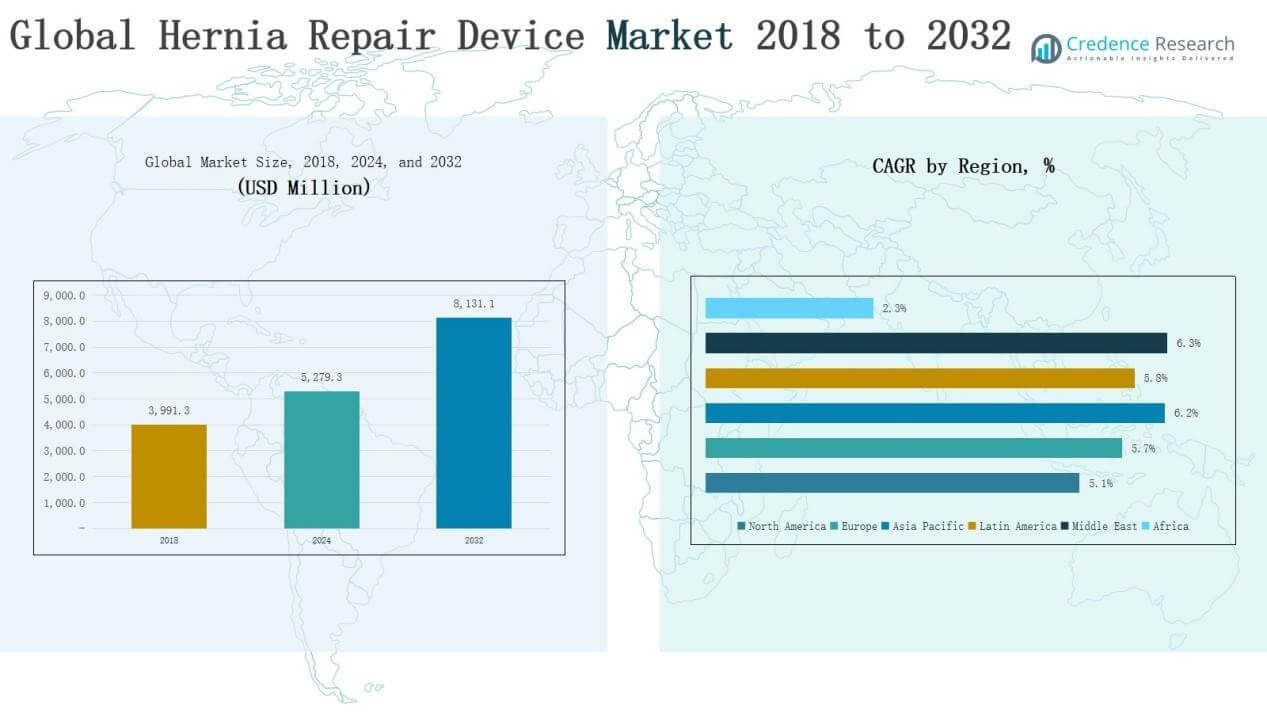
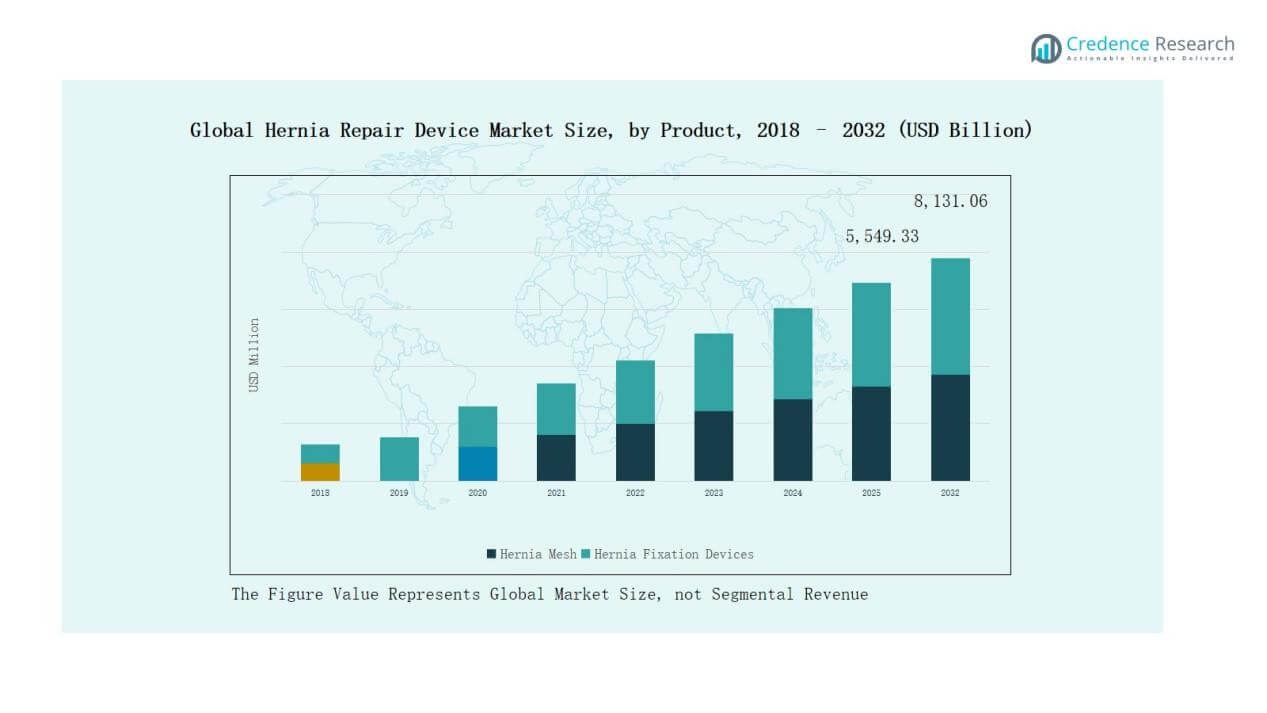
Global Hernia Repair Device Market size was valued at USD 3,991.3 million in 2018 to USD 5,279.3 million in 2024 and is anticipated to reach USD 8,131.1 million by 2032, at a CAGR of 5.61% during the forecast period.

REPORT ATTRIBUTE DETAILS
Historical Period  2020-2023
Base Year  2024
Forecast Period  2025-2032
Hernia Repair Device Market Size 2024  USD 5,279.3 Million
Hernia Repair Device Market, CAGR  5.61%
Hernia Repair Device Market Size 2032  USD 8,131.1 Million


The Global Hernia Repair Device Market is shaped by the strong presence of leading companies such as Medtronic, Johnson & Johnson Services, BD (Becton, Dickinson and Company), W. L. Gore & Associates, B. Braun SE, Baxter International Inc., Cook Medical, Herniamesh S.r.l., and LifeCell Corporation. These players maintain competitive advantage through extensive product portfolios, technological innovation, and wide distribution networks. Market leaders emphasize the development of advanced meshes, absorbable fixation devices, and minimally invasive solutions to address rising surgical demand and improve patient outcomes. Regionally, North America dominated the market with a 33.5% share in 2024, driven by strong healthcare infrastructure, favorable reimbursement systems, and widespread adoption of robotic-assisted and laparoscopic procedures. This leadership reflects the region’s early adoption of innovative technologies and the presence of globally established manufacturers.

Access crucial information at unmatched prices!

Request your sample report today & start making informed decisions powered by Credence Research Inc.!

Download Sample

Market Insights

  • The Global Hernia Repair Device Market grew from USD 3,991.3 million in 2018 to USD 5,279.3 million in 2024, with projections to reach USD 8,131.1 million by 2032.
  • Hernia mesh dominated with 62% share in 2024, led by synthetic mesh at 48% due to cost-effectiveness and durability, while biologic mesh gained 14% in complex repairs.
  • By type, inguinal hernia accounted for 41% share in 2024, followed by umbilical hernia at 22%, incisional at 18%, femoral at 11%, and others at 8%.
  • North America led with 33.5% share in 2024, supported by advanced healthcare infrastructure, favorable reimbursement, and strong presence of global players like Medtronic and Johnson & Johnson.
  • Asia Pacific showed the fastest growth with 23.6% share in 2024, driven by rising healthcare investments, growing surgical capacity, and strong demand in China, India, and Southeast Asia.

Hernia Repair Device Market Size

Market Segment Insights

By Product

The hernia mesh segment dominated the global market in 2024 with a 62% share, reflecting its widespread adoption in surgical procedures. Within this category, synthetic mesh accounted for the largest portion, holding 48% share, supported by its durability, cost-effectiveness, and high success rates in reducing recurrence. Biologic mesh, with an estimated 14% share, is gaining traction in complex and contaminated cases due to better tissue integration and reduced infection risks. Hernia fixation devices represented 38% share, where sutures led with 20% share, followed by tack applicators at 10%, glue applicators at 5%, and others at 3%, driven by surgeon preference and procedure type.

  • For instance, Becton Dickinson’s (BD) SurgiMend® biologic mesh, derived from acellular dermal matrix, has documented use in contaminated hernia repairs where synthetic meshes are contraindicated.

By Type

The inguinal hernia segment held the dominant position in 2024 with a 41% market share, driven by its high global prevalence, particularly in men, and the widespread use of meshes for repair. The umbilical hernia segment accounted for 22% share, supported by rising obesity rates and higher incidence among infants and women. The incisional hernia segment captured 18% share, largely influenced by complications from previous abdominal surgeries. Femoral hernia repairs represented 11% share, with higher adoption in women due to anatomical predispositions. The remaining 8% share was contributed by other hernia types, including rare abdominal wall hernias, where specialized meshes and fixation devices are increasingly used.

  • For instance, Medtronic’s ProGrip™ self-gripping mesh is widely adopted in inguinal hernia surgeries due to its fixation-free design, which reduces operating time.

Market Overview

Key Growth Drivers

Rising Prevalence of Hernia Cases

The global hernia repair device market grows strongly due to rising hernia prevalence worldwide. Factors such as aging populations, obesity, and sedentary lifestyles increase the risk of abdominal wall weaknesses. Inguinal and incisional hernias remain highly common, creating consistent demand for surgical interventions. Healthcare providers prefer advanced meshes and fixation devices to improve outcomes and reduce recurrence rates. Growing patient awareness, combined with higher diagnosis rates, further fuels procedure volumes. This increasing disease burden continues to drive adoption of innovative hernia repair devices globally.

  • For instance, W.L. Gore & Associates introduced the Gore® Synecor Preperitoneal Biomaterial in 2017, combining permanent and bioabsorbable layers, enabling surgeons to customize repair approaches and enhance patient recovery in complex hernia cases.

Technological Advancements in Surgical Procedures

Technological progress in minimally invasive and robotic-assisted surgeries drives the hernia repair device market. Surgeons increasingly adopt laparoscopic procedures that reduce hospital stays, lower infection risks, and ensure quicker recovery. Companies invest in next-generation meshes with biocompatible materials and fixation systems that improve patient safety. Robotics adds precision in complex cases, enhancing surgical efficiency and reducing complications. Continuous improvements in device design, absorbable materials, and tailored mesh solutions strengthen market growth by meeting evolving clinical demands and improving long-term patient outcomes.

  • For instance, Medtronic’s Symbotex™ Composite Mesh incorporates a resorbable collagen barrier that minimizes tissue attachment and enhances tissue integration.

Expanding Healthcare Infrastructure and Expenditure

Rising healthcare investments globally strengthen the adoption of advanced hernia repair devices. Emerging economies, including India, China, and Brazil, expand healthcare facilities and surgical capacities. Government initiatives to modernize healthcare and improve surgical access encourage adoption of minimally invasive treatments. Insurance coverage and reimbursement support in developed markets further boost device uptake. Hospitals and specialty clinics increasingly prefer advanced meshes and fixation devices to reduce complications. Growing focus on cost-effective and efficient surgical care enhances device penetration, supporting sustained market expansion.

Hernia Repair Device Market Share

Key Trends & Opportunities

Shift Toward Biologic and Absorbable Meshes

The global hernia repair device market shows a clear shift toward biologic and absorbable meshes. Surgeons and patients prefer materials that integrate with body tissues and reduce risks of infection or rejection. Biologic meshes offer advantages in complex and contaminated hernia repairs, gaining wide acceptance in developed markets. Research efforts focus on combining strength with natural tissue compatibility. This trend opens opportunities for manufacturers to expand portfolios with innovative, patient-centric solutions, positioning biologic and absorbable meshes as key growth segments.

  • For instance, Integra LifeSciences’ SurgiMend® a biologic mesh derived from fetal bovine dermis has gained adoption in the U.S. for complex abdominal wall reconstructions where infection risk is high.

Growth in Outpatient and Ambulatory Surgical Centers

Ambulatory surgical centers (ASCs) are playing a bigger role in hernia repair procedures. Patients seek cost-effective, minimally invasive treatments with faster recovery, making ASCs an attractive choice. Hospitals also face pressure to optimize resources, pushing simpler procedures toward outpatient facilities. Device makers benefit from developing specialized products suited for quick, minimally invasive surgeries. The growing preference for ASCs provides opportunities to expand device penetration, particularly in regions with strong insurance coverage and cost-focused healthcare systems. This trend accelerates adoption of advanced hernia repair solutions.

  • For instance, Medtronic has reported growing demand for its ProGrip™ Laparoscopic Self-Fixating Mesh, highlighting its suitability for quicker hernia repair procedures conducted in ASC settings.

Key Challenges

Risk of Postoperative Complications and Recurrence

Despite advancements, postoperative complications and hernia recurrence remain major challenges in the global hernia repair device market. Issues such as chronic pain, mesh rejection, and infection impact patient outcomes. Recurrence rates vary depending on procedure type and device used, leading to hesitation among patients and surgeons. Negative experiences can discourage adoption of certain meshes or fixation systems. Manufacturers must focus on improving product safety, biocompatibility, and long-term performance to address these risks and maintain trust among healthcare professionals and patients.

High Cost of Advanced Devices and Procedures

The high cost of advanced hernia repair devices and minimally invasive surgeries limits adoption, particularly in developing economies. Biologic meshes and robotic-assisted systems involve significant expense, restricting access for low- and middle-income populations. Limited reimbursement policies in certain regions further increase financial barriers for patients. Hospitals in cost-sensitive markets often rely on conventional methods, slowing uptake of innovative devices. Addressing affordability and demonstrating cost-effectiveness through clinical outcomes will be crucial for wider penetration in price-sensitive healthcare environments.

Shortage of Skilled Surgeons for Minimally Invasive Procedures

The adoption of advanced hernia repair devices often depends on the availability of skilled surgeons. Many regions, especially in emerging markets, face shortages of professionals trained in laparoscopic and robotic-assisted techniques. Limited training infrastructure and steep learning curves slow the spread of these advanced methods. This challenge restricts device demand, particularly for high-tech meshes and fixation systems designed for minimally invasive surgeries. Expanding surgical training programs and partnerships with hospitals will be critical for manufacturers to overcome workforce limitations and unlock growth.

Regional Analysis

North America

North America accounted for 33.5% of the global hernia repair device market in 2024, supported by strong healthcare infrastructure and high surgical procedure volumes. The market grew from USD 1,325.50 million in 2018 to USD 1,703.25 million in 2024 and is projected to reach USD 2,520.63 million by 2032, registering a CAGR of 5.1%. Widespread adoption of minimally invasive and robotic-assisted surgeries drives growth, along with favorable reimbursement policies. The U.S. dominates the region due to advanced surgical capabilities, strong demand for biologic meshes, and continuous innovation by key players such as Medtronic and Johnson & Johnson.

Europe

Europe represented 25.7% of the global market in 2024, fueled by growing demand for biologic and synthetic meshes. The market expanded from USD 986.24 million in 2018 to USD 1,308.13 million in 2024 and is anticipated to reach USD 2,022.20 million by 2032 at a CAGR of 5.7%. Countries such as Germany, France, and the UK lead adoption due to advanced healthcare systems and strong awareness of minimally invasive procedures. Supportive regulatory frameworks and emphasis on cost-effective, safe hernia repair methods further enhance regional growth. Local manufacturers also contribute through specialized fixation devices and mesh innovations.

Asia Pacific

Asia Pacific held 23.6% of the global market in 2024, showing strong growth potential. The market rose from USD 873.69 million in 2018 to USD 1,199.76 million in 2024 and is forecast to reach USD 1,938.45 million by 2032, advancing at the highest regional CAGR of 6.2%. Rapid healthcare infrastructure development in China, India, and Southeast Asia, coupled with rising obesity and aging populations, fuels demand. Growing access to minimally invasive surgeries and increasing government healthcare spending drive expansion. Multinational companies are actively entering this market through partnerships and training programs to address the shortage of skilled surgeons.

Latin America

Latin America contributed 10.7% to the global market in 2024, driven by increasing awareness of surgical treatments and expanding healthcare access. The market grew from USD 407.51 million in 2018 to USD 545.80 million in 2024 and is projected to reach USD 854.57 million by 2032, reflecting a CAGR of 5.8%. Brazil dominates regional adoption due to its large patient pool and improving surgical infrastructure. Mexico and Argentina are also emerging markets where growing private healthcare and government initiatives are driving demand. However, cost constraints in rural areas continue to limit widespread adoption of advanced hernia repair devices.

Middle East

The Middle East captured 7.9% of the global market in 2024, reflecting robust expansion in GCC countries and Israel. Market revenues rose from USD 292.16 million in 2018 to USD 402.06 million in 2024 and are forecast to reach USD 651.30 million by 2032 at a CAGR of 6.3%. Increasing adoption of minimally invasive surgeries, rising investments in healthcare infrastructure, and government-led modernization initiatives fuel demand. GCC countries drive much of this growth with advanced hospitals and rising surgical capacities. Strong preference for technologically advanced fixation devices and premium meshes positions the region as a lucrative emerging market.

Africa

Africa accounted for the smallest share at 2.4% of the global hernia repair device market in 2024. The market expanded from USD 106.17 million in 2018 to USD 120.29 million in 2024 and is projected to reach USD 143.92 million by 2032, registering the lowest regional CAGR of 2.3%. Growth is hindered by limited access to advanced healthcare, low awareness, and affordability challenges. However, countries such as South Africa and Egypt lead adoption due to better healthcare infrastructure and growing medical tourism. Efforts by NGOs and government programs to expand surgical care access are expected to provide modest growth opportunities.

Hernia Repair Device Market Segmentation

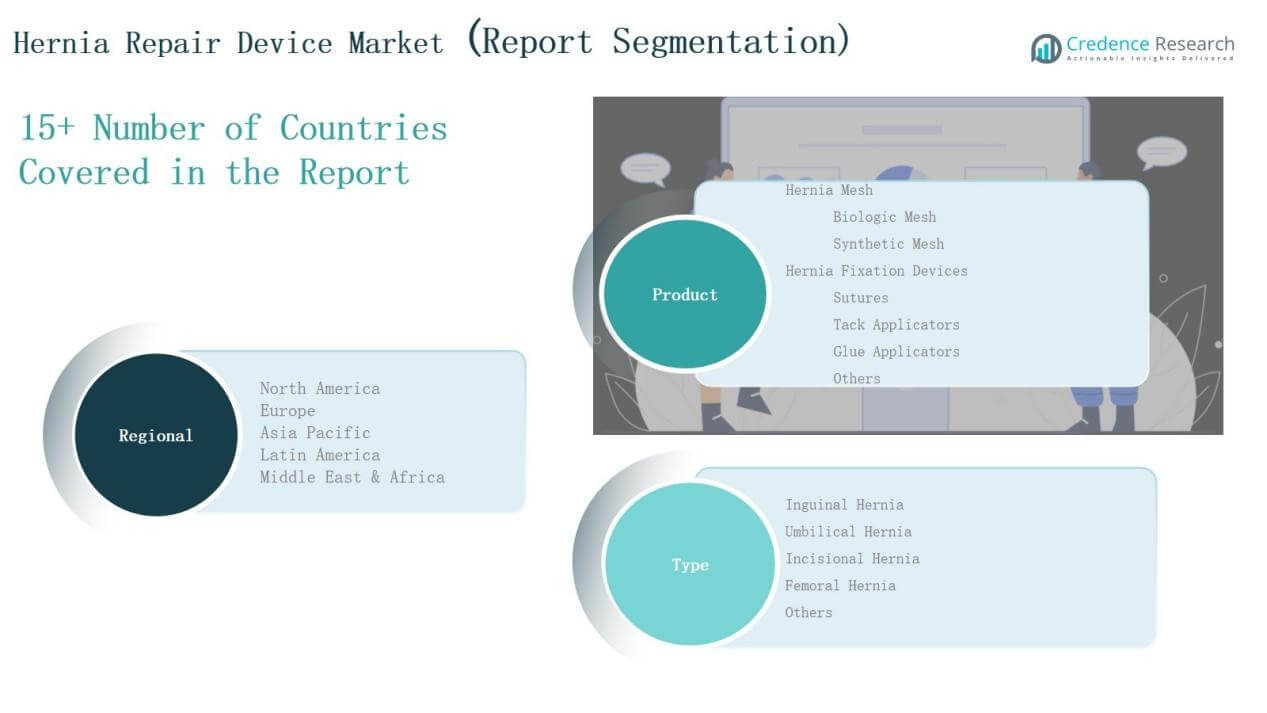
Market Segmentations:

By Product

  • Hernia Mesh
  • Biologic Mesh
  • Synthetic Mesh
  • Hernia Fixation Devices
  • Sutures
  • Tack Applicators
  • Glue Applicators
  • Others

By Type

  • Inguinal Hernia
  • Umbilical Hernia
  • Incisional Hernia
  • Femoral Hernia
  • Others

By Region

North America

  • U.S.
  • Canada
  • Mexico

Europe

  • UK
  • France
  • Germany
  • Italy
  • Spain
  • Russia
  • Rest of Europe

Asia Pacific

  • China
  • Japan
  • South Korea
  • India
  • Australia
  • Southeast Asia
  • Rest of Asia Pacific

Latin America

  • Brazil
  • Argentina
  • Rest of Latin America

Middle East

  • GCC Countries
  • Israel
  • Turkey
  • Rest of Middle East

Africa

  • South Africa
  • Egypt
  • Rest of Africa

Competitive Landscape

The global hernia repair device market is moderately consolidated, with leading multinational companies holding significant market share through strong product portfolios and global distribution networks. Key players such as Medtronic, Johnson & Johnson Services, BD, W. L. Gore & Associates, and B. Braun SE dominate the space with advanced meshes, fixation devices, and minimally invasive solutions. These companies emphasize product innovation, including biologic and absorbable meshes designed to improve patient safety and reduce recurrence rates. Regional players like Herniamesh S.r.l. and LifeCell Corporation also strengthen competition by offering cost-effective and specialized products. Strategic initiatives, including mergers, acquisitions, and collaborations, expand geographic reach and enhance technology adoption. For instance, partnerships with hospitals and training programs help manufacturers promote minimally invasive and robotic-assisted procedures. Continuous investment in R&D, coupled with efforts to address affordability and access in emerging markets, shapes the competitive dynamics of this growing global industry.

Shape Your Report to Specific Countries or Regions & Enjoy 30% Off!

Key Players

  • Medtronic
  • Johnson & Johnson Services, Inc.
  • BD (Becton, Dickinson and Company)
  • L. Gore & Associates, Inc.
  • Braun SE
  • Baxter International Inc.
  • Cook Medical
  • Herniamesh S.r.l.
  • LifeCell Corporation
  • Other Key Players

Recent Developments

  • In July 2025, Medtronic secured CE Mark approval for LigaSure™ RAS integration on the Hugo system and showcased telesurgery capabilities at the SRS 2025 meeting.
  • In April 2025, BD (Becton, Dickinson and Company) received FDA 510(k) clearance and launched Phasix™ ST Umbilical Hernia Patch, the first fully absorbable hernia patch designed specifically for umbilical hernias.
  • In 2024, Medtronic introduced a next-generation polypropylene mesh that cuts flexibility and inflammation risk.

Report Coverage

The research report offers an in-depth analysis based on Type, Product and Region. It details leading market players, providing an overview of their business, product offerings, investments, revenue streams, and key applications. Additionally, the report includes insights into the competitive environment, SWOT analysis, current market trends, as well as the primary drivers and constraints. Furthermore, it discusses various factors that have driven market expansion in recent years. The report also explores market dynamics, regulatory scenarios, and technological advancements that are shaping the industry. It assesses the impact of external factors and global economic changes on market growth. Lastly, it provides strategic recommendations for new entrants and established companies to navigate the complexities of the market.

Future Outlook

  1. Demand for minimally invasive and robotic-assisted hernia repair procedures will continue to rise.
  2. Adoption of biologic and absorbable meshes will expand in complex and contaminated cases.
  3. Manufacturers will focus on developing lighter, more biocompatible, and infection-resistant mesh materials.
  4. Training programs for surgeons in laparoscopic and robotic techniques will increase globally.
  5. Emerging economies will see stronger adoption as healthcare infrastructure and awareness improve.
  6. Outpatient and ambulatory surgical centers will play a larger role in hernia repair treatments.
  7. Strategic mergers and acquisitions will strengthen company portfolios and regional presence.
  8. Cost-effective product innovations will target affordability challenges in low- and middle-income countries.
  9. Regulatory focus on patient safety and long-term outcomes will drive product improvements.
  10. Digital tools and data-driven platforms will support preoperative planning and postoperative monitoring.
CHAPTER NO. 1 : GENESIS OF THE MARKET
1.1 Market Prelude – Introduction & Scope
1.2 The Big Picture – Objectives & Vision
1.3 Strategic Edge – Unique Value Proposition
1.4 Stakeholder Compass – Key Beneficiaries
CHAPTER NO. 2 : EXECUTIVE LENS
2.1 Pulse of the Industry – Market Snapshot
2.2 Growth Arc – Revenue Projections (USD Million)
2.3. Premium Insights – Based on Primary Interviews
CHAPTER NO. 3 : HERNIA REPAIR DEVICE MARKET FORCES & INDUSTRY PULSE
3.1 Foundations of Change – Market Overview
3.2 Catalysts of Expansion – Key Market Drivers
    3.2.1 Momentum Boosters – Growth Triggers
    3.2.2 Innovation Fuel – Disruptive Technologies
3.3 Headwinds & Crosswinds – Market Restraints
    3.3.1 Regulatory Tides – Compliance Challenges
    3.3.2 Economic Frictions – Inflationary Pressures
3.4 Untapped Horizons – Growth Potential & Opportunities
3.5 Strategic Navigation – Industry Frameworks
    3.5.1 Market Equilibrium – Porter’s Five Forces
    3.5.2 Ecosystem Dynamics – Value Chain Analysis
    3.5.3 Macro Forces – PESTEL Breakdown
CHAPTER NO. 4 :KEY INVESTMENT EPICENTER
4.1 Regional Goldmines – High-Growth Geographies
4.2 Product Frontiers – Lucrative Product Categories
4.3 Type Sweet Spots – Emerging Demand Segments
CHAPTER NO. 5: REVENUE TRAJECTORY & WEALTH MAPPING
5.1 Momentum Metrics – Forecast & Growth Curves
5.2 Regional Revenue Footprint – Market Share Insights
5.3 Segmental Wealth Flow – Product & Type Revenue
CHAPTER NO. 6 : TRADE & COMMERCE ANALYSIS
6.1.Import Analysis By Region
6.1.1. Global Hernia Repair Device Market Import Revenue By Region
6.2.Export Analysis By Region
6.2.1. Global Hernia Repair Device Market Export Revenue By Region
CHAPTER NO. 7 : COMPETITION ANALYSIS
7.1.Company Market Share Analysis
7.1.1. Global Hernia Repair Device Market: Company Market Share
7.2. Global Hernia Repair Device Market Company Revenue Market Share
7.3.Strategic Developments
7.3.1.Acquisitions & Mergers
7.3.2. New Product Launch
7.3.3. Regional Expansion
7.4. Competitive Dashboard
7.5.      Company Assessment Metrics, 2024
CHAPTER NO. 8 : HERNIA REPAIR DEVICE MARKET – BY PRODUCT SEGMENT ANALYSIS
8.1.Hernia Repair Device Market Overview By Product Segment
8.1.1. Hernia Repair Device Market Revenue Share By Product
8.2.      Hernia Mesh
8.2.1.   Biologic Mesh
8.2.2.   Synthetic Mesh
8.3.      Hernia Fixation Devices
8.3.1.   Sutures
8.3.2.  Tack Applicators
8.3.3.  Glue Applicators
8.3.4.  Others
CHAPTER NO. 9 : HERNIA REPAIR DEVICE MARKET – BY TYPE SEGMENT ANALYSIS
9.1.Hernia Repair Device Market Overview By Type Segment
9.1.1. Hernia Repair Device Market Revenue Share By Type
9.2.       Inguinal Hernia
9.3.       Umbilical Hernia
9.4.       Incisional Hernia
9.5.       Femoral Hernia
9.6.       Others
CHAPTER NO. 10 : HERNIA REPAIR DEVICE MARKET – REGIONAL ANALYSIS
10.1.Hernia Repair Device Market Overview By Region Segment
10.1.1. Global Hernia Repair Device Market Revenue Share By Region
10.1.2.Regions
10.1.3.Global Hernia Repair Device Market Revenue By Region
10.1.4. Product
10.1.5.Global Hernia Repair Device Market Revenue By Product
10.1.6.Type
10.1.7. Global Hernia Repair Device Market Revenue By Type
CHAPTER NO. 11 : NORTH AMERICA HERNIA REPAIR DEVICE MARKET – COUNTRY ANALYSIS
11.1.North America Hernia Repair Device Market Overview By Country Segment
11.1.1. North America Hernia Repair Device Market Revenue Share By Region
11.2.North America
11.2.1.North America Hernia Repair Device Market Revenue By Country
11.2.2.Product
11.2.3. North America Hernia Repair Device Market Revenue By Product
11.2.4.Type
11.2.5. North America Hernia Repair Device Market Revenue By Type
11.3.U.S.
11.4.Canada
11.5.Mexico
CHAPTER NO. 12 : EUROPE HERNIA REPAIR DEVICE MARKET – COUNTRY ANALYSIS
12.1. Europe Hernia Repair Device Market Overview By Country Segment
12.1.1. Europe Hernia Repair Device Market Revenue Share By Region
12.2.Europe
12.2.1.Europe Hernia Repair Device Market Revenue By Country
12.2.2. Product
12.2.3.Europe Hernia Repair Device Market Revenue By Product
12.2.4.Type
12.2.5. Europe Hernia Repair Device Market Revenue By Type
12.3.UK
12.4.France
12.5.Germany
12.6.Italy
12.7.Spain
12.8.Russia
12.9.   Rest of Europe
CHAPTER NO. 13 : ASIA PACIFIC HERNIA REPAIR DEVICE MARKET – COUNTRY ANALYSIS
13.1.Asia Pacific Hernia Repair Device Market Overview By Country Segment
13.1.1.Asia Pacific Hernia Repair Device Market Revenue Share By Region
13.2.Asia Pacific
13.2.1. Asia Pacific Hernia Repair Device Market Revenue By Country
13.2.2.Product
13.2.3.Asia Pacific Hernia Repair Device Market Revenue By Product
13.2.4.Type
13.2.5.Asia Pacific Hernia Repair Device Market Revenue By Type
13.3.China
13.4.Japan
13.5.South Korea
13.6.India
13.7.Australia
13.8.Southeast Asia
13.9. Rest of Asia Pacific
CHAPTER NO. 14 : LATIN AMERICA HERNIA REPAIR DEVICE MARKET – COUNTRY ANALYSIS
14.1.Latin America Hernia Repair Device Market Overview By Country Segment
14.1.1.Latin America Hernia Repair Device Market Revenue Share By Region
14.2. Latin America
14.2.1. Latin America Hernia Repair Device Market Revenue By Country
14.2.2.Product
14.2.3. Latin America Hernia Repair Device Market Revenue By Product
14.2.4.Type
14.2.5. Latin America Hernia Repair Device Market Revenue By Type
14.3.Brazil
14.4.Argentina
14.5.Rest of Latin America
CHAPTER NO. 15 : MIDDLE EAST HERNIA REPAIR DEVICE MARKET – COUNTRY ANALYSIS
15.1.Middle East Hernia Repair Device Market Overview By Country Segment
15.1.1.Middle East Hernia Repair Device Market Revenue Share By Region
15.2.Middle East
15.2.1. Middle East Hernia Repair Device Market Revenue By Country
15.2.2.Product
15.2.3.Middle East Hernia Repair Device Market Revenue By Product
15.2.4.Type
15.2.5.Middle East Hernia Repair Device Market Revenue By Type
15.3.GCC Countries
15.4. Israel
15.5. Turkey
15.6.Rest of Middle East
CHAPTER NO. 16 : AFRICA HERNIA REPAIR DEVICE MARKET – COUNTRY ANALYSIS
16.1. Africa Hernia Repair Device Market Overview By Country Segment
16.1.1.Africa Hernia Repair Device Market Revenue Share By Region
16.2. Africa
16.2.1.Africa Hernia Repair Device Market Revenue By Country
16.2.2.Product
16.2.3.Africa Hernia Repair Device Market Revenue By Product
16.2.4.Type
16.2.5. Africa Hernia Repair Device Market Revenue By Type
16.3. South Africa
16.4.Egypt
16.5.Rest of Africa
CHAPTER NO. 17 : COMPANY PROFILES
17.1. Medtronic
17.1.2.Product Portfolio
17.1.3.Financial Overview
17.1.4.Recent Developments
17.1.5.Growth Strategy
17.1.6.SWOT Analysis
17.2. Johnson & Johnson Services, Inc.
17.3. BD
17.4. W. L. Gore & Associates, Inc.
17.5. B. Braun SE
17.6. Baxter Internation Inc.
17.7. Cook
17.8.    Herniamesh S.r.l.
17.9.    LifeCell Corporation
17.10. Other Key Players

Request Free Sample

We prioritize the confidentiality and security of your data. Our promise: your information remains private.

Ready to Transform Data into Decisions?

Request Your Sample Report and Start Your Journey of Informed Choices


Providing the strategic compass for industry titans.

cr-clients-logos

Frequently Asked Questions

What is the current market size for Global Hernia Repair Device Market, and what is its projected size in 2032?

The Global Hernia Repair Device Market reached USD 5,279.3 million in 2024 and is projected to grow steadily, attaining USD 8,131.1 million by 2032.

At what Compound Annual Growth Rate is the Global Hernia Repair Device Market projected to grow between 2025 and 2032?

The Global Hernia Repair Device Market is expected to expand at a CAGR of 5.61% during the forecast period from 2025 to 2032.

Which Global Hernia Repair Device Market segment held the largest share in 2024?

In 2024, the Hernia Mesh segment accounted for the largest share, supported by widespread usage of synthetic and biologic meshes across multiple hernia repair procedures globally.

What are the primary factors fueling the growth of the Global Hernia Repair Device Market?

Key drivers include rising hernia prevalence, technological advancements in minimally invasive surgeries, expanding healthcare infrastructure, and growing adoption of biologic and absorbable meshes worldwide.

Who are the leading companies in the Global Hernia Repair Device Market?

Major players include Medtronic, Johnson & Johnson Services, BD, W. L. Gore & Associates, B. Braun SE, Baxter International, Cook Medical, and Herniamesh S.r.l.

Which region commanded the largest share of the Global Hernia Repair Device Market in 2024?

In 2024, North America dominated with 33.5% share, driven by advanced healthcare systems, favorable reimbursement policies, and high adoption of minimally invasive hernia repair technologies.

About Author

Shweta Bisht

Shweta Bisht

Healthcare & Biotech Analyst

Shweta is a healthcare and biotech researcher with strong analytical skills in chemical and agri domains.

View Profile

Related Reports

Karl Fischer Titrators Market

The global Karl Fischer Titrators Market was valued at USD 235.7 million in 2024 and is projected to reach USD 430.48 million by 2032, expanding at a CAGR of 7.82% over the forecast period.

Skincare Diagnostic And Treatment Devices Market

The global skincare diagnostic and treatment devices market was valued at USD 21.86 billion in 2024 and is projected to reach USD 54.51 billion by 2032, expanding at a CAGR of 12.1% over the forecast period.

Intravascular Catheters Market

Intravascular Catheters Market was valued at USD 10.42 billion in 2024 and is anticipated to reach USD 24.36 billion by 2032, growing at a CAGR of 11.2% during the forecast period.

HIV Rapid Test Kits Market

The HIV Rapid Test Kits Market is projected to grow from USD 1487.6 million in 2024 to an estimated USD 1899.13 million by 2032, with a compound annual growth rate (CAGR) of 3.1% from 2024 to 2032.

Kidney Stone Management Devices Market

The global kidney stone management devices market was valued at USD 1,877.5 million in 2024 and is projected to reach USD 2,947.58 million by 2032, growing at a CAGR of 5.8% during the forecast period (2025–2032).

Energy-Based Aesthetic Devices Market

The global Energy-Based Aesthetic Devices Market was valued at USD 4,997.5 million in 2024 and is anticipated to reach USD 18,406.22 million by 2032, expanding at a CAGR of 17.7% during the forecast period (2025–2032).

Cardiac Resynchronization Therapy (CRT) Devices Market

The global Cardiac Resynchronization Therapy (CRT) Devices market was valued at USD 4,737.5 million in 2024 and is projected to reach USD 7,608.03 million by 2032, reflecting a CAGR of 6.1% during the forecast period (2025–2032).

Vaccine Storage Medical Refrigerators Market

The Global Vaccine Storage Medical Refrigerators market was valued at USD 1,287.5 million in 2024 and is projected to reach USD 2,279.2 million by 2032, expanding at a CAGR of 7.4% throughout the forecast period.

Cell Culture Roller Bottles Market

The global Cell Culture Roller Bottles Market was valued at USD 218.97 million in 2024 and is projected to reach USD 336.31 million by 2032, reflecting a CAGR of 5.51% during the forecast period.

Polydextrose Market

The global polydextrose market was valued at USD 276 million in 2024 and is projected to reach USD 392.5 million by 2032, expanding at a CAGR of 4.5% during the forecast period (2025-2032).

Rapid Influenza Diagnostic Tests (RIDT) Market

Rapid Influenza Diagnostic Tests (RIDT) Market size was valued USD 1410.39 million in 2024 and is anticipated to reach USD 2067.97 million by 2032, at a CAGR of 4.9% during the forecast period.

Point of Care Testing Market

Point of Care Testing Market size was valued USD 41987.6 million in 2024 and is anticipated to reach USD 71070.78 million by 2032, at a CAGR of 6.8% during the forecast period.

Licence Option

The report comes as a view-only PDF document, optimized for individual clients. This version is recommended for personal digital use and does not allow printing. Use restricted to one purchaser only.
$4999

To meet the needs of modern corporate teams, our report comes in two formats: a printable PDF and a data-rich Excel sheet. This package is optimized for internal analysis. Unlimited users allowed within one corporate location (e.g., regional office).
$6999

The report will be delivered in printable PDF format along with the report’s data Excel sheet. This license offers 100 Free Analyst hours where the client can utilize Credence Research Inc. research team. Permitted for unlimited global use by all users within the purchasing corporation, such as all employees of a single company.
$12999

Report delivery within 24 to 48 hours

Europe

North America

Email

Smallform of Sample request
User Review

Thank you for the data! The numbers are exactly what we asked for and what we need to build our business case.

Materials Scientist
(privacy requested)

User Review

The report was an excellent overview of the Industrial Burners market. This report does a great job of breaking everything down into manageable chunks.

Imre Hof
Management Assistant, Bekaert

cr-clients-logos

Request Sample