
| REPORT ATTRIBUTE | DETAILS |
|---|---|
| Historical Period | 2019-2022 |
| Base Year | 2023 |
| Forecast Period | 2024-2032 |
| K-Beauty Product Market Size 2023 | USD 14,123.95 Million |
| K-Beauty Product Market, CAGR | 7.90% |
| K-Beauty Product Market Size 2032 | USD 27,999.43 Million |
Market Overview
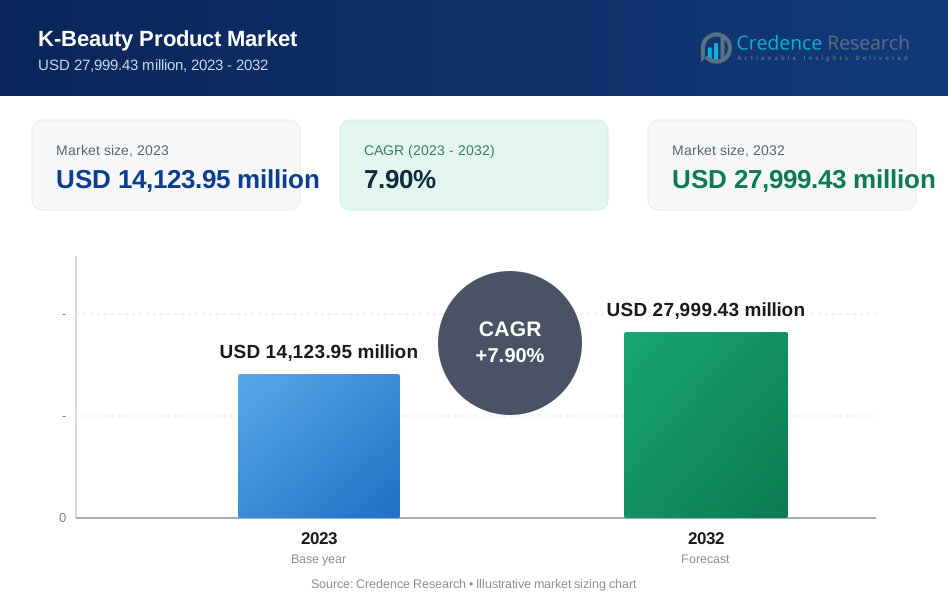
The K-Beauty Product Market is projected to grow from USD 14,123.95 million in 2023 to an estimated USD 27,999.43 million by 2032, registering a compound annual growth rate (CAGR) of 7.90% from 2024 to 2032.
This substantial growth is driven by the increasing popularity of innovative skincare and cosmetic solutions that emphasize natural ingredients, advanced formulations, and unique product offerings.
Key drivers for the market include the growing awareness of skincare and personal grooming, the rising preference for organic and cruelty-free products, and the increasing adoption of K-beauty routines among younger consumers worldwide. Emerging trends, such as the integration of sustainable practices and eco-friendly packaging, are reshaping the market landscape. Additionally, technological advancements in product formulations, including the use of fermented ingredients and skin microbiome care, are attracting a wider audience, enhancing product demand.
Geographically, the Asia-Pacific region dominates the market, led by South Korea's innovative beauty industry, which sets global standards for trends and product launches. North America and Europe are witnessing significant adoption of K-beauty products, supported by an expanding distribution network and rising consumer awareness. Key players in the market include AmorePacific Corporation, LG Household & Health Care, The Face Shop, Innisfree, and COSRX, among others, who continue to drive market growth through product innovation and strategic partnerships.
Market Insights
- The Global K-Beauty product market is projected to expand from USD 14,123.95 million in 2023 to USD 27,999.43 million by 2032, achieving a compound annual growth rate (CAGR) of 7.90%.
- Increasing consumer demand for innovative skincare and cosmetic solutions, emphasizing natural ingredients and advanced formulations, is a primary driver of market growth.
- The global popularity of K-pop culture significantly boosts the adoption of K-Beauty products, as fans seek to emulate the beauty standards promoted by their favorite idols.
- Rising consumer preference for organic, cruelty-free, and sustainable beauty products propels the demand for K-Beauty brands that prioritize ethical and eco-friendly practices.
- Technological innovations, including the use of fermented ingredients and skin microbiome care, enhance product efficacy and attract a broader consumer base.
- The Asia-Pacific region leads the Global K-Beauty market with a 45% share, driven by South Korea's pioneering beauty industry and strong consumer bases in China, Japan, and Southeast Asia.
- North America and Europe hold substantial market shares of 25% and 20% respectively, supported by expanding distribution networks, increasing consumer awareness, and the integration of K-Beauty trends into mainstream beauty routines.
Market Drivers
Increasing Consumer Focus on Skincare and Personal Grooming
Rising awareness of skin health-shaped by concerns around pollution, lifestyle stress, and visible signs of aging-has pushed more consumers toward structured, results-led skincare routines. K-beauty benefits from this shift because its category DNA is built around routine-led usage, where cleansing, hydration, targeted treatment, and protection work together across multiple steps rather than a single “hero” product. This routine mindset supports higher purchase frequency and encourages consumers to add specialized formats such as sheet masks, essences, and ampoules to address specific concerns while maintaining overall skin balance.
The broader move toward self-care and preventive skincare further reinforces demand for products positioned around long-term skin maintenance instead of quick fixes. In parallel, rising disposable incomes in developing markets are expanding the addressable base for premium and performance-driven skincare, reflecting a wider global preference for clinically positioned solutions-illustrated by L’Oréal reporting 9.8% like-for-like growth in 2024 in its Dermatological Beauty division.
Adoption of Innovative and Natural Ingredients
K-beauty’s global traction is closely linked to its pace of formulation innovation and its ability to turn distinctive ingredients into mainstream demand drivers. Brands frequently differentiate through advanced actives and textures ranging from fermented ingredients and probiotics to snail mucin often packaged into gentle, layerable products that fit multi-step routines.
At the same time, the market is aligning more closely with clean beauty expectations, with greater emphasis on ingredient transparency, cruelty-free positioning, and skin-friendly formulations that appeal to sensitive-skin consumers. Sustainability is reinforcing this momentum through growing interest in eco-friendly packaging and ethically sourced inputs, which strengthens brand loyalty and supports premium pricing where credibility is high. This direction is consistent with global consumer intent signals: a YouGov study across 17 markets found 54% of consumers planned to buy more sustainable products.
Influence of Korean Culture and Globalization
The international reach of K-pop, K-dramas, and Korean fashion has created a powerful cultural pipeline that continuously introduces K-beauty routines, looks, and product formats to new audiences. Celebrity influence and fan-driven discovery have made it easier for K-beauty trends-such as “glass skin”-to move quickly from content to commerce, especially as tutorials and product reviews circulate across social platforms. As awareness builds, brands have expanded access through local distribution partnerships and cross-border e-commerce, turning cultural visibility into repeatable retail demand in North America, Europe, and Southeast Asia. South Korea’s export performance underscores how strongly this cultural-commercial flywheel is working at scale, with cosmetics exports reported at USD 10.2 billion in 2024, ranking third worldwide.
Rise in E-commerce Penetration and Digital Marketing
E-commerce has become a structural growth engine for K-beauty by removing geographic barriers and making product discovery frictionless. Online channels allow consumers to compare ingredients, watch routine demonstrations, and purchase curated bundles-behaviors that naturally support multi-step regimens and increase basket size.
Brands are also leveraging influencer partnerships, short-form video, and personalized recommendations to convert attention into sales, particularly among younger buyers who prefer research-led purchases and rapid trend adoption. As online retail ecosystems expand, K-beauty gains a scalable route to international growth without relying solely on physical store footprints. The size of the broader digital commerce runway remains substantial: UN Trade and Development estimates business e-commerce sales approached USD 25 trillion in 2021 and were estimated to rise to almost USD 27 trillion in 2022, highlighting the scale of the channels that help consumers discover and buy K-beauty globally.
Market Trends
Emphasis on Sustainable and Eco-Friendly Products
Sustainability is becoming a stronger purchase filter in K-beauty as consumers weigh packaging waste, ingredient sourcing, and ethical brand practices alongside performance. This shift is pushing brands to redesign packs around recyclable or refillable formats, reduce secondary packaging, and spotlight responsibly sourced ingredients that support “clean beauty” expectations. Several Korean brands are reinforcing this positioning through minimal-packaging approaches, cruelty-free claims, and take-back or recycling initiatives, which helps convert sustainability from a marketing message into a visible product experience.
Demand is strongest among Millennials and Gen Z shoppers, who increasingly link beauty routines with personal values and are more likely to reward brands that demonstrate measurable environmental intent. As a result, sustainability is evolving into both a differentiator and a retention lever, supporting premiumization and repeat purchase when eco-friendly claims align with product efficacy.
Rise of Personalized Skincare Solutions
Personalization is reshaping K-beauty’s growth pathway by making routine building more targeted and less trial-and-error for consumers. Brands are increasingly using digital diagnostics, skin-analysis tools, and AI-driven recommendations to match products to individual skin type, sensitivity, and goals, which improves perceived effectiveness and encourages longer regimen adherence.
Customized solutions such as made-to-order boosters or tailored serum combinations also deepen engagement by turning skincare into an interactive, guided experience rather than a standard shelf purchase. This dynamic strengthens brand loyalty because consumers who see improved outcomes are more likely to repurchase within the same ecosystem and add adjacent steps over time. In a crowded market where product launches are frequent, personalization helps brands stand out by shifting the value proposition from “new” to “made for me.”
Focus on Multi-Functional and Minimalist Products
While K-beauty is known for multi-step routines, changing lifestyles are accelerating demand for simplified regimens that still deliver results. Multi-functional products-combining benefits such as hydration, barrier support, brightening, and SPF-are gaining traction because they reduce the time and complexity of daily routines without abandoning performance expectations. Minimalist formulas also appeal to consumers who prefer fewer ingredients, lower irritation risk, and clearer product purpose, particularly as sensitive-skin claims become more mainstream. This trend supports market expansion in two ways: it brings in time-constrained users who might not adopt full routines, and it increases conversion by making regimen entry easier. It also aligns with sustainability preferences, since fewer products can translate into less packaging and reduced wastage.
Integration of Innovative Ingredients and Technologies
Innovation remains a core engine of K-beauty demand, with brands continuously refreshing product excitement through distinctive ingredients and delivery formats. Soothing and repair-focused actives such as Centella Asiatica (cica), mugwort, snail mucin, probiotics, and fermented extracts are widely used to address barrier stress, hydration, and sensitivity-concerns that have become more prominent in modern skincare routines. At the same time, formulation and packaging technologies are elevating user experience and performance, seen in advanced mask formats (e.g., hydrogel and sculpted sheet masks) and improved delivery systems designed to enhance absorption and wear comfort. Many brands are also using data-driven insights to track emerging preferences and accelerate concept-to-launch cycles, which helps them stay ahead of fast-moving global trends. Together, ingredient novelty plus technology-led performance supports premium pricing, frequent new-product adoption, and sustained international interest in K-beauty innovation.
Market Challenges
Intense Market Competition
The K-beauty market is characterized by fierce competition, both domestically and internationally. Numerous well-established companies like Cosrx, Laneige, and Innisfree have solidified their positions, while new entrants continuously emerge, striving to capture consumer attention with innovative products and competitive pricing. This influx of brands has led to market saturation, making it increasingly challenging for companies to differentiate themselves amid a plethora of similar offerings. Additionally, the prevalence of counterfeit products in online marketplaces poses a significant threat.
These low-cost imitations not only dilute the market but also undermine consumer trust in authentic K-beauty brands. As a response, companies must prioritize brand authenticity and invest in robust marketing strategies to maintain their competitive edge. This includes enhancing product quality, leveraging unique selling propositions, and engaging with consumers through effective storytelling. By focusing on innovation and authenticity, K-beauty brands can navigate the intense competition and continue to thrive in a crowded marketplace.
Complexities of Global Regulatory Compliance
Expanding into international markets presents significant regulatory hurdles for K-beauty brands. Different countries have unique cosmetic regulations, including ingredient restrictions, labeling requirements, and product testing standards. For instance, while South Korea allows certain traditional ingredients in cosmetics, these same ingredients may face restrictions or require additional certifications in regions such as the European Union or the United States. Adapting to these diverse regulations necessitates substantial investment in research and product reformulation to ensure compliance.
Non-compliance can result in product recalls, reputational damage, and financial losses, making it imperative for brands to navigate these complexities carefully. Furthermore, the growing demand for cruelty-free and vegan certifications adds another layer of complexity for brands aiming to cater to ethical consumer preferences. To succeed in global markets, K-beauty brands must not only meet regulatory requirements but also align their products with evolving consumer values and expectations. This strategic approach will enable them to establish a strong presence across diverse markets while maintaining their commitment to quality and ethical practices.
Market Opportunities
Rising Demand for Customized Skincare Solutions
The growing consumer inclination toward personalized skincare represents a substantial opportunity for K-beauty brands. With advancements in artificial intelligence (AI) and skin analysis technologies, brands can now offer tailored product recommendations and formulations based on individual skin types and concerns. For instance, many K-beauty brands leverage these technologies to provide personalized serums designed to target specific issues like dark spots and wrinkles. This shift towards customization not only enhances user satisfaction but also fosters long-term brand loyalty by addressing specific needs that generic products often fail to meet.
Additionally, the demand for products catering to niche concerns, such as anti-pollution, blue light protection, and microbiome care, is on the rise. K-beauty’s reputation for innovation positions it well to capture this segment by introducing unique, science-backed solutions. As consumers increasingly seek products that align with their individual skincare journeys, K-beauty brands are well-equipped to lead the charge in delivering customized experiences that resonate deeply with their audience. By focusing on personalization and niche solutions, these brands can effectively differentiate themselves in a competitive market, ensuring sustained growth and consumer engagement.
Untapped Potential in Emerging Markets
Emerging markets in regions such as Southeast Asia, Latin America, and the Middle East offer untapped opportunities for K-beauty brands. These regions are experiencing increasing urbanization and rising disposable incomes, leading to a growing interest in premium beauty products. For instance, countries in Southeast Asia have seen a notable increase in online beauty shopping, driven by a tech-savvy population eager to explore global beauty trends. By leveraging strategic partnerships with local distributors and e-commerce platforms, K-beauty brands can establish a strong foothold in these markets.
Moreover, targeted marketing campaigns that highlight the cultural appeal of K-beauty’s holistic approach to skincare can resonate deeply with consumers in these regions. By emphasizing the benefits of natural ingredients and innovative formulations, K-beauty brands can effectively engage local audiences and drive adoption. As these markets continue to grow, the potential for K-beauty brands is significant; by aligning their offerings with local preferences and leveraging digital channels, they can tap into a burgeoning consumer base eager for high-quality skincare solutions.
Market Segmentation Analysis
By Type
The global K-beauty product market is segmented into sheet masks, cleansers, moisturizers, and others, with each category supporting overall market growth. Sheet masks remain a signature K-beauty format due to their convenience, product variety, and quick, visible skin benefits, with demand reinforced by ongoing innovation in fabrics and active ingredients. Cleansers account for a meaningful share as consumers adopt more structured skincare routines, supported by product advances such as oil-based and foam cleanser variants tailored to different skin types and use preferences.
Moisturizers continue to be a core category, offering formulations focused on hydration, anti-aging, and skin-barrier support, while interest in lightweight and multi-functional products is rising. The “others” segment-including serums, essences, sunscreens, and specialized treatments-adds depth to skincare regimens by addressing targeted concerns, helping expand usage occasions and product adoption across consumer groups.
By Application
K-beauty products are widely used across daily skincare routines, with applications centered on cleansing, hydration and moisturization, nourishment and repair, sun protection, and targeted skin concerns such as acne care, brightening, anti-aging, and sensitivity management. Usage is influenced by routine layering practices and demand for personalized outcomes, which supports repeat purchases and cross-category adoption (e.g., cleanser + serum/essence + moisturizer + sunscreen).
Segments
Based on Type
- Sheet Masks
- Cleansers
- Moisturizers
- Others
Based on Application
- Beauty Business
- Personal
- Others
Based on End User
- Male
- Female
- Children and Teenage
Based on Distribution Channel
- Online Retail
- Supermarket/Hypermarket
- Specialty/Monobrand Stores
Based on Region
- North America
- U.S.
- Canada
- Mexico
- Europe
- Germany
- France
- U.K.
- Italy
- Spain
- Rest of Europe
- Asia Pacific
- China
- Japan
- India
- South Korea
- South-east Asia
- Rest of Asia Pacific
- Latin America
- Brazil
- Argentina
- Rest of Latin America
- Middle East & Africa
- GCC Countries
- South Africa
- Rest of the Middle East and Africa
Regional Analysis
Asia Pacific (45%)
Asia Pacific dominates the Global K-Beauty market with a substantial 45% share, primarily driven by South Korea, China, Japan, and Southeast Asian countries. South Korea remains the epicenter of K-Beauty innovation, continuously introducing cutting-edge products and setting global beauty trends. The region’s cultural affinity for skincare and beauty, coupled with rapid urbanization and increasing disposable incomes, fuels robust demand. Additionally, the widespread adoption of digital platforms and social media in Asia Pacific enhances brand visibility and consumer engagement, further solidifying the region’s leadership in the K-Beauty market.
North America (25%)
North America holds a significant 25% share of the Global K-Beauty market, propelled by growing consumer interest in high-quality and innovative skincare products. The presence of a large, diverse population and the influence of social media and beauty influencers contribute to the region’s strong market growth. Consumers in North America are increasingly seeking personalized and effective beauty solutions, aligning well with K-Beauty’s emphasis on advanced formulations and multi-step skincare routines. Moreover, the expansion of e-commerce and the availability of K-Beauty products through major retailers and specialty stores enhance accessibility and drive sales in this region.
Key players
- Able C & C Ltd
- Adwin Korea Corporation
- Amorepacific Corporation
- CLIO COSMETICS Co. Ltd
- Cosrx Inc
- LG H&H Co. Ltd. (LG Corporation)
- The Crème Shop Inc
- The Face Shop Inc
- Tonymoly Co. Ltd
Competitive Analysis
The Global K-Beauty product market is highly competitive, featuring a blend of established industry leaders and innovative niche brands. Amorepacific Corporation and LG H&H Co. Ltd. dominate the market with their extensive product portfolios, strong brand recognition, and significant investment in research and development. These giants leverage their advanced technologies and comprehensive marketing strategies to maintain their leading positions. Cosrx Inc and The Face Shop Inc compete effectively by focusing on targeted skincare solutions and maintaining a loyal customer base through robust social media engagement and influencer partnerships.
Emerging brands like CLIO COSMETICS Co. Ltd and Tonymoly Co. Ltd differentiate themselves with unique product offerings and vibrant packaging, appealing to younger demographics. Able C & C Ltd and Adwin Korea Corporation enhance their competitive edge by emphasizing natural ingredients and sustainable practices, catering to the increasing demand for clean beauty products. Additionally, The Crème Shop Inc utilizes strategic retail placements and omnichannel distribution to maximize market presence.
The competitive landscape is further intensified by continuous innovation, frequent product launches, and the ability to swiftly adapt to changing consumer preferences, ensuring that K-Beauty remains a dynamic and resilient segment within the global beauty industry. This intensity is reinforced by South Korea’s government-reported cosmetics exports of USD 10.2 billion in 2024, ranking third worldwide and signaling a large, globally contested arena that rewards both scale players and fast-moving specialists..
Recent Developments
- In January 2026, Goodai Global acquired Serin Company and its K-beauty brand Round Lab, adding another globally popular skincare franchise into its acquisition-led portfolio.
- In January 2026, LANEIGE launched its JuicePop Box Lip Tint line and announced KATSEYE as a global partner for the product campaign, with the collection slated for rollout across major global-facing retail channels including Sephora.
- In December 2025, CJ Olive Young announced it will open its first U.S. brick-and-mortar stores in Pasadena and at Westfield Century City (Los Angeles area) in May 2026, while building U.S. logistics/sourcing capabilities and finalizing a broad brand assortment for the launch.
- In November 2025, Goodai Global acquired K-beauty heritage brand Skinfood, continuing its “house of brands” expansion that aggregates and scales Korean beauty brands internationally.
Market Concentration and Characteristics
The Global K-Beauty product market exhibits a moderately concentrated structure, dominated by a few key players such as Amorepacific Corporation, LG H&H Co. Ltd., and Cosrx Inc, which collectively hold a significant market share through extensive product portfolios and strong brand recognition. These industry leaders leverage advanced research and development capabilities, innovative formulations, and strategic marketing initiatives to maintain their dominant positions.
Additionally, the market is characterized by a high degree of innovation, with continuous introductions of cutting-edge skincare technologies and unique ingredients that cater to diverse consumer preferences. Emerging niche brands also contribute to the competitive landscape by offering specialized products and vibrant packaging, appealing to younger and trend-conscious demographics. Sustainability and clean beauty practices are increasingly prominent, reflecting the growing global consumer demand for environmentally friendly and ethically produced cosmetics.
The integration of digital transformation, including robust e-commerce platforms and influencer-driven marketing, further enhances market accessibility and consumer engagement. Moreover, regional variations in consumer behavior and regulatory environments necessitate localized strategies, fostering a dynamic and resilient market environment. Overall, the Global K-Beauty product market is defined by its blend of established industry giants and innovative newcomers, driving sustained growth and adaptability in response to evolving beauty trends and consumer needs.
Report Coverage
The research report offers an in-depth analysis based on Type, Application, End User, Distribution Channel and Region. It details leading market players, providing an overview of their business, product offerings, investments, revenue streams, and key applications. Additionally, the report includes insights into the competitive environment, SWOT analysis, current market trends, as well as the primary drivers and constraints. Furthermore, it discusses various factors that have driven market expansion in recent years. The report also explores market dynamics, regulatory scenarios, and technological advancements that are shaping the industry. It assesses the impact of external factors and global economic changes on market growth. Lastly, it provides strategic recommendations for new entrants and established companies to navigate the complexities of the market.
Future Outlook
- The Global K-Beauty market is projected to maintain a robust growth trajectory, driven by increasing global consumer interest in innovative and high-quality skincare solutions. This sustained expansion is expected to be supported by rising disposable incomes and expanding middle-class populations in emerging markets.
- K-Beauty brands will continue to prioritize product innovation, introducing advanced formulations and novel ingredients to meet diverse consumer needs. Innovations such as bioactive compounds and multifunctional products will further differentiate K-Beauty offerings in the competitive beauty landscape.
- The demand for clean and sustainable beauty products will intensify, with K-Beauty brands increasingly adopting eco-friendly packaging and ethically sourced ingredients. Sustainability initiatives will become a key differentiator, aligning with the growing global emphasis on environmental responsibility.
- K-Beauty brands will expand their presence in emerging markets across Latin America, the Middle East, and Africa, tapping into new consumer bases and leveraging localized marketing strategies. This geographical diversification will drive significant market growth and enhance global brand recognition.
- Personalized skincare solutions will gain prominence, with brands utilizing data analytics and artificial intelligence to offer tailored products and recommendations. Customization will cater to individual skincare needs, enhancing consumer satisfaction and loyalty.
- The male grooming segment will experience substantial growth as more men embrace skincare and beauty routines. K-Beauty brands will develop specialized products targeting male consumers, addressing specific skin concerns and preferences.
- The integration of advanced technologies such as augmented reality (AR) for virtual try-ons and AI-driven skin analysis tools will enhance the consumer shopping experience. These technologies will facilitate informed purchasing decisions and increase online engagement.
- E-commerce will continue to play a pivotal role in the distribution of K-Beauty products, with brands investing in robust online platforms and seamless user experiences. Enhanced digital marketing strategies and efficient logistics will support the growth of online sales channels.
- K-Beauty brands will form strategic partnerships with local retailers, beauty influencers, and digital platforms to strengthen their market presence. Collaborations will enhance brand visibility, credibility, and consumer trust in diverse regions.
- K-Beauty brands will need to stay abreast of evolving regulatory standards across different regions to ensure compliance and maintain market access. Proactive adaptation to regulatory changes will be crucial for sustaining growth and avoiding potential legal challenges.
Request a Free Sample
Fill in your details and we'll send you a free sample report.
- Sample data tables & charts
- Research methodology
Need a Custom Version of This Report?
Tailor the scope, geography, or segments to your exact requirements.
- Custom geography or segment scope
- Direct access to our analyst team
Frequently Asked Questions
What is the projected market size of the Global K-Beauty product market in 2023 and 2032, and what is the expected CAGR?
What are the primary drivers of growth in the Global K-Beauty product market?
How are technological advancements influencing the Global K-Beauty product market?
Which regions are leading the Global K-Beauty product market and why?
Who are the key players in the Global K-Beauty product market, and how are they driving growth?
Table of Content
Chapter 1. Report Introduction
- 1.1 Report Description & Purpose
- 1.1.1 Report Title & Market Definition
- 1.1.2 Unique Selling Propositions (USP) & Key Differentiators
- 1.1.3 Value Proposition for Stakeholders
- 1.2 Research Objectives
- 1.2.1 Market Sizing Objectives (Volume & Revenue) (Volume Where Applicable)
- 1.2.2 Segmentation Objectives
- 1.2.3 Competitive Intelligence Objectives
- 1.2.4 Forecast & Scenario Objectives
- 1.3 Report Scope
- 1.3.1 K-Beauty Product Scope – Segments & Subsegments Covered
- 1.3.2 Geographic Scope – Regions & Countries Covered
- 1.3.3 Historical Period, Base Year & Forecast Period (2023; forecast to 2032)
- 1.3.4 Inclusions & Exclusions
- 1.4 Industry Classification & Applicable Codes
- 1.5 Currency, Measurement Units & Valuation Basis
- 1.6 Target Stakeholders
- 1.7 Limitations & Assumptions
Chapter 2. Executive Summary
- 2.1 Global K-Beauty Product Market Snapshot
- 2.1.1 Market Size – Historical (2023) & Forecast (2023-2032) (2023: USD 14,123.95 million → 2032: USD 27,999.43 million)
- 2.1.2 Volume & Revenue – Global Totals (Volume Where Applicable)
- 2.1.3 Key Market Highlights – Top Five Facts
- 2.2 K-Beauty Product Market Segmentation Snapshot
- 2.2.1 Market Split by Region – 2023 vs. 2032
- 2.3 Competitive Snapshot
- 2.3.1 Top 10 Players by Revenue Share – 2023
- 2.3.2 Top 10 Players by Volume Share – 2023 (Volume Where Applicable)
- 2.3.3 Recent Strategic Developments (18-Month Summary)
- 2.4 Key Investment Highlights & Strategic Conclusions
Chapter 3. K-Beauty Product Market Dynamics & Industry Analysis
- 3.1 Market Overview & Context
- 3.1.1 K-Beauty Product Market Position in the Broader Industry Value Chain
- 3.1.2 Demand Structure & Purchasing Dynamics
- 3.1.3 Market Maturity & Development Stage by Region
- 3.2 K-Beauty Product Market Drivers
- 3.3 K-Beauty Product Market Restraints & Challenges
- 3.4 K-Beauty Product Market Opportunities
- 3.5 Porter's Five Forces Analysis
- 3.5.1 Threat of New Entrants
- 3.5.2 Bargaining Power of Suppliers
- 3.5.3 Bargaining Power of Buyers
- 3.5.4 Threat of Substitutes
- 3.5.5 Competitive Rivalry – Intensity Assessment
- 3.6 K-Beauty Product Value Chain Analysis
- 3.6.1 Upstream – Key Inputs, Resources & Suppliers
- 3.6.1.1 Key Input/Resource 1
- 3.6.1.2 Key Input/Resource 2
- 3.6.1.3 Key Input/Resource 3
- 3.6.2 Midstream – Core Operations & Value Creation
- 3.6.2.1 Operating Model & Process Overview
- 3.6.2.2 Key Operating Locations & Capabilities by Company
- 3.6.3 Downstream – Market Channels & End Users
- 3.6.3.1 Direct Sales & Customer Engagement Channels
- 3.6.3.2 Indirect Sales, Intermediaries & Partner Channels
- 3.6.4 Value Chain Profitability Analysis
- 3.6.1 Upstream – Key Inputs, Resources & Suppliers
- 3.7 PESTEL Analysis
- 3.7.1 Political Factors
- 3.7.2 Economic Factors
- 3.7.3 Social Factors
- 3.7.4 Technological Factors
- 3.7.5 Environmental Factors
- 3.7.6 Legal Factors
- 3.8 K-Beauty Product Supply Chain Analysis
- 3.8.1 Critical Input & Resource Availability Risk Assessment
- 3.8.2 Supplier & Operational Concentration Risk (Geographic Exposure)
- 3.8.3 Supply & Service Disruption Impact Analysis
- 3.9 Regulatory & Policy Landscape
Note: The regulatory and policy landscape section covers regulations based on their applicability to the market, K-Beauty Product category, geography, and scope of the study. Only regulatory frameworks with a material impact on operations, compliance, trade, sustainability, or market access are analyzed in detail.
Chapter 4. Key Investment Pockets & Opportunity Analysis
- 4.1 K-Beauty Product Market Attractiveness Analysis
- 4.1.1 By Region – Investment Attractiveness Matrix (Market Size × CAGR)
- 4.2 Absolute Revenue Growth Opportunity
- 4.2.1 By Region – Absolute Revenue Growth Through 2032
- 4.3 Incremental Demand Opportunity
- 4.3.1 By Region – Incremental Demand Through 2032
- 4.3.2 Segment – Incremental Demand
- 4.4 Emerging Submarket Opportunity Deep Dive (Subject to Applicability)
- 4.5 Priority Market Opportunity Scorecards
- 4.5.1 United States
- 4.5.2 Europe
- 4.5.3 Asia
- 4.5.4 Middle East & Africa
Note: Priority market opportunity scorecards reflect the geographic scope and strategic relevance of the study. Listed markets are indicative and may be adapted to the industry.
Chapter 5. K-Beauty Product Cross-Border Trade & Market Access Analysis
- 5.1 International Trade & Cross-Border Activity Overview
- 5.1.1 Global Export Value by Country (2023)
- 5.1.2 Global Export Volume by Country (2023) (Volume Where Applicable)
- 5.1.3 Global Import Value by Country (2023)
- 5.1.4 Global Import Volume by Country (2023) (Volume Where Applicable)
- 5.1.5 Net Trade Balance by Country (2023)
- 5.2 Export Analysis – Segment
- 5.2.1 Category 1 (Applicable Classification Code)
- 5.2.2 Category 2 (Applicable Classification Code)
- 5.2.3 Category 3 (Applicable Classification Code)
- 5.2.4 Category 4 (Applicable Classification Code)
- 5.2.5 Category 5 (Applicable Classification Code)
- 5.3 Import Analysis – Segment
- 5.3.1 Category 1 (Applicable Classification Code)
- 5.3.2 Category 2 (Applicable Classification Code)
- 5.3.3 Category 3 (Applicable Classification Code)
- 5.3.4 Category 4 (Applicable Classification Code)
- 5.3.5 Category 5 (Applicable Classification Code)
- 5.4 Cross-Border Pricing & Transaction Benchmarks
- 5.4.1 Export Pricing – Segment & Country
- 5.4.2 Import Pricing – Segment & Source Country
- 5.4.3 Price Trends (2023)
- 5.5 Key Cross-Border Trade & Delivery Routes
- 5.5.1 Cross-Border Trade/Delivery Route 1
- 5.5.2 Cross-Border Trade/Delivery Route 2
- 5.5.3 Cross-Border Trade/Delivery Route 3
- 5.5.4 Cross-Border Trade/Delivery Route 4
- 5.5.5 Cross-Border Trade/Delivery Route 5
- 5.6 Trade Policy & Market Access Impact Assessment
- 5.6.1 Tariff & Non-Tariff Barriers
- 5.6.2 Regional Trade & Economic Integration Frameworks
- 5.6.3 Bilateral & Multilateral Trade Agreements
- 5.6.4 Cross-Border Operating, Licensing & Localization Requirements
Note: This chapter applies where cross-border trade or delivery is relevant to K-Beauty Product. Goods, services, and digital offerings are assessed using applicable classifications and transaction measures. Import-export volumes, trade balances, and route analyses are included only where meaningful to the market.
Chapter 6. Competitive Landscape & Company Benchmarking
- 6.1 K-Beauty Product Market Concentration & Structure
- 6.1.1 Herfindahl-Hirschman Index (HHI) – vs. 2023
- 6.1.2 Leading, Mid-Sized & Emerging Player Structure
- 6.1.3 Global, Regional & Local Player Dynamics
- 6.2 K-Beauty Product Market Share Analysis – 2023
- 6.2.1 Global Revenue Share by Company
- 6.2.2 Global Volume Share by Company (Volume Where Applicable)
- 6.2.3 Regional Revenue Share
- 6.2.4 Market Share Evolution ( vs. 2023)
- 6.2.5 Company Market Share by Key Segment
- 6.2.6 Company Market Share by Customer Group
- 6.3 Operating Scale, Capacity & Infrastructure Analysis
- 6.3.1 Global Operating Scale & Supply Capacity
- 6.3.2 Resource Utilization & Operating Efficiency
- 6.3.3 Output, Service Delivery & Activity Metrics
- 6.3.4 Operating Footprint & Infrastructure Map
- 6.3.5 Planned Operational & Capacity Expansion
- 6.4 K-Beauty Product Competitive Benchmarking Matrix
- 6.4.1 Revenue, Growth, Profitability & Operating Metric Comparison
- 6.4.2 Channel Revenue Mix
- 6.4.3 Geographic Revenue Exposure
- 6.4.4 R&D Intensity
- 6.4.5 Sustainability Maturity
- 6.5 Strategic Developments in K-Beauty Product (Last 24 Months)
- 6.5.1 Mergers, Acquisitions & Divestments
- 6.5.2 New Products, Services & Solutions in K-Beauty Product
- 6.5.3 Operational & Infrastructure Expansions
- 6.5.4 Strategic Alliances, Joint Ventures & Partnerships
- 6.5.5 Distribution Expansion & Market Entry
- 6.5.6 Sustainability & ESG Initiatives
- 6.6 Competitive Strategy Mapping
- 6.6.1 Leader, Challenger, Follower & Niche Classification
- 6.6.2 Pricing Strategy Comparison
- 6.6.3 Channel Strategy Matrix
Note: Strategic developments are included based on their materiality and the availability of reliable information.
Chapter 7. Global K-Beauty Product Market – By Sales & Delivery Channel
- 7.1 Segment Overview
- 7.1.1 Volume & Revenue Split by Channel (2023 & 2032) (Volume Where Applicable)
- 7.1.2 Channel Mix Evolution (2023-2032)
Chapter 8. Regional Market Analysis – Global Overview
- 8.1 Global Regional Overview
- 8.1.1 Regional Volume Share (Volume Where Applicable)
- 8.1.2 Regional Revenue Share
- 8.1.3 Regional Volume by Region (Volume Where Applicable)
- 8.1.4 Regional Revenue by Region
- 8.1.5 Regional Forecast Through 2032
- 8.2 Cross-Regional Segment Analysis
- 8.2.1 By Sales & Delivery Channel
- 8.2.2 By Competitive Positioning & Price Tier
Chapter 9. North America K-Beauty Product Market
- 9.1 United States
- 9.2 Canada
- 9.3 Mexico
Chapter 10. Europe K-Beauty Product Market
- 10.1 Germany
- 10.2 France
- 10.3 Italy
- 10.4 United Kingdom
- 10.5 Spain
- 10.6 Poland
- 10.7 Russia
- 10.8 Netherlands
- 10.9 Belgium
- 10.10 Sweden
- 10.11 Denmark
- 10.12 Norway
- 10.13 Rest of Europe
Chapter 11. Asia Pacific K-Beauty Product Market
- 11.1 China
- 11.2 India
- 11.3 Japan
- 11.4 South Korea
- 11.5 Thailand
- 11.6 Indonesia
- 11.7 Vietnam
- 11.8 Malaysia
- 11.9 Australia
- 11.10 Rest of Asia Pacific
Chapter 12. Latin America K-Beauty Product Market
- 12.1 Brazil
- 12.2 Argentina
- 12.3 Colombia
- 12.4 Chile
- 12.5 Rest of Latin America
Chapter 13. Middle East K-Beauty Product Market
- 13.1 Saudi Arabia
- 13.2 United Arab Emirates
- 13.3 Turkey
- 13.4 Israel
- 13.5 Iran
- 13.6 Rest of the Middle East
Chapter 14. Africa K-Beauty Product Market
- 14.1 South Africa
- 14.2 Egypt
- 14.3 Nigeria
- 14.4 Morocco
- 14.5 Rest of Africa
Chapter 15. K-Beauty Product Company Profiles
- 15.1 [Company 01]
- 15.1.1 Company Overview
- 15.1.2 Key Management Personnel
- 15.1.3 Products & Services Portfolio
- 15.1.4 Financial Performance
- 15.1.5 Key Market Focus & Geographic Presence
- 15.1.6 Recent Developments & Strategic Initiatives
Note: The company profile list is preliminary and may change based on research findings, market developments, data availability, and client requirements.
Chapter 16. Appendices
- Appendix A – List of Abbreviations & Acronyms
- Appendix B – Industry Classification Code Reference – Full Series
- Appendix C – Supply, Output & Operating Capacity Data Tables
- Appendix D – End-Use & Demand Base Tables
- Appendix E – Demand, Adoption & Usage Assumptions
- Appendix F – Pricing & Revenue Metric Reference Tables
- Appendix G – Company Operations & Infrastructure Database
- Appendix H – Cross-Border Trade & Activity Data Tables (Where Applicable)
- Appendix I – Regulatory Summary Tables
- Appendix J – Primary Research Participant List (Anonymized)
- Appendix K – Primary Research Questionnaire Framework
- Appendix L – Data Sources & Bibliography
- Appendix M – Market Size Divergence & Source Comparison
Chapter 17. Research Methodology
- 17.1 Research Framework & Philosophy
- 17.2 Secondary Research – Sources, Hierarchy & Data Extraction
- 17.3 Data Modeling – Bottom-Up & Top-Down Market Sizing
- 17.4 Primary Research – Stakeholder Framework, LOI & Sample Sizes
- 17.5 Forecast Methodology – Regression, Scenario & Sensitivity Analysis
- 17.6 Quality Control – Four-Layer Validation Framework
- 17.7 Limitations & Standard Assumptions
- 17.8 Disclaimer
