
| REPORT ATTRIBUTE | DETAILS |
|---|---|
| Historical Period | 2019-2022 |
| Base Year | 2023 |
| Forecast Period | 2024-2032 |
| Latin America Grid Modernization Market Size 2024 | USD 2,153.35 million |
| Latin America Grid Modernization Market, CAGR | 16.60% |
| Latin America Grid Modernization Market Size 2032 | USD 7,359.52 million |
Market Overview
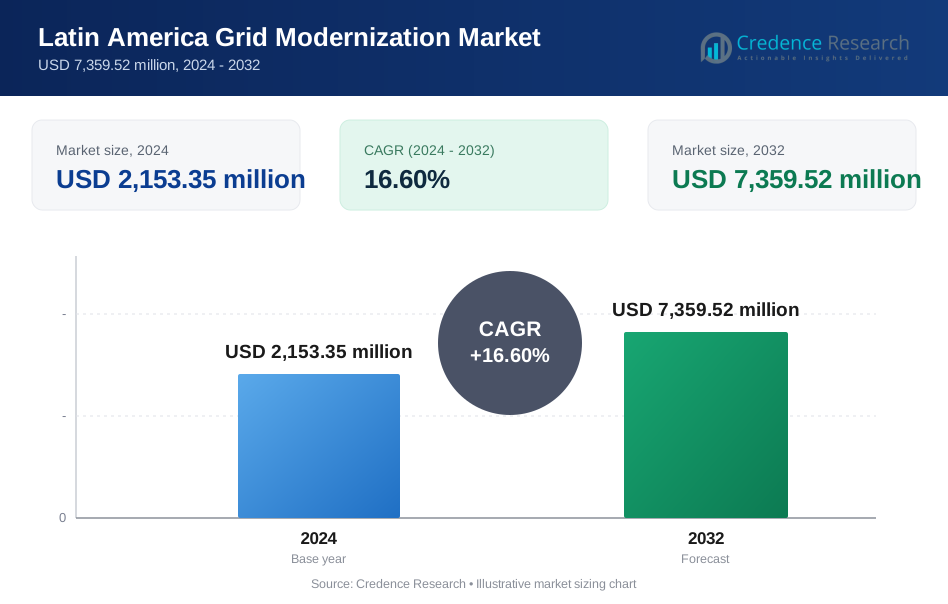
Latin America Grid Modernization market size was valued at USD 2,153.35 million in 2024 and is anticipated to reach USD 7,359.52 million by 2032, at a CAGR of 16.60% during the forecast period (2024-2032).
The Latin America Grid Modernization market is driven by increasing demand for energy efficiency, grid reliability, and resilience amidst rising energy consumption. The adoption of renewable energy sources, such as solar and wind, necessitates advanced grid infrastructure to manage fluctuating energy production. Technological advancements, including smart grid systems, are enabling better monitoring, control, and integration of distributed energy resources. Governments across the region are implementing policies to modernize power grids, improve energy distribution, and reduce carbon emissions, further accelerating the market. Additionally, investments in advanced metering infrastructure, energy storage solutions, and automation technologies are boosting grid efficiency. These drivers, combined with the need to address aging infrastructure and improve service quality, are propelling the region’s grid modernization efforts, positioning it for significant growth in the coming years.
The Latin America Grid Modernization market is characterized by diverse geographical dynamics, with major players actively contributing to the region's transformation. Brazil leads the market, driven by large-scale investments in renewable energy and smart grid technologies. Argentina, Peru, and Chile also play crucial roles, with each focusing on modernizing their energy infrastructure to accommodate renewable sources and enhance grid efficiency. Key players in the market, including Siemens AG, Schneider Electric SE, ABB Ltd., General Electric Company, and Hitachi Energy, are at the forefront, offering advanced grid solutions and driving technological innovation. These companies are leveraging their global expertise to address the unique energy challenges in Latin America, such as integrating distributed energy resources, improving grid resilience, and ensuring energy reliability. As governments across the region continue to prioritize energy security and sustainability, the demand for grid modernization technologies is expected to grow, presenting significant opportunities for key market players.
Market Insights
- The Latin America Grid Modernization market was valued at USD 2,153.35 million in 2024 and is projected to reach USD 7,359.52 million by 2032, growing at a CAGR of 16.60%.
- Rising demand for energy efficiency and grid reliability is driving the market.
- The adoption of renewable energy sources, such as solar and wind, is fueling the need for advanced grid infrastructure.
- Smart grid technologies, energy storage solutions, and automation tools are key market trends.
- Key players like Siemens AG, Schneider Electric, ABB Ltd., and General Electric Company are leading the market.
- High infrastructure costs and regulatory challenges remain significant market restraints.
- Brazil, Argentina, and Chile are leading the regional market, with Brazil holding the largest share, followed by emerging markets like Peru and Colombia.
Market Drivers
Growing Demand for Energy Efficiency
The demand for energy efficiency is a key driver of the Latin America Grid Modernization market. As energy consumption in the region continues to rise, optimizing the management and distribution of electricity has become essential. Grid modernization initiatives are critical for minimizing energy losses and improving the overall efficiency of electricity networks. For instance, in Brazil, the National Electric Energy Agency (ANEEL) has implemented programs to promote energy efficiency, which include the deployment of smart meters and advanced grid management systems. Modern grids facilitate real-time monitoring and data analytics, enabling utilities to detect inefficiencies and make informed decisions for better energy management.
Integration of Renewable Energy Sources
The increasing integration of renewable energy sources, such as solar and wind power, is a significant driver for grid modernization in Latin America. These energy sources are intermittent, requiring advanced grid systems to balance supply and demand. Smart grids, energy storage solutions, and advanced forecasting tools are essential to ensure stable and reliable electricity delivery. As Latin American countries commit to expanding their renewable energy capacity, modernized grids are necessary to support this transition and enhance grid stability.
Government Initiatives and Policies
Government support plays a crucial role in the growth of the grid modernization market. Latin American governments are actively promoting policies aimed at upgrading aging infrastructure, reducing carbon emissions, and improving energy security. National and regional initiatives such as the expansion of renewable energy targets, subsidies for energy-efficient technologies, and investments in grid infrastructure are driving the modernization of power grids. These efforts align with broader sustainability goals and are fostering the adoption of advanced grid technologies.
Technological Advancements and Infrastructure Upgrades
Technological advancements in grid infrastructure are significantly contributing to market growth. The rise of smart grid technologies, advanced metering infrastructure, and automation tools enables better control, monitoring, and fault detection across the grid. These innovations allow utilities to optimize energy distribution, reduce operational costs, and enhance service reliability. For example, in Colombia, utility companies like Interconexion Electrica S.A. E.S.P. (ISA) have embarked on significant grid modernization projects, including the installation of advanced equipment to manage voltage and reduce losses. Additionally, the growing need to replace outdated infrastructure is pushing investments in modern grid solutions, further accelerating the adoption of advanced technologies across Latin America’s energy sector.
Market Trends
Focus on Sustainable and Resilient Infrastructure
The focus on sustainable and resilient grid infrastructure is another important trend in the market. For instance, the Inter-American Development Bank (IDB) has invested in projects aimed at improving resilience to climate and geophysical hazards in the design and implementation of infrastructure in countries like Belize. Latin America is increasingly prioritizing the development of grids that can withstand extreme weather events, such as hurricanes, floods, and droughts. This shift is driven by the need to improve grid reliability and reduce outages, especially in rural and remote areas. By modernizing infrastructure with a focus on sustainability and resilience, Latin American countries are preparing their energy systems for future challenges, including climate change and population growth.
Adoption of Smart Grid Technologies
One of the key trends in the Latin America Grid Modernization market is the widespread adoption of smart grid technologies. These systems leverage digital communication, sensors, and automation to provide real-time data on energy usage, enabling utilities to make more informed decisions. Smart grids allow for better demand response management, improved energy efficiency, and seamless integration of renewable energy sources. As utilities across the region invest in smart grid solutions, they are improving grid reliability, reducing downtime, and enhancing operational performance.
Increased Investment in Energy Storage Solutions
Energy storage solutions are gaining traction as an essential component of grid modernization efforts in Latin America. With the growing share of renewable energy in the energy mix, energy storage systems provide a reliable means of storing excess energy during periods of high production and releasing it when demand is high. This trend is helping address the intermittency issues associated with renewable energy generation. Increased investment in battery storage technologies and other forms of energy storage is expected to play a significant role in stabilizing grids and enhancing their overall efficiency.
Growing Role of Distributed Energy Resources
The role of distributed energy resources (DERs) is expanding rapidly in Latin America. DERs, including rooftop solar panels, small wind turbines, and localized energy storage, enable consumers and businesses to generate and store their own energy. These systems are helping to decentralize energy production and reduce dependency on centralized grid networks. As DERs become more integrated into the grid, utilities are adopting technologies that enable better coordination between centralized and decentralized resources, facilitating a more flexible and resilient energy system across the region.
Market Challenges Analysis
High Infrastructure Costs and Financing Challenges
A significant challenge facing the Latin America Grid Modernization market is the high upfront cost of upgrading aging infrastructure. For instance, in Argentina, the government's historical freeze on regulated transmission and distribution tariffs has led to a significant underinvestment in the sector, resulting in a need for approximately 990MW of new installed capacity per year for the next decade to account for the 13.3GW of inefficient installed capacity. Modernizing power grids requires substantial investment in new technologies, such as smart grid systems, energy storage, and automation tools, which can be financially burdensome for utilities, especially in countries with limited financial resources. Additionally, securing financing for these large-scale infrastructure projects remains a key hurdle. While governments and private investors are increasingly recognizing the importance of grid modernization, access to affordable capital is still a challenge in some Latin American countries. These financial constraints slow down the pace of grid modernization and hinder the ability of utilities to implement necessary upgrades in a timely manner.
Regulatory and Policy Barriers
Regulatory and policy barriers also pose challenges to the market’s growth. In many Latin American countries, outdated regulations and fragmented energy policies make it difficult for utilities to adopt advanced grid technologies or integrate renewable energy sources efficiently. Inconsistent regulations across different nations can also create difficulties for multinational energy companies looking to invest in the region. Additionally, the lack of a clear and unified policy framework for grid modernization can result in delays and uncertainties in project implementation. To address these challenges, governments must align their policies with modern energy trends and establish a conducive regulatory environment that promotes investments in grid modernization technologies while balancing sustainability, efficiency, and energy security.
Market Opportunities
Expansion of Renewable Energy Integration
One of the major opportunities in the Latin America Grid Modernization market lies in the growing need to integrate renewable energy sources into the grid. As countries in the region continue to invest in solar, wind, and other renewable energy projects, modernizing the grid to accommodate these resources becomes essential. The increasing share of intermittent renewable energy in the energy mix presents a significant opportunity for the adoption of advanced grid technologies such as energy storage systems and smart grids. These technologies will not only facilitate the efficient distribution of renewable energy but also enhance grid stability, ensuring a reliable power supply. Utilities and governments are increasingly recognizing the importance of aligning grid infrastructure with renewable energy goals, creating a favorable environment for investments in grid modernization.
Government Incentives and Technological Innovation
The Latin American governments’ commitment to energy efficiency, sustainability, and infrastructure improvement further creates substantial opportunities in grid modernization. With numerous initiatives aimed at reducing carbon emissions and improving energy security, the region is becoming an attractive market for the development and deployment of modern grid solutions. Moreover, technological innovations in smart grid systems, automation, and distributed energy resources (DERs) offer exciting opportunities for both local and international companies. As the demand for resilient and efficient grid systems grows, there is a clear opportunity for utilities to invest in technologies that enhance grid performance, reduce outages, and optimize energy consumption. By capitalizing on government incentives and technological advancements, stakeholders can tap into a rapidly expanding market with significant long-term potential.
Market Segmentation Analysis:
By Component:
The Latin America Grid Modernization market is segmented by component into hardware, software, and services. The hardware segment includes essential infrastructure such as smart meters, sensors, and energy storage systems. These components are critical for enabling real-time data collection, grid monitoring, and efficient energy distribution. The software segment focuses on applications for grid management, data analytics, and optimization. This includes advanced grid control systems, demand response management software, and predictive maintenance tools. Software plays a vital role in enhancing grid performance, automating processes, and ensuring reliable energy delivery. The services segment encompasses consulting, implementation, and maintenance services for grid modernization projects. As utilities in Latin America increasingly adopt smart grid technologies, the demand for comprehensive service solutions that include design, integration, and ongoing support is rising. This segmentation highlights the diverse needs of utilities in upgrading their grids, with each component contributing to the overall efficiency and resilience of the energy infrastructure.
By Application:
Grid modernization in Latin America is also segmented by application into residential, commercial, and industrial sectors. The residential sector is seeing growing demand for smart grid solutions as consumers seek to optimize energy usage and reduce costs. Smart meters and home energy management systems enable better control of energy consumption, making it easier for consumers to monitor and adjust their usage. In the commercial sector, businesses are increasingly investing in energy-efficient grid solutions to minimize operational costs and enhance energy reliability. Modernized grids enable more efficient demand response and support the integration of renewable energy sources, which is vital for businesses looking to reduce their carbon footprint. The industrial sector is the largest consumer of energy, and industrial facilities are adopting advanced grid technologies to ensure uninterrupted power supply, improve energy efficiency, and manage large-scale energy consumption. As grid modernization progresses, all three sectors are poised to benefit from improved energy distribution, increased reliability, and enhanced sustainability.
Segments:
Based on Component:
- Hardware
- Software
- Services
Based on Application:
- Residential
- Commercial
- Industrial
Based on End-User:
- Utilities
- Independent Power Producers (IPPs)
- Government and Municipalities
Based on the Geography:
- Brazil
- Argentina
- Peru
- Chile
- Colombia
- Rest of Latin America
Regional Analysis
Brazil
Brazil holds the largest market share in the Latin America Grid Modernization market, accounting for approximately 35% of the regional market in 2024. The country’s significant investments in energy infrastructure, coupled with its commitment to renewable energy, play a key role in driving grid modernization. As Brazil continues to expand its renewable energy capacity, particularly in wind and solar power, the demand for advanced grid systems that can manage and distribute this intermittent energy has surged. Additionally, government initiatives aimed at improving energy efficiency and reliability have accelerated the adoption of smart grid technologies. The Brazilian government’s support for infrastructure development and energy security ensures that the country will continue to dominate the Latin American market for grid modernization in the coming years.
Argentina
Argentina follows Brazil as one of the largest players in the Latin American market, holding approximately 20% of the market share. The country is actively working to modernize its grid infrastructure to cope with rising energy demand and improve energy distribution across urban and rural areas. Argentina’s commitment to renewable energy and its ongoing efforts to diversify its energy mix present opportunities for the growth of grid modernization technologies. Additionally, government policies aimed at enhancing energy efficiency and encouraging foreign investment are contributing to the market's expansion. The focus on building resilient infrastructure and integrating renewable energy sources positions Argentina as a key growth area within the region.
Peru
Peru represents a growing market for grid modernization in Latin America, with a market share of approximately 12%. The country’s efforts to increase its renewable energy capacity, particularly in solar and hydroelectric power, necessitate the modernization of its grid to accommodate these changes. Peru’s government has implemented policies to enhance energy infrastructure, improve reliability, and increase the efficiency of energy distribution. While the market is still developing, the growing need for more reliable and sustainable energy solutions is expected to drive investments in grid modernization technologies in the coming years. Peru’s favorable business environment and government support for clean energy projects create a positive outlook for the grid modernization market.
Chile, Colombia, and Rest of Latin America
Chile and Colombia, holding approximately 9% and 8% of the market share respectively, are also contributing to the growth of the Latin America Grid Modernization market. Both countries are expanding their renewable energy capacities and focusing on upgrading grid infrastructure to support these efforts. Chile has made significant strides in the solar and wind sectors, while Colombia is focused on improving grid reliability and increasing energy efficiency. The rest of Latin America, including countries like Mexico, Ecuador, and Venezuela, collectively holds the remaining 16% market share. While these regions face challenges such as political instability and economic constraints, their growing focus on sustainability, energy security, and grid reliability presents opportunities for grid modernization technologies. With increasing investments and favorable policies, these markets are expected to experience significant growth in the coming years.
Key Player Analysis
- Siemens AG
- Schneider Electric SE
- ABB Ltd.
- General Electric Company
- Hitachi Energy
- WEG S.A.
- Eaton Corporation
- Landis+Gyr
- Toshiba Latin America
- S&C Electric
Competitive Analysis
The Latin America Grid Modernization market is highly competitive, with several prominent players leading the charge in providing advanced grid solutions. Siemens AG, Schneider Electric SE, ABB Ltd., General Electric Company, Hitachi Energy, WEG S.A., Eaton Corporation, Landis+Gyr, Toshiba Latin America, and S&C Electric are key contributors to the region’s grid modernization efforts. Leading players in the market are focused on providing smart grid systems, automation tools, and energy storage solutions designed to improve grid reliability and efficiency. These companies are capitalizing on the growing demand for renewable energy integration, as well as the need for modernized infrastructure to handle energy distribution more effectively. Additionally, market leaders are innovating in areas such as energy management, power distribution, and advanced metering systems to meet the evolving needs of utilities across the region. Competition in the market is increasing, with companies continuously investing in research and development to introduce next-generation technologies. They are also forming strategic alliances and partnerships to expand their service offerings and enhance market penetration. The focus is on delivering end-to-end solutions that integrate renewable energy sources, reduce energy consumption, and ensure grid resilience in the face of extreme weather events and increasing energy demand. For instance, in Brazil, Neoenergia, a Brazilian Electricity Company, is expanding its smart grids by modernizing its communication networks by adopting Multi-Protocol Label Switching (MPLS). As Latin America continues to prioritize grid modernization, the competitive landscape is expected to evolve, with companies differentiating themselves through technology innovation and customer-centric solutions.
Recent Developments
- In October 2024, Hitachi Energy introduced Grid-enSure in India to advance the country's transition to sustainable energy. The company also announced plans to invest around INR 2,000 crore over the next four to five years in capacity expansion and upgrades for various transformer factories.
- In August 2024, Hitachi Energy called for urgent action to expand global power grids, reduce connection bottlenecks, and accelerate the energy transition. They launched Grid-enSure™ at the CIGRE 2024 Paris Session, a portfolio of solutions to enhance grid flexibility, resilience, and stability.
- In May 2024, Siemens revealed the Gridscale X software, a "co-pilot" for flexible low voltage grid management, aiming to reduce outages by up to 30%.
Market Concentration & Characteristics
The Latin America Grid Modernization market exhibits a moderate to high level of concentration, with several major players dominating the space, while also witnessing the entry of regional and local players. Large multinational corporations, particularly those with expertise in automation, energy storage, and smart grid technologies, hold a significant share of the market. These companies have the resources to invest in research and development, which allows them to offer advanced solutions that cater to the diverse needs of Latin American utilities. However, the market also includes regional players who are focusing on niche segments such as energy management, power control, and smart metering, thus contributing to the overall competitive landscape. One of the key characteristics of the market is the emphasis on technological innovation. Companies are continuously developing new products and solutions to address the growing demand for renewable energy integration, energy efficiency, and grid resilience. Furthermore, the market is highly influenced by government policies and regulations aimed at improving energy security and sustainability. As a result, there is a growing trend toward strategic partnerships, joint ventures, and collaborations among key players to expand their product offerings and enhance regional market penetration. With increasing investments in smart grids and energy infrastructure, the market is expected to remain dynamic, offering opportunities for both large-scale and local players.
Report Coverage
The research report offers an in-depth analysis based on Component, Application, End-User, and Geography. It details leading market players, providing an overview of their business, product offerings, investments, revenue streams, and key applications. Additionally, the report includes insights into the competitive environment, SWOT analysis, current market trends, as well as the primary drivers and constraints. Furthermore, it discusses various factors that have driven market expansion in recent years. The report also explores market dynamics, regulatory scenarios, and technological advancements that are shaping the industry. It assesses the impact of external factors and global economic changes on market growth. Lastly, it provides strategic recommendations for new entrants and established companies to navigate the complexities of the market.
Future Outlook
- The Latin America Grid Modernization market is expected to continue growing rapidly, driven by the increasing demand for energy efficiency and sustainability.
- Investment in renewable energy sources such as solar and wind will increase the need for smart grid solutions to manage intermittent energy.
- Government policies promoting energy security and efficiency will further accelerate the adoption of advanced grid technologies.
- Technological advancements in energy storage, automation, and smart metering will play a key role in enhancing grid reliability and performance.
- The integration of distributed energy resources (DERs) into grid infrastructure will become more widespread across the region.
- Utilities will increasingly adopt real-time data analytics and AI-driven solutions for improved grid management and predictive maintenance.
- Collaboration between public and private sectors will drive innovation and expand market opportunities for grid modernization technologies.
- The demand for resilient grids capable of handling extreme weather events and disruptions will grow, boosting the need for robust infrastructure.
- Latin America will witness a rise in energy efficiency and demand response programs to optimize power consumption and reduce operational costs.
- Regional markets such as Brazil, Chile, and Argentina will continue to lead the way in grid modernization, with other countries gradually catching up.
Request a Free Sample
Fill in your details and we'll send you a free sample report.
- Sample data tables & charts
- Research methodology
Need a Custom Version of This Report?
Tailor the scope, geography, or segments to your exact requirements.
- Custom geography or segment scope
- Direct access to our analyst team
Frequently Asked Questions
What is the current size of the Latin America Grid Modernization market?
What factors are driving the growth of the Latin America Grid Modernization market?
What are some challenges faced by the Latin America Grid Modernization market?
Who are the major players in the Latin America Grid Modernization market?
Table of Content
Chapter 1. Report Introduction
- 1.1 Report Description & Purpose
- 1.1.1 Report Title & Market Definition
- 1.1.2 Unique Selling Propositions (USP) & Key Differentiators
- 1.1.3 Value Proposition for Stakeholders
- 1.2 Research Objectives
- 1.2.1 Market Sizing Objectives (Volume & Revenue)
- 1.2.2 Segmentation Objectives
- 1.2.3 Competitive Intelligence Objectives
- 1.2.4 Forecast & Scenario Objectives
- 1.3 Report Scope
- 1.3.1 Latin America Grid Modernization Scope – Types & Subtypes Covered
- 1.3.2 Geographic Scope – Regions & Countries Covered
- 1.3.3 Historical Period, Base Year & Forecast Period (2024; forecast to 2032)
- 1.3.4 Inclusions & Exclusions
- 1.4 HS Code & Classification Framework
- 1.5 Currency, Units & Pricing Basis
- 1.6 Target Stakeholders
- 1.7 Limitations & Assumptions
Chapter 2. Executive Summary
- 2.1 Global Latin America Grid Modernization Market Snapshot
- 2.1.1 Market Size – Historical (2024) & Forecast (2024-2032) (2024: USD 2,153.35 million → 2032: USD 7,359.52 million)
- 2.1.2 Volume & Revenue – Global Totals
- 2.1.3 Key Market Highlights – Top Five Facts
- 2.2 Latin America Grid Modernization Market Segmentation Snapshot
- 2.2.1 Market Split by Region – 2024 vs. 2032
- 2.3 Competitive Snapshot
- 2.3.1 Top 10 Players by Revenue Share – 2024
- 2.3.2 Top 10 Players by Volume Share – 2024
- 2.3.3 Recent Strategic Developments (18-Month Summary)
- 2.4 Key Investment Highlights & Strategic Conclusions
Chapter 3. Latin America Grid Modernization Market Dynamics & Industry Analysis
- 3.1 Market Overview & Context
- 3.1.1 Latin America Grid Modernization Market Position in the Broader Automotive Value Chain
- 3.1.2 OEM vs. Replacement Market Dynamics
- 3.1.3 Market Maturity & Development Stage by Region
- 3.2 Latin America Grid Modernization Market Drivers
- 3.3 Latin America Grid Modernization Market Restraints & Challenges
- 3.4 Latin America Grid Modernization Market Opportunities
- 3.5 Porter's Five Forces Analysis
- 3.5.1 Threat of New Entrants
- 3.5.2 Bargaining Power of Suppliers
- 3.5.3 Bargaining Power of Buyers
- 3.5.4 Threat of Substitutes
- 3.5.5 Competitive Rivalry – Intensity Assessment
- 3.6 Latin America Grid Modernization Value Chain Analysis
- 3.6.1 Upstream – Raw Material/Input Suppliers
- 3.6.1.1 Raw Material/Input 1
- 3.6.1.2 Raw Material/Input 2
- 3.6.1.3 Raw Material/Input 3
- 3.6.2 Midstream – Production/Manufacturing/Service Delivery
- 3.6.2.1 Production/Process Overview
- 3.6.2.2 Key Facility Locations & Capacity by Manufacturer
- 3.6.3 Downstream – Distribution & End Consumer
- 3.6.3.1 Primary Channel – B2B/OEM
- 3.6.3.2 Secondary Channels – Dealer, Retail, Online, Direct
- 3.6.4 Value Chain Profitability Analysis
- 3.6.1 Upstream – Raw Material/Input Suppliers
- 3.7 PESTEL Analysis
- 3.7.1 Political Factors
- 3.7.2 Economic Factors
- 3.7.3 Social Factors
- 3.7.4 Technological Factors
- 3.7.5 Environmental Factors
- 3.7.6 Legal Factors
- 3.8 Latin America Grid Modernization Supply Chain Analysis
- 3.8.1 Raw Material/Input Supply Risk Assessment
- 3.8.2 Manufacturing Concentration Risk (Geographic Exposure)
- 3.8.3 Trade Disruption Impact Analysis
- 3.9 Regulatory & Policy Landscape
Note: The regulatory and policy landscape section covers regulations based on their applicability to the market, Latin America Grid Modernization category, geography, and scope of the study. Only regulatory frameworks with a material impact on operations, compliance, trade, sustainability, or market access are analyzed in detail.
Chapter 4. Key Investment Pockets & Opportunity Analysis
- 4.1 Latin America Grid Modernization Market Attractiveness Analysis
- 4.1.1 By Region – Investment Attractiveness Matrix (Volume × CAGR)
- 4.2 Absolute Revenue Growth Opportunity
- 4.2.1 By Region – Absolute USD Growth Through 2032
- 4.3 Incremental Volume Opportunity
- 4.3.1 By Region – Incremental Volume Through 2032
- 4.3.2 Segment – Incremental Volume
- 4.4 Emerging Submarket Opportunity Deep Dive (Subject to Applicability)
- 4.5 Emerging Market Opportunity Scorecards
- 4.5.1 United States
- 4.5.2 Europe
- 4.5.3 Asia
- 4.5.4 Middle East & Africa
Note: Emerging Market Opportunity Scorecards will be included based on relevance and strategic importance. Regions listed are indicative and may vary depending on data availability and market dynamics.
Chapter 5. Latin America Grid Modernization Import-Export Analysis & Trade Flows
- 5.1 Global Trade Overview
- 5.1.1 Global Export Value by Country (2024)
- 5.1.2 Global Export Volume by Country (2024)
- 5.1.3 Global Import Value by Country (2024)
- 5.1.4 Global Import Volume by Country (2024)
- 5.1.5 Net Trade Balance by Country (2024)
- 5.2 Export Analysis – Segment
- 5.2.1 Type 1 (HS Code)
- 5.2.2 Type 2 (HS Code)
- 5.2.3 Type 3 (HS Code)
- 5.2.4 Type 4 (HS Code)
- 5.2.5 Type 5 (HS Code)
- 5.3 Import Analysis – Segment
- 5.3.1 Type 1 (HS Code)
- 5.3.2 Type 2 (HS Code)
- 5.3.3 Type 3 (HS Code)
- 5.3.4 Type 4 (HS Code)
- 5.3.5 Type 5 (HS Code)
- 5.4 Average Unit Trade Prices
- 5.4.1 Average Export Price – Segment & Country
- 5.4.2 Average Import Price – Segment & Source Country
- 5.4.3 Price Trends (2024)
- 5.5 Key Trade Route Analysis
- 5.5.1 Trade Route 1
- 5.5.2 Trade Route 2
- 5.5.3 Trade Route 3
- 5.5.4 Trade Route 4
- 5.5.5 Trade Route 5
- 5.6 Trade Policy Impact Assessment
- 5.6.1 US Anti-Dumping & Section 301 Tariffs
- 5.6.2 EU Customs Union Impact
- 5.6.3 Major Free Trade Agreements
- 5.6.4 USMCA Rules of Origin
Note: Trade policy analysis will be included only where relevant to the Latin America Grid Modernization market.
Chapter 6. Competitive Landscape & Company Benchmarking
- 6.1 Latin America Grid Modernization Market Concentration & Structure
- 6.1.1 Herfindahl-Hirschman Index (HHI) – vs. 2024
- 6.1.2 Tier 1, Tier 2 & Tier 3 Market Structure
- 6.1.3 Global, Regional & Local Player Dynamics
- 6.2 Latin America Grid Modernization Market Share Analysis – 2024
- 6.2.1 Global Revenue Share by Company
- 6.2.2 Global Volume Share by Company
- 6.2.3 Regional Revenue Share
- 6.2.4 Market Share Evolution ( vs. 2024)
- 6.2.5 OEM Segment Share by Company
- 6.2.6 Replacement Segment Share by Company
- 6.3 Production/Delivery Capacity & Facility Analysis
- 6.3.1 Global Installed Capacity
- 6.3.2 Capacity Utilization Rates
- 6.3.3 Production/Output Volume
- 6.3.4 Facility Locations & Capacity Map
- 6.3.5 Planned Capacity Additions
- 6.4 Latin America Grid Modernization Competitive Benchmarking Matrix
- 6.4.1 Revenue, Volume, CAGR & Profitability Comparison
- 6.4.2 Channel Revenue Mix
- 6.4.3 Geographic Revenue Exposure
- 6.4.4 R&D Intensity
- 6.4.5 Sustainability Maturity
- 6.5 Strategic Developments in Latin America Grid Modernization (Last 24 Months)
- 6.5.1 Mergers, Acquisitions & Divestments
- 6.5.2 New Latin America Grid Modernization Launches
- 6.5.3 Facility Expansions
- 6.5.4 Strategic Alliances, Joint Ventures & Partnerships
- 6.5.5 Distribution Expansion & Market Entry
- 6.5.6 Sustainability & ESG Initiatives
- 6.6 Competitive Strategy Mapping
- 6.6.1 Leader, Challenger, Follower & Niche Classification
- 6.6.2 Pricing Strategy Comparison
- 6.6.3 Channel Strategy Matrix
Note: Strategic developments are included based on their materiality and the availability of reliable information.
Chapter 7. Global Latin America Grid Modernization Market – By Distribution Channel
- 7.1 Segment Overview
- 7.1.1 Volume & Revenue Split by Channel (2024 & 2032)
- 7.1.2 Channel Mix Evolution (2024-2032)
Chapter 8. Regional Market Analysis – Global Overview
- 8.1 Global Regional Overview
- 8.1.1 Regional Volume Share
- 8.1.2 Regional Revenue Share
- 8.1.3 Regional Volume by Region
- 8.1.4 Regional Revenue by Region
- 8.1.5 Regional Forecast Through 2032
- 8.2 Cross-Regional Segment Analysis
- 8.2.1 By Distribution Channel
- 8.2.2 By Brand/Price Tier
Chapter 9. North America Latin America Grid Modernization Market
- 9.1 United States
- 9.2 Canada
- 9.3 Mexico
Chapter 10. Europe Latin America Grid Modernization Market
- 10.1 Germany
- 10.2 France
- 10.3 Italy
- 10.4 United Kingdom
- 10.5 Spain
- 10.6 Poland
- 10.7 Russia
- 10.8 Netherlands
- 10.9 Belgium
- 10.10 Sweden
- 10.11 Denmark
- 10.12 Norway
- 10.13 Rest of Europe
Chapter 11. Asia Pacific Latin America Grid Modernization Market
- 11.1 China
- 11.2 India
- 11.3 Japan
- 11.4 South Korea
- 11.5 Thailand
- 11.6 Indonesia
- 11.7 Vietnam
- 11.8 Malaysia
- 11.9 Australia
- 11.10 Rest of Asia Pacific
Chapter 12. Latin America Latin America Grid Modernization Market
- 12.1 Brazil
- 12.2 Argentina
- 12.3 Colombia
- 12.4 Chile
- 12.5 Rest of Latin America
Chapter 13. Middle East Latin America Grid Modernization Market
- 13.1 Saudi Arabia
- 13.2 United Arab Emirates
- 13.3 Turkey
- 13.4 Israel
- 13.5 Iran
- 13.6 Rest of the Middle East
Chapter 14. Africa Latin America Grid Modernization Market
- 14.1 South Africa
- 14.2 Egypt
- 14.3 Nigeria
- 14.4 Morocco
- 14.5 Rest of Africa
Chapter 15. Latin America Grid Modernization Company Profiles
- 15.1 [Company 01]
- 15.1.1 Company Overview
- 15.1.2 Key Management Personnel
- 15.1.3 Products & Services Portfolio
- 15.1.4 Financial Performance
- 15.1.5 Key Market Focus & Geographic Presence
- 15.1.6 Recent Developments & Strategic Initiatives
Note: The company profile list is preliminary and may change based on research findings, market developments, data availability, and client requirements.
Chapter 16. Appendices
- Appendix A – List of Abbreviations & Acronyms
- Appendix B – Industry Classification Code Reference – Full Series
- Appendix C – Production & Capacity Data Tables
- Appendix D – End-Use & Demand Base Tables
- Appendix E – Consumption & Replacement Rate Assumptions
- Appendix F – ASP Reference Tables
- Appendix G – Manufacturing & Facility Database
- Appendix H – Import-Export Data Tables
- Appendix I – Regulatory Summary Tables
- Appendix J – Primary Research Participant List (Anonymized)
- Appendix K – Primary Research Questionnaire Framework
- Appendix L – Data Sources & Bibliography
- Appendix M – Market Size Divergence & Source Comparison
Chapter 17. Research Methodology
- 17.1 Research Framework & Philosophy
- 17.2 Secondary Research – Sources, Hierarchy & Data Extraction
- 17.3 Data Modeling – Bottom-Up & Top-Down Market Sizing
- 17.4 Primary Research – Stakeholder Framework, LOI & Sample Sizes
- 17.5 Forecast Methodology – Regression, Scenario & Sensitivity Analysis
- 17.6 Quality Control – Four-Layer Validation Framework
- 17.7 Limitations & Standard Assumptions
- 17.8 Disclaimer
