
| REPORT ATTRIBUTE | DETAILS |
|---|---|
| Historical Period | 2019-2022 |
| Base Year | 2023 |
| Forecast Period | 2024-2032 |
| Medical Electrodes Market Size 2024 | USD 1910 million |
| Medical Electrodes Market, CAGR | 4.3% |
| Medical Electrodes Market Size 2032 | USD 2674.9 million |
Market Overview:
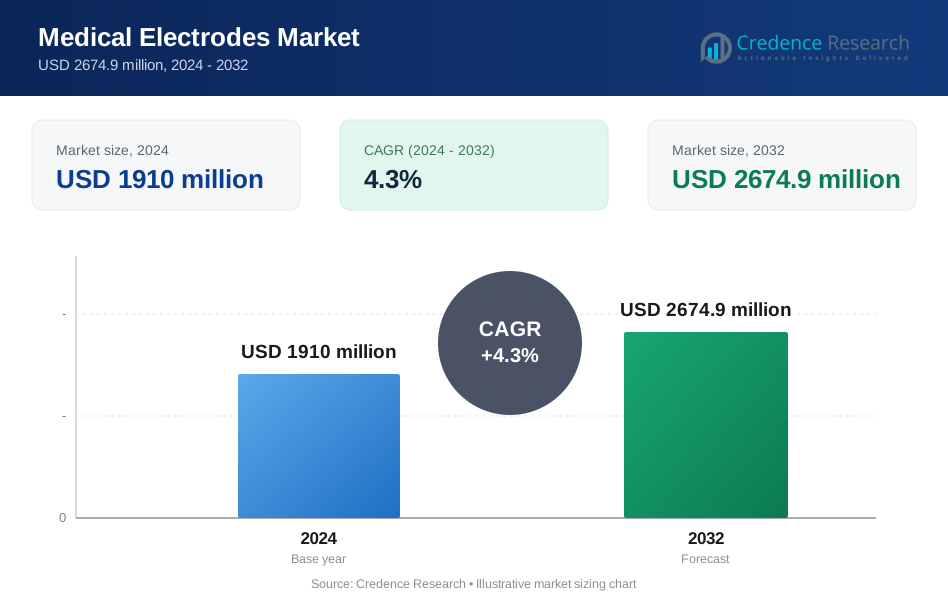
The Medical Electrodes Market is projected to grow from USD 1910 million in 2024 to an estimated USD 2674.9 million by 2032, with a compound annual growth rate (CAGR) of 4.3% from 2024 to 2032.
The primary drivers of the medical electrodes market include the rising incidence of cardiovascular diseases and neurological disorders, growing awareness about healthcare monitoring, and the expanding geriatric population globally. Cardiovascular diseases, for example, account for a significant portion of mortality worldwide, necessitating efficient diagnostic tools, such as electrocardiograms (ECGs), which rely on medical electrodes. In parallel, neurology applications like electroencephalograms (EEGs) are gaining traction due to an increase in cases related to epilepsy, dementia, and other brain disorders. Additionally, advancements in electrode technology, such as dry electrodes and wearable electrodes, have made devices more patient-friendly, increasing adoption. Government initiatives aimed at promoting better health outcomes, especially in emerging economies, further support market expansion by increasing access to advanced healthcare infrastructure.
Regionally, North America holds the largest share of the medical electrodes market, driven by high healthcare spending, an advanced healthcare infrastructure, and significant investments in research and development. The Asia-Pacific region, however, is expected to experience the fastest growth, primarily due to its large population base, rising healthcare expenditure, and the expansion of healthcare infrastructure in countries like China, India, and Japan. Europe also maintains a substantial share of the market, attributed to an aging population and an increasing focus on healthcare advancements. The growing awareness about early disease diagnosis and preventive healthcare in emerging markets is likely to provide further growth opportunities for the industry.
Market Drivers:
Increasing Prevalence of Chronic Diseases and Aging Population:
The medical electrodes market is primarily driven by the rising incidence of chronic diseases, particularly cardiovascular and neurological disorders. Cardiovascular diseases, one of the leading causes of mortality worldwide, have increased the demand for effective diagnostic tools like electrocardiograms (ECGs), which heavily rely on medical electrodes for capturing accurate electrical signals from the heart. Similarly, the prevalence of neurological disorders, including epilepsy, Alzheimer’s disease, and Parkinson’s disease, has spurred the demand for electroencephalogram (EEG) electrodes. The aging global population, which is more susceptible to these conditions, further accentuates the need for reliable diagnostic and therapeutic devices, propelling the growth of the medical electrodes market.
Technological Advancements and Innovations in Electrode Design:
Advances in medical technology have driven innovation in electrode design, enhancing patient comfort and accuracy in diagnostics. Developments such as dry electrodes, hydrogel-based electrodes, and wearable sensors have significantly improved the performance of medical electrodes by reducing skin irritation and increasing signal quality. These innovations also enhance ease of use, allowing for longer diagnostic sessions with minimal patient discomfort. Wearable electrodes, particularly, have gained attention for their application in continuous monitoring and remote diagnostics, enabling real-time health tracking outside traditional clinical settings. For instance, the University of Pittsburgh Medical Center reported that remote patient monitoring, which often utilizes advanced electrode technologies, helped reduce hospital readmission rates by 76%. As technology advances, the demand for high-quality, versatile electrodes that facilitate more comfortable, effective patient monitoring continues to grow, driving the market forward.
Increasing Focus on Minimally Invasive Diagnostics:
A growing preference for minimally invasive diagnostic and monitoring procedures has accelerated the demand for medical electrodes. In contrast to traditional invasive methods, electrode-based diagnostics such as ECG, EEG, and electromyography (EMG) offer non-invasive solutions that are both safer and more comfortable for patients. As healthcare systems strive to improve patient experience and reduce procedural risks, the adoption of minimally invasive tools is rising. Medical electrodes play a pivotal role in this transition, enabling accurate and non-intrusive diagnosis and monitoring across various medical fields, including cardiology, neurology, and sleep medicine. The shift toward non-invasive approaches, alongside supportive government initiatives promoting better healthcare accessibility, acts as a significant driver for the market.
Growing Awareness and Demand for Remote Patient Monitoring:
The increasing awareness and demand for remote patient monitoring (RPM) systems have significantly influenced the medical electrodes market. RPM technologies enable healthcare providers to monitor patients' health status from a distance, using medical electrodes as primary sensors for real-time health data collection. This trend has become particularly relevant in managing chronic conditions where regular monitoring is necessary. For example, according to a Harvard Health Letter article, nearly 50 million people in the United States currently use remote patient monitoring devices. The recent surge in telemedicine and home healthcare services, fueled by the COVID-19 pandemic, has highlighted the importance of RPM. As a result, there is an expanding need for high-quality medical electrodes compatible with RPM systems. This market shift aligns with the broader trend of decentralized healthcare, offering patients greater flexibility while reducing healthcare costs, thus amplifying the demand for advanced medical electrodes.
Market Trends:
Increasing Adoption of Wearable and Remote Monitoring Devices:
A prominent trend in the medical electrodes market is the rising adoption of wearable and remote monitoring devices, which has transformed how healthcare providers track patient health. These devices, equipped with advanced medical electrodes, enable continuous monitoring of vital parameters such as heart rate, blood pressure, and brain activity. Wearable technology has gained traction due to its non-intrusive nature and convenience, allowing for real-time health data collection in home settings. The demand for wearable medical devices, including smartwatches and patches, continues to grow as they offer more accessible monitoring solutions, appealing particularly to patients with chronic conditions requiring regular tracking. This shift aligns with the broader movement towards preventive and personalized healthcare.
Focus on Innovation in Electrode Materials and Designs:
As the medical electrodes market evolves, there is a significant focus on developing innovative materials and designs that enhance functionality, comfort, and performance. New electrode materials, such as hydrogel, silicone, and conductive fabrics, are gaining popularity for their biocompatibility, flexibility, and improved adhesion. These materials minimize skin irritation and improve signal quality, addressing key challenges in long-term monitoring applications. For instance, in December 2021, Shin-Etsu Chemical Co., Ltd. launched electrophysiological dry electrodes and high-elasticity wiring materials to help create performance traits for next-generation wearable technology. This trend reflects an industry-wide emphasis on creating medical electrodes that optimize patient experience while providing high-quality, reliable data for healthcare providers.
Growing Demand for Home Healthcare and Point-of-Care Diagnostics:
The increasing demand for home healthcare and point-of-care (POC) diagnostics is another trend shaping the medical electrodes market. Patients and healthcare providers are shifting toward decentralized healthcare, which enables diagnosis and monitoring in non-clinical settings, reducing hospital visits and healthcare costs. Medical electrodes play an integral role in enabling POC diagnostics, such as portable ECG and EEG machines, which patients can use independently or with minimal assistance. This trend has gained momentum with the rising prevalence of chronic diseases, an aging population, and advancements in telemedicine. For instance, Philips has highlighted the importance of their portable ECG devices in enhancing patient care by enabling remote monitoring and reducing the need for hospital visits. As healthcare systems move toward more accessible and patient-centered solutions, the demand for versatile, portable, and easy-to-use medical electrodes is set to increase.
Emphasis on Integration with Digital Health Technologies:
The integration of medical electrodes with digital health technologies is reshaping the industry, as data collection, storage, and analysis are increasingly integrated into connected healthcare platforms. Medical electrodes, when used in conjunction with mobile applications and cloud-based data storage, enable real-time data sharing between patients and healthcare providers. This facilitates proactive management of chronic conditions and enables more accurate, data-driven clinical decisions. With advancements in artificial intelligence and machine learning, health data collected through electrodes can be further analyzed to detect patterns, predict health risks, and provide personalized treatment recommendations. The convergence of medical electrodes with digital health technologies aligns with the broader digital transformation in healthcare, fostering a more connected, efficient, and data-rich approach to patient care.
Market Restraints and Challenges:
High Cost of Advanced Electrode Technologies:
One of the primary restraints in the medical electrodes market is the high cost associated with advanced electrode technologies, which can hinder adoption in cost-sensitive markets. Innovations in materials, design, and functionality have made electrodes more effective but often come at a premium price. For hospitals and clinics with limited budgets, especially in emerging economies, the cost of acquiring and maintaining advanced electrode systems can be prohibitive. This financial barrier limits the widespread adoption of high-quality electrodes, potentially slowing market growth, especially in regions with lower healthcare funding.
Strict Regulatory Requirements and Approval Processes:
The medical electrodes market is subject to stringent regulatory standards that can pose challenges to manufacturers. Regulatory bodies, including the U.S. Food and Drug Administration (FDA) and the European Medicines Agency (EMA), have rigorous testing and approval procedures to ensure patient safety and efficacy. While these standards protect consumers, they also extend the time and cost associated with bringing new products to market. Compliance with varying regulations across different regions adds complexity, making it challenging for companies to navigate the approval process, especially for smaller players lacking regulatory expertise.
Technical Limitations in Long-Term Monitoring:
Technical limitations in medical electrodes, particularly for long-term monitoring applications, present another significant challenge. Issues such as skin irritation, signal degradation, and adhesion problems can arise during extended use, affecting data accuracy and patient comfort. Although advances in materials have improved comfort and adhesion, long-term wearability remains a concern. Such challenges limit the effectiveness of medical electrodes in continuous monitoring and can impact patient compliance, particularly in chronic care applications where long-term data is crucial.
Data Privacy and Security Concerns:
With the rise of connected medical devices and remote monitoring, data privacy and security have become critical concerns in the medical electrodes market. Medical electrodes used in remote monitoring systems collect sensitive health data, which is often stored and transmitted digitally. The risk of data breaches and unauthorized access poses a significant barrier, as healthcare providers and patients are increasingly concerned about data security. Addressing these security concerns is essential for gaining user trust and ensuring compliance with privacy regulations, which adds another layer of complexity for manufacturers in this evolving market.
Market Segmentation Analysis:
The medical electrodes market is segmented by product type, material, application, and end-user, each addressing specific demands in diagnostic and therapeutic applications.
By Product Type, the market includes surface electrodes, needle electrodes, wire electrodes, and other specialized electrodes. Surface electrodes hold a significant market share due to their non-invasive nature and widespread use in diagnostics such as ECG and EEG. Needle electrodes, utilized primarily in EMG applications, serve niche needs in neurological assessments. Wire and other electrodes are used in advanced procedures requiring higher precision.
By Material, segments include carbon-based, polymer-based, metal-based, and ceramic materials. Carbon-based materials are highly preferred for their conductivity and biocompatibility, ideal for diagnostic applications requiring sensitive electrical capture. Polymer-based materials have gained traction for their flexibility and cost-effectiveness, while metal and ceramic materials are used where durability and signal quality are critical.
By Application, the market spans electroencephalography (EEG), electrocardiography (ECG), electromyography (EMG), and other diagnostic and therapeutic uses. ECG dominates due to the global prevalence of cardiovascular diseases, while EEG and EMG are expanding with increased focus on neurological and muscular diagnostics.
By End User, hospitals and clinics represent the largest segment, driven by high patient volumes and diverse diagnostic requirements. Ambulatory surgical centers and diagnostic centers also play a vital role in market growth, particularly in emerging economies, while home healthcare adoption is rising, encouraged by advancements in wearable electrodes for remote monitoring. This segmentation reflects the versatility of medical electrodes in meeting varied clinical needs across healthcare settings.
Segmentation:
By Product Type
- Surface Electrodes
- Needle Electrodes
- Wire Electrodes
- Other Electrodes
By Material
- Carbon-Based Materials
- Polymer-Based Materials
- Metal-Based Material
- Ceramic Materials
By Application
- Electroencephalography (EEG)
- Electrocardiography (ECG)
- Electromyography (EMG)
- Other Applications
By End User
- Hospitals Clinics
- Ambulatory Surgical Centers
- Diagnostic Centers
- Other End Users
By Regional
- North America
- U.S.
- Canada
- Mexico
- Europe
- Germany
- France
- U.K.
- Italy
- Spain
- Rest of Europe
- Asia Pacific
- China
- Japan
- India
- South Korea
- South-east Asia
- Rest of Asia Pacific
- Latin America
- Brazil
- Argentina
- Rest of Latin America
- Middle East & Africa
- GCC Countries
- South Africa
- Rest of the Middle East and Africa
Regional Analysis:
North America
North America holds the largest share of the medical electrodes market, accounting for approximately 35% of the global market. This dominance is attributed to the region’s advanced healthcare infrastructure, high healthcare expenditure, and widespread adoption of cutting-edge diagnostic technologies. The U.S., in particular, is a major contributor due to a growing elderly population prone to chronic diseases such as cardiovascular and neurological conditions. Additionally, high demand for minimally invasive diagnostic procedures and significant investments in healthcare research further drive market growth in North America. Supportive government policies and a favorable reimbursement framework also encourage the adoption of medical electrodes in various clinical settings.
Europe
Europe represents around 25% of the global medical electrodes market, with countries like Germany, France, and the U.K. leading in adoption rates. The aging population and increasing prevalence of chronic diseases, such as neurological and cardiovascular disorders, drive demand for diagnostic and therapeutic devices in this region. Europe's strong healthcare infrastructure and favorable policies for research and development in medical technologies foster innovation in electrode materials and design. Additionally, the European Union’s emphasis on preventive healthcare and early diagnosis supports market expansion, as medical electrodes are essential in non-invasive monitoring and diagnostics.
Asia-Pacific
The Asia-Pacific region is expected to experience the fastest growth in the medical electrodes market, currently holding about 20% of the global market share. Countries like China, India, and Japan are at the forefront, with rising healthcare expenditures, expanding healthcare infrastructure, and increasing demand for quality healthcare services. The region’s large population base, coupled with a high incidence of cardiovascular and neurological disorders, fuels demand for diagnostic procedures requiring medical electrodes. Government initiatives to improve healthcare access and increase awareness of early diagnosis and preventive healthcare contribute to market growth. The growing adoption of wearable and portable medical devices for home healthcare in this region also supports market expansion.
Latin America
Latin America accounts for approximately 10% of the global medical electrodes market. The market is gradually growing as countries like Brazil, Mexico, and Argentina improve their healthcare infrastructure and adopt advanced diagnostic technologies. Although limited by economic constraints, the region is seeing increased demand for non-invasive diagnostic solutions, driven by a rising prevalence of chronic diseases. Government initiatives to enhance healthcare access and the development of telemedicine infrastructure are also helping to boost market growth in Latin America.
Middle East & Africa
The Middle East & Africa holds a smaller share, around 10%, of the global medical electrodes market. While the region faces economic challenges and limited healthcare access in some areas, there is growing demand for improved diagnostic and therapeutic tools, particularly in countries like the UAE, Saudi Arabia, and South Africa. Investments in healthcare infrastructure, particularly in urban centers, and increased awareness of chronic disease management support modest market growth. Additionally, government initiatives to promote healthcare advancements and the adoption of remote patient monitoring are expected to further stimulate market demand in the coming years.
Key Player Analysis:
- 3M Company
- Ad-Tech Medical
- Ambu
- Braun
- Cardinal Health
- Conmed Corporation
- CONMED Corporation
- CooperSurgical Inc.
- Dymedix
- ETHICON (Johnson & Johnson)
- General Electric Company
- KLS Martin
- Koninklijke Philips N.V.
- Medico Electrodes International Limited
- Medtronic plc
- Natus Medical Incorporated
- Nihon Kohden Corporation
- Vermed
- Zoll Medical
Competitive Analysis:
The medical electrodes market is highly competitive, with numerous players focused on innovation and expanding product offerings. Leading companies like 3M, Medtronic, and CONMED Corporation hold significant market shares due to their established brand presence, broad product portfolios, and extensive distribution networks. These firms invest heavily in R&D to develop advanced electrode materials and designs, enhancing patient comfort and diagnostic accuracy. Smaller and regional players also contribute by offering cost-effective, specialized products catering to local healthcare needs. Strategic partnerships, acquisitions, and product launches are common in this market as companies aim to strengthen their positions and expand geographic reach. The growing demand for wearable and disposable electrodes has intensified competition, prompting firms to focus on differentiating products through enhanced usability and connectivity features. With rising demand in emerging markets, competitive dynamics are expected to evolve, driven by technological innovation and an emphasis on patient-centered solutions.
Recent Developments:
- In 2023, Medtronic plc acquired Intersect ENT, Inc., a prominent provider of treatments for ear, nose, and throat conditions, to bolster its presence in the medical electrodes market.
- In October 2022, Nihon Kohden introduced the Smart Cable NMT Pod and a disposable electrode, designed to help clinicians objectively assess the level of paralysis in patients administered neuromuscular blocking agents (NMBA) during surgery. This device, compatible with both non-depolarizing and depolarizing agents, allows for precise monitoring of neuromuscular blockade, thereby enhancing surgical procedures and improving patient outcomes.
Market Concentration & Characteristics:
The medical electrodes market exhibits moderate concentration, with a mix of large, established players and smaller, specialized companies. Dominant players like 3M, Medtronic, and Koninklijke Philips N.V. command significant market shares due to their extensive product ranges, global presence, and investment in innovation. These major firms benefit from strong distribution networks and advanced R&D capabilities, allowing them to lead in product development and set industry standards. The market is characterized by rapid technological advancements, including the development of wearable and wireless electrodes and innovations in biocompatible materials. Increasing demand for personalized healthcare and remote monitoring has further shaped the market, pushing for non-invasive, user-friendly solutions. The rise of disposable and portable electrodes for at-home care reflects an industry trend toward convenience and patient-centric care. With emerging market growth and ongoing R&D, the market remains competitive and dynamic, driven by evolving healthcare needs and technological progress.
Report Coverage:
The research report offers an in-depth analysis based on By Product Type, By Material, By Application and By End User. It details leading market players, providing an overview of their business, product offerings, investments, revenue streams, and key applications. Additionally, the report includes insights into the competitive environment, SWOT analysis, current market trends, as well as the primary drivers and constraints. Furthermore, it discusses various factors that have driven market expansion in recent years. The report also explores market dynamics, regulatory scenarios, and technological advancements that are shaping the industry. It assesses the impact of external factors and global economic changes on market growth. Lastly, it provides strategic recommendations for new entrants and established companies to navigate the complexities of the market.
Future Outlook:
- Increased demand for non-invasive diagnostics will drive the adoption of advanced electrode technologies in both clinical and home settings.
- Wearable electrodes for continuous health monitoring will see accelerated growth due to rising interest in remote patient care.
- Technological advancements in materials, such as flexible polymers and hydrogels, will improve electrode comfort and signal quality.
- Emerging markets in Asia-Pacific and Latin America are expected to experience high growth, fueled by expanding healthcare infrastructure and awareness of early diagnosis.
- The aging population globally will increase the need for diagnostic tools, supporting market demand for ECG and EEG electrodes.
- Integration with digital health platforms and AI-powered analytics will enhance data utility, facilitating personalized patient care.
- Rising incidences of neurological and cardiovascular disorders will sustain high demand for diagnostic electrodes across global markets.
- Disposable and single-use electrodes will gain traction as hygiene and infection control remain priorities post-pandemic.
- Partnerships and collaborations between key players and healthcare providers will promote product innovation and accessibility.
- Increasing regulatory support for remote monitoring solutions will boost market expansion, especially in-home healthcare applications.
Request a Free Sample
Fill in your details and we'll send you a free sample report.
- Sample data tables & charts
- Research methodology
Need a Custom Version of This Report?
Tailor the scope, geography, or segments to your exact requirements.
- Custom geography or segment scope
- Direct access to our analyst team
Frequently Asked Questions
What is the projected growth of the medical electrodes market?
What are the main drivers of growth in this market?
Which region holds the largest share of the medical electrodes market?
What challenges does the medical electrodes market face?
Table of Content
Chapter 1. Report Introduction
- 1.1 Report Description & Purpose
- 1.1.1 Report Title & Market Definition
- 1.1.2 Unique Selling Propositions (USP) & Key Differentiators
- 1.1.3 Value Proposition for Stakeholders
- 1.2 Research Objectives
- 1.2.1 Market Sizing Objectives (Volume & Revenue)
- 1.2.2 Segmentation Objectives
- 1.2.3 Competitive Intelligence Objectives
- 1.2.4 Forecast & Scenario Objectives
- 1.3 Report Scope
- 1.3.1 Medical Electrodes Scope – Types & Subtypes Covered
- 1.3.2 Geographic Scope – Regions & Countries Covered
- 1.3.3 Historical Period, Base Year & Forecast Period (2024; forecast to 2032)
- 1.3.4 Inclusions & Exclusions
- 1.4 HS Code & Classification Framework
- 1.5 Currency, Units & Pricing Basis
- 1.6 Target Stakeholders
- 1.7 Limitations & Assumptions
Chapter 2. Executive Summary
- 2.1 Global Medical Electrodes Market Snapshot
- 2.1.1 Market Size – Historical (2024) & Forecast (2024-2032) (2024: USD 1910 million → 2032: USD 2674.9 million)
- 2.1.2 Volume & Revenue – Global Totals
- 2.1.3 Key Market Highlights – Top Five Facts
- 2.2 Medical Electrodes Market Segmentation Snapshot
- 2.2.1 Market Split by Region – 2024 vs. 2032
- 2.3 Competitive Snapshot
- 2.3.1 Top 10 Players by Revenue Share – 2024
- 2.3.2 Top 10 Players by Volume Share – 2024
- 2.3.3 Recent Strategic Developments (18-Month Summary)
- 2.4 Key Investment Highlights & Strategic Conclusions
Chapter 3. Medical Electrodes Market Dynamics & Industry Analysis
- 3.1 Market Overview & Context
- 3.1.1 Medical Electrodes Market Position in the Broader Automotive Value Chain
- 3.1.2 OEM vs. Replacement Market Dynamics
- 3.1.3 Market Maturity & Development Stage by Region
- 3.2 Medical Electrodes Market Drivers
- 3.3 Medical Electrodes Market Restraints & Challenges
- 3.4 Medical Electrodes Market Opportunities
- 3.5 Porter's Five Forces Analysis
- 3.5.1 Threat of New Entrants
- 3.5.2 Bargaining Power of Suppliers
- 3.5.3 Bargaining Power of Buyers
- 3.5.4 Threat of Substitutes
- 3.5.5 Competitive Rivalry – Intensity Assessment
- 3.6 Medical Electrodes Value Chain Analysis
- 3.6.1 Upstream – Raw Material/Input Suppliers
- 3.6.1.1 Raw Material/Input 1
- 3.6.1.2 Raw Material/Input 2
- 3.6.1.3 Raw Material/Input 3
- 3.6.2 Midstream – Production/Manufacturing/Service Delivery
- 3.6.2.1 Production/Process Overview
- 3.6.2.2 Key Facility Locations & Capacity by Manufacturer
- 3.6.3 Downstream – Distribution & End Consumer
- 3.6.3.1 Primary Channel – B2B/OEM
- 3.6.3.2 Secondary Channels – Dealer, Retail, Online, Direct
- 3.6.4 Value Chain Profitability Analysis
- 3.6.1 Upstream – Raw Material/Input Suppliers
- 3.7 PESTEL Analysis
- 3.7.1 Political Factors
- 3.7.2 Economic Factors
- 3.7.3 Social Factors
- 3.7.4 Technological Factors
- 3.7.5 Environmental Factors
- 3.7.6 Legal Factors
- 3.8 Medical Electrodes Supply Chain Analysis
- 3.8.1 Raw Material/Input Supply Risk Assessment
- 3.8.2 Manufacturing Concentration Risk (Geographic Exposure)
- 3.8.3 Trade Disruption Impact Analysis
- 3.9 Regulatory & Policy Landscape
Note: The regulatory and policy landscape section covers regulations based on their applicability to the market, Medical Electrodes category, geography, and scope of the study. Only regulatory frameworks with a material impact on operations, compliance, trade, sustainability, or market access are analyzed in detail.
Chapter 4. Key Investment Pockets & Opportunity Analysis
- 4.1 Medical Electrodes Market Attractiveness Analysis
- 4.1.1 By Region – Investment Attractiveness Matrix (Volume × CAGR)
- 4.2 Absolute Revenue Growth Opportunity
- 4.2.1 By Region – Absolute USD Growth Through 2032
- 4.3 Incremental Volume Opportunity
- 4.3.1 By Region – Incremental Volume Through 2032
- 4.3.2 Segment – Incremental Volume
- 4.4 Emerging Submarket Opportunity Deep Dive (Subject to Applicability)
- 4.5 Emerging Market Opportunity Scorecards
- 4.5.1 United States
- 4.5.2 Europe
- 4.5.3 Asia
- 4.5.4 Middle East & Africa
Note: Emerging Market Opportunity Scorecards will be included based on relevance and strategic importance. Regions listed are indicative and may vary depending on data availability and market dynamics.
Chapter 5. Medical Electrodes Import-Export Analysis & Trade Flows
- 5.1 Global Trade Overview
- 5.1.1 Global Export Value by Country (2024)
- 5.1.2 Global Export Volume by Country (2024)
- 5.1.3 Global Import Value by Country (2024)
- 5.1.4 Global Import Volume by Country (2024)
- 5.1.5 Net Trade Balance by Country (2024)
- 5.2 Export Analysis – Segment
- 5.2.1 Type 1 (HS Code)
- 5.2.2 Type 2 (HS Code)
- 5.2.3 Type 3 (HS Code)
- 5.2.4 Type 4 (HS Code)
- 5.2.5 Type 5 (HS Code)
- 5.3 Import Analysis – Segment
- 5.3.1 Type 1 (HS Code)
- 5.3.2 Type 2 (HS Code)
- 5.3.3 Type 3 (HS Code)
- 5.3.4 Type 4 (HS Code)
- 5.3.5 Type 5 (HS Code)
- 5.4 Average Unit Trade Prices
- 5.4.1 Average Export Price – Segment & Country
- 5.4.2 Average Import Price – Segment & Source Country
- 5.4.3 Price Trends (2024)
- 5.5 Key Trade Route Analysis
- 5.5.1 Trade Route 1
- 5.5.2 Trade Route 2
- 5.5.3 Trade Route 3
- 5.5.4 Trade Route 4
- 5.5.5 Trade Route 5
- 5.6 Trade Policy Impact Assessment
- 5.6.1 US Anti-Dumping & Section 301 Tariffs
- 5.6.2 EU Customs Union Impact
- 5.6.3 Major Free Trade Agreements
- 5.6.4 USMCA Rules of Origin
Note: Trade policy analysis will be included only where relevant to the Medical Electrodes market.
Chapter 6. Competitive Landscape & Company Benchmarking
- 6.1 Medical Electrodes Market Concentration & Structure
- 6.1.1 Herfindahl-Hirschman Index (HHI) – vs. 2024
- 6.1.2 Tier 1, Tier 2 & Tier 3 Market Structure
- 6.1.3 Global, Regional & Local Player Dynamics
- 6.2 Medical Electrodes Market Share Analysis – 2024
- 6.2.1 Global Revenue Share by Company
- 6.2.2 Global Volume Share by Company
- 6.2.3 Regional Revenue Share
- 6.2.4 Market Share Evolution ( vs. 2024)
- 6.2.5 OEM Segment Share by Company
- 6.2.6 Replacement Segment Share by Company
- 6.3 Production/Delivery Capacity & Facility Analysis
- 6.3.1 Global Installed Capacity
- 6.3.2 Capacity Utilization Rates
- 6.3.3 Production/Output Volume
- 6.3.4 Facility Locations & Capacity Map
- 6.3.5 Planned Capacity Additions
- 6.4 Medical Electrodes Competitive Benchmarking Matrix
- 6.4.1 Revenue, Volume, CAGR & Profitability Comparison
- 6.4.2 Channel Revenue Mix
- 6.4.3 Geographic Revenue Exposure
- 6.4.4 R&D Intensity
- 6.4.5 Sustainability Maturity
- 6.5 Strategic Developments in Medical Electrodes (Last 24 Months)
- 6.5.1 Mergers, Acquisitions & Divestments
- 6.5.2 New Medical Electrodes Launches
- 6.5.3 Facility Expansions
- 6.5.4 Strategic Alliances, Joint Ventures & Partnerships
- 6.5.5 Distribution Expansion & Market Entry
- 6.5.6 Sustainability & ESG Initiatives
- 6.6 Competitive Strategy Mapping
- 6.6.1 Leader, Challenger, Follower & Niche Classification
- 6.6.2 Pricing Strategy Comparison
- 6.6.3 Channel Strategy Matrix
Note: Strategic developments are included based on their materiality and the availability of reliable information.
Chapter 7. Global Medical Electrodes Market – By Distribution Channel
- 7.1 Segment Overview
- 7.1.1 Volume & Revenue Split by Channel (2024 & 2032)
- 7.1.2 Channel Mix Evolution (2024-2032)
Chapter 8. Regional Market Analysis – Global Overview
- 8.1 Global Regional Overview
- 8.1.1 Regional Volume Share
- 8.1.2 Regional Revenue Share
- 8.1.3 Regional Volume by Region
- 8.1.4 Regional Revenue by Region
- 8.1.5 Regional Forecast Through 2032
- 8.2 Cross-Regional Segment Analysis
- 8.2.1 By Distribution Channel
- 8.2.2 By Brand/Price Tier
Chapter 9. North America Medical Electrodes Market
- 9.1 United States
- 9.2 Canada
- 9.3 Mexico
Chapter 10. Europe Medical Electrodes Market
- 10.1 Germany
- 10.2 France
- 10.3 Italy
- 10.4 United Kingdom
- 10.5 Spain
- 10.6 Poland
- 10.7 Russia
- 10.8 Netherlands
- 10.9 Belgium
- 10.10 Sweden
- 10.11 Denmark
- 10.12 Norway
- 10.13 Rest of Europe
Chapter 11. Asia Pacific Medical Electrodes Market
- 11.1 China
- 11.2 India
- 11.3 Japan
- 11.4 South Korea
- 11.5 Thailand
- 11.6 Indonesia
- 11.7 Vietnam
- 11.8 Malaysia
- 11.9 Australia
- 11.10 Rest of Asia Pacific
Chapter 12. Latin America Medical Electrodes Market
- 12.1 Brazil
- 12.2 Argentina
- 12.3 Colombia
- 12.4 Chile
- 12.5 Rest of Latin America
Chapter 13. Middle East Medical Electrodes Market
- 13.1 Saudi Arabia
- 13.2 United Arab Emirates
- 13.3 Turkey
- 13.4 Israel
- 13.5 Iran
- 13.6 Rest of the Middle East
Chapter 14. Africa Medical Electrodes Market
- 14.1 South Africa
- 14.2 Egypt
- 14.3 Nigeria
- 14.4 Morocco
- 14.5 Rest of Africa
Chapter 15. Medical Electrodes Company Profiles
- 15.1 [Company 01]
- 15.1.1 Company Overview
- 15.1.2 Key Management Personnel
- 15.1.3 Products & Services Portfolio
- 15.1.4 Financial Performance
- 15.1.5 Key Market Focus & Geographic Presence
- 15.1.6 Recent Developments & Strategic Initiatives
Note: The company profile list is preliminary and may change based on research findings, market developments, data availability, and client requirements.
Chapter 16. Appendices
- Appendix A – List of Abbreviations & Acronyms
- Appendix B – Industry Classification Code Reference – Full Series
- Appendix C – Production & Capacity Data Tables
- Appendix D – End-Use & Demand Base Tables
- Appendix E – Consumption & Replacement Rate Assumptions
- Appendix F – ASP Reference Tables
- Appendix G – Manufacturing & Facility Database
- Appendix H – Import-Export Data Tables
- Appendix I – Regulatory Summary Tables
- Appendix J – Primary Research Participant List (Anonymized)
- Appendix K – Primary Research Questionnaire Framework
- Appendix L – Data Sources & Bibliography
- Appendix M – Market Size Divergence & Source Comparison
Chapter 17. Research Methodology
- 17.1 Research Framework & Philosophy
- 17.2 Secondary Research – Sources, Hierarchy & Data Extraction
- 17.3 Data Modeling – Bottom-Up & Top-Down Market Sizing
- 17.4 Primary Research – Stakeholder Framework, LOI & Sample Sizes
- 17.5 Forecast Methodology – Regression, Scenario & Sensitivity Analysis
- 17.6 Quality Control – Four-Layer Validation Framework
- 17.7 Limitations & Standard Assumptions
- 17.8 Disclaimer
