
| REPORT ATTRIBUTE | DETAILS |
|---|---|
| Historical Period | 2020-2023 |
| Base Year | 2024 |
| Forecast Period | 2025-2032 |
| Middle East Disposable Medical Supplies Market Size 2023 | USD 5,083.75 million |
| Middle East Disposable Medical Supplies Market, CAGR | 2.86% |
| Middle East Disposable Medical Supplies Market Size 2032 | USD 6,568.23 million |
Market Overview
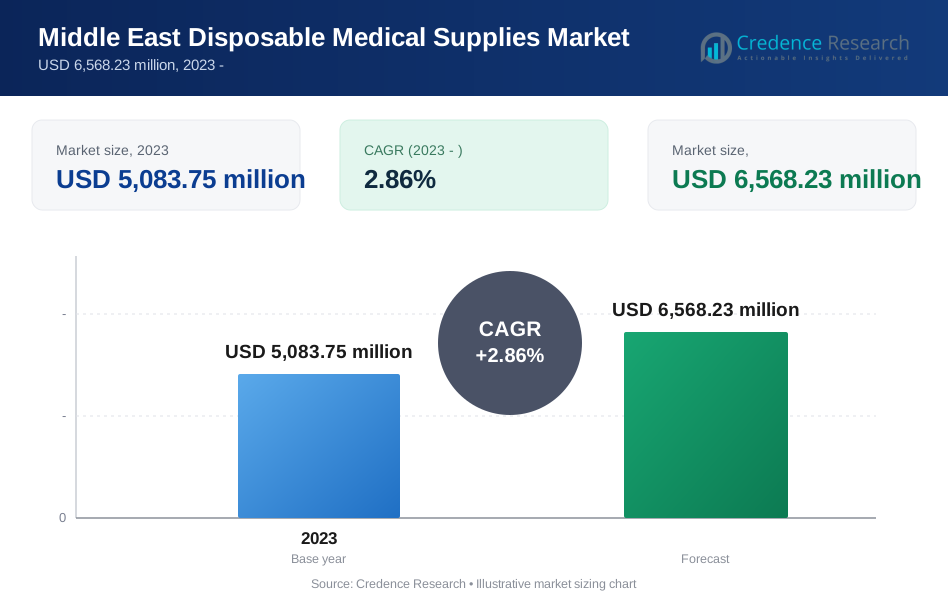
Middle East Disposable Medical Supplies market size was valued at USD 5,083.75 million in 2023 and is anticipated to reach USD 6,568.23 million by 2032, at a CAGR of 2.86% during the forecast period (2023-2032).
The Middle East disposable medical supplies market is experiencing steady growth, driven by the expansion of healthcare infrastructure, rising prevalence of chronic diseases, and increased demand for infection prevention measures. Governments across the region are investing heavily in healthcare modernization, which is accelerating the adoption of single-use medical products in hospitals and clinics. Additionally, the growing elderly population and the rising number of surgical procedures are fueling demand for items such as gloves, syringes, surgical masks, and gowns. Technological advancements in manufacturing processes have improved product quality and affordability, further supporting market expansion. Moreover, heightened awareness of hygiene standards, particularly in the aftermath of the COVID-19 pandemic, continues to influence purchasing patterns in both public and private healthcare sectors. The market also benefits from increased participation of local and international players, leading to greater product availability and competitive pricing. These factors collectively contribute to the market's sustained upward trajectory.
The Middle East disposable medical supplies market exhibits notable geographical diversity, with key growth concentrated in countries such as the UAE, Saudi Arabia, Israel, Turkey, and Iran. These nations are advancing healthcare reforms, increasing investment in medical infrastructure, and witnessing rising demand for single-use medical products due to expanding patient populations and growing awareness of hygiene standards. The market is supported by both domestic and international players who contribute to innovation, quality enhancement, and competitive pricing. Leading companies operating in the region include Smith+Nephew, Medtronic, Procter & Gamble, Ontex, Molnlycke Health Care, and Narang Medical Limited, among others. These players are focusing on expanding their product portfolios, improving distribution networks, and adopting strategic partnerships to strengthen their presence across the region. Local manufacturers are also emerging, contributing to the availability of cost-effective products tailored to regional healthcare needs. This dynamic landscape fosters healthy competition and supports continued market expansion.
Market Insights
- The Middle East disposable medical supplies market was valued at USD 5,083.75 million in 2023 and is projected to reach USD 6,568.23 million by 2032, growing at a CAGR of 2.86%.
- The global Disposable Medical Supplies market was valued at USD 2,45,000 million in 2023 and is expected to reach USD 3,93,306.92 million by 2032, growing at a CAGR of 5.40% during the forecast period.
- Increasing investments in healthcare infrastructure and rising surgical procedures are key drivers boosting demand for disposable medical products.
- There is a noticeable shift toward eco-friendly and sustainable disposable supplies, driven by growing environmental awareness in the region.
- The market is competitive, with key players like Medtronic, Smith+Nephew, and Procter & Gamble expanding their regional presence through innovation and partnerships.
- Regulatory challenges and dependence on imported raw materials pose restraints to market growth and supply chain efficiency.
- Countries such as Saudi Arabia, the UAE, Israel, and Turkey are witnessing strong demand due to advanced healthcare systems and government healthcare initiatives.
- Demand for home healthcare products is rising, contributing to increased consumption of disposable supplies in non-clinical settings.
Report scope
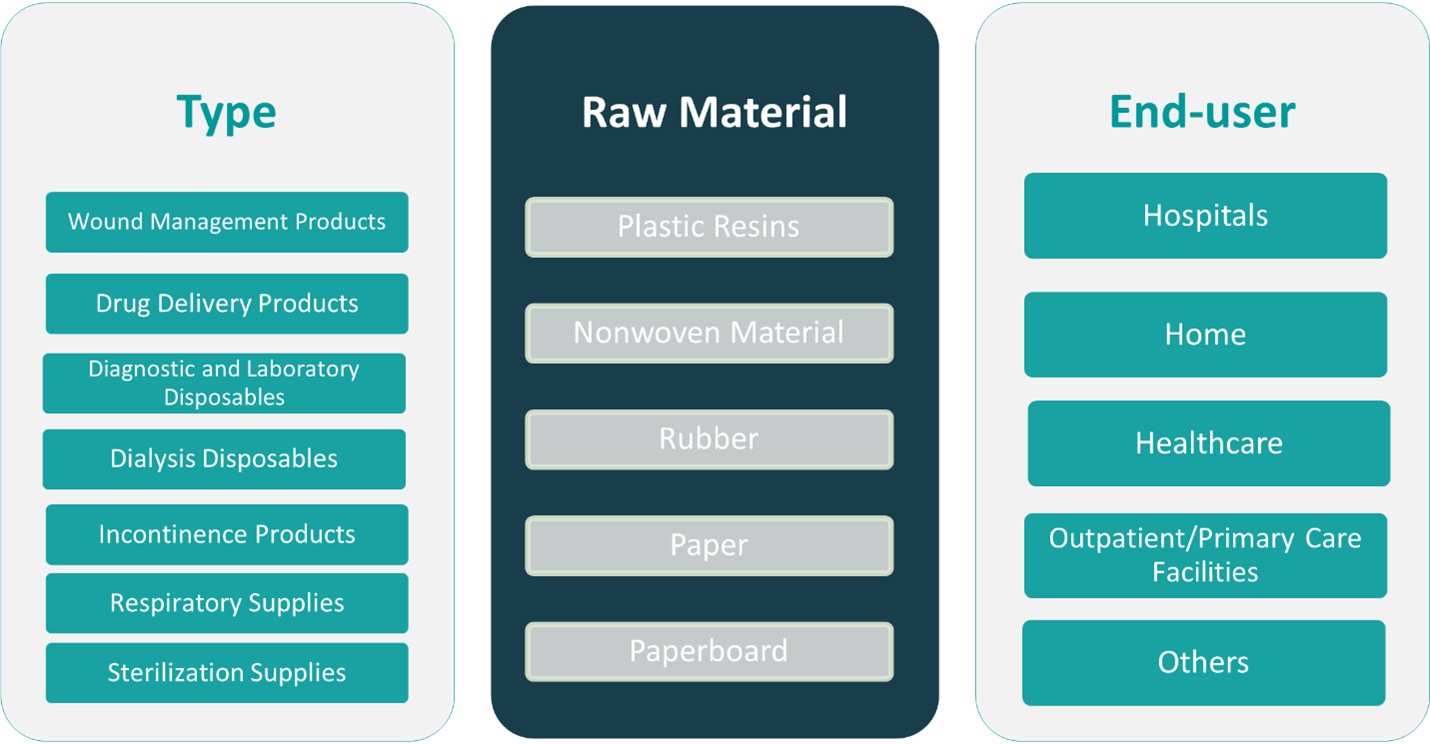
This report segments the Middle East Disposable Medical Supplies Market as follows:
Market Drivers
Healthcare Infrastructure Development
The rapid development of healthcare infrastructure across the Middle East is a significant driver for the growth of the disposable medical supplies market. For instance, Saudi Arabia's Vision 2030 initiative has led to substantial investments in healthcare infrastructure, including the construction of state-of-the-art hospitals and clinics, as highlighted by the Ministry of Health. Governments in countries like Saudi Arabia, the UAE, and Qatar have been investing heavily in expanding and modernizing healthcare facilities to meet the growing demand for medical services. This includes the construction of state-of-the-art hospitals, clinics, and specialized healthcare centers. As the number of healthcare facilities increases, the demand for medical supplies, including disposable items like gloves, syringes, and bandages, is also rising. Additionally, the adoption of advanced healthcare technologies and the push for improving healthcare services directly impacts the need for high-quality disposable medical products to ensure patient safety and efficient care delivery.
Rising Prevalence of Chronic Diseases
The increasing prevalence of chronic diseases, such as diabetes, cardiovascular disorders, and respiratory conditions, is contributing to the rising demand for disposable medical supplies in the region. For instance, the International Diabetes Federation (IDF) reports that Saudi Arabia has one of the highest diabetes prevalence rates globally, necessitating frequent medical interventions and hospital stays. As the Middle East experiences significant demographic shifts, with a growing elderly population and lifestyle-related diseases becoming more common, the need for medical care and related supplies escalates. This trend is particularly evident in countries with large expatriate populations, where non-communicable diseases are on the rise due to factors like poor diet, sedentary lifestyles, and smoking habits. As healthcare systems adapt to manage chronic conditions, the demand for disposable medical supplies is expected to continue growing.
Increased Awareness of Infection Control and Hygiene
The heightened awareness of infection control and hygiene, particularly in the wake of the COVID-19 pandemic, has substantially boosted the demand for disposable medical supplies in the Middle East. Governments, healthcare organizations, and the general public are more focused than ever on maintaining high hygiene standards to prevent the spread of infectious diseases. This shift has accelerated the adoption of disposable items such as masks, gloves, gowns, and syringes, which play a crucial role in minimizing cross-contamination in healthcare settings. Additionally, healthcare providers are adopting infection prevention protocols to ensure patient and staff safety, which further drives the consumption of disposable medical products. This growing emphasis on infection control is expected to continue shaping purchasing trends in the healthcare sector across the region.
Technological Advancements and Product Innovation
Technological advancements and innovation in the manufacturing of disposable medical supplies are fueling market growth in the Middle East. Manufacturers are increasingly focusing on creating high-quality, cost-effective disposable products that meet the evolving needs of healthcare providers. Innovations such as improved materials, advanced sterilization techniques, and product design enhancements have led to the development of more efficient and safer disposable medical supplies. Moreover, the adoption of automation and digitalization in the manufacturing process has resulted in a more streamlined production, reducing costs and increasing supply chain efficiency. As the demand for disposable medical products rises, these technological advancements ensure that the market can meet the growing needs of healthcare facilities, while maintaining the quality and safety standards required in medical settings. This ongoing innovation is expected to be a key factor driving the market forward in the coming years.
Market Trends
Growth in Preventive Healthcare Products
One of the prominent trends in the Middle East disposable medical supplies market is the growing demand for preventive healthcare products. For instance, the World Health Organization (WHO) has emphasized the importance of items like face masks, gloves, and hand sanitizers in infection prevention, particularly during the COVID-19 pandemic. While these products were already a part of medical practices, the pandemic highlighted their critical role in infection prevention. As a result, there has been an increased focus on ensuring healthcare environments are equipped with the necessary disposable products to maintain hygiene and prevent the spread of diseases. This trend is expected to persist as both healthcare professionals and the general public prioritize preventive measures to safeguard against future health crises.
Shift Towards Sustainability and Eco-friendly Solutions
Sustainability has become a growing concern in the healthcare industry worldwide, and the Middle East is no exception. As environmental awareness increases, there is a noticeable trend toward eco-friendly disposable medical supplies. Manufacturers are exploring new materials and technologies that reduce environmental impact while maintaining the efficacy of their products. Biodegradable gloves, recyclable packaging, and eco-friendly surgical gowns are examples of products gaining popularity in the region. This shift is driven by the growing demand from healthcare facilities and consumers for sustainable alternatives that align with global environmental goals. However, balancing sustainability with the need for hygiene and safety in medical settings remains a challenge that manufacturers continue to address.
Technological Integration in Disposable Medical Products
Another key trend influencing the Middle East disposable medical supplies market is the integration of advanced technologies in product development. Innovations such as smart syringes, self-disinfecting surfaces, and automated wound care products are transforming the landscape of disposable medical supplies. The use of advanced materials, such as antimicrobial fabrics and coatings, is enhancing the effectiveness of disposable products in preventing infections. Additionally, digital technologies like RFID (Radio Frequency Identification) tags are being incorporated into some medical products for better inventory management, tracking, and compliance with regulatory standards. These technological advancements are not only improving the functionality and efficiency of disposable supplies but also boosting their demand within the region’s evolving healthcare sector.
Increasing Use of Disposable Medical Supplies in Home Healthcare
The expansion of home healthcare services in the Middle East is another significant trend influencing the disposable medical supplies market. For instance, the Ministry of Health in Saudi Arabia has reported a rise in the use of disposable wound care supplies and insulin syringes to support home-based care for elderly patients. With a growing preference for home-based care, driven by the aging population and advances in telemedicine, there is an increasing demand for disposable medical supplies in non-hospital settings. Products such as disposable wound care supplies, insulin syringes, and incontinence products are becoming essential for patients receiving care at home. This shift is creating new opportunities for suppliers to cater to the home healthcare segment by offering a variety of disposable products tailored for at-home use. As home healthcare continues to gain momentum, the market for disposable medical supplies is expected to expand, providing new avenues for growth in the region.
Market Challenges Analysis
Regulatory and Compliance Challenges
One of the primary challenges facing the Middle East disposable medical supplies market is navigating the complex and evolving regulatory landscape. For instance, the Saudi Food and Drug Authority (SFDA) and the UAE Ministry of Health and Prevention (MOHAP) have implemented stringent guidelines for medical product approvals, requiring manufacturers to meet ISO certifications and CE marking standards. The region is home to diverse healthcare regulations that vary across countries, with each nation implementing its own standards for product approval, manufacturing, and distribution. Companies operating in this market must ensure that their products comply with local regulations, which can be time-consuming and costly. Additionally, the stringent quality control measures required for medical products can lead to delays in product launches and market entry, especially for international manufacturers unfamiliar with the region's regulatory environment. The need for consistent adherence to global and regional standards, such as ISO certifications and CE marking, further complicates the process. These regulatory hurdles can hinder the growth of businesses, particularly smaller players, and increase the cost of doing business in the region.
Supply Chain and Logistics Constraints
The disposable medical supplies market in the Middle East faces significant supply chain and logistics challenges, particularly with respect to the availability and cost of raw materials. Many medical supplies are dependent on imported components, and disruptions in the global supply chain such as those caused by geopolitical tensions, natural disasters, or the COVID-19 pandemic can lead to delays and shortages. Additionally, the region’s dependence on imports means that fluctuations in global trade policies or tariffs can impact the cost and availability of key medical supplies. The need to maintain stringent inventory levels and ensure timely deliveries to healthcare facilities also places pressure on suppliers and distributors. As demand for disposable medical supplies continues to rise, managing an efficient, cost-effective supply chain will be essential for market participants to remain competitive and meet the needs of healthcare providers in the region.
Market Opportunities
The Middle East disposable medical supplies market presents numerous opportunities driven by the region’s growing healthcare needs and expanding infrastructure. With governments heavily investing in healthcare systems, particularly in countries like Saudi Arabia, the UAE, and Qatar, there is significant potential for companies providing medical supplies to capitalize on the increasing number of hospitals, clinics, and specialized medical centers. As these facilities expand and modernize, the demand for disposable products such as gloves, syringes, masks, and gowns will continue to rise. Moreover, the growing emphasis on improving healthcare services and patient safety provides an opportunity for suppliers to offer high-quality, cost-effective disposable products that meet the evolving needs of the healthcare sector.
Additionally, the rise of home healthcare services in the region opens new avenues for disposable medical supply companies. As healthcare delivery increasingly shifts from hospitals to home-based care due to factors like an aging population and the widespread adoption of telemedicine, there is a growing need for disposable products designed for at-home use. Items such as wound care dressings, diabetic care supplies, and incontinence products are becoming essential in home healthcare settings. This trend presents an opportunity for companies to diversify their product offerings and expand into the growing home healthcare market. With increased focus on infection control, sustainability, and product innovation, companies in the region have the chance to introduce eco-friendly, technologically advanced, and efficient medical supplies that cater to both institutional and home care needs. By responding to these shifting market dynamics, businesses can tap into a rapidly expanding sector with significant long-term potential.
Market Segmentation Analysis:
By Type:
The Middle East disposable medical supplies market is segmented into several key product categories, each serving a distinct role in healthcare settings. Wound management products are a significant segment, driven by the increasing number of surgical procedures, injuries, and chronic conditions like diabetes. Items such as bandages, dressings, and wound care kits are in high demand across hospitals and home care settings. Drug delivery products, including syringes, intravenous (IV) bags, and inhalers, are critical in ensuring accurate medication administration and are seeing sustained growth due to the rise in chronic diseases and the need for effective drug administration systems. Diagnostic and laboratory disposables, such as test tubes, sample containers, and swabs, are essential for medical testing and diagnostic procedures, contributing to the growing demand for disposable items. Dialysis disposables are also gaining traction, driven by the increasing prevalence of kidney diseases, while incontinence products, including adult diapers and pads, are expanding due to the aging population and rising awareness of related healthcare needs.
By Raw Material:
The raw material segment in the Middle East disposable medical supplies market is diverse, with key materials being plastic resins, nonwoven material, rubber, paper, and paperboard. Plastic resins are widely used in the production of medical devices such as syringes, gloves, and IV bags, owing to their durability, flexibility, and ease of sterilization. The demand for nonwoven materials, used in items like surgical gowns, face masks, and wound care products, is also on the rise due to their lightweight and breathable properties, making them ideal for disposable medical products. Rubber is predominantly used for gloves and various medical seals, where elasticity and durability are essential. Paper and paperboard are key materials for products like diagnostic test kits, packaging for medical supplies, and absorbent wound care products. Each of these raw materials plays a vital role in ensuring the quality, safety, and functionality of medical supplies, and their demand is closely tied to the growth of healthcare infrastructure and the need for cost-effective, high-performance disposable products.
Segments:
Based on Type:
- Wound Management Products
- Drug Delivery Products
- Diagnostic and Laboratory Disposables
- Dialysis Disposables
- Incontinence Products
Based on Raw Material:
- Plastic Resins
- Nonwoven Material
- Rubber
- Paper
- Paperboard
Based on End- User:
- Hospitals
- Home
- Healthcare
- Outpatient/Primary Care Facilities
- Others
Based on the Geography:
- UAE
- KSA
- Israel
- Turkey
- Iran
- Rest of Middle East
Regional Analysis
UAE
The UAE accounted for approximately 23% of the market share, driven by its advanced healthcare infrastructure and a high standard of medical care. The country’s well-developed healthcare system, increasing government investments, and a growing demand for medical supplies due to rising healthcare needs contribute to its dominant position. The UAE also serves as a medical hub for the GCC region, attracting a significant number of medical tourists, which further boosts the demand for disposable medical products.
Saudi Arabia (KSA)
In Saudi Arabia (KSA), the market share is estimated at 25%, making it the largest market for disposable medical supplies in the region. The country’s ambitious healthcare expansion plans, supported by the Saudi Vision 2030 initiative, which aims to modernize healthcare facilities and services, has created a surge in demand for medical supplies. Additionally, the high incidence of chronic diseases, such as diabetes and cardiovascular conditions, further drives the need for medical disposables in both hospital and home care settings. KSA’s vast healthcare infrastructure and large population make it a key player in the regional market.
Israel
Israel holds a market share of around 15%, thanks to its advanced medical technology and well-established healthcare system. The country’s strong emphasis on research and development, along with high standards of healthcare, creates a steady demand for high-quality disposable medical supplies. The healthcare market in Israel is known for its cutting-edge innovations in medical devices, particularly in diagnostics and drug delivery systems, which supports the growing use of disposable products. The country’s small but highly developed market makes it a prominent player in the region.
Turkey and Iran
Turkey and Iran together account for approximately 30% of the market share. Turkey, with a market share of 18%, benefits from a rapidly growing healthcare sector, a large population, and increasing medical tourism. The country’s healthcare reforms, coupled with a rising demand for disposable medical products in both public and private hospitals, contribute to its expanding market. Iran, with a market share of 12%, faces challenges related to sanctions but remains a significant market due to its large population and demand for affordable healthcare solutions. Despite economic difficulties, Iran continues to be an important player in the region's disposable medical supplies market, driven by the need for essential healthcare products.
Key Player Analysis
- Smith+Nephew
- Shanghai Neo-Medical Co., Ltd
- Procter & Gamble
- Principle Business Enterprises, Inc
- Ontex
- Medtronic
- Nu-Life Medical & Surgical Supplies Inc
- Narang Medical Limited
- Molnlycke Health Care
- Mellon Medical B.V.
- MedGyn Products, Inc
- MED-CON Inc.
Competitive Analysis
The Middle East disposable medical supplies market is characterized by a competitive landscape featuring a mix of global giants and regional players, all striving to expand their footprint and meet the growing demand for high-quality, cost-effective products. Leading players in the market include Smith+Nephew, Medtronic, Procter & Gamble, Ontex, Molnlycke Health Care, Narang Medical Limited, Shanghai Neo-Medical Co., Ltd, Nu-Life Medical & Surgical Supplies Inc, Principle Business Enterprises, Inc, MedGyn Products, Inc, MED-CON Inc., and Mellon Medical B.V. These companies are actively investing in research and development to introduce innovative and safer disposable products, such as advanced wound dressings, drug delivery devices, and eco-friendly materials. They are also enhancing their regional distribution networks through strategic partnerships, mergers, and acquisitions to strengthen market presence. Additionally, many of these key players are expanding product portfolios tailored to local healthcare needs and complying with regional regulatory standards. This competitive dynamic encourages continuous product improvement and pricing strategies aimed at gaining market share while addressing diverse consumer demands in both institutional and home-care segments.
Recent Developments
- In March 2025, At the AAOS Annual Meeting, Smith+Nephew introduced the TESSA Spatial Surgery System, a 510(k)-pending technology combining augmented reality and advanced imaging for arthroscopic surgeries.
- In March 2025, Ontex inaugurated a new R&D center in Segovia, Spain, focusing on sustainable feminine care innovations and eco-friendly production processes.
- In May 2024, PBE invested in expanding production capacity for plus-size incontinence products, launching new 3XL disposable pull-on underwear with breathable materials to enhance comfort and skin health.
- In 2024, Medtronic initiated the limited release of its Evolut FX+ Transcatheter Aortic Valve Replacement device for minimally invasive heart surgeries.
- In May 2023, P&G acquired an established antiseptic brand to strengthen its hygiene portfolio, reflecting a strategic expansion into the personal hygiene market.
Market Concentration & Characteristics
The Middle East disposable medical supplies market exhibits moderate to high market concentration, with a few multinational corporations holding a significant share due to their strong brand recognition, advanced product portfolios, and wide distribution networks. These established players leverage technological innovation, quality assurance, and compliance with international healthcare standards to maintain their competitive edge. At the same time, regional and local manufacturers are emerging, offering cost-effective alternatives and catering to country-specific healthcare requirements. The market is characterized by growing demand across both institutional and home-care settings, driven by factors such as an aging population, rising chronic disease incidence, and heightened awareness of infection control. Disposable medical supplies are increasingly viewed as essential components of modern healthcare delivery, especially post-pandemic. Additionally, purchasing decisions are influenced by factors such as pricing, product performance, and regulatory compliance. This market is also marked by an ongoing shift toward sustainable materials and customized product development tailored to regional needs.
Report Coverage
The research report offers an in-depth analysis based on Type, Raw Material, End-User and Geography. It details leading market players, providing an overview of their business, product offerings, investments, revenue streams, and key applications. Additionally, the report includes insights into the competitive environment, SWOT analysis, current market trends, as well as the primary drivers and constraints. Furthermore, it discusses various factors that have driven market expansion in recent years. The report also explores market dynamics, regulatory scenarios, and technological advancements that are shaping the industry. It assesses the impact of external factors and global economic changes on market growth. Lastly, it provides strategic recommendations for new entrants and established companies to navigate the complexities of the market.
Future Outlook
- The Middle East disposable medical supplies market is projected to continue its growth trajectory, fueled by increased healthcare spending and infrastructure development.
- Rising prevalence of chronic diseases and an aging population are expected to drive sustained demand for disposable medical products.
- Technological advancements, including smart and AI-integrated devices, are anticipated to enhance the efficiency and safety of disposable medical supplies.
- There is a growing emphasis on eco-friendly and sustainable products, leading to increased adoption of biodegradable and recyclable materials.
- The expansion of telemedicine and home healthcare services is likely to boost the demand for disposable supplies suitable for remote patient care.
- Regulatory harmonization efforts across the region aim to streamline approval processes and ensure consistent quality standards for medical disposables.
- The market is expected to see increased competition, with both multinational corporations and local manufacturers striving to meet diverse healthcare needs.
- Investment in research and development is anticipated to result in innovative products tailored to regional health challenges.
- Public awareness campaigns and education initiatives are projected to enhance the proper use and disposal of medical supplies, improving overall healthcare outcomes.
- Strategic collaborations and partnerships among key players are likely to strengthen distribution networks and expand market reach across the Middle East.
Request a Free Sample
Fill in your details and we'll send you a free sample report.
- Sample data tables & charts
- Research methodology
Need a Custom Version of This Report?
Tailor the scope, geography, or segments to your exact requirements.
- Custom geography or segment scope
- Direct access to our analyst team
Frequently Asked Questions
What is the current size of the Middle East Disposable Medical Supplies?
What factors are driving the growth of the Middle East Disposable Medical Supplies?
What are the key segments within the Middle East Disposable Medical Supplies?
Who are the major players in the Middle East Disposable Medical Supplies?
Table of Content
Chapter 1. Report Introduction
- 1.1 Report Description & Purpose
- 1.1.1 Report Title & Market Definition
- 1.1.2 Unique Selling Propositions (USP) & Key Differentiators
- 1.1.3 Value Proposition for Stakeholders
- 1.2 Research Objectives
- 1.2.1 Market Sizing Objectives (Volume & Revenue)
- 1.2.2 Segmentation Objectives
- 1.2.3 Competitive Intelligence Objectives
- 1.2.4 Forecast & Scenario Objectives
- 1.3 Report Scope
- 1.3.1 Middle East Disposable Medical Supplies Scope – Types & Subtypes Covered
- 1.3.2 Geographic Scope – Regions & Countries Covered
- 1.3.3 Historical Period, Base Year & Forecast Period (2023; forecast to the forecast period)
- 1.3.4 Inclusions & Exclusions
- 1.4 HS Code & Classification Framework
- 1.5 Currency, Units & Pricing Basis
- 1.6 Target Stakeholders
- 1.7 Limitations & Assumptions
Chapter 2. Executive Summary
- 2.1 Global Middle East Disposable Medical Supplies Market Snapshot
- 2.1.1 Market Size – Historical (2023) & Forecast (the forecast period) (2023: USD 5,083.75 million → forecast year: USD 6,568.23 million)
- 2.1.2 Volume & Revenue – Global Totals
- 2.1.3 Key Market Highlights – Top Five Facts
- 2.2 Middle East Disposable Medical Supplies Market Segmentation Snapshot
- 2.2.1 Market Split by Region – 2023 vs.
- 2.3 Competitive Snapshot
- 2.3.1 Top 10 Players by Revenue Share – 2023
- 2.3.2 Top 10 Players by Volume Share – 2023
- 2.3.3 Recent Strategic Developments (18-Month Summary)
- 2.4 Key Investment Highlights & Strategic Conclusions
Chapter 3. Middle East Disposable Medical Supplies Market Dynamics & Industry Analysis
- 3.1 Market Overview & Context
- 3.1.1 Middle East Disposable Medical Supplies Market Position in the Broader Automotive Value Chain
- 3.1.2 OEM vs. Replacement Market Dynamics
- 3.1.3 Market Maturity & Development Stage by Region
- 3.2 Middle East Disposable Medical Supplies Market Drivers
- 3.3 Middle East Disposable Medical Supplies Market Restraints & Challenges
- 3.4 Middle East Disposable Medical Supplies Market Opportunities
- 3.5 Porter's Five Forces Analysis
- 3.5.1 Threat of New Entrants
- 3.5.2 Bargaining Power of Suppliers
- 3.5.3 Bargaining Power of Buyers
- 3.5.4 Threat of Substitutes
- 3.5.5 Competitive Rivalry – Intensity Assessment
- 3.6 Middle East Disposable Medical Supplies Value Chain Analysis
- 3.6.1 Upstream – Raw Material/Input Suppliers
- 3.6.1.1 Raw Material/Input 1
- 3.6.1.2 Raw Material/Input 2
- 3.6.1.3 Raw Material/Input 3
- 3.6.2 Midstream – Production/Manufacturing/Service Delivery
- 3.6.2.1 Production/Process Overview
- 3.6.2.2 Key Facility Locations & Capacity by Manufacturer
- 3.6.3 Downstream – Distribution & End Consumer
- 3.6.3.1 Primary Channel – B2B/OEM
- 3.6.3.2 Secondary Channels – Dealer, Retail, Online, Direct
- 3.6.4 Value Chain Profitability Analysis
- 3.6.1 Upstream – Raw Material/Input Suppliers
- 3.7 PESTEL Analysis
- 3.7.1 Political Factors
- 3.7.2 Economic Factors
- 3.7.3 Social Factors
- 3.7.4 Technological Factors
- 3.7.5 Environmental Factors
- 3.7.6 Legal Factors
- 3.8 Middle East Disposable Medical Supplies Supply Chain Analysis
- 3.8.1 Raw Material/Input Supply Risk Assessment
- 3.8.2 Manufacturing Concentration Risk (Geographic Exposure)
- 3.8.3 Trade Disruption Impact Analysis
- 3.9 Regulatory & Policy Landscape
Note: The regulatory and policy landscape section covers regulations based on their applicability to the market, Middle East Disposable Medical Supplies category, geography, and scope of the study. Only regulatory frameworks with a material impact on operations, compliance, trade, sustainability, or market access are analyzed in detail.
Chapter 4. Key Investment Pockets & Opportunity Analysis
- 4.1 Middle East Disposable Medical Supplies Market Attractiveness Analysis
- 4.1.1 By Region – Investment Attractiveness Matrix (Volume × CAGR)
- 4.2 Absolute Revenue Growth Opportunity
- 4.2.1 By Region – Absolute USD Growth Through the forecast period
- 4.3 Incremental Volume Opportunity
- 4.3.1 By Region – Incremental Volume Through the forecast period
- 4.3.2 Segment – Incremental Volume
- 4.4 Emerging Submarket Opportunity Deep Dive (Subject to Applicability)
- 4.5 Emerging Market Opportunity Scorecards
- 4.5.1 United States
- 4.5.2 Europe
- 4.5.3 Asia
- 4.5.4 Middle East & Africa
Note: Emerging Market Opportunity Scorecards will be included based on relevance and strategic importance. Regions listed are indicative and may vary depending on data availability and market dynamics.
Chapter 5. Middle East Disposable Medical Supplies Import-Export Analysis & Trade Flows
- 5.1 Global Trade Overview
- 5.1.1 Global Export Value by Country (2023)
- 5.1.2 Global Export Volume by Country (2023)
- 5.1.3 Global Import Value by Country (2023)
- 5.1.4 Global Import Volume by Country (2023)
- 5.1.5 Net Trade Balance by Country (2023)
- 5.2 Export Analysis – Segment
- 5.2.1 Type 1 (HS Code)
- 5.2.2 Type 2 (HS Code)
- 5.2.3 Type 3 (HS Code)
- 5.2.4 Type 4 (HS Code)
- 5.2.5 Type 5 (HS Code)
- 5.3 Import Analysis – Segment
- 5.3.1 Type 1 (HS Code)
- 5.3.2 Type 2 (HS Code)
- 5.3.3 Type 3 (HS Code)
- 5.3.4 Type 4 (HS Code)
- 5.3.5 Type 5 (HS Code)
- 5.4 Average Unit Trade Prices
- 5.4.1 Average Export Price – Segment & Country
- 5.4.2 Average Import Price – Segment & Source Country
- 5.4.3 Price Trends (2023)
- 5.5 Key Trade Route Analysis
- 5.5.1 Trade Route 1
- 5.5.2 Trade Route 2
- 5.5.3 Trade Route 3
- 5.5.4 Trade Route 4
- 5.5.5 Trade Route 5
- 5.6 Trade Policy Impact Assessment
- 5.6.1 US Anti-Dumping & Section 301 Tariffs
- 5.6.2 EU Customs Union Impact
- 5.6.3 Major Free Trade Agreements
- 5.6.4 USMCA Rules of Origin
Note: Trade policy analysis will be included only where relevant to the Middle East Disposable Medical Supplies market.
Chapter 6. Competitive Landscape & Company Benchmarking
- 6.1 Middle East Disposable Medical Supplies Market Concentration & Structure
- 6.1.1 Herfindahl-Hirschman Index (HHI) – vs. 2023
- 6.1.2 Tier 1, Tier 2 & Tier 3 Market Structure
- 6.1.3 Global, Regional & Local Player Dynamics
- 6.2 Middle East Disposable Medical Supplies Market Share Analysis – 2023
- 6.2.1 Global Revenue Share by Company
- 6.2.2 Global Volume Share by Company
- 6.2.3 Regional Revenue Share
- 6.2.4 Market Share Evolution ( vs. 2023)
- 6.2.5 OEM Segment Share by Company
- 6.2.6 Replacement Segment Share by Company
- 6.3 Production/Delivery Capacity & Facility Analysis
- 6.3.1 Global Installed Capacity
- 6.3.2 Capacity Utilization Rates
- 6.3.3 Production/Output Volume
- 6.3.4 Facility Locations & Capacity Map
- 6.3.5 Planned Capacity Additions
- 6.4 Middle East Disposable Medical Supplies Competitive Benchmarking Matrix
- 6.4.1 Revenue, Volume, CAGR & Profitability Comparison
- 6.4.2 Channel Revenue Mix
- 6.4.3 Geographic Revenue Exposure
- 6.4.4 R&D Intensity
- 6.4.5 Sustainability Maturity
- 6.5 Strategic Developments in Middle East Disposable Medical Supplies (Last 24 Months)
- 6.5.1 Mergers, Acquisitions & Divestments
- 6.5.2 New Middle East Disposable Medical Supplies Launches
- 6.5.3 Facility Expansions
- 6.5.4 Strategic Alliances, Joint Ventures & Partnerships
- 6.5.5 Distribution Expansion & Market Entry
- 6.5.6 Sustainability & ESG Initiatives
- 6.6 Competitive Strategy Mapping
- 6.6.1 Leader, Challenger, Follower & Niche Classification
- 6.6.2 Pricing Strategy Comparison
- 6.6.3 Channel Strategy Matrix
Note: Strategic developments are included based on their materiality and the availability of reliable information.
Chapter 7. Global Middle East Disposable Medical Supplies Market – By Distribution Channel
- 7.1 Segment Overview
- 7.1.1 Volume & Revenue Split by Channel (2023 & )
- 7.1.2 Channel Mix Evolution (the forecast period)
Chapter 8. Regional Market Analysis – Global Overview
- 8.1 Global Regional Overview
- 8.1.1 Regional Volume Share
- 8.1.2 Regional Revenue Share
- 8.1.3 Regional Volume by Region
- 8.1.4 Regional Revenue by Region
- 8.1.5 Regional Forecast Through the forecast period
- 8.2 Cross-Regional Segment Analysis
- 8.2.1 By Distribution Channel
- 8.2.2 By Brand/Price Tier
Chapter 9. North America Middle East Disposable Medical Supplies Market
- 9.1 United States
- 9.2 Canada
- 9.3 Mexico
Chapter 10. Europe Middle East Disposable Medical Supplies Market
- 10.1 Germany
- 10.2 France
- 10.3 Italy
- 10.4 United Kingdom
- 10.5 Spain
- 10.6 Poland
- 10.7 Russia
- 10.8 Netherlands
- 10.9 Belgium
- 10.10 Sweden
- 10.11 Denmark
- 10.12 Norway
- 10.13 Rest of Europe
Chapter 11. Asia Pacific Middle East Disposable Medical Supplies Market
- 11.1 China
- 11.2 India
- 11.3 Japan
- 11.4 South Korea
- 11.5 Thailand
- 11.6 Indonesia
- 11.7 Vietnam
- 11.8 Malaysia
- 11.9 Australia
- 11.10 Rest of Asia Pacific
Chapter 12. Latin America Middle East Disposable Medical Supplies Market
- 12.1 Brazil
- 12.2 Argentina
- 12.3 Colombia
- 12.4 Chile
- 12.5 Rest of Latin America
Chapter 13. Middle East Middle East Disposable Medical Supplies Market
- 13.1 Saudi Arabia
- 13.2 United Arab Emirates
- 13.3 Turkey
- 13.4 Israel
- 13.5 Iran
- 13.6 Rest of the Middle East
Chapter 14. Africa Middle East Disposable Medical Supplies Market
- 14.1 South Africa
- 14.2 Egypt
- 14.3 Nigeria
- 14.4 Morocco
- 14.5 Rest of Africa
Chapter 15. Middle East Disposable Medical Supplies Company Profiles
- 15.1 [Company 01]
- 15.1.1 Company Overview
- 15.1.2 Key Management Personnel
- 15.1.3 Products & Services Portfolio
- 15.1.4 Financial Performance
- 15.1.5 Key Market Focus & Geographic Presence
- 15.1.6 Recent Developments & Strategic Initiatives
Note: The company profile list is preliminary and may change based on research findings, market developments, data availability, and client requirements.
Chapter 16. Appendices
- Appendix A – List of Abbreviations & Acronyms
- Appendix B – Industry Classification Code Reference – Full Series
- Appendix C – Production & Capacity Data Tables
- Appendix D – End-Use & Demand Base Tables
- Appendix E – Consumption & Replacement Rate Assumptions
- Appendix F – ASP Reference Tables
- Appendix G – Manufacturing & Facility Database
- Appendix H – Import-Export Data Tables
- Appendix I – Regulatory Summary Tables
- Appendix J – Primary Research Participant List (Anonymized)
- Appendix K – Primary Research Questionnaire Framework
- Appendix L – Data Sources & Bibliography
- Appendix M – Market Size Divergence & Source Comparison
Chapter 17. Research Methodology
- 17.1 Research Framework & Philosophy
- 17.2 Secondary Research – Sources, Hierarchy & Data Extraction
- 17.3 Data Modeling – Bottom-Up & Top-Down Market Sizing
- 17.4 Primary Research – Stakeholder Framework, LOI & Sample Sizes
- 17.5 Forecast Methodology – Regression, Scenario & Sensitivity Analysis
- 17.6 Quality Control – Four-Layer Validation Framework
- 17.7 Limitations & Standard Assumptions
- 17.8 Disclaimer
