
| REPORT ATTRIBUTE | DETAILS |
|---|---|
| Historical Period | 2019-2022 |
| Base Year | 2023 |
| Forecast Period | 2024-2032 |
| Mobile Phone Protective Cases Market Size 2024 | USD 1320.04 Million |
| Mobile Phone Protective Cases Market, CAGR | 3.33% |
| Mobile Phone Protective Cases Market Size 2032 | USD 1781.21 Million |
Market Overview:
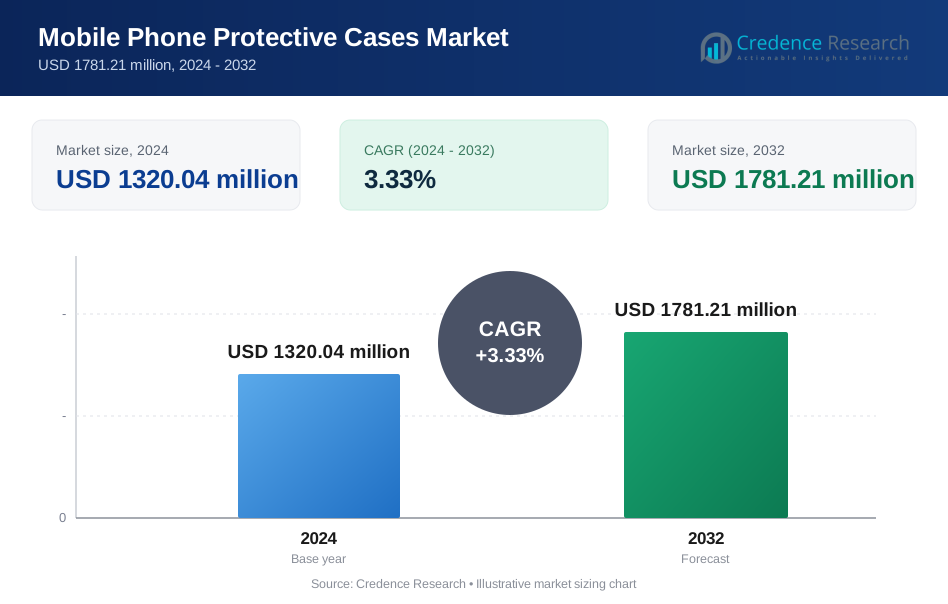
The Global Mobile Phone Protective Cases Market is projected to grow from USD 1320.04 million in 2024 to an estimated USD 1781.21 million by 2032, with a compound annual growth rate (CAGR) of 3.33% from 2024 to 2032.
The Global Mobile Phone Protective Cases market growth is primarily driven by the rising demand for smartphone protection against accidental damage, scratches, and impacts. Consumers are increasingly prioritizing high-quality protective cases to extend the lifespan of their devices. Additionally, growing consumer preferences for personalized and stylish cases have led to the introduction of innovative designs, colors, and customizable options. The rising adoption of premium smartphones has further increased the demand for advanced protective cases, including shockproof, waterproof, and eco-friendly variants. Technological advancements in case manufacturing, such as the use of lightweight and durable materials like thermoplastic polyurethane (TPU) and polycarbonate, are also propelling market growth. The expansion of online retail channels, offering a wide range of protective cases at competitive prices, is further fueling market demand. Additionally, collaborations between smartphone manufacturers and case brands to provide customized and device-specific protection solutions are enhancing product availability and consumer engagement.
Regionally, North America and Europe hold a significant market share due to high smartphone adoption rates and the presence of major market players offering premium protective cases. The Asia-Pacific region is expected to witness substantial growth, driven by the rising number of smartphone users in countries such as China, India, and Indonesia. Increasing disposable income levels and growing e-commerce platforms in the region are further supporting market expansion. Additionally, the Middle East and Africa, along with Latin America, are experiencing steady growth due to increasing smartphone affordability and growing awareness about device protection. The rising influence of global brands and the expansion of local manufacturers offering budget-friendly options are contributing to market penetration in these regions. Furthermore, government initiatives promoting domestic manufacturing in emerging economies are expected to enhance production capacities and reduce product costs, further boosting regional demand.
Market Insights:
- The market is projected to grow from USD 1320.04 million in 2024 to USD 1781.21 million by 2032, with a CAGR of 3.33%, driven by increasing smartphone adoption and rising consumer awareness of device protection.
- Advancements in material technology, including the use of lightweight and durable materials such as TPU and polycarbonate, are enhancing product durability and fueling market demand.
- Consumers are shifting toward personalized and stylish protective cases, with manufacturers offering customized designs, vibrant colors, and eco-friendly alternatives to meet evolving preferences.
- The expansion of e-commerce platforms is boosting market growth, providing consumers with a diverse range of protective cases at competitive prices while increasing brand visibility and customer engagement.
- The Asia-Pacific region is witnessing the fastest growth, driven by the rising number of smartphone users in China, India, and Indonesia, along with increasing disposable income and digital retail expansion.
- Market competition remains intense, with premium brands focusing on innovation and sustainability, while regional manufacturers leverage cost-effective production and local distribution networks.
- Regulatory pressures and environmental concerns are pushing manufacturers to adopt biodegradable and recyclable materials, creating new opportunities for sustainable protective case solutions.
Market Drivers:
Rising Smartphone Penetration and Device Vulnerability
The increasing adoption of smartphones worldwide is a major factor driving the demand for protective cases. For instance, the number of smartphones worldwide is estimated to exceed 7 billion in 2024, with projections reaching 7.434 billion by 2025. As consumers invest in expensive smartphones with advanced features, the need for high-quality protective cases has grown significantly. Mobile devices are prone to accidental drops, scratches, and external damage, making protective cases essential for prolonging device lifespan. The rising awareness of the cost implications of smartphone repairs and replacements further encourages users to invest in durable and impact-resistant cases. With the continuous rise in smartphone ownership across developed and emerging economies, the demand for protective cases is expected to surge.
Growing Consumer Preferences for Aesthetic and Functional Designs
Consumers are increasingly seeking protective cases that offer both durability and visual appeal. The market has witnessed a shift towards personalized and stylish cases, with manufacturers introducing innovative designs, textures, and customizable options. The demand for slim, lightweight, and eco-friendly cases has grown, driven by changing consumer preferences for sustainable and fashionable accessories. In addition to aesthetics, functional advancements such as shockproof, waterproof, and antimicrobial coatings have gained traction, further expanding the market. The availability of diverse materials, including silicone, leather, and thermoplastic polyurethane, allows manufacturers to cater to varying consumer needs and preferences. For instance, Incipio offers phone cases with military drop testing certification 810G
Expansion of E-Commerce and Online Retail Channels
The rise of e-commerce platforms has significantly contributed to the growth of the mobile phone protective cases market. Online retail channels offer consumers access to a wide range of protective cases with competitive pricing, product reviews, and convenient delivery options. For instance, major e-commerce platforms like Amazon, Alibaba, and eBay have become significant players in the mobile phone protective cover market, offering a wide variety of options to consumer. The increasing influence of digital marketing and social media promotions has further enhanced brand visibility and customer engagement. Many manufacturers and third-party retailers leverage e-commerce platforms to introduce new product launches, limited-edition designs, and exclusive discounts, attracting a broad customer base. The growing preference for online shopping, especially among younger demographics, continues to drive market expansion.
Advancements in Material Technology and Manufacturing Processes
The global mobile phone protective cases market is benefiting from continuous innovations in material technology and manufacturing processes. The use of advanced materials such as polycarbonate, thermoplastic polyurethane, and biodegradable compounds has improved product durability, flexibility, and environmental sustainability. Manufacturers are integrating precision molding techniques, reinforced corners, and air-cushion technologies to enhance impact resistance and device protection. Additionally, the rising adoption of 3D printing and laser engraving technologies has enabled greater customization and design flexibility, catering to evolving consumer preferences. As manufacturers continue to develop high-performance protective cases with enhanced features, the market is expected to witness steady growth. For example, some manufacturers use carbon fiber, which is five times stronger than steel but five times lighter.
Market Trends:
Increasing Demand for Sustainable and Eco-Friendly Cases
The growing consumer awareness of environmental sustainability is shaping the mobile phone protective cases market. Consumers are increasingly opting for biodegradable and recyclable cases made from plant-based materials, bamboo, and compostable polymers. Many brands are launching eco-friendly product lines to cater to this demand while reducing plastic waste. For instance, Pela cases are made of a combination of flax straw 'waste', plant-based biopolymers and contain organic ingredients that meet rigorous ASTM D6400 standards for compostability in municipal and industrial composting facilities. Regulatory policies promoting sustainable manufacturing and restrictions on single-use plastics are further accelerating the shift toward environmentally responsible protective cases. As sustainability becomes a key factor in purchasing decisions, manufacturers are prioritizing the use of renewable materials and reducing carbon footprints in production processes.
Rising Popularity of Customization and Personalization
Personalized protective cases are gaining significant traction as consumers seek unique and customized designs that reflect their style and preferences. Market players are offering customization options, allowing customers to add personal images, monograms, and exclusive artwork to their cases. For instance, Casetify allows customers to upload their own photos or artwork to create fully customized phone cases with various layout options. The integration of advanced printing technologies, such as UV printing and laser engraving, has enhanced the quality and durability of customized cases. Social media influencers and online customization platforms have further fueled this trend, making personalized phone cases a popular choice among younger consumers. The demand for limited-edition designs and collaboration-based collections with artists and brands continues to grow, expanding the market’s appeal.
Increasing Adoption of Smart and Multifunctional Cases
Technological advancements are driving the development of smart and multifunctional phone cases with enhanced features. Cases with built-in battery packs, cardholders, kickstands, and wireless charging compatibility are gaining popularity among consumers seeking added convenience. For instance, The Torras Ostand MagSafe case features a 360-degree rotating ring that doubles as a kickstand and secures MagSafe accessories. The integration of RFID-blocking technology in protective cases has also increased, addressing security concerns related to contactless payments and data theft. Some manufacturers are exploring innovations such as self-healing materials that can repair minor scratches and nanotechnology-based coatings that offer antimicrobial protection. The rising demand for multi-purpose accessories is pushing brands to develop protective cases that go beyond basic device protection.
Growth of Premium and Luxury Protective Cases
The rising adoption of high-end smartphones has fueled the demand for premium and luxury protective cases. Consumers are increasingly investing in cases made from high-quality materials such as genuine leather, carbon fiber, and metal alloys. Luxury fashion brands are expanding their product lines to include designer protective cases, targeting affluent customers who prioritize both aesthetics and brand recognition. For instance, Mous, a premium case manufacturer, uses materials like carbon fiber and genuine leather to create cases that combine luxury with military-grade drop protection. The premium segment has witnessed collaborations between mobile case manufacturers and renowned fashion houses, driving exclusivity and brand loyalty. As smartphone prices continue to rise, the demand for luxury protective cases is expected to grow, particularly in regions with high disposable income levels.
Market Challenges Analysis:
Market Saturation and Intense Competition
The mobile phone protective cases market is highly competitive, with numerous global and regional players offering a wide range of products. The presence of low-cost manufacturers, particularly in Asia-Pacific, has led to market saturation, making it challenging for premium brands to differentiate themselves. Price competition among manufacturers has resulted in reduced profit margins, limiting opportunities for high-end product innovation. Additionally, the availability of counterfeit and low-quality cases at significantly lower prices affects brand reputation and consumer trust, further intensifying market challenges.
Environmental Concerns and Regulatory Compliance
The increasing concerns regarding plastic waste and environmental sustainability pose a significant challenge to the market. Traditional protective cases made from non-biodegradable materials contribute to landfill waste, prompting regulatory authorities to impose restrictions on plastic-based products. Manufacturers face growing pressure to adopt eco-friendly materials and sustainable production practices while maintaining product durability and affordability. The transition to biodegradable alternatives involves higher production costs, which may not be feasible for price-sensitive markets, thereby limiting mass adoption.
Changing Consumer Preferences and Short Product Lifecycles
The rapid evolution of smartphone designs and models requires manufacturers to constantly update their product offerings. Consumers frequently upgrade their devices, leading to shorter product lifecycles for protective cases. This dynamic market landscape demands continuous investment in research, development, and inventory management, increasing operational challenges for manufacturers. Additionally, shifting consumer preferences towards minimalist designs or alternative protective solutions, such as screen protectors and foldable phone covers, may impact traditional case demand.
Supply Chain Disruptions and Raw Material Price Volatility
Fluctuations in raw material prices and disruptions in global supply chains present operational challenges for manufacturers. Dependence on petroleum-based polymers and advanced materials exposes companies to price volatility and supply shortages. Geopolitical tensions, trade restrictions, and logistics constraints further impact production timelines and cost structures. Manufacturers must develop resilient supply chain strategies to mitigate risks associated with raw material dependency and ensure consistent product availability.
Market Opportunities:
The growing adoption of smartphones across emerging markets presents a significant opportunity for the mobile phone protective cases market. As smartphone penetration increases in developing regions such as Asia-Pacific, Latin America, and Africa, the demand for affordable and durable protective cases is expected to rise. Expanding e-commerce platforms and digital retail channels provide manufacturers with opportunities to reach a broader consumer base, offering customized and budget-friendly protective solutions. Additionally, the rising popularity of mid-range and premium smartphones creates a strong demand for high-quality protective cases with advanced features, such as shock absorption, waterproofing, and antimicrobial coatings.
The increasing consumer preference for sustainable and eco-friendly products opens new avenues for innovation in protective case manufacturing. Companies that invest in biodegradable, recycled, and plant-based materials can capitalize on the shifting demand for environmentally responsible accessories. Furthermore, technological advancements in material science and smart accessories provide opportunities to develop multifunctional protective cases with integrated features such as wireless charging, RFID blocking, and smart tracking capabilities. Collaborations with smartphone brands, fashion houses, and tech companies for co-branded and designer cases can further drive market growth, offering premium and exclusive products to targeted consumer segments.
Market Segmentation Analysis:
By Product The mobile phone protective cases market is segmented into body gloves, pouches, phone skins, hybrid cases, and others. Body gloves account for a significant share due to their ability to provide all-around protection against drops and scratches while maintaining a sleek design. Pouches remain popular among users who prefer enclosed protection, particularly for premium and business-class smartphones. Phone skins are gaining traction as they offer a lightweight and minimalist solution, appealing to consumers who prioritize aesthetics over heavy-duty protection. Hybrid cases, combining multiple materials such as TPU and polycarbonate, are increasingly in demand for their shock absorption and durability, making them a preferred choice for high-end smartphone users. The others category includes rugged cases, wallet cases, and designer cases, which continue to expand with new innovations and features.
By Distribution Channel The market is divided into online and offline distribution channels. The online segment is experiencing rapid growth due to the increasing preference for e-commerce platforms that offer a wide variety of protective cases at competitive prices. Consumers benefit from extensive product comparisons, customer reviews, and customization options. The offline segment remains a strong channel, particularly in regions where physical retail stores dominate consumer purchasing behavior. Specialty mobile accessory stores, supermarkets, and brand-exclusive outlets drive offline sales by providing hands-on product experience and instant availability. The expansion of both online and offline retail networks continues to shape market accessibility and consumer engagement.
Segmentation:
By Product
- Body Gloves
- Pouch
- Phone Skin
- Hybrid Cases
- Others
By Distribution Channel
- Online
- Offline
Regional Analysis:
North America holds a significant share of the mobile phone protective cases market, accounting for approximately 30% of the global market. The region's high smartphone penetration, coupled with a strong preference for premium and customized accessories, drives market growth. Consumers in the United States and Canada increasingly invest in durable and aesthetically appealing cases to protect their high-value devices. The presence of key market players and well-established e-commerce platforms further strengthens the market in this region. Additionally, rising consumer awareness of sustainable products has led to an increase in demand for eco-friendly and biodegradable protective cases.
Europe accounts for around 25% of the global market, driven by high smartphone usage and the demand for high-quality protective accessories. Countries such as Germany, France, and the United Kingdom contribute significantly to regional market growth due to their strong consumer spending on mobile accessories. The increasing adoption of luxury smartphone cases, particularly those offered by fashion brands, has gained traction among high-income consumers. Additionally, stringent environmental regulations in Europe are pushing manufacturers to focus on sustainable materials, further influencing product innovation. The growing popularity of online retail platforms and the availability of customized and limited-edition protective cases continue to expand the European market.
Asia-Pacific is the fastest-growing region, holding nearly 35% of the global market share, driven by the rising adoption of smartphones in countries such as China, India, Japan, and South Korea. The presence of a large consumer base, increasing disposable income, and the rapid expansion of e-commerce platforms contribute to market expansion. The availability of low-cost manufacturing and the presence of local and international brands offering budget-friendly protective cases make Asia-Pacific a highly competitive market. Additionally, the growing demand for technologically advanced and multifunctional cases, including wireless charging compatibility and shockproof designs, is fueling market growth in the region.
Latin America and the Middle East & Africa collectively account for approximately 10% of the global market share, with steady growth prospects. In Latin America, Brazil and Mexico are key contributors, driven by increasing smartphone adoption and the expanding retail sector. The growing awareness of device protection and the rising influence of global brands are further supporting market expansion. In the Middle East & Africa, countries such as the UAE and South Africa are witnessing increased demand for premium and designer protective cases due to higher disposable incomes. However, the presence of counterfeit and low-cost alternatives remains a challenge in these regions, impacting the growth of premium protective case manufacturers.
Key Player Analysis:
- Otter Products LLC
- Shenzhen Ipaky Electronic Co., Ltd;
- CG Mobile
- Incipio, LLC
- Griffin Technology
- Amzer
- Belkin International, Inc.
- XtremeGuard
- Spigen Inc.
- Urban Armor Gear LLC
- Reiko Wireless Inc.
- Moshi Group
- Ringke Inc.
- Poetic Cases LLC
Competitive Analysis:
The mobile phone protective cases market is highly competitive, with numerous global and regional players striving to expand their market presence. Established brands focus on product innovation, material advancements, and strategic partnerships to differentiate themselves in a saturated market. Leading companies invest in durable, lightweight, and eco-friendly materials to align with evolving consumer preferences. Additionally, customization and collaboration with smartphone manufacturers and fashion brands have become key strategies for premium market positioning. For instance, Otterbox, a leading brand in protective cases, has partnered with PopSockets to create cases with integrated PopGrips, offering enhanced functionality and customization options. Regional players compete by offering cost-effective alternatives, leveraging local distribution networks and online retail platforms to reach a wider customer base. The increasing influence of e-commerce has intensified competition, allowing both established and emerging brands to expand their market reach. Companies are also adopting digital marketing and influencer collaborations to enhance brand visibility and consumer engagement. As demand for multifunctional and sustainable cases grows, market players continue to invest in research and development to introduce innovative and high-performance protective cases.
Recent Developments:
- In September 2023, Incipio debuted its protective case lineup for the iPhone 15 series. The company introduced three unique collections, including the all-new cru. for MagSafe, Forme for MagSafe, and updated versions of their popular Idol and Duo cases. These new offerings focus on sustainability, fashion, and protection without compromise, incorporating recycled materials and plastic-free packaging.
- In September 2024, Ringke, through its partnership with Ringke India, launched a range of indestructible iPhone 16 cases. The collection includes various series such as Fusion X, Onyx, Silicone, Fusion Clear, Fusion Magnetic, and Rugged Gear, each designed to cater to different user needs while maintaining a balance between protection and style.
Market Concentration & Characteristics:
The mobile phone protective cases market exhibits a moderate to high level of market concentration, with a mix of global brands and regional manufacturers competing for market share. Leading players dominate the premium and mid-range segments, leveraging brand recognition, innovative designs, and advanced materials to maintain a competitive edge. Meanwhile, numerous small and medium-sized enterprises cater to price-sensitive consumers by offering affordable protective cases through local retail and e-commerce platforms. The market is characterized by rapid product innovation, driven by evolving smartphone designs and changing consumer preferences. Manufacturers focus on developing lightweight, durable, and multifunctional cases with enhanced features such as shock resistance, waterproofing, and antimicrobial coatings. Sustainability has become a key characteristic, with an increasing number of brands adopting biodegradable and recycled materials. Additionally, the rise of online retail and customization trends has transformed the competitive landscape, providing consumers with a diverse range of options tailored to their preferences.
Report Coverage:
The research report offers an in-depth analysis based on By Product and By Distribution Channel. It details leading market players, providing an overview of their business, product offerings, investments, revenue streams, and key applications. Additionally, the report includes insights into the competitive environment, SWOT analysis, current market trends, as well as the primary drivers and constraints. Furthermore, it discusses various factors that have driven market expansion in recent years. The report also explores market dynamics, regulatory scenarios, and technological advancements that are shaping the industry. It assesses the impact of external factors and global economic changes on market growth. Lastly, it provides strategic recommendations for new entrants and established companies to navigate the complexities of the market.
Future Outlook:
- The mobile phone protective cases market is expected to witness steady growth, driven by increasing global smartphone adoption and rising consumer awareness of device protection.
- Advancements in material technology will lead to the development of ultra-durable, lightweight, and eco-friendly protective cases, catering to sustainability-conscious consumers.
- The demand for customizable and designer cases will continue to rise, with brands focusing on personalization and limited-edition collaborations to attract premium customers.
- E-commerce and direct-to-consumer sales channels will expand market reach, offering a wider variety of products and enhancing consumer accessibility.
- The increasing popularity of foldable and modular smartphones will drive the need for specialized protective cases, encouraging manufacturers to innovate in design and flexibility.
- Growth in emerging markets, particularly in Asia-Pacific, Latin America, and Africa, will create new opportunities for affordable and locally manufactured protective cases.
- Integration of smart features, such as RFID blocking, wireless charging compatibility, and antimicrobial coatings, will enhance product functionality and consumer appeal.
- Sustainable and biodegradable materials will gain prominence as regulatory policies and consumer preferences shift toward environmentally friendly accessories.
- Competition will intensify as regional manufacturers expand their presence, challenging established brands with cost-effective and innovative product offerings.
- Strategic partnerships between smartphone brands, fashion labels, and case manufacturers will shape the market, driving exclusive product launches and premiumization trends.
Request a Free Sample
Fill in your details and we'll send you a free sample report.
- Sample data tables & charts
- Research methodology
Need a Custom Version of This Report?
Tailor the scope, geography, or segments to your exact requirements.
- Custom geography or segment scope
- Direct access to our analyst team
Frequently Asked Questions
What is the current size of the Mobile Phone Protective Cases Market?
What factors are driving the growth of the Mobile Phone Protective Cases Market?
What are the key segments within the Mobile Phone Protective Cases Market?
What are some challenges faced by the Mobile Phone Protective Cases Market?
Who are the major players in the Mobile Phone Protective Cases Market?
Table of Content
Chapter 1. Report Introduction
- 1.1 Report Description & Purpose
- 1.1.1 Report Title & Market Definition
- 1.1.2 Unique Selling Propositions (USP) & Key Differentiators
- 1.1.3 Value Proposition for Stakeholders
- 1.2 Research Objectives
- 1.2.1 Market Sizing Objectives (Volume & Revenue)
- 1.2.2 Segmentation Objectives
- 1.2.3 Competitive Intelligence Objectives
- 1.2.4 Forecast & Scenario Objectives
- 1.3 Report Scope
- 1.3.1 Mobile Phone Protective Cases Scope – Types & Subtypes Covered
- 1.3.2 Geographic Scope – Regions & Countries Covered
- 1.3.3 Historical Period, Base Year & Forecast Period (2024; forecast to 2032)
- 1.3.4 Inclusions & Exclusions
- 1.4 HS Code & Classification Framework
- 1.5 Currency, Units & Pricing Basis
- 1.6 Target Stakeholders
- 1.7 Limitations & Assumptions
Chapter 2. Executive Summary
- 2.1 Global Mobile Phone Protective Cases Market Snapshot
- 2.1.1 Market Size – Historical (2024) & Forecast (2024-2032) (2024: USD 1320.04 million → 2032: USD 1781.21 million)
- 2.1.2 Volume & Revenue – Global Totals
- 2.1.3 Key Market Highlights – Top Five Facts
- 2.2 Mobile Phone Protective Cases Market Segmentation Snapshot
- 2.2.1 Market Split by Region – 2024 vs. 2032
- 2.3 Competitive Snapshot
- 2.3.1 Top 10 Players by Revenue Share – 2024
- 2.3.2 Top 10 Players by Volume Share – 2024
- 2.3.3 Recent Strategic Developments (18-Month Summary)
- 2.4 Key Investment Highlights & Strategic Conclusions
Chapter 3. Mobile Phone Protective Cases Market Dynamics & Industry Analysis
- 3.1 Market Overview & Context
- 3.1.1 Mobile Phone Protective Cases Market Position in the Broader Automotive Value Chain
- 3.1.2 OEM vs. Replacement Market Dynamics
- 3.1.3 Market Maturity & Development Stage by Region
- 3.2 Mobile Phone Protective Cases Market Drivers
- 3.3 Mobile Phone Protective Cases Market Restraints & Challenges
- 3.4 Mobile Phone Protective Cases Market Opportunities
- 3.5 Porter's Five Forces Analysis
- 3.5.1 Threat of New Entrants
- 3.5.2 Bargaining Power of Suppliers
- 3.5.3 Bargaining Power of Buyers
- 3.5.4 Threat of Substitutes
- 3.5.5 Competitive Rivalry – Intensity Assessment
- 3.6 Mobile Phone Protective Cases Value Chain Analysis
- 3.6.1 Upstream – Raw Material/Input Suppliers
- 3.6.1.1 Raw Material/Input 1
- 3.6.1.2 Raw Material/Input 2
- 3.6.1.3 Raw Material/Input 3
- 3.6.2 Midstream – Production/Manufacturing/Service Delivery
- 3.6.2.1 Production/Process Overview
- 3.6.2.2 Key Facility Locations & Capacity by Manufacturer
- 3.6.3 Downstream – Distribution & End Consumer
- 3.6.3.1 Primary Channel – B2B/OEM
- 3.6.3.2 Secondary Channels – Dealer, Retail, Online, Direct
- 3.6.4 Value Chain Profitability Analysis
- 3.6.1 Upstream – Raw Material/Input Suppliers
- 3.7 PESTEL Analysis
- 3.7.1 Political Factors
- 3.7.2 Economic Factors
- 3.7.3 Social Factors
- 3.7.4 Technological Factors
- 3.7.5 Environmental Factors
- 3.7.6 Legal Factors
- 3.8 Mobile Phone Protective Cases Supply Chain Analysis
- 3.8.1 Raw Material/Input Supply Risk Assessment
- 3.8.2 Manufacturing Concentration Risk (Geographic Exposure)
- 3.8.3 Trade Disruption Impact Analysis
- 3.9 Regulatory & Policy Landscape
Note: The regulatory and policy landscape section covers regulations based on their applicability to the market, Mobile Phone Protective Cases category, geography, and scope of the study. Only regulatory frameworks with a material impact on operations, compliance, trade, sustainability, or market access are analyzed in detail.
Chapter 4. Key Investment Pockets & Opportunity Analysis
- 4.1 Mobile Phone Protective Cases Market Attractiveness Analysis
- 4.1.1 By Region – Investment Attractiveness Matrix (Volume × CAGR)
- 4.2 Absolute Revenue Growth Opportunity
- 4.2.1 By Region – Absolute USD Growth Through 2032
- 4.3 Incremental Volume Opportunity
- 4.3.1 By Region – Incremental Volume Through 2032
- 4.3.2 Segment – Incremental Volume
- 4.4 Emerging Submarket Opportunity Deep Dive (Subject to Applicability)
- 4.5 Emerging Market Opportunity Scorecards
- 4.5.1 United States
- 4.5.2 Europe
- 4.5.3 Asia
- 4.5.4 Middle East & Africa
Note: Emerging Market Opportunity Scorecards will be included based on relevance and strategic importance. Regions listed are indicative and may vary depending on data availability and market dynamics.
Chapter 5. Mobile Phone Protective Cases Import-Export Analysis & Trade Flows
- 5.1 Global Trade Overview
- 5.1.1 Global Export Value by Country (2024)
- 5.1.2 Global Export Volume by Country (2024)
- 5.1.3 Global Import Value by Country (2024)
- 5.1.4 Global Import Volume by Country (2024)
- 5.1.5 Net Trade Balance by Country (2024)
- 5.2 Export Analysis – Segment
- 5.2.1 Type 1 (HS Code)
- 5.2.2 Type 2 (HS Code)
- 5.2.3 Type 3 (HS Code)
- 5.2.4 Type 4 (HS Code)
- 5.2.5 Type 5 (HS Code)
- 5.3 Import Analysis – Segment
- 5.3.1 Type 1 (HS Code)
- 5.3.2 Type 2 (HS Code)
- 5.3.3 Type 3 (HS Code)
- 5.3.4 Type 4 (HS Code)
- 5.3.5 Type 5 (HS Code)
- 5.4 Average Unit Trade Prices
- 5.4.1 Average Export Price – Segment & Country
- 5.4.2 Average Import Price – Segment & Source Country
- 5.4.3 Price Trends (2024)
- 5.5 Key Trade Route Analysis
- 5.5.1 Trade Route 1
- 5.5.2 Trade Route 2
- 5.5.3 Trade Route 3
- 5.5.4 Trade Route 4
- 5.5.5 Trade Route 5
- 5.6 Trade Policy Impact Assessment
- 5.6.1 US Anti-Dumping & Section 301 Tariffs
- 5.6.2 EU Customs Union Impact
- 5.6.3 Major Free Trade Agreements
- 5.6.4 USMCA Rules of Origin
Note: Trade policy analysis will be included only where relevant to the Mobile Phone Protective Cases market.
Chapter 6. Competitive Landscape & Company Benchmarking
- 6.1 Mobile Phone Protective Cases Market Concentration & Structure
- 6.1.1 Herfindahl-Hirschman Index (HHI) – vs. 2024
- 6.1.2 Tier 1, Tier 2 & Tier 3 Market Structure
- 6.1.3 Global, Regional & Local Player Dynamics
- 6.2 Mobile Phone Protective Cases Market Share Analysis – 2024
- 6.2.1 Global Revenue Share by Company
- 6.2.2 Global Volume Share by Company
- 6.2.3 Regional Revenue Share
- 6.2.4 Market Share Evolution ( vs. 2024)
- 6.2.5 OEM Segment Share by Company
- 6.2.6 Replacement Segment Share by Company
- 6.3 Production/Delivery Capacity & Facility Analysis
- 6.3.1 Global Installed Capacity
- 6.3.2 Capacity Utilization Rates
- 6.3.3 Production/Output Volume
- 6.3.4 Facility Locations & Capacity Map
- 6.3.5 Planned Capacity Additions
- 6.4 Mobile Phone Protective Cases Competitive Benchmarking Matrix
- 6.4.1 Revenue, Volume, CAGR & Profitability Comparison
- 6.4.2 Channel Revenue Mix
- 6.4.3 Geographic Revenue Exposure
- 6.4.4 R&D Intensity
- 6.4.5 Sustainability Maturity
- 6.5 Strategic Developments in Mobile Phone Protective Cases (Last 24 Months)
- 6.5.1 Mergers, Acquisitions & Divestments
- 6.5.2 New Mobile Phone Protective Cases Launches
- 6.5.3 Facility Expansions
- 6.5.4 Strategic Alliances, Joint Ventures & Partnerships
- 6.5.5 Distribution Expansion & Market Entry
- 6.5.6 Sustainability & ESG Initiatives
- 6.6 Competitive Strategy Mapping
- 6.6.1 Leader, Challenger, Follower & Niche Classification
- 6.6.2 Pricing Strategy Comparison
- 6.6.3 Channel Strategy Matrix
Note: Strategic developments are included based on their materiality and the availability of reliable information.
Chapter 7. Global Mobile Phone Protective Cases Market – By Distribution Channel
- 7.1 Segment Overview
- 7.1.1 Volume & Revenue Split by Channel (2024 & 2032)
- 7.1.2 Channel Mix Evolution (2024-2032)
Chapter 8. Regional Market Analysis – Global Overview
- 8.1 Global Regional Overview
- 8.1.1 Regional Volume Share
- 8.1.2 Regional Revenue Share
- 8.1.3 Regional Volume by Region
- 8.1.4 Regional Revenue by Region
- 8.1.5 Regional Forecast Through 2032
- 8.2 Cross-Regional Segment Analysis
- 8.2.1 By Distribution Channel
- 8.2.2 By Brand/Price Tier
Chapter 9. North America Mobile Phone Protective Cases Market
- 9.1 United States
- 9.2 Canada
- 9.3 Mexico
Chapter 10. Europe Mobile Phone Protective Cases Market
- 10.1 Germany
- 10.2 France
- 10.3 Italy
- 10.4 United Kingdom
- 10.5 Spain
- 10.6 Poland
- 10.7 Russia
- 10.8 Netherlands
- 10.9 Belgium
- 10.10 Sweden
- 10.11 Denmark
- 10.12 Norway
- 10.13 Rest of Europe
Chapter 11. Asia Pacific Mobile Phone Protective Cases Market
- 11.1 China
- 11.2 India
- 11.3 Japan
- 11.4 South Korea
- 11.5 Thailand
- 11.6 Indonesia
- 11.7 Vietnam
- 11.8 Malaysia
- 11.9 Australia
- 11.10 Rest of Asia Pacific
Chapter 12. Latin America Mobile Phone Protective Cases Market
- 12.1 Brazil
- 12.2 Argentina
- 12.3 Colombia
- 12.4 Chile
- 12.5 Rest of Latin America
Chapter 13. Middle East Mobile Phone Protective Cases Market
- 13.1 Saudi Arabia
- 13.2 United Arab Emirates
- 13.3 Turkey
- 13.4 Israel
- 13.5 Iran
- 13.6 Rest of the Middle East
Chapter 14. Africa Mobile Phone Protective Cases Market
- 14.1 South Africa
- 14.2 Egypt
- 14.3 Nigeria
- 14.4 Morocco
- 14.5 Rest of Africa
Chapter 15. Mobile Phone Protective Cases Company Profiles
- 15.1 [Company 01]
- 15.1.1 Company Overview
- 15.1.2 Key Management Personnel
- 15.1.3 Products & Services Portfolio
- 15.1.4 Financial Performance
- 15.1.5 Key Market Focus & Geographic Presence
- 15.1.6 Recent Developments & Strategic Initiatives
Note: The company profile list is preliminary and may change based on research findings, market developments, data availability, and client requirements.
Chapter 16. Appendices
- Appendix A – List of Abbreviations & Acronyms
- Appendix B – Industry Classification Code Reference – Full Series
- Appendix C – Production & Capacity Data Tables
- Appendix D – End-Use & Demand Base Tables
- Appendix E – Consumption & Replacement Rate Assumptions
- Appendix F – ASP Reference Tables
- Appendix G – Manufacturing & Facility Database
- Appendix H – Import-Export Data Tables
- Appendix I – Regulatory Summary Tables
- Appendix J – Primary Research Participant List (Anonymized)
- Appendix K – Primary Research Questionnaire Framework
- Appendix L – Data Sources & Bibliography
- Appendix M – Market Size Divergence & Source Comparison
Chapter 17. Research Methodology
- 17.1 Research Framework & Philosophy
- 17.2 Secondary Research – Sources, Hierarchy & Data Extraction
- 17.3 Data Modeling – Bottom-Up & Top-Down Market Sizing
- 17.4 Primary Research – Stakeholder Framework, LOI & Sample Sizes
- 17.5 Forecast Methodology – Regression, Scenario & Sensitivity Analysis
- 17.6 Quality Control – Four-Layer Validation Framework
- 17.7 Limitations & Standard Assumptions
- 17.8 Disclaimer
