
| REPORT ATTRIBUTE | DETAILS |
|---|---|
| Historical Period | 2019-2022 |
| Base Year | 2023 |
| Forecast Period | 2024-2032 |
| North America Custom Apparel Market Size 2024 | USD 794.00 million |
| North America Custom Apparel Market, CAGR | 7.82% |
| North America Custom Apparel Market Size 2032 | USD 1,450.33 million |
Market Overview:
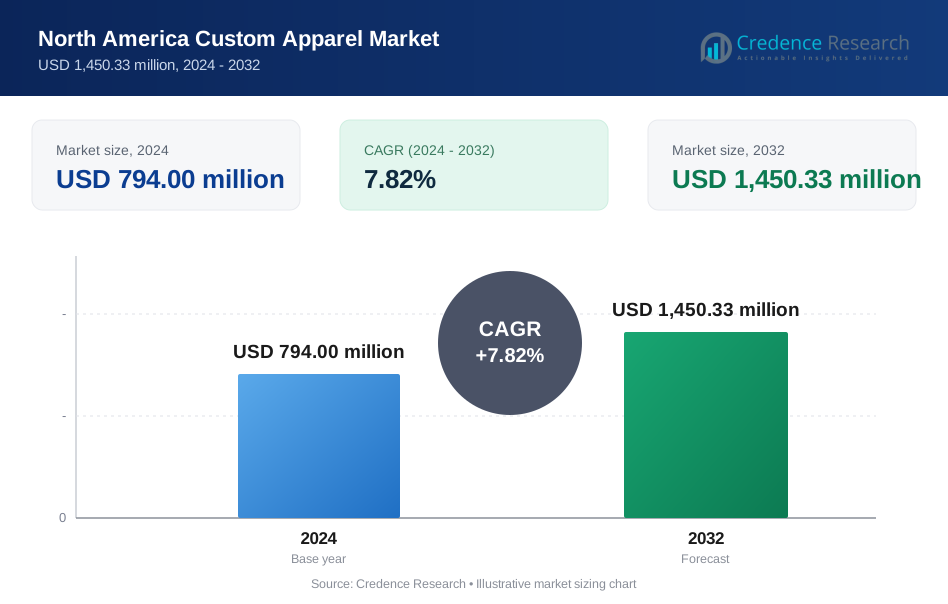
The North America Custom Apparel Market is projected to grow from USD 794.00 million in 2024 to an estimated USD 1,450.33 million by 2032, with a compound annual growth rate (CAGR) of 7.82% from 2024 to 2032.
Key drivers of the North American custom apparel market include significant technological advancements, such as digital printing, 3D modeling, and AI-based design tools. These innovations have revolutionized the customization process, making it faster, more affordable, and highly accessible to a wide range of consumers. The growing inclination toward self-expression and individuality has prompted consumers to seek custom-designed apparel, extending from casual wear and athleisure to high-end formal clothing and corporate uniforms. Additionally, e-commerce platforms have played a pivotal role in expanding the custom apparel market by enabling consumers to design, personalize, and purchase tailored garments from the comfort of their homes. Businesses are leveraging custom apparel for branding and marketing, using unique designs to promote corporate identity and enhance team unity. The rising trend toward sustainable and eco-friendly clothing has also integrated seamlessly into the custom apparel market, with brands increasingly offering options made from organic and recycled materials, thereby meeting the growing consumer demand for ethical and responsible fashion.
Regionally, the United States dominates the North American custom apparel market, accounting for the largest market share due to its strong retail infrastructure, high consumer spending capacity, and rapid adoption of cutting-edge customization technologies. The U.S. market benefits from a diverse consumer base, ranging from fashion enthusiasts to businesses seeking branded apparel. Canada represents a steadily growing segment, driven by rising awareness of personalization options, increased demand for high-quality, premium clothing, and a growing focus on eco-conscious fashion choices. Mexico, while currently a smaller contributor to the market, is showcasing significant growth potential, fueled by a youthful demographic, increasing internet penetration, and the proliferation of e-commerce platforms offering affordable customization solutions. Collectively, these regions highlight the expansive opportunities within the North American custom apparel market, catering to diverse consumer preferences and emerging trends, ensuring sustained growth across the forecast period.
Market Insights:
- The North America custom apparel market is projected to grow at a CAGR of 7.82%, reaching an estimated USD 1,450.33 million by 2032, driven by rising consumer demand for personalized fashion.
- Technological advancements such as digital printing, 3D modeling, and AI tools have revolutionized the customization process, making it faster, cost-effective, and accessible to a broader audience.
- E-commerce platforms are pivotal to market growth, enabling seamless design-to-delivery experiences while incorporating features like augmented reality (AR) and virtual try-ons to enhance consumer engagement.
- Sustainability trends have spurred the adoption of eco-friendly custom apparel options, with brands increasingly offering organic and recycled materials to cater to environmentally conscious consumers.
- The United States leads the regional market with a 65% share, benefiting from strong retail infrastructure, high consumer spending, and rapid technological adoption in apparel customization.
- Canada, holding 20% of the market share, is witnessing steady growth due to rising awareness of personalization options, demand for premium sustainable clothing, and a thriving e-commerce ecosystem.
- Mexico, with 15% market share, is a fast-growing segment fueled by a youthful population, increasing disposable income, and the proliferation of affordable customization services via e-commerce platforms.
Market Drivers:
Technological Advancements in Apparel Customization
The rapid advancement of technologies such as digital printing, 3D modeling, and artificial intelligence (AI) has transformed the custom apparel market in North America. These innovations have made the customization process more efficient, accurate, and scalable. Digital printing allows for vibrant, intricate designs to be produced quickly and at a lower cost, making personalized apparel more accessible to consumers. Similarly, 3D modeling and AI tools enable users to visualize their designs in real-time, enhancing the customization experience. For instance, Custom Ink uses advanced digital printing technology to produce high-quality custom apparel with quick turnaround times. These technologies have not only improved production efficiency but have also fueled consumer interest in unique, made-to-order garments.
Rising Consumer Demand for Personalization
The growing consumer preference for individuality and self-expression is a significant driver of the custom apparel market. Today’s consumers seek clothing that reflects their personal style, preferences, and identity. This trend spans various segments, including casual wear, corporate uniforms, and event-specific apparel. Millennials and Gen Z, in particular, value personalized experiences and are willing to invest in custom-designed clothing that sets them apart. For example, Custom Ink reported a significant increase in demand for personalized apparel, particularly among younger demographics, highlighting the strong consumer interest in unique, made-to-order garments. The ability to tailor fabrics, colors, fits, and designs has created a strong demand for personalized solutions, encouraging businesses to innovate their offerings to cater to these evolving preferences.
Growth of E-Commerce Platforms
The proliferation of e-commerce has been instrumental in driving the custom apparel market across North America. Online platforms have simplified the customization process, providing consumers with intuitive interfaces to design and order personalized garments with ease. E-commerce also enables businesses to reach broader audiences, offering seamless delivery and convenient shopping experiences. For instance, Shopify is often considered the best platform for clothing ecommerce due to its user-friendly design, extensive theme options, and customization features tailored for apparel businesses. Additionally, the integration of augmented reality (AR) and virtual try-on tools within these platforms has further enhanced consumer engagement, making custom apparel a compelling and accessible choice for a wide demographic.
Corporate Branding and Sustainability Trends
Businesses across North America are increasingly leveraging custom apparel as a tool for corporate branding and marketing. Customized uniforms and promotional merchandise are seen as effective ways to enhance brand visibility and foster team cohesion. This trend has bolstered demand for personalized clothing solutions in the corporate sector. Moreover, the rising emphasis on sustainability has driven the adoption of eco-friendly practices in the custom apparel market. Many consumers now prioritize sustainable fabrics and production processes, prompting manufacturers to incorporate organic materials and environmentally conscious methods.For instance, Everlane uses sustainable sources like recycled materials and natural cotton, ensuring fair wages and safe working conditions for all workers. This alignment with consumer values not only boosts market growth but also strengthens brand loyalty among environmentally conscious customers.
Market Trends:
Integration of Advanced Customization Tools
The North America custom apparel market is experiencing a surge in the integration of advanced technologies to enhance personalization. Tools like augmented reality (AR) and virtual reality (VR) are being utilized to allow customers to visualize their designs in real-time before purchase, creating an interactive and immersive shopping experience. For instance, Nike has introduced AR features in its app, allowing customers to see how sneakers would look on their feet before buying. These technologies are particularly popular among e-commerce platforms, where consumers can simulate how a garment would look and fit. Additionally, machine learning algorithms are being adopted to suggest design patterns and customization options based on user preferences, further enhancing the overall personalization process.
Expansion of Direct-to-Consumer Models
Direct-to-consumer (DTC) models are gaining traction within the custom apparel market, as brands aim to establish a direct connection with their customers. This approach eliminates intermediaries, enabling businesses to offer customized products at competitive prices while maintaining quality control. For instance, Bonobos, a DTC brand specializing in men's apparel, reported increase in customer satisfaction due to their direct engagement and personalized service. The DTC model also allows companies to collect valuable consumer data, which can be used to refine product offerings and improve customer satisfaction. Many startups in the custom apparel segment are adopting this model, leveraging social media and digital marketing to target specific consumer demographics effectively.
Increased Adoption of Eco-Friendly Customization
Sustainability is a growing trend in the North America custom apparel market, with both consumers and manufacturers focusing on reducing environmental impact. Brands are increasingly offering eco-friendly options, such as garments made from organic, recycled, or biodegradable materials. For instance, Patagonia has been recognized for its commitment to sustainability, using recycled materials and promoting fair labor practices. The use of waterless dyeing techniques and low-impact printing methods is also on the rise. These practices not only align with consumer demand for sustainable products but also help brands differentiate themselves in a competitive market. The trend toward sustainability has extended to packaging, with many companies adopting reusable or biodegradable materials for shipping.
Rise of Niche and Hyper-Personalized Offerings
As consumer expectations evolve, there is a growing demand for niche and hyper-personalized apparel. This trend is driven by a desire for exclusivity, where customers seek designs that are unique to their preferences or align with specific events or causes. Brands are catering to this trend by offering limited-edition collections and customization options for niche markets, such as fitness enthusiasts, gamers, or cultural events. For instance, MTailor uses advanced technology to offer hyper-personalized clothing by taking precise measurements through a smartphone app, ensuring a perfect fit for each customer. This level of personalization not only fosters brand loyalty but also enables businesses to command premium pricing for their exclusive offerings, contributing to the market’s overall growth.
Market Challenges Analysis:
High Costs of Customization Technologies
The adoption of advanced technologies such as digital printing, augmented reality (AR), and artificial intelligence (AI) significantly enhances the customization process but comes with high costs. Small and medium-sized enterprises (SMEs), which form a substantial portion of the market, often face difficulties in investing in these technologies due to limited budgets. Additionally, the maintenance and upgrades required for these tools can further strain financial resources, hindering their widespread adoption. This challenge limits the ability of smaller players to compete with larger companies that have greater financial capabilities.
Limited Scalability for Custom Orders
The custom apparel market inherently faces challenges with scalability, as personalization often involves time-intensive processes and smaller production runs. Unlike mass production, custom orders require additional time for design approvals, material sourcing, and precise manufacturing, leading to higher costs and extended lead times. For businesses, managing a high volume of customized orders without compromising quality or delivery timelines remains a persistent challenge, especially during peak seasons or promotional events.
Environmental Concerns in Fast Customization
While sustainability is a growing trend, the custom apparel market also faces scrutiny for its environmental impact, particularly in fast fashion and rapid customization processes. The use of synthetic materials, excessive water consumption, and waste generated during production are concerns that need to be addressed. Companies must balance the growing demand for customization with the need for eco-friendly practices, which can be both financially and logistically challenging.
Dependence on E-Commerce Infrastructure
The increasing reliance on e-commerce platforms for custom apparel sales introduces challenges related to digital infrastructure and cybersecurity. Ensuring seamless user experiences, data privacy, and secure payment systems is essential but requires significant investment in IT capabilities. Furthermore, disruptions in logistics or supply chain management for online orders can negatively affect consumer trust and market growth, posing additional challenges for businesses in the sector.
Market Opportunities:
The North America custom apparel market presents significant opportunities, driven by the increasing demand for personalized clothing across various consumer segments. The rising inclination toward self-expression and individuality has created a fertile ground for businesses offering tailored solutions. Technological advancements, such as digital printing and artificial intelligence, have enabled cost-effective and efficient customization processes, expanding the addressable market. The growing popularity of e-commerce platforms has further enhanced accessibility, allowing brands to reach a broader audience and offer seamless customization experiences. Additionally, the surge in demand for sustainable and eco-friendly apparel provides an untapped opportunity for businesses to differentiate themselves by adopting ethical production practices and materials, appealing to environmentally conscious consumers.
Corporate branding represents another lucrative avenue within the custom apparel market. Businesses are increasingly investing in customized uniforms, promotional merchandise, and event-specific apparel to enhance brand visibility and foster team cohesion. This trend, combined with the rising prevalence of hybrid work models, opens doors for personalized corporate wear that reflects flexibility and professionalism. Furthermore, niche markets, such as sports teams, fitness enthusiasts, and special events, offer potential for targeted growth. By leveraging advanced technologies, embracing sustainability, and tapping into these specialized markets, companies operating in the North America custom apparel sector can capitalize on the evolving consumer preferences and emerging trends, ensuring sustained growth and market expansion.
Market Segmentation Analysis:
The North America custom apparel market is segmented based on type, end-user, and distribution channel, each playing a critical role in shaping the market dynamics.
By type, the market includes coats, skirts, pants, shirts, and suits, with shirts and suits dominating the demand. These categories are driven by the growing consumer preference for tailored and personalized fits, reflecting their unique styles. Among these, shirts remain a popular choice for customization due to their versatile use across formal, semi-formal, and casual occasions.
In terms of end-users, the market is divided into women, men, and children. Women form the largest customer base, accounting for significant market share owing to the heightened demand for unique and fashion-forward custom apparel options. The men’s segment is also growing rapidly, driven by increasing awareness of tailored fits and premium styles, particularly in professional and formal settings. The children’s segment, though smaller, is witnessing steady growth due to the rising popularity of customized clothing for special occasions and school uniforms.
By distribution channel, the market is bifurcated into offline and online platforms. While offline channels, such as boutique stores, maintain a strong presence due to personalized consultations and fittings, online platforms are emerging as a key growth driver. The latter benefits from user-friendly interfaces, virtual customization tools, and an expanding e-commerce ecosystem, appealing to tech-savvy customers across the region.
Segmentation:
By Type
- Coat
- Skirt
- Pants
- Shirt
- Suit
By End-user
- Women
- Men
- Children
By Distribution Channel
- Offline
- Online
Regional Analysis:
The North America custom apparel market is led by the United States, which holds the largest market share, accounting for approximately 65% of the regional revenue in 2024. The country’s dominance is driven by a robust retail infrastructure, high consumer spending, and the widespread adoption of advanced customization technologies. The U.S. market benefits from a diverse customer base, including individuals seeking personalized fashion, businesses requiring branded corporate wear, and sports organizations demanding customized team apparel. The integration of e-commerce platforms with user-friendly design tools has further strengthened the U.S. market, making it the primary growth driver in the region. Additionally, the presence of prominent custom apparel companies and their focus on innovation ensure sustained market leadership.
Canada accounts for approximately 20% of the North American custom apparel market, making it the second-largest contributor. The Canadian market is characterized by an increasing awareness of personalization options and a growing demand for high-quality, sustainable apparel. Consumers in Canada are particularly inclined toward eco-friendly custom clothing, which aligns with the country’s strong environmental consciousness. The rapid growth of e-commerce in Canada has also played a significant role in expanding the market, providing easy access to customization services for a wide demographic. Moreover, businesses in Canada are adopting custom apparel for branding and marketing purposes, further propelling the market.
Mexico, contributing around 15% to the regional market, represents a fast-growing segment driven by its youthful population and expanding middle class. The increasing penetration of e-commerce platforms and the availability of affordable customization solutions have bolstered demand in the Mexican market. Younger consumers, in particular, are drawn to personalized fashion as a form of self-expression, while businesses are gradually adopting custom uniforms and promotional apparel. Although Mexico’s market share is smaller compared to the U.S. and Canada, its growth potential remains high due to rising disposable incomes and the growing influence of global trends.
Key Player Analysis:
- Adidas AG
- Allied Shirts
- Amazon.com Inc.
- CafePress Inc.
- Carhartt Inc.
- Cimpress Plc
- CustomInk LLC
- Designhill Inc.
- DOWNTOWN CUSTOM PRINTER
- Jakprints
- Lynka Sp. z.o.o.
- Nike Inc.
- Printful Inc.
- Redbubble Ltd.
- Society6 LLC
- Spreadshirt Inc.
- TeeTalkies
- THREADBIRD
- UberPrints Inc.
- Vantage Custom Classics Inc.
- Zazzle Inc.
Competitive Analysis:
The North America custom apparel market is highly competitive, with the presence of both established players and emerging entrants striving to capture market share. Key companies such as Custom Ink, Vistaprint, Zazzle, and Printful dominate the industry, leveraging advanced customization technologies and expansive e-commerce platforms to attract a diverse customer base. These firms focus on offering seamless design interfaces, quick turnaround times, and a wide range of apparel options, which enhances customer retention and brand loyalty. Emerging players are carving niches through innovative approaches, such as hyper-personalization and eco-friendly offerings, to differentiate themselves in a crowded market. For instance, Printful has seen increase in revenue from eco-friendly products, reflecting the growing consumer demand for sustainable options. Strategic collaborations, technological integration, and targeted marketing are prevalent strategies among competitors to expand their footprint. The market’s competitive landscape is further influenced by the growing emphasis on sustainability and the increasing use of artificial intelligence to optimize customer experiences, making innovation a critical driver of success.
Recent Developments:
- In March 2024, Allied Industrial Partners announced a strategic investment in Celebrity Coaches, LLC, a leading provider of transportation and logistics for the live events and entertainment sector. This investment aims to help expand the company's operations and enhance its service offerings, with the management team retaining ownership stakes.
- In October 2023, Carhartt partnered with Lowe's to bring an assortment of Carhartt products to Lowes.com and select stores nationwide. This partnership includes Carhartt's iconic duck jackets, vests, hoodies, T-shirts, workwear pants, and beanies, available in roughly 250 Lowe's stores across the Northeast, Midwest, and Pacific Northwest, with plans to expand to additional stores in 2024.
- In June 2024, Juvo Plus, along with Cap Hill Brands, Dragonfly, and Moonshot Brands, completed a four-way merger to form Infinite Commerce. This merger, facilitated by Victory Park Capital, positions Infinite Commerce as one of the largest purveyors of consumer products on the Amazon platform.
- In December 2024, Intuit expanded its strategic partnership with Amazon, making Intuit QuickBooks the preferred partner for financial management solutions integrated directly into Amazon Seller Central. This partnership aims to empower Amazon sellers with financial tools to manage their businesses more effectively.
Market Concentration & Characteristics:
The North America custom apparel market exhibits a moderately fragmented structure, with a mix of well-established players and emerging entrants. Large companies such as Custom Ink, Printful, and Vistaprint dominate a significant portion of the market, benefiting from economies of scale, advanced technological capabilities, and extensive distribution networks. However, the market also provides ample opportunities for smaller players and niche businesses, driven by growing consumer demand for personalized and unique designs. Key characteristics of the market include a strong emphasis on technology integration, such as digital printing and AI-based design tools, which enhance efficiency and customization options. The increasing role of e-commerce platforms has also shaped the market dynamics, enabling wider accessibility and streamlined customer experiences. Additionally, a growing focus on sustainability and ethical production practices reflects evolving consumer preferences, influencing the strategies of market participants and shaping the competitive landscape.
Report Coverage:
The research report offers an in-depth analysis based on By Type, By End-user and By Distribution Channel. It details leading market players, providing an overview of their business, product offerings, investments, revenue streams, and key applications. Additionally, the report includes insights into the competitive environment, SWOT analysis, current market trends, as well as the primary drivers and constraints. Furthermore, it discusses various factors that have driven market expansion in recent years. The report also explores market dynamics, regulatory scenarios, and technological advancements that are shaping the industry. It assesses the impact of external factors and global economic changes on market growth. Lastly, it provides strategic recommendations for new entrants and established companies to navigate the complexities of the market.
Future Outlook:
- The market is projected to grow steadily, driven by increasing consumer demand for personalized clothing across various demographics.
- Advancements in digital printing, AI, and 3D design tools will enhance customization efficiency and expand accessibility.
- E-commerce platforms will continue to play a pivotal role, offering seamless design-to-delivery experiences for a broader audience.
- Sustainability will remain a key focus, with rising adoption of eco-friendly materials and ethical production methods.
- Businesses will increasingly utilize custom apparel for corporate branding, boosting demand in the B2B segment.
- Niche markets such as sportswear, event-specific apparel, and fitness clothing will see significant growth opportunities.
- Direct-to-consumer models will gain prominence, enabling brands to build stronger customer relationships and streamline operations.
- Mexico’s growing middle class and e-commerce expansion will fuel rapid market growth in the region.
- Integration of AR and VR technologies will transform the shopping experience, fostering consumer engagement.
- Competitive innovation will intensify, as companies invest in new technologies and sustainable practices to gain market share.
Request a Free Sample
Fill in your details and we'll send you a free sample report.
- Sample data tables & charts
- Research methodology
Need a Custom Version of This Report?
Tailor the scope, geography, or segments to your exact requirements.
- Custom geography or segment scope
- Direct access to our analyst team
Frequently Asked Questions
What is the projected size of the North America custom apparel market by 2032?
What is the compound annual growth rate (CAGR) of the market?
What are the key drivers of the custom apparel market in North America?
Which region dominates the North America custom apparel market?
Table of Content
Chapter 1. Report Introduction
- 1.1 Report Description & Purpose
- 1.1.1 Report Title & Market Definition
- 1.1.2 Unique Selling Propositions (USP) & Key Differentiators
- 1.1.3 Value Proposition for Stakeholders
- 1.2 Research Objectives
- 1.2.1 Market Sizing Objectives (Volume & Revenue)
- 1.2.2 Segmentation Objectives
- 1.2.3 Competitive Intelligence Objectives
- 1.2.4 Forecast & Scenario Objectives
- 1.3 Report Scope
- 1.3.1 North America Custom Apparel Scope – Types & Subtypes Covered
- 1.3.2 Geographic Scope – Regions & Countries Covered
- 1.3.3 Historical Period, Base Year & Forecast Period (2024; forecast to 2032)
- 1.3.4 Inclusions & Exclusions
- 1.4 HS Code & Classification Framework
- 1.5 Currency, Units & Pricing Basis
- 1.6 Target Stakeholders
- 1.7 Limitations & Assumptions
Chapter 2. Executive Summary
- 2.1 Global North America Custom Apparel Market Snapshot
- 2.1.1 Market Size – Historical (2024) & Forecast (2024-2032) (2024: USD 794.00 million → 2032: USD 1,450.33 million)
- 2.1.2 Volume & Revenue – Global Totals
- 2.1.3 Key Market Highlights – Top Five Facts
- 2.2 North America Custom Apparel Market Segmentation Snapshot
- 2.2.1 Market Split by Region – 2024 vs. 2032
- 2.3 Competitive Snapshot
- 2.3.1 Top 10 Players by Revenue Share – 2024
- 2.3.2 Top 10 Players by Volume Share – 2024
- 2.3.3 Recent Strategic Developments (18-Month Summary)
- 2.4 Key Investment Highlights & Strategic Conclusions
Chapter 3. North America Custom Apparel Market Dynamics & Industry Analysis
- 3.1 Market Overview & Context
- 3.1.1 North America Custom Apparel Market Position in the Broader Automotive Value Chain
- 3.1.2 OEM vs. Replacement Market Dynamics
- 3.1.3 Market Maturity & Development Stage by Region
- 3.2 North America Custom Apparel Market Drivers
- 3.3 North America Custom Apparel Market Restraints & Challenges
- 3.4 North America Custom Apparel Market Opportunities
- 3.5 Porter's Five Forces Analysis
- 3.5.1 Threat of New Entrants
- 3.5.2 Bargaining Power of Suppliers
- 3.5.3 Bargaining Power of Buyers
- 3.5.4 Threat of Substitutes
- 3.5.5 Competitive Rivalry – Intensity Assessment
- 3.6 North America Custom Apparel Value Chain Analysis
- 3.6.1 Upstream – Raw Material/Input Suppliers
- 3.6.1.1 Raw Material/Input 1
- 3.6.1.2 Raw Material/Input 2
- 3.6.1.3 Raw Material/Input 3
- 3.6.2 Midstream – Production/Manufacturing/Service Delivery
- 3.6.2.1 Production/Process Overview
- 3.6.2.2 Key Facility Locations & Capacity by Manufacturer
- 3.6.3 Downstream – Distribution & End Consumer
- 3.6.3.1 Primary Channel – B2B/OEM
- 3.6.3.2 Secondary Channels – Dealer, Retail, Online, Direct
- 3.6.4 Value Chain Profitability Analysis
- 3.6.1 Upstream – Raw Material/Input Suppliers
- 3.7 PESTEL Analysis
- 3.7.1 Political Factors
- 3.7.2 Economic Factors
- 3.7.3 Social Factors
- 3.7.4 Technological Factors
- 3.7.5 Environmental Factors
- 3.7.6 Legal Factors
- 3.8 North America Custom Apparel Supply Chain Analysis
- 3.8.1 Raw Material/Input Supply Risk Assessment
- 3.8.2 Manufacturing Concentration Risk (Geographic Exposure)
- 3.8.3 Trade Disruption Impact Analysis
- 3.9 Regulatory & Policy Landscape
Note: The regulatory and policy landscape section covers regulations based on their applicability to the market, North America Custom Apparel category, geography, and scope of the study. Only regulatory frameworks with a material impact on operations, compliance, trade, sustainability, or market access are analyzed in detail.
Chapter 4. Key Investment Pockets & Opportunity Analysis
- 4.1 North America Custom Apparel Market Attractiveness Analysis
- 4.1.1 By Region – Investment Attractiveness Matrix (Volume × CAGR)
- 4.2 Absolute Revenue Growth Opportunity
- 4.2.1 By Region – Absolute USD Growth Through 2032
- 4.3 Incremental Volume Opportunity
- 4.3.1 By Region – Incremental Volume Through 2032
- 4.3.2 Segment – Incremental Volume
- 4.4 Emerging Submarket Opportunity Deep Dive (Subject to Applicability)
- 4.5 Emerging Market Opportunity Scorecards
- 4.5.1 United States
- 4.5.2 Europe
- 4.5.3 Asia
- 4.5.4 Middle East & Africa
Note: Emerging Market Opportunity Scorecards will be included based on relevance and strategic importance. Regions listed are indicative and may vary depending on data availability and market dynamics.
Chapter 5. North America Custom Apparel Import-Export Analysis & Trade Flows
- 5.1 Global Trade Overview
- 5.1.1 Global Export Value by Country (2024)
- 5.1.2 Global Export Volume by Country (2024)
- 5.1.3 Global Import Value by Country (2024)
- 5.1.4 Global Import Volume by Country (2024)
- 5.1.5 Net Trade Balance by Country (2024)
- 5.2 Export Analysis – Segment
- 5.2.1 Type 1 (HS Code)
- 5.2.2 Type 2 (HS Code)
- 5.2.3 Type 3 (HS Code)
- 5.2.4 Type 4 (HS Code)
- 5.2.5 Type 5 (HS Code)
- 5.3 Import Analysis – Segment
- 5.3.1 Type 1 (HS Code)
- 5.3.2 Type 2 (HS Code)
- 5.3.3 Type 3 (HS Code)
- 5.3.4 Type 4 (HS Code)
- 5.3.5 Type 5 (HS Code)
- 5.4 Average Unit Trade Prices
- 5.4.1 Average Export Price – Segment & Country
- 5.4.2 Average Import Price – Segment & Source Country
- 5.4.3 Price Trends (2024)
- 5.5 Key Trade Route Analysis
- 5.5.1 Trade Route 1
- 5.5.2 Trade Route 2
- 5.5.3 Trade Route 3
- 5.5.4 Trade Route 4
- 5.5.5 Trade Route 5
- 5.6 Trade Policy Impact Assessment
- 5.6.1 US Anti-Dumping & Section 301 Tariffs
- 5.6.2 EU Customs Union Impact
- 5.6.3 Major Free Trade Agreements
- 5.6.4 USMCA Rules of Origin
Note: Trade policy analysis will be included only where relevant to the North America Custom Apparel market.
Chapter 6. Competitive Landscape & Company Benchmarking
- 6.1 North America Custom Apparel Market Concentration & Structure
- 6.1.1 Herfindahl-Hirschman Index (HHI) – vs. 2024
- 6.1.2 Tier 1, Tier 2 & Tier 3 Market Structure
- 6.1.3 Global, Regional & Local Player Dynamics
- 6.2 North America Custom Apparel Market Share Analysis – 2024
- 6.2.1 Global Revenue Share by Company
- 6.2.2 Global Volume Share by Company
- 6.2.3 Regional Revenue Share
- 6.2.4 Market Share Evolution ( vs. 2024)
- 6.2.5 OEM Segment Share by Company
- 6.2.6 Replacement Segment Share by Company
- 6.3 Production/Delivery Capacity & Facility Analysis
- 6.3.1 Global Installed Capacity
- 6.3.2 Capacity Utilization Rates
- 6.3.3 Production/Output Volume
- 6.3.4 Facility Locations & Capacity Map
- 6.3.5 Planned Capacity Additions
- 6.4 North America Custom Apparel Competitive Benchmarking Matrix
- 6.4.1 Revenue, Volume, CAGR & Profitability Comparison
- 6.4.2 Channel Revenue Mix
- 6.4.3 Geographic Revenue Exposure
- 6.4.4 R&D Intensity
- 6.4.5 Sustainability Maturity
- 6.5 Strategic Developments in North America Custom Apparel (Last 24 Months)
- 6.5.1 Mergers, Acquisitions & Divestments
- 6.5.2 New North America Custom Apparel Launches
- 6.5.3 Facility Expansions
- 6.5.4 Strategic Alliances, Joint Ventures & Partnerships
- 6.5.5 Distribution Expansion & Market Entry
- 6.5.6 Sustainability & ESG Initiatives
- 6.6 Competitive Strategy Mapping
- 6.6.1 Leader, Challenger, Follower & Niche Classification
- 6.6.2 Pricing Strategy Comparison
- 6.6.3 Channel Strategy Matrix
Note: Strategic developments are included based on their materiality and the availability of reliable information.
Chapter 7. Global North America Custom Apparel Market – By Distribution Channel
- 7.1 Segment Overview
- 7.1.1 Volume & Revenue Split by Channel (2024 & 2032)
- 7.1.2 Channel Mix Evolution (2024-2032)
Chapter 8. Regional Market Analysis – Global Overview
- 8.1 Global Regional Overview
- 8.1.1 Regional Volume Share
- 8.1.2 Regional Revenue Share
- 8.1.3 Regional Volume by Region
- 8.1.4 Regional Revenue by Region
- 8.1.5 Regional Forecast Through 2032
- 8.2 Cross-Regional Segment Analysis
- 8.2.1 By Distribution Channel
- 8.2.2 By Brand/Price Tier
Chapter 9. North America North America Custom Apparel Market
- 9.1 United States
- 9.2 Canada
- 9.3 Mexico
Chapter 10. Europe North America Custom Apparel Market
- 10.1 Germany
- 10.2 France
- 10.3 Italy
- 10.4 United Kingdom
- 10.5 Spain
- 10.6 Poland
- 10.7 Russia
- 10.8 Netherlands
- 10.9 Belgium
- 10.10 Sweden
- 10.11 Denmark
- 10.12 Norway
- 10.13 Rest of Europe
Chapter 11. Asia Pacific North America Custom Apparel Market
- 11.1 China
- 11.2 India
- 11.3 Japan
- 11.4 South Korea
- 11.5 Thailand
- 11.6 Indonesia
- 11.7 Vietnam
- 11.8 Malaysia
- 11.9 Australia
- 11.10 Rest of Asia Pacific
Chapter 12. Latin America North America Custom Apparel Market
- 12.1 Brazil
- 12.2 Argentina
- 12.3 Colombia
- 12.4 Chile
- 12.5 Rest of Latin America
Chapter 13. Middle East North America Custom Apparel Market
- 13.1 Saudi Arabia
- 13.2 United Arab Emirates
- 13.3 Turkey
- 13.4 Israel
- 13.5 Iran
- 13.6 Rest of the Middle East
Chapter 14. Africa North America Custom Apparel Market
- 14.1 South Africa
- 14.2 Egypt
- 14.3 Nigeria
- 14.4 Morocco
- 14.5 Rest of Africa
Chapter 15. North America Custom Apparel Company Profiles
- 15.1 [Company 01]
- 15.1.1 Company Overview
- 15.1.2 Key Management Personnel
- 15.1.3 Products & Services Portfolio
- 15.1.4 Financial Performance
- 15.1.5 Key Market Focus & Geographic Presence
- 15.1.6 Recent Developments & Strategic Initiatives
Note: The company profile list is preliminary and may change based on research findings, market developments, data availability, and client requirements.
Chapter 16. Appendices
- Appendix A – List of Abbreviations & Acronyms
- Appendix B – Industry Classification Code Reference – Full Series
- Appendix C – Production & Capacity Data Tables
- Appendix D – End-Use & Demand Base Tables
- Appendix E – Consumption & Replacement Rate Assumptions
- Appendix F – ASP Reference Tables
- Appendix G – Manufacturing & Facility Database
- Appendix H – Import-Export Data Tables
- Appendix I – Regulatory Summary Tables
- Appendix J – Primary Research Participant List (Anonymized)
- Appendix K – Primary Research Questionnaire Framework
- Appendix L – Data Sources & Bibliography
- Appendix M – Market Size Divergence & Source Comparison
Chapter 17. Research Methodology
- 17.1 Research Framework & Philosophy
- 17.2 Secondary Research – Sources, Hierarchy & Data Extraction
- 17.3 Data Modeling – Bottom-Up & Top-Down Market Sizing
- 17.4 Primary Research – Stakeholder Framework, LOI & Sample Sizes
- 17.5 Forecast Methodology – Regression, Scenario & Sensitivity Analysis
- 17.6 Quality Control – Four-Layer Validation Framework
- 17.7 Limitations & Standard Assumptions
- 17.8 Disclaimer
