Market Overview:
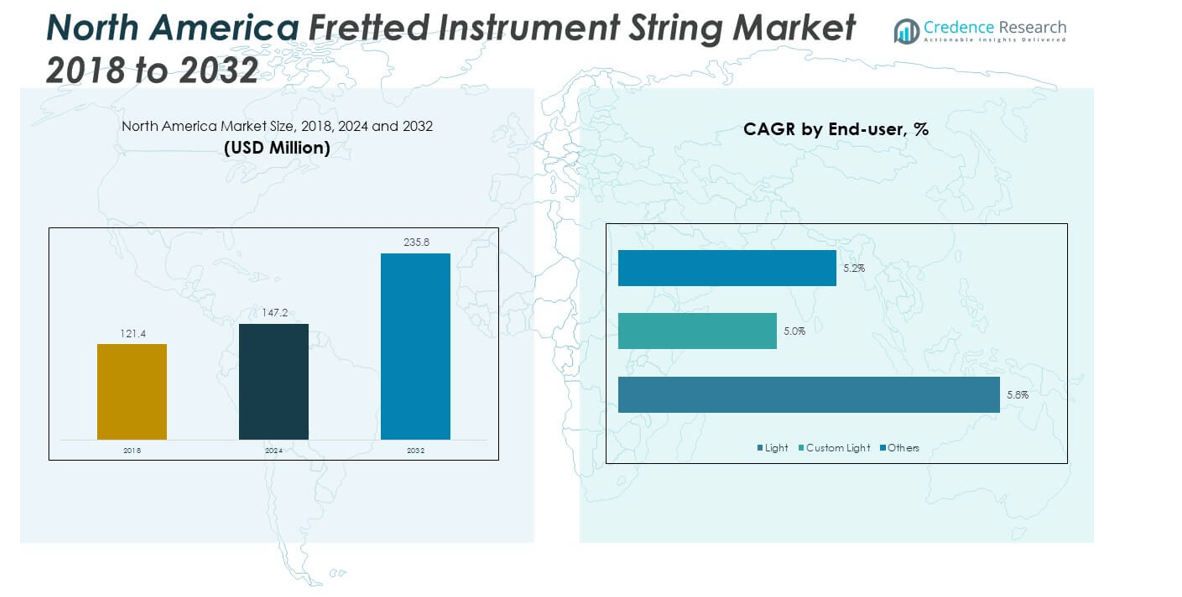
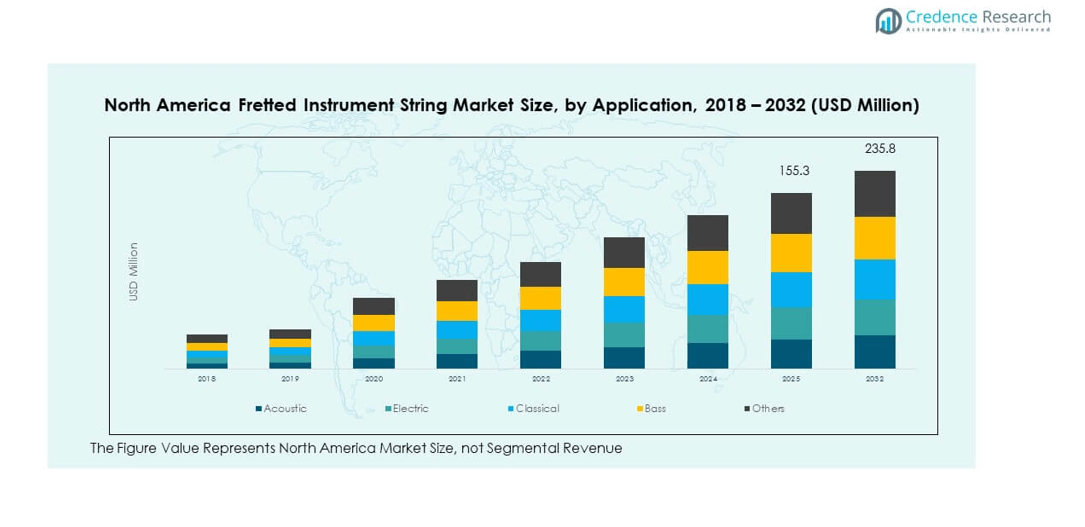
The North America Fretted Instrument String Market size was valued at USD 121.4 million in 2018 to USD 147.2 million in 2024 and is anticipated to reach USD 235.8 million by 2032, at a CAGR of 6.10% during the forecast period.
| REPORT ATTRIBUTE |
DETAILS |
| Historical Period |
2020-2023 |
| Base Year |
2024 |
| Forecast Period |
2025-2032 |
| North America Fretted Instrument String Market Size 2024 |
USD 147.2 million |
| North America Fretted Instrument String Market, CAGR |
6.10% |
| North America Fretted Instrument String Market Size 2032 |
USD 235.8 million |
Growth in the North America fretted instrument string market is fueled by rising demand for guitars, violins, and other stringed instruments across both professional and recreational segments. Increasing popularity of live performances, online music education platforms, and independent music production are encouraging greater string usage. Advancements in string materials, including coated and corrosion-resistant varieties, are improving durability and tonal quality, attracting musicians seeking higher performance. Furthermore, collaborations between manufacturers and music schools, coupled with strong e-commerce distribution channels, continue to boost sales momentum in the region.
The United States dominates the North America fretted instrument string market, supported by its vibrant music industry, high adoption of guitars, and widespread presence of leading manufacturers. Canada is emerging as a strong growth area, benefiting from expanding music education initiatives and a rising number of independent artists. Mexico is also showing steady growth due to increasing consumer interest in affordable fretted instruments and strong cultural ties to traditional music. Collectively, these regional dynamics create a balanced landscape of mature markets and new growth opportunities across North America.
Market Insights:
- The North America Fretted Instrument String Market was valued at USD 147.2 million in 2024 and is projected to reach USD 235.8 million by 2032, growing at a CAGR of 6.10% during the forecast period.
- The Global Fretted Instrument String Market size was valued at USD 342.1 million in 2018 to USD 420.0 million in 2024 and is anticipated to reach USD 674.1 million by 2032, at a CAGR of 6.1% during the forecast period.
- Expanding music education programs across schools and institutions drive consistent demand for acoustic and classical strings.
- Independent artists and the rise of digital platforms fuel continuous string replacement through frequent recording and live performances.
- Fluctuating raw material costs and supply chain disruptions challenge manufacturers, pressuring margins and impacting timely product availability.
- Intense competition from both established brands and low-cost imports increases price sensitivity and forces companies to diversify offerings.
- The United States dominates the regional landscape with 68% share, supported by strong industry infrastructure and global brand presence.
- Canada accounts for 19% share with rising adoption through education and cultural initiatives, while Mexico contributes 13% share through strong folk and regional music traditions.
Access crucial information at unmatched prices!
Request your sample report today & start making informed decisions powered by Credence Research Inc.!
Download Sample
Market Drivers:
Rising Popularity of Music Education and Institutional Support
Music education programs across schools, colleges, and private institutions continue to strengthen demand for fretted instrument strings. The North America Fretted Instrument String Market benefits from structured training initiatives that encourage early adoption of guitars, violins, and other fretted instruments. Partnerships between manufacturers and music schools enhance accessibility to quality products while cultivating brand loyalty. It gains further momentum through community music programs that promote cultural expression. Professional training centers reinforce the need for durable and consistent string quality. Expanding e-learning platforms support growth by providing easy access to lessons and practice guidance. Market players actively target this segment to secure long-term demand. The sustained presence of educational initiatives continues to anchor the foundation of the market.
Expanding Role of Independent Artists and Digital Distribution
Independent artists increasingly shape demand dynamics by driving consistent use of fretted instrument strings in recording and performance activities. The North America Fretted Instrument String Market experiences growing traction as musicians prioritize affordability, durability, and tonal excellence. It benefits from a surge in streaming platforms where independent performers gain global visibility. Local events, online collaborations, and direct-to-fan engagement increase string consumption. Market players strategically support these artists through endorsement programs and sponsorships. Advancements in affordable recording setups stimulate growth among aspiring musicians. Expansion of home studios creates sustained requirements for regular string replacement. Independent artistry continues to be a strong growth driver in the market landscape.
- For instance, Ernie Ball’s “String Theory” web series has featured renowned artists such as John Petrucci, Steve Vai, and Kirk Hammett, highlighting their creative approaches and personal string preferences. The series has strengthened brand visibility by connecting with both professional musicians and emerging players, reinforcing Ernie Ball’s position as an influential innovator in the fretted instrument string segment.
Technological Advancements in String Materials and Performance
Manufacturers increasingly invest in material innovation to deliver superior tonal quality, longer durability, and better performance. The North America Fretted Instrument String Market leverages coatings, corrosion resistance, and hybrid material applications to attract professionals and hobbyists alike. It sees strong adoption of strings with extended lifespan that reduce replacement frequency. Players value consistent tonal stability for both practice and stage performances. Advanced production technologies allow customization for tension levels, enabling tailored experiences for different playing styles. Brands introduce premium offerings that blend durability with responsiveness, elevating market competition. Demand grows for eco-friendly materials that align with sustainable practices. These technological shifts establish a key driver for product differentiation.
- For instance, D’Addario’s XS string series applies an ultra-thin protective film, about one-tenth the thickness of a human hair, developed by its in-house team over several years to extend string life while maintaining the natural tone of uncoated strings.
Expanding Distribution Networks Across Physical and Digital Platforms
The retail ecosystem continues to evolve, integrating digital platforms alongside established music stores. The North America Fretted Instrument String Market benefits from multichannel distribution that ensures broad accessibility. It grows through e-commerce platforms that provide convenience, product variety, and global reach. Music stores continue to play a role by offering personalized recommendations and trial opportunities. Wholesale distribution supports schools, academies, and professional studios with bulk orders. Subscription models drive recurring sales through customized packages. Partnerships with online retailers ensure timely delivery and promotional campaigns. Regional distributors strengthen availability in both urban and semi-urban markets. The expansion of diverse sales channels directly supports long-term growth.
Market Trends:
Increasing Integration of Smart and Digital Technologies in Strings
Smart technologies gradually influence the design and usage of fretted instrument strings. The North America Fretted Instrument String Market adapts to innovations such as sensor-embedded strings that provide wear data and tonal feedback. It benefits from integration with mobile applications that help musicians monitor performance and predict replacement needs. Brands explore digital interfaces to enhance interaction between instruments and recording equipment. Music technology startups collaborate with established string makers to introduce hybrid solutions. Growing acceptance of connected accessories strengthens the premium product segment. Consumers value accuracy, durability, and user-friendly monitoring tools. These innovations enhance performance experiences and reinforce customer loyalty.
- For example, Roadie 4, developed by U.S.-based Band Industries, uses vibration detection technology paired with a Bluetooth-enabled mobile app to deliver precise tuning, a built-in metronome, and automated string-winding features for a wide range of fretted instruments.
Rising Focus on Sustainability and Eco-Conscious Manufacturing Practices
Sustainability emerges as a defining trend across the market, with growing emphasis on recyclable packaging and environmentally friendly materials. The North America Fretted Instrument String Market aligns with consumer preferences for products that minimize ecological impact. It gains strength from brands adopting biodegradable coatings and energy-efficient production methods. Companies actively publicize their green initiatives to attract environmentally aware consumers. Retailers promote eco-certified products, reinforcing market visibility for sustainable offerings. Younger musicians demonstrate strong interest in brands that integrate ethical production practices. Government regulations and industry standards encourage responsible sourcing. The shift toward eco-conscious strings reflects a long-term trend that shapes brand positioning.
- For instance, Ernie Ball introduced a universal envelope system in August 2025 for its plain strings including Slinky and Earthwood lines standardizing packaging across several top-selling acoustic and electric models.
Customization and Personalization for Diverse Playing Styles
Musicians increasingly demand personalized solutions that meet individual playing preferences and styles. The North America Fretted Instrument String Market responds with diverse tension levels, material compositions, and hybrid sets. It builds growth momentum through customizable offerings designed for genres ranging from classical to rock and jazz. Brands provide trial sets and guided recommendations to support player-specific requirements. Professional artists influence consumer preferences by endorsing personalized string types. Retailers emphasize customization through advisory services that match products to skill levels. Online platforms enable consumers to select tailored bundles aligned with their musical goals. The customization trend continues to reshape purchasing patterns across the region.
Expanding Role of E-Commerce and Subscription-Based Models
Digital transformation accelerates the adoption of subscription services and online sales channels. The North America Fretted Instrument String Market benefits from recurring sales models that guarantee consistent revenue streams. It thrives on platforms offering tailored delivery intervals, bulk orders, and loyalty discounts. E-commerce marketplaces broaden access to international brands, strengthening competitive intensity. Personalized subscription plans attract professionals seeking convenience and reliability. Online channels integrate reviews and performance ratings, improving purchasing confidence. Social media campaigns amplify brand visibility and consumer engagement. Expansion of digital ecosystems continues to redefine how customers access fretted instrument strings.
Market Challenges Analysis:
Rising Competition and Price Sensitivity Among Consumers
Competitive intensity across the North America Fretted Instrument String Market creates pricing pressure that impacts profitability. It faces challenges from low-cost imports that appeal to price-sensitive consumers. Premium brands struggle to balance quality with affordability in a crowded marketplace. Independent retailers encounter difficulty competing with large e-commerce platforms offering discounted bundles. Counterfeit products weaken trust and disrupt sales of authentic brands. Small-scale manufacturers find it challenging to invest in advanced materials without eroding margins. Intense competition compels continuous promotional efforts that strain resources. Balancing price competitiveness with product innovation remains a persistent challenge in the region.
Fluctuating Raw Material Costs and Supply Chain Disruptions
Volatility in raw material prices directly affects manufacturing costs across the North America Fretted Instrument String Market. It confronts uncertainty in supply chains due to global disruptions, transportation delays, and geopolitical tensions. Rising costs of metals and coatings impact profit margins for producers. Manufacturers must absorb part of these expenses while sustaining product quality. Small-scale suppliers remain vulnerable to shortages that delay production schedules. Logistics disruptions affect timely distribution, reducing customer satisfaction. Market players increasingly adopt localized sourcing strategies to reduce dependency risks. Addressing supply stability is critical to ensuring long-term resilience and consistent product availability.
Market Opportunities:
Expanding Penetration into Emerging Consumer Segments
New consumer segments create promising growth opportunities across the North America Fretted Instrument String Market. It benefits from younger demographics entering music education programs and exploring creative careers. Female participation in fretted instruments continues to expand, opening new avenues for tailored products. Hobbyists and recreational players contribute consistent demand, particularly for affordable and mid-range strings. Online learning platforms introduce instruments to a wider base of learners. Manufacturers that target these segments with differentiated offerings stand to gain long-term loyalty. Retailers capitalize on the widening consumer base through focused marketing and product bundling. Emerging demand segments enhance both reach and revenue potential.
Strategic Collaborations and Regional Expansion of Distribution Channels
Collaborations between string manufacturers, music schools, and technology firms unlock strong growth pathways. The North America Fretted Instrument String Market leverages partnerships to expand distribution reach across diverse regions. It gains further scope from collaborations with digital platforms that promote educational content and product integration. Regional distributors strengthen access to semi-urban and rural markets. Expansion into underrepresented communities fosters inclusivity and broadens sales prospects. Retail partnerships with global e-commerce giants enhance visibility for niche and premium brands. Strategic alliances help brands optimize reach and build stronger consumer connections. These initiatives create sustainable opportunities across the market.
Market Segmentation Analysis:
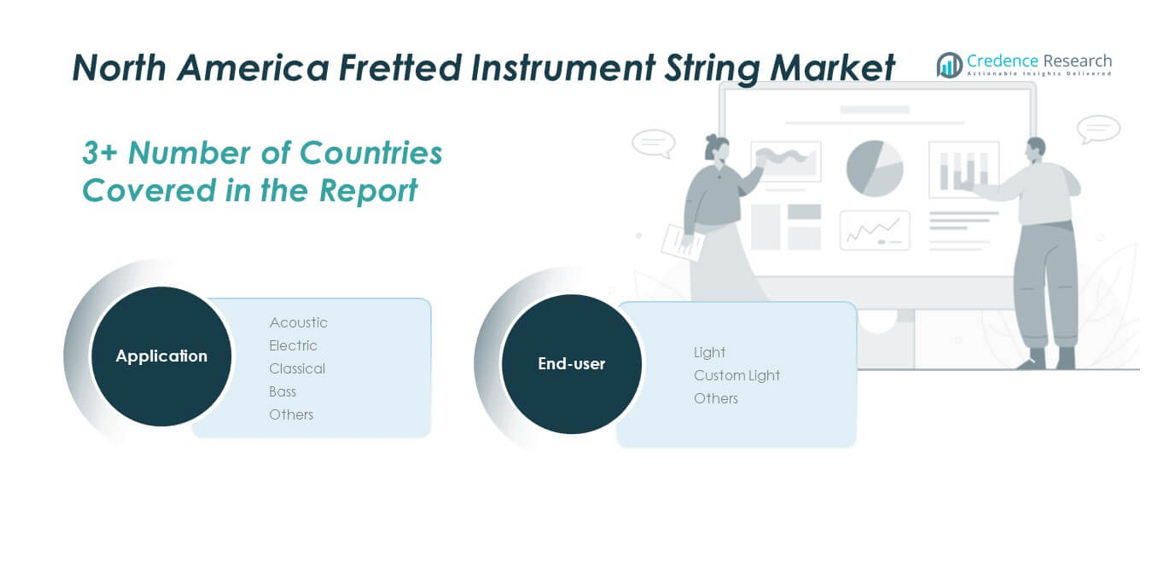
The North America Fretted Instrument String Market demonstrates strong segmentation
By application, reflecting diverse consumer preferences and usage patterns. Acoustic strings hold a significant share, supported by their widespread use among hobbyists, students, and professional musicians. Electric strings maintain steady growth, driven by rock, pop, and jazz performances where amplified sound quality is critical. Classical strings serve a specialized niche, catering to conservatory-trained players and traditional music segments that value tonal depth and precision. Bass strings remain vital to ensemble and studio applications, with durability and resonance serving as key performance metrics. The “Others” category captures experimental and hybrid instruments, showcasing gradual adoption among niche audiences.
- For example, D’Addario XL Nickel Wound bass strings are widely considered the industry standard, prized for their bright tone, comfortable playability, and dependable construction. The strings utilize precision hex-core winding for accurate intonation and durability, and user reviews frequently highlight their extended lifespan and consistent performance.
By end-user type, segmentation highlights differentiated product needs. Light strings dominate, offering ease of play and broad appeal across learners and intermediate musicians seeking comfort and flexibility. Custom light strings address evolving demand for tailored tension and tonal balance, appealing to advanced players and professionals requiring nuanced control. It also extends value to performers who demand reliability in both practice and live settings. The “Others” category comprises specialty gauges and unique designs, reflecting innovative preferences among experimental players. Together, these segments illustrate how diverse applications and user requirements shape purchasing behavior, reinforcing the dynamic growth potential across the region.
- For instance, Elixir Strings has maintained a strong market presence due to its patented Nanoweb coating, which offers extended tone life and enhanced corrosion resistance compared to conventional strings.
Segmentation:
By Application Segment
- Acoustic
- Electric
- Classical
- Bass
- Others
By End-User Segment
- Light
- Custom Light
- Others
Regional Analysis:
The North America Fretted Instrument String Market is led by the United States, which holds 68% of the regional market share. Its dominance is supported by a vibrant music industry, widespread adoption of guitars, and a strong base of professional musicians. It benefits from a large network of schools, conservatories, and independent instructors who promote fretted instrument education. The presence of leading string manufacturers and global brands also strengthens its position. The U.S. market continues to evolve with rising demand for premium coated strings and sustainable product lines. Strong digital distribution and subscription models expand access and maintain consistent sales momentum.
Canada accounts for 19% of the market share, driven by expanding music education programs and cultural events that promote string instruments. It reflects steady growth with rising participation from younger demographics and independent musicians. Canadian retailers and e-commerce platforms play a pivotal role in promoting both local and international brands. The market benefits from government-backed cultural initiatives that support music learning across schools and communities. It shows increasing interest in custom light strings and eco-friendly options, reflecting shifting consumer preferences. Canada’s position is further reinforced by a growing number of festivals and live performances that boost demand for durable and high-quality strings.
Mexico contributes 13% of the regional market share, supported by its cultural traditions that emphasize string-based music. It demonstrates strong growth potential through affordable product ranges and expanding access to fretted instruments in semi-urban and rural areas. The market benefits from growing consumer demand for acoustic and classical strings, particularly in folk and regional music styles. Local distributors and retailers are expanding partnerships to improve accessibility and supply chain efficiency. It also experiences rising influence from younger musicians adopting electric and bass instruments in contemporary genres. Mexico’s role as an emerging contributor strengthens the overall regional landscape and enhances the diversity of the market.
Shape Your Report to Specific Countries or Regions & Enjoy 30% Off!
Key Player Analysis:
- D’Addario
- Fender Musical Instruments Corporation
- Gibson Brands
- Ernie Ball Inc.
- GHS Strings
- F. Martin & Company Inc.
- Dunlop Manufacturing Inc.
- Dean Markley USA Inc.
- DR Handmade Strings
- Elixir Strings
Competitive Analysis:
The North America Fretted Instrument String Market is defined by the presence of established global brands and specialized regional players that compete on quality, innovation, and distribution strength. Leading companies such as D’Addario, Ernie Ball, Fender Musical Instruments Corporation, and Gibson Brands maintain strong visibility through extensive product portfolios and endorsement programs. It emphasizes premium offerings with coated and corrosion-resistant strings that appeal to professionals seeking durability and tonal stability. Mid-sized firms such as GHS Strings, Dean Markley USA, and DR Handmade Strings strengthen the competitive environment by targeting niche segments with custom light and specialty strings. Strategic partnerships with music schools, online platforms, and retail distributors reinforce brand loyalty and broaden market access. Companies actively pursue innovation in eco-friendly packaging, sensor-based monitoring technologies, and subscription-based delivery models. Competitive intensity remains high, compelling players to differentiate through product innovation, pricing strategies, and global distribution networks.
Recent Developments:
- In July 2025, D’Addario & Company, a leading U.S.-based musical string and drumstick manufacturer, changed its packaging strategy to navigate rising tariffs. It began collaborating with Chinese suppliers to ship strings in bulk directly to international customers, bypassing retail packaging in the U.S. This approach reduces the goods’ declared value and lowers the tariff burden.
- In May 2024, Fender partnered with Bluecore, a customer movement and retail identification technology company, to enhance customer growth and retention strategies in North America. The partnership focuses on using Bluecore’s technology to increase digital identification, boost customer retention, and improve purchase frequency, as Fender continues its strategy of balancing new acquisition and long-term brand loyalty
- In May 2025, Thalia Capos expanded its collaboration with Fender to deliver officially licensed accessories capos and pick pucks for guitarists across Europe. This partnership blends Thalia’s precision-engineered designs with Fender’s iconic brand identity, enhancing accessory options within the fretted instrument ecosystem.
- In January 2025, C. F. Martin & Co. unveiled a refreshed Standard Series acoustic guitar lineup at the NAMM Show, including new D-17, 000-17, and OM-45 models. They added Sitka spruce Golden Era bracing, a refined low-oval neck profile, beveled fingerboards, GE modern belly bridges, bone or ebony bridge pins, and vintage finishes with angled nuts and sleeker heels—blending classic tone with modern playability.
- In Sep 2024, D’Addario is celebrating its 50th anniversary with a special series of releases and events for musicians worldwide. To mark the milestone, the company has launched a curated collection of vintage-inspired merchandise such as T-shirts and hats that pay homage to its enduring legacy.
Market Concentration & Characteristics:
The North America Fretted Instrument String Market reflects moderate concentration with a handful of leading brands accounting for a significant share, while smaller manufacturers contribute through niche offerings. It is characterized by strong product innovation, a wide range of tension and gauge options, and a balance of premium and affordable categories. The market shows steady consumer loyalty to established brands but also openness to new entrants with unique value propositions. Intense competition encourages rapid product diversification, with companies investing in material advancements and customized solutions for varied playing styles. Distribution channels remain diverse, combining traditional music stores with rapidly growing e-commerce platforms that provide global reach. It also displays recurring demand patterns due to the consumable nature of strings, creating consistent revenue opportunities for both large and small players.
Report Coverage:
The research report offers an in-depth analysis based on Application and End-user. It details leading market players, providing an overview of their business, product offerings, investments, revenue streams, and key applications. Additionally, the report includes insights into the competitive environment, SWOT analysis, current market trends, as well as the primary drivers and constraints. Furthermore, it discusses various factors that have driven market expansion in recent years. The report also explores market dynamics, regulatory scenarios, and technological advancements that are shaping the industry. It assesses the impact of external factors and global economic changes on market growth. Lastly, it provides strategic recommendations for new entrants and established companies to navigate the complexities of the market.
Future Outlook:
- The North America Fretted Instrument String Market is set to advance through rising demand for premium coated strings that deliver durability and tonal stability.
- Growth in digital music platforms will sustain recurring sales, with independent musicians driving consistent product consumption.
- Eco-friendly innovations in materials and packaging will shape consumer preferences and strengthen brand positioning.
- Expansion of online education platforms will support higher adoption among beginners, boosting acoustic and entry-level string sales.
- Customization options in tension and gauge will continue to attract advanced musicians seeking tailored performance.
- Integration of smart technologies such as sensor-enabled strings will open opportunities in professional and learning applications.
- Strategic collaborations between brands, retailers, and music schools will expand distribution reach and enhance loyalty.
- The rising popularity of regional music festivals and live performances will strengthen demand for bass and electric strings.
- E-commerce and subscription-based delivery models will gain momentum, ensuring consistent replacement cycles.
- Increasing participation from younger demographics and diverse consumer groups will create a broader market base with sustainable long-term potential.



