
| REPORT ATTRIBUTE | DETAILS |
|---|---|
| Historical Period | 2019-2022 |
| Base Year | 2023 |
| Forecast Period | 2024-2032 |
| North America Secondhand Apparel Market Size 2023 | USD 22,394.58 Million |
| North America Secondhand Apparel Market, CAGR | 11.15% |
| North America Secondhand Apparel Market Size 2032 | USD 58,337.81 Million |
Market Overview
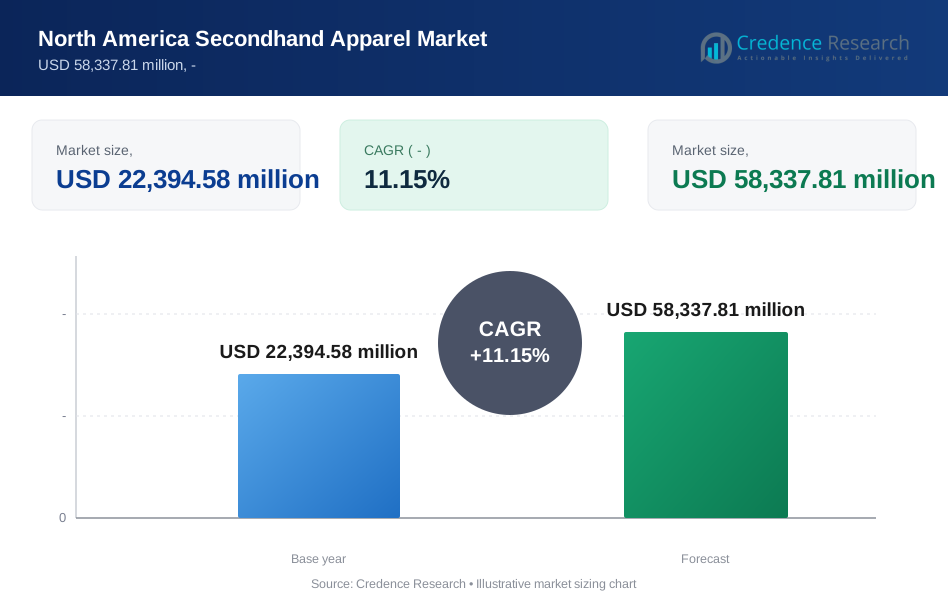
The North America Secondhand Apparel Market is projected to grow from USD 22,394.58 million in 2023 to an estimated USD 58,337.81 million by 2032, with a compound annual growth rate (CAGR) of 11.15% from 2024 to 2032. This robust growth is driven by increasing consumer awareness about sustainable fashion, cost savings associated with purchasing secondhand apparel, and the rising popularity of online resale platforms.
Key market drivers include the rising environmental concerns related to the fashion industry's carbon footprint, which has led consumers to seek more sustainable alternatives such as secondhand apparel. Additionally, the economic benefits of purchasing secondhand clothing, particularly in times of economic uncertainty, have fueled market growth. Trends such as the increased digitalization of resale platforms, enhanced user experience through AI and machine learning, and social media integration for secondhand apparel marketing are also shaping the market's trajectory.
Geographically, the United States dominates the North America Secondhand Apparel Market due to its large consumer base and well-established resale platforms. Canada also shows significant potential, driven by a growing awareness of sustainability and expanding online resale options. Key players in the market include ThredUp, Poshmark, The RealReal, and Depop, which collectively hold over 60% of the market share. These companies are leveraging technology and innovative business models to capture a larger share of the market. They are continually enhancing their platforms to improve customer experience and streamline the buying and selling process, further propelling market growth.
Market Drivers
Increasing Awareness of Sustainable Fashion
Sustainability has become crucial for many consumers, influencing their purchasing decisions and lifestyle choices. For instance, a survey found that 67 out of 100 consumers consider using sustainable materials an important purchasing factor. The fashion industry is one of the most polluting sectors globally, contributing significantly to carbon emissions, water usage, and waste. As awareness of these environmental impacts grows, more consumers are turning to secondhand apparel as a more sustainable alternative to fast fashion. Secondhand clothing helps reduce the demand for new garments, thus lowering the environmental burden associated with manufacturing new apparel. This shift towards eco-consciousness is particularly prevalent among younger generations, such as Millennials and Gen Z, who prioritize sustainability and are more likely to support brands and practices that align with their values. The increasing popularity of documentaries and media coverage highlighting the detrimental effects of fast fashion has also played a role in educating consumers and driving them towards more sustainable choices. This heightened awareness and growing commitment to sustainability have significantly boosted the secondhand apparel market in North America.
Economic Benefits and Cost Savings
The economic benefits of purchasing secondhand apparel are another significant driver of market growth. Consumers are increasingly recognizing the cost savings associated with buying pre-owned clothing, which can often be found at a fraction of the price of new items. For instance, a study found that consumers saved an average of $700 annually by buying secondhand clothes. This is particularly appealing during times of economic uncertainty or financial strain, where individuals and families are looking for ways to reduce expenses without compromising on quality or style. The affordability of secondhand apparel allows consumers to access high-quality, branded items that might otherwise be out of their budget if purchased new. This has made secondhand shopping an attractive option for a broader demographic, including budget-conscious shoppers and those seeking luxury brands at discounted prices. Additionally, the resale value of secondhand clothing provides an opportunity for consumers to recoup some of their expenses by selling items they no longer need, further enhancing the economic appeal of the secondhand market.
Technological Advancements and Digitalization
Technological advancements and the digitalization of the resale market have revolutionized the way consumers buy and sell secondhand apparel. Online platforms and mobile applications have made it easier than ever for consumers to browse, purchase, and sell pre-owned clothing from the comfort of their homes. For instance, in 2023, over 2 million users in North America used online platforms to buy or sell secondhand clothes.These platforms offer a wide range of features, including user-friendly interfaces, detailed search filters, secure payment systems, and convenient shipping options, which have enhanced the overall shopping experience. Innovations such as artificial intelligence (AI) and machine learning are being leveraged to personalize recommendations, improve inventory management, and streamline operations. AI-driven algorithms can analyze consumer preferences and browsing behavior to suggest relevant products, increasing the likelihood of purchase. Virtual try-on technologies and augmented reality (AR) tools are also gaining traction, allowing consumers to visualize how items will look on them before making a purchase. These technological advancements have made secondhand shopping more accessible, efficient, and enjoyable, thereby driving market growth.
Influence of Social Media and Changing Consumer Attitudes
Social media has played a pivotal role in shaping consumer attitudes towards secondhand apparel and promoting its adoption. Platforms like Instagram, TikTok, and YouTube have become powerful tools for influencers and brands to showcase secondhand fashion, share styling tips, and highlight the environmental and economic benefits of pre-owned clothing. Influencers and content creators often collaborate with resale platforms to create engaging content that resonates with their followers, driving traffic and sales to these platforms. The rise of social media has also contributed to the destigmatization of secondhand clothing, making it more fashionable and desirable. Thrift hauls, upcycling tutorials, and sustainable fashion challenges have become popular trends, encouraging consumers to embrace secondhand shopping. The community aspect of social media fosters a sense of belonging and shared values among like-minded individuals, further promoting the growth of the secondhand apparel market. Looking ahead, the continued influence of social media is expected to further increase awareness and foster a cultural shift towards more sustainable and conscious consumption patterns, thereby sustaining the growth of the secondhand apparel market.
Market Trends
Growth of Online Resale Platforms and Marketplaces
One of the most significant trends in the North America Secondhand Apparel Market is the rapid growth of online resale platforms and marketplaces. For instance, in 2023, it was reported that over 10 million users in North America were actively using online resale platforms. Companies like ThredUp, Poshmark, The RealReal, and Depop have revolutionized the way consumers buy and sell secondhand clothing. These platforms offer a wide range of features, such as user-friendly interfaces, detailed search filters, secure payment systems, and convenient shipping options, which have made the process of purchasing secondhand apparel more accessible and efficient. The integration of advanced technologies such as artificial intelligence (AI) and machine learning has further enhanced the user experience on these platforms. AI-driven algorithms can analyze consumer preferences and browsing behavior to provide personalized product recommendations, increasing the likelihood of purchase. Additionally, virtual try-on technologies and augmented reality (AR) tools are gaining traction, allowing consumers to visualize how items will look on them before making a purchase. This combination of technological innovation and ease of use has significantly contributed to the popularity and growth of online resale platforms.
Increased Consumer Acceptance and Demand for Sustainable Fashion
Another prominent trend in the North America Secondhand Apparel Market is the increased consumer acceptance and demand for sustainable fashion. Awareness of the environmental impact of the fashion industry has grown significantly, leading more consumers to seek eco-friendly alternatives such as secondhand clothing. This shift is particularly evident among younger generations, such as Millennials and Gen Z, who prioritize sustainability and ethical consumption. Social media has played a crucial role in promoting sustainable fashion and secondhand apparel. For example, in 2023, there were over 1 million posts on Instagram with the hashtag #sustainablefashion. Influencers and content creators use platforms like Instagram, TikTok, and YouTube to showcase thrift hauls, upcycling tutorials, and sustainable fashion challenges, which have helped destigmatize secondhand clothing and make it more fashionable. These influencers often collaborate with resale platforms to create engaging content that resonates with their followers, driving traffic and sales to these platforms. The rising trend of circularincreasingly values buy, use, and then resell ofr clothing, has also gained momentum. This approach not only reduces waste but also extends the lifecycle of garments, making fashion more sustainable. As a result, retailers and brands are increasingly incorporating secondhand options into their business models, either through partnerships with resale platforms or by launching their own resale initiatives.
Market Restraints and Challenges
Quality Control and Consumer Perception
One of the primary restraints in the North America Secondhand Apparel Market is the challenge of maintaining consistent quality control. Secondhand clothing varies significantly in terms of condition, brand, and style, which can impact consumer satisfaction. While online resale platforms strive to offer detailed product descriptions and images, the inability to physically inspect items before purchase remains a concern for many consumers. Issues such as misrepresentation of product condition, undisclosed damages, and sizing discrepancies can lead to dissatisfaction and returns, negatively affecting the overall customer experience. Additionally, despite the growing acceptance of secondhand apparel, a segment of consumers still perceives pre-owned clothing as inferior or less desirable compared to new items. This perception can be a significant barrier to market growth, particularly among demographics that prioritize newness and brand prestige. Overcoming these challenges requires continuous efforts in quality assurance, transparent communication, and effective marketing strategies to shift consumer attitudes and build trust in secondhand apparel.
Competition from Fast Fashion and Brand New Retailers
The North America Secondhand Apparel Market faces stiff competition from the fast fashion industry and traditional retailers offering brand new clothing. Fast fashion brands, known for their trendy designs and affordable prices, continue to attract a broad customer base, making it challenging for secondhand apparel to compete. The rapid production cycles and aggressive marketing strategies of fast fashion retailers often overshadow the benefits of purchasing secondhand clothing, such as sustainability and cost savings. Furthermore, traditional retailers are increasingly adopting strategies to retain their market share, such as frequent sales, discounts, and loyalty programs. These tactics make new clothing more accessible and appealing to budget-conscious consumers, who might otherwise consider secondhand options. The continuous influx of new collections and promotional activities by fast fashion and traditional retailers can divert consumer attention away from secondhand apparel, posing a significant challenge for market growth. To address these restraints, secondhand apparel businesses must emphasize their unique value propositions, such as sustainability, affordability, and the appeal of vintage or rare items. Collaborations with influencers, enhanced customer service, and leveraging technology for better product curation and personalization can help secondhand retailers differentiate themselves and attract a loyal customer base.
Market Segmentation Analysis
By Product
The North America Secondhand Apparel Market features a diverse range of product segments. Dresses and tops are highly sought after for both casual and formal wear, particularly popular among women seeking affordable fashion options. Shirts and t-shirts cater to a broad demographic, offering versatility and budget-friendly choices suitable for men, women, and children alike. Sweaters, coats, and jackets see seasonal spikes in demand, valued for their durability and cost-effective solutions for winter attire. Jeans and pants, known for their resilience, remain perennial favorites due to denim's enduring appeal and everyday practicality. Additionally, accessories, footwear, and specialty items attract consumers seeking unique, vintage pieces rarely found in traditional retail settings, adding niche appeal to the market's offerings.
By Sector
The North America secondhand apparel market encompasses two main sectors: resale platforms and traditional thrift stores. Both online and offline, resale platforms act as intermediaries connecting sellers and buyers, offering convenience and a vast array of choices. These platforms are gaining popularity due to their accessibility and diverse selection. On the other hand, traditional thrift stores and donation centers rely on community donations to support charitable causes. They cater to budget-conscious shoppers seeking affordable clothing options, including unique vintage pieces, fostering a community-driven approach to sustainable fashion.
Segments
Based on Product
- Dresses and Tops
- Shirts and T-shirts
- Sweaters, Coats, and Jackets
- Jeans and Pants
- Others
Based on Sector
- Resale
- Traditional Thrift Stores & Donations
Based on Target Population
- Men
- Women
- Kids
Based on Sales Channel
- Wholesalers or Distributors
- Hypermarkets or Supermarkets
- Multi-brand Stores
- Independent Small Stores
- Departmental Stores
- Online Retailers
- Other Sales Channels
Based on Region
- United States
- Canada
Regional Analysis
United States (80%):
The United States holds the largest share of the North America Secondhand Apparel Market, accounting for approximately 80% of the total market. Several factors, including a large and diverse consumer base, high levels of awareness regarding sustainable fashion, and the presence of numerous well-established resale platforms drive this dominance. Companies such as ThredUp, Poshmark, The RealReal, and Depop have revolutionized the secondhand apparel market in the U.S., providing consumers with a wide range of options and convenient shopping experiences.
Canada (20%):
Canada accounts for approximately 20% of the North America Secondhand Apparel Market, with a growing consumer base increasingly aware of the benefits of secondhand shopping. The Canadian market is witnessing a gradual shift towards more sustainable and economical fashion choices, driven by environmental concerns and the rising cost of living.
Key players
- ThredUp Inc.
- Poshmark
- The RealReal
- Depop
- Goodwill Industries
- Salvation Army
- Tradesy
- Vestiaire Collective
- Grailed
- Mercari
- Buffalo Exchange
- Crossroads Trading
- ASOS Marketplace
- Rebag
Competitive Analysis
The North America Secondhand Apparel Market is highly competitive, with a diverse array of players catering to different segments and consumer preferences. Online platforms like ThredUp, Poshmark, and The RealReal dominate the digital space by offering extensive selections and user-friendly interfaces. Depop and Grailed target younger, fashion-forward demographics with their trendy and niche collections. Goodwill Industries and Salvation Army leverage their extensive physical store networks and community-oriented missions to attract cost-conscious shoppers. Tradesy, Vestiaire Collective, and Rebag focus on luxury resale, providing authenticated high-end items. Buffalo Exchange and Crossroads Trading excel in offering curated, high-quality secondhand clothing in their physical stores. Mercari and ASOS Marketplace provide versatile options, balancing both affordability and variety. Each player differentiates through unique value propositions, such as sustainability, affordability, and convenience, fostering a dynamic and competitive market landscape.
Recent Developments
In January 2024, UK-based fashion brand HERA launched an integrated platform dedicated to secondhand clothing resale. This initiative aims to promote the quality and longevity of its products, marking a significant step in HERA's circularity journey. By creating its own resale platform, HERA avoids relying on pre-existing reselling sites, ensuring better control over product quality and customer experience. This move reflects HERA's commitment to sustainability and the growing trend of embracing circular economy principles of fashion brands.
In December 2023, Zara expanded its 'Pre-Owned' service to facilitate selling, repairing, and donating secondhand clothes across several European countries. This expansion includes the United Kingdom, France, Finland, Greece, Ireland, Italy, Luxembourg, Netherlands, Portugal, Croatia, Slovakia, Slovenia, Germany, Austria, Belgium, and Spain. By offering these services, Zara aims to cater to the increasing demand for used apparel and enhance its sustainability practices. This strategic move aligns with the broader market trend towards more eco-friendly fashion consumption.
In October 2023, Swedish apparel retailer H&M announced the launch of its "Pre-Loved" collection at its flagship store in London. This new collection will feature secondhand women's clothing, reflecting H&M's efforts to improve sustainability and reduce waste. By introducing "Pre-Loved," H&M joins other fast-fashion brands in responding to consumer demand for more sustainable fashion options. This initiative underscores H&M's commitment to integrating circular economy principles into its business model.
In July 2023, teen retail leader Journeys, under Genesco, partnered with ThredUP to launch Journeys Secondhand, an environmentally conscious resale program. This program allows customers to shop for secondhand apparel and resell gently worn items for Journeys shopping credit. Journeys Secondhand aims to promote sustainability and offer eco-friendly shopping options to its customer base. This initiative aligns with the growing trend of retailers incorporating resale programs to address environmental concerns and meet consumer demand for sustainable fashion choices.
Market Concentration and Characteristics
The North America Secondhand Apparel Market is characterized by a moderate to high market concentration, with several dominant players such as ThredUp, Poshmark, The RealReal, and Depop leading the industry. These companies leverage advanced digital platforms to offer extensive selections, user-friendly interfaces, and personalized shopping experiences. The market also features a mix of traditional thrift stores like Goodwill Industries and Salvation Army, which cater to budget-conscious consumers and emphasize community and charitable initiatives. The sector's growth is driven by increasing consumer awareness of sustainability, economic benefits, and technological advancements, making secondhand apparel a mainstream and attractive option for a diverse demographic.
Report Coverage
The research report offers an in-depth analysis based on Product, Sector, Target Population, Sales Channel and Region. It details leading market players, providing an overview of their business, product offerings, investments, revenue streams, and key applications. Additionally, the report includes insights into the competitive environment, SWOT analysis, current market trends, as well as the primary drivers and constraints. Furthermore, it discusses various factors that have driven market expansion in recent years. The report also explores market dynamics, regulatory scenarios, and technological advancements that are shaping the industry. It assesses the impact of external factors and global economic changes on market growth. Lastly, it provides strategic recommendations for new entrants and established companies to navigate the complexities of the market.
Future Outlook
- The North America secondhand apparel market is expected to continue its robust growth, driven by increasing consumer awareness of sustainability and cost savings.
- Further integration of artificial intelligence and machine learning will enhance user experiences, offering more personalized and efficient shopping options.
- Online resale platforms will expand their reach and capabilities, providing even greater convenience and accessibility for consumers.
- More traditional fashion retailers are likely to incorporate secondhand options into their business models through partnerships or launching their own resale initiatives.
- The stigma associated with secondhand clothing will continue to diminish, especially among younger generations who prioritize eco-friendly practices.
- The luxury segment of the secondhand market is poised for significant growth, as consumers seek high-quality, authenticated pre-owned items at more affordable prices.
- Brands and consumers alike will focus more on circular fashion practices, including recycling and upcycling, to further reduce environmental impacts.
- The variety of secondhand apparel available will increase, catering to a wider range of styles, sizes, and demographics.
- Despite the digital dominance, physical secondhand stores will also grow, offering curated and unique shopping experiences that online platforms cannot fully replicate.
- Government policies promoting sustainability and waste reduction are expected to support the growth of the secondhand apparel market, encouraging more consumers and businesses to participate in this eco-friendly trend.
Request a Free Sample
Fill in your details and we'll send you a free sample report.
- Sample data tables & charts
- Research methodology
Need a Custom Version of This Report?
Tailor the scope, geography, or segments to your exact requirements.
- Custom geography or segment scope
- Direct access to our analyst team
Frequently Asked Questions
What is the projected growth of the North America Secondhand Apparel Market?
What are the key drivers influencing the North America Secondhand Apparel Market?
Which countries dominate the North America Secondhand Apparel Market?
Who are the key players in the North America Secondhand Apparel Market?
What are the major trends shaping the North America Secondhand Apparel Market?
Table of Content
Chapter 1. Report Introduction
- 1.1 Report Description & Purpose
- 1.1.1 Report Title & Market Definition
- 1.1.2 Unique Selling Propositions (USP) & Key Differentiators
- 1.1.3 Value Proposition for Stakeholders
- 1.2 Research Objectives
- 1.2.1 Market Sizing Objectives (Volume & Revenue) (Volume Where Applicable)
- 1.2.2 Segmentation Objectives
- 1.2.3 Competitive Intelligence Objectives
- 1.2.4 Forecast & Scenario Objectives
- 1.3 Report Scope
- 1.3.1 North America Secondhand Apparel Scope – Segments & Subsegments Covered
- 1.3.2 Geographic Scope – Selected Region & Countries Covered
- 1.3.3 Historical Period, Base Year & Forecast Period (the historical period; forecast to the forecast period)
- 1.3.4 Inclusions & Exclusions
- 1.4 Industry Classification & Applicable Codes
- 1.5 Currency, Measurement Units & Valuation Basis
- 1.6 Target Stakeholders
- 1.7 Limitations & Assumptions
Chapter 2. Executive Summary
- 2.1 North America Secondhand Apparel Snapshot
- 2.1.1 Market Size – Historical (the historical period) & Forecast (the forecast period) (base year: USD 22,394.58 million → forecast year: USD 58,337.81 million)
- 2.1.2 Volume & Revenue – Regional Totals (Volume Where Applicable)
- 2.1.3 Key Market Highlights – Top Five Facts
- 2.2 North America Secondhand Apparel Segmentation Snapshot
- 2.2.1 Market Split by Country – vs.
- 2.3 Competitive Snapshot
- 2.3.1 Top 10 Players by Revenue Share –
- 2.3.2 Top 10 Players by Volume Share – (Volume Where Applicable)
- 2.3.3 Recent Strategic Developments (18-Month Summary)
- 2.4 Key Investment Highlights & Strategic Conclusions
Chapter 3. North America Secondhand Apparel Dynamics & Industry Analysis
- 3.1 Market Overview & Context
- 3.1.1 North America Secondhand Apparel Position in the Broader Industry Value Chain
- 3.1.2 Demand Structure & Purchasing Dynamics
- 3.1.3 Market Maturity & Development Stage by Country
- 3.2 North America Secondhand Apparel Drivers
- 3.3 North America Secondhand Apparel Restraints & Challenges
- 3.4 North America Secondhand Apparel Opportunities
- 3.5 Porter's Five Forces Analysis
- 3.5.1 Threat of New Entrants
- 3.5.2 Bargaining Power of Suppliers
- 3.5.3 Bargaining Power of Buyers
- 3.5.4 Threat of Substitutes
- 3.5.5 Competitive Rivalry – Intensity Assessment
- 3.6 North America Secondhand Apparel Value Chain Analysis
- 3.6.1 Upstream – Key Inputs, Resources & Suppliers
- 3.6.1.1 Key Input/Resource 1
- 3.6.1.2 Key Input/Resource 2
- 3.6.1.3 Key Input/Resource 3
- 3.6.2 Midstream – Core Operations & Value Creation
- 3.6.2.1 Operating Model & Process Overview
- 3.6.2.2 Key Operating Locations & Capabilities by Company
- 3.6.3 Downstream – Market Channels & End Users
- 3.6.3.1 Direct Sales & Customer Engagement Channels
- 3.6.3.2 Indirect Sales, Intermediaries & Partner Channels
- 3.6.4 Value Chain Profitability Analysis
- 3.6.1 Upstream – Key Inputs, Resources & Suppliers
- 3.7 PESTEL Analysis
- 3.7.1 Political Factors
- 3.7.2 Economic Factors
- 3.7.3 Social Factors
- 3.7.4 Technological Factors
- 3.7.5 Environmental Factors
- 3.7.6 Legal Factors
- 3.8 North America Secondhand Apparel Supply Chain Analysis
- 3.8.1 Critical Input & Resource Availability Risk Assessment
- 3.8.2 Supplier & Operational Concentration Risk (Geographic Exposure)
- 3.8.3 Supply & Service Disruption Impact Analysis
- 3.9 Regional & Country Regulatory Landscape
Note: The regulatory and policy landscape section covers regulations based on their applicability to the market, North America Secondhand Apparel category, geography, and scope of the study. Only regulatory frameworks with a material impact on operations, compliance, trade, sustainability, or market access are analyzed in detail.
Chapter 4. Key Investment Pockets & Opportunity Analysis
- 4.1 North America Secondhand Apparel Attractiveness Analysis
- 4.1.1 By Country – Investment Attractiveness Matrix (Market Size × CAGR)
- 4.2 Absolute Revenue Growth Opportunity
- 4.2.1 By Country – Absolute Revenue Growth Through the forecast period
- 4.3 Incremental Demand Opportunity
- 4.3.1 By Country – Incremental Demand Through the forecast period
- 4.3.2 Segment – Incremental Demand
- 4.4 Emerging Submarket Opportunity Deep Dive (Subject to Applicability)
- 4.5 Priority Country Opportunity Scorecards
- 4.5.1 Priority Country 1
- 4.5.2 Priority Country 2
- 4.5.3 Priority Country 3
- 4.5.4 Priority Country 4
Note: Priority countries are selected from within the region covered by the study. Numbered entries are indicative and are populated with relevant country names based on market size, growth potential, and strategic relevance.
Chapter 5. North America Secondhand Apparel Cross-Border Trade & Market Access Analysis
- 5.1 Intra-Regional & Extra-Regional Trade Overview
- 5.1.1 Regional Export Value by Country (the historical period)
- 5.1.2 Regional Export Volume by Country (the historical period) (Volume Where Applicable)
- 5.1.3 Regional Import Value by Country (the historical period)
- 5.1.4 Regional Import Volume by Country (the historical period) (Volume Where Applicable)
- 5.1.5 Net Trade Balance by Country (the historical period)
- 5.2 Export Analysis – Segment
- 5.2.1 Category 1 (Applicable Classification Code)
- 5.2.2 Category 2 (Applicable Classification Code)
- 5.2.3 Category 3 (Applicable Classification Code)
- 5.2.4 Category 4 (Applicable Classification Code)
- 5.2.5 Category 5 (Applicable Classification Code)
- 5.3 Import Analysis – Segment
- 5.3.1 Category 1 (Applicable Classification Code)
- 5.3.2 Category 2 (Applicable Classification Code)
- 5.3.3 Category 3 (Applicable Classification Code)
- 5.3.4 Category 4 (Applicable Classification Code)
- 5.3.5 Category 5 (Applicable Classification Code)
- 5.4 Cross-Border Pricing & Transaction Benchmarks
- 5.4.1 Export Pricing – Segment & Country
- 5.4.2 Import Pricing – Segment & Source Country
- 5.4.3 Price Trends (the historical period)
- 5.5 Key Cross-Border Trade & Delivery Routes
- 5.5.1 Cross-Border Trade/Delivery Route 1
- 5.5.2 Cross-Border Trade/Delivery Route 2
- 5.5.3 Cross-Border Trade/Delivery Route 3
- 5.5.4 Cross-Border Trade/Delivery Route 4
- 5.5.5 Cross-Border Trade/Delivery Route 5
- 5.6 Trade Policy & Market Access Impact Assessment
- 5.6.1 Tariff & Non-Tariff Barriers
- 5.6.2 Regional Trade & Economic Integration Frameworks
- 5.6.3 Bilateral & Multilateral Trade Agreements
- 5.6.4 Cross-Border Operating, Licensing & Localization Requirements
Note: Cross-border analysis applies where relevant to North America Secondhand Apparel. Country trade flows distinguish intra-regional activity from trade with markets outside the region. Regional external trade totals exclude intra-regional flows to avoid double counting. Classifications and transaction measures follow the market scope; volume and route analyses apply only where meaningful.
Chapter 6. Competitive Landscape & Company Benchmarking
- 6.1 North America Secondhand Apparel Concentration & Structure
- 6.1.1 Herfindahl-Hirschman Index (HHI) – vs.
- 6.1.2 Leading, Mid-Sized & Emerging Player Structure
- 6.1.3 Global, Regional & Local Player Dynamics
- 6.2 North America Secondhand Apparel Share Analysis –
- 6.2.1 Regional Revenue Share by Company
- 6.2.2 Regional Volume Share by Company (Volume Where Applicable)
- 6.2.3 Company Revenue Share by Country
- 6.2.4 Market Share Evolution ( vs. )
- 6.2.5 Company Market Share by Key Segment
- 6.2.6 Company Market Share by Customer Group
- 6.3 Operating Scale, Capacity & Infrastructure Analysis
- 6.3.1 Regional Operating Scale & Supply Capacity
- 6.3.2 Resource Utilization & Operating Efficiency
- 6.3.3 Output, Service Delivery & Activity Metrics
- 6.3.4 Operating Footprint & Infrastructure Map
- 6.3.5 Planned Operational & Capacity Expansion
- 6.4 North America Secondhand Apparel Competitive Benchmarking Matrix
- 6.4.1 Revenue, Growth, Profitability & Operating Metric Comparison
- 6.4.2 Channel Revenue Mix
- 6.4.3 Revenue Exposure by Country Within the Region
- 6.4.4 R&D Intensity
- 6.4.5 Sustainability Maturity
- 6.5 Strategic Developments in North America Secondhand Apparel (Last 24 Months)
- 6.5.1 Mergers, Acquisitions & Divestments
- 6.5.2 New Products, Services & Solutions in North America Secondhand Apparel
- 6.5.3 Operational & Infrastructure Expansions
- 6.5.4 Strategic Alliances, Joint Ventures & Partnerships
- 6.5.5 Distribution Expansion & Market Entry
- 6.5.6 Sustainability & ESG Initiatives
- 6.6 Competitive Strategy Mapping
- 6.6.1 Leader, Challenger, Follower & Niche Classification
- 6.6.2 Pricing Strategy Comparison
- 6.6.3 Channel Strategy Matrix
Note: Strategic developments are included based on their materiality and the availability of reliable information.
Chapter 7. North America Secondhand Apparel – By Sales & Delivery Channel
- 7.1 Segment Overview
- 7.1.1 Volume & Revenue Split by Channel ( & ) (Volume Where Applicable)
- 7.1.2 Channel Mix Evolution (the forecast period)
Chapter 8. Country Market Analysis – Regional Overview
- 8.1 Country Market Overview Within the Region
- 8.1.1 Country Volume Share Within the Region (Where Applicable)
- 8.1.2 Country Revenue Share Within the Region
- 8.1.3 Market Volume by Country (Where Applicable)
- 8.1.4 Market Revenue by Country
- 8.1.5 Country Forecasts Through the forecast period
- 8.2 Cross-Country Segment Analysis
- 8.2.1 By Sales & Delivery Channel
- 8.2.2 By Competitive Positioning & Price Tier
Chapter 9. North America Secondhand Apparel – Priority Country 1
Chapter 10. North America Secondhand Apparel – Priority Country 2
Chapter 11. North America Secondhand Apparel – Priority Country 3
Chapter 12. North America Secondhand Apparel – Priority Country 4
Chapter 13. North America Secondhand Apparel Company Profiles
- 13.1 [Company 01]
- 13.1.1 Company Overview
- 13.1.2 Key Management Personnel
- 13.1.3 Products & Services Portfolio
- 13.1.4 Financial Performance
- 13.1.5 Regional Market Focus & Country Presence
- 13.1.6 Recent Developments & Strategic Initiatives
Note: The company profile list is preliminary and may change based on research findings, market developments, data availability, and client requirements.
Chapter 14. Appendices
- Appendix A – List of Abbreviations & Acronyms
- Appendix B – Industry Classification Code Reference – Full Series
- Appendix C – Supply, Output & Operating Capacity Data Tables
- Appendix D – End-Use & Demand Base Tables
- Appendix E – Demand, Adoption & Usage Assumptions
- Appendix F – Pricing & Revenue Metric Reference Tables
- Appendix G – Company Operations & Infrastructure Database
- Appendix H – Cross-Border Trade & Activity Data Tables (Where Applicable)
- Appendix I – Regulatory Summary Tables
- Appendix J – Primary Research Participant List (Anonymized)
- Appendix K – Primary Research Questionnaire Framework
- Appendix L – Data Sources & Bibliography
- Appendix M – Market Size Divergence & Source Comparison
Chapter 15. Research Methodology
- 15.1 Research Framework & Philosophy
- 15.2 Secondary Research – Sources, Hierarchy & Data Extraction
- 15.3 Data Modeling – Country-Level Estimates & Regional Aggregation
- 15.4 Primary Research – Stakeholder Framework, LOI & Sample Sizes
- 15.5 Forecast Methodology – Regression, Scenario & Sensitivity Analysis
- 15.6 Quality Control – Four-Layer Validation Framework
- 15.7 Limitations & Standard Assumptions
- 15.8 Disclaimer
