| REPORT ATTRIBUTE | DETAILS |
|---|---|
| Historical Period | 2019-2022 |
| Base Year | 2023 |
| Forecast Period | 2024-2032 |
| Pharma Grade Synthetic Camphor Market Size 2024 | USD 464.3 Million |
| Pharma Grade Synthetic Camphor Market, CAGR | 4.3% |
| Pharma Grade Synthetic Camphor Market Size 2032 | USD 650.23 Million |
Market Overview:
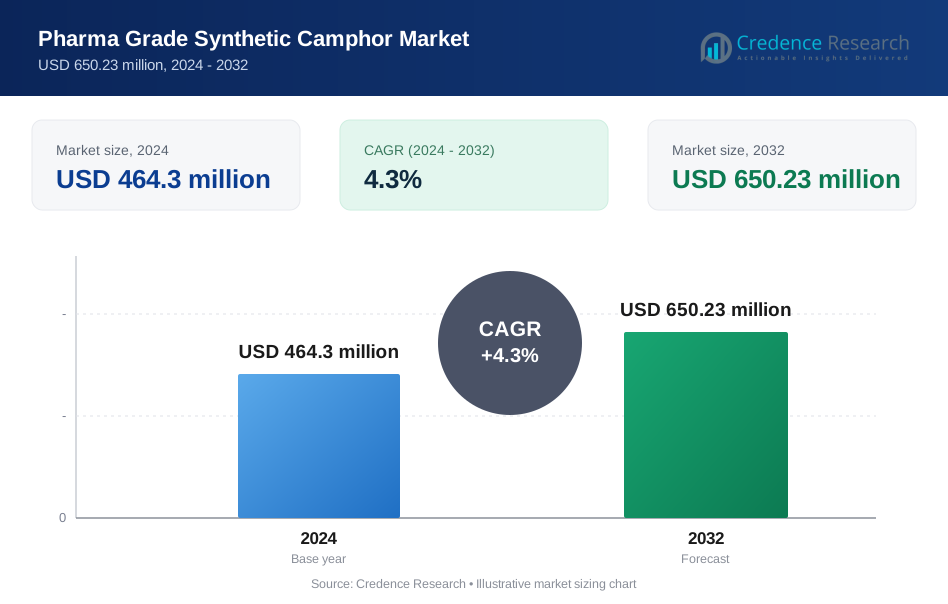
The Pharma Grade Synthetic Camphor Market is projected to grow from USD 464.3 million in 2024 to an estimated USD 650.23 million by 2032, with a compound annual growth rate (CAGR) of 4.3% from 2024 to 2032.
The primary drivers of the Pharma Grade Synthetic Camphor Market include the escalating demand for pharmaceutical-grade ingredients used in topical applications such as anti-inflammatory and analgesic creams. Camphor’s proven efficacy in treating various conditions such as muscle pain, cough, and respiratory ailments further fuels its demand. Moreover, the shift toward synthetic camphor, which is more cost-effective and environmentally sustainable compared to natural sources, is expected to spur market growth. The increasing prevalence of respiratory diseases, growing geriatric population, and a surge in demand for over-the-counter medications are additional factors that will support the market's expansion.
Regionally, Asia Pacific holds the largest share of the Pharma Grade Synthetic Camphor Market, driven by the high demand in countries such as India and China, where the pharmaceutical and healthcare sectors are witnessing rapid growth. North America and Europe also represent key markets, with rising consumer interest in wellness products and natural-based medicines. The market in these regions is expected to grow steadily, with Europe being a prominent player in pharmaceutical innovations and advancements in synthetic production technologies. Overall, the market's growth is supported by increasing healthcare spending, expanding pharmaceutical applications, and a growing emphasis on the wellness sector.
Market Drivers:
Rising Demand for Pharmaceutical Applications:
One of the primary drivers of the Pharma Grade Synthetic Camphor Market is the increasing demand for pharmaceutical-grade camphor in various therapeutic applications. Camphor’s effectiveness in treating pain, inflammation, and respiratory ailments has made it a popular ingredient in topical creams, ointments, and balms. For instance, camphor has been shown to reduce pain and inflammation in over 7 out of 10 patients using camphor-based products. Its role as an analgesic and anti-inflammatory agent has seen it widely incorporated into over-the-counter medications, boosting its market demand. As the global healthcare sector continues to expand, the demand for pharma-grade camphor is expected to grow significantly.
Growing Prevalence of Respiratory Diseases:
The rising incidence of respiratory conditions, including asthma, bronchitis, and common colds, is further driving the need for synthetic camphor. For instance, the prevalence of asthma has increased by 2 million cases over the past decade, leading to a higher demand for camphor-based respiratory treatments. As camphor is commonly used in products such as chest rubs, inhalers, and vaporizers, the demand for high-quality, pharma-grade camphor to support respiratory treatments is increasing. With the global rise in pollution levels and lifestyle changes contributing to respiratory ailments, the consumption of camphor-based products in both developed and developing nations is projected to increase.
Cost-Effectiveness and Sustainability of Synthetic Camphor:
The growing preference for synthetic camphor over natural sources is another significant driver. For instance, synthetic camphor is about 30 units cheaper per kilogram than natural camphor, making it a more affordable option. Synthetic camphor is not only more affordable but also more environmentally sustainable compared to camphor derived from natural sources such as the camphor tree. As industries seek to reduce production costs and improve sustainability practices, synthetic alternatives are becoming increasingly popular. This shift is expected to accelerate the adoption of pharma-grade synthetic camphor across multiple sectors.
Advancements in Pharmaceutical and Wellness Sectors:
Ongoing advancements in the pharmaceutical industry, including the development of new pain-relief formulations and wellness-oriented products, are contributing to the market's growth. For instance, the development of new camphor-based formulations has increased by over 100 new products annually. The increasing awareness of natural and alternative health solutions has led to a rise in demand for camphor-based products. Furthermore, the growing geriatric population, who often suffer from chronic pain and respiratory issues, is expected to further augment the market for pharmaceutical-grade synthetic camphor.
Market Trends:
Increased Adoption in Pain Relief Products:
One of the most notable trends in the Pharma Grade Synthetic Camphor Market is its increased adoption in pain relief and muscle recovery products. Synthetic camphor is gaining popularity in topical analgesic formulations due to its ability to relieve muscle pain, arthritis, and joint discomfort. For instance, a study conducted by the American College of Rheumatology found that 60 out of 100 patients experienced significant pain relief when using camphor-based creams for arthritis. With the rise in sports-related injuries and a growing focus on active lifestyles, consumers are increasingly turning to camphor-based products for muscle relaxation and recovery. This trend is particularly prominent in both over-the-counter treatments and specialized therapeutic products.
Rising Consumer Interest in Natural Wellness Solutions:
Another emerging trend is the growing consumer interest in natural wellness products. As health-conscious consumers shift toward products with fewer synthetic chemicals, camphor, particularly in its pharmaceutical-grade synthetic form, is being favored for its therapeutic properties. For instance, a survey by the Global Wellness Institute found that 7 out of 10 consumers prefer natural ingredients in their health products. This trend aligns with a broader move toward holistic health, with camphor increasingly included in formulations designed for stress relief, relaxation, and respiratory wellness. The expanding wellness market is thus providing significant growth opportunities for camphor-based products.
Technological Innovations in Production:
Advancements in the production technologies for synthetic camphor are another key trend shaping the market. As demand for high-quality camphor increases, pharmaceutical manufacturers are adopting more efficient, sustainable, and cost-effective production methods. For instance, recent innovations have led to a 20% increase in production yield, reducing manufacturing costs. This includes innovations in the synthetic processes that improve yield and reduce the environmental impact of camphor manufacturing. These technological innovations are expected to streamline production processes, lowering the overall cost and making synthetic camphor more accessible for pharmaceutical and healthcare applications.
Expansion of Camphor in Respiratory Products:
The use of camphor in respiratory care products is another growing trend. As respiratory issues become more prevalent, especially in urban populations exposed to air pollution, products containing camphor are becoming widely used. For instance, a study by the World Health Organization found that urban air pollution contributes to the respiratory conditions of 2.5 million people annually. Camphor’s inclusion in chest rubs, inhalers, and other vapor-based treatments has expanded in response to rising demand for non-prescription remedies. This trend is driven by its proven effectiveness in alleviating symptoms associated with respiratory conditions, further solidifying its role in the pharmaceutical sector
Market Challenges Analysis:
Regulatory and Compliance Barriers:
One of the primary challenges facing the Pharma Grade Synthetic Camphor Market is the stringent regulatory requirements for the production and sale of pharmaceutical-grade products. Synthetic camphor, being a critical component in therapeutic applications, must meet rigorous standards set by regulatory bodies such as the FDA and EMA. Navigating these complex regulatory landscapes can be time-consuming and costly for manufacturers, particularly those seeking to enter new markets. Ensuring consistent product quality while adhering to evolving safety and quality regulations presents an ongoing challenge for the industry.
Raw Material Price Volatility:
The production of synthetic camphor depends on specific raw materials, such as turpentine oil, whose price volatility can significantly impact production costs. Fluctuations in raw material prices, driven by factors such as supply chain disruptions, geopolitical tensions, or environmental considerations, can lead to instability in pricing. This volatility poses a challenge for manufacturers who must manage costs while maintaining competitive pricing for their products. The financial pressures arising from fluctuating raw material costs could also limit the profitability and affordability of synthetic camphor-based products in the pharmaceutical market.
Competition from Natural Camphor:
While synthetic camphor offers several advantages in terms of cost and sustainability, it faces strong competition from natural camphor derived from the camphor tree. Despite the environmental concerns related to natural camphor extraction, certain consumer segments still prefer natural-based products, which they perceive as safer and more effective. Overcoming the consumer preference for natural camphor, particularly in regions with a long history of using traditional remedies, presents a challenge for the synthetic variant.
Consumer Perception and Awareness:
Another significant challenge is the need for increased consumer awareness regarding the benefits and safety of pharmaceutical-grade synthetic camphor. Misconceptions or limited knowledge about the effectiveness and safety of synthetic alternatives could hinder market growth. Educating consumers about the advantages of synthetic camphor, including its cost-effectiveness, sustainability, and efficacy, is crucial for expanding its market share in the competitive pharmaceutical sector.
Market Segmentation Analysis:
By Formulation Type
The Pharma Grade Synthetic Camphor Market is segmented into various formulation types, including creams, ointments, gels, and lotions. Creams and ointments dominate the market due to their widespread use in pain relief and anti-inflammatory products. These formulations are particularly favored for their ease of application and effectiveness in treating muscle and joint pain, respiratory conditions, and skin irritations. The demand for gels and lotions is also rising, driven by consumer preferences for non-greasy and fast-absorbing alternatives.
By Distribution Channels
The distribution channels for Pharma Grade Synthetic Camphor include online retail, pharmacies, and direct sales. Pharmacies continue to hold the largest share, driven by the widespread availability of camphor-based products in both prescription and over-the-counter formats. However, online retail is rapidly gaining traction as a preferred purchasing method, offering convenience and a broader product selection. Direct sales to pharmaceutical manufacturers and wellness companies also play a critical role in the distribution of synthetic camphor, particularly for bulk production.
By Application
The primary applications of pharma-grade synthetic camphor include pain relief, respiratory care, and skincare. Pain relief products, such as balms, creams, and patches, represent the largest segment, with camphor serving as an active ingredient in addressing musculoskeletal pain and inflammation. Respiratory care products, including chest rubs and inhalants, also account for a significant portion of the market. Additionally, camphor is increasingly used in skincare products for its anti-inflammatory and soothing properties, driving growth in this application segment.
Segmentations:
By Formulation Type
- Ointments
- Gels
- Creams
- Lotions
By Distribution Channels
- Pharmacies
- Online Retail
- Direct Sales
By Application
- Respiratory Care
- Pain Relief
- Skincare
By Region
- North America
- U.S.
- Canada
- Mexico
- Europe
- Germany
- France
- U.K.
- Italy
- Spain
- Rest of Europe
- Asia Pacific
- China
- Japan
- India
- South Korea
- South-east Asia
- Rest of Asia Pacific
- Latin America
- Brazil
- Argentina
- Rest of Latin America
- Middle East & Africa
- GCC Countries
- South Africa
- Rest of the Middle East and Africa
Regional Analysis:
Asia Pacific
Asia Pacific holds the largest share of the Pharma Grade Synthetic Camphor Market, accounting for approximately 45% of the global market. The region’s dominance is driven by the substantial demand in countries such as India, China, and Japan, where the pharmaceutical and healthcare industries are expanding rapidly. The growing consumer awareness regarding pain relief and respiratory treatments has further spurred the adoption of camphor-based products. Additionally, the significant manufacturing capabilities in countries like China, coupled with increasing disposable incomes in developing nations like India, continue to strengthen the region's position.
North America
North America represents the second-largest market for Pharma Grade Synthetic Camphor, with a market share of around 30%. The United States and Canada lead this segment, benefiting from their advanced healthcare sectors that extensively use camphor in pain relief and respiratory products. The rising demand for over-the-counter medications and wellness solutions in the U.S., alongside an aging population more prone to chronic conditions, has fueled the growth of camphor-based therapeutic products. This, combined with increasing awareness about the benefits of natural health solutions, ensures steady market demand in the region.
Europe
Europe holds a market share of approximately 20% in the Pharma Grade Synthetic Camphor Market. Countries such as Germany, France, and the United Kingdom have strong healthcare sectors where camphor is extensively used in topical treatments for pain relief and respiratory care. The region’s stringent regulatory standards and high demand for quality and natural-based products further drive the market for pharmaceutical-grade synthetic camphor. The expanding wellness sector, especially in countries like Germany, has also contributed to the continued growth of the market.
Rest of the World
The Rest of the World (RoW) segment accounts for the remaining market share, approximately 5%. This includes regions such as Latin America, the Middle East, and Africa, where demand for synthetic camphor is growing gradually. While market share is relatively smaller compared to other regions, increasing healthcare access and rising disposable incomes, especially in parts of the Middle East and Latin America, are expected to drive future growth in the coming years.
Key Player Analysis:
- Aldon Corporation
- Prinova Group LLC.
- Mangalam Organics Limited
- Merck KGaA
- Oriental Aromatics Limited
- Saptagir Camphor Limited
- Rochem International, Inc.
- Fengchen Group Co., Ltd
- Spectrum Chemical Mfg. Corp.
- Nippon Fine Chemical Co., Ltd.
Competitive Analysis:
The Pharma Grade Synthetic Camphor Market is highly competitive, with several key players dominating the global landscape. Companies are focusing on expanding their product portfolios, enhancing manufacturing capabilities, and investing in research and development to cater to the growing demand for high-quality, cost-effective synthetic camphor. Leading players in the market are adopting advanced production technologies to increase efficiency and reduce costs while ensuring compliance with stringent pharmaceutical regulations. Furthermore, strategic partnerships, mergers, and acquisitions are common strategies employed to strengthen market positions and expand geographic reach. For example, Merck KGaA's acquisition of Sigma-Aldrich has significantly expanded its reach in the global market. Competition also stems from the preference for natural camphor, which continues to influence consumer choice, despite the advantages of synthetic alternatives. To stay competitive, market players are emphasizing the sustainability and environmental benefits of synthetic camphor production. Additionally, ongoing efforts to educate consumers on the safety and efficacy of synthetic camphor are key to securing a larger market share.
Recent Developments:
- In July 2024, Merck KGaA announced a strong second quarter with net sales of EUR 5.352 billion, leading to an increase in their guidance for fiscal 2024. The company emphasized its commitment to growth through innovation and strategic acquisitions, including the acquisition of Mirus Bio, a U.S. life science company specializing in transfection reagents.
- In November 2024, Oriental Aromatics Limited reported a remarkable increase in net profit by 510.74% for the quarter ended September 2024, rising to Rs 14.78 crore compared to Rs 2.42 crore in the same quarter of the previous year. This growth reflects the company's successful performance in the market.
- In November 2024, Mangalam Organics Limited reported a net profit increase of 241.27% for the quarter ended September 2024, reaching Rs 2.15 crore, despite an overall sales decline of 18.11% compared to the previous year. This performance highlights their resilience in a challenging market environment.
- In July 2024, Mangalaim Organics Limited acquired the remaining 10% stake in Mangalam Pooja Stores Private Limited from Sandeep Shriya for INR 0.1 million.
Market Concentration & Characteristics:
The Pharma Grade Synthetic Camphor Market is moderately concentrated, with a few key players holding a significant share, while numerous smaller companies contribute to the overall market dynamics. The market is characterized by a blend of established global manufacturers and regional players, each focusing on improving production efficiency, ensuring product quality, and meeting regulatory standards. Leading companies invest heavily in research and development to enhance the performance and applications of synthetic camphor, particularly in pharmaceutical and wellness products. Additionally, firms are increasingly adopting sustainable production methods to appeal to environmentally conscious consumers. As the demand for synthetic camphor grows, competition is intensifying, and players are pursuing strategies such as mergers, acquisitions, and collaborations to expand their market presence and diversify product offerings. Despite the dominance of major players, the market remains dynamic, with new entrants and innovations continuously reshaping the competitive landscape.
Report Coverage:
The research report offers an in-depth analysis based on By Formulation Type, Distribution Channels and Application. It details leading market players, providing an overview of their business, product offerings, investments, revenue streams, and key applications. Additionally, the report includes insights into the competitive environment, SWOT analysis, current market trends, as well as the primary drivers and constraints. Furthermore, it discusses various factors that have driven market expansion in recent years. The report also explores market dynamics, regulatory scenarios, and technological advancements that are shaping the industry. It assesses the impact of external factors and global economic changes on market growth. Lastly, it provides strategic recommendations for new entrants and established companies to navigate the complexities of the market.
Future Outlook:
- The Pharma Grade Synthetic Camphor Market is expected to continue its growth as demand for pain relief and respiratory care products increases.
- Rising awareness of the therapeutic benefits of synthetic camphor in over-the-counter medications will drive market expansion.
- Increasing adoption of synthetic camphor in the wellness and personal care industries will contribute to its market presence.
- Advances in production technologies will make synthetic camphor more cost-effective and widely available.
- Regulatory advancements and improved manufacturing standards will enhance product quality and safety, boosting consumer confidence.
- The growing geriatric population, which is more prone to chronic pain and respiratory issues, will drive demand for camphor-based products.
- Consumer preference for sustainable and environmentally friendly production methods will encourage innovation in camphor manufacturing.
- The increasing popularity of e-commerce platforms for pharmaceutical and wellness products will open new distribution channels for synthetic camphor.
- Strategic mergers, acquisitions, and collaborations among key market players will enhance market reach and diversify product offerings.
- Emerging markets, particularly in Asia Pacific and Latin America, will see heightened demand due to improving healthcare access and rising disposable incomes.
Request a Free Sample
Fill in your details and we'll send you a free sample report.
- Sample data tables & charts
- Research methodology
Market Dynamics
Escalating Use in Pharmaceutical Topicals
Pharma grade synthetic camphor is increasingly used in topical applications such as anti-inflammatory and analgesic creams, ointments, and balms due to its proven efficacy in treating pain, inflammation, and respiratory ailments. This widespread use in over-the-counter and prescription products is a major growth catalyst.
Rising Prevalence of Respiratory Diseases
The global increase in respiratory conditions like asthma and bronchitis, exacerbated by pollution and lifestyle changes, is driving demand for camphor-based respiratory care products such as chest rubs and inhalers, boosting the need for high-quality synthetic camphor.
Cost-Effectiveness and Sustainability of Synthetic Camphor
Synthetic camphor is more affordable and environmentally sustainable compared to natural camphor, making it an attractive choice for manufacturers aiming to reduce costs and improve sustainability, thereby accelerating its adoption in pharmaceutical applications.
Advancements in Pharmaceutical and Wellness Sectors
Ongoing innovation in pain-relief and wellness-oriented formulations, coupled with a growing geriatric population that is more susceptible to chronic pain and respiratory issues, is expanding the application scope and demand for pharma grade synthetic camphor.
Expansion of Distribution Channels
The rapid growth of online retail and e-commerce platforms for pharmaceutical and wellness products is making synthetic camphor-based products more accessible to consumers, supporting market expansion beyond traditional pharmacy channels.
Need a Custom Version of This Report?
Tailor the scope, geography, or segments to your exact requirements.
- Custom geography or segment scope
- Direct access to our analyst team
Frequently Asked Questions
What is the current size of the Pharma Grade Synthetic Camphor Market?
What factors are driving the growth of the Pharma Grade Synthetic Camphor Market?
What are the key segments within the Pharma Grade Synthetic Camphor Market?
What are some challenges faced by the Pharma Grade Synthetic Camphor Market?
Who are the major players in the Pharma Grade Synthetic Camphor Market?
Which segment is leading the market share?
Table of Content
Chapter 1 Market Segmentation
- 1.1 Segmentation Framework
- 1.1.1 Product and Service Classification
- 1.1.2 Application and End-Use Classification
- 1.1.3 Technology and Solution Classification
- 1.1.4 Customer and Distribution Channel Classification
- 1.1.5 Geographic Segmentation
- 1.1.6 Market Segment Definitions and Boundaries
- 1.2 By Application
- 1.2.1 Respiratory Care
- 1.2.2 Pain Relief
- 1.2.3 Skincare
- 1.3 By Formulation Type
- 1.3.1 Ointments
- 1.3.2 Gels
- 1.3.3 Creams
- 1.3.4 Lotions
Chapter 2 Introduction
- 2.1 Report Objectives and Scope
- 2.2 Product Definition and Industry Terminology
- 2.3 Market Inclusions and Exclusions
- 2.4 Research Process
- 2.4.1 Primary Research and Expert Interviews
- 2.4.2 Secondary Research and Source Review
- 2.4.3 Top-Down and Bottom-Up Estimation
- 2.4.4 Data Triangulation and Verification
- 2.5 Market Size Measurement Basis
- 2.5.1 2024: USD 464.3 million → 2032: USD 650.23 million
- 2.6 Historical and Forecast Reference Periods
- 2.6.1 Base Year: 2024
- 2.6.2 Forecast Period: 2024-2032
- 2.7 Research Assumptions and Limitations
Chapter 3 Executive Summary
- 3.1 Market Snapshot and Key Findings
- 3.2 Base-Year Market Size, 2024
- 3.3 Forecast Market Size, 2032
- 3.4 Revenue and Volume Growth Outlook
- 3.5 Key Demand and Supply Indicators
- 3.6 Leading Market Segments
- 3.7 Fastest-Growing Market Opportunities
- 3.8 Regional Performance Highlights
- 3.9 Technology and Industry Transformation
- 3.10 Competitive Landscape Summary
- 3.11 Analyst View and Strategic Implications
Chapter 4 Global Pharma Grade Synthetic Camphor Market Trends and Developments
- 4.1 Historical Industry Development
- 4.2 Recent Market Trends and Developments
- 4.3 Demand and Customer Behavior Trends
- 4.4 Technology and Product Innovation
- 4.5 Artificial Intelligence, Automation and Digitalization
- 4.6 Local Manufacturing and Supply Chain Realignment
- 4.7 Industry Partnerships, Mergers and Acquisitions
- 4.8 Sustainability and Circular Economy Developments
- 4.9 Government and Private Sector Investment Trends
- 4.10 Emerging Business Models and Commercialization
- 4.11 Industry Developments and Announcements
Chapter 5 Global Pharma Grade Synthetic Camphor Market Production, Supply and Demand Analysis
- 5.1 Demand Trend and Consumption Analysis
- 5.2 Demand Forecast, 2024-2032
- 5.3 Production and Output Trend
- 5.4 Production and Output Forecast, 2024-2032
- 5.5 Installed Capacity and Capacity Utilization
- 5.6 Company-Wise Production Plants and Statistics
- 5.6.1 Installed Production Capacity
- 5.6.2 Actual Production
- 5.6.3 Planned Capacity and Expansion Targets
- 5.7 Supply Chain Structure and Procurement Trends
- 5.8 Supply-Demand Gap and Bottlenecks
- 5.9 Import Dependence and Sourcing Structure
- 5.10 Contract Manufacturing and Outsourcing
- 5.11 Regional Supply and Demand Concentration
Chapter 6 Global Pharma Grade Synthetic Camphor Market Pricing Analysis
- 6.1 Pricing Structure and Measurement
- 6.2 Historical Pricing Trends
- 6.3 Pricing Outlook, 2024-2032
- 6.4 Average Selling Price and Unit Economics
- 6.5 Pricing by Product and Market Segment
- 6.6 Geographic Pricing Differences
- 6.7 Key Input, Energy, Labor and Logistics Costs
- 6.8 Contract Pricing and Purchasing Models
- 6.9 Pricing Sensitivity and Competitive Positioning
- 6.10 Price, Margin and Profitability Implications
Chapter 7 Global Pharma Grade Synthetic Camphor Market Dynamics
- 7.1 Market Growth Drivers
- 7.1.1 Demand-Side Drivers
- 7.1.2 Technology and Innovation Drivers
- 7.1.3 Infrastructure and Investment Drivers
- 7.1.4 Regulatory and Policy Drivers
- 7.2 Market Restraints
- 7.2.1 Cost and Affordability Constraints
- 7.2.2 Technology and Adoption Barriers
- 7.2.3 Supply Chain and Operational Constraints
- 7.3 Market Challenges
- 7.3.1 Competitive Pressure and Margin Erosion
- 7.3.2 Skills, Infrastructure and Implementation Gaps
- 7.4 Emerging Market Opportunities
- 7.5 Market Dynamics Impact and Time-Horizon Assessment
Chapter 8 Global Pharma Grade Synthetic Camphor Value Chain Analysis
- 8.1 Industry Value Chain Overview
- 8.2 Upstream Suppliers and Critical Inputs
- 8.3 Technology and Component Providers
- 8.4 Manufacturing or Service Delivery
- 8.5 Distribution, Channel Partners and Integrators
- 8.6 Downstream Applications and End Users
- 8.7 Value Addition and Profit Pools
- 8.8 Vertical Integration and Outsourcing
- 8.9 Supplier Concentration and Risk
- 8.10 Supply Chain Localization and Resilience
Chapter 9 Global Pharma Grade Synthetic Camphor Market Regulations and Policies
- 9.1 Relevant Laws, Standards and Compliance Frameworks
- 9.2 Product, Service, Safety and Quality Requirements
- 9.3 Government Policies, Incentives and Subsidies
- 9.4 Imports, Exports and Trade Barriers
- 9.5 Public Procurement and Local Content Requirements
- 9.6 Environmental and Sustainability Compliance
- 9.7 Upcoming Policy Changes and Market Implications
Chapter 10 Global Pharma Grade Synthetic Camphor Market Hotspots and Opportunities
- 10.1 Market Opportunity Mapping and Growth Hotspots
- 10.2 High-Growth Applications and Customer Groups
- 10.3 Underserved Markets and White-Space Opportunities
- 10.4 Emerging Technology and Product Opportunities
- 10.5 New Capacity and Investment Hotspots
- 10.6 Market Entry and Expansion Opportunities
- 10.7 Distribution and Partnership Opportunities
- 10.8 Near-Term and Long-Term Commercial Potential
- 10.9 Opportunity Attractiveness and Execution Risks
Chapter 11 Global Pharma Grade Synthetic Camphor Market Outlook, 2024-2032
- 11.1 Market Size and Analysis
- 11.1.1 Revenue (Market Measurement: 2024: USD 464.3 million → 2032: USD 650.23 million)
- 11.1.2 Market Volume and Quantity Sold
- 11.1.3 Historical Market Size
- 11.1.4 Base-Year Market Size, 2024
- 11.2 Market Forecast, 2024-2032
- 11.2.1 Revenue Forecast to 2032
- 11.2.2 Volume Forecast to 2032
- 11.2.3 CAGR and Year-on-Year Growth
- 11.2.4 Incremental Revenue Opportunity
- 11.3 Forecast Assumptions and Scenario Analysis
- 11.3.1 Base-Case Forecast
- 11.3.2 Optimistic and Conservative Scenarios
- 11.3.3 Technology, Pricing and Policy Sensitivities
- 11.4 Market Attractiveness and Growth Outlook
Chapter 12 Global Pharma Grade Synthetic Camphor Market Segmentation and Outlook
- 12.1 Segmentation Summary and Market Shares, 2024
- 12.2 Largest and Fastest-Growing Segments
- 12.3 By Application - Market Size and Forecast, 2024-2032
- 12.3.1 Segment Definition and Scope
- 12.3.2 Historical Market Size
- 12.3.3 Revenue Forecast, 2024-2032
- 12.3.4 Volume Forecast, 2024-2032
- 12.3.5 Base-Year Market Share, 2024
- 12.3.6 Segment CAGR and Growth Drivers
- 12.3.7 Subsegment Market Size and Forecast
- 12.3.7.1 Respiratory Care
- 12.3.7.2 Pain Relief
- 12.3.7.3 Skincare
- 12.3.8 Subsegment Pricing and Adoption Trends
- 12.3.9 Leading Suppliers and Competition
- 12.3.10 Regional Demand and Opportunities
- 12.4 By Formulation Type - Market Size and Forecast, 2024-2032
- 12.4.1 Segment Definition and Scope
- 12.4.2 Historical Market Size
- 12.4.3 Revenue Forecast, 2024-2032
- 12.4.4 Volume Forecast, 2024-2032
- 12.4.5 Base-Year Market Share, 2024
- 12.4.6 Segment CAGR and Growth Drivers
- 12.4.7 Subsegment Market Size and Forecast
- 12.4.7.1 Ointments
- 12.4.7.2 Gels
- 12.4.7.3 Creams
- 12.4.7.4 Lotions
- 12.4.8 Subsegment Pricing and Adoption Trends
- 12.4.9 Leading Suppliers and Competition
- 12.4.10 Regional Demand and Opportunities
- 12.5 Segment Growth Comparison
- 12.6 Segment Attractiveness and Priority Matrix
Chapter 13 Global Pharma Grade Synthetic Camphor End-Use and Application Market Outlook
- 13.1 End-Use Industry and Customer Demand Structure
- 13.2 Leading Applications and Customer Groups
- 13.3 End-Use Market Size, Share and Forecast
- 13.4 Major End-Use Industry Deep Dives
- 13.4.1 Customer Requirements and Use Cases
- 13.4.2 Demand and Replacement Cycles
- 13.4.3 Technical and Regulatory Considerations
- 13.4.4 Purchasing and Procurement Models
- 13.4.5 Leading Vendors and Distribution Channels
- 13.4.6 Forecast and Commercial Opportunities
- 13.5 Emerging Applications and Cross-Segment Demand
- 13.6 End-Use Industry Investment Priorities
Chapter 14 Global Pharma Grade Synthetic Camphor Geographic Market Outlook, 2024-2032
- 14.1 Regional Market Size and Share, 2024
- 14.2 Regional Market Forecast, 2024-2032
- 14.3 Regional Pricing, Production and Demand Differences
- 14.4 North America
- 14.4.1 United States
- 14.4.2 Canada
- 14.4.3 Mexico
- 14.5 Europe
- 14.5.1 Germany
- 14.5.2 France
- 14.5.3 Italy
- 14.5.4 United Kingdom
- 14.5.5 Spain
- 14.5.6 Poland
- 14.5.7 Russia
- 14.5.8 Netherlands
- 14.5.9 Belgium
- 14.5.10 Sweden
- 14.5.11 Denmark
- 14.5.12 Norway
- 14.5.13 Rest of Europe
- 14.6 Asia Pacific
- 14.6.1 China
- 14.6.2 India
- 14.6.3 Japan
- 14.6.4 South Korea
- 14.6.5 Thailand
- 14.6.6 Indonesia
- 14.6.7 Vietnam
- 14.6.8 Malaysia
- 14.6.9 Australia
- 14.6.10 Rest of Asia Pacific
- 14.7 Latin America
- 14.7.1 Brazil
- 14.7.2 Argentina
- 14.7.3 Colombia
- 14.7.4 Chile
- 14.7.5 Rest of Latin America
- 14.8 Middle East
- 14.8.1 Saudi Arabia
- 14.8.2 United Arab Emirates
- 14.8.3 Turkey
- 14.8.4 Israel
- 14.8.5 Iran
- 14.8.6 Rest of the Middle East
- 14.9 Africa
- 14.9.1 South Africa
- 14.9.2 Egypt
- 14.9.3 Nigeria
- 14.9.4 Morocco
- 14.9.5 Rest of Africa
- 14.10 Regional Investment, Policy and Supply Chain Differences
- 14.11 Regional Competitive Landscape
- 14.12 Geographic Growth Hotspots
Chapter 15 Global Pharma Grade Synthetic Camphor Technology, Innovation and Sustainability Outlook
- 15.1 Technology Landscape and Maturity
- 15.2 Product, Process and Service Innovation
- 15.3 AI, Automation and Digital Tools in the Industry
- 15.4 Technology Adoption and Performance Benchmarking
- 15.5 Innovation Pipeline and R&D Investment
- 15.6 Patent and Intellectual Property Trends
- 15.7 Energy Efficiency and Resource Management
- 15.8 Sustainability, Recycling and Circularity
- 15.9 Technology Roadmap, 2024-2032
- 15.10 Risks of Obsolescence and Technology Substitution
Chapter 16 Global Pharma Grade Synthetic Camphor Market Key Strategic Imperatives
- 16.1 Growth and Market Entry Priorities
- 16.2 High-Return Products and Segments
- 16.3 Pricing, Profitability and Cost Optimization
- 16.4 Technology Investment and Product Differentiation
- 16.5 Supply Chain Localization and Resilience
- 16.6 Distribution and Customer Acquisition
- 16.7 Partnership, Acquisition and Capacity Strategy
- 16.8 Regional Expansion Priorities
- 16.9 Short-, Medium- and Long-Term Actions
Chapter 17 Competition Outlook
- 17.1 Industry Competition Characteristics
- 17.2 Market Structure and Concentration
- 17.3 Market Share and Competitive Positioning, 2024
- 17.4 Company-Wise Revenue and Product Benchmarking
- 17.5 Production and Service Capacity Benchmarking
- 17.6 Technology, Pricing and Differentiation
- 17.7 Regional Footprint and Distribution Strength
- 17.8 Mergers, Acquisitions and Strategic Alliances
- 17.9 New Entrants and Competitive Threats
- 17.10 Porter's Five Forces and Industry Attractiveness
- 17.11 Competitive Outlook, 2024-2032
Chapter 18 Company Profiles
- 18.1 Company Coverage and Selection Criteria
- 18.2 Aldon Corporation
- 18.2.1 Business Description
- 18.2.2 Company Ownership and Geographic Presence
- 18.2.3 Product and Service Portfolio
- 18.2.4 Manufacturing and Operating Footprint
- 18.2.5 Production Capacity and Expansion Plans
- 18.2.6 Financial Performance and Investment
- 18.2.7 Market Share and Competitive Position
- 18.2.8 Technology and Innovation Capabilities
- 18.2.9 Strategic Alliances or Partnerships
- 18.2.10 Recent Developments
- 18.2.11 Growth Strategy and Outlook
- 18.3 Prinova Group LLC.
- 18.4 Mangalam Organics Limited
- 18.5 Merck KGaA
- 18.6 Oriental Aromatics Limited
- 18.7 Saptagir Camphor Limited
- 18.8 Rochem International, Inc.
- 18.9 Fengchen Group Co., Ltd
- 18.10 Spectrum Chemical Mfg. Corp.
- 18.11 Nippon Fine Chemical Co., Ltd.
- 18.12 Other Relevant Market Participants
Note: Every listed company is profiled on the structure shown under the first company. The company list is preliminary and may change based on research findings, market developments, data availability and client requirements.
Chapter 19 Disclaimer
- 19.1 Research and Forecast Disclaimer
- 19.2 Data Source and Estimation Limitations
Note: The depth of individual sections depends on data availability for this market. Volume, capacity, trade and other unit-based metrics are included where applicable.