
| REPORT ATTRIBUTE | DETAILS |
|---|---|
| Historical Period | 2019-2022 |
| Base Year | 2023 |
| Forecast Period | 2024-2032 |
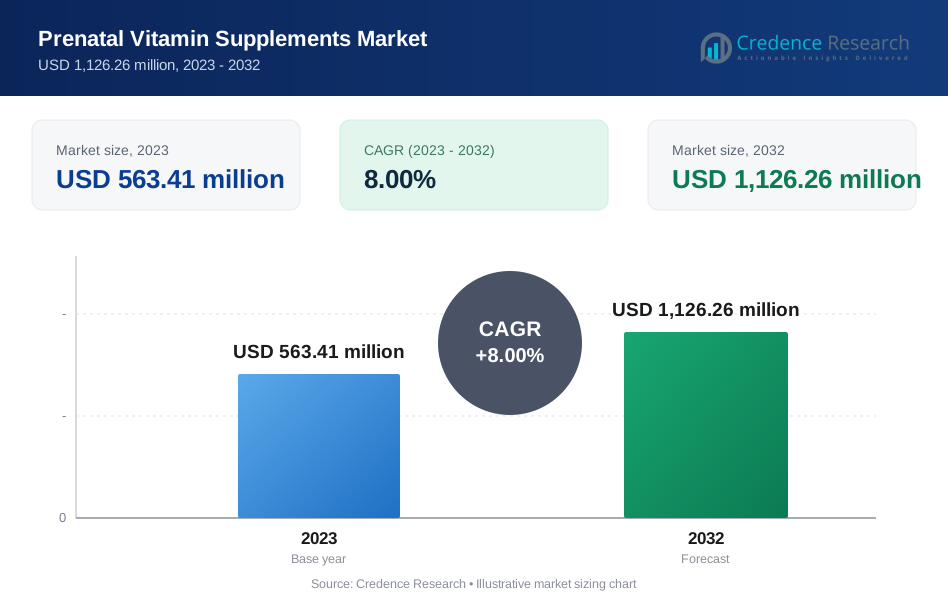
| Prenatal Vitamin Supplement Market Size 2023 | USD 563.41 Million |
| Prenatal Vitamin Supplement Market, CAGR | 8.00% |
| Prenatal Vitamin Supplement Market Size 2032 | USD 1,126.26 Million |
Market Overview
The Prenatal Vitamin Supplement Market is projected to grow from USD 563.41 million in 2023 to an estimated USD 1,126.26 million by 2032, registering a compound annual growth rate (CAGR) of 8.00% from 2024 to 2032. This significant growth can be attributed to rising awareness about maternal health, increasing birth rates in certain regions, and the growing trend of prenatal care among expecting mothers.
The market is primarily driven by the rising incidence of nutrient deficiencies in pregnant women and growing healthcare initiatives promoting prenatal health. Increasing awareness of the benefits of prenatal vitamins, such as preventing birth defects and supporting fetal development, has further boosted demand. Trends such as the growing preference for organic and natural supplements, along with advancements in supplement formulation, are shaping the market landscape.
Geographically, North America dominates the prenatal vitamin supplement market, followed by Europe and Asia Pacific. The high awareness of prenatal care, along with strong healthcare infrastructure in these regions, drives market growth. Key players in the market include Bayer AG, Nestlé, Abbott Laboratories, Church & Dwight Co., Inc., and The Procter & Gamble Company, who are continuously innovating to meet the evolving demands of expecting mothers worldwide.
Market Drivers
Rising Awareness of Maternal and Fetal Health
One of the primary drivers of the prenatal vitamin supplement market is the increasing awareness regarding maternal and fetal health. Over the past decade, various healthcare organizations, government bodies, and NGOs have initiated campaigns to educate women about the importance of prenatal care. These initiatives have focused on raising awareness about the benefits of consuming prenatal vitamins to prevent birth defects and ensure optimal fetal development. For instance, the White House Blueprint for Addressing the Maternal Health Crisis has made significant strides in improving maternal health for women across the United States. Folic acid, a key ingredient in prenatal vitamins, is known to significantly reduce the risk of neural tube defects in newborns. As more women become aware of these critical benefits, the demand for prenatal vitamin supplements is rising. In addition, the growth of digital platforms and the widespread use of the internet have empowered expecting mothers with access to vital information about prenatal care. Numerous websites, blogs, and social media channels are now dedicated to maternal health, further spreading awareness about the importance of prenatal nutrition. Healthcare professionals, including gynecologists and obstetricians, also recommend prenatal vitamins to their patients during routine checkups, which has become a standard practice worldwide. This increasing level of awareness has been a major catalyst for the growth of the prenatal vitamin supplement market.
Growing Incidence of Nutritional Deficiencies During Pregnancy
Nutritional deficiencies during pregnancy are becoming more prevalent, particularly in developing countries, where access to balanced diets may be limited due to socioeconomic factors. Even in developed regions, modern lifestyles have led to a rise in poor dietary habits, making it difficult for expecting mothers to obtain all the essential nutrients solely from their food intake. As a result, prenatal vitamin supplements have become a critical source of necessary vitamins and minerals such as iron, calcium, folic acid, and vitamin D, which are vital for both maternal health and fetal development. The growing prevalence of these nutritional deficiencies has propelled the demand for prenatal vitamins as a preventive measure. According to the World Health Organization (WHO), a significant percentage of pregnant women worldwide suffer from iron-deficiency anemia, which can lead to complications such as preterm birth and low birth weight. Prenatal supplements formulated with iron help mitigate these risks. Similarly, the need for vitamin D supplements has grown as more studies indicate the importance of vitamin D in preventing pregnancy-related complications, including preeclampsia. With the recognition of these deficiencies, the market for prenatal vitamins continues to expand, particularly in regions where dietary imbalances are common.
Advancements in Prenatal Vitamin Formulation and Delivery Methods
Innovation in the formulation and delivery methods of prenatal vitamins is another key driver of the market. Manufacturers are constantly striving to improve the efficacy, bioavailability, and convenience of their products to meet the evolving needs of expecting mothers. For instance, there has been a notable shift towards incorporating natural and organic ingredients into prenatal vitamins, reflecting the broader trend towards health-conscious consumerism. Many pregnant women are increasingly concerned about the quality and safety of the supplements they consume, leading to a growing preference for products that are free from synthetic additives, preservatives, and allergens. Additionally, advancements in delivery formats have contributed to the growing popularity of prenatal vitamins. Traditionally available in tablet or pill form, prenatal vitamins are now offered in a variety of formats, including gummies, soft gels, and powdered supplements, catering to women who may experience nausea or difficulty swallowing pills during pregnancy. These innovations in both formulation and delivery have made prenatal vitamins more accessible and appealing to a wider audience, thus driving market growth.
Increased Focus on Preventive Healthcare The global healthcare industry is witnessing a shift towards preventive healthcare, which has had a direct impact on the prenatal vitamin supplement market. As healthcare systems increasingly emphasize the importance of preventing diseases rather than merely treating them, prenatal vitamins are being recognized as an essential component of preventive care for expecting mothers. The proactive use of prenatal vitamins can help prevent a wide range of complications, including birth defects, maternal anemia, and preterm delivery, which not only ensures the health of the mother and child but also reduces the financial burden associated with medical interventions during and after pregnancy. This growing focus on preventive healthcare has also led to the rise of personalized nutrition, where prenatal vitamins are tailored to meet the specific needs of individual women based on their genetic makeup, lifestyle, and health conditions. With advancements in biotechnology and nutrigenomics, companies are now offering personalized prenatal vitamin formulations, ensuring that each woman receives the precise nutrients she requires during pregnancy. This trend towards customization in preventive care is expected to further fuel the demand for prenatal vitamin supplements. Moreover, healthcare professionals and governments are actively promoting prenatal vitamins as part of comprehensive maternal healthcare programs. Several governments have implemented policies that encourage the use of prenatal supplements, particularly folic acid, as a standard practice in prenatal care. For example, in many countries, healthcare providers distribute free prenatal vitamins to expecting mothers as part of their national healthcare schemes. These initiatives reinforce the critical role of prenatal vitamins in preventive healthcare and contribute to the expansion of the market.
Market Trends
Growing Demand for Organic and Natural Prenatal Supplements A significant trend shaping the prenatal vitamin supplement market is the increasing demand for organic and natural products. Expecting mothers are becoming more health-conscious and are prioritizing the consumption of supplements free from synthetic additives, artificial preservatives, and genetically modified organisms (GMOs). This shift is driven by concerns about potential side effects and long-term health impacts of chemical-based ingredients on both maternal and fetal health. As a result, many manufacturers are reformulating their prenatal supplements using plant-based ingredients, natural minerals, and vitamins derived from organic sources. For instance, the Good Trade editors have personally tested and researched the top clean prenatal vitamins, selecting the best organic, natural, and nontoxic formulations. Furthermore, the “clean label” movement has gained traction, where consumers are actively seeking transparent information regarding the sourcing and processing of ingredients in their prenatal supplements. This trend is particularly strong in developed markets such as North America and Europe, where organic and natural products are in high demand. The rise in organic prenatal supplements is also aligned with the broader trend towards sustainability, as many manufacturers now emphasize eco-friendly and ethical production practices, further appealing to the environmentally conscious consumer base.
Introduction of Personalized Prenatal Vitamins Another emerging trend in the prenatal vitamin supplement market is the rise of personalized nutrition. Advances in biotechnology and digital health tools have enabled companies to offer tailored prenatal vitamin solutions based on the specific needs of individual women. This trend is being fueled by the growing interest in personalized healthcare, where expecting mothers can receive customized supplements based on factors such as genetic makeup, dietary preferences, health conditions, and lifestyle choices. For instance, Ellement offers personalized prenatal supplements created for each mother, with custom-made daily packets tailored to specific nutritional needs. Companies are leveraging data-driven technologies to create personalized formulations that address specific nutrient deficiencies or health concerns unique to each pregnancy. This approach not only enhances the efficacy of prenatal vitamins but also helps women achieve optimal health outcomes during pregnancy. Personalized prenatal vitamins are particularly appealing to consumers who seek a more targeted and individualized approach to prenatal care, making this trend a significant growth driver for the market. As more companies adopt this personalized approach, the prenatal vitamin supplement market is expected to see continued innovation and differentiation in product offerings.
Market Restraints and Challenges
High Cost of Premium and Organic Supplements One of the primary restraints in the prenatal vitamin supplement market is the high cost associated with premium and organic products. As consumer demand for organic, natural, and personalized prenatal supplements grows, the cost of production has increased due to the use of high-quality, sustainably sourced ingredients and advanced formulation technologies. Organic certification, rigorous quality testing, and sustainable packaging further drive up the price of these products.. For many consumers, especially in developing regions, these higher costs make premium supplements less accessible. While developed markets may sustain this demand due to higher disposable incomes, cost-conscious consumers in emerging markets often turn to more affordable alternatives, limiting the growth potential of premium and organic prenatal supplements. This price-sensitive demographic poses a challenge for manufacturers looking to expand their reach globally while maintaining product quality and ethical production practices.
Limited Awareness in Developing Regions Another significant challenge facing the prenatal vitamin supplement market is the lack of awareness in developing regions regarding the importance of prenatal care and supplementation. In many low- and middle-income countries, access to healthcare information is limited, and cultural practices may not prioritize prenatal nutrition. This lack of awareness leads to lower adoption rates of prenatal vitamins, despite the higher prevalence of nutrient deficiencies and maternal health risks in these regions. For instance, a study highlighted that many low- and middle-income countries (LMICs) still struggle with limited access to diagnostic testing, which is crucial for managing diseases like malaria. Additionally, healthcare infrastructure in these areas may not adequately promote or provide access to prenatal supplements, further hindering market growth. Efforts to educate and raise awareness about the critical role of prenatal vitamins in preventing birth defects and ensuring maternal health have been slow to penetrate certain regions, creating a challenge for manufacturers aiming to broaden their market presence. Overcoming these challenges requires increased investment in public health campaigns and partnerships with healthcare providers to promote prenatal supplementation in underserved regions.
Market Segmentation Analysis
By Product
The prenatal vitamin supplement market is segmented by product type, including capsules/tablets, powder, gummies, liquid, and others. Capsules and tablets hold the largest market share due to their convenience, widespread availability, and established use as the most common form of supplementation. However, gummy prenatal vitamins have seen growing popularity, particularly among women who experience nausea or difficulty swallowing pills during pregnancy. Gummies offer a more palatable option and are increasingly formulated with essential nutrients. Liquid prenatal vitamins are also gaining traction, especially among consumers seeking alternative delivery methods for faster absorption. Powder forms, though less common, cater to individuals who prefer to mix their supplements with food or beverages.
By Nature
In terms of nature, the market is segmented into organic and conventional prenatal vitamin supplements. Conventional supplements continue to dominate the market due to their affordability and availability in a wide range of retail outlets. However, the organic segment is experiencing significant growth, driven by increased consumer demand for natural and chemical-free products. Health-conscious expecting mothers are more inclined to choose organic supplements that are free from synthetic additives, artificial preservatives, and genetically modified organisms (GMOs). This segment's growth is further supported by the rising trend of clean-label products and sustainability-conscious consumers, particularly in developed markets like North America and Europe.
Segments
Based on product
- Capsules/Tablets
- Powder
- Gummy
- Liquid
- Others
Based on nature
- Organic
- Conventional
Based on distribution channel
- Supermarkets & Hypermarkets
- Pharmacy & Drug Stores
- Online
- Others
Based on region
- North America
- U.S.
- Canada
- Mexico
- Europe
- Germany
- France
- U.K.
- Italy
- Spain
- Rest of Europe
- Asia Pacific
- China
- Japan
- India
- South Korea
- South-east Asia
- Rest of Asia Pacific
- Latin America
- Brazil
- Argentina
- Rest of Latin America
- Middle East & Africa
- GCC Countries
- South Africa
- Rest of the Middle East and Africa
Regional Analysis
North America (35%):
North America holds the largest share of the prenatal vitamin supplement market, accounting for approximately 35% of the global market in 2023. The region’s dominance is attributed to the high awareness of prenatal care, well-established healthcare systems, and widespread access to prenatal supplements. The United States and Canada are the primary contributors to market growth, with a significant portion of the population prioritizing maternal health and nutrition. Additionally, the increasing adoption of organic and natural prenatal vitamins in North America is driving market expansion. Government initiatives promoting prenatal health and the high rate of recommendations from healthcare professionals further support market growth in this region.
Europe (28%):
Europe follows North America, holding a market share of around 28%. Countries such as the United Kingdom, Germany, and France lead the region in terms of prenatal vitamin consumption. The demand for prenatal vitamins in Europe is driven by growing consumer awareness of the importance of maternal nutrition, along with a rising preference for organic and clean-label supplements. The region has also seen an increase in product innovation, with manufacturers offering various forms of prenatal vitamins such as gummies and liquids to meet consumer preferences. Europe’s robust healthcare infrastructure and government support for prenatal care further contribute to market growth.
Key players
- Country Life Vitamins
- Garden of Life
- MegaFood
- Biotics Research Corporation
- Renew Life Formulas, LLC
- Church & Dwight Co., Inc.
- Avion Pharmaceuticals
- New Chapter
- Abbott
Competitive Analysis
The prenatal vitamin supplement market is highly competitive, with key players focusing on product innovation, organic offerings, and expanding their global footprint. Companies such as Abbott and Church & Dwight Co., Inc. hold strong market positions due to their extensive product portfolios and established brand presence. Garden of Life, MegaFood, and New Chapter differentiate themselves by offering organic and natural prenatal supplements, catering to the growing demand for clean-label products. Avion Pharmaceuticals and Renew Life Formulas, LLC specialize in tailored prenatal solutions, offering products that address specific nutritional needs during pregnancy. Country Life Vitamins and Biotics Research Corporation emphasize high-quality formulations and target health-conscious consumers. The competition in this market is driven by a combination of product quality, brand trust, and the ability to meet evolving consumer preferences, particularly in terms of natural and organic options.
Recent Developments
- In October 2023, Country Life Vitamins released Lemme Mama, a prenatal vitamin that packs over 25 nutrients to support mom’s health and baby’s development from preconception to postpartum.
- In July 2023, Garden of Life introduced the Vitamin Code Raw Prenatal Capsules, a comprehensive whole food multi-nutrient formula specifically formulated for preconception, pregnancy, and lactation.
- In April 2024, Renew Life Formulas launched Ovaterra, one of the only Advanced Prenatal vitamins available in the U.S. that meets all of the key nutrients a woman needs during pregnancy.
- In July 2023, New Chapter introduced a new line of prenatal and postnatal vitamins, including the Advanced Perfect Prenatal multivitamin, which includes 23 vitamins and minerals made with organic vegetables and herbs.
- In June 2024, Abbott partnered with the National Association of Community Health Centers to increase access to healthy foods and promote positive health outcomes, addressing malnutrition and its impact on chronic diseases.
Market Concentration and Characteristics
The prenatal vitamin supplement market is moderately fragmented, with a mix of established pharmaceutical giants and specialized health and wellness companies. Key players such as Abbott, Church & Dwight Co., Inc., and Avion Pharmaceuticals hold a significant share due to their strong distribution networks, extensive product portfolios, and brand recognition. However, the market is witnessing increasing competition from emerging brands that focus on organic, natural, and clean-label supplements, catering to the rising demand for healthier and more transparent products. The market's characteristics are shaped by ongoing innovation in formulation and delivery methods, including the development of gummies, liquids, and personalized supplements, which are tailored to meet the specific needs of expecting mothers. Additionally, strong consumer awareness and healthcare professional recommendations contribute to the market's growth, particularly in developed regions like North America and Europe.
Report Coverage
The research report offers an in-depth analysis based on product, nature, distribution channel and Region. It details leading market players, providing an overview of their business, product offerings, investments, revenue streams, and key applications. Additionally, the report includes insights into the competitive environment, SWOT analysis, current market trends, as well as the primary drivers and constraints. Furthermore, it discusses various factors that have driven market expansion in recent years. The report also explores market dynamics, regulatory scenarios, and technological advancements that are shaping the industry. It assesses the impact of external factors and global economic changes on market growth. Lastly, it provides strategic recommendations for new entrants and established companies to navigate the complexities of the market.
Future Outlook
- The prenatal vitamin supplement market is expected to witness sustained growth, driven by increasing awareness of maternal health and the critical role of prenatal nutrition in preventing birth defects and supporting fetal development.
- Consumers’ growing preference for organic and natural prenatal supplements will continue to fuel demand for products free from synthetic additives, driving innovation in clean-label and eco-friendly formulations.
- With the rapid growth of e-commerce, online platforms will play an increasingly important role in distributing prenatal vitamins, providing consumers with convenience, detailed product information, and easy access to a wide range of options.
- The market will see continued innovation in supplement delivery formats, including gummies, powders, and liquids, catering to diverse consumer preferences and making supplements more accessible to pregnant women with specific needs.
- Personalized prenatal vitamins, tailored to meet the specific health needs of individual women based on genetic, lifestyle, and health factors, will see increased demand as consumers seek more customized healthcare solutions.
- The market is poised for significant expansion in developing regions, particularly in Asia Pacific, as improving healthcare infrastructure and rising awareness of prenatal care boost demand for supplements.
- Prenatal vitamins will continue to be a key component of preventive healthcare, with governments and healthcare organizations promoting their use to reduce maternal health risks and improve pregnancy outcomes.
- Key players in the market will increasingly engage in mergers, acquisitions, and strategic partnerships to expand their market presence, enhance product portfolios, and enter new geographical markets.
- As the prenatal vitamin market grows, regulatory bodies are likely to impose stricter guidelines on supplement quality, labeling, and safety, pushing manufacturers to ensure high product standards.
- Sustainability will become a central focus, with more manufacturers adopting environmentally friendly practices in sourcing, packaging, and production to meet the demands of eco-conscious consumers in the prenatal supplement market.
Request a Free Sample
Fill in your details and we'll send you a free sample report.
- Sample data tables & charts
- Research methodology
Need a Custom Version of This Report?
Tailor the scope, geography, or segments to your exact requirements.
- Custom geography or segment scope
- Direct access to our analyst team
Frequently Asked Questions
What is the market size of the prenatal vitamin supplement market in 2023, and what is it projected to be by 2032?
What are the key factors driving the growth of the prenatal vitamin supplement market?
What types of prenatal vitamin supplements are available on the market?
Why is there a growing demand for organic prenatal vitamin supplements?
Which regions dominate the prenatal vitamin supplement market?
Table of Content
Chapter 1. Report Introduction
- 1.1 Report Description & Purpose
- 1.1.1 Report Title & Market Definition
- 1.1.2 Unique Selling Propositions (USP) & Key Differentiators
- 1.1.3 Value Proposition for Stakeholders
- 1.2 Research Objectives
- 1.2.1 Market Sizing Objectives (Volume & Revenue)
- 1.2.2 Segmentation Objectives
- 1.2.3 Competitive Intelligence Objectives
- 1.2.4 Forecast & Scenario Objectives
- 1.3 Report Scope
- 1.3.1 Prenatal Vitamin Supplements Scope – Types & Subtypes Covered
- 1.3.2 Geographic Scope – Regions & Countries Covered
- 1.3.3 Historical Period, Base Year & Forecast Period (2023; forecast to 2032)
- 1.3.4 Inclusions & Exclusions
- 1.4 HS Code & Classification Framework
- 1.5 Currency, Units & Pricing Basis
- 1.6 Target Stakeholders
- 1.7 Limitations & Assumptions
Chapter 2. Executive Summary
- 2.1 Global Prenatal Vitamin Supplements Market Snapshot
- 2.1.1 Market Size – Historical (2023) & Forecast (2023-2032) (2023: USD 563.41 million → 2032: USD 1,126.26 million)
- 2.1.2 Volume & Revenue – Global Totals
- 2.1.3 Key Market Highlights – Top Five Facts
- 2.2 Prenatal Vitamin Supplements Market Segmentation Snapshot
- 2.2.1 Market Split by Region – 2023 vs. 2032
- 2.3 Competitive Snapshot
- 2.3.1 Top 10 Players by Revenue Share – 2023
- 2.3.2 Top 10 Players by Volume Share – 2023
- 2.3.3 Recent Strategic Developments (18-Month Summary)
- 2.4 Key Investment Highlights & Strategic Conclusions
Chapter 3. Prenatal Vitamin Supplements Market Dynamics & Industry Analysis
- 3.1 Market Overview & Context
- 3.1.1 Prenatal Vitamin Supplements Market Position in the Broader Automotive Value Chain
- 3.1.2 OEM vs. Replacement Market Dynamics
- 3.1.3 Market Maturity & Development Stage by Region
- 3.2 Prenatal Vitamin Supplements Market Drivers
- 3.3 Prenatal Vitamin Supplements Market Restraints & Challenges
- 3.4 Prenatal Vitamin Supplements Market Opportunities
- 3.5 Porter's Five Forces Analysis
- 3.5.1 Threat of New Entrants
- 3.5.2 Bargaining Power of Suppliers
- 3.5.3 Bargaining Power of Buyers
- 3.5.4 Threat of Substitutes
- 3.5.5 Competitive Rivalry – Intensity Assessment
- 3.6 Prenatal Vitamin Supplements Value Chain Analysis
- 3.6.1 Upstream – Raw Material/Input Suppliers
- 3.6.1.1 Raw Material/Input 1
- 3.6.1.2 Raw Material/Input 2
- 3.6.1.3 Raw Material/Input 3
- 3.6.2 Midstream – Production/Manufacturing/Service Delivery
- 3.6.2.1 Production/Process Overview
- 3.6.2.2 Key Facility Locations & Capacity by Manufacturer
- 3.6.3 Downstream – Distribution & End Consumer
- 3.6.3.1 Primary Channel – B2B/OEM
- 3.6.3.2 Secondary Channels – Dealer, Retail, Online, Direct
- 3.6.4 Value Chain Profitability Analysis
- 3.6.1 Upstream – Raw Material/Input Suppliers
- 3.7 PESTEL Analysis
- 3.7.1 Political Factors
- 3.7.2 Economic Factors
- 3.7.3 Social Factors
- 3.7.4 Technological Factors
- 3.7.5 Environmental Factors
- 3.7.6 Legal Factors
- 3.8 Prenatal Vitamin Supplements Supply Chain Analysis
- 3.8.1 Raw Material/Input Supply Risk Assessment
- 3.8.2 Manufacturing Concentration Risk (Geographic Exposure)
- 3.8.3 Trade Disruption Impact Analysis
- 3.9 Regulatory & Policy Landscape
Note: The regulatory and policy landscape section covers regulations based on their applicability to the market, Prenatal Vitamin Supplements category, geography, and scope of the study. Only regulatory frameworks with a material impact on operations, compliance, trade, sustainability, or market access are analyzed in detail.
Chapter 4. Key Investment Pockets & Opportunity Analysis
- 4.1 Prenatal Vitamin Supplements Market Attractiveness Analysis
- 4.1.1 By Region – Investment Attractiveness Matrix (Volume × CAGR)
- 4.2 Absolute Revenue Growth Opportunity
- 4.2.1 By Region – Absolute USD Growth Through 2032
- 4.3 Incremental Volume Opportunity
- 4.3.1 By Region – Incremental Volume Through 2032
- 4.3.2 Segment – Incremental Volume
- 4.4 Emerging Submarket Opportunity Deep Dive (Subject to Applicability)
- 4.5 Emerging Market Opportunity Scorecards
- 4.5.1 United States
- 4.5.2 Europe
- 4.5.3 Asia
- 4.5.4 Middle East & Africa
Note: Emerging Market Opportunity Scorecards will be included based on relevance and strategic importance. Regions listed are indicative and may vary depending on data availability and market dynamics.
Chapter 5. Prenatal Vitamin Supplements Import-Export Analysis & Trade Flows
- 5.1 Global Trade Overview
- 5.1.1 Global Export Value by Country (2023)
- 5.1.2 Global Export Volume by Country (2023)
- 5.1.3 Global Import Value by Country (2023)
- 5.1.4 Global Import Volume by Country (2023)
- 5.1.5 Net Trade Balance by Country (2023)
- 5.2 Export Analysis – Segment
- 5.2.1 Type 1 (HS Code)
- 5.2.2 Type 2 (HS Code)
- 5.2.3 Type 3 (HS Code)
- 5.2.4 Type 4 (HS Code)
- 5.2.5 Type 5 (HS Code)
- 5.3 Import Analysis – Segment
- 5.3.1 Type 1 (HS Code)
- 5.3.2 Type 2 (HS Code)
- 5.3.3 Type 3 (HS Code)
- 5.3.4 Type 4 (HS Code)
- 5.3.5 Type 5 (HS Code)
- 5.4 Average Unit Trade Prices
- 5.4.1 Average Export Price – Segment & Country
- 5.4.2 Average Import Price – Segment & Source Country
- 5.4.3 Price Trends (2023)
- 5.5 Key Trade Route Analysis
- 5.5.1 Trade Route 1
- 5.5.2 Trade Route 2
- 5.5.3 Trade Route 3
- 5.5.4 Trade Route 4
- 5.5.5 Trade Route 5
- 5.6 Trade Policy Impact Assessment
- 5.6.1 US Anti-Dumping & Section 301 Tariffs
- 5.6.2 EU Customs Union Impact
- 5.6.3 Major Free Trade Agreements
- 5.6.4 USMCA Rules of Origin
Note: Trade policy analysis will be included only where relevant to the Prenatal Vitamin Supplements market.
Chapter 6. Competitive Landscape & Company Benchmarking
- 6.1 Prenatal Vitamin Supplements Market Concentration & Structure
- 6.1.1 Herfindahl-Hirschman Index (HHI) – vs. 2023
- 6.1.2 Tier 1, Tier 2 & Tier 3 Market Structure
- 6.1.3 Global, Regional & Local Player Dynamics
- 6.2 Prenatal Vitamin Supplements Market Share Analysis – 2023
- 6.2.1 Global Revenue Share by Company
- 6.2.2 Global Volume Share by Company
- 6.2.3 Regional Revenue Share
- 6.2.4 Market Share Evolution ( vs. 2023)
- 6.2.5 OEM Segment Share by Company
- 6.2.6 Replacement Segment Share by Company
- 6.3 Production/Delivery Capacity & Facility Analysis
- 6.3.1 Global Installed Capacity
- 6.3.2 Capacity Utilization Rates
- 6.3.3 Production/Output Volume
- 6.3.4 Facility Locations & Capacity Map
- 6.3.5 Planned Capacity Additions
- 6.4 Prenatal Vitamin Supplements Competitive Benchmarking Matrix
- 6.4.1 Revenue, Volume, CAGR & Profitability Comparison
- 6.4.2 Channel Revenue Mix
- 6.4.3 Geographic Revenue Exposure
- 6.4.4 R&D Intensity
- 6.4.5 Sustainability Maturity
- 6.5 Strategic Developments in Prenatal Vitamin Supplements (Last 24 Months)
- 6.5.1 Mergers, Acquisitions & Divestments
- 6.5.2 New Prenatal Vitamin Supplements Launches
- 6.5.3 Facility Expansions
- 6.5.4 Strategic Alliances, Joint Ventures & Partnerships
- 6.5.5 Distribution Expansion & Market Entry
- 6.5.6 Sustainability & ESG Initiatives
- 6.6 Competitive Strategy Mapping
- 6.6.1 Leader, Challenger, Follower & Niche Classification
- 6.6.2 Pricing Strategy Comparison
- 6.6.3 Channel Strategy Matrix
Note: Strategic developments are included based on their materiality and the availability of reliable information.
Chapter 7. Global Prenatal Vitamin Supplements Market – By Distribution Channel
- 7.1 Segment Overview
- 7.1.1 Volume & Revenue Split by Channel (2023 & 2032)
- 7.1.2 Channel Mix Evolution (2023-2032)
Chapter 8. Regional Market Analysis – Global Overview
- 8.1 Global Regional Overview
- 8.1.1 Regional Volume Share
- 8.1.2 Regional Revenue Share
- 8.1.3 Regional Volume by Region
- 8.1.4 Regional Revenue by Region
- 8.1.5 Regional Forecast Through 2032
- 8.2 Cross-Regional Segment Analysis
- 8.2.1 By Distribution Channel
- 8.2.2 By Brand/Price Tier
Chapter 9. North America Prenatal Vitamin Supplements Market
- 9.1 United States
- 9.2 Canada
- 9.3 Mexico
Chapter 10. Europe Prenatal Vitamin Supplements Market
- 10.1 Germany
- 10.2 France
- 10.3 Italy
- 10.4 United Kingdom
- 10.5 Spain
- 10.6 Poland
- 10.7 Russia
- 10.8 Netherlands
- 10.9 Belgium
- 10.10 Sweden
- 10.11 Denmark
- 10.12 Norway
- 10.13 Rest of Europe
Chapter 11. Asia Pacific Prenatal Vitamin Supplements Market
- 11.1 China
- 11.2 India
- 11.3 Japan
- 11.4 South Korea
- 11.5 Thailand
- 11.6 Indonesia
- 11.7 Vietnam
- 11.8 Malaysia
- 11.9 Australia
- 11.10 Rest of Asia Pacific
Chapter 12. Latin America Prenatal Vitamin Supplements Market
- 12.1 Brazil
- 12.2 Argentina
- 12.3 Colombia
- 12.4 Chile
- 12.5 Rest of Latin America
Chapter 13. Middle East Prenatal Vitamin Supplements Market
- 13.1 Saudi Arabia
- 13.2 United Arab Emirates
- 13.3 Turkey
- 13.4 Israel
- 13.5 Iran
- 13.6 Rest of the Middle East
Chapter 14. Africa Prenatal Vitamin Supplements Market
- 14.1 South Africa
- 14.2 Egypt
- 14.3 Nigeria
- 14.4 Morocco
- 14.5 Rest of Africa
Chapter 15. Prenatal Vitamin Supplements Company Profiles
- 15.1 [Company 01]
- 15.1.1 Company Overview
- 15.1.2 Key Management Personnel
- 15.1.3 Products & Services Portfolio
- 15.1.4 Financial Performance
- 15.1.5 Key Market Focus & Geographic Presence
- 15.1.6 Recent Developments & Strategic Initiatives
Note: The company profile list is preliminary and may change based on research findings, market developments, data availability, and client requirements.
Chapter 16. Appendices
- Appendix A – List of Abbreviations & Acronyms
- Appendix B – Industry Classification Code Reference – Full Series
- Appendix C – Production & Capacity Data Tables
- Appendix D – End-Use & Demand Base Tables
- Appendix E – Consumption & Replacement Rate Assumptions
- Appendix F – ASP Reference Tables
- Appendix G – Manufacturing & Facility Database
- Appendix H – Import-Export Data Tables
- Appendix I – Regulatory Summary Tables
- Appendix J – Primary Research Participant List (Anonymized)
- Appendix K – Primary Research Questionnaire Framework
- Appendix L – Data Sources & Bibliography
- Appendix M – Market Size Divergence & Source Comparison
Chapter 17. Research Methodology
- 17.1 Research Framework & Philosophy
- 17.2 Secondary Research – Sources, Hierarchy & Data Extraction
- 17.3 Data Modeling – Bottom-Up & Top-Down Market Sizing
- 17.4 Primary Research – Stakeholder Framework, LOI & Sample Sizes
- 17.5 Forecast Methodology – Regression, Scenario & Sensitivity Analysis
- 17.6 Quality Control – Four-Layer Validation Framework
- 17.7 Limitations & Standard Assumptions
- 17.8 Disclaimer
