
Renal Biomarker Market Overview:
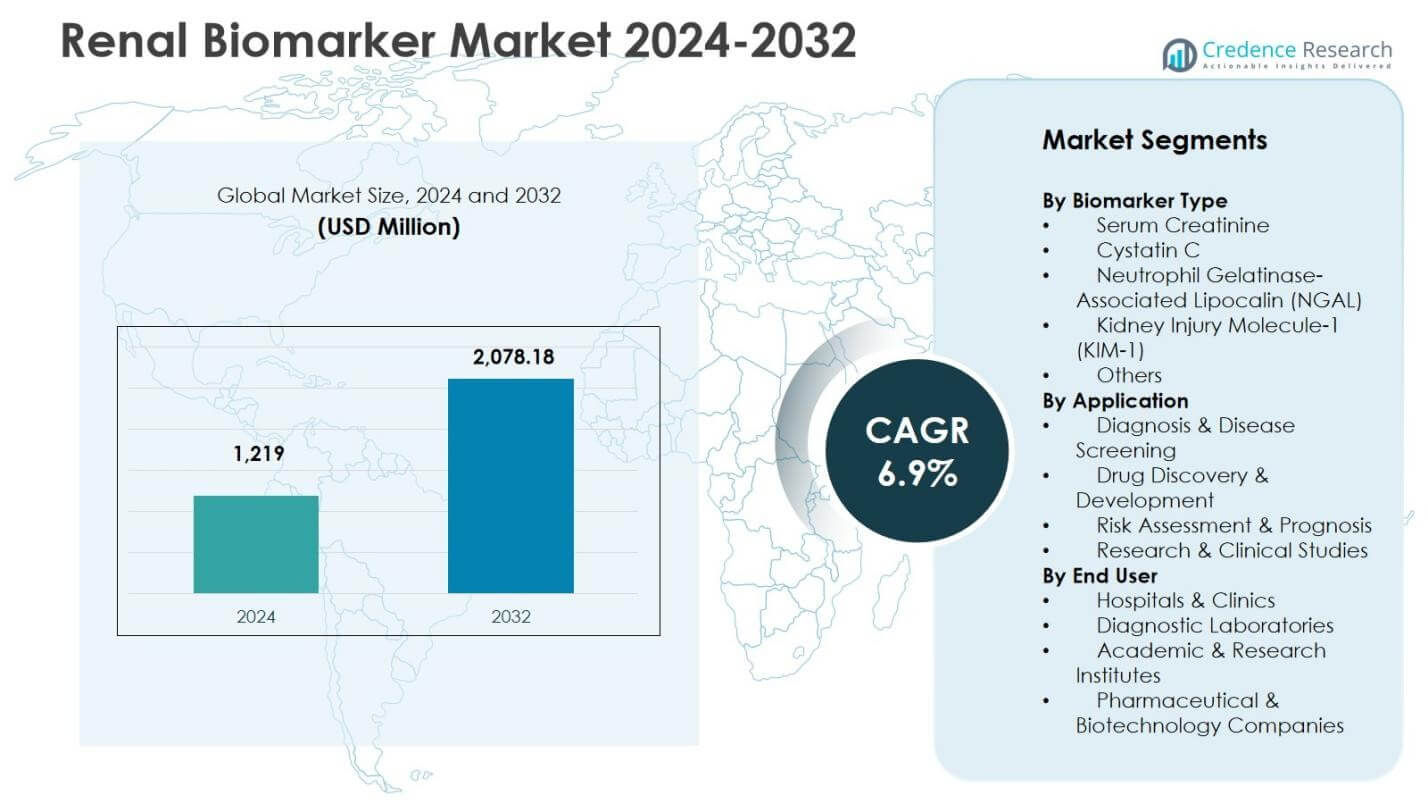
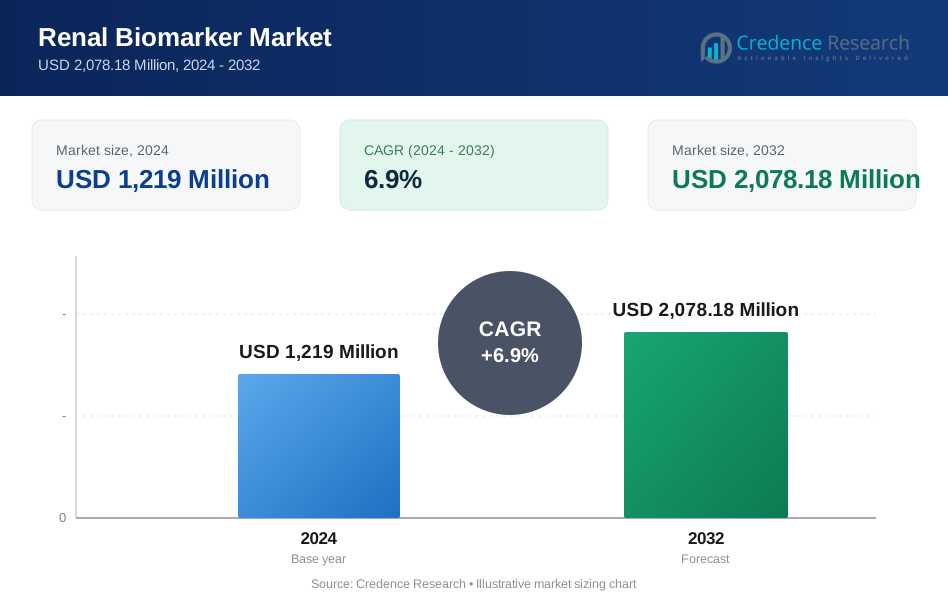
Renal Biomarker Market size was valued USD 1,219 Million in 2024 and is anticipated to reach USD 2,078.18 Million by 2032, at a CAGR of 6.9% during the forecast period.
| REPORT ATTRIBUTE | DETAILS |
|---|---|
| Historical Period | 2020-2023 |
| Base Year | 2024 |
| Forecast Period | 2025-2032 |
| Renal Biomarker Market Size 2024 | USD 1,219 million |
| Renal Biomarker Market, CAGR | 6.9% |
| Renal Biomarker Market Size 2032 | USD 2,078.18 million |
Renal Biomarker Market Insights
- Market overview highlights strong demand driven by rising CKD and AKI prevalence, increasing diagnostic adoption in hospitals and laboratories, and growing use of biomarker-based screening in nephrology care and clinical monitoring.
- Markets driver includes technological advancements in high-sensitivity assays, rising integration of biomarkers in personalized medicine, and expanding applications in drug development, toxicity assessment, and early disease risk evaluation.
- Markets trends indicate a shift toward multi-parameter biomarker panels and assay automation, with key players including Abbott Laboratories, Roche Diagnostics, Siemens Healthineers, Thermo Fisher Scientific, and Beckman Coulter focusing on innovation and portfolio expansion.
- Regional analysis shows North America leading the Renal Biomarker Market with 36.8% share in 2024, while the Serum Creatinine segment accounted for 38.5% share, supported by strong diagnostic infrastructure and higher screening volumes across key healthcare markets.
Renal Biomarker Market Segmentation Analysis:
By Biomarker Type:
The Renal Biomarker Market by biomarker type remains led by Serum Creatinine, which accounted for 38.5% market share in 2024, owing to its widespread clinical adoption as a primary indicator of kidney function and its routine use in chronic kidney disease monitoring and screening. Growing disease prevalence, cost-effective testing methods, and strong integration into diagnostic protocols continue to drive demand for this sub-segment. Cystatin C and NGAL are gaining traction due to their higher sensitivity for early renal impairment, while KIM-1 and other biomarkers expand adoption in precision diagnostics and research applications.
- For instance, Roche Diagnostics offers the CREJ2 Creatinine Jaffé Gen.2 assay for quantitative determination of creatinine in human serum, plasma, and urine on cobas c systems, supporting routine kidney function assessment in clinical labs.
By Application:
In terms of application, Diagnosis and Disease Screening dominated the Renal Biomarker Market with a 44.2% market share in 2024, supported by increasing CKD and AKI incidence, rising patient screening volumes, and the integration of biomarkers into routine nephrology workflows. Healthcare providers increasingly rely on biomarker-based assessments for early detection, staging, and prognosis, which strengthens the segment’s leadership. Drug discovery and development continues to expand due to biomarker-guided toxicity studies, while risk assessment, prognosis, and clinical research applications gain momentum with growing emphasis on personalized and evidence-based renal care.
- For instance, BioPorto's ProNephro AKI (NGAL) test, FDA-cleared for pediatric use (ages 3 months to 21 years), quantifies neutrophil gelatinase-associated lipocalin from 3 µL urine in about 10 minutes on Roche's cobas c 501 analyzer to assess AKI risk in ICU patients within 48-72 hours.
By End User:
The Hospitals and Clinics segment held the largest share of the Renal Biomarker Market at 41.7% in 2024, driven by high patient inflow, expansion of hospital-based diagnostic networks, and adoption of biomarker-supported nephrology testing in inpatient and outpatient settings. Strong integration of renal diagnostics into clinical decision support and chronic disease management programs further reinforces segment leadership. Diagnostic laboratories continue to grow due to increasing outsourced testing volumes, while academic and research institutes and pharmaceutical and biotechnology companies boost adoption through translational research, biomarker validation studies, and drug development initiatives.
Key Growth Drivers
Rising Burden of Chronic Kidney Disease and Acute Kidney Injury
The Renal Biomarker Market grows significantly due to the increasing global prevalence of chronic kidney disease (CKD) and acute kidney injury (AKI), driven by aging populations, diabetes, hypertension, and lifestyle-related disorders. Healthcare systems increasingly adopt biomarker-based diagnostic approaches to enable early detection, risk stratification, and disease monitoring, strengthening clinical decision-making and patient outcomes. The expanding use of renal biomarkers in primary care and nephrology settings, along with supportive government initiatives for CKD screening programs, further accelerates adoption. Growing awareness of renal health and the need for timely therapeutic intervention reinforces strong market demand.
- For instance, Randox offers a multiplex urine test on the Evidence Investigator analyzer, simultaneously detecting NGAL, Cystatin C, Clusterin, and KIM-1 for early AKI identification and drug toxicity monitoring.
Advancements in Diagnostic Technologies and Precision Medicine
Technological innovation plays a critical role in driving the Renal Biomarker Market, as next-generation immunoassays, multiplex testing platforms, and high-sensitivity detection technologies enhance diagnostic accuracy and turnaround time. The shift toward precision medicine supports the integration of biomarker-based tools in personalized treatment pathways, improving prognosis assessment and therapeutic response monitoring. Pharmaceutical and biotechnology companies increasingly incorporate renal biomarkers into clinical trials and toxicity studies, strengthening their role in drug development. Continuous R&D investments, expanding validation studies, and greater availability of automated laboratory systems further stimulate market growth across clinical and research environments.
- For instance, BioPorto Diagnostics launched ProNephro AKI (NGAL), an FDA-cleared immunoassay measuring neutrophil gelatinase-associated lipocalin in 3 µL urine samples.
Expansion of Point-of-Care Testing and Diagnostic Accessibility
The growing adoption of point-of-care renal biomarker testing contributes strongly to market expansion by improving accessibility in emergency care, critical care units, and remote healthcare settings. These solutions enable rapid screening and timely clinical intervention for high-risk patients with suspected renal dysfunction. Increasing demand for decentralized diagnostics, combined with the rising penetration of portable analyzers and microfluidic-based kits, supports wider adoption across developing healthcare markets. The emphasis on cost-efficient, time-saving diagnostic workflows and improved patient management pathways continues to strengthen the role of point-of-care biomarker testing in renal care delivery.
Key Trends & Opportunities
Integration of Biomarkers into Multi-Parameter Diagnostic Panels
A major trend shaping the Renal Biomarker Market is the integration of renal biomarkers into multi-parameter diagnostic panels that combine kidney function indicators with metabolic, inflammatory, and cardiovascular markers. This approach supports comprehensive clinical assessment, enhances prognostic accuracy, and improves early disease detection by correlating multi-system health parameters. The opportunity strengthens further as healthcare providers adopt automated platforms capable of processing large test volumes in centralized laboratories. Growing use of biomarker panels in clinical research, population health screening, and disease risk profiling creates new revenue streams for diagnostic manufacturers and research organizations.
- For instance, Beckman Coulter partnered with SphingoTec in October 2024 to develop a fully automated penKid assay for their Access Family immunoassay analyzers.
Increasing Collaboration Between Healthcare Institutions and Research Organizations
Strategic collaboration among hospitals, academic institutions, diagnostic companies, and pharmaceutical firms represents a key opportunity in the Renal Biomarker Market. Partnerships accelerate biomarker discovery, validation, and clinical translation, leading to improved testing protocols and regulatory approvals. Joint research initiatives support the development of novel biomarkers for early-stage kidney injury and treatment monitoring. The growing focus on real-world evidence studies, biobank research programs, and data-driven clinical modeling enhances innovation potential. These collaborations also expand market reach by enabling technology transfer, co-development of testing platforms, and broader adoption across clinical and research ecosystems.
- For instance, AstraZeneca partnered with RenalytixAI and Mount Sinai Health System to leverage the KidneyIntelX AI-enabled diagnostic platform. This collaboration evaluates patient risk scores from blood-based biomarkers to enhance physician uptake and adherence to CKD treatments, including potassium-binding agents for hyperkalemia patients.
Key Challenges
High Testing Costs and Limited Access in Low-Resource Healthcare Settings
Despite strong clinical benefits, the Renal Biomarker Market faces challenges associated with high testing costs, reimbursement limitations, and restricted availability in low- and middle-income regions. Advanced biomarker assays and specialized diagnostic platforms often require significant infrastructure investment, limiting adoption in smaller laboratories and rural healthcare environments. Inconsistent coverage policies and variations in diagnostic expenditure across healthcare systems further constrain clinical uptake. These barriers can delay early diagnosis and disease monitoring, reducing the potential impact of biomarker-based screening initiatives and challenging wider market penetration in cost-sensitive regions.
Regulatory Complexity and Standardization Gaps in Biomarker Validation
The market also encounters challenges related to regulatory frameworks, assay standardization, and clinical validation requirements. Differences in testing protocols, sample handling methods, and reference ranges across laboratories create variability in diagnostic outcomes, affecting consistency and reliability. Regulatory approval for novel biomarkers requires extensive clinical evidence, long validation cycles, and high development costs, which may slow commercialization and product adoption. Limited global harmonization in diagnostic standards further complicates biomarker integration into routine clinical practice, emphasizing the need for coordinated regulatory alignment and improved benchmarking across healthcare systems.
Regional Analysis
North America
North America held the largest share of the Renal Biomarker Market, accounting for 36.8% market share in 2024, driven by the high prevalence of CKD and AKI, strong adoption of advanced diagnostic technologies, and well-established healthcare infrastructure. Extensive insurance coverage for renal testing, expanding clinical research programs, and strong participation of leading diagnostic manufacturers further strengthen market growth. The United States remains the primary contributor due to high testing volumes and the integration of biomarker-based screening into nephrology practice and hospital workflows, while Canada benefits from coordinated government initiatives supporting early kidney disease detection.
Europe Europe captured a significant position in the Renal Biomarker Market with 28.4% market share in 2024, supported by rising chronic disease burden, rapidly aging populations, and increased emphasis on preventive renal health screening across public healthcare systems. Strong investments in clinical research, collaborative academic–industry biomarker validation programs, and growing integration of laboratory automation technologies enhance testing accuracy and accessibility. Countries such as Germany, the United Kingdom, and France drive market expansion through high diagnostic adoption in hospitals and specialty centers, while Eastern European regions experience gradual growth with improved laboratory infrastructure and expanding nephrology care services.
Asia-Pacific
Asia-Pacific emerged as the fastest-growing region in the Renal Biomarker Market and accounted for 22.6% market share in 2024, fueled by increasing CKD incidence, expanding urban populations, and rising awareness of early kidney disease screening across developing healthcare systems. Rapid healthcare infrastructure modernization, growth in private diagnostic laboratory networks, and increasing adoption of biomarker-based testing in tertiary hospitals significantly strengthen market penetration. China, India, Japan, and South Korea lead regional demand due to growing patient volumes and government-supported chronic disease management programs, while technological advancements and cost-effective diagnostic solutions further accelerate regional market development.
Latin America
Latin America accounted for 7.4% market share in the Renal Biomarker Market in 2024, supported by increasing diagnosis of diabetes- and hypertension-related kidney disorders, improving access to clinical laboratory services, and expanding investment in hospital diagnostics. Brazil and Mexico represent the leading contributors due to higher healthcare expenditure and growing adoption of biomarker-based screening in urban medical centers. Rising emphasis on early detection programs, gradual expansion of private diagnostic chains, and strengthening collaborations with international research and diagnostics companies contribute to market growth, although variability in reimbursement structures continues to influence adoption trends across the region.
Middle East & Africa
The Middle East and Africa region held 4.8% market share in the Renal Biomarker Market in 2024, driven by increasing incidence of kidney complications associated with diabetes, cardiovascular disorders, and lifestyle-related risk factors. GCC countries lead demand due to growing investments in specialized hospital networks, advanced laboratory infrastructure, and adoption of biomarker-enabled renal screening programs. In Africa, gradual improvements in diagnostic capacity, awareness initiatives, and the expansion of urban healthcare facilities support steady market expansion, although limited testing access and economic disparities across public health systems continue to present structural challenges for widespread biomarker adoption.
Renal Biomarker Market Segmentations:
By Biomarker Type
- Serum Creatinine
- Cystatin C
- Neutrophil Gelatinase-Associated Lipocalin (NGAL)
- Kidney Injury Molecule-1 (KIM-1)
- Others
By Application
- Diagnosis & Disease Screening
- Drug Discovery & Development
- Risk Assessment & Prognosis
- Research & Clinical Studies
By End User
- Hospitals & Clinics
- Diagnostic Laboratories
- Academic & Research Institutes
- Pharmaceutical & Biotechnology Companies
By Geography
- North America
- U.S.
- Canada
- Mexico
- Europe
- Germany
- France
- U.K.
- Italy
- Spain
- Rest of Europe
- Asia Pacific
- China
- Japan
- India
- South Korea
- South-east Asia
- Rest of Asia Pacific
- Latin America
- Brazil
- Argentina
- Rest of Latin America
- Middle East & Africa
- GCC Countries
- South Africa
- Rest of the Middle East and Africa
Competitive Landscape
The Renal Biomarker Market features the presence of leading companies such as Abbott Laboratories, Roche Diagnostics, Siemens Healthineers, Thermo Fisher Scientific, Beckman Coulter (Danaher Corporation), Bio-Rad Laboratories, Quest Diagnostics, Randox Laboratories, bioMérieux SA, and Abcam plc. These players focus on expanding biomarker portfolios, strengthening assay sensitivity, and integrating automated and high-throughput testing platforms to enhance diagnostic efficiency and clinical accuracy. Strategic initiatives such as product innovation, R&D investments, regulatory approvals, and collaborations with hospitals, research institutes, and pharmaceutical companies support market expansion and technology adoption. Companies increasingly emphasize the development of early detection and precision-diagnostic solutions for CKD and AKI, reinforcing their competitive positioning in clinical and research environments. Growing participation in clinical validation studies, partnerships for companion diagnostics, and expansion into emerging markets further intensify competition, while pricing strategies and reliability of testing platforms remain key differentiating factors in the global renal biomarker ecosystem.
Key Player Analysis
- Abbott Laboratories
- Roche Diagnostics
- Siemens Healthineers
- Thermo Fisher Scientific
- Bio-Rad Laboratories
- Beckman Coulter (Danaher Corporation)
- Randox Laboratories
- Quest Diagnostics
- bioMérieux SA
- Abcam plc
Recent Developments
- In June 2025, BioPorto A/S initiated commercialization of its ProNephro AKI™ (NGAL) diagnostic test in the U.S. for early risk stratification of moderate-to-severe acute kidney injury in patients aged 3 months to 21 years, marking a significant expansion in clinical access for NGAL-based renal diagnostics.
- In April 2025, Novartis announced its agreement to acquire Regulus Therapeutics and its investigational microRNA inhibitor farabursen, a potential therapeutic targeting autosomal dominant polycystic kidney disease (ADPKD), expanding capabilities in renal disease research and treatment modalities.
- In January 2025, bioMérieux acquired SpinChip Diagnostics for EUR 111 million to add a centrifugal microfluidics platform for rapid renal biomarker results in sepsis and emergency workflows.
- In May 2025, Boditech Med Inc. and SphingoTec GmbH launched the AFIAS sphingotest penKid assay for real-time kidney function assessment in critically ill patients.
Report Coverage
The research report offers an in-depth analysis based on Biomaker Type, Application, End User and Geography. It details leading market players, providing an overview of their business, product offerings, investments, revenue streams, and key applications. Additionally, the report includes insights into the competitive environment, SWOT analysis, current market trends, as well as the primary drivers and constraints. Furthermore, it discusses various factors that have driven market expansion in recent years. The report also explores market dynamics, regulatory scenarios, and technological advancements that are shaping the industry. It assesses the impact of external factors and global economic changes on market growth. Lastly, it provides strategic recommendations for new entrants and established companies to navigate the complexities of the market.
Future Outlook
- The market will witness increasing adoption of renal biomarkers for early detection and monitoring of CKD and AKI across clinical settings.
- Diagnostic laboratories and hospitals will expand the use of high-sensitivity biomarker assays to improve patient risk assessment and treatment outcomes.
- Pharmaceutical and biotechnology companies will integrate renal biomarkers more widely into clinical trials, drug safety studies, and precision medicine programs.
- Point-of-care testing solutions will gain stronger acceptance, supporting rapid diagnosis and renal function screening in emergency and remote healthcare environments.
- Multi-parameter biomarker panels and automated testing platforms will strengthen diagnostic accuracy and clinical decision support systems.
- Research initiatives will accelerate the discovery and validation of novel biomarkers for early-stage kidney injury and disease progression monitoring.
- Emerging economies will experience higher adoption driven by expanding diagnostic infrastructure and growing awareness of renal health screening.
- Collaborations between diagnostic manufacturers, healthcare institutions, and research organizations will drive innovation and market expansion.
- Regulatory alignment and standardization efforts will enhance test reproducibility and clinical reliability across global laboratories.
- Increasing focus on personalized and preventive renal care will reinforce the strategic importance of biomarkers in long-term disease management.
Request a Free Sample
Fill in your details and we'll send you a free sample report.
- Sample data tables & charts
- Research methodology
Need a Custom Version of This Report?
Tailor the scope, geography, or segments to your exact requirements.
- Custom geography or segment scope
- Direct access to our analyst team
Frequently Asked Questions
What is the current market size for the Renal Biomarker Market, and what is its projected size in 2032?
At what Compound Annual Growth Rate is the Renal Biomarker Market projected to grow between 2024 and 2032?
Which Renal Biomarker Market segment held the largest share in 2024?
What are the primary factors fueling the growth of the Renal Biomarker Market?
Who are the leading companies in the Renal Biomarker Market?
Which region commanded the largest share of the Renal Biomarker Market in 2024?
Table of Content
Chapter 1. Report Introduction
- 1.1 Report Description & Purpose
- 1.1.1 Report Title & Market Definition
- 1.1.2 Unique Selling Propositions (USP) & Key Differentiators
- 1.1.3 Value Proposition for Stakeholders
- 1.2 Research Objectives
- 1.2.1 Market Sizing Objectives (Volume & Revenue)
- 1.2.2 Segmentation Objectives
- 1.2.3 Competitive Intelligence Objectives
- 1.2.4 Forecast & Scenario Objectives
- 1.3 Report Scope
- 1.3.1 Renal Biomarker Scope – Types & Subtypes Covered
- 1.3.2 Geographic Scope – Regions & Countries Covered
- 1.3.3 Historical Period, Base Year & Forecast Period (2024; forecast to 2032)
- 1.3.4 Inclusions & Exclusions
- 1.4 HS Code & Classification Framework
- 1.5 Currency, Units & Pricing Basis
- 1.6 Target Stakeholders
- 1.7 Limitations & Assumptions
Chapter 2. Executive Summary
- 2.1 Global Renal Biomarker Market Snapshot
- 2.1.1 Market Size – Historical (2024) & Forecast (2024-2032) (2024: USD 1,219 Million → 2032: USD 2,078.18 Million)
- 2.1.2 Volume & Revenue – Global Totals
- 2.1.3 Key Market Highlights – Top Five Facts
- 2.2 Renal Biomarker Market Segmentation Snapshot
- 2.2.1 Market Split by Region – 2024 vs. 2032
- 2.3 Competitive Snapshot
- 2.3.1 Top 10 Players by Revenue Share – 2024
- 2.3.2 Top 10 Players by Volume Share – 2024
- 2.3.3 Recent Strategic Developments (18-Month Summary)
- 2.4 Key Investment Highlights & Strategic Conclusions
Chapter 3. Renal Biomarker Market Dynamics & Industry Analysis
- 3.1 Market Overview & Context
- 3.1.1 Renal Biomarker Market Position in the Broader Automotive Value Chain
- 3.1.2 OEM vs. Replacement Market Dynamics
- 3.1.3 Market Maturity & Development Stage by Region
- 3.2 Renal Biomarker Market Drivers
- 3.3 Renal Biomarker Market Restraints & Challenges
- 3.4 Renal Biomarker Market Opportunities
- 3.5 Porter's Five Forces Analysis
- 3.5.1 Threat of New Entrants
- 3.5.2 Bargaining Power of Suppliers
- 3.5.3 Bargaining Power of Buyers
- 3.5.4 Threat of Substitutes
- 3.5.5 Competitive Rivalry – Intensity Assessment
- 3.6 Renal Biomarker Value Chain Analysis
- 3.6.1 Upstream – Raw Material/Input Suppliers
- 3.6.1.1 Raw Material/Input 1
- 3.6.1.2 Raw Material/Input 2
- 3.6.1.3 Raw Material/Input 3
- 3.6.2 Midstream – Production/Manufacturing/Service Delivery
- 3.6.2.1 Production/Process Overview
- 3.6.2.2 Key Facility Locations & Capacity by Manufacturer
- 3.6.3 Downstream – Distribution & End Consumer
- 3.6.3.1 Primary Channel – B2B/OEM
- 3.6.3.2 Secondary Channels – Dealer, Retail, Online, Direct
- 3.6.4 Value Chain Profitability Analysis
- 3.6.1 Upstream – Raw Material/Input Suppliers
- 3.7 PESTEL Analysis
- 3.7.1 Political Factors
- 3.7.2 Economic Factors
- 3.7.3 Social Factors
- 3.7.4 Technological Factors
- 3.7.5 Environmental Factors
- 3.7.6 Legal Factors
- 3.8 Renal Biomarker Supply Chain Analysis
- 3.8.1 Raw Material/Input Supply Risk Assessment
- 3.8.2 Manufacturing Concentration Risk (Geographic Exposure)
- 3.8.3 Trade Disruption Impact Analysis
- 3.9 Regulatory & Policy Landscape
Note: The regulatory and policy landscape section covers regulations based on their applicability to the market, Renal Biomarker category, geography, and scope of the study. Only regulatory frameworks with a material impact on operations, compliance, trade, sustainability, or market access are analyzed in detail.
Chapter 4. Key Investment Pockets & Opportunity Analysis
- 4.1 Renal Biomarker Market Attractiveness Analysis
- 4.1.1 By Region – Investment Attractiveness Matrix (Volume × CAGR)
- 4.2 Absolute Revenue Growth Opportunity
- 4.2.1 By Region – Absolute USD Growth Through 2032
- 4.3 Incremental Volume Opportunity
- 4.3.1 By Region – Incremental Volume Through 2032
- 4.3.2 Segment – Incremental Volume
- 4.4 Emerging Submarket Opportunity Deep Dive (Subject to Applicability)
- 4.5 Emerging Market Opportunity Scorecards
- 4.5.1 United States
- 4.5.2 Europe
- 4.5.3 Asia
- 4.5.4 Middle East & Africa
Note: Emerging Market Opportunity Scorecards will be included based on relevance and strategic importance. Regions listed are indicative and may vary depending on data availability and market dynamics.
Chapter 5. Renal Biomarker Import-Export Analysis & Trade Flows
- 5.1 Global Trade Overview
- 5.1.1 Global Export Value by Country (2024)
- 5.1.2 Global Export Volume by Country (2024)
- 5.1.3 Global Import Value by Country (2024)
- 5.1.4 Global Import Volume by Country (2024)
- 5.1.5 Net Trade Balance by Country (2024)
- 5.2 Export Analysis – Segment
- 5.2.1 Type 1 (HS Code)
- 5.2.2 Type 2 (HS Code)
- 5.2.3 Type 3 (HS Code)
- 5.2.4 Type 4 (HS Code)
- 5.2.5 Type 5 (HS Code)
- 5.3 Import Analysis – Segment
- 5.3.1 Type 1 (HS Code)
- 5.3.2 Type 2 (HS Code)
- 5.3.3 Type 3 (HS Code)
- 5.3.4 Type 4 (HS Code)
- 5.3.5 Type 5 (HS Code)
- 5.4 Average Unit Trade Prices
- 5.4.1 Average Export Price – Segment & Country
- 5.4.2 Average Import Price – Segment & Source Country
- 5.4.3 Price Trends (2024)
- 5.5 Key Trade Route Analysis
- 5.5.1 Trade Route 1
- 5.5.2 Trade Route 2
- 5.5.3 Trade Route 3
- 5.5.4 Trade Route 4
- 5.5.5 Trade Route 5
- 5.6 Trade Policy Impact Assessment
- 5.6.1 US Anti-Dumping & Section 301 Tariffs
- 5.6.2 EU Customs Union Impact
- 5.6.3 Major Free Trade Agreements
- 5.6.4 USMCA Rules of Origin
Note: Trade policy analysis will be included only where relevant to the Renal Biomarker market.
Chapter 6. Competitive Landscape & Company Benchmarking
- 6.1 Renal Biomarker Market Concentration & Structure
- 6.1.1 Herfindahl-Hirschman Index (HHI) – vs. 2024
- 6.1.2 Tier 1, Tier 2 & Tier 3 Market Structure
- 6.1.3 Global, Regional & Local Player Dynamics
- 6.2 Renal Biomarker Market Share Analysis – 2024
- 6.2.1 Global Revenue Share by Company
- 6.2.2 Global Volume Share by Company
- 6.2.3 Regional Revenue Share
- 6.2.4 Market Share Evolution ( vs. 2024)
- 6.2.5 OEM Segment Share by Company
- 6.2.6 Replacement Segment Share by Company
- 6.3 Production/Delivery Capacity & Facility Analysis
- 6.3.1 Global Installed Capacity
- 6.3.2 Capacity Utilization Rates
- 6.3.3 Production/Output Volume
- 6.3.4 Facility Locations & Capacity Map
- 6.3.5 Planned Capacity Additions
- 6.4 Renal Biomarker Competitive Benchmarking Matrix
- 6.4.1 Revenue, Volume, CAGR & Profitability Comparison
- 6.4.2 Channel Revenue Mix
- 6.4.3 Geographic Revenue Exposure
- 6.4.4 R&D Intensity
- 6.4.5 Sustainability Maturity
- 6.5 Strategic Developments in Renal Biomarker (Last 24 Months)
- 6.5.1 Mergers, Acquisitions & Divestments
- 6.5.2 New Renal Biomarker Launches
- 6.5.3 Facility Expansions
- 6.5.4 Strategic Alliances, Joint Ventures & Partnerships
- 6.5.5 Distribution Expansion & Market Entry
- 6.5.6 Sustainability & ESG Initiatives
- 6.6 Competitive Strategy Mapping
- 6.6.1 Leader, Challenger, Follower & Niche Classification
- 6.6.2 Pricing Strategy Comparison
- 6.6.3 Channel Strategy Matrix
Note: Strategic developments are included based on their materiality and the availability of reliable information.
Chapter 7. Global Renal Biomarker Market – By Distribution Channel
- 7.1 Segment Overview
- 7.1.1 Volume & Revenue Split by Channel (2024 & 2032)
- 7.1.2 Channel Mix Evolution (2024-2032)
Chapter 8. Regional Market Analysis – Global Overview
- 8.1 Global Regional Overview
- 8.1.1 Regional Volume Share
- 8.1.2 Regional Revenue Share
- 8.1.3 Regional Volume by Region
- 8.1.4 Regional Revenue by Region
- 8.1.5 Regional Forecast Through 2032
- 8.2 Cross-Regional Segment Analysis
- 8.2.1 By Distribution Channel
- 8.2.2 By Brand/Price Tier
Chapter 9. North America Renal Biomarker Market
- 9.1 United States
- 9.2 Canada
- 9.3 Mexico
Chapter 10. Europe Renal Biomarker Market
- 10.1 Germany
- 10.2 France
- 10.3 Italy
- 10.4 United Kingdom
- 10.5 Spain
- 10.6 Poland
- 10.7 Russia
- 10.8 Netherlands
- 10.9 Belgium
- 10.10 Sweden
- 10.11 Denmark
- 10.12 Norway
- 10.13 Rest of Europe
Chapter 11. Asia Pacific Renal Biomarker Market
- 11.1 China
- 11.2 India
- 11.3 Japan
- 11.4 South Korea
- 11.5 Thailand
- 11.6 Indonesia
- 11.7 Vietnam
- 11.8 Malaysia
- 11.9 Australia
- 11.10 Rest of Asia Pacific
Chapter 12. Latin America Renal Biomarker Market
- 12.1 Brazil
- 12.2 Argentina
- 12.3 Colombia
- 12.4 Chile
- 12.5 Rest of Latin America
Chapter 13. Middle East Renal Biomarker Market
- 13.1 Saudi Arabia
- 13.2 United Arab Emirates
- 13.3 Turkey
- 13.4 Israel
- 13.5 Iran
- 13.6 Rest of the Middle East
Chapter 14. Africa Renal Biomarker Market
- 14.1 South Africa
- 14.2 Egypt
- 14.3 Nigeria
- 14.4 Morocco
- 14.5 Rest of Africa
Chapter 15. Renal Biomarker Company Profiles
- 15.1 [Company 01]
- 15.1.1 Company Overview
- 15.1.2 Key Management Personnel
- 15.1.3 Products & Services Portfolio
- 15.1.4 Financial Performance
- 15.1.5 Key Market Focus & Geographic Presence
- 15.1.6 Recent Developments & Strategic Initiatives
Note: The company profile list is preliminary and may change based on research findings, market developments, data availability, and client requirements.
Chapter 16. Appendices
- Appendix A – List of Abbreviations & Acronyms
- Appendix B – Industry Classification Code Reference – Full Series
- Appendix C – Production & Capacity Data Tables
- Appendix D – End-Use & Demand Base Tables
- Appendix E – Consumption & Replacement Rate Assumptions
- Appendix F – ASP Reference Tables
- Appendix G – Manufacturing & Facility Database
- Appendix H – Import-Export Data Tables
- Appendix I – Regulatory Summary Tables
- Appendix J – Primary Research Participant List (Anonymized)
- Appendix K – Primary Research Questionnaire Framework
- Appendix L – Data Sources & Bibliography
- Appendix M – Market Size Divergence & Source Comparison
Chapter 17. Research Methodology
- 17.1 Research Framework & Philosophy
- 17.2 Secondary Research – Sources, Hierarchy & Data Extraction
- 17.3 Data Modeling – Bottom-Up & Top-Down Market Sizing
- 17.4 Primary Research – Stakeholder Framework, LOI & Sample Sizes
- 17.5 Forecast Methodology – Regression, Scenario & Sensitivity Analysis
- 17.6 Quality Control – Four-Layer Validation Framework
- 17.7 Limitations & Standard Assumptions
- 17.8 Disclaimer
