
| REPORT ATTRIBUTE | DETAILS |
|---|---|
| Historical Period | 2020-2023 |
| Base Year | 2024 |
| Forecast Period | 2025-2032 |
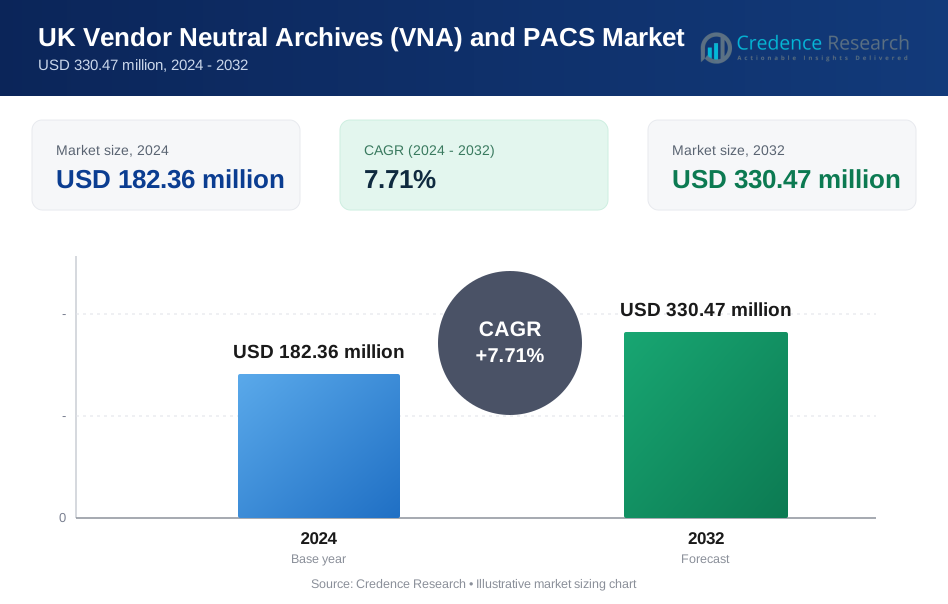
| UK Vendor Neutral Archives (VNA) and Picture Archiving and Communication Systems (PACS) Market Size 2024 | USD 182.36 million |
| UK Vendor Neutral Archives (VNA) and Picture Archiving and Communication Systems (PACS) Market, CGR | 7.71% |
| UK Vendor Neutral Archives (VNA) and Picture Archiving and Communication Systems (PACS) Market Size 2032 | USD 330.47 million |
Market Overview
UK Vendor Neutral Archives (VNA) and Picture Archiving and Communication Systems (PACS) market size was valued at USD 182.36 million in 2024 and is anticipated to reach USD 330.47 million by 2032, at a CAGR of 7.71% during the forecast period (2024-2032).
The UK Vendor Neutral Archives (VNA) and Picture Archiving and Communication Systems (PACS) market is driven by the increasing demand for efficient healthcare data management and seamless interoperability across medical imaging systems. The rising adoption of digital health technologies, coupled with government initiatives promoting healthcare IT infrastructure, is accelerating the deployment of VNA and PACS solutions. Additionally, the growing volume of diagnostic imaging procedures and the need for long-term, secure storage of medical images are propelling market growth. Healthcare providers are prioritizing scalable and centralized image management systems to enhance clinical workflows and ensure regulatory compliance. The trend toward integrated healthcare delivery and the shift to cloud-based solutions are further shaping the market landscape, offering cost-effective and flexible deployment models. As artificial intelligence and machine learning tools gain traction in diagnostic imaging, their integration with PACS and VNA systems is expected to enhance diagnostic accuracy and operational efficiency across healthcare institutions.
The UK Vendor Neutral Archives (VNA) and Picture Archiving and Communication Systems (PACS) market demonstrates strong geographic penetration across major regions, including London, Manchester, Birmingham, and Scotland, each contributing to the growing demand for advanced imaging and data management solutions. Urban centers such as London and Manchester are leading in digital healthcare adoption due to robust infrastructure and large-scale hospital networks, while regions like Scotland are focusing on interoperable systems to support remote and rural healthcare delivery. The market is shaped by the presence of key players such as Siemens Healthineers, Philips Healthcare, Fujifilm Holdings Corporation, Agfa-Gevaert Group, and Sectra AB, all of whom offer comprehensive imaging informatics platforms. Other notable participants include Canon Medical Systems, Dedalus Healthcare, Esaote SpA, PaxeraHealth, and Medavis GmbH. These companies compete on innovation, cloud integration, AI capabilities, and service flexibility, actively supporting the UK’s transition toward centralized, intelligent, and patient-centric imaging environments.
Market Insights
- The UK VNA and PACS market was valued at USD 182.36 million in 2024 and is expected to reach USD 330.47 million by 2032, growing at a CAGR of 7.71%.
- The Global VNA and PACS market was valued at USD 4,411.05 million in 2024 and is expected to reach USD 8,046.15 million by 2032, growing at a CAGR of 7.80% from 2024 to 2032.
- Increasing demand for centralized, interoperable medical imaging systems is a major driver, enhancing clinical workflows and collaboration.
- Cloud-based PACS and VNA solutions are gaining traction due to their scalability, cost-effectiveness, and remote access capabilities.
- Integration with electronic health records (EHRs) is becoming essential, driving adoption of integrated VNA and PACS solutions for streamlined data management.
- AI integration within PACS and VNA systems is revolutionizing image analysis and diagnostics, improving efficiency and diagnostic accuracy.
- Market competition is strong with key players like Siemens Healthineers, Philips Healthcare, and Fujifilm, focusing on innovation and expanding product offerings.
- Regional growth is notable in London, Manchester, Birmingham, and Scotland, driven by digital health initiatives and healthcare infrastructure investment.
Report Scope
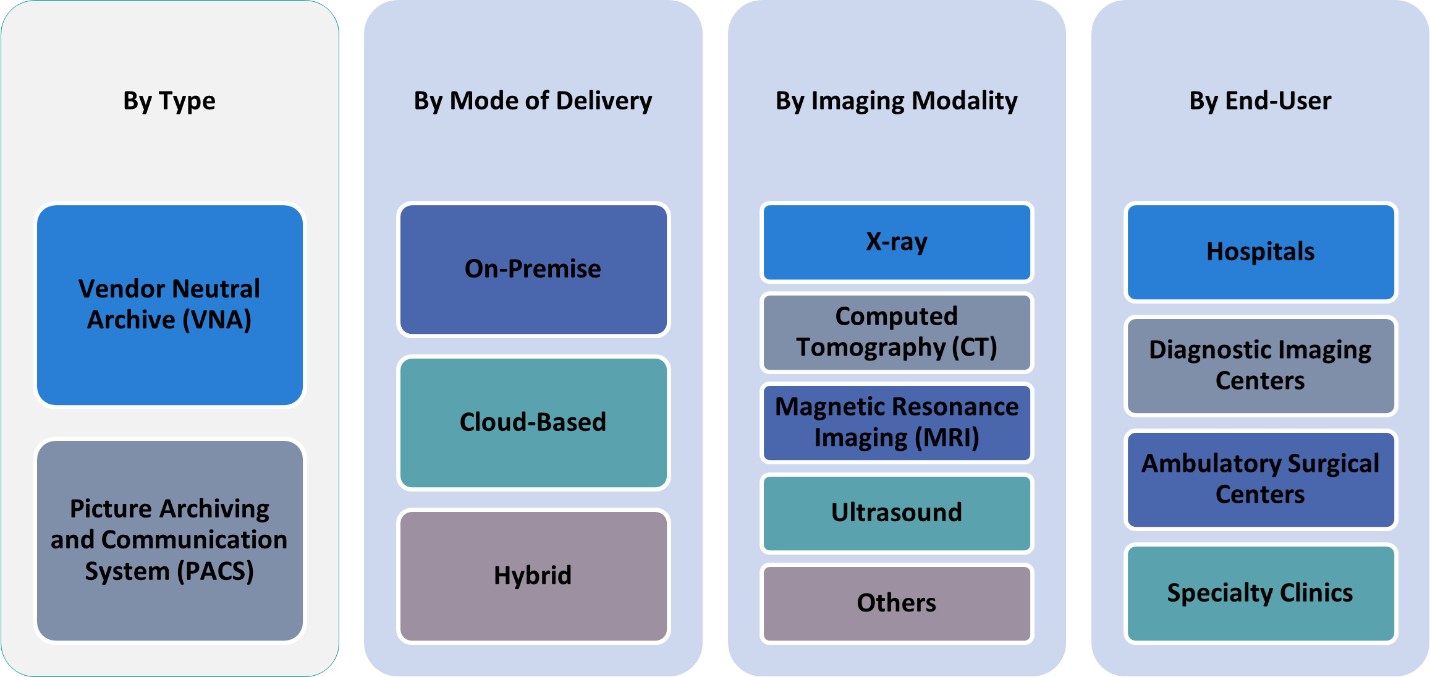
This report segments the UK Vendor Neutral Archives (VNA) and Picture Archiving and Communication Systems (PACS) Market as follows:
Market Drivers
Growing Demand for Centralized Medical Imaging Storage
The increasing volume of medical imaging data across healthcare facilities in the UK is a primary driver for the adoption of Vendor Neutral Archives (VNA) and Picture Archiving and Communication Systems (PACS). With the expansion of diagnostic services such as MRI, CT, and ultrasound, healthcare providers face challenges in storing, managing, and retrieving large volumes of image data efficiently. For instance, the UK healthcare sector is experiencing a rapid transition toward digital imaging, generating a need for effective data management solutions. VNAs offer a centralized and interoperable solution that enables seamless access and management of imaging records across multiple systems and departments, reducing duplication and enhancing collaboration. This centralized approach is particularly valuable in large hospital networks and regional health systems seeking to improve workflow integration and reduce infrastructure complexity.
Advancements in Cloud Technology and Artificial Intelligence
The growing adoption of cloud-based infrastructure in the UK healthcare sector is significantly boosting the VNA and PACS market. Cloud deployment offers scalability, cost efficiency, and improved disaster recovery, allowing healthcare institutions to manage imaging data without investing heavily in on-premises hardware. For instance, the UK’s AI sector study highlights AI-driven healthcare innovations, including medical imaging applications that enhance diagnostic accuracy and streamline workflows. Additionally, advancements in artificial intelligence (AI) are transforming the medical imaging landscape. PACS integrated with AI-driven tools can assist in image analysis, anomaly detection, and predictive diagnostics, thereby increasing clinical productivity and diagnostic accuracy. As AI technologies continue to evolve, their integration into VNA and PACS platforms is expected to become a major driver of innovation and efficiency in healthcare imaging.
Government Initiatives and Regulatory Compliance
The UK government’s commitment to digitizing healthcare services under the NHS Long Term Plan plays a pivotal role in driving the VNA and PACS market. Strategic initiatives aimed at enhancing digital maturity and ensuring compliance with data protection standards such as GDPR are encouraging the adoption of secure and interoperable imaging systems. Regulatory requirements mandating long-term data retention, auditability, and patient data security are compelling healthcare providers to invest in robust archiving and communication platforms. VNAs and modern PACS solutions enable compliance through features like encryption, role-based access controls, and audit trails, ensuring that imaging data is managed securely and transparently.
Shift Toward Interoperability and Integration
Healthcare organizations across the UK are increasingly prioritizing interoperability to support collaborative care delivery and enhance patient outcomes. Traditional PACS systems, often siloed and proprietary, pose challenges in cross-platform data sharing. The shift to vendor-neutral solutions addresses these limitations by facilitating integration with a wide range of imaging modalities and electronic health record (EHR) systems. This interoperability is essential for multi-site healthcare providers and radiology networks aiming to streamline clinical workflows and enable faster, more informed decision-making. Moreover, integrated systems support teleradiology and remote consultation, which have become critical components of healthcare delivery in the post-pandemic era.
Market Trends
Rising Adoption of Cloud-Based Imaging Solutions
A key trend in the UK VNA and PACS market is the growing shift toward cloud-based imaging platforms. Healthcare providers are increasingly recognizing the benefits of cloud deployment, including scalability, cost-efficiency, and remote accessibility. For instance, the NHS Imaging Services report highlights that over 45 million imaging tests were conducted in England between 2022 and 2023, emphasizing the need for scalable cloud-based solutions. Cloud-based PACS and VNA systems enable seamless access to medical images across geographically dispersed facilities, supporting collaborative diagnostics and continuous care. This trend is especially relevant in the wake of growing remote work environments and the demand for telehealth services. Furthermore, cloud architecture reduces the need for costly on-premise infrastructure while providing robust data redundancy, improved uptime, and enhanced disaster recovery capabilities.
Integration with Electronic Health Records (EHRs)
The integration of PACS and VNA systems with Electronic Health Records (EHRs) is becoming increasingly critical in the UK’s push for unified patient records and comprehensive digital healthcare ecosystems. Healthcare organizations are seeking solutions that provide seamless interoperability between imaging systems and EHR platforms to streamline clinical workflows and enhance diagnostic efficiency. For instance, a study on UK emergency departments found that usability challenges in EHR systems impact workflow efficiency, reinforcing the need for better integration with imaging platforms. By integrating imaging data into the broader patient record, clinicians gain quicker and more holistic insights into a patient’s condition, improving both care coordination and outcomes. This trend aligns with NHS digital transformation goals and fosters more informed, data-driven decision-making.
Increasing Role of Artificial Intelligence in Medical Imaging
Artificial Intelligence (AI) is playing a transformative role in the evolution of PACS and VNA systems. The integration of AI tools into imaging platforms is enhancing capabilities such as automated image analysis, anomaly detection, and predictive diagnostics. In the UK, both public and private healthcare sectors are investing in AI-driven radiology to improve efficiency and reduce diagnostic errors. AI algorithms are increasingly being embedded within PACS workflows, offering real-time decision support and prioritization of urgent cases. This trend not only improves radiologist productivity but also accelerates the delivery of care, particularly in high-volume imaging environments.
Emphasis on Interoperability and Vendor Neutrality
The demand for open, standards-based systems continues to grow, driving interest in vendor-neutral architectures that promote data portability and long-term system flexibility. Healthcare providers in the UK are moving away from proprietary PACS solutions toward VNAs that ensure interoperability across multiple imaging modalities and IT platforms. This trend is being driven by the need to future-proof technology investments and avoid vendor lock-in. Standards such as DICOM, HL7, and FHIR are increasingly adopted to ensure consistent data exchange across systems, supporting integrated care and facilitating regional image sharing initiatives across NHS trusts and networks.
Market Challenges Analysis
High Implementation Costs and Legacy System Integration
One of the primary challenges in the UK VNA and PACS market is the high cost associated with implementation, maintenance, and training. Many healthcare institutions, particularly smaller NHS trusts and private clinics, face budgetary constraints that limit their ability to invest in advanced imaging IT infrastructure. For instance, the UK government has acknowledged that over 25% of its digital systems are outdated, costing the public sector £45 billion annually in lost productivity. The upfront capital required for system upgrades, data migration, and user training often deters full-scale adoption, especially when existing legacy systems are still in use. Moreover, integrating new VNA and PACS solutions with these outdated systems can be technically complex and time-consuming. Interoperability issues between legacy platforms and modern solutions can lead to data silos, inefficiencies, and increased reliance on vendor-specific customizations, which contradicts the goal of vendor neutrality.
Data Security, Compliance, and User Resistance
Ensuring data security and compliance with stringent regulations such as the UK GDPR poses an ongoing challenge for organizations deploying VNA and PACS systems. The sensitive nature of medical imaging data necessitates robust cybersecurity measures, including encryption, secure access controls, and audit trails. Any breach or data loss can result in serious legal and reputational consequences. Additionally, migrating large volumes of patient imaging data to new systems—especially cloud-based platforms—can raise concerns over data sovereignty and control. Another challenge lies in the human element: clinicians and IT staff may resist the transition to new technologies due to concerns about workflow disruption, learning curves, and reduced productivity during the adoption phase. Overcoming this resistance requires effective change management strategies, including clear communication, adequate training, and support during the transition.
Market Opportunities
The UK Vendor Neutral Archives (VNA) and Picture Archiving and Communication Systems (PACS) market presents significant opportunities driven by the healthcare sector’s ongoing digital transformation. With the NHS and private healthcare providers focusing on integrated care and patient-centric services, there is growing demand for interoperable imaging systems that support seamless data sharing across multiple facilities and specialties. This environment creates a favourable opportunity for scalable VNA and PACS solutions that enable centralized image management, improved clinical workflows, and enhanced data accessibility. Additionally, the UK government's commitment to digital health innovation and funding programs supporting health IT infrastructure create a conducive landscape for technology providers to expand their market footprint.
The rapid evolution of artificial intelligence and machine learning tools further enhances the value proposition of advanced PACS and VNA platforms. Integrating AI-powered diagnostics, image recognition, and workflow automation within imaging systems can significantly boost diagnostic accuracy and operational efficiency. As healthcare organizations increasingly recognize the potential of AI to manage rising imaging volumes and address radiologist shortages, vendors offering intelligent, cloud-compatible, and future-ready solutions will be well-positioned to capitalize on this trend. Furthermore, with rising awareness around data interoperability and vendor lock-in, the market is opening up to new entrants and specialized providers offering modular, standards-based platforms. As demand grows for flexible, cost-effective deployment models, particularly in rural and underserved areas, cloud-based VNAs and PACS tailored for scalable use cases present a valuable growth avenue for both established and emerging players.
Market Segmentation Analysis:
By Type:
The UK market for medical imaging informatics is segmented into Vendor Neutral Archive (VNA) and Picture Archiving and Communication System (PACS), each playing a distinct role in healthcare IT. PACS remains the dominant segment due to its widespread adoption across hospitals and diagnostic centers for storing, retrieving, and distributing medical images. It is especially prevalent in radiology departments that rely heavily on fast access to imaging for diagnosis and treatment planning. However, VNAs are gaining traction as healthcare providers increasingly prioritize interoperability, long-term data storage, and vendor flexibility. VNAs offer significant advantages by decoupling imaging data from proprietary PACS systems, allowing integration with various clinical applications and supporting cross-enterprise data sharing. This growing demand for centralized image repositories that facilitate seamless access and reduce operational silos is propelling the adoption of VNA solutions. The trend is expected to intensify as healthcare systems across the UK pursue digital maturity and align with NHS goals of integrated care and enhanced patient data accessibility.
By Mode of Delivery:
The UK VNA and PACS market is also segmented based on mode of delivery into on-premise, cloud-based, and hybrid models, each catering to different organizational needs and technological readiness. Traditionally, on-premise solutions have been widely used, particularly among large hospitals with established IT infrastructure and in-house data centers. However, the shift toward digital transformation and the need for scalable, cost-efficient solutions are driving strong interest in cloud-based delivery. Cloud PACS and VNAs offer benefits such as remote accessibility, reduced hardware dependency, and improved disaster recovery, making them especially attractive to smaller providers and rural facilities. Hybrid models are emerging as a practical alternative for institutions seeking to balance data control with cloud benefits. This approach allows critical data to remain on-site while leveraging cloud storage for archiving and remote access. As data volumes grow and AI integration becomes more common, flexible and secure cloud and hybrid deployments are expected to gain further traction across the UK healthcare landscape.
Segments:
Based on Type:
- Vendor Neutral Archive (VNA)
- Picture Archiving and Communication System (PACS)
Based on Mode of Delivery:
- On-Premise
- Cloud-Based
- Hybrid
Based on End- User:
- Hospitals
- Diagnostic Imaging Centers
- Ambulatory Surgical Centers
- Specialty Clinics
Based on Imaging Modality:
- X-ray
- Computed Tomography (CT)
- Magnetic Resonance Imaging (MRI)
- Ultrasound
- Others
Based on the Geography:
- London
- Manchester
- Birmingham
- Scotland
Regional Analysis
London
London holds the largest share of the UK VNA and PACS market, accounting for approximately 35% of total market revenue. As the nation's healthcare and technology hub, London hosts numerous large NHS Trusts, academic medical centers, and private healthcare institutions that drive demand for advanced medical imaging systems. The region's strong investment in healthcare digitization, research, and innovation has led to widespread adoption of integrated PACS and VNA solutions. Additionally, the presence of leading vendors and IT service providers contributes to rapid technology uptake. London’s healthcare institutions prioritize system interoperability and centralized data access to support multi-specialty care and collaborative diagnostics. The region is also at the forefront of implementing AI-powered diagnostic tools and cloud-based imaging platforms, reinforcing its dominant position in the national market.
Manchester
Manchester captures an estimated 22% share of the UK VNA and PACS market, supported by its strong public healthcare infrastructure and growing emphasis on regional health integration. As a core part of the NHS Northern Powerhouse initiative, Greater Manchester is investing in digitally connected care models, which include enterprise imaging and data-sharing frameworks. The region's hospitals and diagnostic centers are increasingly deploying vendor-neutral solutions to support scalable and interoperable systems that can integrate with various EHRs and radiology workflows. Manchester’s digital health strategy encourages collaboration across care settings, creating a favorable environment for PACS and VNA adoption. Additionally, the city's growing medical technology ecosystem and partnerships with universities and innovation hubs position it as a rising center for health IT advancements.
Birmingham
Birmingham holds around 18% of the UK’s VNA and PACS market, driven by its role as a major healthcare and life sciences center. Home to University Hospitals Birmingham NHS Foundation Trust—one of the largest teaching hospital trusts in the UK—the city has been proactive in adopting advanced imaging informatics solutions. Investments in digital healthcare transformation and clinical research have increased the demand for high-capacity, interoperable imaging systems. Birmingham’s health system is actively pursuing vendor-neutral architectures to simplify imaging data access across departments and ensure continuity of care. The region’s increasing use of AI and cloud infrastructure also supports the migration from traditional PACS to hybrid and cloud-based VNA platforms, fostering sustainable market growth.
Scotland
Scotland accounts for roughly 15% of the UK VNA and PACS market, driven by national efforts to standardize digital health services across NHS Scotland. The region has made notable progress in deploying enterprise imaging systems that support data sharing across health boards and rural communities. The Scottish Government’s Digital Health and Care Strategy promotes the adoption of interoperable, patient-centered technologies, which has accelerated the uptake of VNAs and PACS in recent years. Scotland’s unique geography and dispersed population underscore the need for robust, cloud-enabled imaging solutions that can provide remote access to specialists. As the region continues to invest in health IT infrastructure and AI-based imaging analysis, further growth in this segment is expected, especially in telehealth and mobile radiology services.
Key Player Analysis
- Siemens Healthineers
- Philips Healthcare
- Fujifilm Holdings Corporation
- Agfa-Gevaert Group
- Sectra AB
- Canon Medical Systems
- Dedalus Healthcare
- Esaote SpA
- PaxeraHealth
- Medavis GmbH
Competitive Analysis
The UK Vendor Neutral Archives (VNA) and Picture Archiving and Communication Systems (PACS) market is highly competitive, with several leading players providing innovative solutions to meet the growing demand for advanced imaging and data management systems. Siemens Healthineers, Philips Healthcare, Fujifilm Holdings Corporation, Agfa-Gevaert Group, Sectra AB, Canon Medical Systems, Dedalus Healthcare, Esaote SpA, PaxeraHealth, and Medavis GmbH are some of the key participants driving market growth through product innovation, strategic partnerships, and customer-centric solutions. The leading players differentiate themselves by offering comprehensive imaging solutions that integrate advanced technologies like artificial intelligence (AI) and cloud computing. AI-powered PACS solutions are particularly popular, enhancing diagnostic capabilities and improving workflow efficiency in healthcare environments. Additionally, the shift toward cloud-based and hybrid solutions is gaining momentum, as they offer scalability, cost-effectiveness, and improved disaster recovery capabilities. Vendors are also focusing on creating interoperable systems that seamlessly integrate with electronic health records (EHRs) and other healthcare technologies, allowing for a more unified approach to patient data management. Companies that prioritize flexibility, customization, and vendor-neutral solutions are increasingly able to attract healthcare providers looking for systems that can evolve with their changing needs. As the market grows, smaller players are also carving out niches by offering specialized solutions that cater to specific segments of the healthcare industry, further intensifying the competition.
Recent Developments
- In March 2024, at the European Congress of Radiology in Vienna, Philips unveiled new hardware innovations, focusing on integrating artificial intelligence into their imaging solutions to enhance diagnostic accuracy and workflow efficiency.
- In February 2024, FUJIFILM Healthcare Americas Corporation announced that it’s Synapse VNA and Synapse Radiology PACS solutions (in Asia/Oceania) were ranked #1 in the 2024 Best in KLAS Awards: Software and Services. The recognition, based on insights from KLAS Research, highlights companies excelling in improving patient care through their software and services.
- In January 2024, RamSoft (Canada) launched imaging EMR solution, named OmegaAI. The solution is a cloud-native, serverless imaging EMR software platform that consolidates VNA, Enterprise Imaging, PACS, RIS, simplified image exchange/sharing, routing & storage, a zero-footprint (ZFP) viewer, unified worklist, radiology reporting, document management, peer, patient portal, and a real-time business intelligence and analytics solution.
- In November 2023, InsiteOne (US) announced to acquire BRIT Systems cloud native RIS/PACS/VNA solution to advance imaging workflows. This acquisition will continue to focus on developing cost-effective solutions that improve operational productivity while enhancing patient care.
- In July 2023, Fujifilm Sonosite joined the newly formed Medical Imaging Division under the Advanced Medical Technology Association (AdvaMed), collaborating with industry leaders to advance medical imaging technologies.
Market Concentration & Characteristics
The UK Vendor Neutral Archives (VNA) and Picture Archiving and Communication Systems (PACS) market exhibits a moderate to high level of market concentration, with several key players dominating the space. These players offer a diverse range of imaging solutions, incorporating advanced technologies such as AI, cloud integration, and data interoperability to meet the growing demand for efficient healthcare imaging systems. The market is characterized by significant innovation, as companies continually enhance their product portfolios to support digital transformation in healthcare, improve diagnostic accuracy, and streamline clinical workflows. While large multinational companies lead the market, smaller, specialized providers are gaining traction by offering customized, cost-effective solutions for niche applications and regional healthcare networks. The market is also increasingly moving toward cloud-based and hybrid deployment models, providing scalability and flexibility to healthcare providers. Overall, the VNA and PACS market in the UK remains dynamic, with increasing competition and a constant drive toward technological advancements and improved patient care solutions.
Report Coverage
The research report offers an in-depth analysis based on Type, Mode of Delivery, End-User, Imaging Modality and Geography. It details leading market players, providing an overview of their business, product offerings, investments, revenue streams, and key applications. Additionally, the report includes insights into the competitive environment, SWOT analysis, current market trends, as well as the primary drivers and constraints. Furthermore, it discusses various factors that have driven market expansion in recent years. The report also explores market dynamics, regulatory scenarios, and technological advancements that are shaping the industry. It assesses the impact of external factors and global economic changes on market growth. Lastly, it provides strategic recommendations for new entrants and established companies to navigate the complexities of the market.
Future Outlook
- The UK VNA and PACS market will continue to grow as healthcare institutions increasingly adopt digital imaging solutions to enhance operational efficiency.
- Cloud-based PACS and VNA solutions will gain further traction, driven by the need for scalable, cost-effective, and remote access to medical imaging.
- Integration of artificial intelligence (AI) and machine learning will become more prevalent, improving diagnostic accuracy and streamlining clinical workflows.
- The shift toward vendor-neutral platforms will accelerate, allowing healthcare providers to avoid vendor lock-in and promote interoperability across systems.
- Healthcare organizations will increasingly prioritize solutions that offer seamless integration with electronic health records (EHRs) for a unified patient data management approach.
- Hybrid deployment models combining on-premise and cloud-based solutions will become more common, offering flexibility and better data control.
- The growing demand for telehealth and remote diagnostics will fuel further adoption of cloud-enabled imaging platforms.
- Regional healthcare networks will benefit from improved data sharing and access through centralized VNA systems, supporting better collaboration.
- Smaller healthcare providers and rural facilities will increasingly adopt VNA and PACS solutions as cloud options make these technologies more affordable.
- With ongoing advancements in AI and imaging technologies, the market will see a significant shift toward intelligent imaging systems that offer real-time decision support.
Request a Free Sample
Fill in your details and we'll send you a free sample report.
- Sample data tables & charts
- Research methodology
Need a Custom Version of This Report?
Tailor the scope, geography, or segments to your exact requirements.
- Custom geography or segment scope
- Direct access to our analyst team
Frequently Asked Questions
What is the current size of the UK Vendor Neutral Archives (VNA) and Picture Archiving and Communication Systems (PACS)?
What factors are driving the growth of the UK Vendor Neutral Archives (VNA) and Picture Archiving and Communication Systems (PACS)?
What are some challenges faced by the UK Vendor Neutral Archives (VNA) and Picture Archiving and Communication Systems (PACS)?
Who are the major players in the UK Vendor Neutral Archives (VNA) and Picture Archiving and Communication Systems (PACS)?
Table of Content
Chapter 1. Report Introduction
- 1.1 Report Description & Purpose
- 1.1.1 Report Title & Market Definition
- 1.1.2 Unique Selling Propositions (USP) & Key Differentiators
- 1.1.3 Value Proposition for Stakeholders
- 1.2 Research Objectives
- 1.2.1 Market Sizing Objectives (Volume & Revenue)
- 1.2.2 Segmentation Objectives
- 1.2.3 Competitive Intelligence Objectives
- 1.2.4 Forecast & Scenario Objectives
- 1.3 Report Scope
- 1.3.1 UK Vendor Neutral Archives (VNA) and PACS Scope – Types & Subtypes Covered
- 1.3.2 Geographic Scope – Regions & Countries Covered
- 1.3.3 Historical Period, Base Year & Forecast Period (2024; forecast to 2032)
- 1.3.4 Inclusions & Exclusions
- 1.4 HS Code & Classification Framework
- 1.5 Currency, Units & Pricing Basis
- 1.6 Target Stakeholders
- 1.7 Limitations & Assumptions
Chapter 2. Executive Summary
- 2.1 Global UK Vendor Neutral Archives (VNA) and PACS Market Snapshot
- 2.1.1 Market Size – Historical (2024) & Forecast (2024-2032) (2024: USD 182.36 million → 2032: USD 330.47 million)
- 2.1.2 Volume & Revenue – Global Totals
- 2.1.3 Key Market Highlights – Top Five Facts
- 2.2 UK Vendor Neutral Archives (VNA) and PACS Market Segmentation Snapshot
- 2.2.1 Market Split by Region – 2024 vs. 2032
- 2.3 Competitive Snapshot
- 2.3.1 Top 10 Players by Revenue Share – 2024
- 2.3.2 Top 10 Players by Volume Share – 2024
- 2.3.3 Recent Strategic Developments (18-Month Summary)
- 2.4 Key Investment Highlights & Strategic Conclusions
Chapter 3. UK Vendor Neutral Archives (VNA) and PACS Market Dynamics & Industry Analysis
- 3.1 Market Overview & Context
- 3.1.1 UK Vendor Neutral Archives (VNA) and PACS Market Position in the Broader Automotive Value Chain
- 3.1.2 OEM vs. Replacement Market Dynamics
- 3.1.3 Market Maturity & Development Stage by Region
- 3.2 UK Vendor Neutral Archives (VNA) and PACS Market Drivers
- 3.3 UK Vendor Neutral Archives (VNA) and PACS Market Restraints & Challenges
- 3.4 UK Vendor Neutral Archives (VNA) and PACS Market Opportunities
- 3.5 Porter's Five Forces Analysis
- 3.5.1 Threat of New Entrants
- 3.5.2 Bargaining Power of Suppliers
- 3.5.3 Bargaining Power of Buyers
- 3.5.4 Threat of Substitutes
- 3.5.5 Competitive Rivalry – Intensity Assessment
- 3.6 UK Vendor Neutral Archives (VNA) and PACS Value Chain Analysis
- 3.6.1 Upstream – Raw Material/Input Suppliers
- 3.6.1.1 Raw Material/Input 1
- 3.6.1.2 Raw Material/Input 2
- 3.6.1.3 Raw Material/Input 3
- 3.6.2 Midstream – Production/Manufacturing/Service Delivery
- 3.6.2.1 Production/Process Overview
- 3.6.2.2 Key Facility Locations & Capacity by Manufacturer
- 3.6.3 Downstream – Distribution & End Consumer
- 3.6.3.1 Primary Channel – B2B/OEM
- 3.6.3.2 Secondary Channels – Dealer, Retail, Online, Direct
- 3.6.4 Value Chain Profitability Analysis
- 3.6.1 Upstream – Raw Material/Input Suppliers
- 3.7 PESTEL Analysis
- 3.7.1 Political Factors
- 3.7.2 Economic Factors
- 3.7.3 Social Factors
- 3.7.4 Technological Factors
- 3.7.5 Environmental Factors
- 3.7.6 Legal Factors
- 3.8 UK Vendor Neutral Archives (VNA) and PACS Supply Chain Analysis
- 3.8.1 Raw Material/Input Supply Risk Assessment
- 3.8.2 Manufacturing Concentration Risk (Geographic Exposure)
- 3.8.3 Trade Disruption Impact Analysis
- 3.9 Regulatory & Policy Landscape
Note: The regulatory and policy landscape section covers regulations based on their applicability to the market, UK Vendor Neutral Archives (VNA) and PACS category, geography, and scope of the study. Only regulatory frameworks with a material impact on operations, compliance, trade, sustainability, or market access are analyzed in detail.
Chapter 4. Key Investment Pockets & Opportunity Analysis
- 4.1 UK Vendor Neutral Archives (VNA) and PACS Market Attractiveness Analysis
- 4.1.1 By Region – Investment Attractiveness Matrix (Volume × CAGR)
- 4.2 Absolute Revenue Growth Opportunity
- 4.2.1 By Region – Absolute USD Growth Through 2032
- 4.3 Incremental Volume Opportunity
- 4.3.1 By Region – Incremental Volume Through 2032
- 4.3.2 Segment – Incremental Volume
- 4.4 Emerging Submarket Opportunity Deep Dive (Subject to Applicability)
- 4.5 Emerging Market Opportunity Scorecards
- 4.5.1 United States
- 4.5.2 Europe
- 4.5.3 Asia
- 4.5.4 Middle East & Africa
Note: Emerging Market Opportunity Scorecards will be included based on relevance and strategic importance. Regions listed are indicative and may vary depending on data availability and market dynamics.
Chapter 5. UK Vendor Neutral Archives (VNA) and PACS Import-Export Analysis & Trade Flows
- 5.1 Global Trade Overview
- 5.1.1 Global Export Value by Country (2024)
- 5.1.2 Global Export Volume by Country (2024)
- 5.1.3 Global Import Value by Country (2024)
- 5.1.4 Global Import Volume by Country (2024)
- 5.1.5 Net Trade Balance by Country (2024)
- 5.2 Export Analysis – Segment
- 5.2.1 Type 1 (HS Code)
- 5.2.2 Type 2 (HS Code)
- 5.2.3 Type 3 (HS Code)
- 5.2.4 Type 4 (HS Code)
- 5.2.5 Type 5 (HS Code)
- 5.3 Import Analysis – Segment
- 5.3.1 Type 1 (HS Code)
- 5.3.2 Type 2 (HS Code)
- 5.3.3 Type 3 (HS Code)
- 5.3.4 Type 4 (HS Code)
- 5.3.5 Type 5 (HS Code)
- 5.4 Average Unit Trade Prices
- 5.4.1 Average Export Price – Segment & Country
- 5.4.2 Average Import Price – Segment & Source Country
- 5.4.3 Price Trends (2024)
- 5.5 Key Trade Route Analysis
- 5.5.1 Trade Route 1
- 5.5.2 Trade Route 2
- 5.5.3 Trade Route 3
- 5.5.4 Trade Route 4
- 5.5.5 Trade Route 5
- 5.6 Trade Policy Impact Assessment
- 5.6.1 US Anti-Dumping & Section 301 Tariffs
- 5.6.2 EU Customs Union Impact
- 5.6.3 Major Free Trade Agreements
- 5.6.4 USMCA Rules of Origin
Note: Trade policy analysis will be included only where relevant to the UK Vendor Neutral Archives (VNA) and PACS market.
Chapter 6. Competitive Landscape & Company Benchmarking
- 6.1 UK Vendor Neutral Archives (VNA) and PACS Market Concentration & Structure
- 6.1.1 Herfindahl-Hirschman Index (HHI) – vs. 2024
- 6.1.2 Tier 1, Tier 2 & Tier 3 Market Structure
- 6.1.3 Global, Regional & Local Player Dynamics
- 6.2 UK Vendor Neutral Archives (VNA) and PACS Market Share Analysis – 2024
- 6.2.1 Global Revenue Share by Company
- 6.2.2 Global Volume Share by Company
- 6.2.3 Regional Revenue Share
- 6.2.4 Market Share Evolution ( vs. 2024)
- 6.2.5 OEM Segment Share by Company
- 6.2.6 Replacement Segment Share by Company
- 6.3 Production/Delivery Capacity & Facility Analysis
- 6.3.1 Global Installed Capacity
- 6.3.2 Capacity Utilization Rates
- 6.3.3 Production/Output Volume
- 6.3.4 Facility Locations & Capacity Map
- 6.3.5 Planned Capacity Additions
- 6.4 UK Vendor Neutral Archives (VNA) and PACS Competitive Benchmarking Matrix
- 6.4.1 Revenue, Volume, CAGR & Profitability Comparison
- 6.4.2 Channel Revenue Mix
- 6.4.3 Geographic Revenue Exposure
- 6.4.4 R&D Intensity
- 6.4.5 Sustainability Maturity
- 6.5 Strategic Developments in UK Vendor Neutral Archives (VNA) and PACS (Last 24 Months)
- 6.5.1 Mergers, Acquisitions & Divestments
- 6.5.2 New UK Vendor Neutral Archives (VNA) and PACS Launches
- 6.5.3 Facility Expansions
- 6.5.4 Strategic Alliances, Joint Ventures & Partnerships
- 6.5.5 Distribution Expansion & Market Entry
- 6.5.6 Sustainability & ESG Initiatives
- 6.6 Competitive Strategy Mapping
- 6.6.1 Leader, Challenger, Follower & Niche Classification
- 6.6.2 Pricing Strategy Comparison
- 6.6.3 Channel Strategy Matrix
Note: Strategic developments are included based on their materiality and the availability of reliable information.
Chapter 7. Global UK Vendor Neutral Archives (VNA) and PACS Market – By Distribution Channel
- 7.1 Segment Overview
- 7.1.1 Volume & Revenue Split by Channel (2024 & 2032)
- 7.1.2 Channel Mix Evolution (2024-2032)
Chapter 8. Regional Market Analysis – Global Overview
- 8.1 Global Regional Overview
- 8.1.1 Regional Volume Share
- 8.1.2 Regional Revenue Share
- 8.1.3 Regional Volume by Region
- 8.1.4 Regional Revenue by Region
- 8.1.5 Regional Forecast Through 2032
- 8.2 Cross-Regional Segment Analysis
- 8.2.1 By Distribution Channel
- 8.2.2 By Brand/Price Tier
Chapter 9. North America UK Vendor Neutral Archives (VNA) and PACS Market
- 9.1 United States
- 9.2 Canada
- 9.3 Mexico
Chapter 10. Europe UK Vendor Neutral Archives (VNA) and PACS Market
- 10.1 Germany
- 10.2 France
- 10.3 Italy
- 10.4 United Kingdom
- 10.5 Spain
- 10.6 Poland
- 10.7 Russia
- 10.8 Netherlands
- 10.9 Belgium
- 10.10 Sweden
- 10.11 Denmark
- 10.12 Norway
- 10.13 Rest of Europe
Chapter 11. Asia Pacific UK Vendor Neutral Archives (VNA) and PACS Market
- 11.1 China
- 11.2 India
- 11.3 Japan
- 11.4 South Korea
- 11.5 Thailand
- 11.6 Indonesia
- 11.7 Vietnam
- 11.8 Malaysia
- 11.9 Australia
- 11.10 Rest of Asia Pacific
Chapter 12. Latin America UK Vendor Neutral Archives (VNA) and PACS Market
- 12.1 Brazil
- 12.2 Argentina
- 12.3 Colombia
- 12.4 Chile
- 12.5 Rest of Latin America
Chapter 13. Middle East UK Vendor Neutral Archives (VNA) and PACS Market
- 13.1 Saudi Arabia
- 13.2 United Arab Emirates
- 13.3 Turkey
- 13.4 Israel
- 13.5 Iran
- 13.6 Rest of the Middle East
Chapter 14. Africa UK Vendor Neutral Archives (VNA) and PACS Market
- 14.1 South Africa
- 14.2 Egypt
- 14.3 Nigeria
- 14.4 Morocco
- 14.5 Rest of Africa
Chapter 15. UK Vendor Neutral Archives (VNA) and PACS Company Profiles
- 15.1 [Company 01]
- 15.1.1 Company Overview
- 15.1.2 Key Management Personnel
- 15.1.3 Products & Services Portfolio
- 15.1.4 Financial Performance
- 15.1.5 Key Market Focus & Geographic Presence
- 15.1.6 Recent Developments & Strategic Initiatives
Note: The company profile list is preliminary and may change based on research findings, market developments, data availability, and client requirements.
Chapter 16. Appendices
- Appendix A – List of Abbreviations & Acronyms
- Appendix B – Industry Classification Code Reference – Full Series
- Appendix C – Production & Capacity Data Tables
- Appendix D – End-Use & Demand Base Tables
- Appendix E – Consumption & Replacement Rate Assumptions
- Appendix F – ASP Reference Tables
- Appendix G – Manufacturing & Facility Database
- Appendix H – Import-Export Data Tables
- Appendix I – Regulatory Summary Tables
- Appendix J – Primary Research Participant List (Anonymized)
- Appendix K – Primary Research Questionnaire Framework
- Appendix L – Data Sources & Bibliography
- Appendix M – Market Size Divergence & Source Comparison
Chapter 17. Research Methodology
- 17.1 Research Framework & Philosophy
- 17.2 Secondary Research – Sources, Hierarchy & Data Extraction
- 17.3 Data Modeling – Bottom-Up & Top-Down Market Sizing
- 17.4 Primary Research – Stakeholder Framework, LOI & Sample Sizes
- 17.5 Forecast Methodology – Regression, Scenario & Sensitivity Analysis
- 17.6 Quality Control – Four-Layer Validation Framework
- 17.7 Limitations & Standard Assumptions
- 17.8 Disclaimer
