
| REPORT ATTRIBUTE | DETAILS |
|---|---|
| Historical Period | 2019-2022 |
| Base Year | 2023 |
| Forecast Period | 2024-2032 |
| Ultrafast CT Scan Devices Market Size 2023 | USD 9,765.51 million |
| Ultrafast CT Scan Devices Market, CAGR | 6.25% |
| Ultrafast CT Scan Devices Market Size 2032 | USD 15,858.58 million |
Market Overview
The Ultrafas2t CT Scan Devices Market is projected to grow from USD 9,765.51 million in 2023 to an estimated USD 15,858.58 million by 2032, with a compound annual growth rate (CAGR) of 6.25% from 2024 to 2032. The increasing demand for advanced imaging solutions in medical diagnostics, along with technological advancements in imaging systems, is expected to drive the market's expansion.
Key drivers of the market include the increasing adoption of ultrafast CT scan devices due to their ability to provide detailed, high-resolution images in a fraction of the time compared to traditional methods. Moreover, the rise in healthcare expenditure, coupled with the growing number of diagnostic imaging procedures, is expected to further accelerate market demand. Innovations in artificial intelligence and machine learning for enhancing diagnostic accuracy are also notable trends that will shape the market's future.
Geographically, North America is expected to dominate the ultrafast CT scan devices market, owing to the region's advanced healthcare infrastructure and early adoption of cutting-edge medical technologies. However, the Asia Pacific region is projected to witness the highest growth during the forecast period due to the increasing healthcare investments and rising awareness about advanced diagnostic tools. Key players in the market include Siemens Healthineers, GE Healthcare, Philips Healthcare, and Canon Medical Systems Corporation.
Market Insights
-
- The Ultrafast CT scan devices market is projected to grow from USD 9,271.46 million in 2023 to USD 15,334.57 million by 2032, at a CAGR of 5.75% from 2024 to 2032.
- Key drivers include the rising demand for advanced imaging solutions, the growing preference for non-invasive diagnostic methods, and technological innovations in imaging systems.
- The integration of artificial intelligence and machine learning into CT devices is enhancing diagnostic accuracy and reducing physician workload, contributing to market growth.
- Increasing healthcare investments globally, particularly in diagnostic imaging, are fueling the demand for ultrafast CT devices, improving healthcare infrastructure.
- High costs of ultrafast CT scan devices and the need for specialized training for operators are major challenges to market expansion, especially in low-resource settings.
- North America leads the market due to advanced healthcare infrastructure, while Asia Pacific is expected to see the highest growth, driven by increasing healthcare investments.
- The adoption of portable CT scanners and a focus on radiation dose reduction are key trends shaping the future of the ultrafast CT scan devices market.
Report Scope
This report segments the Global Ultrafast CT Scan Devices Market as follows: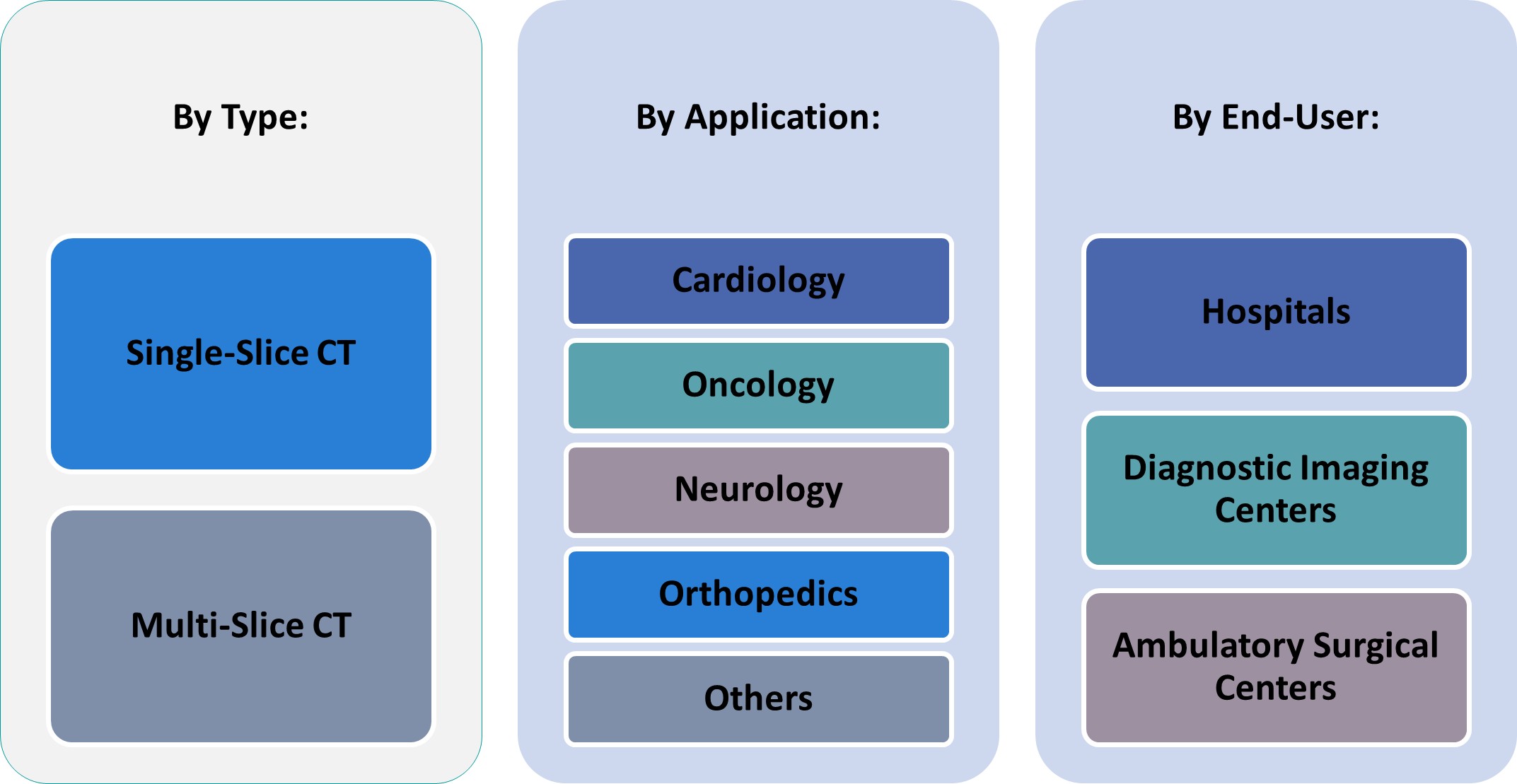
Market Drivers
Technological Advancements and Innovation in Imaging Systems
The continuous advancements in medical imaging technology, especially ultrafast CT scan devices, are one of the primary drivers of market growth. Traditional CT scan devices are limited by resolution and speed, but ultrafast CT systems have overcome these barriers. These devices can capture high-resolution images in a fraction of the time, offering superior image quality and faster diagnostics. Innovations such as dual-energy CT, spectral CT, and the integration of artificial intelligence (AI) for image analysis have significantly enhanced diagnostic accuracy and speed, making them highly attractive for healthcare providers. Moreover, improvements in the hardware, such as faster detector systems, better X-ray tubes, and advanced reconstruction algorithms, enable these devices to perform rapid scans with reduced radiation exposure. These technological strides contribute to a broader acceptance and increased demand for ultrafast CT systems, thus driving the growth of the market.
Rising Prevalence of Chronic Diseases and Health Conditions
The growing incidence of chronic diseases, such as cardiovascular diseases, cancer, neurological disorders, and respiratory diseases, has significantly contributed to the demand for advanced diagnostic tools, including ultrafast CT scan devices. Cardiovascular diseases, in particular, require precise imaging for early diagnosis, risk assessment, and treatment planning. Ultrafast CT scans are essential for performing coronary angiography and assessing the status of coronary arteries, which is crucial for patients with heart disease. Similarly, for oncology, ultrafast CT scans provide detailed imaging of tumors, assisting in early detection and accurate staging of cancers, leading to improved treatment outcomes. As these diseases become more prevalent, the need for quick, accurate, and non-invasive diagnostic tools will continue to rise, driving the demand for ultrafast CT scan devices in healthcare settings worldwide.
Increased Healthcare Expenditure and Access to Advanced Diagnostics
The global rise in healthcare expenditure and the increasing availability of advanced diagnostic imaging equipment in hospitals and medical centers are key drivers for the ultrafast CT scan devices market. In both developed and developing regions, governments and private entities are investing heavily in improving healthcare infrastructure. In particular, healthcare providers are focused on incorporating advanced imaging technologies to enhance patient care and reduce diagnosis time. As healthcare facilities aim to upgrade their diagnostic capabilities, the demand for ultrafast CT scan devices has surged. In developed countries, health insurance schemes are increasingly covering advanced imaging tests, thus making ultrafast CT scans more accessible to a broader patient base. Additionally, as countries in the Asia-Pacific and Latin America regions continue to invest in healthcare systems, these regions are seeing rapid adoption of high-end diagnostic equipment, further fueling market growth. The focus on enhancing healthcare outcomes and improving the speed and accuracy of diagnostic processes is directly contributing to the rise in the adoption of ultrafast CT scan systems.
Growing Preference for Non-Invasive Diagnostic Methods
Patients and healthcare professionals alike are increasingly preferring non-invasive diagnostic methods due to their ability to provide detailed insights without the need for surgical procedures. Ultrafast CT scans are non-invasive and highly effective in identifying a range of health conditions with minimal patient discomfort. Unlike traditional diagnostic methods such as angiograms or biopsies, which can be invasive and carry potential risks, ultrafast CT scans can deliver high-quality results in a quick, safe, and non-invasive manner. As the demand for non-invasive procedures rises, healthcare providers are adopting ultrafast CT scan devices to offer patients accurate and swift diagnoses. This growing patient preference for non-invasive imaging techniques has significantly contributed to the market's expansion, with patients seeking quicker and more comfortable diagnostic options that still provide high diagnostic value.
Market Trends
Integration of Artificial Intelligence (AI) for Enhanced Diagnostics
One of the most significant trends in the ultrafast CT scan devices market is the integration of artificial intelligence (AI) and machine learning algorithms to enhance the diagnostic process. AI is playing a critical role in improving image interpretation, reducing human error, and assisting radiologists in diagnosing conditions more accurately and quickly. For instance, AI algorithms have been shown to enhance image quality by reducing noise and artifacts, allowing radiologists to visualize subtle abnormalities that may otherwise go unnoticed. This capability is particularly crucial in detecting early-stage diseases such as cancer and cardiovascular conditions, where timely intervention can greatly affect patient outcomes.With AI-powered systems, CT scans can be analyzed for subtle abnormalities that might be missed by the human eye, making it easier to detect diseases such as cancer, cardiovascular conditions, and neurological disorders at early stages. Moreover, AI systems have been successfully implemented to automate the analysis of CT scans, enabling the identification of cardiac features predictive of mortality across various patient cohorts. This not only streamlines the diagnostic process but also assists healthcare providers in prioritizing follow-up care for at-risk patients, thereby improving overall healthcare efficiency.AI can also assist in automating routine tasks such as image reconstruction, segmentation, and quantification, which speeds up the overall process. These systems are designed to learn from vast datasets, continually improving their diagnostic accuracy and efficiency. As healthcare providers look to enhance diagnostic capabilities while reducing workload and errors, the demand for AI-integrated ultrafast CT devices is increasing, further propelling the market forward.
Development of Dual-Energy and Spectral CT Imaging
The development of dual-energy and spectral CT imaging is another prominent trend shaping the ultrafast CT scan devices market. Traditional CT scans are limited in their ability to distinguish between different types of tissues based on their density alone. However, dual-energy and spectral CT technologies use two different X-ray energies to acquire images, providing additional information about tissue composition and enabling better differentiation between materials like bone, soft tissue, and contrast agents. For instance, this technology enhances tissue characterization, allowing healthcare providers to detect conditions with greater precision-such as identifying plaque in coronary arteries or assessing tumors in oncology.These advanced imaging techniques enhance the diagnostic potential of ultrafast CT scans, allowing healthcare providers to detect conditions with greater precision. Dual-energy and spectral CT also enable better tissue characterization, which is vital in areas like oncology for assessing tumor heterogeneity or in neurology for detecting and characterizing brain lesions. The growing adoption of these technologies is improving the diagnostic capabilities of ultrafast CT scans, making them more valuable tools in clinical settings.
Reduction of Radiation Dose and Improved Patient Safety
A critical trend in the ultrafast CT scan devices market is the focus on reducing radiation exposure while maintaining high-quality imaging. Traditionally, CT scans have been associated with high doses of radiation, which has raised concerns over patient safety. However, with advancements in ultrafast CT technologies, manufacturers are developing systems that reduce radiation without compromising image accuracy. For instance, new algorithms and advanced reconstruction techniques help reduce noise in images while allowing for lower radiation doses-essential for patient safety, particularly among vulnerable populations like children.Innovations like faster scanning times also contribute to reducing radiation exposure since patients are exposed for less time during scans. The emphasis on patient safety and minimizing radiation exposure is becoming a key priority as regulatory bodies and healthcare providers continue to advocate for safe imaging practices. These technological advancements are expected to drive growth in the ultrafast CT scan market with a stronger focus on efficient imaging practices.
Rise of Portable and Compact CT Devices for Point-of-Care Settings
The demand for portable and compact CT scanners is also shaping current trends in the ultrafast CT scan devices market. With an increasing emphasis on accessibility, healthcare providers are looking for diagnostic solutions that can be used in various settings-including emergency rooms, intensive care units, and even at patients' bedsides. For instance, portable CT scanners offer high-quality imaging results in a compact format that reduces the need for transporting patients to central imaging departments.These devices are particularly valuable in emergency situations where time is critical-such as trauma cases or critical care settings where rapid diagnosis can significantly impact patient outcomes. Additionally, portable CT devices are gaining traction in rural or remote locations where access to traditional imaging equipment is limited. The trend toward portable and point-of-care CT scanners is expanding the scope of ultrafast CT technology, enabling healthcare providers to deliver rapid diagnostics across diverse environments and further driving market growth.
Market Challenges
High Cost of Ultrafast CT Scan Devices
One of the primary challenges facing the ultrafast CT scan devices market is the high upfront cost associated with acquiring and maintaining these advanced systems. Ultrafast CT scanners, with their cutting-edge technologies, require substantial capital investment, which can be prohibitive for smaller healthcare facilities or those in developing regions with limited budgets. Additionally, the cost of maintenance, software updates, and operator training adds to the financial burden. This high cost can restrict the widespread adoption of ultrafast CT scan devices, particularly in low-resource settings. Despite the long-term benefits, including faster diagnoses and improved patient outcomes, the initial financial investment remains a significant barrier. Healthcare providers must balance the need for advanced imaging technology with the economic constraints of their institutions, which can delay or hinder the adoption of these devices.
Complexity and Training Requirements for Medical Professionals
Another challenge faced by the ultrafast CT scan devices market is the complexity of operating and interpreting the advanced imaging provided by these systems. As the technology behind ultrafast CT scans becomes more sophisticated, it requires skilled radiologists and medical professionals who are well-trained in the use of the equipment and in analyzing the complex data generated by these devices. The learning curve associated with mastering new imaging systems and software can be steep, and the shortage of trained professionals in some regions exacerbates this issue. Additionally, as ultrafast CT systems often incorporate AI and machine learning technologies, healthcare workers must also stay updated on these new tools and methods to ensure they can fully leverage the capabilities of the devices. The demand for continuous training and the need for skilled personnel could lead to operational inefficiencies and higher operational costs, presenting a significant challenge for widespread market adoption.
Market Opportunities
Expansion in Emerging Markets
Emerging markets, particularly in Asia-Pacific, Latin America, and Africa, present significant growth opportunities for the ultrafast CT scan devices market. As these regions continue to experience economic growth, healthcare infrastructure is being rapidly expanded, with a focus on adopting advanced medical technologies. The increasing prevalence of chronic diseases, such as cardiovascular conditions, cancer, and neurological disorders, is driving the demand for advanced diagnostic tools. Governments and private healthcare providers in these regions are investing heavily in healthcare facilities, creating a favorable environment for the adoption of ultrafast CT scanners. With lower healthcare penetration and growing awareness of advanced diagnostic technologies, there is a tremendous opportunity to introduce cost-effective, high-performance ultrafast CT systems tailored to meet the specific needs of these markets.
Technological Advancements and Integration with AI
The ongoing advancements in imaging technology, particularly the integration of artificial intelligence (AI), present another major market opportunity. AI-driven solutions can significantly enhance the capabilities of ultrafast CT scanners by improving diagnostic accuracy, automating image analysis, and reducing human error. These innovations offer healthcare providers the ability to achieve faster and more accurate diagnoses, which is essential for better patient outcomes, especially in critical care and emergency settings. As AI integration continues to evolve, there is a growing opportunity for companies to develop next-generation ultrafast CT devices that incorporate AI and machine learning for enhanced image interpretation, predictive analytics, and improved workflow efficiency, thereby expanding the application and appeal of ultrafast CT devices in both developed and emerging markets.
Market Segmentation Analysis
By Modality
The ultrafast CT scan devices market can be segmented by modality into O-arms and C-arms. O-arms are primarily used in orthopedic surgeries, providing real-time imaging for procedures such as spinal surgery. Their ability to offer detailed, 3D imaging helps surgeons navigate complex procedures with precision. On the other hand, C-arms are commonly used in diagnostic imaging across various medical fields, including orthopedics, cardiology, and surgery. C-arms provide high-resolution images, allowing for real-time fluoroscopic imaging during surgical interventions. Both modalities are experiencing increasing adoption in clinical settings due to their ability to provide enhanced imaging during critical procedures, with a preference for the compact and versatile nature of C-arms in emergency and surgical departments.
By Applications
The ultrafast CT scan devices market is also segmented by applications, with key segments including orthopedics, cardiovascular, oncology, neurology, and others. In orthopedics, ultrafast CT scans are widely used for imaging bone fractures, joint diseases, and spinal conditions, offering precise diagnostic insights. In cardiovascular applications, ultrafast CT scans are vital for coronary angiography and assessing cardiovascular abnormalities, enabling early diagnosis and intervention. In oncology, these devices are used for tumor detection, staging, and monitoring cancer progression. Neurology applications benefit from ultrafast CT scans in diagnosing brain lesions, strokes, and neurological conditions with high precision. Other applications include trauma care, dental imaging, and emergency diagnostics. The increasing prevalence of chronic diseases and advancements in imaging technologies are driving the adoption of ultrafast CT scans across these application areas.
Segments
Based on modality
- O-arms
- C-arms
Based on applications
- Orthopedics
- Cardiovascular
- Oncology
- Neurology
- Others
Based on end user
- Hospitals & Ambulatory Surgical Centers (ASCs)
- Diagnostic Imaging Centers
- Others
Based on technology
- High Slice
- Mid Slice
- Low Slice
- Cone Beam Computed Tomography (CBCT)
- Others
Based on Region
- North America
- Europe
- Middle East and Africa
- Latin America
- Asia Pacific
Regional Analysis
North America (45%)
North America dominates the ultrafast CT scan devices market with a market share of approximately 45%. The region is characterized by an advanced healthcare infrastructure, a high level of technological adoption, and significant healthcare spending, all of which contribute to the demand for high-performance imaging systems. The United States, in particular, plays a pivotal role in the region’s market leadership, with hospitals, diagnostic centers, and research institutions increasingly adopting ultrafast CT scan systems to improve patient outcomes. The presence of major market players, such as GE Healthcare, Siemens Healthineers, and Philips, further supports the growth of the market in this region. Moreover, North America's early adoption of artificial intelligence and machine learning integration with CT scan devices enhances diagnostic capabilities, driving the market's expansion.
Europe (30%)
Europe holds the second-largest market share in the ultrafast CT scan devices market, accounting for approximately 30%. The region benefits from well-established healthcare systems, high healthcare expenditure, and significant demand for advanced diagnostic technologies. Countries such as Germany, France, and the United Kingdom are at the forefront of adopting ultrafast CT systems, with growing investments in medical imaging infrastructure. Additionally, Europe’s focus on reducing radiation exposure in medical diagnostics has led to the increased demand for ultrafast CT devices that offer high-resolution imaging with lower radiation doses. The integration of AI in imaging systems is also gaining traction in the European healthcare sector, contributing to further market growth.
Key players
- GE Healthcare (U.S.)
- Hitachi, Ltd. (Japan)
- Siemens Healthineers AG (Germany)
- Koninklijke Philips N.V. (Netherlands)
- Neusoft Medical Systems (China)
- Canon Medical Systems Corporation (Japan)
- Carestream Health (U.S.)
- Planmeca Oy (Finland)
- Fujifilm Corporation (Japan)
Competitive Analysis
The ultrafast CT scan devices market is highly competitive, with several established players vying for market share. GE Healthcare, Siemens Healthineers, and Philips are leading the market, with their strong brand presence, advanced technology, and extensive product portfolios. These companies invest heavily in research and development to offer innovative CT systems integrated with artificial intelligence and advanced imaging capabilities. Japanese companies, such as Hitachi and Canon Medical, are also key competitors, focusing on providing high-quality imaging solutions with a focus on patient safety and lower radiation exposure. Emerging players, like Neusoft Medical Systems from China, are expanding their footprint by offering cost-effective alternatives, particularly in developing markets. Companies such as Carestream Health and Planmeca Oy continue to enhance their product offerings, focusing on delivering high-resolution imaging solutions with ease of use, which helps them maintain a competitive edge in the market.
Recent Developments
- In March 2024, Philips launched the new CT 5300 system aimed at the cardiac CT market, incorporating AI features to enhance image quality and workflow efficiency. This system is designed for complex cardiac cases and includes advanced AI capabilities for diagnosis and interventional procedures, improving patient throughput in radiology departments facing staff shortages.
- In November 2023, Siemens Healthineers announced the introduction of its Somatom X.ceed CT scanner at the Radiological Society of North America (RSNA) annual meeting. This scanner features advanced AI driven technologies that optimize imaging protocols and reduce radiation exposure while providing high quality images for various clinical applications.
- In September 2023, Canon Medical unveiled its latest Aquilion Precision CT scanner, which utilizes advanced imaging technologies to deliver high resolution images with reduced radiation doses. The system is designed to improve diagnostic accuracy in oncology and cardiovascular imaging.
- In October 2023, GE Healthcare introduced its new Revolution Ascend CT scanner, which incorporates cutting edge imaging algorithms and AI to enhance image quality and reduce scan times. This launch aims to address the growing demand for efficient imaging solutions in emergency care settings.
- In August 2023, Fujifilm announced the launch of its Apeiro CT system, featuring advanced image processing technology that enhances diagnostic capabilities in cardiology and oncology. The system focuses on improving workflow efficiency while maintaining high image quality
- In July 2023, Carestream Health launched its new Vue CT imaging system, which integrates AI technology to streamline workflows and enhance image reconstruction processes, making it suitable for a variety of diagnostic applications.
Market Concentration and Characteristics
The ultrafast CT scan devices market is moderately concentrated, with a few dominant players such as GE Healthcare, Siemens Healthineers, Philips, and Canon Medical Systems holding significant market shares. These companies lead the market through strong brand recognition, technological innovation, and comprehensive product portfolios. The market is characterized by high competition among wellInestablished players, who focus on developing advanced imaging systems integrated with artificial intelligence and faster scan technologies. Additionally, emerging players, particularly from regions like China, are expanding their presence by offering costIneffective solutions, catering to the growing demand in developing markets. The market’s dynamic nature is driven by continuous advancements in CT scan technology, regulatory approvals, and the increasing need for nonIninvasive diagnostic tools in healthcare settings globally. Despite the dominance of key players, the market remains open to new entrants offering innovative, specialized solutions, fostering healthy competition.
Report Coverage
The research report offers an inIndepth analysis based on modality, applications, end user, technology and Region. It details leading market players, providing an overview of their business, product offerings, investments, revenue streams, and key applications. Additionally, the report includes insights into the competitive environment, SWOT analysis, current market trends, as well as the primary drivers and constraints. Furthermore, it discusses various factors that have driven market expansion in recent years. The report also explores market dynamics, regulatory scenarios, and technological advancements that are shaping the industry. It assesses the impact of external factors and global economic changes on market growth. Lastly, it provides strategic recommendations for new entrants and established companies to navigate the complexities of the market.
Future Outlook
- Future ultrafast CT scan devices will incorporate more advanced features such as enhanced image resolution and faster scanning capabilities, driven by innovations in detector technology and software.
- The integration of artificial intelligence and machine learning in CT imaging will enhance diagnostic accuracy, automate processes, and reduce the workload of radiologists, improving overall efficiency.
- Increasing healthcare investments in emerging markets, particularly in AsiaInPacific and Latin America, will fuel the demand for ultrafast CT scan devices as healthcare accessibility improves.
- The growing trend toward portable and pointInofIncare CT scanners will offer enhanced diagnostic capabilities in emergency rooms, surgical theaters, and remote locations, expanding the reach of advanced imaging technologies.
- Advancements in radiation dose reduction technologies will make ultrafast CT scans safer for patients, addressing concerns about radiation exposure, especially in pediatric and highInrisk populations.
- Ultrafast CT scans will see increasing adoption across various medical specialties, including orthopedics, cardiology, oncology, and neurology, due to their ability to provide rapid and highInquality imaging.
- As production costs decrease and affordable models emerge, ultrafast CT scan devices will become more accessible to healthcare facilities in lowInresource settings, improving diagnostic capabilities globally.
- The future will see further AIIndriven tools that can assist in interpreting CT images, reducing human error and enabling more accurate and quicker diagnostics in critical care scenarios.
- With growing demand for nonIninvasive diagnostic methods, ultrafast CT scanners will continue to play a key role in providing detailed, quick, and accurate imaging without the need for invasive procedures.
- As regulatory bodies continue to approve new technologies, and with growing focus on standardization, the market will experience more widespread adoption of ultrafast CT devices, leading to improved patient care and outcomes.

Request a Free Sample
Fill in your details and we'll send you a free sample report.
- Sample data tables & charts
- Research methodology
Market Dynamics
Technological Advancements and Innovation in Imaging Systems
Continuous improvements in ultrafast CT technology, such as dual-energy and spectral CT, as well as the integration of artificial intelligence, are enabling faster, higher-resolution imaging with lower radiation doses, making these devices more attractive to healthcare providers.
Rising Prevalence of Chronic Diseases and Health Conditions
The increasing incidence of cardiovascular diseases, cancer, and neurological disorders is driving demand for advanced diagnostic tools like ultrafast CT scan devices, which are essential for early detection, precise diagnosis, and effective treatment planning.
Increased Healthcare Expenditure and Access to Advanced Diagnostics
Growing investments in healthcare infrastructure globally, especially in emerging markets, are expanding access to advanced imaging equipment, fueling the adoption of ultrafast CT scan devices in both developed and developing regions.
Growing Preference for Non-Invasive Diagnostic Methods
Ultrafast CT scans offer rapid, high-quality, non-invasive imaging, reducing patient discomfort and risk compared to traditional invasive diagnostic procedures, which is leading to greater adoption among both patients and healthcare providers.
Integration of Artificial Intelligence for Enhanced Diagnostics
The use of AI and machine learning in ultrafast CT devices is improving diagnostic accuracy, automating image analysis, and reducing physician workload, making these systems more efficient and valuable in clinical practice.
Need a Custom Version of This Report?
Tailor the scope, geography, or segments to your exact requirements.
- Custom geography or segment scope
- Direct access to our analyst team
Frequently Asked Questions
What is the market size of the Ultrafast CT Scan Devices market in 2023 and 2032?
What are the key drivers for the growth of the Ultrafast CT Scan Devices market?
Which regions are expected to lead the growth in the Ultrafast CT Scan Devices market
How does AI integration impact the Ultrafast CT Scan Devices market?
Who are the key players in the Ultrafast CT Scan Devices market?
Table of Content
Chapter 1 Market Segmentation
- 1.1 Segmentation Framework
- 1.1.1 Product and Service Classification
- 1.1.2 Application and End-Use Classification
- 1.1.3 Technology and Solution Classification
- 1.1.4 Customer and Distribution Channel Classification
- 1.1.5 Geographic Segmentation
- 1.1.6 Market Segment Definitions and Boundaries
- 1.2 By End User
- 1.2.1 Hospitals & Ambulatory Surgical Centers (ASCs)
- 1.2.2 Diagnostic Imaging Centers
- 1.2.3 Others
- 1.3 By Modality
- 1.3.1 O-arms
- 1.3.2 C-arms
- 1.4 By Technology
- 1.4.1 High Slice
- 1.4.2 Mid Slice
- 1.4.3 Low Slice
- 1.4.4 Cone Beam Computed Tomography (CBCT)
- 1.4.5 Others
- 1.5 By Application
- 1.5.1 Orthopedics
- 1.5.2 Cardiovascular
- 1.5.3 Oncology
- 1.5.4 Neurology
- 1.5.5 Others
Chapter 2 Introduction
- 2.1 Report Objectives and Scope
- 2.2 Product Definition and Industry Terminology
- 2.3 Market Inclusions and Exclusions
- 2.4 Research Process
- 2.4.1 Primary Research and Expert Interviews
- 2.4.2 Secondary Research and Source Review
- 2.4.3 Top-Down and Bottom-Up Estimation
- 2.4.4 Data Triangulation and Verification
- 2.5 Market Size Measurement Basis
- 2.5.1 2023: USD 9,765.51 million → 2032: USD 15,858.58 million
- 2.6 Historical and Forecast Reference Periods
- 2.6.1 Base Year: 2023
- 2.6.2 Forecast Period: 2023-2032
- 2.7 Research Assumptions and Limitations
Chapter 3 Executive Summary
- 3.1 Market Snapshot and Key Findings
- 3.2 Base-Year Market Size, 2023
- 3.3 Forecast Market Size, 2032
- 3.4 Revenue and Volume Growth Outlook
- 3.5 Key Demand and Supply Indicators
- 3.6 Leading Market Segments
- 3.7 Fastest-Growing Market Opportunities
- 3.8 Regional Performance Highlights
- 3.9 Technology and Industry Transformation
- 3.10 Competitive Landscape Summary
- 3.11 Analyst View and Strategic Implications
Chapter 4 Global Ultrafast CT Scan Devices Market Trends and Developments
- 4.1 Historical Industry Development
- 4.2 Recent Market Trends and Developments
- 4.3 Demand and Customer Behavior Trends
- 4.4 Technology and Product Innovation
- 4.5 Artificial Intelligence, Automation and Digitalization
- 4.6 Local Manufacturing and Supply Chain Realignment
- 4.7 Industry Partnerships, Mergers and Acquisitions
- 4.8 Sustainability and Circular Economy Developments
- 4.9 Government and Private Sector Investment Trends
- 4.10 Emerging Business Models and Commercialization
- 4.11 Industry Developments and Announcements
Chapter 5 Global Ultrafast CT Scan Devices Market Production, Supply and Demand Analysis
- 5.1 Demand Trend and Consumption Analysis
- 5.2 Demand Forecast, 2023-2032
- 5.3 Production and Output Trend
- 5.4 Production and Output Forecast, 2023-2032
- 5.5 Installed Capacity and Capacity Utilization
- 5.6 Company-Wise Production Plants and Statistics
- 5.6.1 Installed Production Capacity
- 5.6.2 Actual Production
- 5.6.3 Planned Capacity and Expansion Targets
- 5.7 Supply Chain Structure and Procurement Trends
- 5.8 Supply-Demand Gap and Bottlenecks
- 5.9 Import Dependence and Sourcing Structure
- 5.10 Contract Manufacturing and Outsourcing
- 5.11 Regional Supply and Demand Concentration
Chapter 6 Global Ultrafast CT Scan Devices Market Pricing Analysis
- 6.1 Pricing Structure and Measurement
- 6.2 Historical Pricing Trends
- 6.3 Pricing Outlook, 2023-2032
- 6.4 Average Selling Price and Unit Economics
- 6.5 Pricing by Product and Market Segment
- 6.6 Geographic Pricing Differences
- 6.7 Key Input, Energy, Labor and Logistics Costs
- 6.8 Contract Pricing and Purchasing Models
- 6.9 Pricing Sensitivity and Competitive Positioning
- 6.10 Price, Margin and Profitability Implications
Chapter 7 Global Ultrafast CT Scan Devices Market Dynamics
- 7.1 Market Growth Drivers
- 7.1.1 Demand-Side Drivers
- 7.1.2 Technology and Innovation Drivers
- 7.1.3 Infrastructure and Investment Drivers
- 7.1.4 Regulatory and Policy Drivers
- 7.2 Market Restraints
- 7.2.1 Cost and Affordability Constraints
- 7.2.2 Technology and Adoption Barriers
- 7.2.3 Supply Chain and Operational Constraints
- 7.3 Market Challenges
- 7.3.1 Competitive Pressure and Margin Erosion
- 7.3.2 Skills, Infrastructure and Implementation Gaps
- 7.4 Emerging Market Opportunities
- 7.5 Market Dynamics Impact and Time-Horizon Assessment
Chapter 8 Global Ultrafast CT Scan Devices Value Chain Analysis
- 8.1 Industry Value Chain Overview
- 8.2 Upstream Suppliers and Critical Inputs
- 8.3 Technology and Component Providers
- 8.4 Manufacturing or Service Delivery
- 8.5 Distribution, Channel Partners and Integrators
- 8.6 Downstream Applications and End Users
- 8.7 Value Addition and Profit Pools
- 8.8 Vertical Integration and Outsourcing
- 8.9 Supplier Concentration and Risk
- 8.10 Supply Chain Localization and Resilience
Chapter 9 Global Ultrafast CT Scan Devices Market Regulations and Policies
- 9.1 Relevant Laws, Standards and Compliance Frameworks
- 9.2 Product, Service, Safety and Quality Requirements
- 9.3 Government Policies, Incentives and Subsidies
- 9.4 Imports, Exports and Trade Barriers
- 9.5 Public Procurement and Local Content Requirements
- 9.6 Environmental and Sustainability Compliance
- 9.7 Upcoming Policy Changes and Market Implications
Chapter 10 Global Ultrafast CT Scan Devices Market Hotspots and Opportunities
- 10.1 Market Opportunity Mapping and Growth Hotspots
- 10.2 High-Growth Applications and Customer Groups
- 10.3 Underserved Markets and White-Space Opportunities
- 10.4 Emerging Technology and Product Opportunities
- 10.5 New Capacity and Investment Hotspots
- 10.6 Market Entry and Expansion Opportunities
- 10.7 Distribution and Partnership Opportunities
- 10.8 Near-Term and Long-Term Commercial Potential
- 10.9 Opportunity Attractiveness and Execution Risks
Chapter 11 Global Ultrafast CT Scan Devices Market Outlook, 2023-2032
- 11.1 Market Size and Analysis
- 11.1.1 Revenue (Market Measurement: 2023: USD 9,765.51 million → 2032: USD 15,858.58 million)
- 11.1.2 Market Volume and Quantity Sold
- 11.1.3 Historical Market Size
- 11.1.4 Base-Year Market Size, 2023
- 11.2 Market Forecast, 2023-2032
- 11.2.1 Revenue Forecast to 2032
- 11.2.2 Volume Forecast to 2032
- 11.2.3 CAGR and Year-on-Year Growth
- 11.2.4 Incremental Revenue Opportunity
- 11.3 Forecast Assumptions and Scenario Analysis
- 11.3.1 Base-Case Forecast
- 11.3.2 Optimistic and Conservative Scenarios
- 11.3.3 Technology, Pricing and Policy Sensitivities
- 11.4 Market Attractiveness and Growth Outlook
Chapter 12 Global Ultrafast CT Scan Devices Market Segmentation and Outlook
- 12.1 Segmentation Summary and Market Shares, 2023
- 12.2 Largest and Fastest-Growing Segments
- 12.3 By End User - Market Size and Forecast, 2023-2032
- 12.3.1 Segment Definition and Scope
- 12.3.2 Historical Market Size
- 12.3.3 Revenue Forecast, 2023-2032
- 12.3.4 Volume Forecast, 2023-2032
- 12.3.5 Base-Year Market Share, 2023
- 12.3.6 Segment CAGR and Growth Drivers
- 12.3.7 Subsegment Market Size and Forecast
- 12.3.7.1 Hospitals & Ambulatory Surgical Centers (ASCs)
- 12.3.7.2 Diagnostic Imaging Centers
- 12.3.7.3 Others
- 12.3.8 Subsegment Pricing and Adoption Trends
- 12.3.9 Leading Suppliers and Competition
- 12.3.10 Regional Demand and Opportunities
- 12.4 By Modality - Market Size and Forecast, 2023-2032
- 12.4.1 Segment Definition and Scope
- 12.4.2 Historical Market Size
- 12.4.3 Revenue Forecast, 2023-2032
- 12.4.4 Volume Forecast, 2023-2032
- 12.4.5 Base-Year Market Share, 2023
- 12.4.6 Segment CAGR and Growth Drivers
- 12.4.7 Subsegment Market Size and Forecast
- 12.4.7.1 O-arms
- 12.4.7.2 C-arms
- 12.4.8 Subsegment Pricing and Adoption Trends
- 12.4.9 Leading Suppliers and Competition
- 12.4.10 Regional Demand and Opportunities
- 12.5 By Technology - Market Size and Forecast, 2023-2032
- 12.5.1 Segment Definition and Scope
- 12.5.2 Historical Market Size
- 12.5.3 Revenue Forecast, 2023-2032
- 12.5.4 Volume Forecast, 2023-2032
- 12.5.5 Base-Year Market Share, 2023
- 12.5.6 Segment CAGR and Growth Drivers
- 12.5.7 Subsegment Market Size and Forecast
- 12.5.7.1 High Slice
- 12.5.7.2 Mid Slice
- 12.5.7.3 Low Slice
- 12.5.7.4 Cone Beam Computed Tomography (CBCT)
- 12.5.7.5 Others
- 12.5.8 Subsegment Pricing and Adoption Trends
- 12.5.9 Leading Suppliers and Competition
- 12.5.10 Regional Demand and Opportunities
- 12.6 By Application - Market Size and Forecast, 2023-2032
- 12.6.1 Segment Definition and Scope
- 12.6.2 Historical Market Size
- 12.6.3 Revenue Forecast, 2023-2032
- 12.6.4 Volume Forecast, 2023-2032
- 12.6.5 Base-Year Market Share, 2023
- 12.6.6 Segment CAGR and Growth Drivers
- 12.6.7 Subsegment Market Size and Forecast
- 12.6.7.1 Orthopedics
- 12.6.7.2 Cardiovascular
- 12.6.7.3 Oncology
- 12.6.7.4 Neurology
- 12.6.7.5 Others
- 12.6.8 Subsegment Pricing and Adoption Trends
- 12.6.9 Leading Suppliers and Competition
- 12.6.10 Regional Demand and Opportunities
- 12.7 Segment Growth Comparison
- 12.8 Segment Attractiveness and Priority Matrix
Chapter 13 Global Ultrafast CT Scan Devices End-Use and Application Market Outlook
- 13.1 End-Use Industry and Customer Demand Structure
- 13.2 Leading Applications and Customer Groups
- 13.3 End-Use Market Size, Share and Forecast
- 13.4 Major End-Use Industry Deep Dives
- 13.4.1 Customer Requirements and Use Cases
- 13.4.2 Demand and Replacement Cycles
- 13.4.3 Technical and Regulatory Considerations
- 13.4.4 Purchasing and Procurement Models
- 13.4.5 Leading Vendors and Distribution Channels
- 13.4.6 Forecast and Commercial Opportunities
- 13.5 Emerging Applications and Cross-Segment Demand
- 13.6 End-Use Industry Investment Priorities
Chapter 14 Global Ultrafast CT Scan Devices Geographic Market Outlook, 2023-2032
- 14.1 Regional Market Size and Share, 2023
- 14.2 Regional Market Forecast, 2023-2032
- 14.3 Regional Pricing, Production and Demand Differences
- 14.4 North America
- 14.4.1 United States
- 14.4.2 Canada
- 14.4.3 Mexico
- 14.5 Europe
- 14.5.1 Germany
- 14.5.2 France
- 14.5.3 Italy
- 14.5.4 United Kingdom
- 14.5.5 Spain
- 14.5.6 Poland
- 14.5.7 Russia
- 14.5.8 Netherlands
- 14.5.9 Belgium
- 14.5.10 Sweden
- 14.5.11 Denmark
- 14.5.12 Norway
- 14.5.13 Rest of Europe
- 14.6 Asia Pacific
- 14.6.1 China
- 14.6.2 India
- 14.6.3 Japan
- 14.6.4 South Korea
- 14.6.5 Thailand
- 14.6.6 Indonesia
- 14.6.7 Vietnam
- 14.6.8 Malaysia
- 14.6.9 Australia
- 14.6.10 Rest of Asia Pacific
- 14.7 Latin America
- 14.7.1 Brazil
- 14.7.2 Argentina
- 14.7.3 Colombia
- 14.7.4 Chile
- 14.7.5 Rest of Latin America
- 14.8 Middle East
- 14.8.1 Saudi Arabia
- 14.8.2 United Arab Emirates
- 14.8.3 Turkey
- 14.8.4 Israel
- 14.8.5 Iran
- 14.8.6 Rest of the Middle East
- 14.9 Africa
- 14.9.1 South Africa
- 14.9.2 Egypt
- 14.9.3 Nigeria
- 14.9.4 Morocco
- 14.9.5 Rest of Africa
- 14.10 Regional Investment, Policy and Supply Chain Differences
- 14.11 Regional Competitive Landscape
- 14.12 Geographic Growth Hotspots
Chapter 15 Global Ultrafast CT Scan Devices Technology, Innovation and Sustainability Outlook
- 15.1 Technology Landscape and Maturity
- 15.2 Product, Process and Service Innovation
- 15.3 AI, Automation and Digital Tools in the Industry
- 15.4 Technology Adoption and Performance Benchmarking
- 15.5 Innovation Pipeline and R&D Investment
- 15.6 Patent and Intellectual Property Trends
- 15.7 Energy Efficiency and Resource Management
- 15.8 Sustainability, Recycling and Circularity
- 15.9 Technology Roadmap, 2023-2032
- 15.10 Risks of Obsolescence and Technology Substitution
Chapter 16 Global Ultrafast CT Scan Devices Market Key Strategic Imperatives
- 16.1 Growth and Market Entry Priorities
- 16.2 High-Return Products and Segments
- 16.3 Pricing, Profitability and Cost Optimization
- 16.4 Technology Investment and Product Differentiation
- 16.5 Supply Chain Localization and Resilience
- 16.6 Distribution and Customer Acquisition
- 16.7 Partnership, Acquisition and Capacity Strategy
- 16.8 Regional Expansion Priorities
- 16.9 Short-, Medium- and Long-Term Actions
Chapter 17 Competition Outlook
- 17.1 Industry Competition Characteristics
- 17.2 Market Structure and Concentration
- 17.3 Market Share and Competitive Positioning, 2023
- 17.4 Company-Wise Revenue and Product Benchmarking
- 17.5 Production and Service Capacity Benchmarking
- 17.6 Technology, Pricing and Differentiation
- 17.7 Regional Footprint and Distribution Strength
- 17.8 Mergers, Acquisitions and Strategic Alliances
- 17.9 New Entrants and Competitive Threats
- 17.10 Porter's Five Forces and Industry Attractiveness
- 17.11 Competitive Outlook, 2023-2032
Chapter 18 Company Profiles
- 18.1 Company Coverage and Selection Criteria
- 18.2 GE Healthcare
- 18.2.1 Business Description
- 18.2.2 Company Ownership and Geographic Presence
- 18.2.3 Product and Service Portfolio
- 18.2.4 Manufacturing and Operating Footprint
- 18.2.5 Production Capacity and Expansion Plans
- 18.2.6 Financial Performance and Investment
- 18.2.7 Market Share and Competitive Position
- 18.2.8 Technology and Innovation Capabilities
- 18.2.9 Strategic Alliances or Partnerships
- 18.2.10 Recent Developments
- 18.2.11 Growth Strategy and Outlook
- 18.3 Siemens Healthineers AG
- 18.4 Koninklijke Philips N.V.
- 18.5 Canon Medical Systems Corporation
- 18.6 Hitachi, Ltd.
- 18.7 Neusoft Medical Systems
- 18.8 Carestream Health
- 18.9 Planmeca Oy
- 18.10 Fujifilm Corporation
- 18.11 Other Relevant Market Participants
Note: Every listed company is profiled on the structure shown under the first company. The company list is preliminary and may change based on research findings, market developments, data availability and client requirements.
Chapter 19 Disclaimer
- 19.1 Research and Forecast Disclaimer
- 19.2 Data Source and Estimation Limitations
Note: The depth of individual sections depends on data availability for this market. Volume, capacity, trade and other unit-based metrics are included where applicable.

