| REPORT ATTRIBUTE | DETAILS |
|---|---|
| Historical Period | 2020-2023 |
| Base Year | 2024 |
| Forecast Period | 2025-2032 |
| UK Retail Pharmacy Market Size 2024 | USD 54,801.52 million |
| UK Retail Pharmacy Market, CGR | 3.89% |
| UK Retail Pharmacy Market Size 2032 | USD 74,347.82 million |
Market Overview
The UK Retail Pharmacy Market is projected to grow from USD 54,801.52 million in 2024 to an estimated USD 74,347.82 million by 2032, with a compound annual growth rate (CAGR) of 3.89% from 2025 to 2032. This growth is attributed to the increasing demand for pharmaceutical products driven by an aging population, a rise in chronic diseases, and the growing awareness of health and wellness.
Key drivers of the UK Retail Pharmacy Market include the growing preference for home healthcare solutions, an increased focus on preventive care, and technological advancements such as online pharmacy services. Additionally, government initiatives aimed at enhancing healthcare access and efficiency contribute to the sector’s expansion. The demand for health-related products like dietary supplements and personal care items further accelerates market growth, with pharmacies becoming more integrated in the health management process.
Geographically, the UK remains a strong hub for retail pharmacy operations, with the highest concentration of pharmacies in major urban centers such as London, Manchester, and Birmingham. The market is characterized by a competitive landscape, with key players such as Boots UK, LloydsPharmacy, and Superdrug dominating the market. The ongoing integration of e-pharmacy services is expected to shape future market trends, particularly in rural and underserved areas, offering consumers enhanced convenience and service accessibility.
Market Insights
- The UK Retail Pharmacy Market is projected to grow from USD 54,801.52 million in 2024 to USD 74,347.82 million by 2032, with a CAGR of 3.89% from 2025 to 2032.
- The Global Retail Pharmacy Market is expected to grow from USD 14,45,920.00 million in 2024 to USD 19,65,958.05 million by 2032, at a CAGR of 3.92% from 2025 to 2032.
- Increasing demand for pharmaceutical products, driven by an aging population, chronic diseases, and growing health awareness, is fueling market expansion.
- The rise of home healthcare solutions and preventive care services is pushing the demand for pharmacies to offer more health-related products and services.
- Advancements in technology, particularly in e-pharmacy services, are enhancing consumer convenience and driving the growth of online prescription and product services.
- Intense price competition and margin pressure, especially from online pharmacies, are limiting profitability for traditional pharmacy chains.
- Regulatory and compliance challenges, such as the need to meet strict healthcare standards, increase operational costs and complexity for pharmacies.
- England dominates the market with approximately 85% market share, while Scotland, Wales, and Northern Ireland contribute to steady growth driven by unique regional healthcare needs.
Report Scope
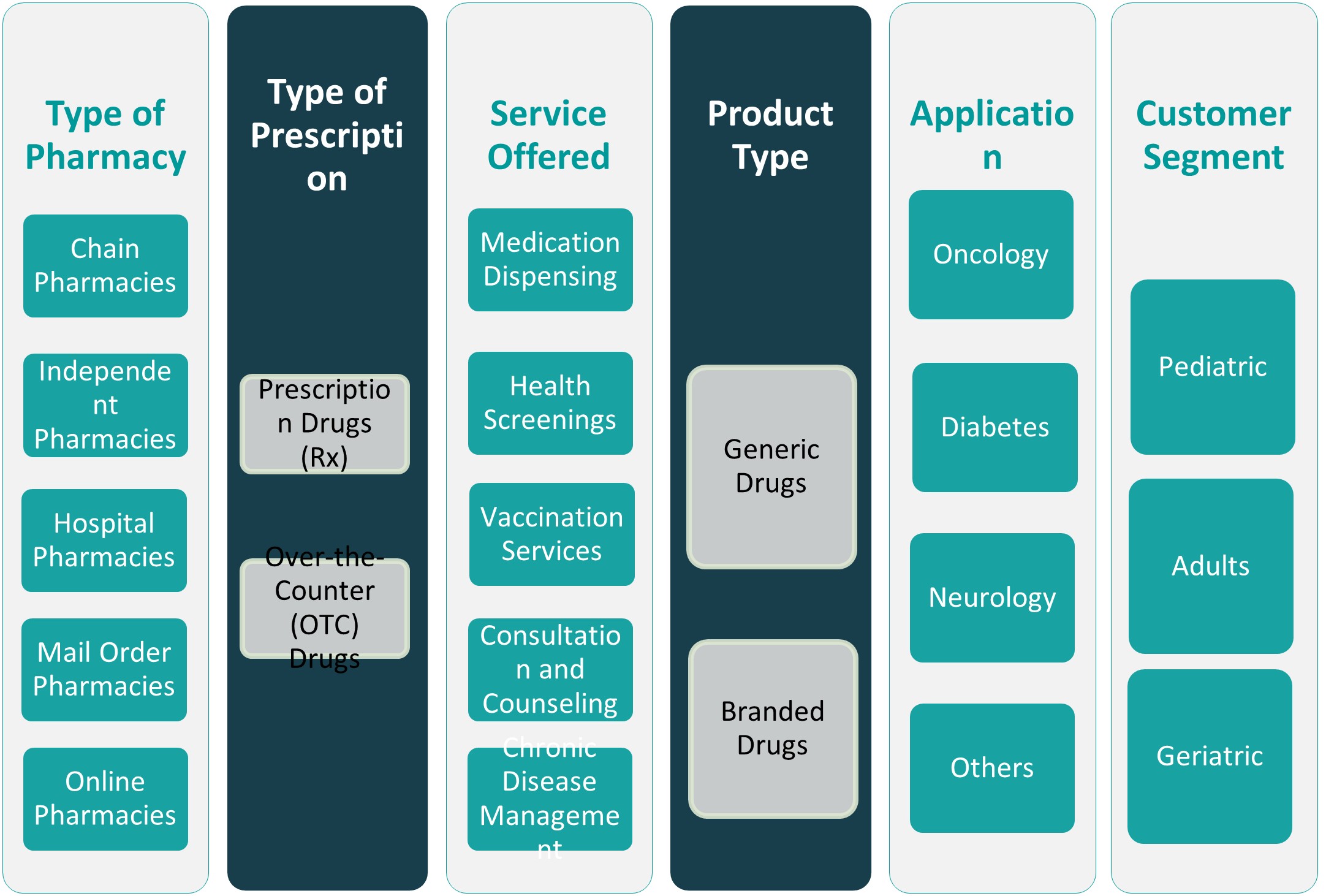
This report segments the UK Retail Pharmacy Market as follows:
Market Drivers
Aging Population and Increasing Healthcare Needs
The UK’s aging population is reshaping demand across the retail pharmacy channel as older adults require more frequent prescription fills, complex medication reviews and continuity services that pharmacies are uniquely positioned to deliver; national statistics highlight the scale of this demand with over 11 million people aged 65 and over in England in 2023 and UK mid-year estimates showing around 12.7 million people aged 65 and above across the whole United Kingdom in 2022, a demographic cohort that consumes a disproportionate share of chronic disease medicines and preventative services and that is projected to grow meaningfully over the next decade, creating sustained repeat prescription volumes and higher-touch clinical work for community pharmacists who act as local care coordinators and medication safety checkpoints, while major pharmacy operators such as Boots report large dispensing footprints and clinical service portfolios that support seniors Boots states it dispenses millions of prescription items each week and employs thousands of pharmacists to deliver services on behalf of the NHS so community pharmacies are evolving toward geriatric-focused offerings like domiciliary delivery, medication blistering and polypharmacy reviews to reduce hospital admissions and support aging in place.
Growing Demand for Preventive Healthcare and Wellness Products
Preventive healthcare and wellness are now central to UK pharmacy strategy as consumers seek accessible ways to manage risk factors and minor ailments without burdensome GP visits, and pharmacies have scaled vaccination and screening programmes to meet that need with measurable results: community pharmacies delivered over four million flu vaccinations through pharmacy-led routes in recent seasons in England, demonstrating both capacity and public trust, and pharmacists increasingly provide services such as smoking cessation support, blood pressure checks and NHS-backed NHS Pharmacy First consultations that divert routine cases away from higher-cost settings while increasing basket size for OTC and wellness assortments, so retail pharmacies capture preventive spend through product ranges, point-of-care services and targeted health campaigns; large chains amplify reach community pharmacy networks combined with supermarket and multiple operators ensure wide local availability and trusted clinical advice, enabling pharmacies to position themselves as front-line preventive health destinations that drive repeat visits and broaden revenue beyond prescriptions while improving early detection and self-care among the population.
Technological Advancements and the Rise of E-Pharmacy Services
Digital transformation is accelerating in the UK retail pharmacy market as e-pharmacy platforms, electronic prescribing, click-and-collect and app-led medication management become mainstream tools for improving convenience and safety; major retailers provide clear proof points Boots reports 8.4 million active users of its app and on-demand delivery from over 250 stores via third-party platforms, illustrating how omnichannel investments scale reach and reduce in-store congestion while maintaining dispensing continuity, and the NHS rollout of digital prescription services and integration with pharmacy systems supports secure e-prescribing and remote consultation workflows, enabling pharmacies to offer telepharmacy, automated refill scheduling and personalized reminders that improve adherence and customer engagement, while technology-driven logistics and inventory management reduce stockouts and waste; as patients adopt online-first behaviours, pharmacies that tightly integrate digital touchpoints with in-store clinical capability convert convenience into loyalty and clinical outcomes, positioning the channel to capture both traditional dispensing volumes and growing online wellness spend.
Government Initiatives and Regulatory Support
Policy and regulatory shifts in the UK are materially expanding the scope of pharmacy practice and creating funded clinical pathways that underpin commercial growth, exemplified by the Pharmacy First roll-out and wider community pharmacy contractual frameworks which together have delivered millions of clinical consultations within months of launch and allocated dedicated funding to embed pharmacy as a first port-of-call for specific common conditions; official data published by NHS Business Services Authority and the Department of Health and Social Care indicate that Pharmacy First clinical pathways have delivered over 1.9 million consultations to date and that NHS contractual frameworks forecast over 1.2 billion prescriptions to be dispensed in the coming year, reflecting both the operational scale of community pharmacy and explicit government intent to relieve primary care pressures by reimbursing pharmacist-led care, while targeted policy measures such as enhanced payments for clinical activity and digital integration support create clearer revenue streams for pharmacies to invest in consultation rooms, workforce training and IT systems, enabling chains and independents to expand patient-facing services and to form formal links with NHS pathways to improve access and continuity of care across the country.
Market Trends
Expansion of E-Pharmacy Services
The rapid growth of e-pharmacy services is one of the most significant trends in the UK retail pharmacy market. Consumers increasingly prefer the convenience of ordering medications and health products online, a trend accelerated by the COVID-19 pandemic. For instance, during the pandemic, online pharmacy usage in the UK surged by over 200%, as reported by the National Pharmacy Association. E-pharmacies offer a range of services, including online prescription refills, home delivery, and telehealth consultations. This digital transformation is supported by regulatory changes, such as the Electronic Prescription Service (EPS), which enables prescriptions to be sent directly to pharmacies electronically, ensuring safety and privacy standards are met. Many traditional brick-and-mortar pharmacies have adapted to this shift by integrating online services, offering customers a seamless shopping experience. This trend not only meets the growing demand for convenience but also allows pharmacies to extend their reach to underserved areas, where access to physical stores may be limited. Notably, a study by the Royal Pharmaceutical Society highlighted that 1 in 4 UK residents now rely on e-pharmacies for their medication needs.
Increasing Role of Pharmacies in Healthcare Services
Retail pharmacies in the UK are increasingly becoming hubs for healthcare services beyond the traditional role of dispensing medications. Pharmacies are now offering a wider range of clinical services such as health screenings, vaccinations, smoking cessation support, and management of chronic conditions like diabetes and hypertension. According to NHS England, over 2.5 million flu vaccinations were administered by community pharmacies in 2022, showcasing their growing role in public health. This shift is part of a broader move towards integrating pharmacies into the National Health Service (NHS) system, as pharmacies are viewed as essential access points for primary healthcare. For instance, the NHS Community Pharmacist Consultation Service (CPCS) has facilitated over 800,000 patient consultations since its launch, further emphasizing the critical role of pharmacies in healthcare provision. Offering these services helps pharmacies build stronger relationships with customers, positioning them as trusted healthcare providers in the community.
Growth of Personalized Health Solutions
Another prominent trend in the UK retail pharmacy market is the rise of personalized health solutions. With advances in technology, pharmacies are increasingly offering products and services tailored to individual health needs. Personalization includes the use of data analytics to provide customized health recommendations based on a customer’s medical history, lifestyle, and preferences. Retail pharmacies are also leveraging advancements in genetic testing and AI-driven platforms to create personalized wellness plans and supplement regimens. This trend is being driven by the increasing consumer demand for more tailored and proactive healthcare. As consumers become more health-conscious and seek to prevent illness rather than merely treat it, pharmacies are capitalizing on this trend by providing specialized products, such as custom vitamin packs and personalized skincare solutions.
Focus on Sustainability and Eco-Friendly Products
Sustainability has become a key concern for consumers in the UK, influencing their purchasing decisions in various sectors, including retail pharmacies. There is an increasing demand for eco-friendly products, sustainable packaging, and products that promote environmental health. Retail pharmacies are responding by expanding their range of sustainable products, such as biodegradable or recyclable packaging, cruelty-free personal care items, and eco-conscious household goods. Many pharmacies are also adopting more environmentally friendly practices in their operations, such as reducing plastic waste and optimizing energy use in stores. This trend reflects the broader global movement toward sustainability and aligns with consumer values that prioritize eco-friendly solutions. By offering sustainable alternatives, retail pharmacies can attract environmentally conscious customers while contributing to the reduction of their environmental footprint.
Market Challenges
Intense Price Competition and Margin Pressure
One of the significant challenges facing the UK retail pharmacy market is the intense price competition, particularly due to the presence of large pharmacy chains and online pharmacies. As pharmacies compete for market share, many are forced to lower prices to attract customers, which can put pressure on profit margins. The retail pharmacy sector is heavily influenced by government pricing regulations, particularly within the National Health Service (NHS) framework, which caps the reimbursement for prescription medications. For instance, NHS Business Services Authority data indicates that the average reimbursement per prescription item in England was approximately £9.35 in 2023. These pricing controls, combined with the rising operational costs, make it difficult for pharmacies to maintain healthy margins. Additionally, the increasing shift toward generic drugs, which accounted for over 80% of all prescription items dispensed in England in 2023, further contributes to the squeeze on profitability. Retail pharmacies must continuously innovate and improve operational efficiency to stay competitive, which involves investing in technology, expanding service offerings, and improving customer engagement. However, these strategies often require significant capital outlay, which can be difficult to sustain in a highly competitive and price-sensitive environment.
Regulatory and Compliance Challenges
The UK retail pharmacy market is subject to complex and evolving regulatory requirements, which can present significant challenges for pharmacies, particularly smaller or independent players. The stringent regulations around the sale of prescription drugs, over-the-counter products, and health services, such as vaccinations and consultations, require pharmacies to maintain high standards of compliance with safety, privacy, and operational guidelines. For example, ensuring compliance with the General Pharmaceutical Council (GPhC) regulations and NHS guidelines can be resource-intensive, requiring continuous training, auditing, and investment in quality assurance processes. Moreover, with the rise of e-pharmacy services, the regulatory environment has become even more complicated, as pharmacies must comply with additional rules related to online sales, data protection, and telemedicine. Any failure to meet these regulatory standards can result in penalties, reputational damage, or even the loss of operating licenses. This ongoing regulatory burden is a particular challenge for small or independent pharmacies that may not have the same resources as larger pharmacy chains to manage compliance effectively. The changing landscape of healthcare policies and evolving regulations can create uncertainty, making it difficult for pharmacies to plan long-term strategies and investments.
Market Opportunities
Expansion of Online and Delivery Services
The growth of e-pharmacy services presents a significant opportunity for the UK retail pharmacy market. As consumer behavior shifts toward the convenience of online shopping, pharmacies have the opportunity to expand their digital offerings, including online prescription refills, health consultations, and medication delivery services. The pandemic has accelerated this shift, and even as restrictions ease, many consumers continue to prefer the convenience of having medications and wellness products delivered to their doorstep. By embracing e-commerce and enhancing digital platforms, pharmacies can reach a broader customer base, especially in underserved or rural areas where physical pharmacy access may be limited. Additionally, leveraging technology such as mobile apps for easy prescription management, medication reminders, and personalized health advice can further enhance customer engagement and loyalty. Expanding online services also provides pharmacies with the potential to diversify revenue streams and reduce dependence on in-store foot traffic, making it a key opportunity for growth.
Leveraging the Growth of Preventive Healthcare and Wellness Products
There is a growing demand for preventive healthcare products, which presents a valuable opportunity for retail pharmacies to expand their product offerings. Consumers are increasingly seeking solutions to maintain health and prevent illness, including vitamins, dietary supplements, and personalized health services. Retail pharmacies can capitalize on this trend by expanding their range of wellness products and offering specialized services, such as health assessments, lifestyle advice, and personalized supplement plans. Additionally, pharmacies can partner with health and wellness brands to provide exclusive products and services that cater to specific consumer needs, such as immunity-boosting products or mental well-being solutions. By positioning themselves as trusted health advisors and one-stop destinations for wellness, pharmacies can attract health-conscious customers and strengthen their market presence. This shift towards preventive care and wellness will continue to fuel demand for pharmacy services and products, offering substantial growth potential in the sector.
Market Segmentation Analysis
By Type of Pharmacy
The UK retail pharmacy market is segmented by the type of pharmacy, with key categories including chain pharmacies, independent pharmacies, hospital pharmacies, mail-order pharmacies, and online pharmacies. Chain pharmacies dominate the market due to their widespread presence, strong brand recognition, and large-scale operations, which allow them to benefit from economies of scale. Independent pharmacies, on the other hand, continue to hold a significant market share by offering personalized services and strong community ties. Hospital pharmacies play a crucial role in healthcare, dispensing medications within hospital settings and contributing to the provision of specialized pharmaceutical care. Mail-order pharmacies are gaining traction, driven by the growing consumer preference for convenience and home delivery services. Online pharmacies have seen a significant rise in recent years, further amplified by the pandemic, as consumers increasingly turn to e-pharmacies for the ease of ordering prescription medications and health products online.
By Type of Prescription
The UK retail pharmacy market is also segmented by the type of prescription, with the two primary categories being prescription drugs (Rx) and over-the-counter (OTC) drugs. Prescription drugs represent a substantial portion of the market, driven by the increasing prevalence of chronic conditions such as diabetes, hypertension, and cardiovascular diseases, which require ongoing medication management. OTC drugs have witnessed significant growth, supported by consumer preferences for self-medication, convenience, and affordability. Pharmacies are increasingly focusing on providing OTC products, such as pain relievers, cold and flu medications, and supplements, catering to the growing demand for non-prescription products that offer immediate relief and preventive care.
Segments
Based on Type of Pharmacy
- Chain Pharmacies
- Independent Pharmacies
- Hospital Pharmacies
- Mail Order Pharmacies
- Online Pharmacies
Based on Type of prescription
- Prescription Drugs (Rx)
- Over-the-Counter (OTC) Drugs
Based on Service offered
- Medication Dispensing
- Health Screenings
- Vaccination Services
- Consultation and Counseling
- Chronic Disease Management
Based on Product Type
- Generic Drugs
- Branded Drugs
Based on Application
- Oncology
- Diabetes
- Neurology
- Others
Based on Customer
- Paediatric
- Adults
- Geriatric
Based on Region
- England
- Scotland
- Wales
- Northern Ireland
Regional Analysis
England (85%)
England holds the largest share of the UK retail pharmacy market, accounting for approximately 85% of the total market value. This dominance is primarily driven by the high population density in urban areas such as London, Manchester, Birmingham, and Leeds, where pharmacies are more concentrated. In these cities, the demand for pharmaceutical products and services is high, owing to the larger and more diverse population, which includes both young and elderly consumers. The growth of e-pharmacy services and online retail pharmacies has also been more pronounced in England, with consumers increasingly opting for the convenience of home delivery and online prescription management. Additionally, England's larger healthcare infrastructure, particularly through the National Health Service (NHS), contributes to the widespread availability of pharmacies in both urban and rural areas, fostering continued market growth.
Scotland (7-8%)
Scotland holds a smaller but significant share of the market, approximately 7-8%. Pharmacies in Scotland serve both urban centers, such as Glasgow and Edinburgh, and rural communities, where pharmacies play a crucial role in providing healthcare access. While the urban centers contribute to a large portion of the market share, the increasing focus on community health services in rural areas is also boosting pharmacy demand. The expansion of pharmacy services beyond traditional medication dispensing, such as health screenings and vaccination services, has been particularly important in remote regions, where access to healthcare can be more limited. Scottish pharmacies are adapting to these unique needs by providing personalized care, especially for elderly patients and those with chronic conditions.
Key players
- Boots UK
- Lloyds Pharmacy
- Well Pharmacy
- Superdrug
- Rowlands Pharmacy
Competitive Analysis
The UK retail pharmacy market is highly competitive, with several key players vying for market share. Boots UK is one of the largest pharmacy chains, offering a broad range of pharmaceutical and health products. It benefits from a strong brand presence and extensive network of stores across the UK, as well as a growing e-commerce platform. Lloyds Pharmacy focuses on community-based pharmacy services and healthcare solutions, providing a personalized approach to medication dispensing and health advice. Well Pharmacy operates with a strong emphasis on delivering health services and expanding its reach through both physical stores and online platforms. Superdrug, while primarily known for its beauty and personal care offerings, has successfully integrated pharmacy services, focusing on convenience and competitive pricing. Rowlands Pharmacy targets niche markets with a focus on customer service and personalized care. The competition among these players is fierce, with differentiation driven by service offerings, geographic presence, and digital transformation strategies.
Recent Developments
- In December 2025, Pharmacy2U announced it had received B Corp status, positioning itself as the only UK online pharmacy with the certification and highlighting commitments around social and environmental responsibility, transparency, and accountability.
- In January 2026, Allied Pharmacies acquired a further 68 Jhoots pharmacies, taking the total number of Jhoots pharmacies it had acquired to 129, marking a significant consolidation move in UK community pharmacy retail.
- In January 2026, Boots launched PrescriptionsPlus, a digital service designed to help customers manage NHS repeat prescriptions, track prescription progress, and choose delivery or in-store collection.
- In January 2026, Nourished launched its personalised nutrition gummies in selected Boots stores, using AI-based product selection and UK-developed 3D-printing technology to combine multiple active ingredients into one gummy.
- In February 2026, Morrisons began exploring the sale of dozens of its in-store pharmacies as part of wider turnaround efforts, indicating potential divestment activity within supermarket-based pharmacy retail.
- In May 2026, P.Louise launched into Boots stores nationwide, marking the beauty brand’s first entry into physical UK high-street retail and expanding Boots’ beauty-led retail offering.
Market Concentration and Characteristics
The UK retail pharmacy market exhibits moderate concentration, with a few large players dominating the sector while a significant number of smaller, independent pharmacies also contribute to the market landscape. Major pharmacy chains like Boots UK, Lloyds Pharmacy, and Superdrug command the largest market share due to their extensive networks, strong brand recognition, and comprehensive service offerings, including prescription dispensing, health consultations, and over-the-counter products. Independent pharmacies remain competitive by focusing on personalized services and community relationships. The market is characterized by a growing trend of digital transformation, with the rise of e-pharmacies and online prescription services reshaping how consumers access pharmaceutical products. Additionally, there is a strong emphasis on expanding healthcare services beyond traditional medication dispensing, including vaccinations, health screenings, and chronic disease management, creating a more service-oriented and customer-centric environment across the sector.
Report Coverage
The research report offers an in-depth analysis based on Type of Pharmacy, Type of prescription, Service offered, Product Type, Application, Customer and Region. It details leading market players, providing an overview of their business, product offerings, investments, revenue streams, and key applications. Additionally, the report includes insights into the competitive environment, SWOT analysis, current market trends, as well as the primary drivers and constraints. Furthermore, it discusses various factors that have driven market expansion in recent years. The report also explores market dynamics, regulatory scenarios, and technological advancements that are shaping the industry. It assesses the impact of external factors and global economic changes on market growth. Lastly, it provides strategic recommendations for new entrants and established companies to navigate the complexities of the market.
Future Outlook
- The UK retail pharmacy market will continue to embrace digital transformation, enhancing e-commerce platforms and telehealth services to meet evolving consumer demands for convenience and accessibility.
- Pharmacies will increasingly become health hubs, offering a broader range of services including chronic disease management, mental health support, and personalized wellness programs.
- There will be greater integration between pharmacies and the National Health Service (NHS), allowing for more seamless patient care and expanded roles in public health initiatives.
- Retail pharmacies will place more emphasis on preventative care, providing screenings, vaccinations, and educational programs to help reduce the burden on primary healthcare facilities.
- Artificial intelligence and advanced analytics will be more widely adopted to improve service efficiency, personalize customer interactions, and streamline inventory management.
- Pharmacies will adopt more sustainable practices, including eco-friendly packaging and waste reduction measures, responding to consumer preferences for environmentally responsible businesses.
- The market will see an increase in the sales of generic and over-the-counter medications as consumers seek cost-effective treatment options.
- Pharmacies will invest in improving the customer experience, utilizing technology to offer faster service, more accurate health advice, and interactive engagement through apps and online portals.
- Strategic partnerships with healthcare providers, technology companies, and insurance agencies will become more common as pharmacies look to broaden their service offerings and market reach.
- Pharmacies will need to stay agile and adapt to ongoing regulatory changes, ensuring compliance while also seizing new opportunities that arise from legislative developments.

Request a Free Sample
Fill in your details and we'll send you a free sample report.
- Sample data tables & charts
- Research methodology
Market Dynamics
Aging Population and Increasing Healthcare Needs
The growing proportion of elderly individuals in the UK is driving higher demand for prescription medications, chronic disease management, and pharmacy-based clinical services, as older adults require more frequent and complex pharmaceutical care.
Expansion of Preventive Healthcare and Wellness Products
UK consumers are increasingly seeking preventive health solutions, such as vaccinations, screenings, and wellness products, prompting pharmacies to broaden their service and product offerings and capture additional revenue streams beyond traditional dispensing.
Technological Advancements and E-Pharmacy Growth
The rapid adoption of digital platforms, electronic prescribing, and online pharmacy services is enhancing convenience for consumers, expanding pharmacy reach into underserved areas, and driving overall market growth through new service models.
Government Initiatives and Regulatory Support
Policy measures like the NHS Pharmacy First program and expanded clinical service funding are integrating pharmacies more deeply into the healthcare system, increasing their role in primary care and generating new, reimbursed service opportunities.
Shift Toward Generic and OTC Medications
Cost-conscious consumers and NHS policies are fueling the uptake of generic and over-the-counter drugs, increasing pharmacy transaction volumes and supporting market expansion as patients seek affordable, accessible treatment options.
Need a Custom Version of This Report?
Tailor the scope, geography, or segments to your exact requirements.
- Custom geography or segment scope
- Direct access to our analyst team
Frequently Asked Questions
What is the market size of the UK Retail Pharmacy Market in 2023 and 2032?
What are the key drivers of the UK Retail Pharmacy Market?
What role do government initiatives play in the UK Retail Pharmacy Market?
Which key players dominate the UK Retail Pharmacy Market?
Table of Content
Chapter 1 Market Segmentation
- 1.1 Segmentation Framework
- 1.1.1 Product and Service Classification
- 1.1.2 Application and End-Use Classification
- 1.1.3 Technology and Solution Classification
- 1.1.4 Customer and Distribution Channel Classification
- 1.1.5 Geographic Segmentation
- 1.1.6 Market Segment Definitions and Boundaries
- 1.2 By Service Offered
- 1.2.1 Medication Dispensing
- 1.2.2 Health Screenings
- 1.2.3 Vaccination Services
- 1.2.4 Consultation and Counseling
- 1.2.5 Chronic Disease Management
- 1.3 By Type of Pharmacy
- 1.3.1 Chain Pharmacies
- 1.3.2 Independent Pharmacies
- 1.3.3 Hospital Pharmacies
- 1.3.4 Mail Order Pharmacies
- 1.3.5 Online Pharmacies
- 1.4 By Type of Prescription
- 1.4.1 Prescription Drugs (Rx)
- 1.4.2 Over-the-Counter (OTC) Drugs
Chapter 2 Introduction
- 2.1 Report Objectives and Scope
- 2.2 Product Definition and Industry Terminology
- 2.3 Market Inclusions and Exclusions
- 2.4 Research Process
- 2.4.1 Primary Research and Expert Interviews
- 2.4.2 Secondary Research and Source Review
- 2.4.3 Top-Down and Bottom-Up Estimation
- 2.4.4 Data Triangulation and Verification
- 2.5 Market Size Measurement Basis
- 2.5.1 2024: USD 54,801.52 million → 2032: USD 74,347.82 million
- 2.6 Historical and Forecast Reference Periods
- 2.6.1 Base Year: 2024
- 2.6.2 Forecast Period: 2024-2032
- 2.7 Research Assumptions and Limitations
Chapter 3 Executive Summary
- 3.1 Market Snapshot and Key Findings
- 3.2 Base-Year Market Size, 2024
- 3.3 Forecast Market Size, 2032
- 3.4 Revenue and Volume Growth Outlook
- 3.5 Key Demand and Supply Indicators
- 3.6 Leading Market Segments
- 3.7 Fastest-Growing Market Opportunities
- 3.8 Regional Performance Highlights
- 3.9 Technology and Industry Transformation
- 3.10 Competitive Landscape Summary
- 3.11 Analyst View and Strategic Implications
Chapter 4 UK Retail Pharmacy Market Trends and Developments
- 4.1 Historical Industry Development
- 4.2 Recent Market Trends and Developments
- 4.3 Demand and Customer Behavior Trends
- 4.4 Technology and Product Innovation
- 4.5 Artificial Intelligence, Automation and Digitalization
- 4.6 Local Manufacturing and Supply Chain Realignment
- 4.7 Industry Partnerships, Mergers and Acquisitions
- 4.8 Sustainability and Circular Economy Developments
- 4.9 Government and Private Sector Investment Trends
- 4.10 Emerging Business Models and Commercialization
- 4.11 Industry Developments and Announcements
Chapter 5 UK Retail Pharmacy Market Production, Supply and Demand Analysis
- 5.1 Demand Trend and Consumption Analysis
- 5.2 Demand Forecast, 2024-2032
- 5.3 Production and Output Trend
- 5.4 Production and Output Forecast, 2024-2032
- 5.5 Installed Capacity and Capacity Utilization
- 5.6 Company-Wise Production Plants and Statistics
- 5.6.1 Installed Production Capacity
- 5.6.2 Actual Production
- 5.6.3 Planned Capacity and Expansion Targets
- 5.7 Supply Chain Structure and Procurement Trends
- 5.8 Supply-Demand Gap and Bottlenecks
- 5.9 Import Dependence and Sourcing Structure
- 5.10 Contract Manufacturing and Outsourcing
- 5.11 Regional Supply and Demand Concentration
Chapter 6 UK Retail Pharmacy Market Pricing Analysis
- 6.1 Pricing Structure and Measurement
- 6.2 Historical Pricing Trends
- 6.3 Pricing Outlook, 2024-2032
- 6.4 Average Selling Price and Unit Economics
- 6.5 Pricing by Product and Market Segment
- 6.6 Geographic Pricing Differences
- 6.7 Key Input, Energy, Labor and Logistics Costs
- 6.8 Contract Pricing and Purchasing Models
- 6.9 Pricing Sensitivity and Competitive Positioning
- 6.10 Price, Margin and Profitability Implications
Chapter 7 UK Retail Pharmacy Market Dynamics
- 7.1 Market Growth Drivers
- 7.1.1 Demand-Side Drivers
- 7.1.2 Technology and Innovation Drivers
- 7.1.3 Infrastructure and Investment Drivers
- 7.1.4 Regulatory and Policy Drivers
- 7.2 Market Restraints
- 7.2.1 Cost and Affordability Constraints
- 7.2.2 Technology and Adoption Barriers
- 7.2.3 Supply Chain and Operational Constraints
- 7.3 Market Challenges
- 7.3.1 Competitive Pressure and Margin Erosion
- 7.3.2 Skills, Infrastructure and Implementation Gaps
- 7.4 Emerging Market Opportunities
- 7.5 Market Dynamics Impact and Time-Horizon Assessment
Chapter 8 UK Retail Pharmacy Value Chain Analysis
- 8.1 Industry Value Chain Overview
- 8.2 Upstream Suppliers and Critical Inputs
- 8.3 Technology and Component Providers
- 8.4 Manufacturing or Service Delivery
- 8.5 Distribution, Channel Partners and Integrators
- 8.6 Downstream Applications and End Users
- 8.7 Value Addition and Profit Pools
- 8.8 Vertical Integration and Outsourcing
- 8.9 Supplier Concentration and Risk
- 8.10 Supply Chain Localization and Resilience
Chapter 9 UK Retail Pharmacy Market Regulations and Policies
- 9.1 Relevant Laws, Standards and Compliance Frameworks
- 9.2 Product, Service, Safety and Quality Requirements
- 9.3 Government Policies, Incentives and Subsidies
- 9.4 Imports, Exports and Trade Barriers
- 9.5 Public Procurement and Local Content Requirements
- 9.6 Environmental and Sustainability Compliance
- 9.7 Upcoming Policy Changes and Market Implications
Chapter 10 UK Retail Pharmacy Market Hotspots and Opportunities
- 10.1 Market Opportunity Mapping and Growth Hotspots
- 10.2 High-Growth Applications and Customer Groups
- 10.3 Underserved Markets and White-Space Opportunities
- 10.4 Emerging Technology and Product Opportunities
- 10.5 New Capacity and Investment Hotspots
- 10.6 Market Entry and Expansion Opportunities
- 10.7 Distribution and Partnership Opportunities
- 10.8 Near-Term and Long-Term Commercial Potential
- 10.9 Opportunity Attractiveness and Execution Risks
Chapter 11 UK Retail Pharmacy Market Outlook, 2024-2032
- 11.1 Market Size and Analysis
- 11.1.1 Revenue (Market Measurement: 2024: USD 54,801.52 million → 2032: USD 74,347.82 million)
- 11.1.2 Market Volume and Quantity Sold
- 11.1.3 Historical Market Size
- 11.1.4 Base-Year Market Size, 2024
- 11.2 Market Forecast, 2024-2032
- 11.2.1 Revenue Forecast to 2032
- 11.2.2 Volume Forecast to 2032
- 11.2.3 CAGR and Year-on-Year Growth
- 11.2.4 Incremental Revenue Opportunity
- 11.3 Forecast Assumptions and Scenario Analysis
- 11.3.1 Base-Case Forecast
- 11.3.2 Optimistic and Conservative Scenarios
- 11.3.3 Technology, Pricing and Policy Sensitivities
- 11.4 Market Attractiveness and Growth Outlook
Chapter 12 UK Retail Pharmacy Market Segmentation and Outlook
- 12.1 Segmentation Summary and Market Shares, 2024
- 12.2 Largest and Fastest-Growing Segments
- 12.3 By Service Offered - Market Size and Forecast, 2024-2032
- 12.3.1 Segment Definition and Scope
- 12.3.2 Historical Market Size
- 12.3.3 Revenue Forecast, 2024-2032
- 12.3.4 Volume Forecast, 2024-2032
- 12.3.5 Base-Year Market Share, 2024
- 12.3.6 Segment CAGR and Growth Drivers
- 12.3.7 Subsegment Market Size and Forecast
- 12.3.7.1 Medication Dispensing
- 12.3.7.2 Health Screenings
- 12.3.7.3 Vaccination Services
- 12.3.7.4 Consultation and Counseling
- 12.3.7.5 Chronic Disease Management
- 12.3.8 Subsegment Pricing and Adoption Trends
- 12.3.9 Leading Suppliers and Competition
- 12.3.10 Regional Demand and Opportunities
- 12.4 By Type of Pharmacy - Market Size and Forecast, 2024-2032
- 12.4.1 Segment Definition and Scope
- 12.4.2 Historical Market Size
- 12.4.3 Revenue Forecast, 2024-2032
- 12.4.4 Volume Forecast, 2024-2032
- 12.4.5 Base-Year Market Share, 2024
- 12.4.6 Segment CAGR and Growth Drivers
- 12.4.7 Subsegment Market Size and Forecast
- 12.4.7.1 Chain Pharmacies
- 12.4.7.2 Independent Pharmacies
- 12.4.7.3 Hospital Pharmacies
- 12.4.7.4 Mail Order Pharmacies
- 12.4.7.5 Online Pharmacies
- 12.4.8 Subsegment Pricing and Adoption Trends
- 12.4.9 Leading Suppliers and Competition
- 12.4.10 Regional Demand and Opportunities
- 12.5 By Type of Prescription - Market Size and Forecast, 2024-2032
- 12.5.1 Segment Definition and Scope
- 12.5.2 Historical Market Size
- 12.5.3 Revenue Forecast, 2024-2032
- 12.5.4 Volume Forecast, 2024-2032
- 12.5.5 Base-Year Market Share, 2024
- 12.5.6 Segment CAGR and Growth Drivers
- 12.5.7 Subsegment Market Size and Forecast
- 12.5.7.1 Prescription Drugs (Rx)
- 12.5.7.2 Over-the-Counter (OTC) Drugs
- 12.5.8 Subsegment Pricing and Adoption Trends
- 12.5.9 Leading Suppliers and Competition
- 12.5.10 Regional Demand and Opportunities
- 12.6 Segment Growth Comparison
- 12.7 Segment Attractiveness and Priority Matrix
Chapter 13 UK Retail Pharmacy Geographic Market Outlook, 2024-2032
- 13.1 Domestic Market Distribution and Demand Clusters
- 13.2 State- or Province-Wise Market Size and Forecast, 2024-2032
- 13.3 City and Metropolitan Market Outlook
- 13.4 Industrial, Manufacturing and Commercial Clusters
- 13.5 Geographic Concentration of Key End Users
- 13.6 Local Pricing and Purchasing Differences
- 13.7 Domestic Production Facilities and Capacity Map
- 13.8 Local Infrastructure and Project Pipeline
- 13.9 State-Level Policy and Incentive Differences
- 13.10 Subnational Investment Hotspots and Opportunities
- 13.11 Distribution and Logistics Networks
- 13.12 Domestic Competitive Footprint
Chapter 14 UK Retail Pharmacy Technology, Innovation and Sustainability Outlook
- 14.1 Technology Landscape and Maturity
- 14.2 Product, Process and Service Innovation
- 14.3 AI, Automation and Digital Tools in the Industry
- 14.4 Technology Adoption and Performance Benchmarking
- 14.5 Innovation Pipeline and R&D Investment
- 14.6 Patent and Intellectual Property Trends
- 14.7 Energy Efficiency and Resource Management
- 14.8 Sustainability, Recycling and Circularity
- 14.9 Technology Roadmap, 2024-2032
- 14.10 Risks of Obsolescence and Technology Substitution
Chapter 15 UK Retail Pharmacy Market Key Strategic Imperatives
- 15.1 Growth and Market Entry Priorities
- 15.2 High-Return Products and Segments
- 15.3 Pricing, Profitability and Cost Optimization
- 15.4 Technology Investment and Product Differentiation
- 15.5 Supply Chain Localization and Resilience
- 15.6 Distribution and Customer Acquisition
- 15.7 Partnership, Acquisition and Capacity Strategy
- 15.8 Regional Expansion Priorities
- 15.9 Short-, Medium- and Long-Term Actions
Chapter 16 Competition Outlook
- 16.1 Industry Competition Characteristics
- 16.2 Market Structure and Concentration
- 16.3 Market Share and Competitive Positioning, 2024
- 16.4 Company-Wise Revenue and Product Benchmarking
- 16.5 Production and Service Capacity Benchmarking
- 16.6 Technology, Pricing and Differentiation
- 16.7 Regional Footprint and Distribution Strength
- 16.8 Mergers, Acquisitions and Strategic Alliances
- 16.9 New Entrants and Competitive Threats
- 16.10 Porter's Five Forces and Industry Attractiveness
- 16.11 Competitive Outlook, 2024-2032
Chapter 17 Company Profiles
- 17.1 Company Coverage and Selection Criteria
- 17.2 Boots UK
- 17.2.1 Business Description
- 17.2.2 Company Ownership and Geographic Presence
- 17.2.3 Product and Service Portfolio
- 17.2.4 Manufacturing and Operating Footprint
- 17.2.5 Production Capacity and Expansion Plans
- 17.2.6 Financial Performance and Investment
- 17.2.7 Market Share and Competitive Position
- 17.2.8 Technology and Innovation Capabilities
- 17.2.9 Strategic Alliances or Partnerships
- 17.2.10 Recent Developments
- 17.2.11 Growth Strategy and Outlook
- 17.3 Lloyds Pharmacy
- 17.4 Well Pharmacy
- 17.5 Superdrug
- 17.6 Rowlands Pharmacy
- 17.7 Pharmacy2U
- 17.8 Allied Pharmacies
- 17.9 Jhoots Pharmacy
- 17.10 Morrisons Pharmacy
- 17.11 Day Lewis Pharmacy
- 17.12 Other Relevant Market Participants
Note: Every listed company is profiled on the structure shown under the first company. The company list is preliminary and may change based on research findings, market developments, data availability and client requirements.
Chapter 18 Disclaimer
- 18.1 Research and Forecast Disclaimer
- 18.2 Data Source and Estimation Limitations
Note: The depth of individual sections depends on data availability for this market. Volume, capacity, trade and other unit-based metrics are included where applicable.