| REPORT ATTRIBUTE | DETAILS |
|---|---|
| Historical Period | 2020-2023 |
| Base Year | 2024 |
| Forecast Period | 2025-2032 |
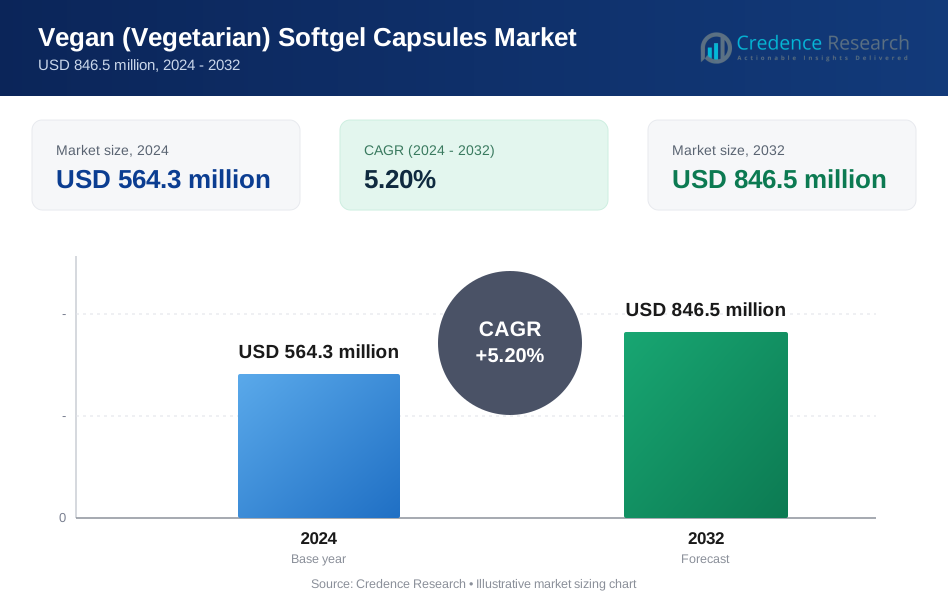
| Vegan (Vegetarian) Softgel Capsules Market Size 2024 | USD 564.3 million |
| Vegan (Vegetarian) Softgel Capsules Market, CAGR | 5.20% |
| Vegan (Vegetarian) Softgel Capsules Market Size 2032 | USD 846.5 million |
Market overview
The Vegan (Vegetarian) Softgel Capsules market size was valued at USD 451.2 million in 2018, grew to USD 564.3 million in 2024, and is anticipated to reach USD 846.5 million by 2032, at a CAGR of 5.20% during the forecast period.
The Vegan (Vegetarian) Softgel Capsules market is led by prominent players such as Catalent, Inc., Aenova Group, Capsugel (Lonza), Procaps Group, Sirio Pharma, and Captek Softgel International, who are driving innovation through advanced plant-based formulations and expanding their global manufacturing capabilities. These companies focus on product diversification and strategic partnerships to meet the growing demand for vegan, allergen-free, and clean-label capsules. North America stands as the leading region, holding 36.1% of the market share in 2024, supported by strong consumer preference for plant-based supplements and well-established regulatory frameworks. Asia Pacific is the fastest-growing region, offering significant expansion opportunities.
Market Insights
- The Vegan (Vegetarian) Softgel Capsules market was valued at USD 564.3 million in 2024 and is projected to reach USD 846.5 million by 2032, growing at a CAGR of 5.20% during the forecast period.
- Growing consumer demand for plant-based, clean-label, and allergen-free supplements is a key driver fueling market expansion across health supplements, pharmaceuticals, and nutracosmetics applications.
- Increasing preference for nutracosmetics and beauty-from-within trends, along with technological advancements in capsule stability and controlled-release formulations, is shaping market growth.
- North America holds the largest regional market share at 36.1%, followed by Europe at 26.9% and Asia Pacific at 22.3%; Carrageenan remains the leading product segment due to its superior gelling properties.
- Limited raw material availability, higher production costs, and technical challenges in capsule performance compared to gelatin-based options are key restraints impacting the growth potential in price-sensitive markets.
Market Segmentation Analysis:
By Product:
Carrageenan holds the largest market share in the Vegan (Vegetarian) Softgel Capsules market by product in 2024. Its strong position is driven by excellent gelling, stability, and plant-based composition, making it a preferred alternative to gelatin. Carrageenan offers consistent encapsulation and is widely used in both nutraceutical and pharmaceutical applications. Hydroxypropyl Methylcellulose (HPMC) is a growing product segment, holding a notable market share in the Vegan (Vegetarian) Softgel Capsules market. HPMC is highly valued for its superior stability, moisture resistance, and compatibility with a wide range of active ingredients. It is particularly preferred in pharmaceutical applications where capsule integrity and controlled release are critical. The starch segment holds a moderate but steadily increasing share in the Vegan (Vegetarian) Softgel Capsules market. Starch-based capsules are favored for their cost-efficiency, natural origin, and biodegradability. They are widely used in health supplements and functional food products where clean-label demands are high.
- For instance, Capsugel (Lonza) successfully developed plant-based softgel capsules using carrageenan, supporting over 200 commercial supplement products globally across various therapeutic areas.
By Application
Health Supplements dominate the Vegan (Vegetarian) Softgel Capsules market by application, accounting for the largest market share in 2024. The segment’s growth is driven by increasing consumer preference for plant-based vitamins, omega-3 supplements, and herbal formulations. Vegan softgel capsules are particularly valued for their ease of consumption, quick absorption, and high bioavailability. The pharmaceutical segment holds a significant and growing share in the Vegan (Vegetarian) Softgel Capsules market. This growth is supported by increasing regulatory acceptance of plant-based excipients and a strong push for animal-free capsule alternatives. Pharmaceutical companies are adopting vegan softgel capsules to meet dietary restrictions, cultural preferences, and rising consumer demand for ethical products. The nutracosmetics segment is an emerging application area in the Vegan (Vegetarian) Softgel Capsules market, with increasing consumer interest in beauty-from-within products driving its growth. Younger consumers and beauty-conscious demographics are fueling this segment’s expansion, as they increasingly seek convenient, plant-based options for beauty and personal care.
- For instance, Robinson Pharma produces over 500 million plant-based softgel capsules annually for health supplement brands worldwide.
Market Overview
Expanding Nutraceutical and Dietary Supplement Industry
The rapid growth of the nutraceutical and dietary supplement industry significantly supports the expansion of the Vegan (Vegetarian) Softgel Capsules market. Rising awareness of preventive healthcare and increasing demand for convenient, bioavailable supplement formats are driving the preference for softgel capsules. Vegan softgels offer advantages such as faster absorption, improved taste masking, and easy swallowing, which further enhances their market appeal. As consumers prioritize wellness and long-term health, the demand for plant-based vitamins, omega-3 supplements, and herbal extracts in vegan softgel forms continues to accelerate across major markets.
- For instance, Sirio Pharma’s vegan softgel production capacity has increased to over 1 billion capsules per year to meet global nutraceutical demand.
Regulatory Support for Plant-Based Excipients
Favorable regulatory shifts and approvals for plant-based excipients are driving growth in the Vegan (Vegetarian) Softgel Capsules market. Health authorities and food safety organizations are increasingly approving plant-derived materials like carrageenan, HPMC, starch, and pullulan for pharmaceutical and nutraceutical use. Regulatory bodies are also promoting transparency in product labeling, encouraging clean-label and vegan-certified formulations. This regulatory alignment supports manufacturers in adopting plant-based softgel technologies while meeting stringent safety and quality standards. The evolving regulatory landscape is providing a strong foundation for market players to innovate and expand vegan softgel offerings globally.
- For instance, Fuji Capsule Co., Ltd. secured plant-based capsule approvals for over 15 pharmaceutical products in Japan and Europe in the past three years.
Rising Demand for Plant-Based and Clean-Label Products
The growing consumer shift toward plant-based, clean-label, and allergen-free products is a major driver in the Vegan (Vegetarian) Softgel Capsules market. Increasing health consciousness and ethical consumerism are encouraging buyers to seek animal-free alternatives across dietary supplements, pharmaceuticals, and nutracosmetics. Consumers are actively avoiding gelatin-based capsules due to animal welfare concerns and potential allergen risks, creating strong demand for plant-derived softgel solutions. This shift is particularly notable among vegan, vegetarian, and flexitarian populations, which are expanding globally and pushing manufacturers to focus on plant-based innovations.
Key Trends & Opportunities
Growth of Nutracosmetics and Beauty-From-Within Products
The rising popularity of nutracosmetics presents a significant opportunity for the Vegan (Vegetarian) Softgel Capsules market. Consumers are increasingly embracing beauty-from-within solutions that combine nutrition and skincare benefits. Plant-based softgels delivering antioxidants, collagen boosters, and skin-nourishing supplements are gaining rapid traction, especially among younger, ethically conscious demographics. This trend aligns with the broader demand for clean-label, sustainable, and cruelty-free beauty products. As brands continue to launch vegan-friendly beauty supplements in softgel formats, the nutracosmetics segment is expected to unlock new growth avenues for market participants.
- For instance, Sirio Pharma reported the successful launch of 35 plant-based softgel formulations for beauty applications, with an annual production capacity exceeding 500 million capsules specifically for skin health, collagen support, and antioxidant delivery.
Technological Advancements in Capsule Formulations
Ongoing technological advancements in plant-based capsule materials and manufacturing processes are creating new market opportunities. Innovations in capsule stability, oxygen barrier properties, and disintegration rates are enhancing the performance of vegan softgel capsules, making them competitive with traditional gelatin options. The development of multi-layer and controlled-release vegan capsules is expanding their potential applications in both supplements and pharmaceuticals. Additionally, improvements in plant-derived polymers are helping manufacturers overcome earlier limitations related to shelf life and ingredient compatibility, creating favorable conditions for further market penetration.
- For instance, Procaps Group developed Unigel™ technology capable of combining liquids and solids within a single plant-based softgel, and it is now utilized in over 80 commercialized formulations worldwide, with capsule disintegration times optimized to under 30 minutes to match pharmaceutical release standards.
Key Challenges
Limited Raw Material Availability and High Costs
One of the key challenges in the Vegan (Vegetarian) Softgel Capsules market is the limited availability of high-quality plant-based raw materials and their relatively high production costs. Materials like carrageenan, HPMC, and pullulan often involve complex extraction and processing, leading to higher input costs compared to gelatin. This price gap can limit the competitiveness of vegan softgels, especially in cost-sensitive markets. Securing a stable supply of premium plant-derived materials remains a critical hurdle for manufacturers aiming to achieve economies of scale and maintain consistent product quality.
Technical Challenges in Capsule Performance
Achieving the same level of performance as traditional gelatin capsules remains a technical challenge for vegan softgels. Issues related to capsule integrity, stability under high humidity, and slower disintegration rates can affect product efficacy and consumer acceptance. Some plant-based materials may be sensitive to temperature and moisture, leading to concerns about shelf life and ingredient protection. Although technological advancements are improving capsule formulations, overcoming these performance limitations continues to require significant research and development investment from market participants.
Consumer Awareness and Price Sensitivity
Despite growing interest in plant-based products, consumer awareness of vegan softgel capsule benefits remains relatively low in several emerging markets. Additionally, price-sensitive consumers may still prefer more affordable gelatin-based alternatives. The higher cost of vegan softgels can be a barrier, especially when price differences are not justified by perceived value or health benefits. Manufacturers must focus on education, effective marketing, and product differentiation to increase consumer acceptance and willingness to pay a premium for vegan softgel products, particularly in developing regions.
Regional Analysis
North America
North America held a significant position in the Vegan (Vegetarian) Softgel Capsules market, accounting for the largest regional share of 36.1% in 2024. The market was valued at USD 173.2 million in 2018 and reached USD 206.0 million in 2024, projected to grow to USD 281.0 million by 2032 at a CAGR of 5.5%. The region's growth is driven by increasing consumer preference for plant-based supplements, strong regulatory support for vegan labeling, and high demand for clean-label nutraceuticals. The presence of leading health supplement manufacturers further strengthens the regional market's leadership.
Europe
Europe captured a regional market share of 26.9% in 2024 in the Vegan (Vegetarian) Softgel Capsules market, with a market size of USD 128.6 million in 2018 rising to USD 153.5 million in 2024. It is projected to reach USD 216.7 million by 2032 at a CAGR of 4.8%. The region benefits from growing demand for ethically sourced health products and strong consumer awareness of vegan and vegetarian alternatives. Increasing regulatory approvals for plant-based excipients and the popularity of dietary supplements and nutracosmetics are key factors supporting market expansion across major European countries.
Asia Pacific
Asia Pacific is the fastest-growing region in the Vegan (Vegetarian) Softgel Capsules market, holding a 22.3% market share in 2024. The regional market grew from USD 81.7 million in 2018 to USD 127.5 million in 2024 and is expected to reach USD 236.2 million by 2032, expanding at the highest CAGR of 6.3%. The growth is supported by increasing health awareness, rising disposable incomes, and a growing vegan population, particularly in countries like India, China, and Japan. Expanding dietary supplement industries and the growing adoption of plant-based beauty and health products are key regional growth drivers.
Latin America
Latin America held a smaller market share of 4.0% in 2024 in the Vegan (Vegetarian) Softgel Capsules market. The market size increased from USD 22.1 million in 2018 to USD 23.1 million in 2024 and is forecasted to reach USD 40.6 million by 2032, growing at a CAGR of 3.3%. The region is witnessing gradual growth driven by the rising popularity of health supplements and increasing awareness of vegan alternatives. Although price sensitivity and limited product penetration pose challenges, emerging consumer interest in plant-based dietary products is expected to support steady market development.
Middle East
The Middle East accounted for 5.7% of the market share in 2024 in the Vegan (Vegetarian) Softgel Capsules market. The market grew from USD 28.0 million in 2018 to USD 32.7 million in 2024, with expectations to reach USD 44.9 million by 2032, at a CAGR of 4.0%. Growing demand for plant-based supplements and halal-certified vegan products is driving market expansion in the region. Increasing health consciousness and dietary diversification among the urban population are supporting the adoption of vegan softgels, while regional manufacturers are gradually expanding plant-based product lines to meet evolving consumer preferences.
Africa
Africa held the smallest market share of 3.7% in 2024 in the Vegan (Vegetarian) Softgel Capsules market. The regional market size increased from USD 17.6 million in 2018 to USD 21.4 million in 2024 and is projected to reach USD 27.1 million by 2032, growing at a CAGR of 2.4%. Growth in Africa is currently limited due to lower consumer awareness and restricted product availability. However, increasing health education, gradual urbanization, and the entry of international supplement brands are expected to create future opportunities. Market expansion will largely depend on affordability and targeted consumer outreach in the coming years.
Market Segmentations:
By Product
- Carrageenan
- Hydroxypropyl Methylcellulose (HPMC)
- Starch
- Others
By Application
- Health Supplements
- Pharmaceutical
- Nutracosmetics
- Others
By Geography
- North America
- U.S.
- Canada
- Mexico
- Europe
- Germany
- France
- U.K.
- Italy
- Spain
- Rest of Europe
- Asia Pacific
- China
- Japan
- India
- South Korea
- South-east Asia
- Rest of Asia Pacific
- Latin America
- Brazil
- Argentina
- Rest of Latin America
- Middle East & Africa
- GCC Countries
- South Africa
- Rest of the Middle East and Africa
Competitive Landscape
The Vegan (Vegetarian) Softgel Capsules market is characterized by intense competition, with key players focusing on product innovation, technological advancements, and strategic partnerships to strengthen their market positions. Leading companies such as Catalent, Inc., Aenova Group, Capsugel (Lonza), Procaps Group, and Sirio Pharma are actively expanding their product portfolios to address the growing demand for plant-based, clean-label capsules. Many players are investing in research and development to improve capsule performance, stability, and compatibility with a wide range of active ingredients. Additionally, companies are pursuing mergers, acquisitions, and collaborations to enhance global reach and manufacturing capabilities. Market participants are also focusing on expanding production facilities in high-growth regions like Asia Pacific and North America to capitalize on rising consumer interest in vegan supplements. Branding, product differentiation, and regulatory compliance remain critical factors for gaining competitive advantage in this evolving market landscape, where consumer preference for ethical, sustainable, and high-quality products continues to drive innovation.
Key Player Analysis
- Catalent, Inc.
- Aenova Group
- Capsugel (Lonza)
- Procaps Group
- Sirio Pharma
- Captek Softgel International
- EuroCaps Ltd.
- Bahrain Pharma
- Robinson Pharma, Inc.
- Soft Gel Technologies, Inc.
- Fuji Capsule Co., Ltd.
- ALAND (Jiangsu) Nutraceutical Co.
- Sunsho Pharmaceutical
- Roxlor LLC
Recent Developments
- In October 2024, Catalent launched its OptiGel DR technology, a delayed/enteric release softgel innovation. This technology uses pectin (a plant-derived polysaccharide) in combination with gelatin, allowing for the creation of softgel capsules with inherent enteric properties, thus eliminating the need for a separate coating step. This advancement improves both productivity and product quality in softgel manufacturing.
- In July 2024, Aenova launched a new line of plant-based softgel capsules under the VegaGels® brand, directly responding to the rising demand for vegan and vegetarian supplements. These capsules are designed for nutraceutical and pharmaceutical applications, offering a clean-label, animal-free alternative.
- In June 2024, Lonza (Capsugel) introduced the Capsugel Enprotect® capsule in a new, smaller size 9 format. This plant-based, enteric capsule is designed for pre-clinical delivery of acid-sensitive active pharmaceutical ingredients (APIs), streamlining early-stage drug development and supporting vegan product lines
Market Concentration & Characteristics
The Vegan (Vegetarian) Softgel Capsules Market is moderately concentrated, with several key players holding significant shares through product innovation, advanced manufacturing capabilities, and strategic partnerships. It features a competitive landscape where leading companies like Catalent, Inc., Aenova Group, and Capsugel (Lonza) consistently introduce plant-based formulations to meet growing consumer demand. It is characterized by strong competition on product quality, capsule performance, and regulatory compliance. Companies focus on developing capsules with improved stability and bioavailability to differentiate their offerings. The market shows high product diversity, with carrageenan leading the product segment due to its excellent gelling and encapsulation properties. Health supplements dominate application usage, driven by increasing consumer preference for plant-based nutritional products. North America holds the largest regional share, supported by strong demand for clean-label supplements and a well-established regulatory environment. Asia Pacific is the fastest-growing region due to rising health awareness and the growing adoption of vegan products across key markets.
Report Coverage
The research report offers an in-depth analysis based on Product, Application and Geography. It details leading market players, providing an overview of their business, product offerings, investments, revenue streams, and key applications. Additionally, the report includes insights into the competitive environment, SWOT analysis, current market trends, as well as the primary drivers and constraints. Furthermore, it discusses various factors that have driven market expansion in recent years. The report also explores market dynamics, regulatory scenarios, and technological advancements that are shaping the industry. It assesses the impact of external factors and global economic changes on market growth. Lastly, it provides strategic recommendations for new entrants and established companies to navigate the complexities of the market.
Future Outlook
- The demand for vegan softgel capsules is expected to grow steadily due to rising consumer preference for plant-based supplements.
- Health supplements will continue to dominate the application segment driven by increased focus on preventive healthcare.
- Carrageenan will maintain its position as the leading product type supported by its strong functional properties.
- North America will remain the largest regional market driven by high consumer awareness and advanced manufacturing infrastructure.
- Asia Pacific is expected to be the fastest-growing region supported by increasing vegan population and expanding dietary supplement industry.
- Companies will invest more in research and development to improve capsule stability and enhance product performance.
- Plant-based pharmaceutical formulations will see higher adoption as manufacturers shift towards animal-free delivery systems.
- Nutracosmetics will emerge as a key growth area driven by growing demand for beauty-from-within solutions.
- Market players will focus on capacity expansion and partnerships to strengthen their global presence.
- Price sensitivity and raw material availability will remain key challenges impacting future growth.
Request a Free Sample
Fill in your details and we'll send you a free sample report.
- Sample data tables & charts
- Research methodology
Market Dynamics
Expansion of Nutraceutical and Dietary Supplement Industry
The rapid growth of the nutraceutical and dietary supplement sector is fueling demand for vegan softgel capsules, as consumers increasingly seek convenient, bioavailable, and plant-based supplement formats for preventive healthcare.
Regulatory Support for Plant-Based Excipients
Favorable regulatory shifts and approvals for plant-derived capsule materials such as carrageenan and HPMC are enabling broader adoption of vegan softgels in both pharmaceutical and nutraceutical applications, supporting market expansion.
Rising Demand for Clean-Label and Allergen-Free Products
Growing consumer preference for clean-label, allergen-free, and animal-free supplements is driving manufacturers to develop and market vegan softgel capsules, particularly among vegan, vegetarian, and flexitarian populations.
Technological Advancements in Capsule Formulations
Innovations in plant-based capsule stability, controlled-release technology, and ingredient compatibility are enhancing the performance of vegan softgels, making them more competitive with traditional gelatin capsules and expanding their application scope.
Growth of Nutracosmetics and Beauty-From-Within Trends
Increasing consumer interest in beauty-from-within solutions is boosting demand for vegan softgel capsules in nutracosmetics, as brands launch plant-based supplements targeting skin health, collagen support, and antioxidant delivery.
Need a Custom Version of This Report?
Tailor the scope, geography, or segments to your exact requirements.
- Custom geography or segment scope
- Direct access to our analyst team
Frequently Asked Questions
What is the current size of the Vegan (Vegetarian) Softgel Capsules Market?
What are the key segments within the Vegan (Vegetarian) Softgel Capsules Market?
What are some challenges faced by the Vegan (Vegetarian) Softgel Capsules Market?
Who are the major players in the Vegan (Vegetarian) Softgel Capsules Market?
Table of Content
Chapter 1 Market Segmentation
- 1.1 Segmentation Framework
- 1.1.1 Product and Service Classification
- 1.1.2 Application and End-Use Classification
- 1.1.3 Technology and Solution Classification
- 1.1.4 Customer and Distribution Channel Classification
- 1.1.5 Geographic Segmentation
- 1.1.6 Market Segment Definitions and Boundaries
- 1.2 By Product
- 1.2.1 Carrageenan
- 1.2.2 Hydroxypropyl Methylcellulose (HPMC)
- 1.2.3 Starch
- 1.2.4 Others
- 1.3 By Application
- 1.3.1 Health Supplements
- 1.3.2 Pharmaceutical
- 1.3.3 Nutracosmetics
- 1.3.4 Others
Chapter 2 Introduction
- 2.1 Report Objectives and Scope
- 2.2 Product Definition and Industry Terminology
- 2.3 Market Inclusions and Exclusions
- 2.4 Research Process
- 2.4.1 Primary Research and Expert Interviews
- 2.4.2 Secondary Research and Source Review
- 2.4.3 Top-Down and Bottom-Up Estimation
- 2.4.4 Data Triangulation and Verification
- 2.5 Market Size Measurement Basis
- 2.5.1 2024: USD 564.3 million → 2032: USD 846.5 million
- 2.6 Historical and Forecast Reference Periods
- 2.6.1 Base Year: 2024
- 2.6.2 Forecast Period: 2024-2032
- 2.7 Research Assumptions and Limitations
Chapter 3 Executive Summary
- 3.1 Market Snapshot and Key Findings
- 3.2 Base-Year Market Size, 2024
- 3.3 Forecast Market Size, 2032
- 3.4 Revenue and Volume Growth Outlook
- 3.5 Key Demand and Supply Indicators
- 3.6 Leading Market Segments
- 3.7 Fastest-Growing Market Opportunities
- 3.8 Regional Performance Highlights
- 3.9 Technology and Industry Transformation
- 3.10 Competitive Landscape Summary
- 3.11 Analyst View and Strategic Implications
Chapter 4 Global Vegan (Vegetarian) Softgel Capsules Market Trends and Developments
- 4.1 Historical Industry Development
- 4.2 Recent Market Trends and Developments
- 4.3 Demand and Customer Behavior Trends
- 4.4 Technology and Product Innovation
- 4.5 Artificial Intelligence, Automation and Digitalization
- 4.6 Local Manufacturing and Supply Chain Realignment
- 4.7 Industry Partnerships, Mergers and Acquisitions
- 4.8 Sustainability and Circular Economy Developments
- 4.9 Government and Private Sector Investment Trends
- 4.10 Emerging Business Models and Commercialization
- 4.11 Industry Developments and Announcements
Chapter 5 Global Vegan (Vegetarian) Softgel Capsules Market Production, Supply and Demand Analysis
- 5.1 Demand Trend and Consumption Analysis
- 5.2 Demand Forecast, 2024-2032
- 5.3 Production and Output Trend
- 5.4 Production and Output Forecast, 2024-2032
- 5.5 Installed Capacity and Capacity Utilization
- 5.6 Company-Wise Production Plants and Statistics
- 5.6.1 Installed Production Capacity
- 5.6.2 Actual Production
- 5.6.3 Planned Capacity and Expansion Targets
- 5.7 Supply Chain Structure and Procurement Trends
- 5.8 Supply-Demand Gap and Bottlenecks
- 5.9 Import Dependence and Sourcing Structure
- 5.10 Contract Manufacturing and Outsourcing
- 5.11 Regional Supply and Demand Concentration
Chapter 6 Global Vegan (Vegetarian) Softgel Capsules Market Pricing Analysis
- 6.1 Pricing Structure and Measurement
- 6.2 Historical Pricing Trends
- 6.3 Pricing Outlook, 2024-2032
- 6.4 Average Selling Price and Unit Economics
- 6.5 Pricing by Product and Market Segment
- 6.6 Geographic Pricing Differences
- 6.7 Key Input, Energy, Labor and Logistics Costs
- 6.8 Contract Pricing and Purchasing Models
- 6.9 Pricing Sensitivity and Competitive Positioning
- 6.10 Price, Margin and Profitability Implications
Chapter 7 Global Vegan (Vegetarian) Softgel Capsules Market Dynamics
- 7.1 Market Growth Drivers
- 7.1.1 Demand-Side Drivers
- 7.1.2 Technology and Innovation Drivers
- 7.1.3 Infrastructure and Investment Drivers
- 7.1.4 Regulatory and Policy Drivers
- 7.2 Market Restraints
- 7.2.1 Cost and Affordability Constraints
- 7.2.2 Technology and Adoption Barriers
- 7.2.3 Supply Chain and Operational Constraints
- 7.3 Market Challenges
- 7.3.1 Competitive Pressure and Margin Erosion
- 7.3.2 Skills, Infrastructure and Implementation Gaps
- 7.4 Emerging Market Opportunities
- 7.5 Market Dynamics Impact and Time-Horizon Assessment
Chapter 8 Global Vegan (Vegetarian) Softgel Capsules Value Chain Analysis
- 8.1 Industry Value Chain Overview
- 8.2 Upstream Suppliers and Critical Inputs
- 8.3 Technology and Component Providers
- 8.4 Manufacturing or Service Delivery
- 8.5 Distribution, Channel Partners and Integrators
- 8.6 Downstream Applications and End Users
- 8.7 Value Addition and Profit Pools
- 8.8 Vertical Integration and Outsourcing
- 8.9 Supplier Concentration and Risk
- 8.10 Supply Chain Localization and Resilience
Chapter 9 Global Vegan (Vegetarian) Softgel Capsules Market Regulations and Policies
- 9.1 Relevant Laws, Standards and Compliance Frameworks
- 9.2 Product, Service, Safety and Quality Requirements
- 9.3 Government Policies, Incentives and Subsidies
- 9.4 Imports, Exports and Trade Barriers
- 9.5 Public Procurement and Local Content Requirements
- 9.6 Environmental and Sustainability Compliance
- 9.7 Upcoming Policy Changes and Market Implications
Chapter 10 Global Vegan (Vegetarian) Softgel Capsules Market Hotspots and Opportunities
- 10.1 Market Opportunity Mapping and Growth Hotspots
- 10.2 High-Growth Applications and Customer Groups
- 10.3 Underserved Markets and White-Space Opportunities
- 10.4 Emerging Technology and Product Opportunities
- 10.5 New Capacity and Investment Hotspots
- 10.6 Market Entry and Expansion Opportunities
- 10.7 Distribution and Partnership Opportunities
- 10.8 Near-Term and Long-Term Commercial Potential
- 10.9 Opportunity Attractiveness and Execution Risks
Chapter 11 Global Vegan (Vegetarian) Softgel Capsules Market Outlook, 2024-2032
- 11.1 Market Size and Analysis
- 11.1.1 Revenue (Market Measurement: 2024: USD 564.3 million → 2032: USD 846.5 million)
- 11.1.2 Market Volume and Quantity Sold
- 11.1.3 Historical Market Size
- 11.1.4 Base-Year Market Size, 2024
- 11.2 Market Forecast, 2024-2032
- 11.2.1 Revenue Forecast to 2032
- 11.2.2 Volume Forecast to 2032
- 11.2.3 CAGR and Year-on-Year Growth
- 11.2.4 Incremental Revenue Opportunity
- 11.3 Forecast Assumptions and Scenario Analysis
- 11.3.1 Base-Case Forecast
- 11.3.2 Optimistic and Conservative Scenarios
- 11.3.3 Technology, Pricing and Policy Sensitivities
- 11.4 Market Attractiveness and Growth Outlook
Chapter 12 Global Vegan (Vegetarian) Softgel Capsules Market Segmentation and Outlook
- 12.1 Segmentation Summary and Market Shares, 2024
- 12.2 Largest and Fastest-Growing Segments
- 12.3 By Product - Market Size and Forecast, 2024-2032
- 12.3.1 Segment Definition and Scope
- 12.3.2 Historical Market Size
- 12.3.3 Revenue Forecast, 2024-2032
- 12.3.4 Volume Forecast, 2024-2032
- 12.3.5 Base-Year Market Share, 2024
- 12.3.6 Segment CAGR and Growth Drivers
- 12.3.7 Subsegment Market Size and Forecast
- 12.3.7.1 Carrageenan
- 12.3.7.2 Hydroxypropyl Methylcellulose (HPMC)
- 12.3.7.3 Starch
- 12.3.7.4 Others
- 12.3.8 Subsegment Pricing and Adoption Trends
- 12.3.9 Leading Suppliers and Competition
- 12.3.10 Regional Demand and Opportunities
- 12.4 By Application - Market Size and Forecast, 2024-2032
- 12.4.1 Segment Definition and Scope
- 12.4.2 Historical Market Size
- 12.4.3 Revenue Forecast, 2024-2032
- 12.4.4 Volume Forecast, 2024-2032
- 12.4.5 Base-Year Market Share, 2024
- 12.4.6 Segment CAGR and Growth Drivers
- 12.4.7 Subsegment Market Size and Forecast
- 12.4.7.1 Health Supplements
- 12.4.7.2 Pharmaceutical
- 12.4.7.3 Nutracosmetics
- 12.4.7.4 Others
- 12.4.8 Subsegment Pricing and Adoption Trends
- 12.4.9 Leading Suppliers and Competition
- 12.4.10 Regional Demand and Opportunities
- 12.5 Segment Growth Comparison
- 12.6 Segment Attractiveness and Priority Matrix
Chapter 13 Global Vegan (Vegetarian) Softgel Capsules End-Use and Application Market Outlook
- 13.1 End-Use Industry and Customer Demand Structure
- 13.2 Leading Applications and Customer Groups
- 13.3 End-Use Market Size, Share and Forecast
- 13.4 Major End-Use Industry Deep Dives
- 13.4.1 Customer Requirements and Use Cases
- 13.4.2 Demand and Replacement Cycles
- 13.4.3 Technical and Regulatory Considerations
- 13.4.4 Purchasing and Procurement Models
- 13.4.5 Leading Vendors and Distribution Channels
- 13.4.6 Forecast and Commercial Opportunities
- 13.5 Emerging Applications and Cross-Segment Demand
- 13.6 End-Use Industry Investment Priorities
Chapter 14 Global Vegan (Vegetarian) Softgel Capsules Geographic Market Outlook, 2024-2032
- 14.1 Regional Market Size and Share, 2024
- 14.2 Regional Market Forecast, 2024-2032
- 14.3 Regional Pricing, Production and Demand Differences
- 14.4 North America
- 14.4.1 United States
- 14.4.2 Canada
- 14.4.3 Mexico
- 14.5 Europe
- 14.5.1 Germany
- 14.5.2 France
- 14.5.3 Italy
- 14.5.4 United Kingdom
- 14.5.5 Spain
- 14.5.6 Poland
- 14.5.7 Russia
- 14.5.8 Netherlands
- 14.5.9 Belgium
- 14.5.10 Sweden
- 14.5.11 Denmark
- 14.5.12 Norway
- 14.5.13 Rest of Europe
- 14.6 Asia Pacific
- 14.6.1 China
- 14.6.2 India
- 14.6.3 Japan
- 14.6.4 South Korea
- 14.6.5 Thailand
- 14.6.6 Indonesia
- 14.6.7 Vietnam
- 14.6.8 Malaysia
- 14.6.9 Australia
- 14.6.10 Rest of Asia Pacific
- 14.7 Latin America
- 14.7.1 Brazil
- 14.7.2 Argentina
- 14.7.3 Colombia
- 14.7.4 Chile
- 14.7.5 Rest of Latin America
- 14.8 Middle East
- 14.8.1 Saudi Arabia
- 14.8.2 United Arab Emirates
- 14.8.3 Turkey
- 14.8.4 Israel
- 14.8.5 Iran
- 14.8.6 Rest of the Middle East
- 14.9 Africa
- 14.9.1 South Africa
- 14.9.2 Egypt
- 14.9.3 Nigeria
- 14.9.4 Morocco
- 14.9.5 Rest of Africa
- 14.10 Regional Investment, Policy and Supply Chain Differences
- 14.11 Regional Competitive Landscape
- 14.12 Geographic Growth Hotspots
Chapter 15 Global Vegan (Vegetarian) Softgel Capsules Technology, Innovation and Sustainability Outlook
- 15.1 Technology Landscape and Maturity
- 15.2 Product, Process and Service Innovation
- 15.3 AI, Automation and Digital Tools in the Industry
- 15.4 Technology Adoption and Performance Benchmarking
- 15.5 Innovation Pipeline and R&D Investment
- 15.6 Patent and Intellectual Property Trends
- 15.7 Energy Efficiency and Resource Management
- 15.8 Sustainability, Recycling and Circularity
- 15.9 Technology Roadmap, 2024-2032
- 15.10 Risks of Obsolescence and Technology Substitution
Chapter 16 Global Vegan (Vegetarian) Softgel Capsules Market Key Strategic Imperatives
- 16.1 Growth and Market Entry Priorities
- 16.2 High-Return Products and Segments
- 16.3 Pricing, Profitability and Cost Optimization
- 16.4 Technology Investment and Product Differentiation
- 16.5 Supply Chain Localization and Resilience
- 16.6 Distribution and Customer Acquisition
- 16.7 Partnership, Acquisition and Capacity Strategy
- 16.8 Regional Expansion Priorities
- 16.9 Short-, Medium- and Long-Term Actions
Chapter 17 Competition Outlook
- 17.1 Industry Competition Characteristics
- 17.2 Market Structure and Concentration
- 17.3 Market Share and Competitive Positioning, 2024
- 17.4 Company-Wise Revenue and Product Benchmarking
- 17.5 Production and Service Capacity Benchmarking
- 17.6 Technology, Pricing and Differentiation
- 17.7 Regional Footprint and Distribution Strength
- 17.8 Mergers, Acquisitions and Strategic Alliances
- 17.9 New Entrants and Competitive Threats
- 17.10 Porter's Five Forces and Industry Attractiveness
- 17.11 Competitive Outlook, 2024-2032
Chapter 18 Company Profiles
- 18.1 Company Coverage and Selection Criteria
- 18.2 Catalent, Inc.
- 18.2.1 Business Description
- 18.2.2 Company Ownership and Geographic Presence
- 18.2.3 Product and Service Portfolio
- 18.2.4 Manufacturing and Operating Footprint
- 18.2.5 Production Capacity and Expansion Plans
- 18.2.6 Financial Performance and Investment
- 18.2.7 Market Share and Competitive Position
- 18.2.8 Technology and Innovation Capabilities
- 18.2.9 Strategic Alliances or Partnerships
- 18.2.10 Recent Developments
- 18.2.11 Growth Strategy and Outlook
- 18.3 Aenova Group
- 18.4 Capsugel (Lonza)
- 18.5 Procaps Group
- 18.6 Sirio Pharma
- 18.7 Captek Softgel International
- 18.8 EuroCaps Ltd.
- 18.9 Robinson Pharma, Inc.
- 18.10 Fuji Capsule Co., Ltd.
- 18.11 Soft Gel Technologies, Inc.
- 18.12 Other Relevant Market Participants
Note: Every listed company is profiled on the structure shown under the first company. The company list is preliminary and may change based on research findings, market developments, data availability and client requirements.
Chapter 19 Disclaimer
- 19.1 Research and Forecast Disclaimer
- 19.2 Data Source and Estimation Limitations
Note: The depth of individual sections depends on data availability for this market. Volume, capacity, trade and other unit-based metrics are included where applicable.