
| REPORT ATTRIBUTE | DETAILS |
|---|---|
| Historical Period | 2019-2022 |
| Base Year | 2023 |
| Forecast Period | 2024-2032 |
| Automotive Automatic Transmission Market Size 2023 | USD 32,983.56 Million |
| Automotive Automatic Transmission Market, CAGR | 5.67% |
| Automotive Automatic Transmission Market Size 2032 | USD 54,182.98 Million |
Market Overview
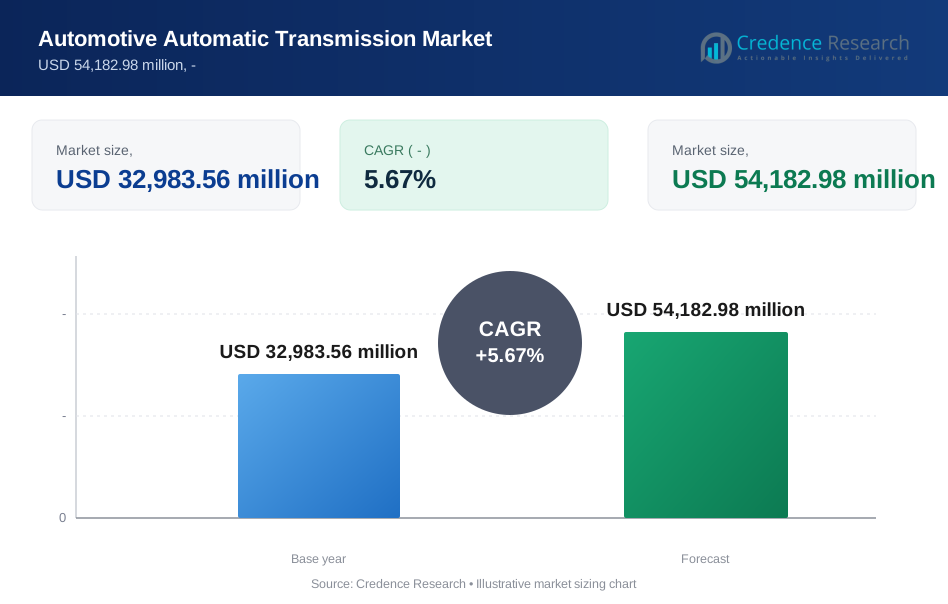
The Automotive Automatic Transmission market is projected to grow from USD 32,983.56 million in 2023 to an estimated USD 54,182.98 million by 2032, with a compound annual growth rate (CAGR) of 5.67% from 2024 to 2032. This significant growth is attributed to the increasing demand for fuel-efficient vehicles and the rising adoption of advanced transmission systems in modern automobiles.
Market drivers include the growing consumer preference for enhanced driving comfort and convenience, the surge in vehicle production, and stringent emission regulations driving the adoption of fuel-efficient technologies. Additionally, technological advancements in transmission systems, such as the development of dual-clutch and continuously variable transmissions, are influencing market growth trends.
Geographically, the Asia Pacific region dominates the Automotive Automatic Transmission market, driven by robust automotive manufacturing in countries like China, Japan, and South Korea. North America and Europe are also significant markets due to the high demand for luxury vehicles and the presence of key automotive manufacturers. Major players in this market include ZF Friedrichshafen AG, Aisin Seiki Co., Ltd., BorgWarner Inc., and JATCO Ltd., who are continually investing in R&D to stay competitive in the evolving market landscape.
Market Drivers
Rising Consumer Demand for Enhanced Driving Comfort and Convenience
One of the primary drivers of the automotive automatic transmission market is the growing consumer preference for vehicles that offer superior driving comfort and convenience. Automatic transmissions provide a seamless driving experience by eliminating the need for manual gear shifting, which reduces driver fatigue, particularly in heavy traffic conditions. This convenience has become a crucial selling point for automotive manufacturers, especially as urbanization increases and more people drive in congested city environments. For instance, over 70% of consumers in urban areas prioritize ease of driving when purchasing a new vehicle. Consumers are increasingly looking for vehicles that offer smooth acceleration, ease of use, and minimal driver intervention, all of which are facilitated by automatic transmission systems. This growing demand is particularly evident in the mid-range and luxury vehicle segments, where buyers are willing to pay a premium for advanced transmission technologies that enhance the overall driving experience. Automatic transmissions now account for over 60% of new vehicle sales in many developed countries.
Stringent Emission Regulations and Fuel Efficiency Standards
The automotive industry is under increasing pressure to comply with stringent emission regulations and fuel efficiency standards set by governments worldwide. These regulations are designed to reduce greenhouse gas emissions and lower the overall environmental impact of vehicles. Automatic transmission systems, particularly those with advanced technologies like continuously variable transmissions (CVTs) and dual-clutch transmissions (DCTs), play a crucial role in improving vehicle fuel efficiency. These systems optimize engine performance by ensuring that the engine operates within its most efficient range, thereby reducing fuel consumption and emissions. Government data indicates that vehicles equipped with advanced automatic transmissions can achieve up to 15% better fuel economy compared to their manual counterparts. As regulatory bodies continue to tighten emission standards, the demand for vehicles equipped with fuel-efficient automatic transmissions is expected to rise. Recent environmental impact assessments project that widespread adoption of advanced transmission technologies could reduce automotive emissions by up to 10% over the next decade.
Technological Advancements in Transmission Systems
Technological advancements in transmission systems are another significant driver of the automotive automatic transmission market. The industry has witnessed rapid innovations aimed at improving the performance, efficiency, and durability of automatic transmissions. One such advancement is the development of multi-speed transmissions, which offer a greater number of gear ratios compared to traditional systems. These multi-speed transmissions, including 8-speed and 10-speed automatics, provide smoother acceleration, better fuel economy, and enhanced driving dynamics. Industry reports show that vehicles equipped with 8-speed or higher automatic transmissions can achieve up to 8% better fuel efficiency compared to 6-speed models. Additionally, the integration of electronic control units (ECUs) in transmission systems has enabled more precise control over gear shifting, resulting in improved vehicle responsiveness and efficiency. Hybrid and electric vehicles are also benefiting from advancements in automatic transmission technology. Over 80% of electric vehicles sold globally now utilize some form of advanced automatic transmission system.
Increasing Adoption of Hybrid and Electric Vehicles
The global shift toward sustainable transportation is driving the adoption of hybrid and electric vehicles (EVs), which, in turn, is boosting the demand for advanced automatic transmission systems. Hybrid vehicles, which combine internal combustion engines with electric propulsion, require sophisticated transmission systems that can seamlessly integrate both power sources. Automatic transmissions, particularly those with hybrid-specific configurations, are essential for optimizing the performance and efficiency of hybrid vehicles. For example, some hybrid systems use a combination of planetary gear sets and electric motors to manage power distribution between the engine and the wheels, enabling smooth transitions between electric and combustion power. Electric vehicles, on the other hand, typically operate without traditional transmissions, relying instead on single-speed gearboxes or direct-drive systems. However, as the EV market matures, there is growing interest in developing multi-speed transmissions for electric vehicles to improve energy efficiency and driving dynamics. This trend is expected to open new opportunities for automatic transmission manufacturers to innovate and expand their offerings to cater to the evolving needs of the EV market. The increasing penetration of hybrid and electric vehicles is poised to be a major driver of growth in the automotive automatic transmission market over the coming years.
Market Trends
Integration of Advanced Driver Assistance Systems (ADAS) with Automatic Transmissions
One of the most significant trends in the automotive automatic transmission market is the increasing integration of advanced driver assistance systems (ADAS) with automatic transmissions. ADAS technologies, such as adaptive cruise control, lane-keeping assist, and automated parking, are becoming standard features in modern vehicles, particularly in higher-end models. These systems rely heavily on automatic transmissions to function effectively, as they require precise control over vehicle speed and gear selection. For instance, 60% of new vehicles sold in developed markets now come equipped with some form of ADAS technology. The integration of ADAS with automatic transmissions not only enhances vehicle safety and convenience but also drives the adoption of automatic transmissions across various vehicle segments. Vehicles with integrated ADAS and automatic transmission systems have seen a 15% increase in consumer preference over the past two years.
Growing Popularity of Continuously Variable Transmissions (CVTs) and Dual-Clutch Transmissions (DCTs)
Another prominent trend in the automotive automatic transmission market is the growing popularity of continuously variable transmissions (CVTs) and dual-clutch transmissions (DCTs). CVTs, known for their ability to provide a smooth and fuel-efficient driving experience, are becoming increasingly common in compact and mid-sized vehicles. Recent market analysis shows that CVT adoption has grown by 25% in the past five years, with particularly strong uptake in Asian markets. On the other hand, DCTs are gaining traction in performance-oriented and luxury vehicles due to their ability to deliver quick and seamless gear shifts. Industry reports indicate that DCT installations have increased by 18% annually in premium vehicle segments. The adoption of CVTs and DCTs reflects a broader industry trend toward optimizing vehicle performance and efficiency while meeting consumer demands for a smoother and more responsive driving experience. Vehicles equipped with these advanced transmission technologies have shown an average improvement in fuel efficiency of 7-10% compared to traditional automatic transmissions.
Market Restraints and Challenges
High Costs Associated with Advanced Transmission Technologies
One of the key restraints in the automotive automatic transmission market is the high cost associated with advanced transmission technologies. Automatic transmissions, particularly those that incorporate cutting-edge features, are significantly more expensive to develop and manufacture compared to traditional manual transmissions. For instance, the average cost premium for an automatic transmission can range from several hundred to over a thousand dollars per vehicle. This price differential can be a substantial barrier for price-sensitive customers, especially in emerging markets where affordability is a primary concern. Government data shows that in some regions, the take rate for automatic transmissions remains low due to cost factors, with manual transmissions still dominating certain vehicle segments. Additionally, the high cost of maintenance and repairs associated with complex transmission systems can further deter potential buyers. A significant percentage of car shoppers cite concerns about long-term maintenance costs as a key factor in their transmission choice.
Technical Complexities and Reliability Issues
Another significant challenge in the automotive automatic transmission market is the technical complexity and potential reliability issues associated with advanced transmission systems. While modern automatic transmissions offer numerous benefits, their intricate design and reliance on electronic components can lead to increased susceptibility to malfunctions and failures. For instance, automotive reliability studies have found that transmission-related problems are among the top reasons for vehicle breakdowns and warranty claims. Industry data indicates that a notable percentage of automatic transmission failures occur before 100,000 miles, which is earlier than many consumers expect. The complexity of these systems also requires specialized skills and equipment for diagnostics and repairs, which may not be readily available in all regions. Surveys of repair shops show that many technicians feel underprepared to work on the latest transmission technologies. Furthermore, consumer satisfaction surveys reveal that transmission performance and reliability are key factors influencing overall vehicle satisfaction and brand loyalty.
Market Segmentation Analysis
By Transmission Type
Conventional automatic transmissions continue to dominate the automotive industry as the most popular choice in passenger cars and light commercial vehicles, prized for their reliability, ease of use, and established presence in the market. For instance, over 65% of new passenger vehicles sold globally were equipped with conventional automatic transmissions. Meanwhile, continuously variable transmissions (CVTs) are gaining traction for their ability to deliver smooth and efficient power, making them especially appealing in compact and mid-sized vehicles that prioritize fuel efficiency and driving comfort. CVT adoption has grown by 12% annually over the past 5 years. Additionally, automated manual transmissions (AMTs) are on the rise, blending the best aspects of manual and automatic systems by providing automated gear shifts while maintaining the efficiency of manual transmissions. This makes AMTs increasingly popular in commercial vehicles and budget-friendly passenger cars, thanks to their cost-effectiveness and enhanced fuel economy. Government statistics show AMT installations in commercial vehicles have increased by 18% year-over-year as fleet operators seek to improve efficiency.
By Fuel Type
Gasoline-powered vehicles maintain their lead in the automotive automatic transmission market, thanks to their widespread availability and well-established infrastructure, though they face challenges from stricter emission regulations and the rise of alternative fuel vehicles. The gasoline vehicles still account for over 70% of new car sales worldwide. Diesel engines, celebrated for their fuel efficiency and torque, are frequently used with automatic transmissions in commercial and off-road vehicles, but they too are under pressure due to tightening emission standards and a shift toward cleaner energy sources. Industry reports indicate diesel vehicle sales have declined by 8% annually in major markets. The electric vehicle (EV) segment is rapidly expanding, necessitating specially designed or modified automatic transmissions to meet the unique demands of electric powertrains, with expectations for significant growth as global demand for EVs surges. Government data reveals EV sales have grown by over 40% year-over-year in leading automotive markets. Similarly, hybrid vehicles, which merge internal combustion engines with electric propulsion, are growing in popularity as they require advanced transmission systems to efficiently distribute power between the two sources, driven by a push from consumers and manufacturers to find a balance between performance and environmental sustainability. The hybrid vehicle sales have increased by 15% annually over the past 3 years.
Segments
Based on Transmission Type
- Conventional Automatic Transmission
- Continuously Variable Transmission (CVT)
- Automated Manual Transmission (AMT)
Based on Fuel Type
- Gasoline
- Diesel
- Electric
- Hybrid
Based on Vehicle Type
- Passenger Cars
- Off-road Vehicles
- Light Commercial Vehicles (LCVs)
- Heavy Commercial Vehicles (HCVs)
Based on Technology
- Hydraulic Transmission Systems
- Electronic Transmission Systems
- Hybrid Transmission Systems
Based on Region
- North America
- U.S.
- Canada
- Mexico
- Europe
- Germany
- France
- U.K.
- Italy
- Spain
- Rest of Europe
- Asia Pacific
- China
- Japan
- India
- South Korea
- South-east Asia
- Rest of Asia Pacific
- Latin America
- Brazil
- Argentina
- Rest of Latin America
- Middle East & Africa
- GCC Countries
- South Africa
- Rest of the Middle East and Africa
Regional Analysis
Asia Pacific (35%):
Asia Pacific leads the global landscape with approximately 35% market share, driven by high vehicle production and consumption rates in countries like China, Japan, and South Korea. The region's dominance is bolstered by robust automotive manufacturing infrastructures and increasing consumer demand for vehicles equipped with advanced transmission systems. For instance, China produced over 26 million vehicles in 2021, with passenger vehicles accounting for over 21 million units. Additionally, rapid urbanization and rising income levels continue to push the demand for automatic transmissions, as consumers in these markets show a strong preference for convenience and luxury. In Japan, automatic transmissions accounted for over 95% of new passenger vehicle sales in recent years.
North America (25%):
North America holds around 25% of the market share, where consumer preference for comfort and the presence of major automotive players like Ford and General Motors stimulate the adoption of automatic transmissions. The market in this region is also influenced by stringent emission standards and fuel economy regulations, which drive the adoption of more efficient transmission systems in both new and existing vehicles. For instance, the average fuel economy for 2021 model year vehicles reached a record high of 25.7 miles per gallon. The United States, in particular, shows a high penetration rate of advanced technologies such as CVTs and DCTs in its automotive sector. According to industry data, over 95% of new cars sold in the U.S. in recent years have been equipped with automatic transmissions.
Key players
- Continental AG
- Aisin Seiki Co. Ltd.
- ZF Friedrichshafen
- BorgWarner Inc.
- Delphi Automotive
- Eaton Corporation
- Magna International
- Fiat Powertrain Technologies
- Tremec
- Valeo SA
- Hyundai Motor Group
- General Motors Company
- Sulzer AG
- Hilite International
Competitive Analysis
The automotive automatic transmission market is highly competitive, with key players such as Continental AG, Aisin Seiki Co. Ltd., and ZF Friedrichshafen leading innovation and technological advancements. Companies like BorgWarner Inc. and Eaton Corporation are focusing on developing energy-efficient and high-performance transmission systems to meet stringent global emission standards. The competition is intensified by the presence of major automotive manufacturers like Hyundai Motor Group and General Motors Company, which integrate advanced transmissions into their vehicles to enhance fuel efficiency and performance. Suppliers like Magna International and Delphi Automotive are expanding their global footprint by forming strategic alliances and increasing their R&D investments to stay ahead in the evolving market. This dynamic competitive landscape is driven by continuous technological innovations, mergers, acquisitions, and collaborations, enabling companies to leverage market opportunities and address the diverse needs of the automotive industry.
Recent Developments
- In December 2023, ZF Friedrichshafen expanded local production of transmissions and axles in Coimbatore, India, with a new plant catering to domestic and selected export markets.
- In September 2023, Aisin Seiki Co. Ltd. presented a range of electrification technologies at the 2023 Detroit Auto Show, including a 1-motor Hybrid Transmission and a 2-motor Hybrid System.
- In August 2023, BorgWarner Inc. won a major order from an East Asian original equipment manufacturer to supply its electric-motor stator and inverter for electric vehicles.
- In October 2022, Magna International developed a 48-volt hybrid dual-clutch transmission for the Jeep Renegade and Compass e-Hybrid in collaboration with Stellantis.
- In April 2023, Continental AG presented its latest intelligent, safe, and sustainable solutions at Auto Shanghai 2023, including high-performance computers for electric vehicles.
- In October 2023, Delphi Automotive announced the release of nearly 500 new parts in 2023 across various product lines, including Vehicle Electronics and Fuel Management.
Market Concentration and Characteristics
The Automotive Automatic Transmission market is characterized by a moderate to high level of market concentration, with several major global players and numerous smaller companies playing significant roles. Dominant players like ZF Friedrichshafen, Aisin Seiki Co. Ltd., and BorgWarner Inc. control a substantial portion of the market share due to their extensive product portfolios, strong global presence, and persistent technological innovations. The market is further characterized by intense R&D activities, as companies continuously strive to develop more efficient and sophisticated transmission systems that cater to the evolving demands for fuel efficiency and smoother driving experiences. This sector is also marked by strategic collaborations, mergers, and acquisitions, which are employed by companies to expand their technological capabilities and market reach. Such dynamics reflect a competitive environment where technological advancements and strategic partnerships are crucial for maintaining and enhancing market position.
Report Coverage
The research report offers an in-depth analysis based on Transmission Type, Fuel Type, Vehicle Type, Technology and Region. It details leading market players, providing an overview of their business, product offerings, investments, revenue streams, and key applications. Additionally, the report includes insights into the competitive environment, SWOT analysis, current market trends, as well as the primary drivers and constraints. Furthermore, it discusses various factors that have driven market expansion in recent years. The report also explores market dynamics, regulatory scenarios, and technological advancements that are shaping the industry. It assesses the impact of external factors and global economic changes on market growth. Lastly, it provides strategic recommendations for new entrants and established companies to navigate the complexities of the market.
Future Outlook
- The market is set to experience significant growth due to the increasing electrification of vehicles, with manufacturers integrating advanced automatic transmissions into electric and hybrid models to enhance efficiency.
- Continuous technological advancements in transmission systems, such as the development of more sophisticated CVTs and DCTs, will drive the market forward by offering improved fuel efficiency and performance.
- The market is expected to expand in emerging markets due to rising vehicle sales, growing urbanization, and increasing consumer spending on automobiles.
- Stricter global emission regulations will push automotive manufacturers to adopt advanced automatic transmission systems that contribute to reduced vehicle emissions and better fuel economy.
- A shift in consumer preference towards automatic transmissions for their convenience and ease of use will continue to bolster market growth across various vehicle segments.
- The integration of automatic transmissions with Advanced Driver Assistance Systems (ADAS) will become more prevalent, enhancing vehicle safety and driving dynamics.
- There will be a heightened focus on sustainability, prompting manufacturers to develop environmentally friendly transmission solutions that align with global sustainability goals.
- The market may see consolidation as major players acquire smaller companies to enhance their technological capabilities and market share.
- Increased investments in research and development will be crucial for companies to stay competitive and innovate in areas like transmission efficiency and integration with electric drivetrains.
- Companies in the automatic transmission market will need to rapidly adapt to changing market trends, including the demands of new mobility solutions and the shift towards vehicle electrification.
Request a Free Sample
Fill in your details and we'll send you a free sample report.
- Sample data tables & charts
- Research methodology
Need a Custom Version of This Report?
Tailor the scope, geography, or segments to your exact requirements.
- Custom geography or segment scope
- Direct access to our analyst team
Frequently Asked Questions
What is driving the growth of the Automotive Automatic Transmission market?
How are emission regulations affecting the Automotive Automatic Transmission market?
Which region leads in the Automotive Automatic Transmission market?
What technological advancements are shaping the market?
What are the future trends expected in the Automotive Automatic Transmission market?
Table of Content
Chapter 1. Report Introduction
- 1.1 Report Description & Purpose
- 1.1.1 Report Title & Market Definition
- 1.1.2 Unique Selling Propositions (USP) & Key Differentiators
- 1.1.3 Value Proposition for Stakeholders
- 1.2 Research Objectives
- 1.2.1 Market Sizing Objectives (Volume & Revenue)
- 1.2.2 Segmentation Objectives
- 1.2.3 Competitive Intelligence Objectives
- 1.2.4 Forecast & Scenario Objectives
- 1.3 Report Scope
- 1.3.1 Automotive Automatic Transmission Scope – Types & Subtypes Covered
- 1.3.2 Geographic Scope – Regions & Countries Covered
- 1.3.3 Historical Period, Base Year & Forecast Period (the historical period; forecast to the forecast period)
- 1.3.4 Inclusions & Exclusions
- 1.4 HS Code & Classification Framework
- 1.5 Currency, Units & Pricing Basis
- 1.6 Target Stakeholders
- 1.7 Limitations & Assumptions
Chapter 2. Executive Summary
- 2.1 Global Automotive Automatic Transmission Market Snapshot
- 2.1.1 Market Size – Historical (the historical period) & Forecast (the forecast period) (base year: USD 32,983.56 million → forecast year: USD 54,182.98 million)
- 2.1.2 Volume & Revenue – Global Totals
- 2.1.3 Key Market Highlights – Top Five Facts
- 2.2 Automotive Automatic Transmission Market Segmentation Snapshot
- 2.2.1 Market Split by Region – vs.
- 2.3 Competitive Snapshot
- 2.3.1 Top 10 Players by Revenue Share –
- 2.3.2 Top 10 Players by Volume Share –
- 2.3.3 Recent Strategic Developments (18-Month Summary)
- 2.4 Key Investment Highlights & Strategic Conclusions
Chapter 3. Automotive Automatic Transmission Market Dynamics & Industry Analysis
- 3.1 Market Overview & Context
- 3.1.1 Automotive Automatic Transmission Market Position in the Broader Automotive Value Chain
- 3.1.2 OEM vs. Replacement Market Dynamics
- 3.1.3 Market Maturity & Development Stage by Region
- 3.2 Automotive Automatic Transmission Market Drivers
- 3.3 Automotive Automatic Transmission Market Restraints & Challenges
- 3.4 Automotive Automatic Transmission Market Opportunities
- 3.5 Porter's Five Forces Analysis
- 3.5.1 Threat of New Entrants
- 3.5.2 Bargaining Power of Suppliers
- 3.5.3 Bargaining Power of Buyers
- 3.5.4 Threat of Substitutes
- 3.5.5 Competitive Rivalry – Intensity Assessment
- 3.6 Automotive Automatic Transmission Value Chain Analysis
- 3.6.1 Upstream – Raw Material/Input Suppliers
- 3.6.1.1 Raw Material/Input 1
- 3.6.1.2 Raw Material/Input 2
- 3.6.1.3 Raw Material/Input 3
- 3.6.2 Midstream – Production/Manufacturing/Service Delivery
- 3.6.2.1 Production/Process Overview
- 3.6.2.2 Key Facility Locations & Capacity by Manufacturer
- 3.6.3 Downstream – Distribution & End Consumer
- 3.6.3.1 Primary Channel – B2B/OEM
- 3.6.3.2 Secondary Channels – Dealer, Retail, Online, Direct
- 3.6.4 Value Chain Profitability Analysis
- 3.6.1 Upstream – Raw Material/Input Suppliers
- 3.7 PESTEL Analysis
- 3.7.1 Political Factors
- 3.7.2 Economic Factors
- 3.7.3 Social Factors
- 3.7.4 Technological Factors
- 3.7.5 Environmental Factors
- 3.7.6 Legal Factors
- 3.8 Automotive Automatic Transmission Supply Chain Analysis
- 3.8.1 Raw Material/Input Supply Risk Assessment
- 3.8.2 Manufacturing Concentration Risk (Geographic Exposure)
- 3.8.3 Trade Disruption Impact Analysis
- 3.9 Regulatory & Policy Landscape
Note: The regulatory and policy landscape section covers regulations based on their applicability to the market, Automotive Automatic Transmission category, geography, and scope of the study. Only regulatory frameworks with a material impact on operations, compliance, trade, sustainability, or market access are analyzed in detail.
Chapter 4. Key Investment Pockets & Opportunity Analysis
- 4.1 Automotive Automatic Transmission Market Attractiveness Analysis
- 4.1.1 By Region – Investment Attractiveness Matrix (Volume × CAGR)
- 4.2 Absolute Revenue Growth Opportunity
- 4.2.1 By Region – Absolute USD Growth Through the forecast period
- 4.3 Incremental Volume Opportunity
- 4.3.1 By Region – Incremental Volume Through the forecast period
- 4.3.2 Segment – Incremental Volume
- 4.4 Emerging Submarket Opportunity Deep Dive (Subject to Applicability)
- 4.5 Emerging Market Opportunity Scorecards
- 4.5.1 United States
- 4.5.2 Europe
- 4.5.3 Asia
- 4.5.4 Middle East & Africa
Note: Emerging Market Opportunity Scorecards will be included based on relevance and strategic importance. Regions listed are indicative and may vary depending on data availability and market dynamics.
Chapter 5. Automotive Automatic Transmission Import-Export Analysis & Trade Flows
- 5.1 Global Trade Overview
- 5.1.1 Global Export Value by Country (the historical period)
- 5.1.2 Global Export Volume by Country (the historical period)
- 5.1.3 Global Import Value by Country (the historical period)
- 5.1.4 Global Import Volume by Country (the historical period)
- 5.1.5 Net Trade Balance by Country (the historical period)
- 5.2 Export Analysis – Segment
- 5.2.1 Type 1 (HS Code)
- 5.2.2 Type 2 (HS Code)
- 5.2.3 Type 3 (HS Code)
- 5.2.4 Type 4 (HS Code)
- 5.2.5 Type 5 (HS Code)
- 5.3 Import Analysis – Segment
- 5.3.1 Type 1 (HS Code)
- 5.3.2 Type 2 (HS Code)
- 5.3.3 Type 3 (HS Code)
- 5.3.4 Type 4 (HS Code)
- 5.3.5 Type 5 (HS Code)
- 5.4 Average Unit Trade Prices
- 5.4.1 Average Export Price – Segment & Country
- 5.4.2 Average Import Price – Segment & Source Country
- 5.4.3 Price Trends (the historical period)
- 5.5 Key Trade Route Analysis
- 5.5.1 Trade Route 1
- 5.5.2 Trade Route 2
- 5.5.3 Trade Route 3
- 5.5.4 Trade Route 4
- 5.5.5 Trade Route 5
- 5.6 Trade Policy Impact Assessment
- 5.6.1 US Anti-Dumping & Section 301 Tariffs
- 5.6.2 EU Customs Union Impact
- 5.6.3 Major Free Trade Agreements
- 5.6.4 USMCA Rules of Origin
Note: Trade policy analysis will be included only where relevant to the Automotive Automatic Transmission market.
Chapter 6. Competitive Landscape & Company Benchmarking
- 6.1 Automotive Automatic Transmission Market Concentration & Structure
- 6.1.1 Herfindahl-Hirschman Index (HHI) – vs.
- 6.1.2 Tier 1, Tier 2 & Tier 3 Market Structure
- 6.1.3 Global, Regional & Local Player Dynamics
- 6.2 Automotive Automatic Transmission Market Share Analysis –
- 6.2.1 Global Revenue Share by Company
- 6.2.2 Global Volume Share by Company
- 6.2.3 Regional Revenue Share
- 6.2.4 Market Share Evolution ( vs. )
- 6.2.5 OEM Segment Share by Company
- 6.2.6 Replacement Segment Share by Company
- 6.3 Production/Delivery Capacity & Facility Analysis
- 6.3.1 Global Installed Capacity
- 6.3.2 Capacity Utilization Rates
- 6.3.3 Production/Output Volume
- 6.3.4 Facility Locations & Capacity Map
- 6.3.5 Planned Capacity Additions
- 6.4 Automotive Automatic Transmission Competitive Benchmarking Matrix
- 6.4.1 Revenue, Volume, CAGR & Profitability Comparison
- 6.4.2 Channel Revenue Mix
- 6.4.3 Geographic Revenue Exposure
- 6.4.4 R&D Intensity
- 6.4.5 Sustainability Maturity
- 6.5 Strategic Developments in Automotive Automatic Transmission (Last 24 Months)
- 6.5.1 Mergers, Acquisitions & Divestments
- 6.5.2 New Automotive Automatic Transmission Launches
- 6.5.3 Facility Expansions
- 6.5.4 Strategic Alliances, Joint Ventures & Partnerships
- 6.5.5 Distribution Expansion & Market Entry
- 6.5.6 Sustainability & ESG Initiatives
- 6.6 Competitive Strategy Mapping
- 6.6.1 Leader, Challenger, Follower & Niche Classification
- 6.6.2 Pricing Strategy Comparison
- 6.6.3 Channel Strategy Matrix
Note: Strategic developments are included based on their materiality and the availability of reliable information.
Chapter 7. Global Automotive Automatic Transmission Market – By Distribution Channel
- 7.1 Segment Overview
- 7.1.1 Volume & Revenue Split by Channel ( & )
- 7.1.2 Channel Mix Evolution (the forecast period)
Chapter 8. Regional Market Analysis – Global Overview
- 8.1 Global Regional Overview
- 8.1.1 Regional Volume Share
- 8.1.2 Regional Revenue Share
- 8.1.3 Regional Volume by Region
- 8.1.4 Regional Revenue by Region
- 8.1.5 Regional Forecast Through the forecast period
- 8.2 Cross-Regional Segment Analysis
- 8.2.1 By Distribution Channel
- 8.2.2 By Brand/Price Tier
Chapter 9. North America Automotive Automatic Transmission Market
- 9.1 United States
- 9.2 Canada
- 9.3 Mexico
Chapter 10. Europe Automotive Automatic Transmission Market
- 10.1 Germany
- 10.2 France
- 10.3 Italy
- 10.4 United Kingdom
- 10.5 Spain
- 10.6 Poland
- 10.7 Russia
- 10.8 Netherlands
- 10.9 Belgium
- 10.10 Sweden
- 10.11 Denmark
- 10.12 Norway
- 10.13 Rest of Europe
Chapter 11. Asia Pacific Automotive Automatic Transmission Market
- 11.1 China
- 11.2 India
- 11.3 Japan
- 11.4 South Korea
- 11.5 Thailand
- 11.6 Indonesia
- 11.7 Vietnam
- 11.8 Malaysia
- 11.9 Australia
- 11.10 Rest of Asia Pacific
Chapter 12. Latin America Automotive Automatic Transmission Market
- 12.1 Brazil
- 12.2 Argentina
- 12.3 Colombia
- 12.4 Chile
- 12.5 Rest of Latin America
Chapter 13. Middle East Automotive Automatic Transmission Market
- 13.1 Saudi Arabia
- 13.2 United Arab Emirates
- 13.3 Turkey
- 13.4 Israel
- 13.5 Iran
- 13.6 Rest of the Middle East
Chapter 14. Africa Automotive Automatic Transmission Market
- 14.1 South Africa
- 14.2 Egypt
- 14.3 Nigeria
- 14.4 Morocco
- 14.5 Rest of Africa
Chapter 15. Automotive Automatic Transmission Company Profiles
- 15.1 [Company 01]
- 15.1.1 Company Overview
- 15.1.2 Key Management Personnel
- 15.1.3 Products & Services Portfolio
- 15.1.4 Financial Performance
- 15.1.5 Key Market Focus & Geographic Presence
- 15.1.6 Recent Developments & Strategic Initiatives
Note: The company profile list is preliminary and may change based on research findings, market developments, data availability, and client requirements.
Chapter 16. Appendices
- Appendix A – List of Abbreviations & Acronyms
- Appendix B – Industry Classification Code Reference – Full Series
- Appendix C – Production & Capacity Data Tables
- Appendix D – End-Use & Demand Base Tables
- Appendix E – Consumption & Replacement Rate Assumptions
- Appendix F – ASP Reference Tables
- Appendix G – Manufacturing & Facility Database
- Appendix H – Import-Export Data Tables
- Appendix I – Regulatory Summary Tables
- Appendix J – Primary Research Participant List (Anonymized)
- Appendix K – Primary Research Questionnaire Framework
- Appendix L – Data Sources & Bibliography
- Appendix M – Market Size Divergence & Source Comparison
Chapter 17. Research Methodology
- 17.1 Research Framework & Philosophy
- 17.2 Secondary Research – Sources, Hierarchy & Data Extraction
- 17.3 Data Modeling – Bottom-Up & Top-Down Market Sizing
- 17.4 Primary Research – Stakeholder Framework, LOI & Sample Sizes
- 17.5 Forecast Methodology – Regression, Scenario & Sensitivity Analysis
- 17.6 Quality Control – Four-Layer Validation Framework
- 17.7 Limitations & Standard Assumptions
- 17.8 Disclaimer
