
| REPORT ATTRIBUTE | DETAILS |
|---|---|
| Historical Period | 2019-2022 |
| Base Year | 2023 |
| Forecast Period | 2024-2032 |
| Africa Mainframe Modernization Services Market Size 2023 | USD 324.94 million |
| Africa Mainframe Modernization Services Market, CAGR | 12.38% |
| Africa Mainframe Modernization Services Market Size 2032 | USD 917.80 million |
Market Overview
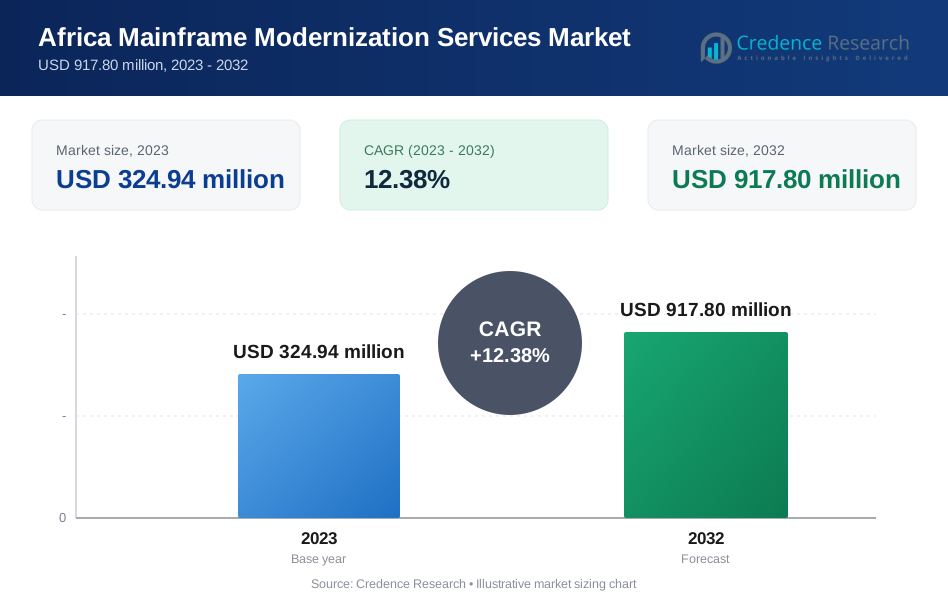
The Africa Mainframe Modernization Services Market is projected to grow from USD 324.94 million in 2023 to USD 917.80 million by 2032, at a CAGR of 12.38%.
The Africa mainframe modernization services market is driven by the increasing adoption of cloud-based solutions to enhance operational efficiency and scalability across various industries. Organizations are prioritizing digital transformation to improve system performance, reduce costs, and ensure compatibility with modern IT ecosystems. The growing need for improved security measures and compliance with regulatory requirements also accelerates the shift from legacy mainframe systems. Furthermore, the rise of advanced technologies, such as AI, machine learning, and big data analytics, is fueling the demand for modernization services to enable seamless integration and data-driven decision-making. Key trends include a surge in hybrid cloud deployments, fostering flexibility and resilience, and the increasing reliance on automation to streamline mainframe migration processes. The region's expanding IT infrastructure and supportive government initiatives further support market growth, positioning mainframe modernization as a critical component in Africa’s digital transformation journey.
The Africa mainframe modernization services market is experiencing growth across various regions, with key players driving innovation and digital transformation. In North Africa, countries like Egypt and Morocco are leading the charge, supported by government initiatives and expanding IT infrastructure. Southern Africa, particularly South Africa, follows closely with strong adoption in sectors such as banking and healthcare. Key players like IBM, Accenture, TCS, and DXC Technology are prominent across these regions, offering a range of modernization services, including cloud migration, application modernization, and consulting. In East and West Africa, emerging economies are increasingly investing in digitalization, creating opportunities for players like Wipro, HCL Technologies, and Infosys to expand their presence. As infrastructure continues to evolve and digital transformation accelerates, these companies are well-positioned to drive the modernization efforts in Africa’s diverse markets.
Market Insights
- The Africa mainframe modernization services market is valued at USD 324.94 million in 2023 and is projected to reach USD 917.80 million by 2032, growing at a CAGR of 12.38%.
- The increasing demand for digital transformation and cloud adoption across industries is driving the market.
- The growing need for operational efficiency and cost reduction is pushing businesses to modernize their legacy mainframe systems.
- Emerging technologies like AI, ML, and big data analytics are contributing to the rising demand for mainframe modernization.
- Key players such as IBM, Accenture, TCS, and DXC Technology are competing to offer comprehensive modernization solutions across Africa.
- High initial costs and a shortage of skilled professionals in certain regions are major market restraints.
- North and Southern Africa are the leading regions in terms of market share, driven by strong IT infrastructure and digital initiatives.
Market Drivers
Emphasis on Digital Transformation
The push toward digital transformation across industries is another critical factor driving market growth. Businesses are modernizing their mainframes to align with contemporary IT architectures and improve interoperability with modern applications. For instance, the World Bank's Digital Economy for Africa initiative has significantly increased broadband access, supporting digital transformation efforts. Upgrading legacy systems allows organizations to enhance system agility, reduce downtime, and optimize operational processes. This transformation is essential for improving customer experiences and gaining a competitive edge in dynamic market environments, particularly in sectors such as banking, healthcare, and telecommunications.
Growing Demand for Cloud-Based Solutions
The increasing adoption of cloud-based solutions serves as a significant driver for the Africa mainframe modernization services market. Organizations are migrating their legacy mainframe systems to cloud platforms to enhance scalability, flexibility, and operational efficiency. Cloud-based modernization reduces IT infrastructure costs and facilitates easier access to advanced technologies, enabling organizations to respond swiftly to market demands. Furthermore, the ability to integrate mainframes with cloud environments empowers businesses to achieve improved performance and resilience, fostering their digital transformation efforts.
Need for Enhanced Security and Compliance
As cyber threats and data breaches become increasingly sophisticated, the need for robust security measures and compliance with international regulations is intensifying. Legacy mainframe systems often lack the advanced security features required to counter modern threats. Modernization services enable organizations to integrate cutting-edge cybersecurity tools, ensuring data integrity and compliance with evolving standards. The adoption of secure, modernized systems safeguards sensitive information, builds stakeholder trust, and mitigates the risks associated with outdated infrastructures.
Rise of Advanced Technologies
The emergence of advanced technologies, such as artificial intelligence (AI), machine learning (ML), and big data analytics, is significantly influencing the demand for mainframe modernization in Africa. Modernization services facilitate the seamless integration of these technologies, enabling organizations to leverage data-driven insights for strategic decision-making. For instance, a large South African financial institution has successfully integrated AI and cloud technologies to enhance its mainframe operations. The growing reliance on AI and analytics underscores the need for systems capable of handling complex computations, which legacy mainframes often struggle to accommodate, thereby driving modernization efforts.
Market Trends
Growing Integration of Automation Tools
Automation is becoming a key enabler in mainframe modernization projects across Africa. Organizations are leveraging automation tools to streamline migration processes, minimize human errors, and reduce operational disruptions. For instance, IBM has integrated AI-driven automation tools into their mainframe modernization services, significantly reducing downtime and errors during migration. Automated solutions simplify tasks such as code analysis, data migration, and system testing, significantly accelerating modernization timelines. This trend reflects a broader industry shift toward efficiency and innovation, making modernization more accessible and cost-effective for businesses of all sizes.
Increasing Adoption of Hybrid Cloud Solutions
The shift toward hybrid cloud environments is a prominent trend shaping the Africa mainframe modernization services market. Businesses are combining on-premises systems with public and private clouds to balance cost efficiency, flexibility, and control over sensitive data. This approach allows organizations to modernize their legacy systems while maintaining critical workloads on secure, private platforms. The trend is driven by the need for adaptable IT infrastructures that support dynamic business requirements and reduce dependency on outdated hardware.
Emphasis on AI and Machine Learning Capabilities
The integration of artificial intelligence (AI) and machine learning (ML) into mainframe systems is gaining momentum. Modernized systems equipped with AI and ML enable predictive analytics, enhanced decision-making, and improved system performance. This trend is particularly relevant in industries such as banking and telecommunications, where real-time data analysis and automation are critical for competitive success. The adoption of these technologies highlights the increasing demand for modernized systems that can support advanced computational capabilities.
Expanding IT Infrastructure Across Africa
The rapid expansion of IT infrastructure across Africa is creating new opportunities for mainframe modernization services. Governments and private organizations are investing heavily in digital ecosystems to drive economic growth and technological advancement. This infrastructure development includes enhanced internet connectivity, cloud adoption, and data center expansions, all of which support the integration of modernized mainframe solutions. As IT ecosystems evolve, businesses are compelled to upgrade their legacy systems to align with these advancements, driving market growth.
Market Challenges Analysis
High Initial Costs and Resource Constraints
One of the primary challenges facing the Africa mainframe modernization services market is the high initial investment required for transitioning from legacy systems to modern platforms. Many organizations in the region operate on limited IT budgets, making it difficult to allocate resources for such extensive upgrades. Additionally, the costs associated with hiring skilled professionals, integrating advanced technologies, and ensuring minimal disruptions during the migration process further strain financial resources. Smaller enterprises, in particular, face significant hurdles in adopting modernization services, leading to slower market penetration and uneven growth across sectors.
Limited Access to Skilled Workforce and Technology Gaps
The availability of skilled professionals proficient in mainframe modernization and advanced technologies remains a pressing issue in Africa. Legacy systems often require expertise that is both specialized and scarce, creating a gap between demand and supply of qualified talent. For instance, the World Economic Forum notes that Africa needs to expand its pool of highly skilled employees through the development of cognitive STEM-based skills and non-cognitive soft skills. Furthermore, technological disparities across regions hinder the adoption of sophisticated solutions, particularly in rural and underdeveloped areas. The lack of robust IT infrastructure and limited access to training programs exacerbates these challenges, delaying modernization efforts and impeding the overall growth of the market. Addressing these gaps is essential to unlocking the full potential of mainframe modernization in Africa.
Market Opportunities
Expansion of Cloud and Data Center Infrastructure
The ongoing expansion of cloud computing and data center infrastructure in Africa presents significant opportunities for the mainframe modernization services market. As businesses and governments increasingly adopt digital technologies, the demand for scalable and secure IT systems continues to grow. Modernized mainframes, integrated with cloud platforms, enable organizations to enhance their operational efficiency while reducing costs and maintaining flexibility. The development of localized data centers in key regions also addresses concerns around data sovereignty and latency, making cloud-integrated mainframe solutions more attractive. These advancements create a conducive environment for businesses to transition from legacy systems, driving demand for modernization services across sectors such as banking, telecommunications, and healthcare.
Rising Adoption of Emerging Technologies
The growing adoption of emerging technologies, including artificial intelligence (AI), machine learning (ML), and big data analytics, provides another key opportunity for market growth. Modernized mainframes support these advanced capabilities, enabling organizations to harness data-driven insights, improve decision-making, and optimize operational processes. Industries reliant on real-time analytics, such as finance and logistics, stand to benefit significantly from these advancements. Additionally, government-led digital transformation initiatives aimed at fostering innovation and economic growth further support the adoption of modern IT infrastructures. By addressing the need for compatibility with advanced technologies, mainframe modernization services can play a pivotal role in Africa's digital evolution, unlocking new avenues for growth and innovation.
Market Segmentation Analysis:
By Type:
The Africa mainframe modernization services market is segmented into application modernization, cloud migration, data modernization, integration services, and consulting services. Application modernization leads the segment as businesses prioritize updating legacy systems to support modern application frameworks, ensuring enhanced performance and operational efficiency. Cloud migration is witnessing significant growth due to the increasing adoption of cloud platforms for scalability and cost-effectiveness. Data modernization services are gaining traction as organizations seek to optimize data management and harness analytics for strategic decision-making. Integration services are essential for ensuring seamless interoperability between legacy and modern systems, while consulting services are vital for guiding businesses through complex modernization processes. Each segment addresses unique challenges, offering tailored solutions to meet the specific needs of industries such as banking, telecommunications, and healthcare.
By Deployment Mode:
Based on deployment mode, the market is categorized into on-premises and cloud-based solutions. On-premises deployment remains a preferred choice for businesses that require greater control over sensitive data and systems. However, cloud-based deployment is rapidly gaining momentum due to its flexibility, scalability, and cost-effectiveness. The growing availability of localized data centers and advancements in cloud technologies make this mode increasingly viable for organizations across Africa. Cloud-based solutions also support remote operations, a crucial feature for businesses seeking resilience in dynamic market conditions. Both deployment modes play critical roles in driving the adoption of modernization services, catering to diverse business needs and operational requirements.
Segments:
Based on Type:
- Application Modernization
- Cloud Migration
- Data Modernization
- Integration Services
- Consulting Services
Based on Deployment Mode:
- On-premises
- Cloud-based
Based on End-User:
- Banking, Financial Services, and Insurance (BFSI)
- Healthcare
- IT and Telecommunications
- Retail and E-commerce
- Others
Based on Organization Size:
- Small and Medium Enterprises (SMEs)
- Large Enterprises
Based on the Geography:
- Egypt
- Nigeria
- Algeria
- Morocco
- Rest of Africa
Regional Analysis
Egypt
Egypt holds the largest market share in the Africa mainframe modernization services market, accounting for 28% of the total share in 2023. This dominance is driven by the country’s strong economic growth and the expanding IT infrastructure across sectors such as banking, telecommunications, and government. Egypt’s initiatives to foster digital transformation, including national smart city projects and e-government services, have significantly boosted the demand for mainframe modernization services. Additionally, the growing adoption of cloud technologies and data security measures is propelling businesses to upgrade legacy systems, particularly in the public and private sectors. Egypt’s strategic location as a gateway to the Middle East and Africa also enhances its role as a regional hub for IT innovation and modernization.
Nigeria
Nigeria, with a 25% market share in 2023, is a key player in the Africa mainframe modernization services market. The country’s rapid digitalization, especially within the banking and financial services sectors, is a primary driver of modernization efforts. Nigeria is home to several financial institutions that rely heavily on legacy systems but are increasingly seeking modernization solutions to enhance their operational efficiency and customer service. The rise of fintech companies and the Nigerian government’s efforts to digitize public services further contribute to the growing demand for mainframe modernization. With its large population and expanding tech ecosystem, Nigeria offers significant growth opportunities for mainframe modernization service providers.
Algeria
Algeria is an emerging market for mainframe modernization services in Africa, with growing investments in IT infrastructure and digital transformation initiatives. While its market share is smaller compared to Egypt and Nigeria, Algeria's focus on modernizing public sector services and improving digital access across industries is fueling demand. The country’s state-owned enterprises, particularly in energy and utilities, rely on legacy mainframe systems and are increasingly looking for modernization solutions to improve operational efficiency. The government’s efforts to diversify the economy through digital initiatives and smart city projects are creating favorable conditions for market growth in Algeria.
Morocco
Morocco has steadily become a key market for mainframe modernization services, driven by the country's robust focus on digital transformation. With a market share of around 18%, Morocco is investing heavily in upgrading its IT infrastructure, particularly in sectors such as banking, telecommunications, and manufacturing. Moroccan companies are increasingly adopting cloud-based solutions and data modernization services to enhance scalability and security. Additionally, the government's Vision 2020 and Vision 2030 plans, which focus on fostering innovation and digitalization, are accelerating the demand for mainframe modernization services. The country’s strategic geographic location and open trade policies further attract investments, positioning Morocco as a growing market for modernization solutions across Africa.
Key Player Analysis
- IBM
- Accenture Africa
- TCS Africa
- DXC Technology
- Wipro Africa
- HCL Technologies
- Infosys Africa
- Oracle Africa
- Capgemini Africa
- Cognizant Africa
Competitive Analysis
The competitive landscape of the Africa mainframe modernization services market is marked by the presence of several global and regional players who are driving innovation and offering tailored solutions across industries. Leading companies like IBM, Accenture, TCS, DXC Technology, Wipro, HCL Technologies, Infosys, Oracle, Capgemini, and Cognizant dominate the market, providing a comprehensive range of services, including cloud migration, application modernization, and consulting. Leading companies focus on providing a comprehensive range of services, including cloud migration, application modernization, data modernization, and integration services. Many players are differentiating themselves by leveraging cutting-edge technologies such as artificial intelligence (AI), machine learning (ML), and big data analytics, which are becoming increasingly essential for organizations looking to optimize their IT infrastructures. For instance, the African Union's Digital Transformation Strategy for Africa aims to enhance internet connectivity and cloud adoption across the continent, supporting digital transformation efforts. In this competitive environment, firms are investing in localized solutions to cater to the specific needs of African businesses, ensuring scalability, cost-efficiency, and security. Furthermore, service providers are enhancing their offerings by collaborating with regional governments and enterprises to drive digital transformation initiatives, particularly in sectors like banking, telecommunications, and healthcare. However, the market also faces challenges such as the high cost of modernization projects and the shortage of skilled professionals in certain regions. Despite these challenges, competition remains strong, with players focusing on innovation and delivering value through integrated, customized modernization services to maintain their competitive edge in the growing market.
Recent Developments
- In August 2024, Capgemini signed an agreement to acquire Syniti, one of the leading companies in the enterprise data management software and services including platform and migration services. This acquisition will strengthen Capgemini’s data-driven solutions, especially for large-scale SAP transformations like the shift to SAP S/4HANA.
- In June 2024, Oracle and Google Cloud announced a partnership in which Google Cloud will offer Oracle Cloud Infrastructure (OCI) database services and high-speed network interconnect with Oracle. This partnership will enable users to accelerate their application migrations and modernization.
- In June 2024, Cognizant expanded its partnership with Cengage Group. This move highlights the trend of modernizing educational platforms by integrating advanced technologies to enhance digital learning experiences, reflecting the broader push towards modernizing application infrastructures across sectors.
- In April 2024, Atos officially renewed its participation in the robust Amazon Web Services (AWS) Managed Service Provider (MSP) Partner Program. The AWS MSP Partner Program recognizes and evaluates top APN Consulting Partners who excel at providing complete lifecycle solutions to customers. Next-generation AWS MSPs can assist organizations in inventing the future, solving business problems, and supporting projects by focusing on critical results.
- In April 2024, Fujitsu Limited and Oracle partnered to provide sovereign cloud and AI capabilities that satisfy the digital sovereignty needs of Japanese businesses and the public sector.
- In April 2024, Cloud Software Group Inc. and Microsoft Corp. deepened their collaboration with a focus on Citrix virtual applications and cloud AI solutions. This partnership underscores the importance of cloud migration and AI integration in application modernization, emphasizing the need for businesses to update their legacy systems to leverage these technologies.
- In January 2024, IBM announced that it had entered a definitive deal to acquire Advanced's application modernization capabilities, bringing a combination of talent, tools, and knowledge to IBM Consulting's mainframe application and data modernization services. The announced acquisition will allow us to support better clients' mainframe application modernization journeys, representing another significant step forward in IBM's hybrid cloud and AI strategy.
- In January 2024, Accenture acquired Work & Co, enhancing its capabilities in creating innovative digital products. This acquisition reflects the increasing importance of blending design and technology to modernize applications, helping clients improve user experiences and stay competitive in the digital age.
Market Concentration & Characteristics
The Africa mainframe modernization services market exhibits a moderate level of concentration, with a mix of global and regional players dominating the landscape. While multinational companies with established global footprints lead the market, there is also a growing presence of regional service providers who offer tailored solutions to meet the specific needs of African businesses. The market is characterized by a competitive environment where players are differentiating themselves through technological innovation, comprehensive service offerings, and localized expertise. Companies are focusing on providing end-to-end solutions, including cloud migration, application modernization, and data modernization, to help businesses improve operational efficiency and reduce costs. A key characteristic of the market is the increasing demand for customized solutions that cater to the unique challenges faced by businesses in Africa, such as limited IT infrastructure, regulatory requirements, and diverse industry needs. Companies in the region are adopting modern technologies like artificial intelligence, machine learning, and big data analytics to enhance the effectiveness of their modernization efforts. Another notable characteristic is the focus on security and data protection, as organizations seek to modernize while safeguarding sensitive information. Overall, the Africa mainframe modernization services market is evolving rapidly, driven by a combination of technological advancements, local market dynamics, and the growing need for digital transformation.
Report Coverage
The research report offers an in-depth analysis based on Type, Deployment Mode, End-User, Organization Size and Geography. It details leading market players, providing an overview of their business, product offerings, investments, revenue streams, and key applications. Additionally, the report includes insights into the competitive environment, SWOT analysis, current market trends, as well as the primary drivers and constraints. Furthermore, it discusses various factors that have driven market expansion in recent years. The report also explores market dynamics, regulatory scenarios, and technological advancements that are shaping the industry. It assesses the impact of external factors and global economic changes on market growth. Lastly, it provides strategic recommendations for new entrants and established companies to navigate the complexities of the market.
Future Outlook
- The Africa mainframe modernization services market is expected to continue growing, driven by the increasing adoption of digital transformation across industries.
- Cloud migration and application modernization will remain key focus areas for businesses aiming to enhance operational efficiency and reduce costs.
- Emerging technologies such as AI, machine learning, and big data analytics will play a significant role in modernizing legacy systems.
- The demand for secure and scalable modernization solutions will rise as organizations seek to protect sensitive data while transitioning to newer platforms.
- Companies will increasingly invest in hybrid cloud and multi-cloud environments to improve flexibility and scalability.
- Regional governments are likely to drive modernization initiatives, particularly in sectors like healthcare, banking, and public services.
- The growth of the fintech sector in Africa will further accelerate the need for mainframe modernization services to support evolving technologies.
- Service providers will focus on offering customized solutions to address the unique challenges and requirements of African businesses.
- The shortage of skilled professionals in mainframe modernization will present opportunities for training and development in the region.
- Partnerships and collaborations between global players and regional firms will help drive innovation and expand service offerings across Africa.
Request a Free Sample
Fill in your details and we'll send you a free sample report.
- Sample data tables & charts
- Research methodology
Need a Custom Version of This Report?
Tailor the scope, geography, or segments to your exact requirements.
- Custom geography or segment scope
- Direct access to our analyst team
Frequently Asked Questions
What is the current size of the Africa Mainframe Modernization Services market?
What factors are driving the growth of the Africa Mainframe Modernization Services market?
What are the key segments within the Africa Mainframe Modernization Services market?
What are some challenges faced by the Africa Mainframe Modernization Services market?
Who are the major players in the Africa Mainframe Modernization Services market?
Table of Content
Chapter 1. Report Introduction
- 1.1 Report Description & Purpose
- 1.1.1 Report Title & Market Definition
- 1.1.2 Unique Selling Propositions (USP) & Key Differentiators
- 1.1.3 Value Proposition for Stakeholders
- 1.2 Research Objectives
- 1.2.1 Market Sizing Objectives (Volume & Revenue)
- 1.2.2 Segmentation Objectives
- 1.2.3 Competitive Intelligence Objectives
- 1.2.4 Forecast & Scenario Objectives
- 1.3 Report Scope
- 1.3.1 Africa Mainframe Modernization Services Scope – Types & Subtypes Covered
- 1.3.2 Geographic Scope – Regions & Countries Covered
- 1.3.3 Historical Period, Base Year & Forecast Period (2023; forecast to 2032)
- 1.3.4 Inclusions & Exclusions
- 1.4 HS Code & Classification Framework
- 1.5 Currency, Units & Pricing Basis
- 1.6 Target Stakeholders
- 1.7 Limitations & Assumptions
Chapter 2. Executive Summary
- 2.1 Global Africa Mainframe Modernization Services Market Snapshot
- 2.1.1 Market Size – Historical (2023) & Forecast (2023-2032) (2023: USD 324.94 million → 2032: USD 917.80 million)
- 2.1.2 Volume & Revenue – Global Totals
- 2.1.3 Key Market Highlights – Top Five Facts
- 2.2 Africa Mainframe Modernization Services Market Segmentation Snapshot
- 2.2.1 Market Split by Region – 2023 vs. 2032
- 2.3 Competitive Snapshot
- 2.3.1 Top 10 Players by Revenue Share – 2023
- 2.3.2 Top 10 Players by Volume Share – 2023
- 2.3.3 Recent Strategic Developments (18-Month Summary)
- 2.4 Key Investment Highlights & Strategic Conclusions
Chapter 3. Africa Mainframe Modernization Services Market Dynamics & Industry Analysis
- 3.1 Market Overview & Context
- 3.1.1 Africa Mainframe Modernization Services Market Position in the Broader Automotive Value Chain
- 3.1.2 OEM vs. Replacement Market Dynamics
- 3.1.3 Market Maturity & Development Stage by Region
- 3.2 Africa Mainframe Modernization Services Market Drivers
- 3.3 Africa Mainframe Modernization Services Market Restraints & Challenges
- 3.4 Africa Mainframe Modernization Services Market Opportunities
- 3.5 Porter's Five Forces Analysis
- 3.5.1 Threat of New Entrants
- 3.5.2 Bargaining Power of Suppliers
- 3.5.3 Bargaining Power of Buyers
- 3.5.4 Threat of Substitutes
- 3.5.5 Competitive Rivalry – Intensity Assessment
- 3.6 Africa Mainframe Modernization Services Value Chain Analysis
- 3.6.1 Upstream – Raw Material/Input Suppliers
- 3.6.1.1 Raw Material/Input 1
- 3.6.1.2 Raw Material/Input 2
- 3.6.1.3 Raw Material/Input 3
- 3.6.2 Midstream – Production/Manufacturing/Service Delivery
- 3.6.2.1 Production/Process Overview
- 3.6.2.2 Key Facility Locations & Capacity by Manufacturer
- 3.6.3 Downstream – Distribution & End Consumer
- 3.6.3.1 Primary Channel – B2B/OEM
- 3.6.3.2 Secondary Channels – Dealer, Retail, Online, Direct
- 3.6.4 Value Chain Profitability Analysis
- 3.6.1 Upstream – Raw Material/Input Suppliers
- 3.7 PESTEL Analysis
- 3.7.1 Political Factors
- 3.7.2 Economic Factors
- 3.7.3 Social Factors
- 3.7.4 Technological Factors
- 3.7.5 Environmental Factors
- 3.7.6 Legal Factors
- 3.8 Africa Mainframe Modernization Services Supply Chain Analysis
- 3.8.1 Raw Material/Input Supply Risk Assessment
- 3.8.2 Manufacturing Concentration Risk (Geographic Exposure)
- 3.8.3 Trade Disruption Impact Analysis
- 3.9 Regulatory & Policy Landscape
Note: The regulatory and policy landscape section covers regulations based on their applicability to the market, Africa Mainframe Modernization Services category, geography, and scope of the study. Only regulatory frameworks with a material impact on operations, compliance, trade, sustainability, or market access are analyzed in detail.
Chapter 4. Key Investment Pockets & Opportunity Analysis
- 4.1 Africa Mainframe Modernization Services Market Attractiveness Analysis
- 4.1.1 By Region – Investment Attractiveness Matrix (Volume × CAGR)
- 4.2 Absolute Revenue Growth Opportunity
- 4.2.1 By Region – Absolute USD Growth Through 2032
- 4.3 Incremental Volume Opportunity
- 4.3.1 By Region – Incremental Volume Through 2032
- 4.3.2 Segment – Incremental Volume
- 4.4 Emerging Submarket Opportunity Deep Dive (Subject to Applicability)
- 4.5 Emerging Market Opportunity Scorecards
- 4.5.1 United States
- 4.5.2 Europe
- 4.5.3 Asia
- 4.5.4 Middle East & Africa
Note: Emerging Market Opportunity Scorecards will be included based on relevance and strategic importance. Regions listed are indicative and may vary depending on data availability and market dynamics.
Chapter 5. Africa Mainframe Modernization Services Import-Export Analysis & Trade Flows
- 5.1 Global Trade Overview
- 5.1.1 Global Export Value by Country (2023)
- 5.1.2 Global Export Volume by Country (2023)
- 5.1.3 Global Import Value by Country (2023)
- 5.1.4 Global Import Volume by Country (2023)
- 5.1.5 Net Trade Balance by Country (2023)
- 5.2 Export Analysis – Segment
- 5.2.1 Type 1 (HS Code)
- 5.2.2 Type 2 (HS Code)
- 5.2.3 Type 3 (HS Code)
- 5.2.4 Type 4 (HS Code)
- 5.2.5 Type 5 (HS Code)
- 5.3 Import Analysis – Segment
- 5.3.1 Type 1 (HS Code)
- 5.3.2 Type 2 (HS Code)
- 5.3.3 Type 3 (HS Code)
- 5.3.4 Type 4 (HS Code)
- 5.3.5 Type 5 (HS Code)
- 5.4 Average Unit Trade Prices
- 5.4.1 Average Export Price – Segment & Country
- 5.4.2 Average Import Price – Segment & Source Country
- 5.4.3 Price Trends (2023)
- 5.5 Key Trade Route Analysis
- 5.5.1 Trade Route 1
- 5.5.2 Trade Route 2
- 5.5.3 Trade Route 3
- 5.5.4 Trade Route 4
- 5.5.5 Trade Route 5
- 5.6 Trade Policy Impact Assessment
- 5.6.1 US Anti-Dumping & Section 301 Tariffs
- 5.6.2 EU Customs Union Impact
- 5.6.3 Major Free Trade Agreements
- 5.6.4 USMCA Rules of Origin
Note: Trade policy analysis will be included only where relevant to the Africa Mainframe Modernization Services market.
Chapter 6. Competitive Landscape & Company Benchmarking
- 6.1 Africa Mainframe Modernization Services Market Concentration & Structure
- 6.1.1 Herfindahl-Hirschman Index (HHI) – vs. 2023
- 6.1.2 Tier 1, Tier 2 & Tier 3 Market Structure
- 6.1.3 Global, Regional & Local Player Dynamics
- 6.2 Africa Mainframe Modernization Services Market Share Analysis – 2023
- 6.2.1 Global Revenue Share by Company
- 6.2.2 Global Volume Share by Company
- 6.2.3 Regional Revenue Share
- 6.2.4 Market Share Evolution ( vs. 2023)
- 6.2.5 OEM Segment Share by Company
- 6.2.6 Replacement Segment Share by Company
- 6.3 Production/Delivery Capacity & Facility Analysis
- 6.3.1 Global Installed Capacity
- 6.3.2 Capacity Utilization Rates
- 6.3.3 Production/Output Volume
- 6.3.4 Facility Locations & Capacity Map
- 6.3.5 Planned Capacity Additions
- 6.4 Africa Mainframe Modernization Services Competitive Benchmarking Matrix
- 6.4.1 Revenue, Volume, CAGR & Profitability Comparison
- 6.4.2 Channel Revenue Mix
- 6.4.3 Geographic Revenue Exposure
- 6.4.4 R&D Intensity
- 6.4.5 Sustainability Maturity
- 6.5 Strategic Developments in Africa Mainframe Modernization Services (Last 24 Months)
- 6.5.1 Mergers, Acquisitions & Divestments
- 6.5.2 New Africa Mainframe Modernization Services Launches
- 6.5.3 Facility Expansions
- 6.5.4 Strategic Alliances, Joint Ventures & Partnerships
- 6.5.5 Distribution Expansion & Market Entry
- 6.5.6 Sustainability & ESG Initiatives
- 6.6 Competitive Strategy Mapping
- 6.6.1 Leader, Challenger, Follower & Niche Classification
- 6.6.2 Pricing Strategy Comparison
- 6.6.3 Channel Strategy Matrix
Note: Strategic developments are included based on their materiality and the availability of reliable information.
Chapter 7. Global Africa Mainframe Modernization Services Market – By Distribution Channel
- 7.1 Segment Overview
- 7.1.1 Volume & Revenue Split by Channel (2023 & 2032)
- 7.1.2 Channel Mix Evolution (2023-2032)
Chapter 8. Regional Market Analysis – Global Overview
- 8.1 Global Regional Overview
- 8.1.1 Regional Volume Share
- 8.1.2 Regional Revenue Share
- 8.1.3 Regional Volume by Region
- 8.1.4 Regional Revenue by Region
- 8.1.5 Regional Forecast Through 2032
- 8.2 Cross-Regional Segment Analysis
- 8.2.1 By Distribution Channel
- 8.2.2 By Brand/Price Tier
Chapter 9. North America Africa Mainframe Modernization Services Market
- 9.1 United States
- 9.2 Canada
- 9.3 Mexico
Chapter 10. Europe Africa Mainframe Modernization Services Market
- 10.1 Germany
- 10.2 France
- 10.3 Italy
- 10.4 United Kingdom
- 10.5 Spain
- 10.6 Poland
- 10.7 Russia
- 10.8 Netherlands
- 10.9 Belgium
- 10.10 Sweden
- 10.11 Denmark
- 10.12 Norway
- 10.13 Rest of Europe
Chapter 11. Asia Pacific Africa Mainframe Modernization Services Market
- 11.1 China
- 11.2 India
- 11.3 Japan
- 11.4 South Korea
- 11.5 Thailand
- 11.6 Indonesia
- 11.7 Vietnam
- 11.8 Malaysia
- 11.9 Australia
- 11.10 Rest of Asia Pacific
Chapter 12. Latin America Africa Mainframe Modernization Services Market
- 12.1 Brazil
- 12.2 Argentina
- 12.3 Colombia
- 12.4 Chile
- 12.5 Rest of Latin America
Chapter 13. Middle East Africa Mainframe Modernization Services Market
- 13.1 Saudi Arabia
- 13.2 United Arab Emirates
- 13.3 Turkey
- 13.4 Israel
- 13.5 Iran
- 13.6 Rest of the Middle East
Chapter 14. Africa Africa Mainframe Modernization Services Market
- 14.1 South Africa
- 14.2 Egypt
- 14.3 Nigeria
- 14.4 Morocco
- 14.5 Rest of Africa
Chapter 15. Africa Mainframe Modernization Services Company Profiles
- 15.1 [Company 01]
- 15.1.1 Company Overview
- 15.1.2 Key Management Personnel
- 15.1.3 Products & Services Portfolio
- 15.1.4 Financial Performance
- 15.1.5 Key Market Focus & Geographic Presence
- 15.1.6 Recent Developments & Strategic Initiatives
Note: The company profile list is preliminary and may change based on research findings, market developments, data availability, and client requirements.
Chapter 16. Appendices
- Appendix A – List of Abbreviations & Acronyms
- Appendix B – Industry Classification Code Reference – Full Series
- Appendix C – Production & Capacity Data Tables
- Appendix D – End-Use & Demand Base Tables
- Appendix E – Consumption & Replacement Rate Assumptions
- Appendix F – ASP Reference Tables
- Appendix G – Manufacturing & Facility Database
- Appendix H – Import-Export Data Tables
- Appendix I – Regulatory Summary Tables
- Appendix J – Primary Research Participant List (Anonymized)
- Appendix K – Primary Research Questionnaire Framework
- Appendix L – Data Sources & Bibliography
- Appendix M – Market Size Divergence & Source Comparison
Chapter 17. Research Methodology
- 17.1 Research Framework & Philosophy
- 17.2 Secondary Research – Sources, Hierarchy & Data Extraction
- 17.3 Data Modeling – Bottom-Up & Top-Down Market Sizing
- 17.4 Primary Research – Stakeholder Framework, LOI & Sample Sizes
- 17.5 Forecast Methodology – Regression, Scenario & Sensitivity Analysis
- 17.6 Quality Control – Four-Layer Validation Framework
- 17.7 Limitations & Standard Assumptions
- 17.8 Disclaimer
