
| REPORT ATTRIBUTE | DETAILS |
|---|---|
| Historical Period | 2019-2022 |
| Base Year | 2023 |
| Forecast Period | 2024-2032 |
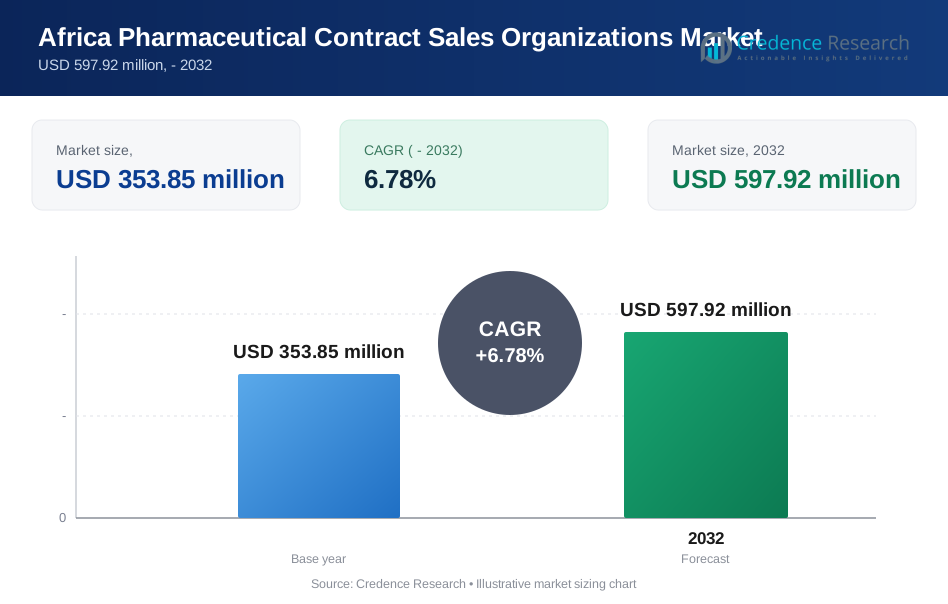
| Africa Pharmaceutical Contract Sales Organizations Market Size 2024 | USD 353.85 million |
| Africa Pharmaceutical Contract Sales Organizations Market, CAGR | 6.78% |
| Africa Pharmaceutical Contract Sales Organizations Market Size 2032 | USD 597.92 million |
Market Overview:
The Africa Pharmaceutical Contract Sales Organizations Market is projected to grow from USD 353.85 million in 2024 to an estimated USD 597.92 million by 2032, with a compound annual growth rate (CAGR) of 6.78% from 2024 to 2032.
Several factors are driving the growth of the Africa Pharmaceutical CSOs market. One key driver is the increasing prevalence of chronic diseases such as diabetes, cardiovascular disorders, and respiratory conditions, which has amplified the demand for pharmaceutical products across the continent. With limited in-house capabilities, many pharmaceutical companies are turning to CSOs to effectively manage and optimize their sales strategies. Additionally, the rising number of new drug launches and expanding therapeutic portfolios necessitate specialized sales expertise, which CSOs are well-positioned to provide. Technological advancements, such as the integration of AI-powered customer relationship management tools, are further enhancing the operational capabilities of CSOs. Moreover, the continent’s focus on improving healthcare access and infrastructure has spurred pharmaceutical companies to seek flexible and scalable sales models, fueling demand for CSO services.
The regional dynamics of the Africa Pharmaceutical CSOs market highlight significant disparities in growth and adoption. South Africa remains a dominant market due to its advanced healthcare infrastructure, higher pharmaceutical spending, and the presence of several multinational pharmaceutical companies. North Africa, particularly Egypt and Morocco, is witnessing steady growth, supported by government initiatives to enhance local pharmaceutical production and exports. In contrast, East Africa is emerging as a key market due to its rising healthcare investments and growing focus on improving access to essential medicines. Meanwhile, West and Central Africa, while comparatively smaller in market share, show promising potential with increasing collaborations between governments and international organizations to strengthen healthcare systems. The market's growth across the continent is characterized by the interplay of rising pharmaceutical demand, evolving healthcare ecosystems, and the expanding role of contract sales organizations in bridging operational gaps.
Market Insights:
- The Africa Pharmaceutical CSO market is projected to grow from USD 353.85 million in 2024 to USD 597.92 million by 2032, with a CAGR of 6.78%, driven by increasing pharmaceutical demand and sales outsourcing trends.
- Rising chronic diseases such as diabetes, cardiovascular disorders, and infectious conditions like malaria and tuberculosis have heightened the need for efficient pharmaceutical sales solutions, boosting CSO demand.
- Governments across Africa are investing in healthcare infrastructure, promoting access to essential medicines through subsidies, universal health schemes, and public-private partnerships, creating a favorable environment for CSOs.
- Technological advancements, including AI-driven analytics and digital engagement tools, are transforming CSO operations, enabling targeted sales strategies and improved market insights.
- Regional disparities are evident, with South Africa holding the largest market share due to its advanced healthcare systems, followed by growth in North Africa, East Africa, and emerging opportunities in West and Central Africa.
- Despite opportunities, the market faces challenges like inadequate healthcare infrastructure, regulatory complexities, and workforce shortages, particularly in underserved regions.
- As biopharmaceutical innovation grows, the demand for specialized sales expertise in biologics and precision medicines provides CSOs with significant long-term growth prospects across diverse African markets.
Market Drivers:
Growing Prevalence of Chronic and Infectious Diseases
The increasing burden of chronic and infectious diseases across Africa is a significant driver of the pharmaceutical CSO market. Conditions such as diabetes, cardiovascular diseases, and respiratory disorders are on the rise due to lifestyle changes and urbanization. Concurrently, the persistent prevalence of infectious diseases like malaria, HIV, and tuberculosis highlights the need for extensive pharmaceutical outreach. For instance, the World Health Organization (WHO) reported that infectious diseases account for at least 69% of deaths on the continent. This growing demand for a diverse range of medications has created opportunities for CSOs to provide specialized sales and marketing solutions, enabling pharmaceutical companies to reach healthcare providers and patients more efficiently.
Rising Demand for Cost-Effective Sales Models
The escalating complexity of pharmaceutical sales has compelled companies to seek cost-effective solutions, driving the growth of CSOs in Africa. By outsourcing sales and promotional activities to contract organizations, pharmaceutical companies can focus on core competencies such as drug development and manufacturing. CSOs offer scalability and flexibility, allowing companies to adapt to changing market conditions without the financial burden of maintaining large, in-house sales teams. For example, Merck Serono succeeded in reducing the average price to patients by 44% across six product lines by changing their distribution strategy, which resulted in a 300% increase in sales in a single year. This cost advantage, coupled with the ability to optimize resource allocation, has made CSOs an attractive option for both regional and multinational pharmaceutical firms operating in Africa.
Government Initiatives to Improve Healthcare Access
African governments are actively investing in healthcare infrastructure and policies aimed at improving access to essential medicines, creating a favorable environment for CSOs. Initiatives such as subsidized healthcare programs, the establishment of universal health coverage schemes, and public-private partnerships have significantly boosted the pharmaceutical market. For instance, several African countries have implemented successful health financing reforms that have increased access to health services and financial risk protection, moving them closer to the policy objective of universal health coverage (UHC). CSOs play a crucial role in bridging the gap between pharmaceutical companies and healthcare facilities, ensuring that medications reach underserved populations. These developments are particularly evident in regions like East Africa, where governments are prioritizing healthcare as part of their economic development agendas.
Advancements in Technology and Data-Driven Strategies
Technological innovation is reshaping the operations of pharmaceutical CSOs in Africa, enabling them to deliver more efficient and targeted services. The integration of AI-powered analytics, real-time data monitoring, and digital engagement tools enhances the ability of CSOs to identify market trends and optimize sales strategies. For example, Prosper Africa's Tech for Trade Alliance has launched a digital platform to improve transparency in Africa’s pharmaceutical supply chains, leveraging AI-based training for African pharmacies and retailers to optimize their sales strategies. These advancements not only improve the effectiveness of promotional activities but also enable companies to address the specific needs of diverse customer segments. As digital health solutions continue to gain traction across Africa, the adoption of technology-driven approaches is expected to further drive the growth of the CSO market.
Market Trends:
Adoption of Digital Solutions
The integration of digital technologies is reshaping the operations of pharmaceutical contract sales organizations in Africa. For instance, IQVIA has noted that 54% of healthcare professionals (HCPs) in the Middle East and Africa (MEA) region are now willing to consider a hybrid engagement model with pharmaceutical companies, while 26% prefer virtual interactions over face-to-face meetings. CSOs are increasingly adopting tools such as AI-powered customer relationship management (CRM) systems and data analytics to optimize their sales strategies and better understand market needs. These solutions enable real-time tracking of sales performance and provide actionable insights, allowing companies to target specific demographics effectively. Furthermore, the shift towards virtual engagement methods, such as telemedicine and online detailing, has gained momentum, particularly after the pandemic. This trend aligns with the growing penetration of mobile and internet technologies across the continent.
Focus on Local Partnerships
A notable trend in the market is the growing emphasis on forming partnerships with local entities to navigate the complexities of Africa’s diverse markets. For example, Bloom Public Health has partnered with Nigeria’s National Institute for Pharmaceutical Research and Development (NIPRD) in a World Bank-funded initiative to establish the WHO Prequalification Programme for Nigerian pharmaceutical manufacturers. Multinational CSOs and pharmaceutical companies are collaborating with regional players to leverage their expertise in local regulatory frameworks and market dynamics. Such partnerships not only enhance operational efficiency but also foster trust with local stakeholders. Additionally, government-backed initiatives to encourage private-sector involvement in healthcare have created opportunities for collaborative efforts that strengthen pharmaceutical distribution networks.
Expansion into Emerging Markets
While South Africa and North Africa remain dominant, the market is witnessing an expansion into emerging regions such as East and West Africa. Rising healthcare investments, coupled with growing awareness of chronic and lifestyle-related diseases, are driving demand for pharmaceutical products in these areas. Countries like Kenya, Nigeria, and Ghana are becoming key focus markets for CSOs, owing to their increasing urbanization and improving healthcare access. For instance, Ghana is becoming a key focus market for CSOs due to its increasing urbanization and improving healthcare access.This expansion trend indicates that companies are shifting their strategies to tap into untapped potential and diversify their geographic presence.
Diversification of Service Offerings
CSOs are increasingly diversifying their service portfolios to cater to the evolving needs of pharmaceutical and biopharmaceutical companies. In addition to traditional promotional activities, there is a growing demand for value-added services such as nurse (clinical) educators, medical affairs solutions, and remote medical science liaison (MSL) teams. These specialized services enable CSOs to address the complex requirements of innovative drug launches, such as biologics and precision medicines. Furthermore, the focus on patient-centric approaches, including adherence programs and disease awareness campaigns, highlights the market’s shift towards holistic healthcare solutions. For example, Adalvo and Eurolab have strengthened their strategic partnership in South Africa to introduce affordable high-quality treatments into the cancer care environment.
Market Challenges Analysis:
Limited Healthcare Infrastructure
A significant challenge in the Africa Pharmaceutical CSO market is the inadequate healthcare infrastructure in several regions. Many areas, particularly in West and Central Africa, face a lack of advanced medical facilities and distribution networks, which limits the ability of CSOs to operate effectively. Poor logistics and supply chain inefficiencies further exacerbate the issue, affecting timely delivery and accessibility of pharmaceutical products.
Regulatory Complexities
The diverse and often fragmented regulatory landscape across African countries poses another major restraint. Variations in approval processes, compliance requirements, and enforcement mechanisms create hurdles for CSOs attempting to operate across multiple regions. Additionally, inconsistent regulations can lead to delays in product launches and market entry, hindering the seamless execution of sales and promotional strategies.
Economic Instability
Economic instability in certain African countries presents a challenge for market growth. Currency fluctuations, political uncertainties, and limited government healthcare budgets can impact the purchasing power of both consumers and healthcare providers. This, in turn, reduces the demand for pharmaceutical products and, consequently, the need for CSO services.
Talent and Workforce Limitations
The scarcity of skilled professionals, such as medical representatives and clinical educators, is a persistent challenge for CSOs. Recruiting and training a competent workforce in regions with limited educational and healthcare resources can be time-consuming and costly.
Competition from In-House Teams
Pharmaceutical companies with sufficient resources often maintain in-house sales teams, limiting the scope of outsourcing to CSOs. This competition is particularly evident in regions with well-established healthcare markets, such as South Africa and North Africa.
Market Opportunities:
The Africa Pharmaceutical Contract Sales Organizations (CSO) market presents significant opportunities driven by the region’s evolving healthcare landscape and growing pharmaceutical needs. The rising prevalence of chronic and infectious diseases has created a strong demand for pharmaceuticals, prompting companies to seek cost-effective and scalable sales strategies. With many pharmaceutical firms lacking in-house expertise to navigate the complexities of diverse African markets, CSOs are well-positioned to bridge the gap by offering tailored solutions, such as promotional sales teams, key account management, and medical affairs services. Additionally, the increasing focus on expanding access to essential medicines across underserved regions highlights a critical opportunity for CSOs to play a pivotal role in enhancing healthcare delivery.
Technological advancements and the growing adoption of digital health tools further enhance market potential. The integration of AI-powered analytics, remote engagement platforms, and customer relationship management systems offers CSOs the ability to optimize sales processes and reach a broader audience efficiently. Furthermore, the development of local pharmaceutical manufacturing facilities and supportive government policies aimed at strengthening healthcare systems across Africa create fertile ground for market growth. As biopharmaceutical companies introduce innovative drugs, including biosimilars and precision medicines, the demand for specialized sales expertise is expected to surge. These trends, combined with the continent’s untapped healthcare markets, underscore substantial opportunities for CSOs to expand their presence and drive growth across Africa.
Market Segmentation Analysis:
The Africa Pharmaceutical Contract Sales Organizations (CSO) market is segmented by service type and end-use, each catering to specific needs within the pharmaceutical ecosystem.
By Service
The Personal Promotion segment accounts for a significant share of the market, driven by the demand for direct engagement with healthcare professionals. This includes Promotional Sales Teams, which form the backbone of CSOs by offering dedicated field representatives. Key Account Management is gaining traction as pharmaceutical companies increasingly focus on strategic relationships with high-value clients. Vacancy Management provides short-term staffing solutions, ensuring seamless operations during workforce gaps. The Non-personal Promotion segment is growing rapidly, supported by the rising adoption of digital and remote solutions. Medical Affairs Solutions and Remote Medical Science Liaisons are particularly prominent, enabling companies to communicate complex scientific data efficiently. Nurse (Clinical) Educators contribute to patient support and compliance programs, while other services, such as telehealth-driven initiatives, are expanding to meet diverse market demands.
By End-use
Pharmaceutical Companies dominate the market as they increasingly rely on CSOs to manage large-scale promotional and sales activities efficiently. The growing complexity of therapeutic portfolios has further cemented their dependence on CSOs for specialized sales expertise. Biopharmaceutical Companies represent a rapidly expanding segment, reflecting the growing emphasis on biologics and precision medicine. Their need for tailored promotional strategies aligns well with CSO offerings, especially in regions with emerging healthcare infrastructure.
Segmentation:
By Service
- Personal Promotion
- Promotional Sales Team
- Key Account Management
- Vacancy Management
- Non-personal Promotion
- Medical Affairs Solutions
- Remote Medical Science Liaisons
- Nurse (Clinical) Educators
- Others
By End-use
- Pharmaceutical Companies
- Biopharmaceutical Companies
Regional Analysis:
The Africa Pharmaceutical Contract Sales Organizations (CSO) market showcases significant regional disparities in growth, market share, and adoption, influenced by varying levels of healthcare infrastructure, regulatory environments, and pharmaceutical demand. South Africa leads the market, followed by North Africa, East Africa, and West & Central Africa, each contributing uniquely to the market dynamics.
South Africa
South Africa accounts for approximately 35% of the market share, making it the dominant region in the Africa Pharmaceutical CSO market. This leadership is attributed to its advanced healthcare infrastructure, higher pharmaceutical spending, and the presence of both multinational and local pharmaceutical companies. The region's robust regulatory environment and focus on innovation make it a key hub for CSO activity. Increasing demand for chronic disease medications and government-led healthcare initiatives further enhance the market's growth potential.
North Africa
North Africa holds around 25% of the market share, with Egypt and Morocco as significant contributors. These countries benefit from their established pharmaceutical manufacturing industries and strategic geographic locations, enabling easy access to European and Middle Eastern markets. Government initiatives to increase local production and exports have encouraged pharmaceutical companies to collaborate with CSOs for efficient sales and distribution. The focus on biosimilars and generic drugs is also driving CSO demand in this region.
East Africa
East Africa represents approximately 20% of the market share, emerging as a growing hub due to rising investments in healthcare infrastructure and expanding access to essential medicines. Countries like Kenya, Uganda, and Tanzania are witnessing increasing pharmaceutical demand driven by population growth and efforts to combat infectious diseases. Partnerships between governments and international organizations are playing a pivotal role in fostering the adoption of CSOs in this region.
West and Central Africa
West and Central Africa collectively account for about 15% of the market share. While these regions lag in healthcare infrastructure compared to other parts of Africa, they offer significant growth potential. Nigeria, the largest pharmaceutical market in West Africa, is a key driver of CSO demand. Efforts to improve healthcare access, coupled with growing collaborations between public and private sectors, are expected to bolster market growth in these regions.
Key Player Analysis:
- IQVIA, Inc.
- Tardis Group
- Worldwide Clinical Trials
- Chugai Pharma
- Medix
- PDI Health
- Charles River Laboratories
- Celerion
- Katalyst HealthCare Solutions
- Syneous Health
Competitive Analysis:
The Africa Pharmaceutical Contract Sales Organizations (CSO) market is highly dynamic, with competition shaped by a mix of local and international players. Local CSOs leverage their deep understanding of regional markets, regulatory requirements, and cultural nuances to maintain a competitive edge. These companies often dominate in specific territories such as East or West Africa, offering customized services tailored to local pharmaceutical needs. In contrast, multinational CSOs bring advanced technological capabilities, scalable solutions, and expertise in handling complex sales strategies. For instance, Fosum Pharma partnered with IFC in June 2023 to improve its pharmaceutical company facility and distribution hub. Their ability to cater to global pharmaceutical firms seeking market entry into Africa provides them with a significant advantage. The market's competitive landscape is further influenced by the growing adoption of AI and CRM tools, which are increasingly integrated into service offerings. As the demand for cost-effective and efficient sales models rises, the focus on strategic partnerships and innovation continues to intensify competition among market players.
Recent Developments:
- In October 2024, Charles River Laboratories International, Inc. announced a collaboration agreement with an Lundbeck Enter Agreement company to deploy Logica, an AI-driven drug solution, across various targets within the RS portfolio previously unexplored for drug development. This initiative aims to convert biological insights into refined assets.
- In August 2024, Worldwide Clinical Trials, a global contract research organization (CRO), announced the adoption of a Clinical Trial Management System (BSI CTMS) for conducting clinical trials. This move is part of their strategy to develop tailored solutions for advancing therapies.
- In September 2023, Syneos Health extended its partnership with Oracle. The collaboration aims to shorten the time it takes to find patients for clinical studies and broaden the patient populations participating in medical research by utilizing the Oracle Cerner Learning Health Network (LHN) and some of Oracle's study startup solutions.
- In March 2024, Veeda Clinical Research Limited, a full-service CRO, acquired Heads, a European CRO specializing in oncology clinical trials. This acquisition expands Veeda's global reach and capabilities, positioning it as a global CRO with integrated services from discovery to post-commercial launch
Market Concentration & Characteristics:
The Africa Pharmaceutical Contract Sales Organizations (CSO) market is characterized by a fragmented landscape with a mix of regional and international players. Local CSOs dominate in specific regions, leveraging their understanding of regulatory frameworks and market dynamics, while multinational organizations bring scalability and advanced technological capabilities. The market is moderately concentrated in regions like South Africa and North Africa, where mature pharmaceutical industries and robust healthcare infrastructure foster significant CSO activity. Key characteristics of the market include increasing adoption of innovative sales strategies, integration of digital tools, and a focus on building long-term partnerships with pharmaceutical companies. As the demand for tailored sales solutions grows, CSOs are diversifying their service portfolios to include data-driven insights, salesforce training, and customer relationship management. The market's competitive intensity is expected to rise as new entrants and established players compete to address the growing pharmaceutical needs of the continent.
Report Coverage:
The research report offers an in-depth analysis based on By Service and By End Use It details leading market players, providing an overview of their business, product offerings, investments, revenue streams, and key applications. Additionally, the report includes insights into the competitive environment, SWOT analysis, current market trends, as well as the primary drivers and constraints. Furthermore, it discusses various factors that have driven market expansion in recent years. The report also explores market dynamics, regulatory scenarios, and technological advancements that are shaping the industry. It assesses the impact of external factors and global economic changes on market growth. Lastly, it provides strategic recommendations for new entrants and established companies to navigate the complexities of the market.
Future Outlook:
- The Africa Pharmaceutical CSO market is expected to witness sustained growth driven by the increasing prevalence of chronic and lifestyle-related diseases.
- Rising demand for cost-effective sales models will encourage more pharmaceutical companies to outsource to CSOs.
- Expansion of healthcare infrastructure across emerging regions will create new opportunities for CSO services.
- Technological advancements, including AI-powered tools, will enhance the efficiency and reach of CSO operations.
- Growing investment in local pharmaceutical manufacturing will drive demand for specialized sales expertise.
- Increased focus on accessibility to essential medicines will elevate the role of CSOs in underserved regions.
- Strategic collaborations between global pharmaceutical companies and regional CSOs will foster market growth.
- Evolving regulatory frameworks will encourage standardized practices, improving market stability.
- Expanding therapeutic portfolios with innovative drugs will require specialized sales strategies, benefiting CSOs.
- Government initiatives aimed at improving healthcare delivery will indirectly boost the CSO market.
Request a Free Sample
Fill in your details and we'll send you a free sample report.
- Sample data tables & charts
- Research methodology
Need a Custom Version of This Report?
Tailor the scope, geography, or segments to your exact requirements.
- Custom geography or segment scope
- Direct access to our analyst team
Frequently Asked Questions
What is the projected market size of the Africa Pharmaceutical CSO market by 2032?
What factors are driving the growth of the Africa Pharmaceutical CSO market?
Which region in Africa dominates the CSO market?
What are the challenges facing the Africa Pharmaceutical CSO market?
Table of Content
Chapter 1. Report Introduction
- 1.1 Report Description & Purpose
- 1.1.1 Report Title & Market Definition
- 1.1.2 Unique Selling Propositions (USP) & Key Differentiators
- 1.1.3 Value Proposition for Stakeholders
- 1.2 Research Objectives
- 1.2.1 Market Sizing Objectives (Volume & Revenue)
- 1.2.2 Segmentation Objectives
- 1.2.3 Competitive Intelligence Objectives
- 1.2.4 Forecast & Scenario Objectives
- 1.3 Report Scope
- 1.3.1 Africa Pharmaceutical Contract Sales Organizations Scope – Types & Subtypes Covered
- 1.3.2 Geographic Scope – Regions & Countries Covered
- 1.3.3 Historical Period, Base Year & Forecast Period (the historical period; forecast to 2032)
- 1.3.4 Inclusions & Exclusions
- 1.4 HS Code & Classification Framework
- 1.5 Currency, Units & Pricing Basis
- 1.6 Target Stakeholders
- 1.7 Limitations & Assumptions
Chapter 2. Executive Summary
- 2.1 Global Africa Pharmaceutical Contract Sales Organizations Market Snapshot
- 2.1.1 Market Size – Historical (the historical period) & Forecast (2032) (base year: USD 353.85 million → 2032: USD 597.92 million)
- 2.1.2 Volume & Revenue – Global Totals
- 2.1.3 Key Market Highlights – Top Five Facts
- 2.2 Africa Pharmaceutical Contract Sales Organizations Market Segmentation Snapshot
- 2.2.1 Market Split by Region – vs. 2032
- 2.3 Competitive Snapshot
- 2.3.1 Top 10 Players by Revenue Share –
- 2.3.2 Top 10 Players by Volume Share –
- 2.3.3 Recent Strategic Developments (18-Month Summary)
- 2.4 Key Investment Highlights & Strategic Conclusions
Chapter 3. Africa Pharmaceutical Contract Sales Organizations Market Dynamics & Industry Analysis
- 3.1 Market Overview & Context
- 3.1.1 Africa Pharmaceutical Contract Sales Organizations Market Position in the Broader Automotive Value Chain
- 3.1.2 OEM vs. Replacement Market Dynamics
- 3.1.3 Market Maturity & Development Stage by Region
- 3.2 Africa Pharmaceutical Contract Sales Organizations Market Drivers
- 3.3 Africa Pharmaceutical Contract Sales Organizations Market Restraints & Challenges
- 3.4 Africa Pharmaceutical Contract Sales Organizations Market Opportunities
- 3.5 Porter's Five Forces Analysis
- 3.5.1 Threat of New Entrants
- 3.5.2 Bargaining Power of Suppliers
- 3.5.3 Bargaining Power of Buyers
- 3.5.4 Threat of Substitutes
- 3.5.5 Competitive Rivalry – Intensity Assessment
- 3.6 Africa Pharmaceutical Contract Sales Organizations Value Chain Analysis
- 3.6.1 Upstream – Raw Material/Input Suppliers
- 3.6.1.1 Raw Material/Input 1
- 3.6.1.2 Raw Material/Input 2
- 3.6.1.3 Raw Material/Input 3
- 3.6.2 Midstream – Production/Manufacturing/Service Delivery
- 3.6.2.1 Production/Process Overview
- 3.6.2.2 Key Facility Locations & Capacity by Manufacturer
- 3.6.3 Downstream – Distribution & End Consumer
- 3.6.3.1 Primary Channel – B2B/OEM
- 3.6.3.2 Secondary Channels – Dealer, Retail, Online, Direct
- 3.6.4 Value Chain Profitability Analysis
- 3.6.1 Upstream – Raw Material/Input Suppliers
- 3.7 PESTEL Analysis
- 3.7.1 Political Factors
- 3.7.2 Economic Factors
- 3.7.3 Social Factors
- 3.7.4 Technological Factors
- 3.7.5 Environmental Factors
- 3.7.6 Legal Factors
- 3.8 Africa Pharmaceutical Contract Sales Organizations Supply Chain Analysis
- 3.8.1 Raw Material/Input Supply Risk Assessment
- 3.8.2 Manufacturing Concentration Risk (Geographic Exposure)
- 3.8.3 Trade Disruption Impact Analysis
- 3.9 Regulatory & Policy Landscape
Note: The regulatory and policy landscape section covers regulations based on their applicability to the market, Africa Pharmaceutical Contract Sales Organizations category, geography, and scope of the study. Only regulatory frameworks with a material impact on operations, compliance, trade, sustainability, or market access are analyzed in detail.
Chapter 4. Key Investment Pockets & Opportunity Analysis
- 4.1 Africa Pharmaceutical Contract Sales Organizations Market Attractiveness Analysis
- 4.1.1 By Region – Investment Attractiveness Matrix (Volume × CAGR)
- 4.2 Absolute Revenue Growth Opportunity
- 4.2.1 By Region – Absolute USD Growth Through 2032
- 4.3 Incremental Volume Opportunity
- 4.3.1 By Region – Incremental Volume Through 2032
- 4.3.2 Segment – Incremental Volume
- 4.4 Emerging Submarket Opportunity Deep Dive (Subject to Applicability)
- 4.5 Emerging Market Opportunity Scorecards
- 4.5.1 United States
- 4.5.2 Europe
- 4.5.3 Asia
- 4.5.4 Middle East & Africa
Note: Emerging Market Opportunity Scorecards will be included based on relevance and strategic importance. Regions listed are indicative and may vary depending on data availability and market dynamics.
Chapter 5. Africa Pharmaceutical Contract Sales Organizations Import-Export Analysis & Trade Flows
- 5.1 Global Trade Overview
- 5.1.1 Global Export Value by Country (the historical period)
- 5.1.2 Global Export Volume by Country (the historical period)
- 5.1.3 Global Import Value by Country (the historical period)
- 5.1.4 Global Import Volume by Country (the historical period)
- 5.1.5 Net Trade Balance by Country (the historical period)
- 5.2 Export Analysis – Segment
- 5.2.1 Type 1 (HS Code)
- 5.2.2 Type 2 (HS Code)
- 5.2.3 Type 3 (HS Code)
- 5.2.4 Type 4 (HS Code)
- 5.2.5 Type 5 (HS Code)
- 5.3 Import Analysis – Segment
- 5.3.1 Type 1 (HS Code)
- 5.3.2 Type 2 (HS Code)
- 5.3.3 Type 3 (HS Code)
- 5.3.4 Type 4 (HS Code)
- 5.3.5 Type 5 (HS Code)
- 5.4 Average Unit Trade Prices
- 5.4.1 Average Export Price – Segment & Country
- 5.4.2 Average Import Price – Segment & Source Country
- 5.4.3 Price Trends (the historical period)
- 5.5 Key Trade Route Analysis
- 5.5.1 Trade Route 1
- 5.5.2 Trade Route 2
- 5.5.3 Trade Route 3
- 5.5.4 Trade Route 4
- 5.5.5 Trade Route 5
- 5.6 Trade Policy Impact Assessment
- 5.6.1 US Anti-Dumping & Section 301 Tariffs
- 5.6.2 EU Customs Union Impact
- 5.6.3 Major Free Trade Agreements
- 5.6.4 USMCA Rules of Origin
Note: Trade policy analysis will be included only where relevant to the Africa Pharmaceutical Contract Sales Organizations market.
Chapter 6. Competitive Landscape & Company Benchmarking
- 6.1 Africa Pharmaceutical Contract Sales Organizations Market Concentration & Structure
- 6.1.1 Herfindahl-Hirschman Index (HHI) – vs.
- 6.1.2 Tier 1, Tier 2 & Tier 3 Market Structure
- 6.1.3 Global, Regional & Local Player Dynamics
- 6.2 Africa Pharmaceutical Contract Sales Organizations Market Share Analysis –
- 6.2.1 Global Revenue Share by Company
- 6.2.2 Global Volume Share by Company
- 6.2.3 Regional Revenue Share
- 6.2.4 Market Share Evolution ( vs. )
- 6.2.5 OEM Segment Share by Company
- 6.2.6 Replacement Segment Share by Company
- 6.3 Production/Delivery Capacity & Facility Analysis
- 6.3.1 Global Installed Capacity
- 6.3.2 Capacity Utilization Rates
- 6.3.3 Production/Output Volume
- 6.3.4 Facility Locations & Capacity Map
- 6.3.5 Planned Capacity Additions
- 6.4 Africa Pharmaceutical Contract Sales Organizations Competitive Benchmarking Matrix
- 6.4.1 Revenue, Volume, CAGR & Profitability Comparison
- 6.4.2 Channel Revenue Mix
- 6.4.3 Geographic Revenue Exposure
- 6.4.4 R&D Intensity
- 6.4.5 Sustainability Maturity
- 6.5 Strategic Developments in Africa Pharmaceutical Contract Sales Organizations (Last 24 Months)
- 6.5.1 Mergers, Acquisitions & Divestments
- 6.5.2 New Africa Pharmaceutical Contract Sales Organizations Launches
- 6.5.3 Facility Expansions
- 6.5.4 Strategic Alliances, Joint Ventures & Partnerships
- 6.5.5 Distribution Expansion & Market Entry
- 6.5.6 Sustainability & ESG Initiatives
- 6.6 Competitive Strategy Mapping
- 6.6.1 Leader, Challenger, Follower & Niche Classification
- 6.6.2 Pricing Strategy Comparison
- 6.6.3 Channel Strategy Matrix
Note: Strategic developments are included based on their materiality and the availability of reliable information.
Chapter 7. Global Africa Pharmaceutical Contract Sales Organizations Market – By Distribution Channel
- 7.1 Segment Overview
- 7.1.1 Volume & Revenue Split by Channel ( & 2032)
- 7.1.2 Channel Mix Evolution (2032)
Chapter 8. Regional Market Analysis – Global Overview
- 8.1 Global Regional Overview
- 8.1.1 Regional Volume Share
- 8.1.2 Regional Revenue Share
- 8.1.3 Regional Volume by Region
- 8.1.4 Regional Revenue by Region
- 8.1.5 Regional Forecast Through 2032
- 8.2 Cross-Regional Segment Analysis
- 8.2.1 By Distribution Channel
- 8.2.2 By Brand/Price Tier
Chapter 9. North America Africa Pharmaceutical Contract Sales Organizations Market
- 9.1 United States
- 9.2 Canada
- 9.3 Mexico
Chapter 10. Europe Africa Pharmaceutical Contract Sales Organizations Market
- 10.1 Germany
- 10.2 France
- 10.3 Italy
- 10.4 United Kingdom
- 10.5 Spain
- 10.6 Poland
- 10.7 Russia
- 10.8 Netherlands
- 10.9 Belgium
- 10.10 Sweden
- 10.11 Denmark
- 10.12 Norway
- 10.13 Rest of Europe
Chapter 11. Asia Pacific Africa Pharmaceutical Contract Sales Organizations Market
- 11.1 China
- 11.2 India
- 11.3 Japan
- 11.4 South Korea
- 11.5 Thailand
- 11.6 Indonesia
- 11.7 Vietnam
- 11.8 Malaysia
- 11.9 Australia
- 11.10 Rest of Asia Pacific
Chapter 12. Latin America Africa Pharmaceutical Contract Sales Organizations Market
- 12.1 Brazil
- 12.2 Argentina
- 12.3 Colombia
- 12.4 Chile
- 12.5 Rest of Latin America
Chapter 13. Middle East Africa Pharmaceutical Contract Sales Organizations Market
- 13.1 Saudi Arabia
- 13.2 United Arab Emirates
- 13.3 Turkey
- 13.4 Israel
- 13.5 Iran
- 13.6 Rest of the Middle East
Chapter 14. Africa Africa Pharmaceutical Contract Sales Organizations Market
- 14.1 South Africa
- 14.2 Egypt
- 14.3 Nigeria
- 14.4 Morocco
- 14.5 Rest of Africa
Chapter 15. Africa Pharmaceutical Contract Sales Organizations Company Profiles
- 15.1 [Company 01]
- 15.1.1 Company Overview
- 15.1.2 Key Management Personnel
- 15.1.3 Products & Services Portfolio
- 15.1.4 Financial Performance
- 15.1.5 Key Market Focus & Geographic Presence
- 15.1.6 Recent Developments & Strategic Initiatives
Note: The company profile list is preliminary and may change based on research findings, market developments, data availability, and client requirements.
Chapter 16. Appendices
- Appendix A – List of Abbreviations & Acronyms
- Appendix B – Industry Classification Code Reference – Full Series
- Appendix C – Production & Capacity Data Tables
- Appendix D – End-Use & Demand Base Tables
- Appendix E – Consumption & Replacement Rate Assumptions
- Appendix F – ASP Reference Tables
- Appendix G – Manufacturing & Facility Database
- Appendix H – Import-Export Data Tables
- Appendix I – Regulatory Summary Tables
- Appendix J – Primary Research Participant List (Anonymized)
- Appendix K – Primary Research Questionnaire Framework
- Appendix L – Data Sources & Bibliography
- Appendix M – Market Size Divergence & Source Comparison
Chapter 17. Research Methodology
- 17.1 Research Framework & Philosophy
- 17.2 Secondary Research – Sources, Hierarchy & Data Extraction
- 17.3 Data Modeling – Bottom-Up & Top-Down Market Sizing
- 17.4 Primary Research – Stakeholder Framework, LOI & Sample Sizes
- 17.5 Forecast Methodology – Regression, Scenario & Sensitivity Analysis
- 17.6 Quality Control – Four-Layer Validation Framework
- 17.7 Limitations & Standard Assumptions
- 17.8 Disclaimer
