
| REPORT ATTRIBUTE | DETAILS |
|---|---|
| Historical Period | 2019-2022 |
| Base Year | 2023 |
| Forecast Period | 2024-2032 |
| Asia Pacific Pharmaceutical Contract Sales Organizations Market Size 2024 | USD 2,318.34 million |
| Asia Pacific Pharmaceutical Contract Sales Organizations Market, CAGR | 9.85% |
| Asia Pacific Pharmaceutical Contract Sales Organizations Market Size 2032 | USD 4,914.97 million |
Market Overview:
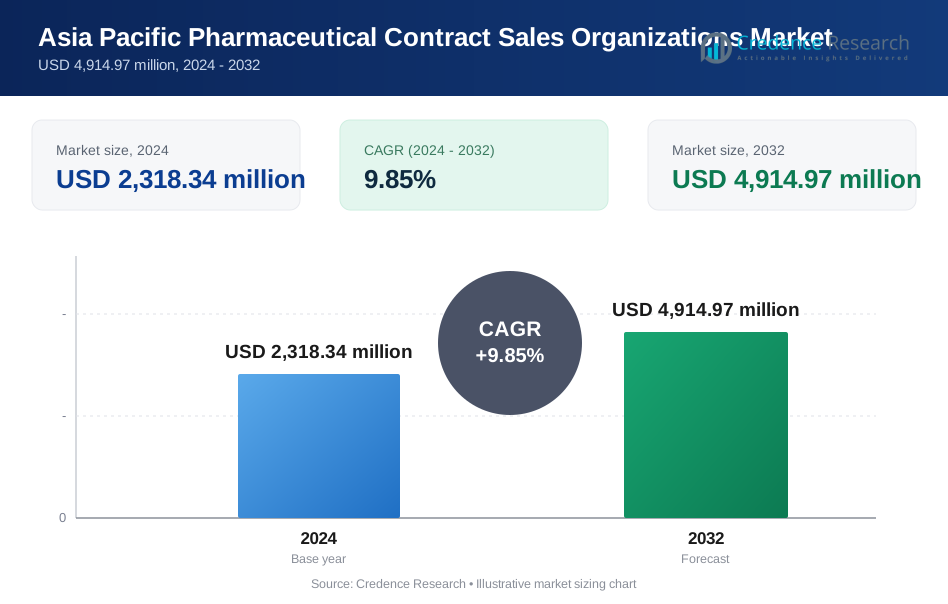
The Asia Pacific Pharmaceutical Contract Sales Organizations Market is projected to grow from USD 2,318.34 million in 2024 to an estimated USD 4,914.97 million by 2032, with a compound annual growth rate (CAGR) of 9.85% from 2024 to 2032.
Several factors are driving the growth of the Asia Pacific pharmaceutical CSO market. The increasing complexity of pharmaceutical products, such as biologics and precision medicines, has heightened the demand for specialized sales expertise, which CSOs are well-equipped to provide. Additionally, the growing pressure on pharmaceutical companies to reduce operational costs while maintaining competitiveness has fueled the adoption of outsourced sales and marketing services. The rise of chronic diseases, aging populations, and the need for patient-centric healthcare delivery further augment the demand for pharmaceutical products, indirectly boosting the need for effective sales strategies supported by CSOs. Technological advancements, including the integration of AI-driven analytics and CRM tools, have enhanced the efficiency of CSO operations, enabling targeted sales and improving customer engagement.
The Asia Pacific region represents a dynamic and diverse market for pharmaceutical CSOs, driven by strong growth in countries such as China, India, Japan, and South Korea. China and India collectively account for a substantial share due to their vast populations, increasing healthcare expenditures, and the presence of a growing middle class with higher disposable incomes. These countries are also key hubs for pharmaceutical manufacturing and innovation, further driving the need for effective sales networks. Japan, with its advanced healthcare infrastructure and a significant elderly population, offers a lucrative market for CSOs specializing in high-value and innovative pharmaceutical products. South Korea is emerging as a fast-growing market, fueled by government initiatives to promote pharmaceutical R&D and export-oriented manufacturing. Smaller markets, including Southeast Asian countries like Indonesia, Malaysia, and Vietnam, are gaining traction due to improving healthcare access, rising pharmaceutical imports, and expanding healthcare infrastructure. The diversity of markets in the Asia Pacific region requires tailored strategies, and CSOs play a critical role in bridging the gap between pharmaceutical companies and end-users.
Market Insights:
- The market is projected to grow significantly, driven by increasing demand for specialized sales expertise, with a CAGR of 9.85% from 2024 to 2032.
- Rising complexity in pharmaceutical products, including biologics and precision medicines, has elevated the need for tailored and highly skilled sales strategies.
- Cost optimization pressures are prompting pharmaceutical companies to outsource sales and marketing to CSOs, ensuring scalability and efficiency while focusing on core operations.
- The prevalence of chronic diseases and aging populations in countries like China and Japan has significantly boosted the demand for patient-centric pharmaceutical products and sales support.
- Advanced technologies such as AI-driven analytics, CRM tools, and digital platforms are reshaping sales strategies, enabling targeted marketing and improved customer engagement.
- Regulatory diversity across Asia Pacific poses a challenge for CSOs, requiring localized strategies and expertise to navigate complex compliance requirements.
- Emerging markets in Southeast Asia, including Indonesia and Vietnam, are experiencing rapid growth due to improving healthcare access and expanding pharmaceutical imports, providing new opportunities for CSOs.
Market Drivers:
Increasing Complexity of Pharmaceutical Products
The growing complexity of pharmaceutical products, particularly biologics and precision medicines, is a significant driver of the Asia Pacific pharmaceutical CSO market. These advanced therapies require specialized knowledge and tailored sales strategies to effectively communicate their benefits to healthcare professionals and patients. For instance, Japan's Initiative on Rare and Undiagnosed Diseases (IRUD) leverages genetic information to improve diagnoses and treatments for rare diseases. As pharmaceutical companies focus on niche and high-value segments, they increasingly rely on CSOs to provide the expertise needed for effective product positioning and engagement. This trend is particularly strong in developed markets like Japan and South Korea, where the demand for innovative treatments is on the rise.
Pressure to Optimize Costs and Operations
Pharmaceutical companies are under continuous pressure to reduce operational costs while maintaining competitive market positions. This has led to a growing preference for outsourcing sales and marketing activities to CSOs, which offer scalable and cost-effective solutions. By leveraging the expertise and networks of CSOs, companies can focus on core functions such as research and development while ensuring efficient market coverage. For example, Novartis has successfully reduced costs by outsourcing its clinical trials to specialized organizations, achieving cost savings. This driver is particularly pronounced in emerging markets like India and Southeast Asia, where the demand for cost-effective solutions is critical for expanding access to healthcare.
Growing Prevalence of Chronic Diseases and Aging Populations
The rising prevalence of chronic diseases, coupled with aging populations across the Asia Pacific region, is fueling demand for pharmaceutical products and, consequently, for CSO services. Conditions such as diabetes, cardiovascular diseases, and cancer are becoming more common, necessitating ongoing patient engagement and tailored treatment solutions. For instance, Sanofi has implemented comprehensive chronic disease management programs in China, focusing on diabetes and cardiovascular diseases, which have significantly improved patient outcomes. CSOs play a crucial role in this scenario by providing targeted promotional strategies and patient-centric support to ensure that innovative treatments reach the right audiences. This trend is especially significant in countries like China and India, which have large and aging populations.
Technological Advancements in Sales and Marketing
Advancements in technology are reshaping the sales and marketing landscape in the pharmaceutical industry, acting as a key driver for CSOs. The integration of AI-driven analytics, CRM tools, and digital engagement platforms enables CSOs to enhance the efficiency and precision of their operations. These technologies facilitate targeted marketing, real-time data analysis, and improved customer relationship management, making them indispensable for addressing the diverse needs of the Asia Pacific market. For example, Pfizer has invested heavily in AI-powered CRM systems, which have enhanced customer engagement by providing personalized insights and recommendations, leading to a improvement in sales efficiency. The adoption of these tools has gained significant traction in recent years, further driving the growth of the CSO market in the region.
Market Trends:
Growing Focus on Digital Sales Strategies
A key trend reshaping the Asia Pacific pharmaceutical CSO market is the growing adoption of digital sales strategies. With the rapid digitalization of healthcare and the rising prominence of e-commerce platforms, pharmaceutical companies are leveraging digital tools to enhance customer engagement and streamline operations. CSOs are increasingly utilizing artificial intelligence (AI) for predictive analytics, enabling them to anticipate market needs and optimize sales efforts. For instance, companies like Zocdoc have introduced platforms that empower patients by allowing them to schedule appointments, access medical records, and communicate directly with healthcare providers. The integration of virtual engagement platforms and remote detailing is further transforming traditional sales models, allowing CSOs to reach healthcare professionals and patients more efficiently.
Expansion of Niche Therapeutic Areas
As pharmaceutical innovation continues to advance, CSOs are increasingly focusing on specialized therapeutic areas such as oncology, rare diseases, and biologics. The Asia Pacific region, with its diverse demographic and epidemiological profiles, presents significant opportunities in these high-value segments. For example, Pepgra, a niche therapeutic CRO, has completed holistic projects in areas like cardiovascular, psychiatry, and oncology, highlighting the demand for specialized expertise. CSOs are aligning their strategies with the growing demand for personalized medicine, which requires tailored sales and marketing approaches. This focus on niche areas is also driving the need for highly skilled sales professionals with in-depth knowledge of complex treatments and therapies.
Rising Collaboration Between CSOs and Pharmaceutical Companies
Collaboration between pharmaceutical companies and CSOs is intensifying as firms seek to expand their market reach and optimize their sales operations. Partnerships are no longer limited to traditional promotional activities; they now encompass end-to-end sales solutions, including market access support, training programs, and post-launch activities. These collaborations are particularly pronounced in emerging markets, where local CSOs provide valuable insights into regulatory environments and healthcare systems, enabling global companies to navigate complexities and penetrate new markets effectively. For instance, Syneos Health announced a strategic partnership with Fosun Pharma USA Inc. in January 2023 to support the launch of Serplulimab in the U.S., showcasing the depth of collaboration in the industry.
Emergence of Patient-Centric Sales Models
The shift toward patient-centric healthcare is influencing the operational strategies of CSOs across the region. Companies are increasingly prioritizing engagement models that focus on educating and supporting patients throughout their treatment journey. Nurse educators and remote medical science liaisons are becoming integral to CSO offerings, providing personalized care and guidance to enhance patient outcomes. For instance, Kaiser Permanente has invested in telehealth and 24/7 virtual care to increase access and personalized support, especially for those in remote or underserved areas. This trend aligns with the broader industry movement toward value-based healthcare, where outcomes and patient satisfaction take precedence over traditional volume-driven approaches.
Market Challenges Analysis:
Regulatory Complexity
The diverse regulatory frameworks across the Asia Pacific region pose a significant challenge for pharmaceutical contract sales organizations (CSOs). Each country has its own compliance requirements, approval processes, and healthcare policies, making it difficult for CSOs to implement uniform strategies. Navigating these regulatory variations demands substantial time, resources, and expertise, often leading to increased operational costs and delays in market entry.
Cultural and Market Diversity
The cultural and economic diversity of the Asia Pacific region further complicates the market landscape. Consumer preferences, healthcare systems, and purchasing behaviors vary widely between developed markets like Japan and South Korea and emerging economies like Indonesia and Vietnam. CSOs must adopt highly localized strategies to effectively engage healthcare professionals and patients, which can strain resources and limit scalability.
Intensifying Competition
The market is becoming increasingly competitive, with global players dominating through advanced technologies and broad service portfolios, while regional firms leverage their local expertise and cost advantages. This competitive environment pressures CSOs to continuously innovate and offer differentiated services, which may not always align with their financial or operational capabilities.
Technological Integration Challenges
While technological advancements such as AI-driven analytics and digital engagement tools are transforming the industry, their implementation comes with challenges. High costs of technology adoption, lack of skilled personnel, and resistance to change among traditional stakeholders can impede the seamless integration of these innovations into CSO operations.
Economic Uncertainty
Fluctuations in regional economies, coupled with the varying pace of healthcare infrastructure development, can create unpredictability in market growth. Economic downturns and budget constraints in emerging markets may hinder the expansion of pharmaceutical sales initiatives, directly affecting CSO operations.
Market Opportunities:
The Asia Pacific Pharmaceutical Contract Sales Organizations (CSO) market presents substantial growth opportunities driven by the expanding healthcare sector and increasing demand for cost-effective sales solutions. As pharmaceutical companies face growing pressure to streamline operations and improve market access, the adoption of outsourced sales services is expected to rise significantly. The region’s diverse demographic landscape, characterized by aging populations in Japan and South Korea and rising healthcare access in developing markets like India and Southeast Asia, underscores the need for tailored and scalable sales strategies. Furthermore, the increasing complexity of pharmaceutical products, including biologics and precision medicines, creates a strong demand for CSOs with specialized capabilities.
Technological advancements are another key driver of opportunity in the market. The integration of artificial intelligence, machine learning, and CRM tools into CSO operations has enhanced targeting efficiency, customer engagement, and data-driven decision-making. Emerging markets within Southeast Asia, such as Indonesia, Malaysia, and Vietnam, are rapidly developing their healthcare infrastructure, providing fertile ground for CSOs to establish and expand their presence. Additionally, the trend toward patient-centric healthcare and the growing acceptance of digital and remote engagement methods further open avenues for innovation in sales and marketing. With diverse market dynamics, the Asia Pacific CSO market holds considerable potential for players capable of navigating regulatory complexities and delivering region-specific, value-driven solutions.
Market Segmentation Analysis:
The Asia Pacific Pharmaceutical Contract Sales Organizations (CSO) market is segmented by service type and end-use, reflecting diverse client needs and specialized offerings.
By Service:
The service segment is divided into personal promotion and non-personal promotion. Personal promotion includes promotional sales teams, which play a pivotal role in engaging with healthcare professionals, key account management, focused on maintaining strategic relationships with major clients, and vacancy management, which ensures uninterrupted sales operations during staffing gaps. Non-personal promotion services include medical affairs solutions, offering scientific and clinical expertise to support product positioning; remote medical science liaisons, facilitating virtual engagement with healthcare professionals; nurse (clinical) educators, providing patient-centric education and support; and other services tailored to specific client requirements. The growing complexity of pharmaceutical products has significantly increased the demand for both personal and non-personal promotional services.
By End-Use:
The market caters to pharmaceutical companies and biopharmaceutical companies, each leveraging CSOs to enhance market access and optimize sales strategies. Pharmaceutical companies rely on CSOs to expand their reach and address diverse markets, while biopharmaceutical companies, focusing on innovative and high-value products, require specialized promotional expertise.
Segmentation:
By Service
- Personal Promotion
- Promotional Sales Team
- Key Account Management
- Vacancy Management
- Non-personal Promotion
- Medical Affairs Solutions
- Remote Medical Science Liaisons
- Nurse (Clinical) Educators
- Others
By End-use
- Pharmaceutical Companies
- Biopharmaceutical Companies
Regional Analysis:
The Asia Pacific Pharmaceutical Contract Sales Organizations (CSO) market exhibits a diverse regional landscape, with significant growth across key markets. China, India, Japan, and South Korea are the primary contributors, while emerging economies in Southeast Asia are gaining momentum.
China
China accounts for the largest share of the market, contributing approximately 30% in 2024. The country’s vast population, rising healthcare expenditures, and the increasing prevalence of chronic diseases drive demand for pharmaceutical products and services. Moreover, the robust local pharmaceutical manufacturing industry and a growing middle-class population have created a favorable environment for CSOs to expand their operations and provide tailored solutions.
India
India represents around 20% of the market, fueled by its large pharmaceutical manufacturing base and a rapidly growing biopharmaceutical sector. The increasing adoption of affordable and generic drugs, along with rising healthcare access in rural and urban areas, is driving demand for outsourced sales services. India’s cost-effective operational framework and skilled workforce further enhance its appeal as a key market.
Japan
Japan accounts for 15% of the market, supported by its advanced healthcare infrastructure and aging population. The country’s emphasis on innovative, high-value pharmaceutical products creates a demand for specialized sales expertise provided by CSOs. Strong government support for healthcare innovation further amplifies the growth potential in Japan.
South Korea
South Korea holds approximately 10% of the market share, driven by its focus on pharmaceutical research and development. Government initiatives to promote local pharmaceutical manufacturing and export-oriented growth strategies have created opportunities for CSOs. South Korea’s well-established healthcare system also facilitates market expansion.
Southeast Asia
Emerging economies such as Indonesia, Malaysia, Vietnam, and Thailand collectively contribute 15% of the market share. These countries are witnessing rapid healthcare infrastructure development, increased pharmaceutical imports, and rising awareness of chronic disease management. CSOs in these regions are focused on addressing local market dynamics with tailored sales strategies.
Key Player Analysis:
- IQVIA, Inc.
- Chugai Pharma
- Medix
- PDI Health
- Charles River Laboratories
- Celerion
- Katalyst HealthCare Solutions
- Medix
- Peak Pharma Solutions Inc.
- Syneous Health
Competitive Analysis:
The Asia Pacific Pharmaceutical Contract Sales Organizations (CSO) market is characterized by a competitive and dynamic landscape, with both global and regional players vying for market share. Key competitors include well-established multinational companies and emerging regional firms that cater to diverse client needs. Global players such as IQVIA, Syneos Health, and Ashfield Healthcare dominate the market with comprehensive service portfolios, advanced technologies, and strong client networks. These firms leverage their extensive resources and expertise to offer end-to-end solutions, including personal and non-personal promotion strategies. Regional competitors, including domestic CSOs in China, India, and Japan, are gaining traction by providing cost-effective, localized services tailored to specific market demands. For example, CMIC Holdings Co Ltd and EPS Holdings Inc are among the leading companies operating in the Asia Pacific pharmaceutical contract sales organizations market, offering specialized services that cater to the unique needs of the region. These companies benefit from their deep understanding of local regulatory environments and cultural nuances, enabling them to deliver customized solutions efficiently. The competitive environment is further shaped by technological advancements, with firms increasingly adopting AI-driven analytics, CRM tools, and digital engagement platforms to enhance sales effectiveness and maintain a competitive edge.
Recent Developments:
- In April 2024, IQVIA, Inc. announced an expanded global strategic partnership with Salesforce to accelerate the development of Salesforce's Life Sciences Cloud, a next-generation customer engagement platform for the global life sciences industry. This partnership will leverage innovations from IQVIA's Orchestrated Customer Engagement (OCE) platform, launched in 2017, to provide customers with a new single, end-to-end engagement platform. IQVIA will license the OCE CRM related software to Salesforce, and both companies will collaborate to ensure a coordinated transition from IQVIA's OCE to Salesforce's solution, expected to be available in 2025.
- In January 2025, Chugai Pharmaceutical entered into a research collaboration and option-to-license agreement with Araris Biotech, a Swiss oncology biotech, focusing on antibody-drug conjugates (ADCs). This deal, worth up to $780 million, will see Araris using its ADC platform to generate ADCs with antibodies provided by Chugai against undisclosed targets.
- In March 2024, Charles River Laboratories entered into a co-marketing and collaboration agreement with DURECT Corporation for the ALZET® Osmotic Pumps Portfolio and Associated Product Line in the U.S. and Canada. This partnership aims to jointly market and commercialize the ALZET product line, enhancing Charles River's offerings in drug discovery and non-clinical development solutions.
- In May 2024, Akari Therapeutics and Peak Bio announced a portfolio prioritization plan following their anticipated merger. The combined entity will focus on Peak's ADC (antibody drug conjugate) platform technology and Akari's PAS-nomacopan program for Geographic Atrophy, aiming to secure business development opportunities and funding while advancing these programs.
Market Concentration & Characteristics:
The Asia Pacific Pharmaceutical Contract Sales Organizations (CSO) market is moderately fragmented, with a mix of global and regional players competing for market share. While multinational companies such as IQVIA and Syneos Health hold a strong presence due to their extensive service offerings and technological capabilities, regional firms in China, India, and Japan are emerging as significant contenders. These local companies excel in providing cost-effective, tailored solutions that address specific regional demands and regulatory requirements. The market is characterized by the increasing adoption of advanced technologies, including AI-driven analytics, digital engagement tools, and CRM platforms, which are transforming traditional sales strategies. Additionally, the growing focus on personalized healthcare and the complexity of pharmaceutical products have heightened the demand for specialized services. Collaborative partnerships, adaptability to diverse market needs, and regulatory compliance are critical factors shaping the competitive dynamics of the market. This evolving landscape highlights opportunities for innovation and market expansion.
Report Coverage:
The research report offers an in-depth analysis based on By Service and By End Use It details leading market players, providing an overview of their business, product offerings, investments, revenue streams, and key applications. Additionally, the report includes insights into the competitive environment, SWOT analysis, current market trends, as well as the primary drivers and constraints. Furthermore, it discusses various factors that have driven market expansion in recent years. The report also explores market dynamics, regulatory scenarios, and technological advancements that are shaping the industry. It assesses the impact of external factors and global economic changes on market growth. Lastly, it provides strategic recommendations for new entrants and established companies to navigate the complexities of the market.
Future Outlook:
- The market is set to experience significant growth, driven by the increasing adoption of outsourced sales and marketing services.
- Rising demand for biologics and precision medicines will enhance the need for specialized contract sales expertise.
- Integration of AI and advanced analytics tools is expected to improve sales targeting and operational efficiency.
- Expanding healthcare infrastructure across Southeast Asia will create new opportunities for CSOs in emerging markets.
- The growing prevalence of chronic diseases and aging populations will drive demand for innovative pharmaceutical sales strategies.
- Increasing focus on patient-centric healthcare will push CSOs to adopt personalized marketing approaches.
- Governments in key markets like South Korea and Japan are likely to support pharmaceutical R&D, boosting CSO collaboration opportunities.
- Evolving regulations and compliance standards will require CSOs to adapt swiftly to meet industry demands.
- Cross-border partnerships between pharmaceutical firms and CSOs are anticipated to expand, ensuring better regional coverage.
- Continued investments in digital transformation by CSOs will further strengthen their market position in the Asia Pacific region.
Request a Free Sample
Fill in your details and we'll send you a free sample report.
- Sample data tables & charts
- Research methodology
Need a Custom Version of This Report?
Tailor the scope, geography, or segments to your exact requirements.
- Custom geography or segment scope
- Direct access to our analyst team
Frequently Asked Questions
What is the projected market size of the Asia Pacific pharmaceutical CSO market?
What factors are driving the growth of the pharmaceutical CSO market in Asia Pacific?
Which countries are leading the Asia Pacific pharmaceutical CSO market?
What are the main challenges faced by pharmaceutical CSOs in the Asia Pacific region?
Table of Content
Chapter 1. Report Introduction
- 1.1 Report Description & Purpose
- 1.1.1 Report Title & Market Definition
- 1.1.2 Unique Selling Propositions (USP) & Key Differentiators
- 1.1.3 Value Proposition for Stakeholders
- 1.2 Research Objectives
- 1.2.1 Market Sizing Objectives (Volume & Revenue)
- 1.2.2 Segmentation Objectives
- 1.2.3 Competitive Intelligence Objectives
- 1.2.4 Forecast & Scenario Objectives
- 1.3 Report Scope
- 1.3.1 Asia Pacific Pharmaceutical Contract Sales Organizations Scope – Types & Subtypes Covered
- 1.3.2 Geographic Scope – Regions & Countries Covered
- 1.3.3 Historical Period, Base Year & Forecast Period (2024; forecast to 2032)
- 1.3.4 Inclusions & Exclusions
- 1.4 HS Code & Classification Framework
- 1.5 Currency, Units & Pricing Basis
- 1.6 Target Stakeholders
- 1.7 Limitations & Assumptions
Chapter 2. Executive Summary
- 2.1 Global Asia Pacific Pharmaceutical Contract Sales Organizations Market Snapshot
- 2.1.1 Market Size – Historical (2024) & Forecast (2024-2032) (2024: USD 2,318.34 million → 2032: USD 4,914.97 million)
- 2.1.2 Volume & Revenue – Global Totals
- 2.1.3 Key Market Highlights – Top Five Facts
- 2.2 Asia Pacific Pharmaceutical Contract Sales Organizations Market Segmentation Snapshot
- 2.2.1 Market Split by Region – 2024 vs. 2032
- 2.3 Competitive Snapshot
- 2.3.1 Top 10 Players by Revenue Share – 2024
- 2.3.2 Top 10 Players by Volume Share – 2024
- 2.3.3 Recent Strategic Developments (18-Month Summary)
- 2.4 Key Investment Highlights & Strategic Conclusions
Chapter 3. Asia Pacific Pharmaceutical Contract Sales Organizations Market Dynamics & Industry Analysis
- 3.1 Market Overview & Context
- 3.1.1 Asia Pacific Pharmaceutical Contract Sales Organizations Market Position in the Broader Automotive Value Chain
- 3.1.2 OEM vs. Replacement Market Dynamics
- 3.1.3 Market Maturity & Development Stage by Region
- 3.2 Asia Pacific Pharmaceutical Contract Sales Organizations Market Drivers
- 3.3 Asia Pacific Pharmaceutical Contract Sales Organizations Market Restraints & Challenges
- 3.4 Asia Pacific Pharmaceutical Contract Sales Organizations Market Opportunities
- 3.5 Porter's Five Forces Analysis
- 3.5.1 Threat of New Entrants
- 3.5.2 Bargaining Power of Suppliers
- 3.5.3 Bargaining Power of Buyers
- 3.5.4 Threat of Substitutes
- 3.5.5 Competitive Rivalry – Intensity Assessment
- 3.6 Asia Pacific Pharmaceutical Contract Sales Organizations Value Chain Analysis
- 3.6.1 Upstream – Raw Material/Input Suppliers
- 3.6.1.1 Raw Material/Input 1
- 3.6.1.2 Raw Material/Input 2
- 3.6.1.3 Raw Material/Input 3
- 3.6.2 Midstream – Production/Manufacturing/Service Delivery
- 3.6.2.1 Production/Process Overview
- 3.6.2.2 Key Facility Locations & Capacity by Manufacturer
- 3.6.3 Downstream – Distribution & End Consumer
- 3.6.3.1 Primary Channel – B2B/OEM
- 3.6.3.2 Secondary Channels – Dealer, Retail, Online, Direct
- 3.6.4 Value Chain Profitability Analysis
- 3.6.1 Upstream – Raw Material/Input Suppliers
- 3.7 PESTEL Analysis
- 3.7.1 Political Factors
- 3.7.2 Economic Factors
- 3.7.3 Social Factors
- 3.7.4 Technological Factors
- 3.7.5 Environmental Factors
- 3.7.6 Legal Factors
- 3.8 Asia Pacific Pharmaceutical Contract Sales Organizations Supply Chain Analysis
- 3.8.1 Raw Material/Input Supply Risk Assessment
- 3.8.2 Manufacturing Concentration Risk (Geographic Exposure)
- 3.8.3 Trade Disruption Impact Analysis
- 3.9 Regulatory & Policy Landscape
Note: The regulatory and policy landscape section covers regulations based on their applicability to the market, Asia Pacific Pharmaceutical Contract Sales Organizations category, geography, and scope of the study. Only regulatory frameworks with a material impact on operations, compliance, trade, sustainability, or market access are analyzed in detail.
Chapter 4. Key Investment Pockets & Opportunity Analysis
- 4.1 Asia Pacific Pharmaceutical Contract Sales Organizations Market Attractiveness Analysis
- 4.1.1 By Region – Investment Attractiveness Matrix (Volume × CAGR)
- 4.2 Absolute Revenue Growth Opportunity
- 4.2.1 By Region – Absolute USD Growth Through 2032
- 4.3 Incremental Volume Opportunity
- 4.3.1 By Region – Incremental Volume Through 2032
- 4.3.2 Segment – Incremental Volume
- 4.4 Emerging Submarket Opportunity Deep Dive (Subject to Applicability)
- 4.5 Emerging Market Opportunity Scorecards
- 4.5.1 United States
- 4.5.2 Europe
- 4.5.3 Asia
- 4.5.4 Middle East & Africa
Note: Emerging Market Opportunity Scorecards will be included based on relevance and strategic importance. Regions listed are indicative and may vary depending on data availability and market dynamics.
Chapter 5. Asia Pacific Pharmaceutical Contract Sales Organizations Import-Export Analysis & Trade Flows
- 5.1 Global Trade Overview
- 5.1.1 Global Export Value by Country (2024)
- 5.1.2 Global Export Volume by Country (2024)
- 5.1.3 Global Import Value by Country (2024)
- 5.1.4 Global Import Volume by Country (2024)
- 5.1.5 Net Trade Balance by Country (2024)
- 5.2 Export Analysis – Segment
- 5.2.1 Type 1 (HS Code)
- 5.2.2 Type 2 (HS Code)
- 5.2.3 Type 3 (HS Code)
- 5.2.4 Type 4 (HS Code)
- 5.2.5 Type 5 (HS Code)
- 5.3 Import Analysis – Segment
- 5.3.1 Type 1 (HS Code)
- 5.3.2 Type 2 (HS Code)
- 5.3.3 Type 3 (HS Code)
- 5.3.4 Type 4 (HS Code)
- 5.3.5 Type 5 (HS Code)
- 5.4 Average Unit Trade Prices
- 5.4.1 Average Export Price – Segment & Country
- 5.4.2 Average Import Price – Segment & Source Country
- 5.4.3 Price Trends (2024)
- 5.5 Key Trade Route Analysis
- 5.5.1 Trade Route 1
- 5.5.2 Trade Route 2
- 5.5.3 Trade Route 3
- 5.5.4 Trade Route 4
- 5.5.5 Trade Route 5
- 5.6 Trade Policy Impact Assessment
- 5.6.1 US Anti-Dumping & Section 301 Tariffs
- 5.6.2 EU Customs Union Impact
- 5.6.3 Major Free Trade Agreements
- 5.6.4 USMCA Rules of Origin
Note: Trade policy analysis will be included only where relevant to the Asia Pacific Pharmaceutical Contract Sales Organizations market.
Chapter 6. Competitive Landscape & Company Benchmarking
- 6.1 Asia Pacific Pharmaceutical Contract Sales Organizations Market Concentration & Structure
- 6.1.1 Herfindahl-Hirschman Index (HHI) – vs. 2024
- 6.1.2 Tier 1, Tier 2 & Tier 3 Market Structure
- 6.1.3 Global, Regional & Local Player Dynamics
- 6.2 Asia Pacific Pharmaceutical Contract Sales Organizations Market Share Analysis – 2024
- 6.2.1 Global Revenue Share by Company
- 6.2.2 Global Volume Share by Company
- 6.2.3 Regional Revenue Share
- 6.2.4 Market Share Evolution ( vs. 2024)
- 6.2.5 OEM Segment Share by Company
- 6.2.6 Replacement Segment Share by Company
- 6.3 Production/Delivery Capacity & Facility Analysis
- 6.3.1 Global Installed Capacity
- 6.3.2 Capacity Utilization Rates
- 6.3.3 Production/Output Volume
- 6.3.4 Facility Locations & Capacity Map
- 6.3.5 Planned Capacity Additions
- 6.4 Asia Pacific Pharmaceutical Contract Sales Organizations Competitive Benchmarking Matrix
- 6.4.1 Revenue, Volume, CAGR & Profitability Comparison
- 6.4.2 Channel Revenue Mix
- 6.4.3 Geographic Revenue Exposure
- 6.4.4 R&D Intensity
- 6.4.5 Sustainability Maturity
- 6.5 Strategic Developments in Asia Pacific Pharmaceutical Contract Sales Organizations (Last 24 Months)
- 6.5.1 Mergers, Acquisitions & Divestments
- 6.5.2 New Asia Pacific Pharmaceutical Contract Sales Organizations Launches
- 6.5.3 Facility Expansions
- 6.5.4 Strategic Alliances, Joint Ventures & Partnerships
- 6.5.5 Distribution Expansion & Market Entry
- 6.5.6 Sustainability & ESG Initiatives
- 6.6 Competitive Strategy Mapping
- 6.6.1 Leader, Challenger, Follower & Niche Classification
- 6.6.2 Pricing Strategy Comparison
- 6.6.3 Channel Strategy Matrix
Note: Strategic developments are included based on their materiality and the availability of reliable information.
Chapter 7. Global Asia Pacific Pharmaceutical Contract Sales Organizations Market – By Distribution Channel
- 7.1 Segment Overview
- 7.1.1 Volume & Revenue Split by Channel (2024 & 2032)
- 7.1.2 Channel Mix Evolution (2024-2032)
Chapter 8. Regional Market Analysis – Global Overview
- 8.1 Global Regional Overview
- 8.1.1 Regional Volume Share
- 8.1.2 Regional Revenue Share
- 8.1.3 Regional Volume by Region
- 8.1.4 Regional Revenue by Region
- 8.1.5 Regional Forecast Through 2032
- 8.2 Cross-Regional Segment Analysis
- 8.2.1 By Distribution Channel
- 8.2.2 By Brand/Price Tier
Chapter 9. North America Asia Pacific Pharmaceutical Contract Sales Organizations Market
- 9.1 United States
- 9.2 Canada
- 9.3 Mexico
Chapter 10. Europe Asia Pacific Pharmaceutical Contract Sales Organizations Market
- 10.1 Germany
- 10.2 France
- 10.3 Italy
- 10.4 United Kingdom
- 10.5 Spain
- 10.6 Poland
- 10.7 Russia
- 10.8 Netherlands
- 10.9 Belgium
- 10.10 Sweden
- 10.11 Denmark
- 10.12 Norway
- 10.13 Rest of Europe
Chapter 11. Asia Pacific Asia Pacific Pharmaceutical Contract Sales Organizations Market
- 11.1 China
- 11.2 India
- 11.3 Japan
- 11.4 South Korea
- 11.5 Thailand
- 11.6 Indonesia
- 11.7 Vietnam
- 11.8 Malaysia
- 11.9 Australia
- 11.10 Rest of Asia Pacific
Chapter 12. Latin America Asia Pacific Pharmaceutical Contract Sales Organizations Market
- 12.1 Brazil
- 12.2 Argentina
- 12.3 Colombia
- 12.4 Chile
- 12.5 Rest of Latin America
Chapter 13. Middle East Asia Pacific Pharmaceutical Contract Sales Organizations Market
- 13.1 Saudi Arabia
- 13.2 United Arab Emirates
- 13.3 Turkey
- 13.4 Israel
- 13.5 Iran
- 13.6 Rest of the Middle East
Chapter 14. Africa Asia Pacific Pharmaceutical Contract Sales Organizations Market
- 14.1 South Africa
- 14.2 Egypt
- 14.3 Nigeria
- 14.4 Morocco
- 14.5 Rest of Africa
Chapter 15. Asia Pacific Pharmaceutical Contract Sales Organizations Company Profiles
- 15.1 [Company 01]
- 15.1.1 Company Overview
- 15.1.2 Key Management Personnel
- 15.1.3 Products & Services Portfolio
- 15.1.4 Financial Performance
- 15.1.5 Key Market Focus & Geographic Presence
- 15.1.6 Recent Developments & Strategic Initiatives
Note: The company profile list is preliminary and may change based on research findings, market developments, data availability, and client requirements.
Chapter 16. Appendices
- Appendix A – List of Abbreviations & Acronyms
- Appendix B – Industry Classification Code Reference – Full Series
- Appendix C – Production & Capacity Data Tables
- Appendix D – End-Use & Demand Base Tables
- Appendix E – Consumption & Replacement Rate Assumptions
- Appendix F – ASP Reference Tables
- Appendix G – Manufacturing & Facility Database
- Appendix H – Import-Export Data Tables
- Appendix I – Regulatory Summary Tables
- Appendix J – Primary Research Participant List (Anonymized)
- Appendix K – Primary Research Questionnaire Framework
- Appendix L – Data Sources & Bibliography
- Appendix M – Market Size Divergence & Source Comparison
Chapter 17. Research Methodology
- 17.1 Research Framework & Philosophy
- 17.2 Secondary Research – Sources, Hierarchy & Data Extraction
- 17.3 Data Modeling – Bottom-Up & Top-Down Market Sizing
- 17.4 Primary Research – Stakeholder Framework, LOI & Sample Sizes
- 17.5 Forecast Methodology – Regression, Scenario & Sensitivity Analysis
- 17.6 Quality Control – Four-Layer Validation Framework
- 17.7 Limitations & Standard Assumptions
- 17.8 Disclaimer
