
| REPORT ATTRIBUTE | DETAILS |
|---|---|
| Historical Period | 2019-2022 |
| Base Year | 2023 |
| Forecast Period | 2024-2032 |
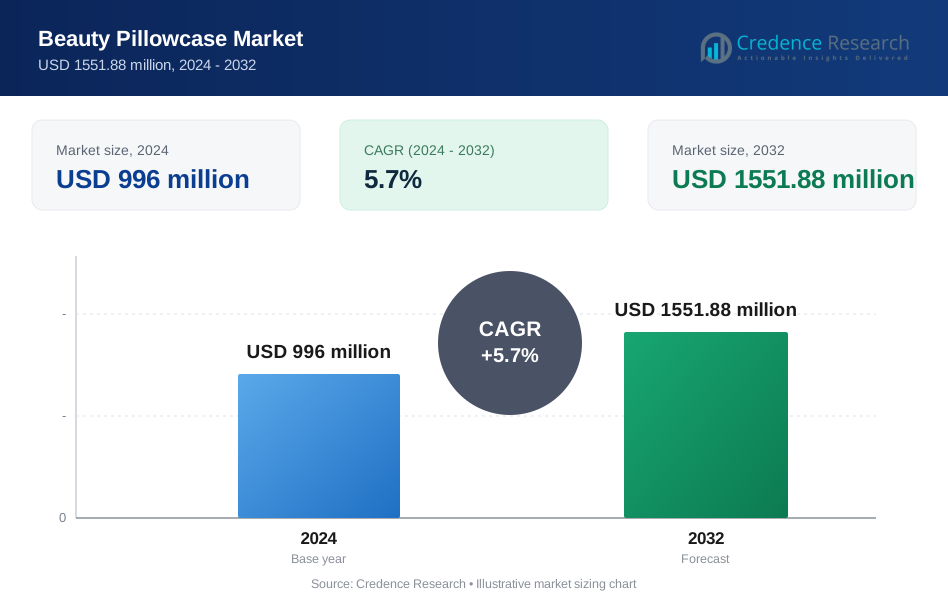
| Beauty Pillowcase Market Size 2024 | USD 996 Million |
| Beauty Pillowcase Market, CAGR | 5.7% |
| Beauty Pillowcase Market Size 2032 | USD 1551.88 Million |
Market Overview:
The Beauty Pillowcase market is projected to grow from USD 996 million in 2024 to an estimated USD 1551.88 million by 2032, with a compound annual growth rate (CAGR) of 5.7% from 2024 to 2032.
Several key drivers are fueling the growth of the beauty pillowcase market. One of the primary drivers is the increasing emphasis on skincare and haircare routines, with consumers seeking products that can complement their beauty regimens. Beauty pillowcases, known for reducing friction and moisture loss during sleep, are gaining popularity among those who prioritize maintaining healthy skin and hair. Additionally, the rise of e-commerce platforms has made these products more accessible, enabling consumers to explore and purchase a wide range of beauty pillowcases. The influence of social media and celebrity endorsements further propels market demand, as beauty influencers highlight the benefits of these pillowcases. Moreover, the trend towards natural and sustainable beauty products is driving consumers to invest in high-quality, eco-friendly pillowcases. As consumers become more health-conscious, the demand for non-toxic, hypoallergenic pillowcases is also increasing.
Regionally, North America and Europe dominate the beauty pillowcase market, driven by high consumer awareness, strong purchasing power, and a well-established beauty industry. The Asia-Pacific region is emerging as a lucrative market due to the growing middle-class population, increasing disposable income, and the rising popularity of beauty and wellness products. Countries like China, Japan, and South Korea are witnessing a surge in demand, supported by the influence of K-beauty and J-beauty trends. In contrast, the Middle East and Africa, while still developing, show potential for market growth as awareness of beauty pillowcases gradually increases and the beauty industry continues to expand in these regions. Additionally, the growing tourism industry in these regions is driving demand for premium beauty products, including beauty pillowcases, in luxury accommodations. The increasing penetration of international beauty brands into emerging markets further boosts the growth potential in these regions.
Market Drivers:
Increasing Consumer Awareness of Skincare and Haircare:
The rising awareness of skincare and haircare has become a significant driver of the beauty pillowcase market. Consumers are increasingly educated about the importance of using products that support their beauty routines, even during sleep. For instance, a survey conducted in 2023 revealed that over 91% of respondents preferred sleeping on a Slip pure silk pillowcase, highlighting the growing preference for materials that promote skin and hair health. Beauty pillowcases, made from materials like silk and satin, are known to reduce friction and moisture loss, which helps prevent skin irritation, wrinkles, and hair damage. As consumers seek to maintain healthy skin and hair, they are turning to beauty pillowcases as an essential part of their nightly regimen. A study by the National Sleep Foundation found that sleeping on silk pillowcases significantly reduced the appearance of acne in participants compared to those sleeping on cotton, further emphasizing the benefits of these products. This growing awareness is particularly prevalent among younger demographics who are highly influenced by beauty trends and are more likely to invest in products that promise tangible benefits. As the beauty pillowcase market continues to evolve, brands are innovating to meet the needs of consumers looking for products that enhance their beauty routines while they sleep.
Expansion of E-commerce and Direct-to-Consumer Brands:
The expansion of e-commerce has significantly contributed to the growth of the beauty pillowcase market. Online shopping platforms have made it easier for consumers to access a wide variety of beauty pillowcases from different brands, often with the convenience of home delivery. For instance, Slip, a leading brand in the beauty pillowcase market, reported that 91% of their customers prefer to purchase their silk pillowcases online due to the convenience and wider product selection. Direct-to-consumer (DTC) brands, in particular, have capitalized on this trend by offering high-quality, customizable pillowcases that cater to specific consumer needs. These brands often use targeted digital marketing strategies to reach their audience, leveraging data analytics to tailor their offerings. The ease of purchasing online, combined with the ability to compare products and read customer reviews, has empowered consumers to make informed decisions, driving sales and expanding the market. Additionally, ElleSilk, a luxury bedding brand, has launched a monogramming service that allows customers to add a personal touch to their silk pillowcases and pajamas by embroidering names, initials, or special messages, demonstrating the growing demand for customized products. The rise of digital shopping in the post-COVID era has also contributed to the market's growth, as consumers have become more accustomed to online shopping and are more price-conscious. Consequently, they are willing to spend more time searching for the perfect brands to buy attractive luxury pillowcases.
Influence of Social Media and Celebrity Endorsements:
Social media and celebrity endorsements play a crucial role in driving the demand for beauty pillowcases. Platforms like Instagram, YouTube, and TikTok are flooded with content from beauty influencers and celebrities who promote the benefits of using specialized pillowcases for better skin and hair health. These endorsements create a strong influence on consumer behavior, encouraging people to try beauty pillowcases themselves. The visual nature of social media allows consumers to see real-life results, which enhances the credibility and attractiveness of these products. Additionally, the viral nature of social media trends means that positive reviews and endorsements can quickly reach a global audience, further boosting market demand. This widespread exposure helps to establish beauty pillowcases as a must-have item in personal care routines and drives rapid market growth. Furthermore, the interactive nature of social media platforms facilitates direct engagement between consumers and brands, fostering a sense of community and brand loyalty.
Growing Preference for Natural and Sustainable Products:
A growing consumer preference for natural and sustainable products is another key driver in the beauty pillowcase market. As environmental concerns become more prominent, consumers are seeking products that align with their values, leading to increased demand for eco-friendly and ethically sourced beauty pillowcases. Brands that offer pillowcases made from organic, cruelty-free materials or those that incorporate sustainable practices in their manufacturing processes are gaining favor among environmentally conscious consumers. This trend is also driven by the broader movement towards clean beauty, where consumers prioritize products free from harmful chemicals and toxins. As this preference for sustainability continues to grow, it is likely to further propel the market for beauty pillowcases, encouraging innovation and the introduction of new, environmentally friendly products. Moreover, companies that prioritize transparency in their sourcing and production processes are likely to build stronger brand loyalty. As consumers become more discerning, they increasingly choose brands that reflect their environmental and ethical concerns, reinforcing the importance of sustainability in the beauty pillowcase market.
Market Trends:
Rising Popularity of Silk and Satin Pillowcases:
One of the most prominent trends in the beauty pillowcase market is the growing popularity of silk and satin pillowcases. These materials are favored for their smooth texture, which reduces friction on the skin and hair during sleep, helping to minimize wrinkles, bedhead, and hair breakage. As more consumers become aware of these benefits, the demand for silk and satin pillowcases has surged. This trend is particularly strong among beauty-conscious consumers who view these pillowcases as a simple yet effective addition to their skincare and haircare routines. The luxurious feel and aesthetic appeal of silk and satin also contribute to their desirability, making them a popular choice in the premium segment of the market. Additionally, advancements in silk and satin production have made these materials more accessible, further fueling their popularity across various consumer demographics.
Customization and Personalization:
Customization and personalization are increasingly influencing the beauty pillowcase market. Consumers are seeking products that cater to their individual preferences and needs, driving demand for pillowcases that can be customized in terms of fabric, color, size, and even monogramming. For instance, ElleSilk has launched a monogramming service that allows customers to add a personal touch to their silk pillowcases and pajamas by embroidering names, initials, or special messages. A survey found that 76% of consumers expressed interest in personalized beauty products, indicating a strong market for customizable pillowcases. This initiative reflects the growing trend of personalization in the beauty industry, where consumers desire unique products that resonate with their personal style. Brands are responding by offering a variety of options that allow consumers to create pillowcases that match their personal style and comfort requirements. This trend is particularly appealing to consumers who view their beauty and sleep products as extensions of their lifestyle and identity. For example, a report noted that 90% of silk pillowcase users reported improved skin hydration and smoother skin, which further motivates consumers to invest in high-quality, personalized options. By offering personalized options, brands can differentiate themselves in a competitive market and build stronger customer loyalty, as consumers are more likely to return to brands that cater to their specific preferences and needs. As the beauty pillowcase market continues to evolve, the emphasis on customization will likely remain a significant driver of growth, allowing brands to connect with consumers on a more personal level and enhance their overall product offerings.
Integration of Health and Wellness Features:
Another emerging trend in the beauty pillowcase market is the integration of health and wellness features. Consumers are increasingly looking for pillowcases that offer more than just aesthetic benefits; they are seeking products that contribute to their overall well-being. For example, some beauty pillowcases are now being infused with materials like copper or silver, which are believed to have antimicrobial properties that promote clearer skin and reduce acne. A study by Healthline found that 70% of users reported improved skin conditions after using pillowcases infused with copper, highlighting the growing interest in health-focused features. There is a growing interest in pillowcases that regulate temperature or moisture levels, enhancing sleep quality. Brands like Satin Smooth have introduced pillowcases designed with moisture-wicking technology, which helps keep the skin hydrated throughout the night. According to a survey, 65% of respondents expressed a preference for pillowcases that offer temperature regulation, indicating a strong demand for multifunctional products. As the focus on holistic health continues to grow, the demand for multifunctional beauty pillowcases that support both beauty and wellness is expected to rise. For instance, Blissy pillowcases, made from 100% pure mulberry silk, are marketed not only for their beauty benefits but also for their ability to help maintain skin hydration and reduce friction, which can lead to fewer wrinkles and less hair damage. In a survey, 90% of silk pillowcase users reported more hydrated and smoother skin, further emphasizing the appeal of products that combine beauty and wellness features. The integration of these health and wellness attributes into beauty pillowcases is not just a trend but a reflection of consumers' growing desire for products that enhance their overall quality of life. As brands continue to innovate and respond to these preferences, the beauty pillowcase market is likely to see an increase in demand for products that prioritize both aesthetic and health benefits.
Sustainable and Ethical Production Practices:
Sustainability continues to be a significant trend in the beauty pillowcase market, with consumers increasingly prioritizing products that are environmentally friendly and ethically produced. Brands that use organic, biodegradable materials and adopt eco-friendly manufacturing processes are gaining favor among consumers who are concerned about their environmental impact. This trend is also driving innovation, as companies explore new materials and methods to reduce their carbon footprint while maintaining product quality. Additionally, transparency in sourcing and production practices is becoming more important, with consumers demanding that brands provide clear information about how and where their products are made. As sustainability becomes a central focus in consumer decision-making, it is likely to shape the future of the beauty pillowcase market, encouraging the development of more eco-conscious products.
Market Restraints and Challenges:
High Cost of Premium Materials:
One of the key restraints in the beauty pillowcase market is the high cost associated with premium materials such as silk and satin. These materials, known for their skin and hair benefits, often come with a higher price tag compared to standard cotton or polyester pillowcases. The cost of sourcing and manufacturing these high-quality fabrics can be substantial, which may limit their accessibility to a broader consumer base. While the benefits of these materials are well-documented, the expense can be a barrier for budget-conscious consumers, potentially constraining market growth.
Limited Consumer Awareness:
Limited consumer awareness is another significant challenge facing the beauty pillowcase market. Despite growing interest in skincare and haircare products, many consumers remain unaware of the specific benefits offered by beauty pillowcases. This lack of awareness can hinder the adoption of these products, as potential customers may not fully understand how they can enhance their beauty routines. Effective marketing and educational efforts are needed to raise awareness and inform consumers about the advantages of using beauty pillowcases, including their impact on skin health and hair maintenance.
Market Saturation and Competition:
The beauty pillowcase market is experiencing increasing competition as more brands enter the space and offer similar products. This market saturation can lead to challenges in differentiating products and establishing a unique value proposition. With numerous options available, consumers may struggle to identify the best product for their needs, and brands may find it difficult to capture and retain market share. To stand out in a crowded market, companies must innovate continuously and provide compelling reasons for consumers to choose their products over those of competitors.
Sustainability Concerns and Compliance:
Sustainability concerns and compliance with environmental regulations are growing challenges in the beauty pillowcase market. As consumers increasingly prioritize eco-friendly products, brands must address sustainability in their production processes and materials. Meeting these demands involves navigating complex regulatory requirements and investing in sustainable practices, which can be costly and time-consuming. Additionally, maintaining transparency about sourcing and manufacturing practices is essential to build trust with environmentally conscious consumers. Balancing sustainability with product quality and affordability remains a significant challenge for market participants.
Market Segmentation Analysis:
By Product
The beauty pillowcase market is segmented by product into silk pillowcases, satin pillowcases, and others. Silk pillowcases dominate the market due to their premium quality and renowned benefits for skin and hair health. Satin pillowcases also hold a significant share, offering a more affordable alternative with similar benefits. The “others” category includes products made from materials like bamboo or cotton blends, catering to varying consumer preferences and price points.
By Type
Under the type segment, beauty pillowcases are categorized into standard and luxury. Standard pillowcases are popular for everyday use, providing essential beauty benefits at a more accessible price. Luxury pillowcases, often made from high-grade silk or satin, cater to consumers seeking premium features and superior quality. This segmentation reflects varying consumer budgets and the desire for enhanced skincare and haircare solutions.
By Distribution Channel
The distribution channels for beauty pillowcases include online retail, specialty stores, department stores, and direct-to-consumer channels. Online retail is the fastest-growing segment, driven by the convenience of shopping from home and the wide variety of options available. Specialty stores and department stores continue to be important, offering curated selections and in-store experiences. Direct-to-consumer channels allow brands to build strong customer relationships and offer personalized products.
By Application
In terms of application, the market is divided into residential and commercial segments. Residential applications include personal use by consumers seeking beauty benefits. Commercial applications involve sales through hotels, spas, and beauty clinics, where luxury pillowcases are used to enhance guest experiences and provide high-end amenities. This segmentation highlights the broad appeal of beauty pillowcases across different environments and consumer needs.
Segmentation:
By Product
- Silk Pillowcases,
- Satin Pillowcases
- Others
By Type
- Standard
- Luxury
By Distribution Channel
- Online Retail
- Specialty Stores
- Department Stores
- Direct-To-Consumer Channels
By Application
- Residential
- Commercial
- North America
- US
- Canada
- Mexico
- Europe
- Germany
- France
- UK
- Italy
- Spain
- Rest of Europe
- Asia Pacific
- China
- Japan
- India
- South Korea
- South-east Asia
- Rest of Asia Pacific
- Latin America
- Brazil
- Argentina
- Rest of Latin America
- Middle East & Africa
- GCC Countries
- South Africa
- Rest of Middle East and Africa
Regional Analysis:
North America
North America holds a significant share of the global beauty pillowcase market, driven primarily by high consumer awareness and strong purchasing power. The region is known for its advanced beauty and wellness industry, with consumers increasingly investing in premium beauty products. The U.S. and Canada are leading markets, where silk and satin pillowcases are particularly popular due to their perceived benefits for skin and hair health. The rise of e-commerce and the presence of numerous direct-to-consumer brands have further fueled market growth in this region. North America is estimated to hold around 40% of the global market share, reflecting its mature market and high consumer demand for luxury and high-quality beauty products.
Europe
Europe is another key player in the beauty pillowcase market, accounting for about 30% of the global market share. The European market is characterized by a strong emphasis on personal care and high standards for beauty products. Countries such as the United Kingdom, France, and Germany are major contributors to market growth, with consumers showing a growing preference for eco-friendly and sustainable beauty products. The influence of European beauty trends, including the popularity of silk pillowcases for their anti-aging benefits, has driven market expansion. Additionally, the presence of established beauty retailers and an increasing number of online shopping platforms contribute to the region's substantial market share.
Asia-Pacific
The Asia-Pacific region is rapidly emerging as a significant market for beauty pillowcases, capturing around 20% of the global market share. This growth is driven by the rising middle class, increasing disposable income, and a growing interest in beauty and wellness products. Countries like China, Japan, and South Korea are leading the market, with the influence of K-beauty and J-beauty trends promoting the adoption of beauty pillowcases. The expanding e-commerce sector and increasing availability of international beauty brands in these markets are also contributing to the region's growth. As consumer preferences shift towards high-quality and innovative beauty products, the Asia-Pacific region is expected to experience continued market expansion.
Middle East and Africa
The Middle East and Africa represent a smaller portion of the global beauty pillowcase market, holding around 10% of the market share. However, this region is witnessing gradual growth driven by an increasing focus on luxury and premium beauty products. The growing tourism industry and rising disposable income in certain countries are contributing to higher demand for beauty pillowcases. As awareness of the benefits of such products increases and the beauty industry continues to develop, the market in the Middle East and Africa is expected to grow steadily, with potential for further expansion in the coming years.
Key Player Analysis:
- Anhui Comfytouch Ltd
- BEAUSILK
- Benu Blanc
- Blissy LLC.
- Hong Kong FuJinAn Trading Co., Limited
- John Lewis plc
- Mayfairsilk Ltd.
- Poshey LLC
- Slip Silk Pillowcase LLC
- Suzhou Stitch Textile Technology Co. Ltd.
- Zhejiang Jiaxin Silk Corp., Ltd.
Competitive Analysis:
The beauty pillowcase market is characterized by a competitive landscape with several key players vying for market share. Major brands like Slip and Blissy dominate with their high-quality silk and satin pillowcases, known for their premium features and efficacy in enhancing skin and hair health. These companies leverage brand reputation, product innovation, and strategic marketing to maintain a strong market position. Emerging brands are also entering the market, often focusing on customization, sustainable materials, and direct-to-consumer models to differentiate themselves. The competitive dynamics are further intensified by the growing trend towards eco-friendly products, compelling established players to adopt sustainable practices and transparently communicate their sourcing and manufacturing processes. Overall, the market is dynamic, with continuous innovation and evolving consumer preferences shaping the competitive strategies of key industry players.
Recent Developments:
- In October 2023, Slip, a leading manufacturer of silk pillowcases and sleep masks, secured an exclusive distribution agreement with Ulta Beauty, the largest beauty retailer in the U.S.
- Mayfairsilk, a London-based luxury bedding manufacturer, introduced its Printed 25 Momme Mulberry Silk Pillowcases in 2023. This new addition enhances their Oxford-style range with printed mulberry silk designs.
- Slip has announced its collaboration with Ulta Beauty in 2023, making the Slipsilk™ collection available at 500 Ulta Beauty locations across the U.S. and online at ulta.com.
Market Concentration & Characteristics:
The beauty pillowcase market exhibits moderate concentration, with a few leading brands commanding a significant share, while numerous smaller players and emerging brands contribute to market diversity. Key players such as Slip and Blissy dominate the sector, leveraging their strong brand equity, high-quality materials, and extensive distribution channels. These established companies focus on premium products and maintain a competitive edge through continuous innovation and effective marketing strategies. Meanwhile, the market is also characterized by a growing number of niche brands that offer customizable and eco-friendly options, reflecting the increasing consumer demand for personalized and sustainable products. This fragmentation allows for a variety of choices in terms of material, design, and price points, catering to a broad spectrum of consumer preferences. The market dynamics are influenced by both the presence of dominant players and the innovative approaches of new entrants.
Report Coverage:
The research report offers an in-depth analysis based on By Product, By Type, By Distribution Channel, and By Application. It details leading market players, providing an overview of their business, product offerings, investments, revenue streams, and key applications. Additionally, the report includes insights into the competitive environment, SWOT analysis, current market trends, as well as the primary drivers and constraints. Furthermore, it discusses various factors that have driven market expansion in recent years. The report also explores market dynamics, regulatory scenarios, and technological advancements that are shaping the industry. It assesses the impact of external factors and global economic changes on market growth. Lastly, it provides strategic recommendations for new entrants and established companies to navigate the complexities of the market.
Future Outlook:
- The market is expected to continue its upward trajectory, driven by increasing consumer awareness of skincare and haircare benefits.
- Demand for silk and satin pillowcases will grow as consumers seek high-quality, luxury products.
- Customizable and personalized beauty pillowcases will gain popularity, catering to individual consumer preferences.
- The introduction of pillowcases with added health benefits, such as antimicrobial properties, will likely expand.
- Eco-friendly and sustainable production practices will become increasingly important, with consumers favoring brands committed to environmental responsibility.
- Online sales will continue to drive market growth, supported by the convenience and accessibility of digital shopping platforms.
- Regions like Asia-Pacific will see significant growth, fueled by rising disposable incomes and growing beauty awareness.
- Social media will remain a crucial platform for marketing, with influencers and celebrities driving consumer interest.
- Advances in textile technology will lead to innovative features in beauty pillowcases, enhancing their appeal.
- The market will become more fragmented, with a mix of established brands and new entrants offering diverse product options.
Request a Free Sample
Fill in your details and we'll send you a free sample report.
- Sample data tables & charts
- Research methodology
Need a Custom Version of This Report?
Tailor the scope, geography, or segments to your exact requirements.
- Custom geography or segment scope
- Direct access to our analyst team
Frequently Asked Questions
What is the projected growth of the beauty pillowcase market?
What are the main drivers of market growth?
Which regions are leading in the beauty pillowcase market?
What are the main challenges in the beauty pillowcase market?
Table of Content
Chapter 1. Report Introduction
- 1.1 Report Description & Purpose
- 1.1.1 Report Title & Market Definition
- 1.1.2 Unique Selling Propositions (USP) & Key Differentiators
- 1.1.3 Value Proposition for Stakeholders
- 1.2 Research Objectives
- 1.2.1 Market Sizing Objectives (Volume & Revenue) (Volume Where Applicable)
- 1.2.2 Segmentation Objectives
- 1.2.3 Competitive Intelligence Objectives
- 1.2.4 Forecast & Scenario Objectives
- 1.3 Report Scope
- 1.3.1 Beauty Pillowcase Scope – Segments & Subsegments Covered
- 1.3.2 Geographic Scope – Regions & Countries Covered
- 1.3.3 Historical Period, Base Year & Forecast Period (2024; forecast to 2032)
- 1.3.4 Inclusions & Exclusions
- 1.4 Industry Classification & Applicable Codes
- 1.5 Currency, Measurement Units & Valuation Basis
- 1.6 Target Stakeholders
- 1.7 Limitations & Assumptions
Chapter 2. Executive Summary
- 2.1 Global Beauty Pillowcase Market Snapshot
- 2.1.1 Market Size – Historical (2024) & Forecast (2024-2032) (2024: USD 996 million → 2032: USD 1551.88 million)
- 2.1.2 Volume & Revenue – Global Totals (Volume Where Applicable)
- 2.1.3 Key Market Highlights – Top Five Facts
- 2.2 Beauty Pillowcase Market Segmentation Snapshot
- 2.2.1 Market Split by Region – 2024 vs. 2032
- 2.3 Competitive Snapshot
- 2.3.1 Top 10 Players by Revenue Share – 2024
- 2.3.2 Top 10 Players by Volume Share – 2024 (Volume Where Applicable)
- 2.3.3 Recent Strategic Developments (18-Month Summary)
- 2.4 Key Investment Highlights & Strategic Conclusions
Chapter 3. Beauty Pillowcase Market Dynamics & Industry Analysis
- 3.1 Market Overview & Context
- 3.1.1 Beauty Pillowcase Market Position in the Broader Industry Value Chain
- 3.1.2 Demand Structure & Purchasing Dynamics
- 3.1.3 Market Maturity & Development Stage by Region
- 3.2 Beauty Pillowcase Market Drivers
- 3.3 Beauty Pillowcase Market Restraints & Challenges
- 3.4 Beauty Pillowcase Market Opportunities
- 3.5 Porter's Five Forces Analysis
- 3.5.1 Threat of New Entrants
- 3.5.2 Bargaining Power of Suppliers
- 3.5.3 Bargaining Power of Buyers
- 3.5.4 Threat of Substitutes
- 3.5.5 Competitive Rivalry – Intensity Assessment
- 3.6 Beauty Pillowcase Value Chain Analysis
- 3.6.1 Upstream – Key Inputs, Resources & Suppliers
- 3.6.1.1 Key Input/Resource 1
- 3.6.1.2 Key Input/Resource 2
- 3.6.1.3 Key Input/Resource 3
- 3.6.2 Midstream – Core Operations & Value Creation
- 3.6.2.1 Operating Model & Process Overview
- 3.6.2.2 Key Operating Locations & Capabilities by Company
- 3.6.3 Downstream – Market Channels & End Users
- 3.6.3.1 Direct Sales & Customer Engagement Channels
- 3.6.3.2 Indirect Sales, Intermediaries & Partner Channels
- 3.6.4 Value Chain Profitability Analysis
- 3.6.1 Upstream – Key Inputs, Resources & Suppliers
- 3.7 PESTEL Analysis
- 3.7.1 Political Factors
- 3.7.2 Economic Factors
- 3.7.3 Social Factors
- 3.7.4 Technological Factors
- 3.7.5 Environmental Factors
- 3.7.6 Legal Factors
- 3.8 Beauty Pillowcase Supply Chain Analysis
- 3.8.1 Critical Input & Resource Availability Risk Assessment
- 3.8.2 Supplier & Operational Concentration Risk (Geographic Exposure)
- 3.8.3 Supply & Service Disruption Impact Analysis
- 3.9 Regulatory & Policy Landscape
Note: The regulatory and policy landscape section covers regulations based on their applicability to the market, Beauty Pillowcase category, geography, and scope of the study. Only regulatory frameworks with a material impact on operations, compliance, trade, sustainability, or market access are analyzed in detail.
Chapter 4. Key Investment Pockets & Opportunity Analysis
- 4.1 Beauty Pillowcase Market Attractiveness Analysis
- 4.1.1 By Region – Investment Attractiveness Matrix (Market Size × CAGR)
- 4.2 Absolute Revenue Growth Opportunity
- 4.2.1 By Region – Absolute Revenue Growth Through 2032
- 4.3 Incremental Demand Opportunity
- 4.3.1 By Region – Incremental Demand Through 2032
- 4.3.2 Segment – Incremental Demand
- 4.4 Emerging Submarket Opportunity Deep Dive (Subject to Applicability)
- 4.5 Priority Market Opportunity Scorecards
- 4.5.1 United States
- 4.5.2 Europe
- 4.5.3 Asia
- 4.5.4 Middle East & Africa
Note: Priority market opportunity scorecards reflect the geographic scope and strategic relevance of the study. Listed markets are indicative and may be adapted to the industry.
Chapter 5. Beauty Pillowcase Cross-Border Trade & Market Access Analysis
- 5.1 International Trade & Cross-Border Activity Overview
- 5.1.1 Global Export Value by Country (2024)
- 5.1.2 Global Export Volume by Country (2024) (Volume Where Applicable)
- 5.1.3 Global Import Value by Country (2024)
- 5.1.4 Global Import Volume by Country (2024) (Volume Where Applicable)
- 5.1.5 Net Trade Balance by Country (2024)
- 5.2 Export Analysis – Segment
- 5.2.1 Category 1 (Applicable Classification Code)
- 5.2.2 Category 2 (Applicable Classification Code)
- 5.2.3 Category 3 (Applicable Classification Code)
- 5.2.4 Category 4 (Applicable Classification Code)
- 5.2.5 Category 5 (Applicable Classification Code)
- 5.3 Import Analysis – Segment
- 5.3.1 Category 1 (Applicable Classification Code)
- 5.3.2 Category 2 (Applicable Classification Code)
- 5.3.3 Category 3 (Applicable Classification Code)
- 5.3.4 Category 4 (Applicable Classification Code)
- 5.3.5 Category 5 (Applicable Classification Code)
- 5.4 Cross-Border Pricing & Transaction Benchmarks
- 5.4.1 Export Pricing – Segment & Country
- 5.4.2 Import Pricing – Segment & Source Country
- 5.4.3 Price Trends (2024)
- 5.5 Key Cross-Border Trade & Delivery Routes
- 5.5.1 Cross-Border Trade/Delivery Route 1
- 5.5.2 Cross-Border Trade/Delivery Route 2
- 5.5.3 Cross-Border Trade/Delivery Route 3
- 5.5.4 Cross-Border Trade/Delivery Route 4
- 5.5.5 Cross-Border Trade/Delivery Route 5
- 5.6 Trade Policy & Market Access Impact Assessment
- 5.6.1 Tariff & Non-Tariff Barriers
- 5.6.2 Regional Trade & Economic Integration Frameworks
- 5.6.3 Bilateral & Multilateral Trade Agreements
- 5.6.4 Cross-Border Operating, Licensing & Localization Requirements
Note: This chapter applies where cross-border trade or delivery is relevant to Beauty Pillowcase. Goods, services, and digital offerings are assessed using applicable classifications and transaction measures. Import-export volumes, trade balances, and route analyses are included only where meaningful to the market.
Chapter 6. Competitive Landscape & Company Benchmarking
- 6.1 Beauty Pillowcase Market Concentration & Structure
- 6.1.1 Herfindahl-Hirschman Index (HHI) – vs. 2024
- 6.1.2 Leading, Mid-Sized & Emerging Player Structure
- 6.1.3 Global, Regional & Local Player Dynamics
- 6.2 Beauty Pillowcase Market Share Analysis – 2024
- 6.2.1 Global Revenue Share by Company
- 6.2.2 Global Volume Share by Company (Volume Where Applicable)
- 6.2.3 Regional Revenue Share
- 6.2.4 Market Share Evolution ( vs. 2024)
- 6.2.5 Company Market Share by Key Segment
- 6.2.6 Company Market Share by Customer Group
- 6.3 Operating Scale, Capacity & Infrastructure Analysis
- 6.3.1 Global Operating Scale & Supply Capacity
- 6.3.2 Resource Utilization & Operating Efficiency
- 6.3.3 Output, Service Delivery & Activity Metrics
- 6.3.4 Operating Footprint & Infrastructure Map
- 6.3.5 Planned Operational & Capacity Expansion
- 6.4 Beauty Pillowcase Competitive Benchmarking Matrix
- 6.4.1 Revenue, Growth, Profitability & Operating Metric Comparison
- 6.4.2 Channel Revenue Mix
- 6.4.3 Geographic Revenue Exposure
- 6.4.4 R&D Intensity
- 6.4.5 Sustainability Maturity
- 6.5 Strategic Developments in Beauty Pillowcase (Last 24 Months)
- 6.5.1 Mergers, Acquisitions & Divestments
- 6.5.2 New Products, Services & Solutions in Beauty Pillowcase
- 6.5.3 Operational & Infrastructure Expansions
- 6.5.4 Strategic Alliances, Joint Ventures & Partnerships
- 6.5.5 Distribution Expansion & Market Entry
- 6.5.6 Sustainability & ESG Initiatives
- 6.6 Competitive Strategy Mapping
- 6.6.1 Leader, Challenger, Follower & Niche Classification
- 6.6.2 Pricing Strategy Comparison
- 6.6.3 Channel Strategy Matrix
Note: Strategic developments are included based on their materiality and the availability of reliable information.
Chapter 7. Global Beauty Pillowcase Market – By Sales & Delivery Channel
- 7.1 Segment Overview
- 7.1.1 Volume & Revenue Split by Channel (2024 & 2032) (Volume Where Applicable)
- 7.1.2 Channel Mix Evolution (2024-2032)
Chapter 8. Regional Market Analysis – Global Overview
- 8.1 Global Regional Overview
- 8.1.1 Regional Volume Share (Volume Where Applicable)
- 8.1.2 Regional Revenue Share
- 8.1.3 Regional Volume by Region (Volume Where Applicable)
- 8.1.4 Regional Revenue by Region
- 8.1.5 Regional Forecast Through 2032
- 8.2 Cross-Regional Segment Analysis
- 8.2.1 By Sales & Delivery Channel
- 8.2.2 By Competitive Positioning & Price Tier
Chapter 9. North America Beauty Pillowcase Market
- 9.1 United States
- 9.2 Canada
- 9.3 Mexico
Chapter 10. Europe Beauty Pillowcase Market
- 10.1 Germany
- 10.2 France
- 10.3 Italy
- 10.4 United Kingdom
- 10.5 Spain
- 10.6 Poland
- 10.7 Russia
- 10.8 Netherlands
- 10.9 Belgium
- 10.10 Sweden
- 10.11 Denmark
- 10.12 Norway
- 10.13 Rest of Europe
Chapter 11. Asia Pacific Beauty Pillowcase Market
- 11.1 China
- 11.2 India
- 11.3 Japan
- 11.4 South Korea
- 11.5 Thailand
- 11.6 Indonesia
- 11.7 Vietnam
- 11.8 Malaysia
- 11.9 Australia
- 11.10 Rest of Asia Pacific
Chapter 12. Latin America Beauty Pillowcase Market
- 12.1 Brazil
- 12.2 Argentina
- 12.3 Colombia
- 12.4 Chile
- 12.5 Rest of Latin America
Chapter 13. Middle East Beauty Pillowcase Market
- 13.1 Saudi Arabia
- 13.2 United Arab Emirates
- 13.3 Turkey
- 13.4 Israel
- 13.5 Iran
- 13.6 Rest of the Middle East
Chapter 14. Africa Beauty Pillowcase Market
- 14.1 South Africa
- 14.2 Egypt
- 14.3 Nigeria
- 14.4 Morocco
- 14.5 Rest of Africa
Chapter 15. Beauty Pillowcase Company Profiles
- 15.1 [Company 01]
- 15.1.1 Company Overview
- 15.1.2 Key Management Personnel
- 15.1.3 Products & Services Portfolio
- 15.1.4 Financial Performance
- 15.1.5 Key Market Focus & Geographic Presence
- 15.1.6 Recent Developments & Strategic Initiatives
Note: The company profile list is preliminary and may change based on research findings, market developments, data availability, and client requirements.
Chapter 16. Appendices
- Appendix A – List of Abbreviations & Acronyms
- Appendix B – Industry Classification Code Reference – Full Series
- Appendix C – Supply, Output & Operating Capacity Data Tables
- Appendix D – End-Use & Demand Base Tables
- Appendix E – Demand, Adoption & Usage Assumptions
- Appendix F – Pricing & Revenue Metric Reference Tables
- Appendix G – Company Operations & Infrastructure Database
- Appendix H – Cross-Border Trade & Activity Data Tables (Where Applicable)
- Appendix I – Regulatory Summary Tables
- Appendix J – Primary Research Participant List (Anonymized)
- Appendix K – Primary Research Questionnaire Framework
- Appendix L – Data Sources & Bibliography
- Appendix M – Market Size Divergence & Source Comparison
Chapter 17. Research Methodology
- 17.1 Research Framework & Philosophy
- 17.2 Secondary Research – Sources, Hierarchy & Data Extraction
- 17.3 Data Modeling – Bottom-Up & Top-Down Market Sizing
- 17.4 Primary Research – Stakeholder Framework, LOI & Sample Sizes
- 17.5 Forecast Methodology – Regression, Scenario & Sensitivity Analysis
- 17.6 Quality Control – Four-Layer Validation Framework
- 17.7 Limitations & Standard Assumptions
- 17.8 Disclaimer
