
| REPORT ATTRIBUTE | DETAILS |
|---|---|
| Historical Period | 2020-2023 |
| Base Year | 2024 |
| Forecast Period | 2025-2032 |
| Canada Parking Management Software Market Size 2024 | USD 171.57 million |
| Canada Parking Management Software Market, CAGR | 7.17% |
| Canada Parking Management Software Market Size 2032 | USD 298.49 million |
Market Overview:
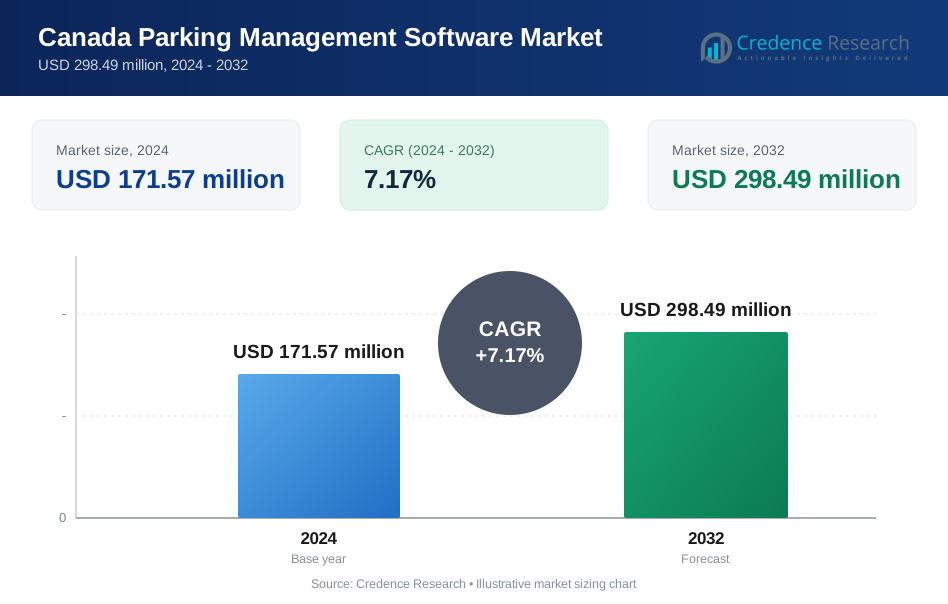
The Canada Parking Management Software Market is projected to grow from USD 171.57 million in 2024 to an estimated USD 298.49 million by 2032, with a compound annual growth rate (CAGR) of 7.17% from 2024 to 2032.
Several factors are fueling the demand for parking management software in Canada. One of the primary drivers is the escalating traffic congestion in metropolitan areas, which has led municipal authorities and private developers to adopt digital parking solutions that optimize space utilization and improve traffic flow. Additionally, the widespread adoption of smartphones and mobile applications has enhanced the functionality and accessibility of parking software, enabling users to locate, reserve, and pay for parking spaces through integrated platforms. Environmental concerns also play a pivotal role, as smart parking solutions contribute to reduced carbon emissions by minimizing the time spent searching for parking. Furthermore, the growing trend of automation and the integration of Internet of Things (IoT) in urban infrastructure are propelling the evolution of intelligent parking systems capable of real-time monitoring, analytics, and predictive management.
Regionally, the Canadian parking management software market demonstrates a strong concentration in urban provinces such as Ontario, British Columbia, and Quebec. Ontario, particularly the Greater Toronto Area, leads the market due to its dense population, high vehicle volume, and ongoing investments in smart city initiatives. British Columbia follows closely, driven by Vancouver's advanced urban planning strategies and sustainability goals. Quebec also contributes significantly to market growth, supported by proactive municipal policies and increasing deployment of digital infrastructure. Smaller provinces are gradually adopting parking management solutions, spurred by federal funding and the nationwide push for digital transformation in public services. As regional governments prioritize intelligent transportation systems, the market is expected to expand further across both densely populated and emerging urban areas in Canada.
Market Insights:
- The Canada parking management software market is projected to grow from USD 171.57 million in 2024 to USD 298.49 million by 2032, with a compound annual growth rate (CAGR) of 7.17%, driven by increasing urbanization and the need for efficient parking solutions in metropolitan areas.
- Government initiatives, particularly smart city developments, are a major factor propelling the demand for parking management software as municipalities focus on improving urban mobility.
- The adoption of cloud-based and mobile solutions is transforming the market, offering scalability, flexibility, and enhanced customer convenience for both public and private sector organizations.
- Environmental sustainability goals are contributing to market growth as smart parking systems help reduce fuel consumption and integrate electric vehicle charging stations in urban areas.
- High initial implementation costs remain a challenge, especially for smaller municipalities and businesses, hindering the widespread adoption of advanced parking management solutions.
- Integrating parking management systems with existing infrastructure, especially legacy systems, is a complex task that can lead to delays and increased costs during implementation.
- Data privacy and security concerns are emerging challenges, as parking management systems collect sensitive user data, making robust cybersecurity measures essential for protecting customer trust and compliance.
Market Drivers:
Increasing Urbanization and Traffic Congestion
Urbanization in Canada has led to an exponential rise in vehicle ownership, contributing to increased traffic congestion in major cities. As urban areas become more densely populated, the demand for efficient and effective parking solutions has grown. Parking management software helps address the growing challenges of limited parking spaces and the inefficiency of traditional parking systems. By leveraging advanced algorithms and real-time data, these software solutions can optimize the allocation of parking spaces, reduce search times for parking, and ease traffic congestion. This shift toward digital solutions is essential in urban centers where congestion and limited parking infrastructure have become a significant challenge to the daily functioning of cities.
Government Initiatives and Smart City Developments
Governments across Canada have been increasingly focusing on transforming urban environments into smart cities. These initiatives often include the deployment of smart parking systems that leverage Internet of Things (IoT) technology and data analytics to manage parking spaces efficiently. Canadian municipalities are adopting parking management software to improve urban mobility, enhance citizen satisfaction, and streamline traffic flow. For instance, the Toronto Parking Authority's GreenP initiative has implemented a comprehensive network of on-street and off-street parking facilities, offering real-time information on parking availability through a mobile app. In addition to improving parking efficiency, smart parking systems can collect valuable data that informs better city planning and policy-making. With continued investment from federal and local governments in smart city infrastructure, the adoption of parking management software is anticipated to rise significantly over the coming years.
Growing Adoption of Mobile and Cloud-Based Solutions
The proliferation of smartphones and mobile applications has transformed how consumers interact with urban services, including parking. The convenience of mobile applications for parking space reservation, payment, and real-time availability tracking is driving the adoption of parking management software. Cloud-based solutions, in particular, enable scalability, flexibility, and cost-efficiency, making them an attractive choice for both public and private sector organizations. By leveraging the cloud, parking management software can provide centralized control, real-time updates, and user-friendly interfaces that offer customers greater convenience and accessibility. For instance, in October 2024, SpotHero expanded its integration with Google Maps, allowing drivers to reserve parking spots with features like EV charging and valet services, enhancing convenience for over 10 million users. This shift toward mobile and cloud-based systems is one of the key drivers propelling the market's growth in Canada.
Environmental Considerations and Sustainability Goals
As environmental sustainability continues to be a top priority for governments and businesses alike, parking management software is playing a crucial role in reducing carbon emissions. By optimizing parking space utilization and reducing the time spent by drivers searching for parking, these solutions help decrease fuel consumption and air pollution. Smart parking systems also contribute to the overall sustainability goals of Canadian cities by enabling efficient energy management and supporting the integration of electric vehicle (EV) charging stations. As urban centers strive to meet climate action targets, the adoption of parking management software aligns with broader sustainability efforts, further driving the market's growth.
Market Trends:
Integration of Artificial Intelligence and Machine Learning
One of the key trends in the Canada parking management software market is the growing integration of artificial intelligence (AI) and machine learning (ML) technologies. These technologies enable parking systems to offer more intelligent, data-driven solutions by predicting parking demand patterns, optimizing space utilization, and providing real-time availability updates. AI and ML algorithms can analyze historical data, weather patterns, and local events to predict parking demand more accurately, helping municipalities and businesses manage their resources more effectively. For example, Bosch's AI-powered parking system uses "IoT-enabled sensors in parking lots, streets, and garages" to identify available spaces and relay information to drivers in real-time. This trend towards incorporating advanced technologies not only improves operational efficiency but also enhances the overall user experience by providing more personalized and accurate parking solutions.
Adoption of Contactless and Cashless Payment Systems
The rise of digital payment methods is a significant trend in the parking management software sector in Canada. As contactless and cashless payment systems become more widespread, the demand for integrated parking solutions that support these methods has surged. The convenience of digital payments, combined with the growing preference for cashless transactions, has led to the widespread adoption of mobile-based parking apps, QR code scanning, and automated payment kiosks. For instance, the City of Kingston has expanded HONK to on-street parking locations, allowing drivers to pay for parking through a safe, secure and user-friendly system. This trend enhances the customer experience by streamlining the parking process, allowing users to pay quickly and securely without physical interaction. Furthermore, contactless systems are increasingly seen as a safer option, especially in light of ongoing health and safety concerns.
Deployment of Electric Vehicle Charging Stations
As the adoption of electric vehicles (EVs) continues to grow in Canada, there is a notable trend toward integrating electric vehicle charging stations into parking management systems. Parking management software providers are incorporating EV charging capabilities into their platforms to meet the needs of this expanding market. This integration ensures that drivers can easily locate available charging stations within parking facilities, facilitating the transition to cleaner transportation options. With government incentives and an increasing emphasis on sustainability, the demand for EV-friendly parking solutions is expected to rise, prompting more parking management software companies to expand their offerings to include electric vehicle infrastructure.
Shift Toward Data-Driven Decision-Making
Data analytics is becoming increasingly important in the management of parking spaces across Canada. Parking management software is evolving to include advanced data analytics tools that provide valuable insights into parking patterns, user behavior, and operational efficiency. By collecting and analyzing data, parking operators and municipal authorities can make more informed decisions regarding parking pricing, space allocation, and infrastructure development. This trend toward data-driven decision-making allows for greater optimization of parking resources, better planning for future growth, and improved customer satisfaction. As more data becomes available through smart parking systems, the role of analytics in the market will continue to expand.
Market Challenges Analysis:
High Initial Implementation Costs
One of the primary restraints in the Canada parking management software market is the high initial cost of implementation. The deployment of advanced parking management systems, especially those integrating IoT technology, AI, and machine learning, requires significant capital investment. This includes costs for hardware installation, software development, system integration, and ongoing maintenance. For municipalities and businesses with limited budgets, the upfront expenses can pose a barrier to adopting such solutions. Despite the long-term benefits, the initial financial burden remains a challenge for many stakeholders, particularly in smaller cities or regions with lower parking demand.
Complexity of System Integration
Another challenge faced by organizations in adopting parking management software is the complexity of integrating these systems with existing infrastructure. Many parking facilities, especially older ones, have legacy systems that are not compatible with modern digital solutions. The need for seamless integration between various technologies, such as payment systems, security systems, and data analytics platforms, can create technical hurdles. This complexity may lead to delays in implementation and potential disruptions in operations during the transition period. Furthermore, the need for ongoing software updates and system compatibility checks can increase operational costs and strain resources.
Data Privacy and Security Concerns
With the increasing use of digital parking systems, data privacy and security concerns have emerged as a significant challenge. Parking management systems often collect sensitive data from users, including personal information and payment details. Ensuring the security of this data is critical to maintaining customer trust and meeting regulatory requirements. Cybersecurity threats, such as data breaches and hacking attempts, pose a substantial risk to the integrity of parking management systems. For example, a data breach at Park'N Fly in Canada compromised approximately 1 million customer records, exposing personal information like email addresses and Aeroplan numbers. As such, companies must invest in robust cybersecurity measures to protect user data, which can further increase operational costs and complexity.
Regulatory and Compliance Issues
The regulatory environment surrounding smart parking systems in Canada is still evolving, and varying provincial regulations may create challenges for software providers. Different regions may have different rules regarding data usage, payment systems, and infrastructure standards. Staying compliant with these varying regulations can complicate the development and deployment of parking management solutions, potentially leading to delays, additional costs, or system modifications.
Market Opportunities:
The Canada parking management software market presents significant opportunities driven by the increasing demand for efficient urban mobility solutions. As Canadian cities continue to grow and urbanize, the need for smart parking systems that optimize space utilization and reduce traffic congestion becomes more critical. There is an opportunity for parking management software providers to expand their offerings by integrating advanced technologies such as artificial intelligence, machine learning, and the Internet of Things (IoT). These innovations can offer predictive analytics for parking demand, real-time updates, and improved user experiences, making them attractive to municipalities, businesses, and commercial property owners. With urban areas focusing on sustainability, the demand for environmentally friendly and energy-efficient parking solutions, including electric vehicle (EV) charging stations, is also expected to grow, creating new avenues for software solutions tailored to this emerging market.
Additionally, as the adoption of mobile technology continues to rise, there is an opportunity to leverage mobile applications for seamless parking management. Integrating mobile-based parking apps with real-time availability tracking, automated payments, and parking reservations presents an untapped opportunity to enhance customer convenience and reduce operational inefficiencies. Smaller cities and suburban areas, traditionally underserved in terms of smart infrastructure, also offer untapped potential for the expansion of parking management solutions. The increasing focus on smart city initiatives across the country, coupled with government funding for technological advancements, further strengthens the market's growth potential. These factors create a promising outlook for parking management software providers to tap into both mature and emerging markets across Canada.
Market Segmentation Analysis:
The Canada parking management software market is segmented by solution, application, end-user, and deployment, each exhibiting distinct characteristics and growth drivers.
By Solution Segment
In the solution segment, Access Control holds a significant share as parking facilities increasingly focus on secure entry and exit management. Revenue Management follows closely, driven by the need for efficient pricing strategies and automated billing. Parking Security and Surveillance is also gaining traction as urban areas prioritize safety and surveillance in parking environments. Parking Reservation Management is growing as more parking lots and garages adopt systems that allow users to book spaces in advance. Lastly, Analytics Solutions are in demand for data-driven decision-making, providing insights into parking patterns, usage trends, and optimization opportunities.
By Application Segment
In the application segment, Cloud-Based solutions dominate, accounting for a growing share of the market. Their scalability, flexibility, and cost-effectiveness make them highly attractive to municipalities, commercial businesses, and residential areas. On-Premise solutions, while still relevant, are seeing slower adoption due to the increasing preference for cloud technologies that offer real-time updates and centralized control.
By End-User Segment
Commercial end-users lead the market, as businesses, shopping centers, and airports seek efficient parking management systems to cater to high volumes of users. Government and Municipalities follow closely, as local governments invest in smart city initiatives to streamline urban mobility. Residential applications are also on the rise, particularly in densely populated urban areas with high demand for efficient parking solutions.
By Deployment Segment
Similar to the application segment, Cloud-Based deployments are the dominant choice due to their ease of integration, cost-effectiveness, and scalability, while On-Premise deployments remain more traditional but less favored in the current market environment.
Segmentation:
By Solution Segment
- Access Control
- Revenue Management
- Parking Security and Surveillance
- Parking Reservation Management
- Analytics Solutions
By Application Segment
- On-Premise
- Cloud-Based
By End-User Segment
- Residential
- Commercial
- Government and Municipalities
By Deployment Segment
- On-Premise
- Cloud-Based
Regional Analysis:
The Canadian parking management software market is experiencing regional growth, with varying levels of adoption and demand across different provinces. Ontario, Quebec, and British Columbia are the key regions driving the market, due to their urbanized environments, significant population density, and increasing emphasis on smart city solutions. Each region exhibits unique characteristics and growth dynamics that contribute to the overall market expansion.
Ontario Market Overview
Ontario is the largest and most mature market for parking management software in Canada, accounting for approximately 40% of the overall market share in 2024. The Greater Toronto Area (GTA), with its high population density, frequent traffic congestion, and numerous commercial developments, continues to be a hotspot for smart parking solutions. Municipalities in Ontario are heavily investing in smart city infrastructure, which includes the integration of digital parking systems. Additionally, the province’s commitment to sustainability and energy-efficient technologies is further driving the demand for parking management solutions, including electric vehicle (EV) charging stations within parking facilities. Ontario's progressive approach to urban mobility and significant infrastructure investment ensures that it will continue to dominate the parking management software market.
Quebec Market Overview
Quebec holds a significant portion of the Canadian parking management software market, contributing around 25% of the total market share. The province is witnessing substantial adoption of smart parking technologies in major cities such as Montreal and Quebec City. Montreal’s focus on enhancing urban mobility, reducing traffic congestion, and meeting environmental goals has prompted a growing interest in digital parking solutions. Quebec's policies promoting sustainability, along with increasing government investments in smart city technologies, are key factors driving this growth. The province's proactive stance in integrating IoT and data-driven technologies into public infrastructure creates a favorable environment for the market.
British Columbia Market Overview
British Columbia, particularly the Vancouver metropolitan area, holds a 20% share of the Canadian parking management software market. Vancouver’s ongoing efforts to transform into a smart city, combined with its commitment to sustainability, are key drivers of the market in the province. The region’s high demand for real-time data on parking availability and the rise of mobile parking applications have significantly contributed to the market’s expansion. Additionally, the adoption of electric vehicles in British Columbia is accelerating, with a corresponding need for EV-friendly parking management systems. The province’s forward-thinking urban planning and technology-driven solutions are creating a robust market for parking management software.
Other Provinces and Emerging Markets
The remaining 15% of the market is divided among other provinces, including Alberta, Manitoba, and the Atlantic provinces. While these regions currently have smaller shares in the parking management software market, they are witnessing gradual adoption due to growing urbanization, infrastructure development, and government support for smart city initiatives. In particular, cities like Calgary and Edmonton in Alberta are focusing on implementing digital parking systems to manage growing urban populations and increase operational efficiency in parking facilities. As smaller cities embrace technological advancements, the market is poised for future expansion across Canada’s less urbanized areas.
Key Player Analysis:
- ParkMobile, LLC
- Passport Parking Inc.
- Cisco Systems, Inc.
- Amano Corporation
- TIBA Parking Systems
- FlashParking
- SP Plus Corporation
- LAZ Parking Ltd, LLC
- ParkingSoft
- Q-Free ASA (Canada operations)
Competitive Analysis:
The Canada parking management software market is highly competitive, with key players focusing on technological innovation, customer-centric solutions, and strategic partnerships. Companies like ParkMobile, T2 Systems, and Flowbird dominate the market, offering a range of integrated solutions that cater to both public and private sector parking needs. These companies leverage advanced technologies, including artificial intelligence, cloud computing, and mobile applications, to provide real-time parking availability, automated payments, and seamless user experiences. Competition is also intensifying from emerging players offering specialized, cost-effective solutions tailored to small and medium-sized parking facilities. Additionally, large technology firms are entering the market with innovative parking management platforms that integrate seamlessly into smart city ecosystems. The market is characterized by strong competition, rapid technological advancements, and a focus on scalability, with companies continuously enhancing their offerings to meet the growing demand for smart, efficient, and sustainable parking solutions.
Recent Developments:
- In February 2025, Passport Parking Inc. expanded its partnership with the City of Jefferson City, Missouri, implementing its unified parking and curb management solutions. The company also partnered with the City of Wilmington, Delaware in November 2024, providing digital parking permit and enforcement solutions to streamline permit management for over 8,950 active permits.
- In September 2024, ParkMobile, LLC formed a strategic partnership with FlashParking to accelerate the digital transformation of the parking industry in North America. This collaboration aims to process over a billion transactions annually, modernize parking infrastructure across millions of spaces, and simplify digital payment experiences.
- In January 2025, FlashParking, in partnership with ParkMobile, announced plans to finance the deployment of AI camera, access, and payment infrastructure for parking operators and industry partners. The companies aim to provide frictionless parking experiences, facilitate price transparency, and expand payment options across thousands of parking locations in North America.
Market Concentration & Characteristics:
The Canada parking management software market exhibits moderate concentration, with a few large players dominating the landscape. Key companies such as ParkMobile, T2 Systems, and Flowbird hold a substantial share due to their established presence, comprehensive product offerings, and technological innovations. These leaders leverage advanced solutions, including real-time data analytics, mobile integration, and IoT-based systems, to maintain competitive advantages. However, the market also presents opportunities for smaller, specialized players to capture market share by offering tailored solutions for niche applications, such as residential or small commercial spaces. The market is characterized by continuous innovation, particularly in the areas of cloud-based platforms, mobile applications, and integration with smart city infrastructure. As urban mobility needs evolve, the demand for scalable, cost-effective, and user-friendly parking management solutions is driving companies to develop flexible and adaptive systems. This dynamic environment ensures a high level of competition, fostering ongoing market growth and technological advancements.
Report Coverage:
The research report offers an in-depth analysis based on By Solution Segment, By Application Segment, By End-User Segment and By Deployment Segment. It details leading market players, providing an overview of their business, product offerings, investments, revenue streams, and key applications. Additionally, the report includes insights into the competitive environment, SWOT analysis, current market trends, as well as the primary drivers and constraints. Furthermore, it discusses various factors that have driven market expansion in recent years. The report also explores market dynamics, regulatory scenarios, and technological advancements that are shaping the industry. It assesses the impact of external factors and global economic changes on market growth. Lastly, it provides strategic recommendations for new entrants and established companies to navigate the complexities of the market.
Future Outlook:
- The Canada parking management software market is expected to experience significant growth, driven by a strong compound annual growth rate (CAGR) in the coming years.
- Increasing urbanization and traffic congestion will drive the adoption of smart parking solutions.
- Demand for mobile-based and cloud-based platforms will continue to dominate due to their scalability and cost-effectiveness.
- Integration of AI and machine learning in parking systems will optimize space allocation and predict parking demand.
- The rise of electric vehicles will prompt the integration of EV charging stations within parking management systems.
- Government investments in smart city initiatives will provide significant opportunities for parking software providers.
- Data analytics will become increasingly crucial for optimizing parking operations and pricing strategies.
- Smaller cities and suburban regions will gradually adopt digital parking systems, broadening market reach.
- Contactless and cashless payment methods will become the standard across parking systems, enhancing customer convenience.
- The need for enhanced security and surveillance will lead to higher demand for integrated parking security solutions.
Request a Free Sample
Fill in your details and we'll send you a free sample report.
- Sample data tables & charts
- Research methodology
Need a Custom Version of This Report?
Tailor the scope, geography, or segments to your exact requirements.
- Custom geography or segment scope
- Direct access to our analyst team
Frequently Asked Questions
What is the current size of the Canada Parking Management Software Market?
What factors are driving the growth of the Canada Parking Management Software Market?
What are some challenges faced by the Canada Parking Management Software Market?
Which segment is leading the Canada Parking Management Software Market share?
Table of Content
Chapter 1. Report Introduction
- 1.1 Report Description & Purpose
- 1.1.1 Report Title & Market Definition
- 1.1.2 Unique Selling Propositions (USP) & Key Differentiators
- 1.1.3 Value Proposition for Stakeholders
- 1.2 Research Objectives
- 1.2.1 Market Sizing Objectives (Volume & Revenue)
- 1.2.2 Segmentation Objectives
- 1.2.3 Competitive Intelligence Objectives
- 1.2.4 Forecast & Scenario Objectives
- 1.3 Report Scope
- 1.3.1 Canada Parking Management Software Scope – Types & Subtypes Covered
- 1.3.2 Geographic Scope – Regions & Countries Covered
- 1.3.3 Historical Period, Base Year & Forecast Period (2024; forecast to 2032)
- 1.3.4 Inclusions & Exclusions
- 1.4 HS Code & Classification Framework
- 1.5 Currency, Units & Pricing Basis
- 1.6 Target Stakeholders
- 1.7 Limitations & Assumptions
Chapter 2. Executive Summary
- 2.1 Global Canada Parking Management Software Market Snapshot
- 2.1.1 Market Size – Historical (2024) & Forecast (2024-2032) (2024: USD 171.57 million → 2032: USD 298.49 million)
- 2.1.2 Volume & Revenue – Global Totals
- 2.1.3 Key Market Highlights – Top Five Facts
- 2.2 Canada Parking Management Software Market Segmentation Snapshot
- 2.2.1 Market Split by Region – 2024 vs. 2032
- 2.3 Competitive Snapshot
- 2.3.1 Top 10 Players by Revenue Share – 2024
- 2.3.2 Top 10 Players by Volume Share – 2024
- 2.3.3 Recent Strategic Developments (18-Month Summary)
- 2.4 Key Investment Highlights & Strategic Conclusions
Chapter 3. Canada Parking Management Software Market Dynamics & Industry Analysis
- 3.1 Market Overview & Context
- 3.1.1 Canada Parking Management Software Market Position in the Broader Automotive Value Chain
- 3.1.2 OEM vs. Replacement Market Dynamics
- 3.1.3 Market Maturity & Development Stage by Region
- 3.2 Canada Parking Management Software Market Drivers
- 3.3 Canada Parking Management Software Market Restraints & Challenges
- 3.4 Canada Parking Management Software Market Opportunities
- 3.5 Porter's Five Forces Analysis
- 3.5.1 Threat of New Entrants
- 3.5.2 Bargaining Power of Suppliers
- 3.5.3 Bargaining Power of Buyers
- 3.5.4 Threat of Substitutes
- 3.5.5 Competitive Rivalry – Intensity Assessment
- 3.6 Canada Parking Management Software Value Chain Analysis
- 3.6.1 Upstream – Raw Material/Input Suppliers
- 3.6.1.1 Raw Material/Input 1
- 3.6.1.2 Raw Material/Input 2
- 3.6.1.3 Raw Material/Input 3
- 3.6.2 Midstream – Production/Manufacturing/Service Delivery
- 3.6.2.1 Production/Process Overview
- 3.6.2.2 Key Facility Locations & Capacity by Manufacturer
- 3.6.3 Downstream – Distribution & End Consumer
- 3.6.3.1 Primary Channel – B2B/OEM
- 3.6.3.2 Secondary Channels – Dealer, Retail, Online, Direct
- 3.6.4 Value Chain Profitability Analysis
- 3.6.1 Upstream – Raw Material/Input Suppliers
- 3.7 PESTEL Analysis
- 3.7.1 Political Factors
- 3.7.2 Economic Factors
- 3.7.3 Social Factors
- 3.7.4 Technological Factors
- 3.7.5 Environmental Factors
- 3.7.6 Legal Factors
- 3.8 Canada Parking Management Software Supply Chain Analysis
- 3.8.1 Raw Material/Input Supply Risk Assessment
- 3.8.2 Manufacturing Concentration Risk (Geographic Exposure)
- 3.8.3 Trade Disruption Impact Analysis
- 3.9 Regulatory & Policy Landscape
Note: The regulatory and policy landscape section covers regulations based on their applicability to the market, Canada Parking Management Software category, geography, and scope of the study. Only regulatory frameworks with a material impact on operations, compliance, trade, sustainability, or market access are analyzed in detail.
Chapter 4. Key Investment Pockets & Opportunity Analysis
- 4.1 Canada Parking Management Software Market Attractiveness Analysis
- 4.1.1 By Region – Investment Attractiveness Matrix (Volume × CAGR)
- 4.2 Absolute Revenue Growth Opportunity
- 4.2.1 By Region – Absolute USD Growth Through 2032
- 4.3 Incremental Volume Opportunity
- 4.3.1 By Region – Incremental Volume Through 2032
- 4.3.2 Segment – Incremental Volume
- 4.4 Emerging Submarket Opportunity Deep Dive (Subject to Applicability)
- 4.5 Emerging Market Opportunity Scorecards
- 4.5.1 United States
- 4.5.2 Europe
- 4.5.3 Asia
- 4.5.4 Middle East & Africa
Note: Emerging Market Opportunity Scorecards will be included based on relevance and strategic importance. Regions listed are indicative and may vary depending on data availability and market dynamics.
Chapter 5. Canada Parking Management Software Import-Export Analysis & Trade Flows
- 5.1 Global Trade Overview
- 5.1.1 Global Export Value by Country (2024)
- 5.1.2 Global Export Volume by Country (2024)
- 5.1.3 Global Import Value by Country (2024)
- 5.1.4 Global Import Volume by Country (2024)
- 5.1.5 Net Trade Balance by Country (2024)
- 5.2 Export Analysis – Segment
- 5.2.1 Type 1 (HS Code)
- 5.2.2 Type 2 (HS Code)
- 5.2.3 Type 3 (HS Code)
- 5.2.4 Type 4 (HS Code)
- 5.2.5 Type 5 (HS Code)
- 5.3 Import Analysis – Segment
- 5.3.1 Type 1 (HS Code)
- 5.3.2 Type 2 (HS Code)
- 5.3.3 Type 3 (HS Code)
- 5.3.4 Type 4 (HS Code)
- 5.3.5 Type 5 (HS Code)
- 5.4 Average Unit Trade Prices
- 5.4.1 Average Export Price – Segment & Country
- 5.4.2 Average Import Price – Segment & Source Country
- 5.4.3 Price Trends (2024)
- 5.5 Key Trade Route Analysis
- 5.5.1 Trade Route 1
- 5.5.2 Trade Route 2
- 5.5.3 Trade Route 3
- 5.5.4 Trade Route 4
- 5.5.5 Trade Route 5
- 5.6 Trade Policy Impact Assessment
- 5.6.1 US Anti-Dumping & Section 301 Tariffs
- 5.6.2 EU Customs Union Impact
- 5.6.3 Major Free Trade Agreements
- 5.6.4 USMCA Rules of Origin
Note: Trade policy analysis will be included only where relevant to the Canada Parking Management Software market.
Chapter 6. Competitive Landscape & Company Benchmarking
- 6.1 Canada Parking Management Software Market Concentration & Structure
- 6.1.1 Herfindahl-Hirschman Index (HHI) – vs. 2024
- 6.1.2 Tier 1, Tier 2 & Tier 3 Market Structure
- 6.1.3 Global, Regional & Local Player Dynamics
- 6.2 Canada Parking Management Software Market Share Analysis – 2024
- 6.2.1 Global Revenue Share by Company
- 6.2.2 Global Volume Share by Company
- 6.2.3 Regional Revenue Share
- 6.2.4 Market Share Evolution ( vs. 2024)
- 6.2.5 OEM Segment Share by Company
- 6.2.6 Replacement Segment Share by Company
- 6.3 Production/Delivery Capacity & Facility Analysis
- 6.3.1 Global Installed Capacity
- 6.3.2 Capacity Utilization Rates
- 6.3.3 Production/Output Volume
- 6.3.4 Facility Locations & Capacity Map
- 6.3.5 Planned Capacity Additions
- 6.4 Canada Parking Management Software Competitive Benchmarking Matrix
- 6.4.1 Revenue, Volume, CAGR & Profitability Comparison
- 6.4.2 Channel Revenue Mix
- 6.4.3 Geographic Revenue Exposure
- 6.4.4 R&D Intensity
- 6.4.5 Sustainability Maturity
- 6.5 Strategic Developments in Canada Parking Management Software (Last 24 Months)
- 6.5.1 Mergers, Acquisitions & Divestments
- 6.5.2 New Canada Parking Management Software Launches
- 6.5.3 Facility Expansions
- 6.5.4 Strategic Alliances, Joint Ventures & Partnerships
- 6.5.5 Distribution Expansion & Market Entry
- 6.5.6 Sustainability & ESG Initiatives
- 6.6 Competitive Strategy Mapping
- 6.6.1 Leader, Challenger, Follower & Niche Classification
- 6.6.2 Pricing Strategy Comparison
- 6.6.3 Channel Strategy Matrix
Note: Strategic developments are included based on their materiality and the availability of reliable information.
Chapter 7. Global Canada Parking Management Software Market – By Distribution Channel
- 7.1 Segment Overview
- 7.1.1 Volume & Revenue Split by Channel (2024 & 2032)
- 7.1.2 Channel Mix Evolution (2024-2032)
Chapter 8. Regional Market Analysis – Global Overview
- 8.1 Global Regional Overview
- 8.1.1 Regional Volume Share
- 8.1.2 Regional Revenue Share
- 8.1.3 Regional Volume by Region
- 8.1.4 Regional Revenue by Region
- 8.1.5 Regional Forecast Through 2032
- 8.2 Cross-Regional Segment Analysis
- 8.2.1 By Distribution Channel
- 8.2.2 By Brand/Price Tier
Chapter 9. North America Canada Parking Management Software Market
- 9.1 United States
- 9.2 Canada
- 9.3 Mexico
Chapter 10. Europe Canada Parking Management Software Market
- 10.1 Germany
- 10.2 France
- 10.3 Italy
- 10.4 United Kingdom
- 10.5 Spain
- 10.6 Poland
- 10.7 Russia
- 10.8 Netherlands
- 10.9 Belgium
- 10.10 Sweden
- 10.11 Denmark
- 10.12 Norway
- 10.13 Rest of Europe
Chapter 11. Asia Pacific Canada Parking Management Software Market
- 11.1 China
- 11.2 India
- 11.3 Japan
- 11.4 South Korea
- 11.5 Thailand
- 11.6 Indonesia
- 11.7 Vietnam
- 11.8 Malaysia
- 11.9 Australia
- 11.10 Rest of Asia Pacific
Chapter 12. Latin America Canada Parking Management Software Market
- 12.1 Brazil
- 12.2 Argentina
- 12.3 Colombia
- 12.4 Chile
- 12.5 Rest of Latin America
Chapter 13. Middle East Canada Parking Management Software Market
- 13.1 Saudi Arabia
- 13.2 United Arab Emirates
- 13.3 Turkey
- 13.4 Israel
- 13.5 Iran
- 13.6 Rest of the Middle East
Chapter 14. Africa Canada Parking Management Software Market
- 14.1 South Africa
- 14.2 Egypt
- 14.3 Nigeria
- 14.4 Morocco
- 14.5 Rest of Africa
Chapter 15. Canada Parking Management Software Company Profiles
- 15.1 [Company 01]
- 15.1.1 Company Overview
- 15.1.2 Key Management Personnel
- 15.1.3 Products & Services Portfolio
- 15.1.4 Financial Performance
- 15.1.5 Key Market Focus & Geographic Presence
- 15.1.6 Recent Developments & Strategic Initiatives
Note: The company profile list is preliminary and may change based on research findings, market developments, data availability, and client requirements.
Chapter 16. Appendices
- Appendix A – List of Abbreviations & Acronyms
- Appendix B – Industry Classification Code Reference – Full Series
- Appendix C – Production & Capacity Data Tables
- Appendix D – End-Use & Demand Base Tables
- Appendix E – Consumption & Replacement Rate Assumptions
- Appendix F – ASP Reference Tables
- Appendix G – Manufacturing & Facility Database
- Appendix H – Import-Export Data Tables
- Appendix I – Regulatory Summary Tables
- Appendix J – Primary Research Participant List (Anonymized)
- Appendix K – Primary Research Questionnaire Framework
- Appendix L – Data Sources & Bibliography
- Appendix M – Market Size Divergence & Source Comparison
Chapter 17. Research Methodology
- 17.1 Research Framework & Philosophy
- 17.2 Secondary Research – Sources, Hierarchy & Data Extraction
- 17.3 Data Modeling – Bottom-Up & Top-Down Market Sizing
- 17.4 Primary Research – Stakeholder Framework, LOI & Sample Sizes
- 17.5 Forecast Methodology – Regression, Scenario & Sensitivity Analysis
- 17.6 Quality Control – Four-Layer Validation Framework
- 17.7 Limitations & Standard Assumptions
- 17.8 Disclaimer
