
| REPORT ATTRIBUTE | DETAILS |
|---|---|
| Historical Period | 2019-2022 |
| Base Year | 2023 |
| Forecast Period | 2024-2032 |
| Canada Pharmaceutical Contract Sales Organizations Market Size 2024 | USD 282.92 million |
| Canada Pharmaceutical Contract Sales Organizations Market, CAGR | 7.66% |
| Canada Pharmaceutical Contract Sales Organizations Market Size 2032 | USD 510.60 million |
Market Overview:
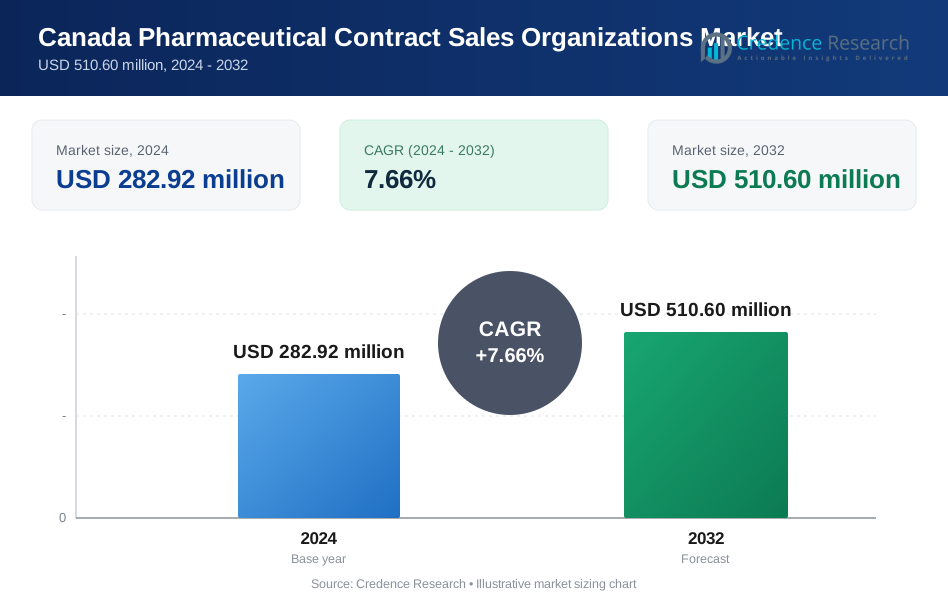
The Canada Pharmaceutical Contract Sales Organizations Market is projected to grow from USD 282.92 million in 2024 to an estimated USD 510.60 million by 2032, with a compound annual growth rate (CAGR) of 7.66% from 2024 to 2032.
Several factors are driving the expansion of the Canadian CSO market. One primary driver is the increasing complexity of pharmaceutical products, including biologics and precision medicines, which require specialized sales expertise and training. Additionally, the rising prevalence of chronic and lifestyle-related diseases, such as diabetes, cancer, and cardiovascular conditions, is bolstering the demand for innovative pharmaceutical solutions. These trends are compelling pharmaceutical companies to focus on enhancing their outreach capabilities through efficient sales channels provided by CSOs. Moreover, cost-efficiency plays a pivotal role in driving CSO adoption in Canada. By outsourcing sales operations, pharmaceutical companies can reduce the burden of managing in-house sales teams while leveraging the expertise and scalability of CSOs. The growing emphasis on regulatory compliance and patient-centric approaches has further encouraged companies to collaborate with CSOs, which often possess a deeper understanding of local market dynamics and regulatory frameworks.
Canada’s CSO market is concentrated primarily in urban regions with a strong pharmaceutical presence, such as Ontario, Quebec, and British Columbia. Ontario leads the market due to its robust pharmaceutical infrastructure, housing several multinational corporations and research institutions. The province benefits from a high concentration of healthcare professionals and access to advanced technological resources. Quebec, known for its thriving life sciences ecosystem, is another significant contributor, driven by government incentives and partnerships fostering pharmaceutical growth. Meanwhile, Western Canada, including British Columbia and Alberta, is emerging as a potential growth area, fueled by investments in biotechnology and healthcare innovation. These regions are witnessing increasing collaborations between local pharmaceutical firms and CSOs to expand market reach. The presence of well-developed logistics networks and a growing focus on digital health solutions also contribute to market development across Canada.
Market Insights:
- The Canada Pharmaceutical CSO market is projected to grow from USD 282.92 million in 2024 to USD 510.60 million by 2032, with a CAGR of 7.66%, reflecting strong growth potential.
- The increasing complexity of biologics and precision medicines drives the need for specialized sales expertise, making CSOs critical for effective product promotion and education.
- Chronic diseases such as diabetes, cancer, and cardiovascular conditions are fueling sustained demand for innovative pharmaceutical products and efficient sales solutions through CSOs.
- The shift toward patient-centric care and value-based healthcare models has elevated the role of CSOs in providing tailored and compliant sales strategies.
- Ontario leads the market with a 38% share due to its advanced pharmaceutical infrastructure, followed by Quebec at 28%, with strong government support for life sciences.
- Western Canada, including British Columbia and Alberta, is emerging as a growth hotspot, driven by investments in biotechnology and digital health solutions.
- The adoption of advanced technologies such as AI, CRM tools, and virtual engagement platforms is reshaping the market, enhancing CSO capabilities while presenting integration challenges.
Market Drivers:
Increasing Demand for Specialized Expertise
The growing complexity of pharmaceutical products, particularly biologics and precision medicines, is driving the need for specialized sales expertise in the Canada Pharmaceutical CSO Market. Biologics require detailed knowledge of their mechanisms, benefits, and administration methods, which CSOs are equipped to deliver through trained sales representatives and medical science liaisons (MSLs). For instance, companies like Pfizer and Roche have invested significantly in training their sales teams to handle biologics and precision medicines. Pharmaceutical companies increasingly rely on CSOs to navigate these complexities, ensuring that healthcare professionals receive accurate and comprehensive information about advanced therapeutic solutions. This trend is particularly pronounced in niche therapeutic areas such as oncology and rare diseases, where expertise is paramount.
Rising Prevalence of Chronic Diseases
Canada faces a significant burden of chronic diseases such as diabetes, cancer, and cardiovascular conditions, driving the demand for innovative pharmaceutical products and effective sales strategies. CSOs play a pivotal role in bridging the gap between pharmaceutical companies and healthcare providers, ensuring that life-saving medications reach patients efficiently. The growing incidence of these diseases has created a sustained demand for contract sales services, particularly in urban centers with higher patient volumes. For example, the Canadian Cancer Society's 2023 report estimated about 239,100 new cancer cases in Canada, highlighting the need for specialized sales teams to promote oncology therapies. As the population ages, this trend is expected to intensify, further fueling the need for CSO services to promote and distribute medications tailored to chronic disease management.
Cost Efficiency in Pharmaceutical Operations
The cost-saving benefits of outsourcing sales operations to CSOs are a critical driver of market growth. By partnering with CSOs, pharmaceutical companies can reduce the financial burden of maintaining in-house sales teams and redirect resources toward research and development. CSOs provide scalable solutions that align with the dynamic needs of pharmaceutical companies, enabling efficient market access while maintaining compliance with regulatory standards. This cost-efficiency is particularly valuable for smaller pharmaceutical firms and biopharmaceutical companies looking to optimize their sales strategies without incurring high overhead costs. For instance, the pharmaceutical industry's focus on cost control and operational flexibility has led to an increased reliance on CSOs, as noted in market analyses.
Evolving Regulatory and Market Dynamics
The Canadian pharmaceutical landscape is shaped by stringent regulations and a focus on patient-centric care, both of which have amplified the demand for specialized CSO services. CSOs that are well-versed in local regulatory requirements help pharmaceutical companies ensure compliance while adapting to market-specific needs. Additionally, the shift toward value-based healthcare has emphasized the importance of demonstrating product efficacy and safety, which CSOs support through their expertise in medical affairs and clinical education. This alignment with evolving regulatory and market dynamics has positioned CSOs as indispensable partners in the Canadian pharmaceutical ecosystem. For example, the transformation of the Canadian Agency for Drugs and Technology in Health (CADTH) into the Canadian Drug Agency (CDA) aims to standardize prescription practices and expand access to health data, which will further influence the role of CSOs in market access strategies
Market Trends:
Shift Toward Patient-Centric Sales Models
A key trend in the Canada Pharmaceutical CSO Market is the shift toward patient-centric sales approaches. Pharmaceutical companies increasingly emphasize understanding patient needs and tailoring solutions accordingly. For instance, McKesson Canada has implemented an integrated patient-centric model, supporting patients throughout the treatment cycle, including reimbursement, adherence, and through their national network of INVIVA private infusion clinics. CSOs are adapting by integrating personalized strategies, such as delivering education on drug administration or adherence programs through nurse educators. This trend is particularly strong in promoting specialty medicines and biologics, where patient-specific support plays a critical role in treatment success. CSOs that align with this patient-focused strategy are better positioned to secure long-term contracts with pharmaceutical companies.
Adoption of Digital Engagement Tools
The adoption of digital tools for sales and marketing activities is rapidly transforming the CSO landscape in Canada. Companies are leveraging platforms like virtual detailing, video conferencing, and AI-driven analytics to enhance outreach efficiency. For example, Hexaware partnered with a prominent pharmaceutical CSO to transform its data management and analytics capabilities, establishing a centralized data repository and enhancing business intelligence services. Remote medical science liaisons (MSLs) and digital communication channels are becoming integral to CSO operations, especially as healthcare professionals increasingly prefer online interactions over in-person meetings. This trend has been further accelerated by the lingering impacts of the COVID-19 pandemic, which highlighted the importance of digital adaptability in maintaining effective sales strategies.
Growing Role of Data-Driven Insights
Data analytics is emerging as a cornerstone for success in the CSO market. Companies are harnessing real-time data to optimize sales strategies, identify high-value accounts, and predict market trends. Predictive analytics is particularly valuable for enhancing decision-making processes and targeting healthcare professionals more effectively. For instance, Hexaware's transformation of a pharmaceutical CSO's data analytics capabilities enabled the CSO to advance its commercialization strategies and enhance patient care. Additionally, insights derived from customer relationship management (CRM) systems allow CSOs to track performance metrics, refine their strategies, and deliver measurable value to pharmaceutical clients.
Expansion into Emerging Therapeutic Areas
CSOs in Canada are expanding their focus to emerging therapeutic areas such as oncology, immunology, and rare diseases. These areas present unique challenges due to their complex treatment regimens and specialized nature, making them an ideal fit for CSOs with the expertise to navigate these demands. For example, Canadian biopharmaceutical SMEs have strengths in oncology, with 82 companies specializing in this category. Furthermore, advancements in personalized medicine and the increasing prevalence of rare diseases in Canada are driving the need for tailored promotional efforts, creating new opportunities for market players to grow their service portfolios.
Market Challenges Analysis:
Evolving Regulatory Environment
One of the primary challenges facing the Canada Pharmaceutical CSO Market is the constantly evolving regulatory landscape. Pharmaceutical companies and CSOs must navigate stringent guidelines related to drug promotion, compliance, and transparency, which can increase operational complexity. Adapting to these regulations requires significant investment in training, monitoring, and system upgrades, which can strain resources for smaller CSOs.
Increasing Competition
The growing demand for outsourced sales services has intensified competition within the market. Established players and new entrants are competing to secure contracts, often leading to pricing pressures and reduced profit margins. This competitive environment necessitates continuous innovation and differentiation in service offerings, which may require additional investment and strategic planning.
Rising Costs of Skilled Talent
CSOs rely heavily on a skilled workforce, including medical science liaisons, clinical educators, and sales representatives, to provide specialized services. However, the increasing demand for experienced professionals has led to higher recruitment and retention costs. This issue is further compounded by the need for ongoing training to ensure staff remain updated on the latest advancements in pharmaceutical products and regulatory requirements.
Integration of Advanced Technologies
While technology adoption offers opportunities for growth, it also presents a challenge. The integration of advanced tools such as AI, CRM systems, and digital engagement platforms requires significant financial and technical resources. Smaller CSOs may face barriers in adopting these technologies, potentially limiting their competitiveness in the evolving market landscape.
Market Opportunities:
The Canada Pharmaceutical CSO Market presents significant growth opportunities driven by the increasing complexity of pharmaceutical products and the growing need for cost-efficient sales solutions. As biologics and precision medicines become more prevalent, pharmaceutical companies are seeking specialized sales expertise to effectively promote these innovative products. CSOs are well-positioned to address this demand by offering tailored strategies and leveraging advanced technologies such as customer relationship management (CRM) tools and data analytics to enhance sales performance. Additionally, the rising prevalence of chronic and lifestyle-related diseases in Canada, including diabetes, cancer, and cardiovascular conditions, underscores the need for effective sales channels to meet growing patient demands.
Regional and technological advancements further amplify market opportunities. Ontario and Quebec, with their established pharmaceutical infrastructure and government support, remain key markets for CSOs. Meanwhile, Western Canada, including British Columbia and Alberta, is emerging as a growth hotspot due to investments in biotechnology and healthcare innovation. The increasing adoption of digital health solutions, remote medical science liaison services, and virtual promotional strategies is reshaping traditional sales models, creating new opportunities for CSOs to expand their offerings. As pharmaceutical companies focus on patient-centric approaches and regulatory compliance, CSOs that can deliver scalable, efficient, and innovative sales solutions will be pivotal in driving market growth and capturing the expanding opportunities within Canada’s pharmaceutical landscape.
Market Segmentation Analysis:
The Canada Pharmaceutical Contract Sales Organizations (CSO) Market is segmented by service type and end-use, reflecting the diverse needs of the pharmaceutical and biopharmaceutical industries.
By Service
The market is divided into personal promotion and non-personal promotion services. Personal promotion, which includes promotional sales teams, key account management, and vacancy management, accounts for a significant share of the market. Pharmaceutical companies often rely on these services to enhance their in-person engagement with healthcare professionals and maximize product reach. Within this segment, key account management is gaining traction due to its strategic focus on high-value clients. Non-personal promotion services, such as medical affairs solutions, remote medical science liaisons, and nurse (clinical) educators, are witnessing rapid growth. These services enable companies to efficiently deliver product education and address regulatory requirements. The rise of remote medical science liaisons is particularly notable, driven by advancements in communication technologies and the growing acceptance of virtual interactions.
By End-Use
End-use segmentation includes pharmaceutical companies and biopharmaceutical companies, with pharmaceutical companies representing the majority of the market share. These firms frequently outsource sales operations to CSOs to streamline costs and focus on core activities such as research and development. However, the biopharmaceutical companies segment is growing at a faster pace due to the increasing complexity of biologics and specialty drugs, which demand specialized sales expertise.
Segmentation:
By Service
- Personal Promotion
- Promotional Sales Team
- Key Account Management
- Vacancy Management
- Non-personal Promotion
- Medical Affairs Solutions
- Remote Medical Science Liaisons
- Nurse (Clinical) Educators
- Others
By End-use
- Pharmaceutical Companies
- Biopharmaceutical Companies
Regional Analysis:
The Canada Pharmaceutical Contract Sales Organizations (CSO) Market is geographically diverse, with major hubs in Ontario, Quebec, British Columbia, and Alberta. Each region contributes uniquely to the overall market growth, driven by its infrastructure, healthcare ecosystem, and pharmaceutical industry dynamics.
Ontario
Ontario holds the largest market share, accounting for approximately 38% of the total CSO market. The region's dominance is attributed to its robust pharmaceutical infrastructure, which includes the presence of several multinational corporations, research institutions, and contract manufacturing organizations. Ontario benefits from a high concentration of skilled healthcare professionals and advanced technological resources, enabling CSOs to deliver efficient and specialized sales services. Government initiatives supporting life sciences and healthcare innovation further bolster the region's position as a leading hub for pharmaceutical operations.
Quebec
Quebec follows closely, contributing around 28% to the market share. Known for its thriving life sciences ecosystem, the province benefits from a collaborative environment between pharmaceutical companies, academic institutions, and government bodies. Quebec’s bilingual workforce and strong emphasis on regulatory compliance make it an attractive location for CSOs serving both domestic and international markets. Additionally, government incentives and tax benefits support pharmaceutical growth, driving demand for contract sales services.
British Columbia
British Columbia represents approximately 18% of the market, with its growing biotechnology sector playing a significant role in driving CSO adoption. The province is home to a vibrant startup ecosystem and numerous collaborations between pharmaceutical companies and research organizations. Investments in digital health solutions and the increasing focus on precision medicine have created opportunities for CSOs to expand their services in this region.
Alberta and Other Regions
Alberta, along with other regions in Western Canada, accounts for the remaining 16% of the market share. Alberta’s pharmaceutical landscape is evolving, supported by investments in healthcare infrastructure and biotechnology innovation. Emerging opportunities in rural and underserved areas, combined with a focus on patient-centric healthcare, offer growth potential for CSOs in this region.
Key Player Analysis:
- Icon Plc.
- The Biopharma Group
- Celerion
- Axxelus
- PDI Health
- EPS Corp.
- QFR Solutions
- Mednext Pharma Pvt. Ltd.
- Peak Pharma Solutions Inc.
- IQVIA, Inc.
- Syneous Health
Competitive Analysis:
The Canada Pharmaceutical Contract Sales Organizations (CSO) Market is moderately competitive, with both established players and emerging firms striving to capture market share through specialized services and innovative solutions. Key players differentiate themselves by offering expertise in managing sales operations for complex pharmaceutical products such as biologics, biosimilars, and precision medicines. These organizations emphasize tailored sales strategies, regulatory compliance, and technological integration, such as customer relationship management (CRM) systems and data analytics. Market leaders focus on expanding their geographic footprint and strengthening partnerships with pharmaceutical companies by delivering cost-effective and scalable sales solutions. For example, Syneos Health has expanded its operations to enhance its global reach and service offerings. Smaller players leverage niche expertise and localized knowledge to compete effectively in specific regions like Ontario and Quebec. Increasing demand for digital health solutions and patient-centric approaches is prompting CSOs to enhance their technological capabilities. As competition intensifies, innovation and service differentiation will remain crucial to sustaining competitive advantage in this dynamic market
Recent Developments:
- In December 2024, Charles River Laboratories International, Inc. announced the launch of the Charles River Incubator Program (CIP). This initiative aims to support biotechnology developers in the discovery phase, offering them access to extensive scientific expertise and a wide ecosystem of discovery, development, and manufacturing capabilities. The program is designed to nurture innovative start-up and early-stage biotechnology companies, providing them with cost-effective, consultative regulatory and quality expertise, personnel training, and access to laboratory space and equipment.
- Celerion announced in December 2024 its commitment to the Science Based Targets Initiative (SBTi), aiming to set both Near Term and Net Zero company-wide emission reduction targets in line with science-based standards. This move reinforces Celerion's dedication to sustainable corporate climate action3. Additionally, in June 2024, Celerion was honored with the prestigious CRO Leadership Award for the ninth consecutive year, recognizing its quality, capabilities, and reliability in the clinical research sector.
- In December 2024, EPS Group presented at the 9th International Conference on Vaccines Research & Development. Earlier in the year, in August 2024, EPS Group announced a reorganization, and in May 2024, it signed a partnership agreement with Suzuken Group and Bushu Pharmaceuticals to support the introduction of unapproved drugs into the Japanese market.
- In December 2024, Terumo Health Outcomes (THO) and Medis Medical Imaging announced a strategic partnership in the United States to enhance cardiovascular care. This collaboration combines Terumo’s ePRISM™ precision medicine software platform with Medis’ Quantitative Flow Ratio (QFR) technology, aiming to provide prospective insights to enhance patient care through real-time data from electronic health records.
Market Concentration & Characteristics:
The Canada Pharmaceutical Contract Sales Organizations (CSO) Market exhibits a moderately concentrated structure, with a mix of established players and emerging firms catering to the diverse needs of pharmaceutical companies. Leading CSOs leverage their expertise in specialized sales and marketing strategies to secure partnerships with pharmaceutical companies, particularly for biologics, precision medicines, and other complex products. The market is characterized by the growing adoption of innovative technologies such as artificial intelligence (AI), customer relationship management (CRM) tools, and digital health solutions, which enhance sales effectiveness and operational efficiency. Key players focus on tailoring services to regional dynamics, leveraging their understanding of local regulatory frameworks and patient-centric approaches. The market’s emphasis on cost efficiency and scalability drives demand for CSOs, enabling pharmaceutical companies to streamline operations. With increasing investments in biotechnology and healthcare innovation, particularly in urban hubs, the market is positioned for sustained growth and evolving service sophistication.
Report Coverage:
The research report offers an in-depth analysis based on By Service and By End Use. It details leading market players, providing an overview of their business, product offerings, investments, revenue streams, and key applications. Additionally, the report includes insights into the competitive environment, SWOT analysis, current market trends, as well as the primary drivers and constraints. Furthermore, it discusses various factors that have driven market expansion in recent years. The report also explores market dynamics, regulatory scenarios, and technological advancements that are shaping the industry. It assesses the impact of external factors and global economic changes on market growth. Lastly, it provides strategic recommendations for new entrants and established companies to navigate the complexities of the market.
Future Outlook:
- The Canada Pharmaceutical CSO market is projected to grow steadily, driven by the increasing demand for outsourcing sales operations.
- Rising adoption of biologics and precision medicines will require specialized sales expertise, boosting CSO engagement.
- Urban centers like Ontario and Quebec will remain dominant, while Western Canada emerges as a key growth area.
- Technological advancements, including AI and CRM tools, are expected to enhance sales strategies and market penetration.
- A growing emphasis on regulatory compliance will strengthen partnerships between pharmaceutical companies and CSOs.
- Increasing prevalence of chronic diseases will drive the need for innovative pharmaceutical solutions, supporting CSO expansion.
- Collaborations with biotech firms in emerging regions will open new avenues for market growth.
- Cost-efficiency benefits of outsourcing sales will remain a major driver for CSO adoption across Canada.
- The market will see a rise in patient-centric approaches, requiring tailored sales and marketing strategies.
- Enhanced digital healthcare infrastructure will support seamless integration of CSOs into pharmaceutical sales operations.
Request a Free Sample
Fill in your details and we'll send you a free sample report.
- Sample data tables & charts
- Research methodology
Need a Custom Version of This Report?
Tailor the scope, geography, or segments to your exact requirements.
- Custom geography or segment scope
- Direct access to our analyst team
Frequently Asked Questions
What is the projected growth of the Canada Pharmaceutical CSO market?
What factors are driving the growth of the Canadian CSO market?
Which regions are leading in the Canadian CSO market?
What challenges does the Canadian CSO market face?
Table of Content
Chapter 1. Report Introduction
- 1.1 Report Description & Purpose
- 1.1.1 Report Title & Market Definition
- 1.1.2 Unique Selling Propositions (USP) & Key Differentiators
- 1.1.3 Value Proposition for Stakeholders
- 1.2 Research Objectives
- 1.2.1 Market Sizing Objectives (Volume & Revenue)
- 1.2.2 Segmentation Objectives
- 1.2.3 Competitive Intelligence Objectives
- 1.2.4 Forecast & Scenario Objectives
- 1.3 Report Scope
- 1.3.1 Canada Pharmaceutical Contract Sales Organizations Scope – Types & Subtypes Covered
- 1.3.2 Geographic Scope – Regions & Countries Covered
- 1.3.3 Historical Period, Base Year & Forecast Period (2024; forecast to 2032)
- 1.3.4 Inclusions & Exclusions
- 1.4 HS Code & Classification Framework
- 1.5 Currency, Units & Pricing Basis
- 1.6 Target Stakeholders
- 1.7 Limitations & Assumptions
Chapter 2. Executive Summary
- 2.1 Global Canada Pharmaceutical Contract Sales Organizations Market Snapshot
- 2.1.1 Market Size – Historical (2024) & Forecast (2024-2032) (2024: USD 282.92 million → 2032: USD 510.60 million)
- 2.1.2 Volume & Revenue – Global Totals
- 2.1.3 Key Market Highlights – Top Five Facts
- 2.2 Canada Pharmaceutical Contract Sales Organizations Market Segmentation Snapshot
- 2.2.1 Market Split by Region – 2024 vs. 2032
- 2.3 Competitive Snapshot
- 2.3.1 Top 10 Players by Revenue Share – 2024
- 2.3.2 Top 10 Players by Volume Share – 2024
- 2.3.3 Recent Strategic Developments (18-Month Summary)
- 2.4 Key Investment Highlights & Strategic Conclusions
Chapter 3. Canada Pharmaceutical Contract Sales Organizations Market Dynamics & Industry Analysis
- 3.1 Market Overview & Context
- 3.1.1 Canada Pharmaceutical Contract Sales Organizations Market Position in the Broader Automotive Value Chain
- 3.1.2 OEM vs. Replacement Market Dynamics
- 3.1.3 Market Maturity & Development Stage by Region
- 3.2 Canada Pharmaceutical Contract Sales Organizations Market Drivers
- 3.3 Canada Pharmaceutical Contract Sales Organizations Market Restraints & Challenges
- 3.4 Canada Pharmaceutical Contract Sales Organizations Market Opportunities
- 3.5 Porter's Five Forces Analysis
- 3.5.1 Threat of New Entrants
- 3.5.2 Bargaining Power of Suppliers
- 3.5.3 Bargaining Power of Buyers
- 3.5.4 Threat of Substitutes
- 3.5.5 Competitive Rivalry – Intensity Assessment
- 3.6 Canada Pharmaceutical Contract Sales Organizations Value Chain Analysis
- 3.6.1 Upstream – Raw Material/Input Suppliers
- 3.6.1.1 Raw Material/Input 1
- 3.6.1.2 Raw Material/Input 2
- 3.6.1.3 Raw Material/Input 3
- 3.6.2 Midstream – Production/Manufacturing/Service Delivery
- 3.6.2.1 Production/Process Overview
- 3.6.2.2 Key Facility Locations & Capacity by Manufacturer
- 3.6.3 Downstream – Distribution & End Consumer
- 3.6.3.1 Primary Channel – B2B/OEM
- 3.6.3.2 Secondary Channels – Dealer, Retail, Online, Direct
- 3.6.4 Value Chain Profitability Analysis
- 3.6.1 Upstream – Raw Material/Input Suppliers
- 3.7 PESTEL Analysis
- 3.7.1 Political Factors
- 3.7.2 Economic Factors
- 3.7.3 Social Factors
- 3.7.4 Technological Factors
- 3.7.5 Environmental Factors
- 3.7.6 Legal Factors
- 3.8 Canada Pharmaceutical Contract Sales Organizations Supply Chain Analysis
- 3.8.1 Raw Material/Input Supply Risk Assessment
- 3.8.2 Manufacturing Concentration Risk (Geographic Exposure)
- 3.8.3 Trade Disruption Impact Analysis
- 3.9 Regulatory & Policy Landscape
Note: The regulatory and policy landscape section covers regulations based on their applicability to the market, Canada Pharmaceutical Contract Sales Organizations category, geography, and scope of the study. Only regulatory frameworks with a material impact on operations, compliance, trade, sustainability, or market access are analyzed in detail.
Chapter 4. Key Investment Pockets & Opportunity Analysis
- 4.1 Canada Pharmaceutical Contract Sales Organizations Market Attractiveness Analysis
- 4.1.1 By Region – Investment Attractiveness Matrix (Volume × CAGR)
- 4.2 Absolute Revenue Growth Opportunity
- 4.2.1 By Region – Absolute USD Growth Through 2032
- 4.3 Incremental Volume Opportunity
- 4.3.1 By Region – Incremental Volume Through 2032
- 4.3.2 Segment – Incremental Volume
- 4.4 Emerging Submarket Opportunity Deep Dive (Subject to Applicability)
- 4.5 Emerging Market Opportunity Scorecards
- 4.5.1 United States
- 4.5.2 Europe
- 4.5.3 Asia
- 4.5.4 Middle East & Africa
Note: Emerging Market Opportunity Scorecards will be included based on relevance and strategic importance. Regions listed are indicative and may vary depending on data availability and market dynamics.
Chapter 5. Canada Pharmaceutical Contract Sales Organizations Import-Export Analysis & Trade Flows
- 5.1 Global Trade Overview
- 5.1.1 Global Export Value by Country (2024)
- 5.1.2 Global Export Volume by Country (2024)
- 5.1.3 Global Import Value by Country (2024)
- 5.1.4 Global Import Volume by Country (2024)
- 5.1.5 Net Trade Balance by Country (2024)
- 5.2 Export Analysis – Segment
- 5.2.1 Type 1 (HS Code)
- 5.2.2 Type 2 (HS Code)
- 5.2.3 Type 3 (HS Code)
- 5.2.4 Type 4 (HS Code)
- 5.2.5 Type 5 (HS Code)
- 5.3 Import Analysis – Segment
- 5.3.1 Type 1 (HS Code)
- 5.3.2 Type 2 (HS Code)
- 5.3.3 Type 3 (HS Code)
- 5.3.4 Type 4 (HS Code)
- 5.3.5 Type 5 (HS Code)
- 5.4 Average Unit Trade Prices
- 5.4.1 Average Export Price – Segment & Country
- 5.4.2 Average Import Price – Segment & Source Country
- 5.4.3 Price Trends (2024)
- 5.5 Key Trade Route Analysis
- 5.5.1 Trade Route 1
- 5.5.2 Trade Route 2
- 5.5.3 Trade Route 3
- 5.5.4 Trade Route 4
- 5.5.5 Trade Route 5
- 5.6 Trade Policy Impact Assessment
- 5.6.1 US Anti-Dumping & Section 301 Tariffs
- 5.6.2 EU Customs Union Impact
- 5.6.3 Major Free Trade Agreements
- 5.6.4 USMCA Rules of Origin
Note: Trade policy analysis will be included only where relevant to the Canada Pharmaceutical Contract Sales Organizations market.
Chapter 6. Competitive Landscape & Company Benchmarking
- 6.1 Canada Pharmaceutical Contract Sales Organizations Market Concentration & Structure
- 6.1.1 Herfindahl-Hirschman Index (HHI) – vs. 2024
- 6.1.2 Tier 1, Tier 2 & Tier 3 Market Structure
- 6.1.3 Global, Regional & Local Player Dynamics
- 6.2 Canada Pharmaceutical Contract Sales Organizations Market Share Analysis – 2024
- 6.2.1 Global Revenue Share by Company
- 6.2.2 Global Volume Share by Company
- 6.2.3 Regional Revenue Share
- 6.2.4 Market Share Evolution ( vs. 2024)
- 6.2.5 OEM Segment Share by Company
- 6.2.6 Replacement Segment Share by Company
- 6.3 Production/Delivery Capacity & Facility Analysis
- 6.3.1 Global Installed Capacity
- 6.3.2 Capacity Utilization Rates
- 6.3.3 Production/Output Volume
- 6.3.4 Facility Locations & Capacity Map
- 6.3.5 Planned Capacity Additions
- 6.4 Canada Pharmaceutical Contract Sales Organizations Competitive Benchmarking Matrix
- 6.4.1 Revenue, Volume, CAGR & Profitability Comparison
- 6.4.2 Channel Revenue Mix
- 6.4.3 Geographic Revenue Exposure
- 6.4.4 R&D Intensity
- 6.4.5 Sustainability Maturity
- 6.5 Strategic Developments in Canada Pharmaceutical Contract Sales Organizations (Last 24 Months)
- 6.5.1 Mergers, Acquisitions & Divestments
- 6.5.2 New Canada Pharmaceutical Contract Sales Organizations Launches
- 6.5.3 Facility Expansions
- 6.5.4 Strategic Alliances, Joint Ventures & Partnerships
- 6.5.5 Distribution Expansion & Market Entry
- 6.5.6 Sustainability & ESG Initiatives
- 6.6 Competitive Strategy Mapping
- 6.6.1 Leader, Challenger, Follower & Niche Classification
- 6.6.2 Pricing Strategy Comparison
- 6.6.3 Channel Strategy Matrix
Note: Strategic developments are included based on their materiality and the availability of reliable information.
Chapter 7. Global Canada Pharmaceutical Contract Sales Organizations Market – By Distribution Channel
- 7.1 Segment Overview
- 7.1.1 Volume & Revenue Split by Channel (2024 & 2032)
- 7.1.2 Channel Mix Evolution (2024-2032)
Chapter 8. Regional Market Analysis – Global Overview
- 8.1 Global Regional Overview
- 8.1.1 Regional Volume Share
- 8.1.2 Regional Revenue Share
- 8.1.3 Regional Volume by Region
- 8.1.4 Regional Revenue by Region
- 8.1.5 Regional Forecast Through 2032
- 8.2 Cross-Regional Segment Analysis
- 8.2.1 By Distribution Channel
- 8.2.2 By Brand/Price Tier
Chapter 9. North America Canada Pharmaceutical Contract Sales Organizations Market
- 9.1 United States
- 9.2 Canada
- 9.3 Mexico
Chapter 10. Europe Canada Pharmaceutical Contract Sales Organizations Market
- 10.1 Germany
- 10.2 France
- 10.3 Italy
- 10.4 United Kingdom
- 10.5 Spain
- 10.6 Poland
- 10.7 Russia
- 10.8 Netherlands
- 10.9 Belgium
- 10.10 Sweden
- 10.11 Denmark
- 10.12 Norway
- 10.13 Rest of Europe
Chapter 11. Asia Pacific Canada Pharmaceutical Contract Sales Organizations Market
- 11.1 China
- 11.2 India
- 11.3 Japan
- 11.4 South Korea
- 11.5 Thailand
- 11.6 Indonesia
- 11.7 Vietnam
- 11.8 Malaysia
- 11.9 Australia
- 11.10 Rest of Asia Pacific
Chapter 12. Latin America Canada Pharmaceutical Contract Sales Organizations Market
- 12.1 Brazil
- 12.2 Argentina
- 12.3 Colombia
- 12.4 Chile
- 12.5 Rest of Latin America
Chapter 13. Middle East Canada Pharmaceutical Contract Sales Organizations Market
- 13.1 Saudi Arabia
- 13.2 United Arab Emirates
- 13.3 Turkey
- 13.4 Israel
- 13.5 Iran
- 13.6 Rest of the Middle East
Chapter 14. Africa Canada Pharmaceutical Contract Sales Organizations Market
- 14.1 South Africa
- 14.2 Egypt
- 14.3 Nigeria
- 14.4 Morocco
- 14.5 Rest of Africa
Chapter 15. Canada Pharmaceutical Contract Sales Organizations Company Profiles
- 15.1 [Company 01]
- 15.1.1 Company Overview
- 15.1.2 Key Management Personnel
- 15.1.3 Products & Services Portfolio
- 15.1.4 Financial Performance
- 15.1.5 Key Market Focus & Geographic Presence
- 15.1.6 Recent Developments & Strategic Initiatives
Note: The company profile list is preliminary and may change based on research findings, market developments, data availability, and client requirements.
Chapter 16. Appendices
- Appendix A – List of Abbreviations & Acronyms
- Appendix B – Industry Classification Code Reference – Full Series
- Appendix C – Production & Capacity Data Tables
- Appendix D – End-Use & Demand Base Tables
- Appendix E – Consumption & Replacement Rate Assumptions
- Appendix F – ASP Reference Tables
- Appendix G – Manufacturing & Facility Database
- Appendix H – Import-Export Data Tables
- Appendix I – Regulatory Summary Tables
- Appendix J – Primary Research Participant List (Anonymized)
- Appendix K – Primary Research Questionnaire Framework
- Appendix L – Data Sources & Bibliography
- Appendix M – Market Size Divergence & Source Comparison
Chapter 17. Research Methodology
- 17.1 Research Framework & Philosophy
- 17.2 Secondary Research – Sources, Hierarchy & Data Extraction
- 17.3 Data Modeling – Bottom-Up & Top-Down Market Sizing
- 17.4 Primary Research – Stakeholder Framework, LOI & Sample Sizes
- 17.5 Forecast Methodology – Regression, Scenario & Sensitivity Analysis
- 17.6 Quality Control – Four-Layer Validation Framework
- 17.7 Limitations & Standard Assumptions
- 17.8 Disclaimer
