
| REPORT ATTRIBUTE | DETAILS |
|---|---|
| Historical Period | 2019-2022 |
| Base Year | 2023 |
| Forecast Period | 2024-2032 |
| Change Management Software Market Size 2023 | USD 2300 million |
| Change Management Software Market, CAGR | 14.2% |
| Change Management Software Market Size 2032 | USD 6653.59 million |
Market Overview:
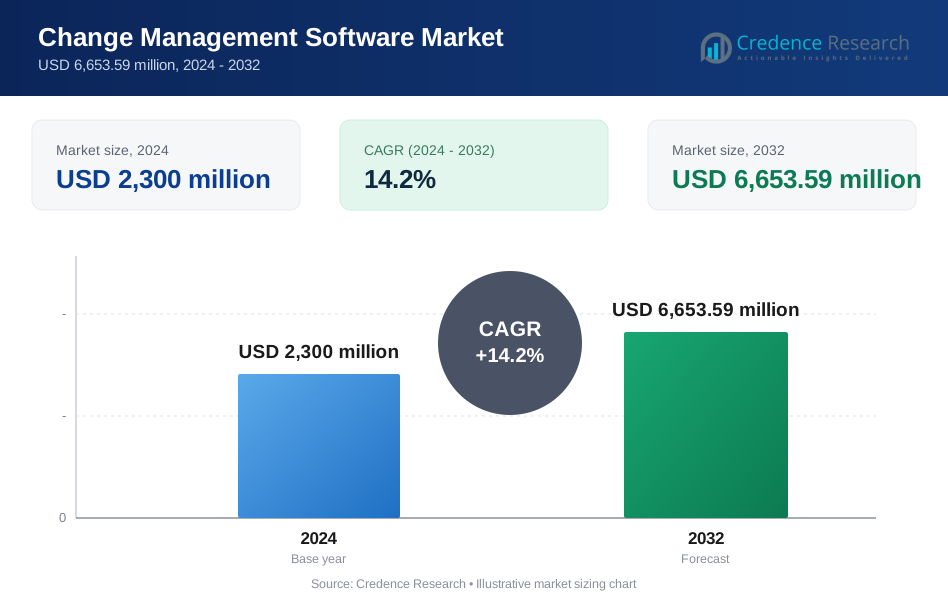
The Change Management Software Market is projected to grow from USD 2300 million in 2024 to an estimated USD 6653.59 million by 2032, with a compound annual growth rate (CAGR) of 14.2% from 2024 to 2032.
Several key drivers fuel the growth of the change management software market. Foremost is the increasing adoption of digital transformation initiatives and cloud computing across industries, making it crucial for companies to manage operational changes effectively. As organizations prioritize business continuity and efficiency, automated change management solutions provide tools for seamless transitions, minimizing downtime and errors. Additionally, regulatory compliance requirements in sectors like finance, healthcare, and manufacturing further drive demand, as change management software ensures transparent, auditable processes that adhere to industry standards. Moreover, as hybrid and remote work models grow, companies seek solutions to manage distributed IT environments efficiently, enhancing demand for change management tools. The rising focus on IT infrastructure security is another significant factor; these solutions enable organizations to implement changes securely, mitigating risks associated with unauthorized access and cyber threats. With these combined factors, the market is set for sustained growth.
North America currently holds the largest share of the change management software market, driven by the region’s strong IT infrastructure and early adoption of digital transformation initiatives. The presence of key technology players and heightened focus on compliance and risk management in the United States and Canada further accelerate regional growth. Europe follows, particularly in sectors like finance, where regulatory demands emphasize robust change management processes. The Asia-Pacific region is expected to witness the highest growth rate over the forecast period, attributed to rapid digitization across emerging economies such as India and China, coupled with an increasing focus on IT security and automation. Latin America and the Middle East & Africa are also gaining traction, as businesses in these regions adopt change management solutions to enhance agility and operational resilience. These varying regional trends reflect diverse growth opportunities and underscore the global relevance of change management software in navigating complex IT landscapes.
Market Drivers:
Digital Transformation and Cloud Adoption:
The surge in digital transformation initiatives across industries is a primary driver in the change management software market. As companies rapidly transition to digital platforms to streamline processes, improve customer experience, and maintain competitive advantages, they face increased complexity in managing technological changes. This digital evolution often involves adopting cloud-based infrastructure and applications, requiring efficient management of changes to avoid disruptions and ensure smooth transitions. For instance, Salesforce reported that its customers have seen significant improvements in operational efficiency and customer satisfaction after adopting its cloud solutions. Change management software has emerged as an essential tool to facilitate these transitions, enabling businesses to respond to changes quickly and minimize the impact on operations, ultimately enhancing productivity and resilience. The demand for agile solutions that can handle these complex transformations effectively drives the market forward.
Focus on Regulatory Compliance and Risk Management:
Compliance requirements across industries, particularly in sectors like finance, healthcare, and manufacturing, intensify the demand for robust change management software. Regulatory standards often mandate detailed documentation and oversight of change processes to maintain data integrity, security, and accountability. Change management software provides the necessary framework to meet these standards, offering features that track, document, and report changes accurately. For example, IBM's OpenPages has been instrumental in helping organizations manage regulatory compliance by providing a centralized platform for tracking and reporting changes. These capabilities support businesses in adhering to compliance requirements, minimizing the risk of fines, legal complications, and reputational damage. As regulatory bodies worldwide continue to increase scrutiny on data handling and operational transparency, businesses are increasingly adopting change management solutions to manage these obligations efficiently, thereby driving market growth.
Shift Toward Hybrid and Remote Work Environments:
The rise of hybrid and remote work models has reshaped the way organizations manage IT infrastructures, leading to a heightened demand for effective change management solutions. Distributed work environments introduce complexities in IT change processes, as employees rely on diverse networks and systems that may vary in security and compatibility. Change management software provides a centralized platform to control and coordinate changes across dispersed systems, enabling organizations to implement updates, patches, and upgrades seamlessly in remote settings. By automating workflows and enabling remote access to change management tools, businesses can maintain continuity and reduce the risk of disruptions, which has become critical in today's flexible work environments. The shift toward decentralized workspaces is, therefore, a key factor accelerating the adoption of change management software.
Heightened Focus on IT Security and Cyber Resilience:
With the growing incidence of cyber threats and data breaches, organizations are increasingly prioritizing IT security and resilience in their operations. Change management software plays a crucial role in supporting these efforts by enabling secure implementation and monitoring of IT changes, reducing vulnerabilities that could be exploited by cyber threats. By providing real-time insights, tracking unauthorized changes, and automating updates, these solutions help prevent security lapses and enhance overall system resilience. Additionally, as organizations integrate new technologies like AI and IoT, managing these additions securely becomes essential, making change management software indispensable. This increased emphasis on cyber resilience is propelling market growth, as companies seek solutions that safeguard against emerging security threats while maintaining operational efficiency.
Market Trends:
Adoption of AI and Machine Learning for Enhanced Automation:
A prominent trend in the change management software market is the integration of artificial intelligence (AI) and machine learning (ML) to enhance automation and improve decision-making. AI and ML algorithms allow software to analyze historical change data, predict potential impacts, and offer insights into optimal change paths. By reducing manual intervention, AI-driven change management tools increase efficiency, decrease human error, and help organizations respond more effectively to dynamic operational needs. As companies look to reduce operational bottlenecks and minimize downtime, the demand for AI-enabled features within change management software is set to rise, providing a competitive edge to vendors that offer these advanced capabilities.
Increased Emphasis on Customization and Modular Solutions:
Customization and modularity have become key trends as organizations seek change management software that aligns with their unique requirements and workflows. Vendors are responding by offering modular solutions, allowing clients to select only the features and integrations they need, optimizing cost-effectiveness and user experience. This trend is especially appealing to industries with specific regulatory or operational requirements, such as healthcare, finance, and government sectors, where flexibility is crucial for compliance and risk management. Modular and customizable software options are attractive to businesses across various sizes and sectors, as they enable organizations to scale and adapt their change management tools in line with growth and evolving needs.
Growth of Integrated IT Service Management (ITSM) Solutions:
The convergence of change management software with IT Service Management (ITSM) solutions has emerged as a significant trend, driven by the demand for comprehensive IT operations platforms. By integrating change management functionalities with ITSM, organizations benefit from a unified approach to incident, problem, and change management, leading to better coordination and streamlined IT workflows. For example, Chilean healthcare provider RedSalud relies on the Freshservice ITSM platform to streamline change management across nine hospitals and more than 40 medical and dental centers. This integrated approach not only reduces the complexity associated with managing multiple tools but also enhances overall IT governance and compliance. Many leading vendors are increasingly focusing on developing or enhancing ITSM platforms with embedded change management capabilities, appealing to enterprises seeking all-in-one solutions to simplify IT operations and reduce silos within their digital infrastructure.
Expansion of Change Management in Non-IT Functions:
While change management software has traditionally been associated with IT, its application is expanding into non-IT functions such as human resources, finance, and operations. Organizations are recognizing the value of structured change management processes across different departments, especially as businesses undergo digital transformations that affect multiple functions simultaneously. For example, Trax Retail relied on automated communication from Freshservice while the change management team focused on transforming the customer experience across various departments. This cross-functional expansion is a growing trend, as companies seek holistic solutions that provide change management capabilities beyond IT, further broadening the market scope and opening new revenue streams for vendors catering to diverse departmental needs.
Market Restraints and Challenges:
High Implementation Costs and Complexity:
One of the significant restraints in the change management software market is the high implementation cost, especially for small and medium-sized enterprises (SMEs). The adoption of change management software often requires a substantial investment in licensing, setup, customization, and training. Additionally, the integration of these solutions with existing IT infrastructure can be complex and time-consuming, requiring specialized personnel and resources. This complexity can deter smaller organizations with limited budgets, slowing market growth as many SMEs opt for traditional or in-house methods to manage changes rather than investing in comprehensive software solutions.
Resistance to Change and Organizational Culture:
Resistance to change remains a common challenge across industries, impacting the adoption of change management software. Employees and management often hesitate to transition to new systems due to a lack of understanding of the benefits, perceived risks, or disruptions to established workflows. Organizational culture plays a significant role in influencing how changes are received, and resistance can slow or impede the effective implementation of new change management tools. Overcoming this challenge requires substantial change management efforts and executive buy-in, which not all organizations can readily achieve.
Data Security and Privacy Concerns:
The increasing reliance on cloud-based change management solutions introduces concerns regarding data security and privacy. Companies may hesitate to adopt these platforms due to worries about storing sensitive operational data in the cloud, where it could be vulnerable to cyber threats or unauthorized access. These concerns are particularly prevalent in industries dealing with confidential data, such as finance and healthcare, where data breaches can have severe regulatory and reputational consequences. Ensuring robust security features and compliance with international data protection standards is crucial for vendors to address these concerns and foster trust among potential clients.
Limited Customization and Scalability Challenges:
While change management software offers a range of features, some organizations find the lack of customization options limiting. Industries with unique operational requirements may struggle to tailor these solutions to fit their specific needs, affecting the software’s relevance and efficiency. Additionally, scalability can become a challenge for fast-growing companies that outgrow their change management solutions, requiring frequent upgrades or migration to more robust platforms. This lack of flexibility poses a restraint in the market, as businesses seek solutions that can adapt and grow in line with their evolving requirements.
Market Segmentation Analysis:
The change management software market is segmented by component, deployment type, organization size, and industry type.
By component, the market divides into software and services. Software solutions dominate, driven by increasing automation needs in change management processes, while the services segment—comprising consulting, integration, and support services—grows as organizations seek expert guidance for smooth adoption and integration.
By Deployment type segments the market into on-premise and cloud-based solutions. Cloud-based solutions are gaining traction due to their scalability, cost-effectiveness, and remote accessibility, making them popular among organizations pursuing digital transformation. However, on-premise deployments continue to hold value in sectors with stringent data security and control requirements, such as finance and healthcare.
By organization size, large enterprises represent a significant share due to their high adoption rates and complex IT infrastructures that require efficient change management. However, small and medium-sized enterprises (SMEs) are increasingly adopting change management solutions as cloud-based and affordable options emerge, helping them improve efficiency and reduce downtime.
By Industry-wise, BFSI, healthcare, and telecom & IT lead in adopting change management software due to high regulatory standards and continuous IT demands. The government and public sector are also increasingly investing in these solutions to ensure compliance and enhance operational transparency. Other sectors, including retail, education, and consumer packaged goods, are adopting change management software to drive efficiency and keep up with rapid digitalization, contributing to the diverse growth across industries.
Segmentation:
By Component:
- Software
- Services
By Deployment Type:
- On-Premise
- Cloud-based
By Organization Size:
- SMEs
- Large Enterprises
By Industry Type:
- BFSI (Banking, Financial Services, and Insurance)
- Healthcare and Life Science
- Education
- Government and Public Sector
- Telecom and IT
- Retail and Consumer Packaged Goods
- Others
By Regional
- North America
- U.S.
- Canada
- Mexico
- Europe
- Germany
- France
- U.K.
- Italy
- Spain
- Rest of Europe
- Asia Pacific
- China
- Japan
- India
- South Korea
- South-east Asia
- Rest of Asia Pacific
- Latin America
- Brazil
- Argentina
- Rest of Latin America
- Middle East & Africa
- GCC Countries
- South Africa
- Rest of the Middle East and Africa
Regional Analysis:
North America: Leading Market Share
North America holds the largest market share in the global change management software market, driven primarily by the high rate of digital transformation and advanced IT infrastructure across industries. With the United States and Canada being early adopters of digital solutions, there is strong demand for change management tools to support complex IT operations, compliance requirements, and regulatory standards, especially in sectors such as BFSI, healthcare, and telecom. The presence of key market players and high investment levels in innovative technologies further support market growth in this region. North America’s market share is anticipated to remain substantial over the forecast period due to continuous investments in IT infrastructure modernization and cybersecurity.
Europe: Growing Emphasis on Compliance and Security
Europe ranks as the second-largest region in the change management software market, driven by stringent data protection regulations such as the General Data Protection Regulation (GDPR). Industries within the European Union are increasingly investing in change management software to ensure compliance with these regulations, enhancing data security, and operational transparency. The BFSI and healthcare sectors are particularly active in adopting these solutions to maintain compliance and improve operational efficiency. Additionally, rising demand from countries like Germany, the United Kingdom, and France contributes significantly to the region's overall market share. The European market is expected to see steady growth as regulatory standards evolve and demand for IT risk management solutions intensifies.
Asia-Pacific: Highest Growth Potential
Asia-Pacific is projected to witness the highest growth rate in the change management software market over the forecast period, driven by rapid digitalization and increasing investments in cloud infrastructure across emerging economies such as China, India, and Japan. The region's growth is also fueled by a surge in the adoption of digital transformation initiatives across industries, particularly in telecom, retail, and government sectors. As organizations in Asia-Pacific modernize their IT systems and shift to cloud-based solutions, the demand for change management software is expected to expand. Additionally, government initiatives supporting digital transformation and increasing awareness of IT security are bolstering growth prospects, making Asia-Pacific a key focus for market expansion.
Latin America and Middle East & Africa: Emerging Markets
Latin America and the Middle East & Africa hold relatively smaller shares in the change management software market, yet they present considerable growth opportunities due to the rising adoption of digital solutions. In Latin America, countries like Brazil and Mexico are increasingly investing in IT infrastructure to support economic growth, creating a demand for change management tools to enhance efficiency and security. Similarly, the Middle East & Africa, driven by countries like the UAE and Saudi Arabia, is witnessing a gradual shift towards digitalization, with government initiatives supporting smart cities and digital transformation projects. While these regions currently have a smaller market share, their growth rates are expected to increase as businesses and government bodies prioritize digitalization and operational resilience.
Key Player Analysis:
- Alloy Software, Inc.
- Axios Systems
- BMC Software, Inc.,
- CA Technologies,
- Cherwell Software, LLC.
- EasyVista Inc.,
- Honeywell
- IBM Corporation,
- Ivanti,
- Micro Focus International Plc,
- Science Soft USA Corporation
- Service Now Corporation,
- Sparta Systems, Inc.
- SysAid Technologies Ltd.
- Zoho Corporation
Competitive Analysis:
The change management software market is highly competitive, with numerous established players and new entrants driving innovation to address evolving market demands. Key players include IBM Corporation, BMC Software, ServiceNow, and Ivanti, which lead the market with comprehensive change management solutions and strong customer bases. These companies compete by offering advanced functionalities, including AI integration, automation, and enhanced data security features, catering to sectors with high compliance needs like healthcare, BFSI, and IT. Smaller players and niche vendors also compete by offering specialized or cost-effective solutions, often targeting SMEs or specific industries. The market sees continuous innovation as companies strive to differentiate through improved user experiences, cloud-based deployments, and customizable solutions. Strategic partnerships, mergers, and acquisitions are common strategies among major players to expand their market reach and reinforce their product portfolios, intensifying competition and accelerating market growth.
Market Concentration & Characteristics:
The change management software market is moderately concentrated, with a mix of global leaders and specialized regional vendors. Major players such as IBM, BMC Software, and ServiceNow hold a substantial share, primarily due to their extensive portfolios, established customer bases, and strong market presence across industries. However, the market also sees significant participation from smaller, niche vendors that focus on industry-specific or cost-effective solutions, particularly appealing to small and medium-sized enterprises (SMEs). Market characteristics include a high rate of technological innovation, with vendors continuously integrating advanced features like AI, automation, and enhanced data security to address the rising demand for digital transformation and compliance requirements. The market shows a strong preference for cloud-based solutions, driven by the need for scalability and remote accessibility. Additionally, the presence of regulatory requirements and varying IT infrastructure needs across industries shapes the demand for adaptable and customizable change management solutions.
Report Coverage:
The research report offers an in-depth analysis based on By Component, By Deployment Type, By Organization Size and By Industry Type. It details leading market players, providing an overview of their business, product offerings, investments, revenue streams, and key applications. Additionally, the report includes insights into the competitive environment, SWOT analysis, current market trends, as well as the primary drivers and constraints. Furthermore, it discusses various factors that have driven market expansion in recent years. The report also explores market dynamics, regulatory scenarios, and technological advancements that are shaping the industry. It assesses the impact of external factors and global economic changes on market growth. Lastly, it provides strategic recommendations for new entrants and established companies to navigate the complexities of the market.
Future Outlook:
- Demand for cloud-based change management solutions is expected to increase as organizations prioritize flexibility and remote accessibility.
- AI-driven automation will likely enhance process efficiency, reducing manual intervention and increasing software adoption.
- Small and medium-sized enterprises (SMEs) will adopt change management tools more widely, encouraged by affordable, scalable options.
- Increased regulatory demands will continue to drive adoption in sectors like BFSI, healthcare, and government.
- Integration with IT service management (ITSM) platforms will become more common, offering comprehensive IT operations solutions.
- Growing cybersecurity concerns will push demand for secure, compliant change management software across industries.
- The Asia-Pacific region is anticipated to lead in growth due to rapid digital transformation and cloud adoption in emerging markets.
- Vendors will focus on customization and modular solutions to meet diverse organizational requirements.
- Strategic partnerships and acquisitions will intensify as companies seek to expand their offerings and market reach.
- Enhanced data analytics capabilities within change management software will support better decision-making and change impact analysis.
Request a Free Sample
Fill in your details and we'll send you a free sample report.
- Sample data tables & charts
- Research methodology
Need a Custom Version of This Report?
Tailor the scope, geography, or segments to your exact requirements.
- Custom geography or segment scope
- Direct access to our analyst team
Frequently Asked Questions
What is the projected growth of the Change Management Software Market?
What are the key drivers of growth in this market?
Which region currently holds the largest market share?
What challenges does the Change Management Software Market face?
Table of Content
Chapter 1. Report Introduction
- 1.1 Report Description & Purpose
- 1.1.1 Report Title & Market Definition
- 1.1.2 Unique Selling Propositions (USP) & Key Differentiators
- 1.1.3 Value Proposition for Stakeholders
- 1.2 Research Objectives
- 1.2.1 Market Sizing Objectives (Volume & Revenue)
- 1.2.2 Segmentation Objectives
- 1.2.3 Competitive Intelligence Objectives
- 1.2.4 Forecast & Scenario Objectives
- 1.3 Report Scope
- 1.3.1 Change Management Software Scope – Types & Subtypes Covered
- 1.3.2 Geographic Scope – Regions & Countries Covered
- 1.3.3 Historical Period, Base Year & Forecast Period (2024; forecast to 2032)
- 1.3.4 Inclusions & Exclusions
- 1.4 HS Code & Classification Framework
- 1.5 Currency, Units & Pricing Basis
- 1.6 Target Stakeholders
- 1.7 Limitations & Assumptions
Chapter 2. Executive Summary
- 2.1 Global Change Management Software Market Snapshot
- 2.1.1 Market Size – Historical (2024) & Forecast (2024-2032) (2024: USD 2,300 million → 2032: USD 6,653.59 million)
- 2.1.2 Volume & Revenue – Global Totals
- 2.1.3 Key Market Highlights – Top Five Facts
- 2.2 Change Management Software Market Segmentation Snapshot
- 2.2.1 Market Split by Region – 2024 vs. 2032
- 2.3 Competitive Snapshot
- 2.3.1 Top 10 Players by Revenue Share – 2024
- 2.3.2 Top 10 Players by Volume Share – 2024
- 2.3.3 Recent Strategic Developments (18-Month Summary)
- 2.4 Key Investment Highlights & Strategic Conclusions
Chapter 3. Change Management Software Market Dynamics & Industry Analysis
- 3.1 Market Overview & Context
- 3.1.1 Change Management Software Market Position in the Broader Automotive Value Chain
- 3.1.2 OEM vs. Replacement Market Dynamics
- 3.1.3 Market Maturity & Development Stage by Region
- 3.2 Change Management Software Market Drivers
- 3.3 Change Management Software Market Restraints & Challenges
- 3.4 Change Management Software Market Opportunities
- 3.5 Porter's Five Forces Analysis
- 3.5.1 Threat of New Entrants
- 3.5.2 Bargaining Power of Suppliers
- 3.5.3 Bargaining Power of Buyers
- 3.5.4 Threat of Substitutes
- 3.5.5 Competitive Rivalry – Intensity Assessment
- 3.6 Change Management Software Value Chain Analysis
- 3.6.1 Upstream – Raw Material/Input Suppliers
- 3.6.1.1 Raw Material/Input 1
- 3.6.1.2 Raw Material/Input 2
- 3.6.1.3 Raw Material/Input 3
- 3.6.2 Midstream – Production/Manufacturing/Service Delivery
- 3.6.2.1 Production/Process Overview
- 3.6.2.2 Key Facility Locations & Capacity by Manufacturer
- 3.6.3 Downstream – Distribution & End Consumer
- 3.6.3.1 Primary Channel – B2B/OEM
- 3.6.3.2 Secondary Channels – Dealer, Retail, Online, Direct
- 3.6.4 Value Chain Profitability Analysis
- 3.6.1 Upstream – Raw Material/Input Suppliers
- 3.7 PESTEL Analysis
- 3.7.1 Political Factors
- 3.7.2 Economic Factors
- 3.7.3 Social Factors
- 3.7.4 Technological Factors
- 3.7.5 Environmental Factors
- 3.7.6 Legal Factors
- 3.8 Change Management Software Supply Chain Analysis
- 3.8.1 Raw Material/Input Supply Risk Assessment
- 3.8.2 Manufacturing Concentration Risk (Geographic Exposure)
- 3.8.3 Trade Disruption Impact Analysis
- 3.9 Regulatory & Policy Landscape
Note: The regulatory and policy landscape section covers regulations based on their applicability to the market, Change Management Software category, geography, and scope of the study. Only regulatory frameworks with a material impact on operations, compliance, trade, sustainability, or market access are analyzed in detail.
Chapter 4. Key Investment Pockets & Opportunity Analysis
- 4.1 Change Management Software Market Attractiveness Analysis
- 4.1.1 By Region – Investment Attractiveness Matrix (Volume × CAGR)
- 4.2 Absolute Revenue Growth Opportunity
- 4.2.1 By Region – Absolute USD Growth Through 2032
- 4.3 Incremental Volume Opportunity
- 4.3.1 By Region – Incremental Volume Through 2032
- 4.3.2 Segment – Incremental Volume
- 4.4 Emerging Submarket Opportunity Deep Dive (Subject to Applicability)
- 4.5 Emerging Market Opportunity Scorecards
- 4.5.1 United States
- 4.5.2 Europe
- 4.5.3 Asia
- 4.5.4 Middle East & Africa
Note: Emerging Market Opportunity Scorecards will be included based on relevance and strategic importance. Regions listed are indicative and may vary depending on data availability and market dynamics.
Chapter 5. Change Management Software Import-Export Analysis & Trade Flows
- 5.1 Global Trade Overview
- 5.1.1 Global Export Value by Country (2024)
- 5.1.2 Global Export Volume by Country (2024)
- 5.1.3 Global Import Value by Country (2024)
- 5.1.4 Global Import Volume by Country (2024)
- 5.1.5 Net Trade Balance by Country (2024)
- 5.2 Export Analysis – Segment
- 5.2.1 Type 1 (HS Code)
- 5.2.2 Type 2 (HS Code)
- 5.2.3 Type 3 (HS Code)
- 5.2.4 Type 4 (HS Code)
- 5.2.5 Type 5 (HS Code)
- 5.3 Import Analysis – Segment
- 5.3.1 Type 1 (HS Code)
- 5.3.2 Type 2 (HS Code)
- 5.3.3 Type 3 (HS Code)
- 5.3.4 Type 4 (HS Code)
- 5.3.5 Type 5 (HS Code)
- 5.4 Average Unit Trade Prices
- 5.4.1 Average Export Price – Segment & Country
- 5.4.2 Average Import Price – Segment & Source Country
- 5.4.3 Price Trends (2024)
- 5.5 Key Trade Route Analysis
- 5.5.1 Trade Route 1
- 5.5.2 Trade Route 2
- 5.5.3 Trade Route 3
- 5.5.4 Trade Route 4
- 5.5.5 Trade Route 5
- 5.6 Trade Policy Impact Assessment
- 5.6.1 US Anti-Dumping & Section 301 Tariffs
- 5.6.2 EU Customs Union Impact
- 5.6.3 Major Free Trade Agreements
- 5.6.4 USMCA Rules of Origin
Note: Trade policy analysis will be included only where relevant to the Change Management Software market.
Chapter 6. Competitive Landscape & Company Benchmarking
- 6.1 Change Management Software Market Concentration & Structure
- 6.1.1 Herfindahl-Hirschman Index (HHI) – vs. 2024
- 6.1.2 Tier 1, Tier 2 & Tier 3 Market Structure
- 6.1.3 Global, Regional & Local Player Dynamics
- 6.2 Change Management Software Market Share Analysis – 2024
- 6.2.1 Global Revenue Share by Company
- 6.2.2 Global Volume Share by Company
- 6.2.3 Regional Revenue Share
- 6.2.4 Market Share Evolution ( vs. 2024)
- 6.2.5 OEM Segment Share by Company
- 6.2.6 Replacement Segment Share by Company
- 6.3 Production/Delivery Capacity & Facility Analysis
- 6.3.1 Global Installed Capacity
- 6.3.2 Capacity Utilization Rates
- 6.3.3 Production/Output Volume
- 6.3.4 Facility Locations & Capacity Map
- 6.3.5 Planned Capacity Additions
- 6.4 Change Management Software Competitive Benchmarking Matrix
- 6.4.1 Revenue, Volume, CAGR & Profitability Comparison
- 6.4.2 Channel Revenue Mix
- 6.4.3 Geographic Revenue Exposure
- 6.4.4 R&D Intensity
- 6.4.5 Sustainability Maturity
- 6.5 Strategic Developments in Change Management Software (Last 24 Months)
- 6.5.1 Mergers, Acquisitions & Divestments
- 6.5.2 New Change Management Software Launches
- 6.5.3 Facility Expansions
- 6.5.4 Strategic Alliances, Joint Ventures & Partnerships
- 6.5.5 Distribution Expansion & Market Entry
- 6.5.6 Sustainability & ESG Initiatives
- 6.6 Competitive Strategy Mapping
- 6.6.1 Leader, Challenger, Follower & Niche Classification
- 6.6.2 Pricing Strategy Comparison
- 6.6.3 Channel Strategy Matrix
Note: Strategic developments are included based on their materiality and the availability of reliable information.
Chapter 7. Global Change Management Software Market – By Distribution Channel
- 7.1 Segment Overview
- 7.1.1 Volume & Revenue Split by Channel (2024 & 2032)
- 7.1.2 Channel Mix Evolution (2024-2032)
Chapter 8. Regional Market Analysis – Global Overview
- 8.1 Global Regional Overview
- 8.1.1 Regional Volume Share
- 8.1.2 Regional Revenue Share
- 8.1.3 Regional Volume by Region
- 8.1.4 Regional Revenue by Region
- 8.1.5 Regional Forecast Through 2032
- 8.2 Cross-Regional Segment Analysis
- 8.2.1 By Distribution Channel
- 8.2.2 By Brand/Price Tier
Chapter 9. North America Change Management Software Market
- 9.1 United States
- 9.2 Canada
- 9.3 Mexico
Chapter 10. Europe Change Management Software Market
- 10.1 Germany
- 10.2 France
- 10.3 Italy
- 10.4 United Kingdom
- 10.5 Spain
- 10.6 Poland
- 10.7 Russia
- 10.8 Netherlands
- 10.9 Belgium
- 10.10 Sweden
- 10.11 Denmark
- 10.12 Norway
- 10.13 Rest of Europe
Chapter 11. Asia Pacific Change Management Software Market
- 11.1 China
- 11.2 India
- 11.3 Japan
- 11.4 South Korea
- 11.5 Thailand
- 11.6 Indonesia
- 11.7 Vietnam
- 11.8 Malaysia
- 11.9 Australia
- 11.10 Rest of Asia Pacific
Chapter 12. Latin America Change Management Software Market
- 12.1 Brazil
- 12.2 Argentina
- 12.3 Colombia
- 12.4 Chile
- 12.5 Rest of Latin America
Chapter 13. Middle East Change Management Software Market
- 13.1 Saudi Arabia
- 13.2 United Arab Emirates
- 13.3 Turkey
- 13.4 Israel
- 13.5 Iran
- 13.6 Rest of the Middle East
Chapter 14. Africa Change Management Software Market
- 14.1 South Africa
- 14.2 Egypt
- 14.3 Nigeria
- 14.4 Morocco
- 14.5 Rest of Africa
Chapter 15. Change Management Software Company Profiles
- 15.1 [Company 01]
- 15.1.1 Company Overview
- 15.1.2 Key Management Personnel
- 15.1.3 Products & Services Portfolio
- 15.1.4 Financial Performance
- 15.1.5 Key Market Focus & Geographic Presence
- 15.1.6 Recent Developments & Strategic Initiatives
Note: The company profile list is preliminary and may change based on research findings, market developments, data availability, and client requirements.
Chapter 16. Appendices
- Appendix A – List of Abbreviations & Acronyms
- Appendix B – Industry Classification Code Reference – Full Series
- Appendix C – Production & Capacity Data Tables
- Appendix D – End-Use & Demand Base Tables
- Appendix E – Consumption & Replacement Rate Assumptions
- Appendix F – ASP Reference Tables
- Appendix G – Manufacturing & Facility Database
- Appendix H – Import-Export Data Tables
- Appendix I – Regulatory Summary Tables
- Appendix J – Primary Research Participant List (Anonymized)
- Appendix K – Primary Research Questionnaire Framework
- Appendix L – Data Sources & Bibliography
- Appendix M – Market Size Divergence & Source Comparison
Chapter 17. Research Methodology
- 17.1 Research Framework & Philosophy
- 17.2 Secondary Research – Sources, Hierarchy & Data Extraction
- 17.3 Data Modeling – Bottom-Up & Top-Down Market Sizing
- 17.4 Primary Research – Stakeholder Framework, LOI & Sample Sizes
- 17.5 Forecast Methodology – Regression, Scenario & Sensitivity Analysis
- 17.6 Quality Control – Four-Layer Validation Framework
- 17.7 Limitations & Standard Assumptions
- 17.8 Disclaimer
