
| REPORT ATTRIBUTE | DETAILS |
|---|---|
| Historical Period | 2019-2022 |
| Base Year | 2023 |
| Forecast Period | 2024-2032 |
| Classic Car Maintenance Market Size 2024 | USD 6,011 billion |
| Classic Car Maintenance Market, CAGR | 8.26% |
| Classic Car Maintenance Market Size 2032 | USD 11,437.69 billion |
Market Overview
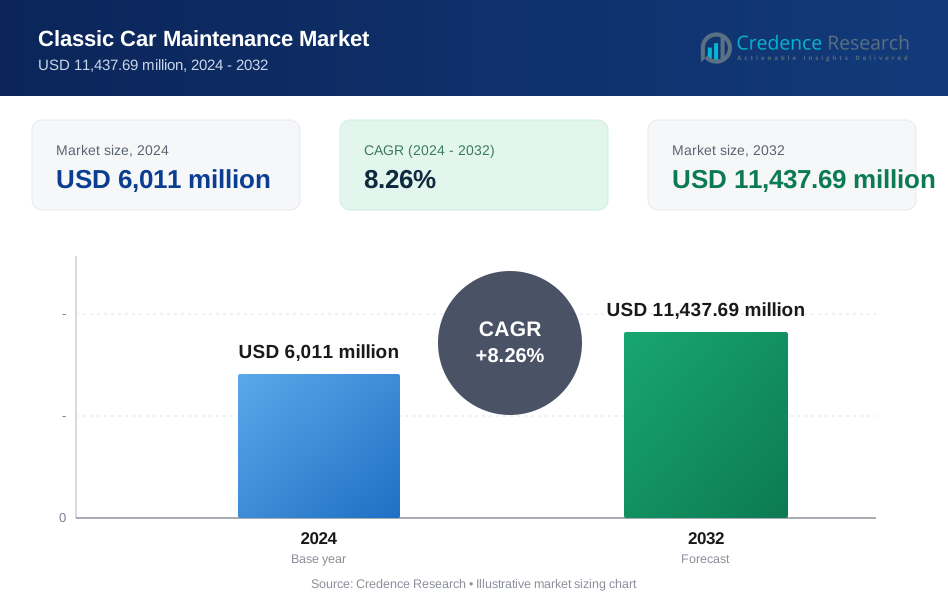
The Global Classic Car Maintenance Market is projected to grow from USD 6,011 million in 2024 to USD 11,437.69 million by 2032, reflecting a compound annual growth rate (CAGR) of 8.26%.
The Global Classic Car Maintenance Market is experiencing robust growth driven by the increasing popularity of vintage vehicles among collectors and automotive enthusiasts, who seek to preserve the authenticity and value of their classic cars. Rising disposable income and a growing culture of car restoration and participation in classic car events contribute to market expansion. Demand for specialized maintenance services, authentic spare parts, and skilled technicians is rising as owners prioritize the originality and longevity of their vehicles. Trends such as digital platforms for sourcing rare components, the emergence of professional restoration workshops, and the adoption of advanced diagnostic tools are transforming the service landscape. The market also benefits from the rising visibility of classic car auctions and rallies, which foster community engagement and stimulate further investment in maintenance. These factors collectively reinforce sustained demand for high-quality restoration, repair, and preservation services within the classic car maintenance sector.
The Global Classic Car Maintenance Market displays strong regional diversity, with robust demand for restoration and specialized services across North America, Europe, Asia Pacific, Latin America, and the Middle East & Africa. North America leads with its well-established infrastructure, frequent automotive events, and a high concentration of collectors, while Europe’s historic automotive heritage and network of skilled technicians foster an active market for vintage and luxury vehicles. Asia Pacific shows rapid growth, driven by rising disposable incomes and expanding classic car communities in Japan, Australia, and China. Latin America and the Middle East & Africa exhibit steady expansion, supported by passionate enthusiast groups and emerging restoration centers. Key players shaping the competitive landscape include Hagerty, Inc., RM Auto Restoration, and Fiskens Fine Historic Automobiles, each offering comprehensive restoration, parts, and financial services tailored to the unique needs of classic car owners and collectors worldwide.
Market Insights
- The Global Classic Car Maintenance Market was valued at USD 6,011 million in 2024 and is projected to reach USD 11,437.69 million by 2032, with a CAGR of 8.26%.
- Growing passion for vintage vehicle ownership and preservation fuels steady demand for comprehensive restoration and specialized maintenance services.
- Digital transformation in parts sourcing and service delivery, including online marketplaces and virtual consultations, is reshaping the customer experience and improving efficiency.
- Major players such as Hagerty, Inc., Fiskens Fine Historic Automobiles, Classic Car Restorations, Inc., and RM Auto Restoration are focusing on expanding service portfolios and investing in skilled labor to capture greater market share.
- Scarcity of authentic spare parts and a shortage of highly trained technicians limit market growth and prolong project timelines for owners and workshops.
- North America dominates the market with a 38% share, followed by Europe at 31%, while Asia Pacific, Latin America, and the Middle East & Africa collectively drive the remainder of market expansion.
- The market benefits from strong community engagement, frequent automotive events, and increased collaboration among restoration experts, though regulatory complexities and rising operational costs continue to present challenges for industry stakeholders.
Report Scope
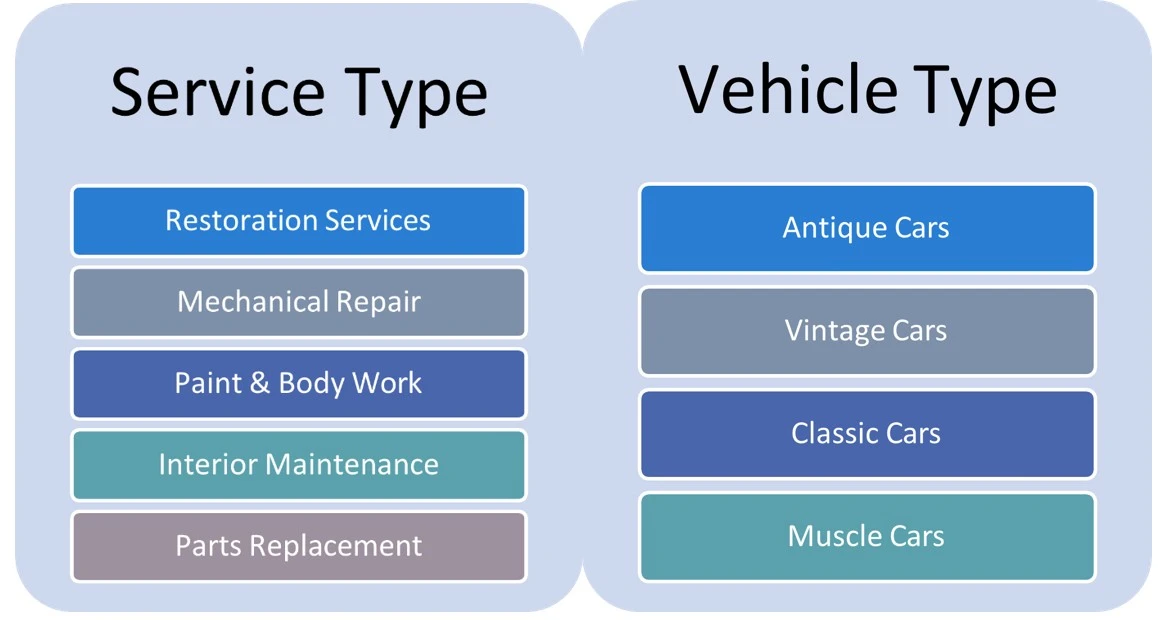
This report segments the Global Classic Car Maintenance Market as follows:
Market Drivers
Rising Enthusiasm for Classic Car Ownership Fuels Demand
The Global Classic Car Maintenance Market benefits from a surge in passion among collectors, hobbyists, and investors who value the heritage and craftsmanship of vintage automobiles. This enthusiasm for car ownership drives steady demand for restoration, preservation, and maintenance services, ensuring vehicles remain in optimal condition for shows, auctions, and personal enjoyment. Owners seek to retain authenticity, prompting increased investment in original parts, expert labor, and tailored solutions. Growing disposable income and expanding middle-class wealth across various regions support this trend. The increasing frequency of classic car rallies, exhibitions, and club activities stimulates interest in maintaining vehicle performance and appearance. The market reflects a shift toward lifestyle-driven investments, where car ownership represents both a status symbol and a source of personal satisfaction.
- For instance, according to a survey conducted by the Historic Vehicle Association, the number of registered classic car owners has doubled in the last ten years, with club memberships consistently increasing across North America and Europe.
Expansion of Professional Restoration Services and Specialized Workshops
Expansion in the availability of professional restoration services and specialized workshops significantly enhances the Global Classic Car Maintenance Market. Industry players invest in training, equipment, and technology to address the complex requirements of classic models. Access to certified technicians with deep knowledge of vintage vehicles reassures owners about quality standards. The rise of branded restoration facilities and boutique workshops offers a range of tailored services, from mechanical repairs to full aesthetic overhauls. This evolution of the aftermarket service ecosystem helps support both rare models and widely popular classics, fostering a culture of trust and repeat business. Investments in these facilities create new revenue streams and expand the overall market footprint.
- For instance, the Federation Internationale des Vehicules Anciens reports that the number of registered restoration workshops grew by more than one thousand new businesses in the past five years, and waitlists for major restoration projects now often extend beyond one hundred and twenty days.
Innovation in Parts Sourcing and Digital Marketplaces
The digital transformation of parts sourcing is a key driver for the Global Classic Car Maintenance Market. Owners and workshops leverage online platforms and global supply chains to locate and acquire rare or original components. These advancements overcome geographical limitations, reduce wait times, and improve pricing transparency for buyers. Digital marketplaces also facilitate peer-to-peer sales and direct connections with original equipment manufacturers. Such innovations help address the persistent challenge of parts scarcity and support the timely completion of maintenance projects. Technology adoption in procurement improves efficiency, enhances the customer experience, and sustains market momentum.
Cultural and Social Influences Promote Market Growth
Cultural factors play an important role in the Global Classic Car Maintenance Market, where nostalgia, tradition, and social prestige encourage ongoing investment in vintage vehicles. The growing popularity of classic car events, international rallies, and concours d’elegance increases demand for expert maintenance to prepare vehicles for competition and public display. Media coverage and digital content focused on restoration projects inspire new entrants and promote best practices. Car clubs, enthusiast forums, and social networks foster a sense of community and encourage knowledge sharing, strengthening engagement within the market. These social and cultural influences create a positive environment that supports continuous market expansion.
Market Trends
Digital Transformation and Online Parts Marketplaces Shape Service Delivery
The digitalization of services and the proliferation of online parts marketplaces are reshaping the Global Classic Car Maintenance Market. Owners and technicians increasingly turn to digital platforms for sourcing authentic and rare parts, making procurement more efficient and transparent. The integration of e-commerce solutions enables suppliers to reach a wider audience, while buyers benefit from access to global inventories. Digital catalogs, virtual consultations, and real-time tracking of shipments streamline the maintenance process. This evolution in parts acquisition supports faster turnaround times for repairs and restorations, contributing to higher customer satisfaction. The market reflects a trend toward greater connectivity and information sharing throughout the maintenance value chain.
- For instance, the Department for Transport in the UK documented a threefold increase in online classic car parts listings on major platforms over four years, with some global e-commerce channels now offering more than one million individual classic car parts for sale.
Advancements in Restoration Techniques and Diagnostic Technologies
The Global Classic Car Maintenance Market demonstrates strong adoption of advanced restoration methods and diagnostic technologies, elevating service quality and reliability. Professional workshops invest in state-of-the-art tools such as 3D scanning, digital paint-matching, and electronic diagnostic systems to address the complex requirements of vintage vehicles. Technicians combine traditional craftsmanship with modern equipment to restore vehicles to their original specifications or enhance their functionality while preserving authenticity. These technical innovations improve the precision of repairs, extend the lifespan of classic cars, and increase their market value. The ongoing integration of advanced diagnostic solutions enables more effective maintenance planning and reduces the risk of costly breakdowns.
- For instance, a European Automotive Restoration Association study found that one out of every four restoration projects now involves digital modeling and 3D scanning, resulting in an average reduction of project timelines by twenty-five days.
Growth of Professional Networks and Industry Collaboration
Expanding networks of restoration experts, classic car clubs, and industry associations drive collaboration in the Global Classic Car Maintenance Market. Industry stakeholders form strategic partnerships to share knowledge, exchange best practices, and promote industry standards. Events such as classic car shows, rallies, and educational workshops foster professional relationships and attract new participants to the sector. The development of training programs and certifications ensures that technicians possess the skills necessary to maintain and restore diverse models. These collaborative efforts contribute to higher service quality, workforce development, and greater market credibility, supporting the sector’s long-term sustainability.
Sustainability and Eco-Conscious Restoration Practices Emerge
Sustainability trends influence the Global Classic Car Maintenance Market, with a growing emphasis on environmentally responsible practices. Workshops and owners adopt eco-friendly materials, energy-efficient processes, and recycling initiatives during restoration and maintenance. Interest in retrofitting classic cars with electric powertrains or alternative fuels is increasing, offering new avenues for modernization while maintaining heritage. These green practices align with evolving consumer expectations and regulatory developments, encouraging the sector to minimize its environmental footprint. The market benefits from a shift toward sustainability, enhancing its reputation among younger, environmentally conscious collectors and broadening its appeal.
Market Challenges Analysis
Scarcity of Authentic Parts and Skilled Technicians Impedes Growth
The Global Classic Car Maintenance Market faces significant challenges due to the limited availability of authentic spare parts and a shortage of skilled technicians. Sourcing original components for rare and discontinued models remains a persistent obstacle, often leading to increased costs and extended restoration timelines. Many suppliers lack the inventory or expertise to support complex maintenance requirements, creating reliability concerns among classic car owners. The industry experiences a gap in workforce training, with fewer technicians possessing specialized knowledge of vintage vehicle systems and restoration techniques. This shortage affects service quality and reduces customer confidence in workshop capabilities. The market must address these supply and talent shortages to maintain momentum and fulfill rising demand.
Regulatory Complexities and Rising Costs Hinder Market Expansion
The Global Classic Car Maintenance Market contends with evolving regulatory requirements and escalating operational costs that challenge both service providers and vehicle owners. Stringent emissions and safety regulations in various regions place restrictions on the use and modification of vintage vehicles, increasing the complexity of compliance. Insurance costs for classic cars often rise due to their unique value and maintenance needs, placing financial pressure on enthusiasts. Workshops also encounter higher costs for acquiring tools, technology, and qualified labor, which can limit access to quality maintenance services for some segments of the market. These regulatory and economic pressures shape the landscape and require adaptive strategies to sustain long-term growth.
Market Opportunities
Expansion of Digital Platforms and E-commerce Creates New Avenues
The Global Classic Car Maintenance Market presents strong opportunities through the expansion of digital platforms and e-commerce solutions. Online marketplaces for parts and restoration services connect buyers and sellers across borders, streamlining procurement and enabling access to rare components. Virtual consultations, digital catalogs, and remote diagnostics improve customer engagement and make specialized expertise more widely available. E-commerce enhances the efficiency of the supply chain, reducing turnaround times for maintenance projects. Technology-driven platforms support transparent pricing, service reviews, and global networking, fostering trust and business growth. The market is positioned to capitalize on these digital advancements to broaden its reach and improve customer satisfaction.
Emergence of Sustainable Restoration and Customization Services
Growing consumer demand for sustainability and customization provides fresh opportunities in the Global Classic Car Maintenance Market. Workshops can adopt eco-friendly materials, energy-efficient practices, and responsible recycling to attract environmentally conscious collectors. The trend toward electric conversions and alternative powertrain retrofits appeals to a new generation of enthusiasts seeking performance and reduced emissions without sacrificing heritage. Offering tailored restoration packages and unique upgrades enables service providers to differentiate their offerings and command premium pricing. By embracing both sustainability and personalization, the market stands to attract a broader, younger customer base and increase long-term value creation.
Market Segmentation Analysis:
By Service Type:
Restoration services hold a prominent position, reflecting the high demand for comprehensive repairs and original condition restoration. Owners of classic vehicles prioritize authenticity and historical value, making full-scale restorations a core segment. Mechanical repair services follow closely, supported by the necessity for routine maintenance and the replacement of worn mechanical systems to ensure reliable operation. Paint and body work forms a significant part of the market, driven by the need to preserve or restore the vehicle’s appearance and structural integrity. Interior maintenance services address the demand for authentic upholstery, dashboard restoration, and interior detailing, catering to collectors who value both aesthetics and comfort. Parts replacement completes the segment landscape, with the ongoing need for authentic and high-quality components to extend the lifespan of vintage vehicles.
- For instance, a recent survey by the Historic Vehicle Association found that, on average, workshops manage more than forty full restoration projects at any given time, with some flagship facilities reporting waitlists extending beyond one hundred individual vehicle requests.
By Vehicle Type:
The market covers antique cars, vintage cars, classic cars, and muscle cars, each segment exhibiting unique maintenance needs and value propositions. Antique cars, often over a century old, require specialized restoration skills and access to rare parts, positioning them as high-value projects within the industry. Vintage cars, representing vehicles typically produced between 1919 and 1930, attract enthusiasts seeking historically accurate restorations and preservation. The classic cars segment covers mid-20th-century models, drawing a large and active base of collectors who invest in both maintenance and performance upgrades. Muscle cars represent a distinct segment characterized by high-performance American vehicles from the 1960s and 1970s, with owners focusing on both restoration and enhancement of engine capabilities. The Global Classic Car Maintenance Market effectively serves these diverse segments by providing specialized services, skilled labor, and tailored solutions that meet the evolving demands of a passionate and discerning customer base.
- For instance, data from the International Classic Car Federation shows that muscle car owners complete, on average, two performance upgrades or engine overhauls every year, while antique car owners invest in sourcing at least four rare parts annually for ongoing preservation.
Segments:
Based on Service Type:
- Restoration Services
- Mechanical Repair
- Paint & Body Work
- Interior Maintenance
- Parts Replacement
Based on Vehicle Type:
- Antique Cars
- Vintage Cars
- Classic Cars
- Muscle Cars
Based on the Geography:
- North America
- U.S.
- Canada
- Mexico
- Europe
- UK
- France
- Germany
- Italy
- Spain
- Russia
- Belgium
- Netherlands
- Austria
- Sweden
- Poland
- Denmark
- Switzerland
- Rest of Europe
- Asia Pacific
- China
- Japan
- South Korea
- India
- Australia
- Thailand
- Indonesia
- Vietnam
- Malaysia
- Philippines
- Taiwan
- Rest of Asia Pacific
- Latin America
- Brazil
- Argentina
- Peru
- Chile
- Colombia
- Rest of Latin America
- Middle East
- UAE
- KSA
- Israel
- Turkey
- Iran
- Rest of Middle East
- Africa
- Egypt
- Nigeria
- Algeria
- Morocco
- Rest of Africa
Regional Analysis
North America
North America holds the largest share of the Global Classic Car Maintenance Market, accounting for approximately 38% of total revenue. The region’s strong market presence is supported by a vibrant culture of classic car ownership, frequent auctions, and a high concentration of automotive enthusiasts. The United States leads North America with well-developed infrastructure for restoration workshops, parts suppliers, and specialized service providers. Large-scale classic car shows and events, such as the Pebble Beach Concours d’Elegance and Barrett-Jackson Auctions, drive demand for top-quality restoration and maintenance services. The region also benefits from a mature insurance sector and established transportation networks, making it easier for collectors to access services and source rare parts. Regulatory policies tend to favor classic car use, with exemptions for emissions and safety standards in several states, enabling continued operation and restoration of older vehicles. The market’s robust performance reflects high disposable incomes, strong community engagement, and ongoing investment in both service capabilities and classic car collections.
Europe
Europe accounts for approximately 31% of the Global Classic Car Maintenance Market, positioning it as the second-largest regional contributor. The region’s deep automotive heritage, historic marques, and a thriving collector community sustain elevated demand for classic car maintenance and restoration. The United Kingdom, Germany, Italy, and France serve as major hubs, each with a network of specialized workshops and skilled technicians dedicated to vintage and luxury vehicles. The presence of world-renowned brands, such as Aston Martin, Porsche, Ferrari, and Jaguar, contributes to a steady flow of restoration projects and aftermarket parts sales. Europe’s regulatory environment supports preservation, with heritage vehicle registrations and limited-use licenses that encourage ongoing investment in maintenance. Active classic car clubs and prestigious rallies, including the Mille Miglia and Goodwood Revival, reinforce a strong culture of restoration and showcase the sector’s high standards. The region’s market share is further supported by cross-border trade and the digitalization of parts sourcing, enhancing access to rare components and skilled labor.
Asia Pacific
Asia Pacific commands around 18% market share in the Global Classic Car Maintenance Market. The region is witnessing rapid growth driven by rising disposable incomes, expanding luxury markets, and increasing interest in classic car ownership among affluent individuals in Japan, Australia, China, and South Korea. Japan stands out with a dedicated community of vintage car collectors, along with local workshops skilled in both European and American classic models. Australia maintains a robust restoration sector, supported by a strong car culture and a favorable climate for classic vehicles. China’s luxury market has seen a recent uptick in classic car imports and restoration investments, especially among a younger generation of collectors. Market expansion in Asia Pacific is further supported by international trade in rare components and growing partnerships between regional and global restoration specialists. Infrastructure development and a rising number of automotive exhibitions foster continued market advancement.
Latin America
Latin America holds a 7% share of the Global Classic Car Maintenance Market. Brazil, Argentina, and Mexico drive most of the region’s market activity, supported by an established network of vintage car clubs and restoration professionals. Classic cars hold significant cultural value in these countries, with frequent shows and rallies that promote investment in maintenance and restoration services. Access to authentic parts can be limited, requiring collaboration with North American and European suppliers, but increasing digitalization is improving the procurement process. Economic conditions influence discretionary spending, but the region continues to experience steady growth in collector interest and restoration projects. The market’s resilience is underpinned by passionate local communities and expanding service capabilities in key metropolitan areas.
Middle East and Africa
The Middle East and Africa collectively represent about 6% of the Global Classic Car Maintenance Market. The Middle East, led by the United Arab Emirates and Saudi Arabia, features a growing base of collectors with a preference for rare and high-value vehicles. The development of specialized restoration centers, alongside luxury automotive dealerships, supports market expansion in major cities such as Dubai and Riyadh. High levels of disposable income and a strong affinity for Western car culture stimulate demand for professional maintenance and restoration. Africa, while smaller in market share, demonstrates potential in South Africa and select North African nations, where classic car communities organize events and preservation initiatives. Challenges remain in sourcing parts and accessing specialized expertise, but the market outlook is positive due to ongoing investment and growing collector interest across both regions.
Key Player Analysis
- Hagerty, Inc.
- Fiskens Fine Historic Automobiles
- Classic Car Restorations, Inc
- Hexagon Classics
- Specialized Vintage Vehicle Services Ltd.
- Canepa Design
- RM Auto Restoration
- E-Type UK
- Classic & Sports Finance
- Hill’s Automotive
Competitive Analysis
The Global Classic Car Maintenance Market features a competitive landscape marked by the presence of established leaders and specialized service providers. Key players such as Hagerty, Inc., Fiskens Fine Historic Automobiles, Classic Car Restorations, Inc., Hexagon Classics, Specialized Vintage Vehicle Services Ltd., Canepa Design, RM Auto Restoration, E-Type UK, Classic & Sports Finance, and Hill’s Automotive dominate the market with distinct value propositions. These companies offer comprehensive restoration, mechanical repair, paint and body work, and parts replacement services, addressing the diverse needs of classic car collectors and enthusiasts. Many have built strong reputations for authenticity, craftsmanship, and reliability, which drive customer loyalty and recurring business. Leading firms invest heavily in skilled labor, advanced diagnostic technologies, and global sourcing networks for rare parts. They often maintain exclusive relationships with car clubs and auction houses to secure high-profile restoration projects and reinforce their brand presence. Expansion of digital platforms and virtual consultations further differentiates top players, allowing for seamless customer engagement and access to expertise worldwide. Competitive strategies also include offering tailored financial services, insurance solutions, and aftercare programs that enhance the ownership experience. The market remains dynamic, with companies competing on quality, service breadth, and their ability to preserve the originality and value of classic vehicles.
Recent Developments
- In January 2025, Hagerty’s Market Rating a key industry indicator rose for the first time in ten months, reflecting a minor boost in the collector car market. While this is more a market trend than a direct maintenance innovation, it signals increased activity and confidence in the classic car sector, which often correlates with heightened demand for maintenance and restoration services.
- In June 2024, RM Auto Restoration hosted a major "Cars & Coffee" event at their facility, attracting over 350 vehicles and enthusiasts. The event provided public access to their restoration shop, where visitors could observe high-end classic car restoration in progress.
Market Concentration & Characteristics
The Global Classic Car Maintenance Market demonstrates a moderate to high degree of market concentration, characterized by the presence of established specialist firms alongside numerous boutique workshops and regional service providers. Leading companies command significant influence due to their advanced technical expertise, global sourcing capabilities, and strong reputations for quality restoration. The market is defined by a focus on authenticity, craftsmanship, and personalized customer service, reflecting the bespoke nature of classic car ownership and maintenance. Barriers to entry remain high due to the specialized skills, rare parts access, and substantial investment in equipment required to serve vintage vehicles. It is shaped by long-term customer relationships, word-of-mouth referrals, and involvement in classic car communities and events. The industry relies on continuous innovation in restoration techniques, digital service delivery, and supply chain management to address evolving client needs while maintaining high standards of originality and vehicle value.
Report Coverage
The research report offers an in-depth analysis based on Service Type, Vehicle Type and Geography. It details leading market players, providing an overview of their business, product offerings, investments, revenue streams, and key applications. Additionally, the report includes insights into the competitive environment, SWOT analysis, current market trends, as well as the primary drivers and constraints. Furthermore, it discusses various factors that have driven market expansion in recent years. The report also explores market dynamics, regulatory scenarios, and technological advancements that are shaping the industry. It assesses the impact of external factors and global economic changes on market growth. Lastly, it provides strategic recommendations for new entrants and established companies to navigate the complexities of the market.
Future Outlook
- The market is projected to grow steadily, driven by increasing interest in vintage vehicles and the perception of classic cars as valuable investments.
- Rising disposable incomes, particularly among high-net-worth individuals, are fueling demand for rare and well-maintained classic cars.
- The expansion of online auction platforms and digital marketplaces is facilitating easier access to classic car transactions, broadening the market's reach.
- There is a growing trend of electrifying classic cars, merging vintage aesthetics with modern sustainability concerns.
- High maintenance and restoration costs remain a challenge, potentially limiting market participation for some potential buyers.
- Regulatory restrictions, especially related to emissions, are impacting the ownership and use of classic cars in urban areas.
- The market is witnessing a resurgence among younger generations, who value both the craftsmanship and historical significance of vintage vehicles.
- Technological advancements, such as 3D printing and computer-aided design (CAD), are enabling more accurate and efficient restoration processes.
- Strategic partnerships and collaborations between restoration companies and automotive manufacturers are shaping the market landscape.
- The market is expected to benefit from technological advancements and the growing popularity of car restoration shows and events.
Request a Free Sample
Fill in your details and we'll send you a free sample report.
- Sample data tables & charts
- Research methodology
Need a Custom Version of This Report?
Tailor the scope, geography, or segments to your exact requirements.
- Custom geography or segment scope
- Direct access to our analyst team
Frequently Asked Questions
What is the current size of the Global Classic Car Maintenance Market?
What factors are driving the growth of the Global Classic Car Maintenance Market?
What are the key segments within the Global Classic Car Maintenance Market?
What are some challenges faced by the Global Classic Car Maintenance Market?
Who are the major players in the Global Classic Car Maintenance Market?
Table of Content
Chapter 1. Report Introduction
- 1.1 Report Description & Purpose
- 1.1.1 Report Title & Market Definition
- 1.1.2 Unique Selling Propositions (USP) & Key Differentiators
- 1.1.3 Value Proposition for Stakeholders
- 1.2 Research Objectives
- 1.2.1 Market Sizing Objectives (Volume & Revenue) (Volume Where Applicable)
- 1.2.2 Segmentation Objectives
- 1.2.3 Competitive Intelligence Objectives
- 1.2.4 Forecast & Scenario Objectives
- 1.3 Report Scope
- 1.3.1 Classic Car Maintenance Scope – Segments & Subsegments Covered
- 1.3.2 Geographic Scope – Regions & Countries Covered
- 1.3.3 Historical Period, Base Year & Forecast Period (2024; forecast to 2032)
- 1.3.4 Inclusions & Exclusions
- 1.4 Industry Classification & Applicable Codes
- 1.5 Currency, Measurement Units & Valuation Basis
- 1.6 Target Stakeholders
- 1.7 Limitations & Assumptions
Chapter 2. Executive Summary
- 2.1 Global Classic Car Maintenance Market Snapshot
- 2.1.1 Market Size – Historical (2024) & Forecast (2024-2032) (2024: USD 6,011 million → 2032: USD 11,437.69 million)
- 2.1.2 Volume & Revenue – Global Totals (Volume Where Applicable)
- 2.1.3 Key Market Highlights – Top Five Facts
- 2.2 Classic Car Maintenance Market Segmentation Snapshot
- 2.2.1 Market Split by Region – 2024 vs. 2032
- 2.3 Competitive Snapshot
- 2.3.1 Top 10 Players by Revenue Share – 2024
- 2.3.2 Top 10 Players by Volume Share – 2024 (Volume Where Applicable)
- 2.3.3 Recent Strategic Developments (18-Month Summary)
- 2.4 Key Investment Highlights & Strategic Conclusions
Chapter 3. Classic Car Maintenance Market Dynamics & Industry Analysis
- 3.1 Market Overview & Context
- 3.1.1 Classic Car Maintenance Market Position in the Broader Industry Value Chain
- 3.1.2 Demand Structure & Purchasing Dynamics
- 3.1.3 Market Maturity & Development Stage by Region
- 3.2 Classic Car Maintenance Market Drivers
- 3.3 Classic Car Maintenance Market Restraints & Challenges
- 3.4 Classic Car Maintenance Market Opportunities
- 3.5 Porter's Five Forces Analysis
- 3.5.1 Threat of New Entrants
- 3.5.2 Bargaining Power of Suppliers
- 3.5.3 Bargaining Power of Buyers
- 3.5.4 Threat of Substitutes
- 3.5.5 Competitive Rivalry – Intensity Assessment
- 3.6 Classic Car Maintenance Value Chain Analysis
- 3.6.1 Upstream – Key Inputs, Resources & Suppliers
- 3.6.1.1 Key Input/Resource 1
- 3.6.1.2 Key Input/Resource 2
- 3.6.1.3 Key Input/Resource 3
- 3.6.2 Midstream – Core Operations & Value Creation
- 3.6.2.1 Operating Model & Process Overview
- 3.6.2.2 Key Operating Locations & Capabilities by Company
- 3.6.3 Downstream – Market Channels & End Users
- 3.6.3.1 Direct Sales & Customer Engagement Channels
- 3.6.3.2 Indirect Sales, Intermediaries & Partner Channels
- 3.6.4 Value Chain Profitability Analysis
- 3.6.1 Upstream – Key Inputs, Resources & Suppliers
- 3.7 PESTEL Analysis
- 3.7.1 Political Factors
- 3.7.2 Economic Factors
- 3.7.3 Social Factors
- 3.7.4 Technological Factors
- 3.7.5 Environmental Factors
- 3.7.6 Legal Factors
- 3.8 Classic Car Maintenance Supply Chain Analysis
- 3.8.1 Critical Input & Resource Availability Risk Assessment
- 3.8.2 Supplier & Operational Concentration Risk (Geographic Exposure)
- 3.8.3 Supply & Service Disruption Impact Analysis
- 3.9 Regulatory & Policy Landscape
Note: The regulatory and policy landscape section covers regulations based on their applicability to the market, Classic Car Maintenance category, geography, and scope of the study. Only regulatory frameworks with a material impact on operations, compliance, trade, sustainability, or market access are analyzed in detail.
Chapter 4. Key Investment Pockets & Opportunity Analysis
- 4.1 Classic Car Maintenance Market Attractiveness Analysis
- 4.1.1 By Region – Investment Attractiveness Matrix (Market Size × CAGR)
- 4.2 Absolute Revenue Growth Opportunity
- 4.2.1 By Region – Absolute Revenue Growth Through 2032
- 4.3 Incremental Demand Opportunity
- 4.3.1 By Region – Incremental Demand Through 2032
- 4.3.2 Segment – Incremental Demand
- 4.4 Emerging Submarket Opportunity Deep Dive (Subject to Applicability)
- 4.5 Priority Market Opportunity Scorecards
- 4.5.1 United States
- 4.5.2 Europe
- 4.5.3 Asia
- 4.5.4 Middle East & Africa
Note: Priority market opportunity scorecards reflect the geographic scope and strategic relevance of the study. Listed markets are indicative and may be adapted to the industry.
Chapter 5. Classic Car Maintenance Cross-Border Trade & Market Access Analysis
- 5.1 International Trade & Cross-Border Activity Overview
- 5.1.1 Global Export Value by Country (2024)
- 5.1.2 Global Export Volume by Country (2024) (Volume Where Applicable)
- 5.1.3 Global Import Value by Country (2024)
- 5.1.4 Global Import Volume by Country (2024) (Volume Where Applicable)
- 5.1.5 Net Trade Balance by Country (2024)
- 5.2 Export Analysis – Segment
- 5.2.1 Category 1 (Applicable Classification Code)
- 5.2.2 Category 2 (Applicable Classification Code)
- 5.2.3 Category 3 (Applicable Classification Code)
- 5.2.4 Category 4 (Applicable Classification Code)
- 5.2.5 Category 5 (Applicable Classification Code)
- 5.3 Import Analysis – Segment
- 5.3.1 Category 1 (Applicable Classification Code)
- 5.3.2 Category 2 (Applicable Classification Code)
- 5.3.3 Category 3 (Applicable Classification Code)
- 5.3.4 Category 4 (Applicable Classification Code)
- 5.3.5 Category 5 (Applicable Classification Code)
- 5.4 Cross-Border Pricing & Transaction Benchmarks
- 5.4.1 Export Pricing – Segment & Country
- 5.4.2 Import Pricing – Segment & Source Country
- 5.4.3 Price Trends (2024)
- 5.5 Key Cross-Border Trade & Delivery Routes
- 5.5.1 Cross-Border Trade/Delivery Route 1
- 5.5.2 Cross-Border Trade/Delivery Route 2
- 5.5.3 Cross-Border Trade/Delivery Route 3
- 5.5.4 Cross-Border Trade/Delivery Route 4
- 5.5.5 Cross-Border Trade/Delivery Route 5
- 5.6 Trade Policy & Market Access Impact Assessment
- 5.6.1 Tariff & Non-Tariff Barriers
- 5.6.2 Regional Trade & Economic Integration Frameworks
- 5.6.3 Bilateral & Multilateral Trade Agreements
- 5.6.4 Cross-Border Operating, Licensing & Localization Requirements
Note: This chapter applies where cross-border trade or delivery is relevant to Classic Car Maintenance. Goods, services, and digital offerings are assessed using applicable classifications and transaction measures. Import-export volumes, trade balances, and route analyses are included only where meaningful to the market.
Chapter 6. Competitive Landscape & Company Benchmarking
- 6.1 Classic Car Maintenance Market Concentration & Structure
- 6.1.1 Herfindahl-Hirschman Index (HHI) – vs. 2024
- 6.1.2 Leading, Mid-Sized & Emerging Player Structure
- 6.1.3 Global, Regional & Local Player Dynamics
- 6.2 Classic Car Maintenance Market Share Analysis – 2024
- 6.2.1 Global Revenue Share by Company
- 6.2.2 Global Volume Share by Company (Volume Where Applicable)
- 6.2.3 Regional Revenue Share
- 6.2.4 Market Share Evolution ( vs. 2024)
- 6.2.5 Company Market Share by Key Segment
- 6.2.6 Company Market Share by Customer Group
- 6.3 Operating Scale, Capacity & Infrastructure Analysis
- 6.3.1 Global Operating Scale & Supply Capacity
- 6.3.2 Resource Utilization & Operating Efficiency
- 6.3.3 Output, Service Delivery & Activity Metrics
- 6.3.4 Operating Footprint & Infrastructure Map
- 6.3.5 Planned Operational & Capacity Expansion
- 6.4 Classic Car Maintenance Competitive Benchmarking Matrix
- 6.4.1 Revenue, Growth, Profitability & Operating Metric Comparison
- 6.4.2 Channel Revenue Mix
- 6.4.3 Geographic Revenue Exposure
- 6.4.4 R&D Intensity
- 6.4.5 Sustainability Maturity
- 6.5 Strategic Developments in Classic Car Maintenance (Last 24 Months)
- 6.5.1 Mergers, Acquisitions & Divestments
- 6.5.2 New Products, Services & Solutions in Classic Car Maintenance
- 6.5.3 Operational & Infrastructure Expansions
- 6.5.4 Strategic Alliances, Joint Ventures & Partnerships
- 6.5.5 Distribution Expansion & Market Entry
- 6.5.6 Sustainability & ESG Initiatives
- 6.6 Competitive Strategy Mapping
- 6.6.1 Leader, Challenger, Follower & Niche Classification
- 6.6.2 Pricing Strategy Comparison
- 6.6.3 Channel Strategy Matrix
Note: Strategic developments are included based on their materiality and the availability of reliable information.
Chapter 7. Global Classic Car Maintenance Market – By Sales & Delivery Channel
- 7.1 Segment Overview
- 7.1.1 Volume & Revenue Split by Channel (2024 & 2032) (Volume Where Applicable)
- 7.1.2 Channel Mix Evolution (2024-2032)
Chapter 8. Regional Market Analysis – Global Overview
- 8.1 Global Regional Overview
- 8.1.1 Regional Volume Share (Volume Where Applicable)
- 8.1.2 Regional Revenue Share
- 8.1.3 Regional Volume by Region (Volume Where Applicable)
- 8.1.4 Regional Revenue by Region
- 8.1.5 Regional Forecast Through 2032
- 8.2 Cross-Regional Segment Analysis
- 8.2.1 By Sales & Delivery Channel
- 8.2.2 By Competitive Positioning & Price Tier
Chapter 9. North America Classic Car Maintenance Market
- 9.1 United States
- 9.2 Canada
- 9.3 Mexico
Chapter 10. Europe Classic Car Maintenance Market
- 10.1 Germany
- 10.2 France
- 10.3 Italy
- 10.4 United Kingdom
- 10.5 Spain
- 10.6 Poland
- 10.7 Russia
- 10.8 Netherlands
- 10.9 Belgium
- 10.10 Sweden
- 10.11 Denmark
- 10.12 Norway
- 10.13 Rest of Europe
Chapter 11. Asia Pacific Classic Car Maintenance Market
- 11.1 China
- 11.2 India
- 11.3 Japan
- 11.4 South Korea
- 11.5 Thailand
- 11.6 Indonesia
- 11.7 Vietnam
- 11.8 Malaysia
- 11.9 Australia
- 11.10 Rest of Asia Pacific
Chapter 12. Latin America Classic Car Maintenance Market
- 12.1 Brazil
- 12.2 Argentina
- 12.3 Colombia
- 12.4 Chile
- 12.5 Rest of Latin America
Chapter 13. Middle East Classic Car Maintenance Market
- 13.1 Saudi Arabia
- 13.2 United Arab Emirates
- 13.3 Turkey
- 13.4 Israel
- 13.5 Iran
- 13.6 Rest of the Middle East
Chapter 14. Africa Classic Car Maintenance Market
- 14.1 South Africa
- 14.2 Egypt
- 14.3 Nigeria
- 14.4 Morocco
- 14.5 Rest of Africa
Chapter 15. Classic Car Maintenance Company Profiles
- 15.1 [Company 01]
- 15.1.1 Company Overview
- 15.1.2 Key Management Personnel
- 15.1.3 Products & Services Portfolio
- 15.1.4 Financial Performance
- 15.1.5 Key Market Focus & Geographic Presence
- 15.1.6 Recent Developments & Strategic Initiatives
Note: The company profile list is preliminary and may change based on research findings, market developments, data availability, and client requirements.
Chapter 16. Appendices
- Appendix A – List of Abbreviations & Acronyms
- Appendix B – Industry Classification Code Reference – Full Series
- Appendix C – Supply, Output & Operating Capacity Data Tables
- Appendix D – End-Use & Demand Base Tables
- Appendix E – Demand, Adoption & Usage Assumptions
- Appendix F – Pricing & Revenue Metric Reference Tables
- Appendix G – Company Operations & Infrastructure Database
- Appendix H – Cross-Border Trade & Activity Data Tables (Where Applicable)
- Appendix I – Regulatory Summary Tables
- Appendix J – Primary Research Participant List (Anonymized)
- Appendix K – Primary Research Questionnaire Framework
- Appendix L – Data Sources & Bibliography
- Appendix M – Market Size Divergence & Source Comparison
Chapter 17. Research Methodology
- 17.1 Research Framework & Philosophy
- 17.2 Secondary Research – Sources, Hierarchy & Data Extraction
- 17.3 Data Modeling – Bottom-Up & Top-Down Market Sizing
- 17.4 Primary Research – Stakeholder Framework, LOI & Sample Sizes
- 17.5 Forecast Methodology – Regression, Scenario & Sensitivity Analysis
- 17.6 Quality Control – Four-Layer Validation Framework
- 17.7 Limitations & Standard Assumptions
- 17.8 Disclaimer
