
| REPORT ATTRIBUTE | DETAILS |
|---|---|
| Historical Period | 2019-2022 |
| Base Year | 2023 |
| Forecast Period | 2024-2032 |
| Faith Based Tourism Market Size 2024 | USD 16,091.10 Million |
| Faith Based Tourism Market, CAGR | 9.5% |
| Faith Based Tourism Market Size 2032 | USD 33258.19 Million |
Market Overview:
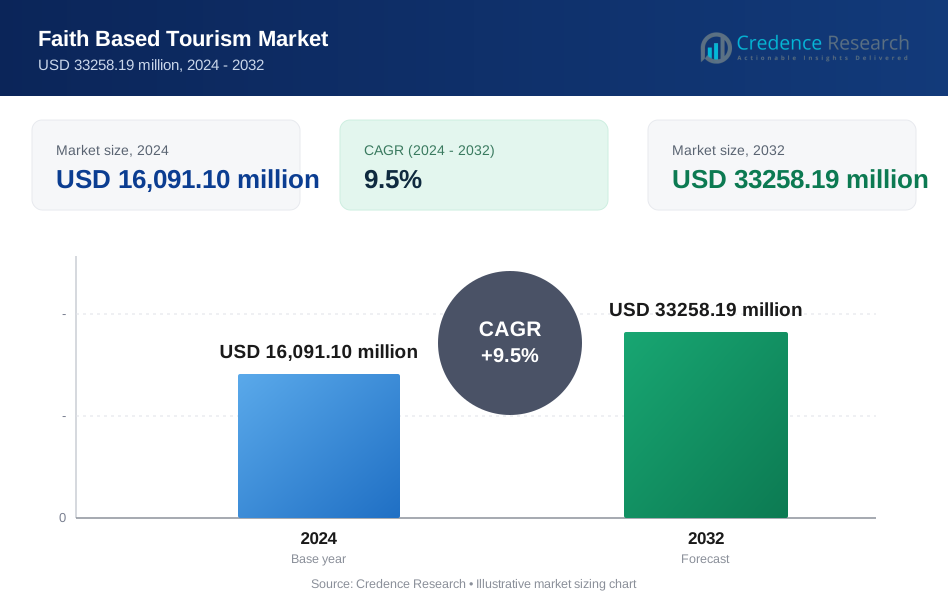
The Faith Based Tourism Market is projected to grow from USD 16,091.10 million in 2024 to an estimated USD 33258.19 million by 2032, with a compound annual growth rate (CAGR) of 9.5% from 2024 to 2032.
Key drivers of the faith-based tourism market include the increasing global interest in spiritual and religious journeys, the rising affordability of travel, and the expansion of digital platforms facilitating the booking of religious tours. As people seek deeper personal connections and spiritual enlightenment, faith-based tourism offers an avenue for self-discovery and cultural immersion. The market is also being fueled by the availability of organized pilgrimages, travel packages, and the growing interest in visiting sacred destinations, which are seen as important elements of one’s faith journey. Furthermore, the rise of wellness tourism, which combines spirituality and health, has also positively impacted the market.
Regionally, the faith-based tourism market is dominated by regions with a rich history of religious significance, including Europe, the Middle East, and Asia-Pacific. Europe remains a prominent hub for Christian pilgrimages, with countries like Italy and Spain hosting millions of visitors each year. The Middle East, particularly Saudi Arabia, experiences a high influx of Muslim tourists, drawn by the religious significance of Mecca and Medina. The Asia-Pacific region, with its vast array of religious sites, continues to witness an increasing number of spiritual tourists. As more people turn to travel as a means to fulfill their spiritual needs, destinations are responding by enhancing their offerings to cater specifically to this market segment. This includes developing specialized tours that focus on local religious practices and traditions while promoting sustainable tourism practices that respect both cultural heritage and environmental integrity. The growing interest in eco-spiritual travel reflects a broader trend towards responsible tourism that aligns with travelers’ values. Additionally, government initiatives aimed at promoting faith-based tourism are expected to further stimulate growth in this sector by improving infrastructure and marketing key pilgrimage sites effectively.
Market Drivers:
Increasing Global Interest in Religious Travel
One of the primary drivers of the faith-based tourism market is the growing global interest in religious and spiritual travel. As individuals seek deeper personal connections and experiences, faith-based tourism offers an avenue for spiritual exploration and cultural enrichment. Pilgrimages, religious festivals, and visits to sacred sites attract millions annually, contributing to the market's steady expansion. For instance, the Hajj pilgrimage to Mecca attracts over 2 million Muslims each year from around the world, highlighting the significant interest in religious travel. Many travelers are now prioritizing spiritual journeys, driven by a desire for self-reflection and engagement with historical religious landmarks.
Rising Affordability of Travel
The increasing affordability and accessibility of travel are significant factors boosting the faith-based tourism market. Reduced travel costs, coupled with the proliferation of budget airlines and low-cost accommodations, have made religious destinations more accessible to a broader demographic. For example, Ryanair offers budget flights to numerous religious destinations across Europe, making travel more affordable for pilgrims. Additionally, advances in digital platforms, which allow for easier trip planning and booking, further enhance the convenience of visiting sacred sites. This affordability is particularly attractive to younger generations, who are increasingly looking for affordable travel options that offer both spiritual significance and enriching cultural experiences.
Expansion of Organized Pilgrimages and Travel Packages
The growth of organized pilgrimages and tailored travel packages has significantly contributed to the market's development. Tour operators have capitalized on the demand for structured, group-based travel to religious destinations, offering comprehensive packages that include transportation, accommodations, and guided tours. For instance, Globus Faith-Based Tours offers structured packages to destinations like Lourdes and Fatima, including guided tours and accommodations, catering to the specific needs of faith-based travelers. These well-organized tours cater to the specific needs of faith-based travelers, providing a hassle-free experience and ensuring they can focus on their spiritual journeys without worrying about logistical challenges.
Rise of Wellness and Spiritual Tourism
The growing trend of wellness tourism, which blends spirituality and health, is another driver of the faith-based tourism market. Many travelers are now seeking destinations that offer both physical well-being and spiritual enrichment. For example, the Ananda in the Himalayas wellness retreat offers spiritual activities like yoga and meditation alongside health treatments, blending both sacred significance and therapeutic benefits. Faith-based tourism often intersects with wellness tourism, with pilgrims visiting locations that offer both sacred significance and therapeutic benefits. This synergy has led to the development of specialized travel offerings that cater to individuals seeking both spiritual and physical rejuvenation.
Market Trends:
Growth of Digital Platforms and Online Booking
A notable trend in the faith-based tourism market is the growing reliance on digital platforms for planning and booking religious travel experiences. Online booking systems, apps, and travel websites dedicated to religious tourism have streamlined the process, enabling travelers to easily access information about sacred sites, pilgrimages, and religious tours. For instance, PilgrimPath, an app dedicated to religious travel, allows users to plan their trips, access guided tours, and receive instant confirmations, enhancing the convenience for travelers. This digital transformation enhances convenience for both tourists and operators, as travelers can now easily customize their spiritual journeys, access guided tours, and receive instant confirmations.
Focus on Sustainable and Responsible Tourism
As with other segments of the travel industry, there is an increasing emphasis on sustainability within the faith-based tourism market. Tourists and operators alike are prioritizing responsible tourism practices, aiming to reduce environmental impact while preserving the cultural and spiritual integrity of sacred destinations. For example, the Sacred Sites Program by the World Monuments Fund focuses on preserving religious heritage sites while promoting eco-friendly tourism practices. Many religious tourism organizations are adopting eco-friendly initiatives, such as carbon offset programs, waste reduction efforts, and community-based tourism projects. This trend reflects a growing awareness among travelers of the need to respect both the environment and local traditions.
Emergence of Wellness Tourism Integration
Another emerging trend is the integration of wellness tourism into faith-based travel experiences. Many travelers are now seeking destinations that offer both spiritual enrichment and health benefits, such as retreats focused on mindfulness, meditation, and rejuvenation. For example, the Shreyas Retreat in India combines yoga and meditation with spiritual teachings, offering a holistic travel experience. Sacred sites that offer wellness services, such as yoga or natural healing therapies, are becoming increasingly popular. This trend is reflective of the broader desire for holistic travel experiences that nurture both the body and spirit.
Rise of Multifaith and Intercultural Pilgrimages
A growing trend in the faith-based tourism market is the rise of multifaith and intercultural pilgrimages. These tours, which bring together individuals from different religious backgrounds to visit shared sacred sites, promote dialogue, understanding, and peace. For instance, the Abraham Path Initiative organizes intercultural walks along historical routes that connect various religious sites in the Middle East. This trend is gaining momentum as people seek to foster mutual respect and cross-cultural connections while exploring the common spiritual themes present across various faiths. These pilgrimages provide a unique opportunity for spiritual enrichment and intercultural exchange.
Market Challenges Analysis:
Cultural Sensitivity and Religious Differences
One of the primary challenges facing the faith-based tourism market is navigating cultural sensitivity and religious differences. Religious sites are often sacred and carry deep spiritual significance, making them vulnerable to misinterpretation or exploitation by tourists who may lack understanding of local customs and traditions. Ensuring that tourists respect the cultural and religious practices of the host destinations is essential, as any perceived disrespect can negatively impact the reputation of the destination and the tourism industry as a whole. Operators must educate travelers on appropriate behavior and cultural norms to mitigate such risks. Political instability in certain regions poses a significant challenge to the faith-based tourism market. Areas with political unrest or security concerns can deter potential travelers, particularly those planning to visit religious or pilgrimage sites. Safety concerns related to travel restrictions, terrorism, or local conflicts can lead to a decline in tourist numbers, making it difficult for operators to maintain steady business. Managing these risks requires continuous monitoring of global political landscapes and the implementation of security measures to ensure the safety of tourists.
Limited Infrastructure and Accessibility Issues
Another challenge for the faith-based tourism market is the limited infrastructure and accessibility of some sacred sites. Many religious destinations, particularly those located in remote or rural areas, may lack adequate transportation options, accommodations, and modern amenities. This can create logistical challenges for tour operators and discourage tourists from visiting these sites. Additionally, some sites may not be easily accessible to individuals with disabilities, limiting the inclusivity of faith-based tourism offerings. Addressing these infrastructure limitations is essential for expanding market potential and enhancing the overall experience for travelers. The commercialization of religious tourism is another challenge in the faith-based tourism market. While the growing popularity of faith-based travel has opened up new revenue streams, there is a fine line between commercial development and maintaining the sacred nature of religious sites. Over-commercialization can undermine the spiritual significance of these locations and create tension between local communities, religious authorities, and tourism providers. Striking a balance between economic benefits and preserving the sanctity of religious destinations remains a critical challenge.
Market Segmentation Analysis:
Market Segment Analysis: Faith-Based Tourism Market
By Tour Type
The faith-based tourism market can be divided into organized tours, independent travel, and religious events or festivals. Organized tours dominate the market, providing structured, group-based travel to religious destinations. These tours are popular for their convenience and the ability to engage with other like-minded individuals. Independent travel is also gaining traction, particularly among travelers seeking more personalized spiritual experiences. Religious events and festivals attract large numbers of visitors to specific locations, driving seasonal tourism.
By Tourist Type
Faith-based tourism can be categorized into two key groups: religious pilgrims and spiritual seekers. Pilgrims travel to sacred sites as part of fulfilling religious obligations, while spiritual seekers are often motivated by personal enrichment and exploration of cultural or historical sites. Both segments are significant, though pilgrims typically represent a larger and more consistent demographic, particularly during key religious times.
By Traveler Type
Faith-based tourists can be grouped into solo travelers, family groups, and organized groups. Solo travelers often seek personal reflection and individual spiritual experiences. Family groups tend to travel for religious milestones and educational purposes, while organized groups, usually led by religious leaders, participate in collective pilgrimages.
By Booking Channel
Booking for faith-based tourism is increasingly happening through online travel agencies (OTAs), direct bookings through religious organizations, and specialized tour operators. OTAs provide a broad selection of options, while specialized operators offer tailored experiences for faith-based travelers.
By Age Group
The faith-based tourism market includes various age groups, with older generations typically engaging in pilgrimage-based travel and younger travelers seeking immersive cultural or spiritual experiences. The increasing popularity of wellness tourism has also attracted younger, health-conscious individuals to spiritual destinations.
Segmentations:
By Tour Type
- Organized Tours
- Independent Travel
- Religious Events/Festivals
By Tourist Type
- Religious Pilgrims
- Spiritual Seekers
By Traveler Type
- Solo Travelers
- Family Groups
- Organized Groups
By Booking Channel
- Online Travel Agencies (OTAs)
- Direct Bookings via Religious Organizations
- Specialized Tour Operators
By Age Group
- Older Generations
- Younger Generations
By Region
- North America
- U.S.
- Canada
- Mexico
- Europe
- Germany
- France
- U.K.
- Italy
- Spain
- Rest of Europe
- Asia Pacific
- China
- Japan
- India
- South Korea
- South-east Asia
- Rest of Asia Pacific
- Latin America
- Brazil
- Argentina
- Rest of Latin America
- Middle East & Africa
- GCC Countries
- South Africa
- Rest of the Middle East and Africa
North America
North America holds a significant market share of 25% in the global faith-based tourism sector. The region’s large and diverse population, with a high proportion of religious individuals, drives demand for both international and domestic religious travel. The United States, in particular, is a key player, with many major Christian pilgrimage sites such as the National Shrine of Our Lady of La Leche and the Shrine of Our Lady of Guadalupe attracting millions of visitors annually. Canada also contributes to the market, with its increasing interest in religious tourism.
Europe
Europe captures a market share of 30%, driven by its rich religious heritage and the high number of Christian pilgrimages. Countries like Italy, Spain, France, and Poland are well-known for their religious significance, with iconic pilgrimage destinations like the Vatican, Lourdes, and Santiago de Compostela drawing millions of faith-based tourists every year. The historical and cultural appeal of European religious sites also attracts spiritual seekers from around the world.
Asia-Pacific
Asia-Pacific represents a growing segment of the market, holding a 20% market share. The region’s diverse religious landscape, including Hinduism, Buddhism, Islam, and other faiths, creates a rich tapestry of sacred sites and pilgrimage routes. India, with major pilgrimage centers like Varanasi, Amritsar, and the Char Dham, plays a critical role in the region’s faith-based tourism growth. The growing middle class in countries like China and Japan is also fueling demand for spiritual travel, making Asia-Pacific an increasingly important region for faith-based tourism
Middle East & Africa
The Middle East and Africa collectively hold a 15% share of the global faith-based tourism market. The region’s religious significance, particularly in Islam, with the annual influx of Muslim pilgrims traveling to Mecca for Hajj, drives a substantial portion of the market. Countries like Saudi Arabia, Egypt, and Jordan are central to the faith-based tourism sector, with key destinations such as the Al-Masjid al-Haram in Mecca and the Al-Aqsa Mosque in Jerusalem attracting millions of pilgrims annually.
Latin America
Latin America accounts for a 10% share of the global faith-based tourism market. Countries such as Brazil, Mexico, and Argentina are home to popular Christian pilgrimage sites, including the Sanctuary of Our Lady of Aparecida in Brazil and the Basilica of Our Lady of Guadalupe in Mexico. The region is also seeing growing interest from international travelers seeking religious and cultural experiences.
Key Player Analysis:
- Expedia
- Kesari Tours
- Trafalgar Tours
- Catholic Travel Centre
- G Adventures
- Globus
- TourRadar
- Insight Vacations
- Rick Steves' Europe
- ACE Cultural Tours
Competitive Analysis:
The faith-based tourism market is highly competitive, with numerous global and regional players vying for market share. Leading companies such as TUI Group, Thomas Cook, and Pride Hotels Group offer tailored packages and experiences to cater to the growing demand for religious and spiritual travel. These players focus on providing organized tours, accommodations, and specialized services to meet the unique needs of faith-based travelers. In addition to traditional travel operators, online platforms like Expedia Group and Booking Holdings are significant competitors, offering convenience and accessibility through digital channels. These platforms provide a wide range of travel options, including pilgrimages and religious tours, making it easier for travelers to book their journeys. Smaller, specialized companies like Pilgrim Tours and Religious Tours also play a critical role by offering personalized experiences and guided pilgrimages. For example, Pilgrim Tours offers customized pilgrimages to sites such as the Camino de Santiago, ensuring authenticity and cultural immersion. The market is increasingly driven by the need for authenticity, cultural immersion, and the ability to cater to diverse faith-based travel preferences.
Recent Developments:
- In March 2024, The Catholic Travel Centre expanded its offerings by launching new pilgrimage packages that include guided tours to significant religious sites, responding to the growing demand for faith-based travel among Catholic pilgrims.
- In April 2024, Expedia Group launched two new sustainable travel programs, the Destination Climate Champions and the Destination Giveback Initiative, aimed at promoting environmentally responsible travel and supporting local communities.
- In November 2023, TourRadar launched a dedicated section for faith-based tours on its platform, allowing travelers to easily find and book spiritual journeys tailored to various religious traditions
Market Concentration & Characteristics:
The faith-based tourism market is moderately concentrated, with a mix of large global travel companies and specialized niche operators. Major players like TUI Group, Thomas Cook, and Expedia dominate the market by offering broad portfolios of religious travel options and leveraging well-established networks. However, smaller, specialized companies like Pilgrim Tours and Religious Tours carve out significant niches by providing tailored, authentic experiences focused on specific religious traditions and pilgrimage routes. The market is characterized by increasing digitalization, with online booking platforms gaining importance in simplifying travel planning for faith-based tourists. Additionally, the growing demand for personalized and culturally immersive experiences is prompting many operators to focus on unique travel offerings that combine spirituality with other elements such as wellness and cultural exploration. Overall, the market is competitive, with companies focusing on service differentiation, customer loyalty, and expanding their geographical reach to capitalize on emerging opportunities.
Report Coverage:
The research report offers an in-depth analysis based on tour type, tourist type, traveler type, booking channel, age group and region. It details leading market players, providing an overview of their business, product offerings, investments, revenue streams, and key applications. Additionally, the report includes insights into the competitive environment, SWOT analysis, current market trends, as well as the primary drivers and constraints. Furthermore, it discusses various factors that have driven market expansion in recent years. The report also explores market dynamics, regulatory scenarios, and technological advancements that are shaping the industry. It assesses the impact of external factors and global economic changes on market growth. Lastly, it provides strategic recommendations for new entrants and established companies to navigate the complexities of the market.
Future Outlook:
- The demand for faith-based tourism will continue to rise as travelers seek more meaningful and personalized experiences.
- Digital platforms and online booking systems will play an increasingly important role in making faith-based travel more accessible and convenient.
- Pilgrimages will remain a key driver, with growing numbers of people traveling to sacred sites for religious observance and cultural enrichment.
- The market will see greater integration of wellness tourism, as travelers seek both spiritual and physical rejuvenation at sacred locations.
- Increased collaboration between religious and non-religious institutions will help improve accessibility, affordability, and inclusivity within the market.
- The demand for eco-friendly and sustainable travel options will rise, with faith-based tourism operators adopting greener practices to appeal to environmentally conscious travelers.
- Customized travel packages tailored to specific religious needs will become more common, meeting the unique preferences of different faiths.
- Younger generations will play an important role in shaping the market, with millennials and Gen Z seeking immersive and experiential spiritual journeys.
- Regional markets such as Asia-Pacific and the Middle East will see continued growth as new pilgrimage routes and sacred sites become more accessible.
- The market will become increasingly competitive, with operators focusing on service differentiation, specialized offerings, and seamless customer experiences.
Request a Free Sample
Fill in your details and we'll send you a free sample report.
- Sample data tables & charts
- Research methodology
Need a Custom Version of This Report?
Tailor the scope, geography, or segments to your exact requirements.
- Custom geography or segment scope
- Direct access to our analyst team
Frequently Asked Questions
What is the projected growth of the faith-based tourism market?
What are the key drivers of the faith-based tourism market?
How does wellness tourism impact faith-based tourism?
Which regions are leading the faith-based tourism market?
What factors contribute to the growth of faith-based tourism in these regions?
Table of Content
Chapter 1. Report Introduction
- 1.1 Report Description & Purpose
- 1.1.1 Report Title & Market Definition
- 1.1.2 Unique Selling Propositions (USP) & Key Differentiators
- 1.1.3 Value Proposition for Stakeholders
- 1.2 Research Objectives
- 1.2.1 Market Sizing Objectives (Volume & Revenue)
- 1.2.2 Segmentation Objectives
- 1.2.3 Competitive Intelligence Objectives
- 1.2.4 Forecast & Scenario Objectives
- 1.3 Report Scope
- 1.3.1 Faith Based Tourism Scope – Types & Subtypes Covered
- 1.3.2 Geographic Scope – Regions & Countries Covered
- 1.3.3 Historical Period, Base Year & Forecast Period (2024; forecast to 2032)
- 1.3.4 Inclusions & Exclusions
- 1.4 HS Code & Classification Framework
- 1.5 Currency, Units & Pricing Basis
- 1.6 Target Stakeholders
- 1.7 Limitations & Assumptions
Chapter 2. Executive Summary
- 2.1 Global Faith Based Tourism Market Snapshot
- 2.1.1 Market Size – Historical (2024) & Forecast (2024-2032) (2024: USD 16,091.10 million → 2032: USD 33258.19 million)
- 2.1.2 Volume & Revenue – Global Totals
- 2.1.3 Key Market Highlights – Top Five Facts
- 2.2 Faith Based Tourism Market Segmentation Snapshot
- 2.2.1 Market Split by Region – 2024 vs. 2032
- 2.3 Competitive Snapshot
- 2.3.1 Top 10 Players by Revenue Share – 2024
- 2.3.2 Top 10 Players by Volume Share – 2024
- 2.3.3 Recent Strategic Developments (18-Month Summary)
- 2.4 Key Investment Highlights & Strategic Conclusions
Chapter 3. Faith Based Tourism Market Dynamics & Industry Analysis
- 3.1 Market Overview & Context
- 3.1.1 Faith Based Tourism Market Position in the Broader Automotive Value Chain
- 3.1.2 OEM vs. Replacement Market Dynamics
- 3.1.3 Market Maturity & Development Stage by Region
- 3.2 Faith Based Tourism Market Drivers
- 3.3 Faith Based Tourism Market Restraints & Challenges
- 3.4 Faith Based Tourism Market Opportunities
- 3.5 Porter's Five Forces Analysis
- 3.5.1 Threat of New Entrants
- 3.5.2 Bargaining Power of Suppliers
- 3.5.3 Bargaining Power of Buyers
- 3.5.4 Threat of Substitutes
- 3.5.5 Competitive Rivalry – Intensity Assessment
- 3.6 Faith Based Tourism Value Chain Analysis
- 3.6.1 Upstream – Raw Material/Input Suppliers
- 3.6.1.1 Raw Material/Input 1
- 3.6.1.2 Raw Material/Input 2
- 3.6.1.3 Raw Material/Input 3
- 3.6.2 Midstream – Production/Manufacturing/Service Delivery
- 3.6.2.1 Production/Process Overview
- 3.6.2.2 Key Facility Locations & Capacity by Manufacturer
- 3.6.3 Downstream – Distribution & End Consumer
- 3.6.3.1 Primary Channel – B2B/OEM
- 3.6.3.2 Secondary Channels – Dealer, Retail, Online, Direct
- 3.6.4 Value Chain Profitability Analysis
- 3.6.1 Upstream – Raw Material/Input Suppliers
- 3.7 PESTEL Analysis
- 3.7.1 Political Factors
- 3.7.2 Economic Factors
- 3.7.3 Social Factors
- 3.7.4 Technological Factors
- 3.7.5 Environmental Factors
- 3.7.6 Legal Factors
- 3.8 Faith Based Tourism Supply Chain Analysis
- 3.8.1 Raw Material/Input Supply Risk Assessment
- 3.8.2 Manufacturing Concentration Risk (Geographic Exposure)
- 3.8.3 Trade Disruption Impact Analysis
- 3.9 Regulatory & Policy Landscape
Note: The regulatory and policy landscape section covers regulations based on their applicability to the market, Faith Based Tourism category, geography, and scope of the study. Only regulatory frameworks with a material impact on operations, compliance, trade, sustainability, or market access are analyzed in detail.
Chapter 4. Key Investment Pockets & Opportunity Analysis
- 4.1 Faith Based Tourism Market Attractiveness Analysis
- 4.1.1 By Region – Investment Attractiveness Matrix (Volume × CAGR)
- 4.2 Absolute Revenue Growth Opportunity
- 4.2.1 By Region – Absolute USD Growth Through 2032
- 4.3 Incremental Volume Opportunity
- 4.3.1 By Region – Incremental Volume Through 2032
- 4.3.2 Segment – Incremental Volume
- 4.4 Emerging Submarket Opportunity Deep Dive (Subject to Applicability)
- 4.5 Emerging Market Opportunity Scorecards
- 4.5.1 United States
- 4.5.2 Europe
- 4.5.3 Asia
- 4.5.4 Middle East & Africa
Note: Emerging Market Opportunity Scorecards will be included based on relevance and strategic importance. Regions listed are indicative and may vary depending on data availability and market dynamics.
Chapter 5. Faith Based Tourism Import-Export Analysis & Trade Flows
- 5.1 Global Trade Overview
- 5.1.1 Global Export Value by Country (2024)
- 5.1.2 Global Export Volume by Country (2024)
- 5.1.3 Global Import Value by Country (2024)
- 5.1.4 Global Import Volume by Country (2024)
- 5.1.5 Net Trade Balance by Country (2024)
- 5.2 Export Analysis – Segment
- 5.2.1 Type 1 (HS Code)
- 5.2.2 Type 2 (HS Code)
- 5.2.3 Type 3 (HS Code)
- 5.2.4 Type 4 (HS Code)
- 5.2.5 Type 5 (HS Code)
- 5.3 Import Analysis – Segment
- 5.3.1 Type 1 (HS Code)
- 5.3.2 Type 2 (HS Code)
- 5.3.3 Type 3 (HS Code)
- 5.3.4 Type 4 (HS Code)
- 5.3.5 Type 5 (HS Code)
- 5.4 Average Unit Trade Prices
- 5.4.1 Average Export Price – Segment & Country
- 5.4.2 Average Import Price – Segment & Source Country
- 5.4.3 Price Trends (2024)
- 5.5 Key Trade Route Analysis
- 5.5.1 Trade Route 1
- 5.5.2 Trade Route 2
- 5.5.3 Trade Route 3
- 5.5.4 Trade Route 4
- 5.5.5 Trade Route 5
- 5.6 Trade Policy Impact Assessment
- 5.6.1 US Anti-Dumping & Section 301 Tariffs
- 5.6.2 EU Customs Union Impact
- 5.6.3 Major Free Trade Agreements
- 5.6.4 USMCA Rules of Origin
Note: Trade policy analysis will be included only where relevant to the Faith Based Tourism market.
Chapter 6. Competitive Landscape & Company Benchmarking
- 6.1 Faith Based Tourism Market Concentration & Structure
- 6.1.1 Herfindahl-Hirschman Index (HHI) – vs. 2024
- 6.1.2 Tier 1, Tier 2 & Tier 3 Market Structure
- 6.1.3 Global, Regional & Local Player Dynamics
- 6.2 Faith Based Tourism Market Share Analysis – 2024
- 6.2.1 Global Revenue Share by Company
- 6.2.2 Global Volume Share by Company
- 6.2.3 Regional Revenue Share
- 6.2.4 Market Share Evolution ( vs. 2024)
- 6.2.5 OEM Segment Share by Company
- 6.2.6 Replacement Segment Share by Company
- 6.3 Production/Delivery Capacity & Facility Analysis
- 6.3.1 Global Installed Capacity
- 6.3.2 Capacity Utilization Rates
- 6.3.3 Production/Output Volume
- 6.3.4 Facility Locations & Capacity Map
- 6.3.5 Planned Capacity Additions
- 6.4 Faith Based Tourism Competitive Benchmarking Matrix
- 6.4.1 Revenue, Volume, CAGR & Profitability Comparison
- 6.4.2 Channel Revenue Mix
- 6.4.3 Geographic Revenue Exposure
- 6.4.4 R&D Intensity
- 6.4.5 Sustainability Maturity
- 6.5 Strategic Developments in Faith Based Tourism (Last 24 Months)
- 6.5.1 Mergers, Acquisitions & Divestments
- 6.5.2 New Faith Based Tourism Launches
- 6.5.3 Facility Expansions
- 6.5.4 Strategic Alliances, Joint Ventures & Partnerships
- 6.5.5 Distribution Expansion & Market Entry
- 6.5.6 Sustainability & ESG Initiatives
- 6.6 Competitive Strategy Mapping
- 6.6.1 Leader, Challenger, Follower & Niche Classification
- 6.6.2 Pricing Strategy Comparison
- 6.6.3 Channel Strategy Matrix
Note: Strategic developments are included based on their materiality and the availability of reliable information.
Chapter 7. Global Faith Based Tourism Market – By Distribution Channel
- 7.1 Segment Overview
- 7.1.1 Volume & Revenue Split by Channel (2024 & 2032)
- 7.1.2 Channel Mix Evolution (2024-2032)
Chapter 8. Regional Market Analysis – Global Overview
- 8.1 Global Regional Overview
- 8.1.1 Regional Volume Share
- 8.1.2 Regional Revenue Share
- 8.1.3 Regional Volume by Region
- 8.1.4 Regional Revenue by Region
- 8.1.5 Regional Forecast Through 2032
- 8.2 Cross-Regional Segment Analysis
- 8.2.1 By Distribution Channel
- 8.2.2 By Brand/Price Tier
Chapter 9. North America Faith Based Tourism Market
- 9.1 United States
- 9.2 Canada
- 9.3 Mexico
Chapter 10. Europe Faith Based Tourism Market
- 10.1 Germany
- 10.2 France
- 10.3 Italy
- 10.4 United Kingdom
- 10.5 Spain
- 10.6 Poland
- 10.7 Russia
- 10.8 Netherlands
- 10.9 Belgium
- 10.10 Sweden
- 10.11 Denmark
- 10.12 Norway
- 10.13 Rest of Europe
Chapter 11. Asia Pacific Faith Based Tourism Market
- 11.1 China
- 11.2 India
- 11.3 Japan
- 11.4 South Korea
- 11.5 Thailand
- 11.6 Indonesia
- 11.7 Vietnam
- 11.8 Malaysia
- 11.9 Australia
- 11.10 Rest of Asia Pacific
Chapter 12. Latin America Faith Based Tourism Market
- 12.1 Brazil
- 12.2 Argentina
- 12.3 Colombia
- 12.4 Chile
- 12.5 Rest of Latin America
Chapter 13. Middle East Faith Based Tourism Market
- 13.1 Saudi Arabia
- 13.2 United Arab Emirates
- 13.3 Turkey
- 13.4 Israel
- 13.5 Iran
- 13.6 Rest of the Middle East
Chapter 14. Africa Faith Based Tourism Market
- 14.1 South Africa
- 14.2 Egypt
- 14.3 Nigeria
- 14.4 Morocco
- 14.5 Rest of Africa
Chapter 15. Faith Based Tourism Company Profiles
- 15.1 [Company 01]
- 15.1.1 Company Overview
- 15.1.2 Key Management Personnel
- 15.1.3 Products & Services Portfolio
- 15.1.4 Financial Performance
- 15.1.5 Key Market Focus & Geographic Presence
- 15.1.6 Recent Developments & Strategic Initiatives
Note: The company profile list is preliminary and may change based on research findings, market developments, data availability, and client requirements.
Chapter 16. Appendices
- Appendix A – List of Abbreviations & Acronyms
- Appendix B – Industry Classification Code Reference – Full Series
- Appendix C – Production & Capacity Data Tables
- Appendix D – End-Use & Demand Base Tables
- Appendix E – Consumption & Replacement Rate Assumptions
- Appendix F – ASP Reference Tables
- Appendix G – Manufacturing & Facility Database
- Appendix H – Import-Export Data Tables
- Appendix I – Regulatory Summary Tables
- Appendix J – Primary Research Participant List (Anonymized)
- Appendix K – Primary Research Questionnaire Framework
- Appendix L – Data Sources & Bibliography
- Appendix M – Market Size Divergence & Source Comparison
Chapter 17. Research Methodology
- 17.1 Research Framework & Philosophy
- 17.2 Secondary Research – Sources, Hierarchy & Data Extraction
- 17.3 Data Modeling – Bottom-Up & Top-Down Market Sizing
- 17.4 Primary Research – Stakeholder Framework, LOI & Sample Sizes
- 17.5 Forecast Methodology – Regression, Scenario & Sensitivity Analysis
- 17.6 Quality Control – Four-Layer Validation Framework
- 17.7 Limitations & Standard Assumptions
- 17.8 Disclaimer
