
| REPORT ATTRIBUTE | DETAILS |
|---|---|
| Historical Period | 2020-2023 |
| Base Year | 2024 |
| Forecast Period | 2025-2032 |
| Management Consulting Market Size 2024 | USD 303,103.91 Million |
| Management Consulting Market, CAGR | 5.27% |
| Management Consulting Market Size 2032 | USD 457,118.21 Million |
Market Overview
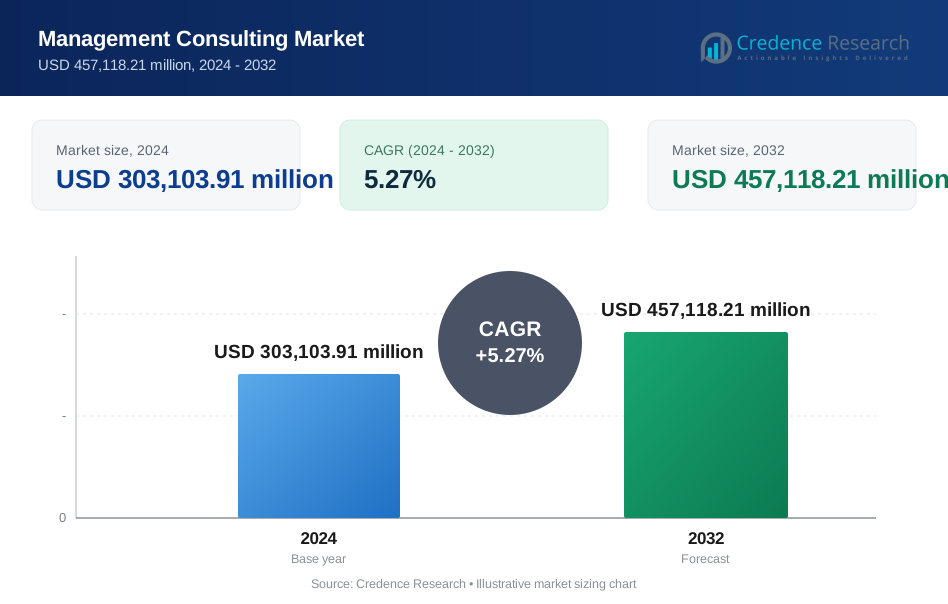
The global Management Consulting Market is projected to grow from USD 303,103.91 million in 2024 to an estimated USD 457,118.21 million by 2032, with a compound annual growth rate (CAGR) of 5.27% from 2025 to 2032. This growth is driven by an increasing demand for specialized consulting services across industries such as healthcare, finance, IT, and government sectors.
The market is primarily driven by factors such as the increasing complexity of business processes, rising adoption of digital technologies, and the need for strategic guidance in navigating economic uncertainty. Moreover, companies are increasingly focusing on optimizing operational efficiency and implementing cost-effective solutions, further boosting the demand for management consulting services. Key trends influencing market growth include the growing use of artificial intelligence and data analytics in consulting services, as well as a shift towards remote consulting due to the evolving business environment.
Geographically, North America holds the largest share of the Management Consulting Market, attributed to the presence of major consulting firms and a robust demand for business optimization strategies. Europe and the Asia-Pacific regions are also witnessing significant growth, driven by expanding business operations and increased investments in digital transformation. Key players in the market include McKinsey & Company, Boston Consulting Group, Deloitte, PwC Advisory Services, and Accenture, all of which contribute to shaping industry standards and driving innovation in consulting services.
Market Insights
- The global Management Consulting Market is projected to grow from USD 303,103.91 million in 2024 to USD 457,118.21 million by 2032, with a CAGR of 5.27% from 2025 to 2032.
- Key drivers include the increasing complexity of business processes, rising demand for digital technologies, and the need for strategic guidance in navigating economic uncertainties.
- The growing use of artificial intelligence, data analytics, and digital transformation is accelerating the demand for management consulting services across various industries.
- The market faces challenges such as price competition and pressure on consulting fees, along with the potential for talent retention issues in the industry.
- North America holds the largest market share, driven by the presence of leading consulting firms and high demand for business optimization strategies.
- The Asia-Pacific region is witnessing significant growth due to emerging markets and increasing investments in digital transformation.
- Increasing focus on sustainability and Environmental, Social, and Governance (ESG) goals presents new opportunities and challenges for consulting firms globally.
Market Drivers
Global Economic Uncertainty and Competitive Pressures
The global economy is frequently subject to fluctuations and disruptions, such as recessions, inflation, trade tensions, and geopolitical risks. During times of economic uncertainty, companies are increasingly looking for external expertise to navigate these turbulent conditions, minimize risks, and identify new opportunities. Management consultants help businesses assess their market position, optimize their cost structures, and adjust their strategies to remain competitive during periods of volatility.In addition to macroeconomic uncertainty, businesses are also facing intense competition from both traditional players and new entrants in their respective industries. To remain competitive, companies must constantly innovate, improve efficiencies, and develop strategies that differentiate them from the competition. Consulting firms offer strategic insights and implement effective solutions to help businesses stay ahead of rivals, whether through cost-cutting measures, operational restructuring, or targeted market expansion initiatives. As the competitive landscape becomes more challenging, organizations continue to rely on consultants for expert advice to maintain or gain a competitive edge, fueling the demand for consulting services across various sectors.
Focus on Operational Efficiency and Cost Optimization
In the face of rising operational costs and an ever-demanding market environment, companies are placing a greater emphasis on improving their operational efficiency and optimizing costs. Consulting firms assist organizations by identifying inefficiencies, eliminating redundancies, and streamlining operations, all of which can significantly reduce costs. Consultants also help businesses implement strategies to improve their supply chain management, enhance resource allocation, and optimize production processes.In addition to cost-cutting initiatives, companies are increasingly focusing on improving their long-term profitability by adopting lean management techniques, enhancing workforce productivity, and leveraging technology to automate manual tasks. Management consultants bring a wealth of expertise to the table, helping companies implement best practices in operations, supply chain, and customer service management, which directly contributes to better financial performance. This demand for cost optimization and operational excellence is driving a steady need for consulting services, as companies seek to improve their financial position while maintaining high-quality outputs.
Increased Complexity of Business Operations
As businesses across the globe face growing challenges related to technological advancements, changing consumer preferences, and evolving regulatory environments, the complexity of their operations continues to rise. Organizations are increasingly seeking external expertise to navigate these complexities, making management consulting services more essential than ever. Consultants help businesses streamline their processes, improve productivity, and reduce operational risks. They also offer strategic guidance on managing global supply chains, optimizing internal functions, and navigating legal and compliance frameworks, all of which contribute to the overall growth of the management consulting market.For instance, a major retail chain worked with consultants to implement a comprehensive e-commerce platform, integrating inventory management systems, enhancing customer experience with personalized recommendations, and using data analytics to optimize marketing strategies. This resulted in a significant improvement in online sales and customer satisfaction. Such examples demonstrate how management consultants can help businesses address operational challenges while adapting to changing market dynamics. In industries such as healthcare, finance, manufacturing, and IT-where businesses face multifaceted challenges-the role of consultants becomes even more critical. By providing tailored solutions to improve operational efficiency and mitigate risks, consultants enable organizations to thrive in today’s competitive landscape.
Adoption of Digital Technologies and Innovation
The increasing adoption of digital technologies and innovations is a major driver of the global management consulting market. As companies pursue digital transformation strategies to stay ahead of competition, management consultants play a crucial role in guiding these efforts. Consultants help businesses integrate new technologies like artificial intelligence (AI), machine learning, blockchain, and cloud computing into their operations, allowing them to drive innovation, enhance customer experiences, and optimize business processes.For instance, a leading financial services firm collaborated with consultants to implement advanced AI-driven tools for fraud detection while simultaneously integrating blockchain technology for secure transactions. This not only improved the firm’s operational efficiency but also strengthened its compliance with regulatory standards. Such initiatives highlight the indispensable role of consultants in helping organizations adopt cutting-edge technologies effectively. Additionally, as digitalization accelerates cybersecurity concerns, businesses increasingly rely on consultants for secure tech integration and data-driven strategies that maximize performance. By addressing these needs, management consultants enable companies to innovate while minimizing risks, further fueling the demand for their expertise in an increasingly digital world. This trend is expected to persist as businesses continue their digital transformation journeys.
Market Trends
Sustainability and Environmental, Social, and Governance (ESG) Consulting
As environmental concerns, social responsibility, and governance standards become more critical in the global business landscape, companies are seeking consulting services to align their strategies with sustainability goals and regulatory frameworks. Consultants are increasingly providing services that help organizations develop comprehensive sustainability strategies, reduce their carbon footprints, and meet the expectations of consumers, investors, and regulatory bodies regarding environmental, social, and governance (ESG) issues.The demand for ESG-related consulting has surged, with businesses recognizing the importance of sustainability not only for corporate social responsibility but also for long-term profitability. Organizations are under pressure to demonstrate their commitment to responsible practices in areas such as supply chain management, waste reduction, energy efficiency, and social equity. Consultants are offering guidance on how companies can improve their ESG performance, develop transparent reporting mechanisms, and implement responsible sourcing and production practices. The global focus on sustainability has created a significant opportunity for management consulting firms, driving the growth of specialized consulting services in ESG-related domains.
Rise of Remote and Hybrid Consulting Models
The COVID-19 pandemic accelerated the adoption of remote work, and this shift is having a lasting impact on the consulting industry. Traditionally, management consultants worked closely with clients on-site to assess business operations, facilitate workshops, and collaborate on strategic initiatives. However, the pandemic forced many consulting firms to adapt to virtual environments, leading to the development of remote and hybrid consulting models. Today, many firms continue to offer virtual services, which allows them to provide consulting support to clients around the world without the need for physical presence.Remote consulting is becoming increasingly popular due to its convenience and cost-effectiveness. Clients can now access top-tier consulting services without the associated costs of travel and on-site engagements. Additionally, hybrid models that combine virtual meetings with occasional in-person interactions are gaining traction. This flexibility not only improves client satisfaction but also enables consulting firms to tap into a broader talent pool, as consultants are no longer restricted by geographical location. As remote work and hybrid models continue to evolve, consulting firms are finding innovative ways to engage with clients, collaborate on complex projects, and deliver high-quality services through virtual platforms.
Integration of Artificial Intelligence (AI) and Data Analytics
One of the most prominent trends in the global management consulting market is the integration of artificial intelligence (AI) and data analytics into consulting practices. As companies face increasing pressure to make data-driven decisions, consultants are leveraging AI and advanced analytics to help organizations derive actionable insights from vast amounts of data. AI tools are being used to optimize business operations, predict market trends, and enhance decision-making processes across industries such as finance, healthcare, retail, and manufacturing.For instance, Bain & Company employs AI tools to automate data extraction and analysis from sources such as market reports and financial documents, enabling consultants to rapidly collect insights without manual intervention. McKinsey & Company has developed analytics tools powered by AI that are applied across industries like finance and healthcare, helping clients accurately predict market changes and consumer behavior. In the retail sector, AI analyzes years of sales data to forecast future trends and prepare for seasonal demands, optimizing inventory management and promotional strategies. Consultants are employing machine learning algorithms and predictive analytics to create more effective business strategies, improve risk management, and optimize supply chain operations. As data volume continues to grow exponentially, AI-driven solutions in management consulting will play a critical role in helping organizations stay competitive.
Emphasis on Digital Transformation and Cloud Adoption
Digital transformation remains one of the central themes driving growth in the management consulting market. Companies across industries are embracing cloud computing, automation, and digital tools to streamline their operations, enhance customer experiences, and develop innovative products and services. Consultants are guiding organizations through this transformation by offering strategic insights on the best technologies to adopt and how to integrate these solutions into their existing infrastructure.For instance, AstraZeneca worked with consultants to globally adopt Salesforce and Veeva platforms, transforming its sales and marketing activities significantly. Similarly, AMETEK collaborated with consultants to support CRM instances like Salesforce and MS Dynamics across over 30 business units. This included implementing Sales Cloud/Service Cloud solutions alongside integrations with ERPs, marketing tools, and support systems. The shift toward cloud-based systems is particularly notable as it enables companies to scale operations efficiently, improve data accessibility, and reduce IT infrastructure costs. Consultants are helping businesses migrate to the cloud while optimizing applications and managing associated risks. Additionally, as agile methodologies gain traction and remote work becomes more common, consultants are assisting organizations in navigating these changes by implementing effective collaboration tools and frameworks. Digital transformation is evolving into a broader business strategy aimed at improving organizational agility, competitiveness, and growth prospects.
Market Challenges
Talent Acquisition and Retention
The management consulting industry faces a significant challenge in attracting and retaining top talent. As the demand for skilled consultants rises, firms are finding it increasingly difficult to compete for the best professionals, especially in areas such as digital transformation, AI, and data analytics. The rapid pace of technological advancements means that consultants must continually update their skills and expertise, which adds another layer of complexity to talent management.Moreover, many consulting firms are experiencing high turnover rates as professionals seek opportunities that offer more flexible work environments, better work-life balance, or higher compensation. The COVID-19 pandemic has further amplified this challenge by altering employees’ expectations regarding remote work and flexibility. Retaining top talent is crucial for delivering high-quality consulting services and maintaining long-term client relationships. As a result, firms must invest in talent development, provide competitive benefits, and create a conducive work environment to retain skilled consultants in a highly competitive talent market.
Increasing Competition and Price Pressure in Management Consulting
One of the primary challenges faced by the global management consulting market is the increasing competition and downward pressure on prices. With the growing number of consulting firms, including boutique agencies and freelance consultants, the market is becoming highly saturated. Clients now have a broader selection of service providers, from large multinational consulting firms to specialized and niche consultancies offering tailored solutions.For instance, a study conducted across 40 countries and 25 industries revealed that 82% of companies are experiencing increasing price strains, with stronger competition from low-price suppliers identified as the main driver. This competitive pressure has forced large consultancies to rethink their pricing and service offerings, potentially resulting in decreased profit margins and a struggle to maintain market position in a rapidly changing sector.Additionally, the rise of digital platforms and AI-driven tools has made certain consulting services more accessible, further intensifying the pressure to maintain competitive pricing. As businesses continue to prioritize cost efficiency, they may seek out lower-cost alternatives or opt for in-house solutions rather than engaging high-priced consultants. To overcome this challenge, management consulting firms must differentiate themselves by offering unique value propositions, focusing on specialized expertise, and providing tangible, long-term results for their clients.
Market Opportunities
Expansion of Digital Transformation Services
One of the most significant opportunities in the global management consulting market lies in the continued expansion of digital transformation services. As businesses worldwide continue to adopt new technologies to enhance their operations, improve customer experiences, and streamline processes, the demand for consulting expertise in areas such as artificial intelligence, machine learning, cloud computing, and automation is growing. Management consulting firms can capitalize on this opportunity by offering specialized services to help organizations navigate complex digital transformations, implement new technological solutions, and optimize their digital infrastructure. By positioning themselves as trusted partners in the digital journey, consulting firms can secure long-term relationships with clients across various industries, including finance, healthcare, manufacturing, and retail.
Growing Demand for Sustainability and ESG Consulting
Another key market opportunity in the management consulting industry is the increasing demand for sustainability and Environmental, Social, and Governance (ESG) consulting services. As organizations are under mounting pressure from governments, investors, and consumers to adopt responsible and sustainable practices, consulting firms are well-positioned to help businesses align their strategies with ESG criteria. Firms can assist clients in developing sustainability goals, enhancing transparency in reporting, and ensuring compliance with evolving regulations. The growing emphasis on corporate social responsibility and sustainable business practices presents an opportunity for management consultants to offer services that not only drive positive environmental and social impact but also generate long-term value for clients. This trend is especially prominent in sectors like energy, manufacturing, and retail, where businesses are exploring ways to reduce their environmental footprint while ensuring profitability.
Market Segmentation Analysis
By Type
The global management consulting market is segmented into several specialized services, each addressing distinct business needs. Strategy Consulting focuses on high-level decision-making related to corporate strategy, market entry, and competitive positioning, helping organizations navigate market changes and achieve sustainable growth. Operations Consulting aims to optimize day-to-day business functions by enhancing efficiency, reducing costs, and streamlining processes such as supply chains and resource utilization. The Financial Advisory segment includes various sub-categories like Corporate Finance, which assists with mergers, acquisitions, and capital restructuring; Accounting Advisory, focused on improving financial reporting and compliance; Tax Advisory, aimed at tax optimization and structuring; Transaction Services, which provides insights on mergers and financial transactions; and Risk Management, helping businesses mitigate financial, operational, and strategic risks. Technology Consulting supports businesses in adopting and integrating new technologies, digital transformation, and improving IT infrastructure. Human Resources Consulting addresses organizational development, talent management, compensation strategies, and employee engagement.
By Organization Size
The management consulting market is also segmented by organization size, with different needs across large enterprises and small-to-medium-sized enterprises (SMEs). Large Enterprises generally have more complex business needs and engage consultants for specialized services, including digital transformation, risk management, and strategic planning. These organizations often require long-term consulting partnerships to remain competitive in the global market. On the other hand, Small & Medium-Sized Enterprises (SMEs) represent a growing segment in the consulting market. These businesses increasingly seek guidance on improving operational efficiency, adopting digital technologies, and managing costs. Consulting services for SMEs typically focus on scalability, growth strategies, and facilitating the digital adoption required to compete with larger organizations.
Segments
Based on Type:
- Strategy Consulting
- Operations Consulting
- Financial Advisory
- Corporate Finance
- Accounting Advisory
- Tax Advisory
- Transaction Services
- Risk Management
- Technology Consulting
- Human Resources Consulting
Based on Organization Size:
- Large Enterprises
- Small & Medium-Sized Enterprises (SMEs)
Based on End User:
- IT and Telecommunication
- Healthcare
- Media and Entertainment
- Real Estate
- Other End-User Industries
Based on Region
- North America
- U.S.
- Canada
- Mexico
- Europe
- Germany
- France
- U.K.
- Italy
- Spain
- Rest of Europe
- Asia Pacific
- China
- Japan
- India
- South Korea
- South-east Asia
- Rest of Asia Pacific
- Latin America
- Brazil
- Argentina
- Rest of Latin America
- Middle East & Africa
- GCC Countries
- South Africa
- Rest of the Middle East and Africa
Regional Analysis
North America (40%)
North America holds the largest share of the global management consulting market, accounting for approximately 40% of the total market value. This dominance is driven by the presence of several major consulting firms, including McKinsey & Company, Boston Consulting Group, and Deloitte. The region benefits from a highly developed business ecosystem, with a strong demand for strategic, financial, and technology consulting services. Moreover, the increasing focus on digital transformation, automation, and data analytics across industries, such as finance, healthcare, and IT, continues to drive growth. In addition, the region’s advanced infrastructure and well-established business networks contribute significantly to North America's leadership in the global consulting market.
Europe (30%)
Europe represents the second-largest market, with a share of approximately 30%. The demand for consulting services in Europe is driven by factors such as regulatory changes, the need for operational efficiency, and the growing focus on sustainability and Environmental, Social, and Governance (ESG) criteria. Major markets like the United Kingdom, Germany, and France dominate the consulting industry in Europe, with firms increasingly assisting businesses in sectors like finance, energy, and healthcare. The region is also experiencing a shift toward digital transformation, with businesses seeking consulting expertise in integrating advanced technologies like AI, blockchain, and cloud computing.
Key players
- IBM
- Accenture
- Deloitte
- KPMG
- Ernst and Young
Competitive Analysis
The global management consulting market is highly competitive, with several leading firms driving innovation and growth across various segments. IBM, known for its strong presence in technology consulting, focuses on integrating AI, cloud computing, and data analytics into business solutions, enabling organizations to enhance efficiency and transform their operations. Accenture stands out for its comprehensive services across digital transformation, technology consulting, and management services, offering tailored solutions to clients across industries. Deloitte, with its expertise in financial advisory, risk management, and strategy consulting, has a solid foothold in the market, providing robust solutions for complex business challenges. KPMG is well-regarded for its strong advisory services, particularly in the areas of audit, tax, and risk management, helping businesses maintain compliance and optimize their operations. Ernst and Young excels in offering consulting services related to business strategy, transformation, and sustainability, with a focus on aligning clients' operations with ESG goals. Each firm leverages its unique strengths to maintain a competitive edge, catering to diverse industry needs.
Recent Developments
- In March 2025, IBM's stock was added to Wedbush's Best Ideas List, reflecting growing confidence in the company's ability to capitalize on AI-driven opportunities. IBM's focus on AI, particularly its Generation AI (GenAI) initiative, has positioned the company to benefit from the "AI Revolution".
- In March 2025, Accenture reported strong Q2 FY25 results with revenues of $16.66 billion, an increase of 5% in U.S. dollars and 8.5% in local currency.
- In July 2023, Deloitte was identified as one of the key players in the global management consulting market.
- In October 2024, EY reported global revenues of $51.2 billion for the fiscal year ending June 2024, an increase of 3.9% in local currency.
Market Concentration and Characteristics
The global management consulting market is characterized by moderate concentration, with a few major players holding significant market share, while numerous smaller and niche firms contribute to the industry's overall competitiveness. Leading firms such as IBM, Accenture, Deloitte, KPMG, and Ernst and Young dominate the market, offering comprehensive and diverse consulting services across strategy, operations, technology, financial advisory, and human resources. These large players benefit from their extensive global presence, strong brand recognition, and ability to offer specialized, high-value services. However, the market also sees the presence of boutique consulting firms that provide tailored solutions for specific industries or emerging technologies, allowing them to cater to niche demands. The market is highly dynamic, with firms increasingly focusing on digital transformation, sustainability, and innovation to differentiate themselves in an ever-evolving business landscape.
Report Coverage
The research report offers an in-depth analysis based on Type, Organization Size, End User and Region. It details leading market players, providing an overview of their business, product offerings, investments, revenue streams, and key applications. Additionally, the report includes insights into the competitive environment, SWOT analysis, current market trends, as well as the primary drivers and constraints. Furthermore, it discusses various factors that have driven market expansion in recent years. The report also explores market dynamics, regulatory scenarios, and technological advancements that are shaping the industry. It assesses the impact of external factors and global economic changes on market growth. Lastly, it provides strategic recommendations for new entrants and established companies to navigate the complexities of the market.
Future Outlook
- The increasing adoption of digital technologies will drive sustained demand for consulting services to help businesses integrate and optimize these innovations. Consulting firms will play a pivotal role in guiding organizations through their digital transformation journeys.
- As businesses focus more on sustainability, the demand for environmental, social, and governance (ESG) advisory services will continue to grow. Consulting firms will provide essential expertise in aligning operations with sustainability goals and regulations.
- AI will become integral to business operations, with consulting firms offering services to implement AI-driven solutions that enhance operational efficiency, data analytics, and decision-making processes.
- With rising cyber threats, organizations will seek consulting expertise in strengthening cybersecurity frameworks. Consultants will help businesses protect data and comply with regulatory standards in an increasingly complex digital landscape.
- The demand for consulting services in emerging markets, especially in Asia-Pacific, Africa, and Latin America, will see significant growth. These regions will look to consulting firms for strategic guidance, market entry, and operational optimization.
- As consolidation and restructuring activities rise, there will be an increased need for mergers and acquisitions consulting. Firms will offer expertise in navigating complex transactions and ensuring business alignment.
- The evolving nature of work, including remote work models and talent management, will drive growth in human resources consulting. Companies will seek advice on optimizing workforce structures and enhancing employee engagement.
- The continued use of remote work and hybrid engagement models will reshape how consulting services are delivered. Firms will adapt to these new models by utilizing digital platforms and virtual collaboration tools to reach clients globally.
- The lines between traditional management consulting and technology consulting will continue to blur. Consulting firms will increasingly offer integrated solutions that combine business strategy with cutting-edge technology and innovation.
- As businesses seek to become more data-driven, demand for consulting services in data analytics and automation will rise. Firms will assist companies in leveraging data to enhance productivity, optimize operations, and drive growth.
Request a Free Sample
Fill in your details and we'll send you a free sample report.
- Sample data tables & charts
- Research methodology
Need a Custom Version of This Report?
Tailor the scope, geography, or segments to your exact requirements.
- Custom geography or segment scope
- Direct access to our analyst team
Frequently Asked Questions
What is the size of the global Management Consulting Market in 2023 and 2032?
What factors are driving the growth of the Management Consulting Market?
Which regions are leading the growth in the Management Consulting Market?
What are the key trends in the global Management Consulting Market?
Who are the key players in the Management Consulting Market?
Table of Content
Chapter 1. Report Introduction
- 1.1 Report Description & Purpose
- 1.1.1 Report Title & Market Definition
- 1.1.2 Unique Selling Propositions (USP) & Key Differentiators
- 1.1.3 Value Proposition for Stakeholders
- 1.2 Research Objectives
- 1.2.1 Market Sizing Objectives (Volume & Revenue) (Volume Where Applicable)
- 1.2.2 Segmentation Objectives
- 1.2.3 Competitive Intelligence Objectives
- 1.2.4 Forecast & Scenario Objectives
- 1.3 Report Scope
- 1.3.1 Management Consulting Scope – Segments & Subsegments Covered
- 1.3.2 Geographic Scope – Regions & Countries Covered
- 1.3.3 Historical Period, Base Year & Forecast Period (2024; forecast to 2032)
- 1.3.4 Inclusions & Exclusions
- 1.4 Industry Classification & Applicable Codes
- 1.5 Currency, Measurement Units & Valuation Basis
- 1.6 Target Stakeholders
- 1.7 Limitations & Assumptions
Chapter 2. Executive Summary
- 2.1 Global Management Consulting Market Snapshot
- 2.1.1 Market Size – Historical (2024) & Forecast (2024-2032) (2024: USD 303,103.91 million → 2032: USD 457,118.21 million)
- 2.1.2 Volume & Revenue – Global Totals (Volume Where Applicable)
- 2.1.3 Key Market Highlights – Top Five Facts
- 2.2 Management Consulting Market Segmentation Snapshot
- 2.2.1 Market Split by Region – 2024 vs. 2032
- 2.3 Competitive Snapshot
- 2.3.1 Top 10 Players by Revenue Share – 2024
- 2.3.2 Top 10 Players by Volume Share – 2024 (Volume Where Applicable)
- 2.3.3 Recent Strategic Developments (18-Month Summary)
- 2.4 Key Investment Highlights & Strategic Conclusions
Chapter 3. Management Consulting Market Dynamics & Industry Analysis
- 3.1 Market Overview & Context
- 3.1.1 Management Consulting Market Position in the Broader Industry Value Chain
- 3.1.2 Demand Structure & Purchasing Dynamics
- 3.1.3 Market Maturity & Development Stage by Region
- 3.2 Management Consulting Market Drivers
- 3.3 Management Consulting Market Restraints & Challenges
- 3.4 Management Consulting Market Opportunities
- 3.5 Porter's Five Forces Analysis
- 3.5.1 Threat of New Entrants
- 3.5.2 Bargaining Power of Suppliers
- 3.5.3 Bargaining Power of Buyers
- 3.5.4 Threat of Substitutes
- 3.5.5 Competitive Rivalry – Intensity Assessment
- 3.6 Management Consulting Value Chain Analysis
- 3.6.1 Upstream – Key Inputs, Resources & Suppliers
- 3.6.1.1 Key Input/Resource 1
- 3.6.1.2 Key Input/Resource 2
- 3.6.1.3 Key Input/Resource 3
- 3.6.2 Midstream – Core Operations & Value Creation
- 3.6.2.1 Operating Model & Process Overview
- 3.6.2.2 Key Operating Locations & Capabilities by Company
- 3.6.3 Downstream – Market Channels & End Users
- 3.6.3.1 Direct Sales & Customer Engagement Channels
- 3.6.3.2 Indirect Sales, Intermediaries & Partner Channels
- 3.6.4 Value Chain Profitability Analysis
- 3.6.1 Upstream – Key Inputs, Resources & Suppliers
- 3.7 PESTEL Analysis
- 3.7.1 Political Factors
- 3.7.2 Economic Factors
- 3.7.3 Social Factors
- 3.7.4 Technological Factors
- 3.7.5 Environmental Factors
- 3.7.6 Legal Factors
- 3.8 Management Consulting Supply Chain Analysis
- 3.8.1 Critical Input & Resource Availability Risk Assessment
- 3.8.2 Supplier & Operational Concentration Risk (Geographic Exposure)
- 3.8.3 Supply & Service Disruption Impact Analysis
- 3.9 Regulatory & Policy Landscape
Note: The regulatory and policy landscape section covers regulations based on their applicability to the market, Management Consulting category, geography, and scope of the study. Only regulatory frameworks with a material impact on operations, compliance, trade, sustainability, or market access are analyzed in detail.
Chapter 4. Key Investment Pockets & Opportunity Analysis
- 4.1 Management Consulting Market Attractiveness Analysis
- 4.1.1 By Region – Investment Attractiveness Matrix (Market Size × CAGR)
- 4.2 Absolute Revenue Growth Opportunity
- 4.2.1 By Region – Absolute Revenue Growth Through 2032
- 4.3 Incremental Demand Opportunity
- 4.3.1 By Region – Incremental Demand Through 2032
- 4.3.2 Segment – Incremental Demand
- 4.4 Emerging Submarket Opportunity Deep Dive (Subject to Applicability)
- 4.5 Priority Market Opportunity Scorecards
- 4.5.1 United States
- 4.5.2 Europe
- 4.5.3 Asia
- 4.5.4 Middle East & Africa
Note: Priority market opportunity scorecards reflect the geographic scope and strategic relevance of the study. Listed markets are indicative and may be adapted to the industry.
Chapter 5. Management Consulting Cross-Border Trade & Market Access Analysis
- 5.1 International Trade & Cross-Border Activity Overview
- 5.1.1 Global Export Value by Country (2024)
- 5.1.2 Global Export Volume by Country (2024) (Volume Where Applicable)
- 5.1.3 Global Import Value by Country (2024)
- 5.1.4 Global Import Volume by Country (2024) (Volume Where Applicable)
- 5.1.5 Net Trade Balance by Country (2024)
- 5.2 Export Analysis – Segment
- 5.2.1 Category 1 (Applicable Classification Code)
- 5.2.2 Category 2 (Applicable Classification Code)
- 5.2.3 Category 3 (Applicable Classification Code)
- 5.2.4 Category 4 (Applicable Classification Code)
- 5.2.5 Category 5 (Applicable Classification Code)
- 5.3 Import Analysis – Segment
- 5.3.1 Category 1 (Applicable Classification Code)
- 5.3.2 Category 2 (Applicable Classification Code)
- 5.3.3 Category 3 (Applicable Classification Code)
- 5.3.4 Category 4 (Applicable Classification Code)
- 5.3.5 Category 5 (Applicable Classification Code)
- 5.4 Cross-Border Pricing & Transaction Benchmarks
- 5.4.1 Export Pricing – Segment & Country
- 5.4.2 Import Pricing – Segment & Source Country
- 5.4.3 Price Trends (2024)
- 5.5 Key Cross-Border Trade & Delivery Routes
- 5.5.1 Cross-Border Trade/Delivery Route 1
- 5.5.2 Cross-Border Trade/Delivery Route 2
- 5.5.3 Cross-Border Trade/Delivery Route 3
- 5.5.4 Cross-Border Trade/Delivery Route 4
- 5.5.5 Cross-Border Trade/Delivery Route 5
- 5.6 Trade Policy & Market Access Impact Assessment
- 5.6.1 Tariff & Non-Tariff Barriers
- 5.6.2 Regional Trade & Economic Integration Frameworks
- 5.6.3 Bilateral & Multilateral Trade Agreements
- 5.6.4 Cross-Border Operating, Licensing & Localization Requirements
Note: This chapter applies where cross-border trade or delivery is relevant to Management Consulting. Goods, services, and digital offerings are assessed using applicable classifications and transaction measures. Import-export volumes, trade balances, and route analyses are included only where meaningful to the market.
Chapter 6. Competitive Landscape & Company Benchmarking
- 6.1 Management Consulting Market Concentration & Structure
- 6.1.1 Herfindahl-Hirschman Index (HHI) – vs. 2024
- 6.1.2 Leading, Mid-Sized & Emerging Player Structure
- 6.1.3 Global, Regional & Local Player Dynamics
- 6.2 Management Consulting Market Share Analysis – 2024
- 6.2.1 Global Revenue Share by Company
- 6.2.2 Global Volume Share by Company (Volume Where Applicable)
- 6.2.3 Regional Revenue Share
- 6.2.4 Market Share Evolution ( vs. 2024)
- 6.2.5 Company Market Share by Key Segment
- 6.2.6 Company Market Share by Customer Group
- 6.3 Operating Scale, Capacity & Infrastructure Analysis
- 6.3.1 Global Operating Scale & Supply Capacity
- 6.3.2 Resource Utilization & Operating Efficiency
- 6.3.3 Output, Service Delivery & Activity Metrics
- 6.3.4 Operating Footprint & Infrastructure Map
- 6.3.5 Planned Operational & Capacity Expansion
- 6.4 Management Consulting Competitive Benchmarking Matrix
- 6.4.1 Revenue, Growth, Profitability & Operating Metric Comparison
- 6.4.2 Channel Revenue Mix
- 6.4.3 Geographic Revenue Exposure
- 6.4.4 R&D Intensity
- 6.4.5 Sustainability Maturity
- 6.5 Strategic Developments in Management Consulting (Last 24 Months)
- 6.5.1 Mergers, Acquisitions & Divestments
- 6.5.2 New Products, Services & Solutions in Management Consulting
- 6.5.3 Operational & Infrastructure Expansions
- 6.5.4 Strategic Alliances, Joint Ventures & Partnerships
- 6.5.5 Distribution Expansion & Market Entry
- 6.5.6 Sustainability & ESG Initiatives
- 6.6 Competitive Strategy Mapping
- 6.6.1 Leader, Challenger, Follower & Niche Classification
- 6.6.2 Pricing Strategy Comparison
- 6.6.3 Channel Strategy Matrix
Note: Strategic developments are included based on their materiality and the availability of reliable information.
Chapter 7. Global Management Consulting Market – By Sales & Delivery Channel
- 7.1 Segment Overview
- 7.1.1 Volume & Revenue Split by Channel (2024 & 2032) (Volume Where Applicable)
- 7.1.2 Channel Mix Evolution (2024-2032)
Chapter 8. Regional Market Analysis – Global Overview
- 8.1 Global Regional Overview
- 8.1.1 Regional Volume Share (Volume Where Applicable)
- 8.1.2 Regional Revenue Share
- 8.1.3 Regional Volume by Region (Volume Where Applicable)
- 8.1.4 Regional Revenue by Region
- 8.1.5 Regional Forecast Through 2032
- 8.2 Cross-Regional Segment Analysis
- 8.2.1 By Sales & Delivery Channel
- 8.2.2 By Competitive Positioning & Price Tier
Chapter 9. North America Management Consulting Market
- 9.1 United States
- 9.2 Canada
- 9.3 Mexico
Chapter 10. Europe Management Consulting Market
- 10.1 Germany
- 10.2 France
- 10.3 Italy
- 10.4 United Kingdom
- 10.5 Spain
- 10.6 Poland
- 10.7 Russia
- 10.8 Netherlands
- 10.9 Belgium
- 10.10 Sweden
- 10.11 Denmark
- 10.12 Norway
- 10.13 Rest of Europe
Chapter 11. Asia Pacific Management Consulting Market
- 11.1 China
- 11.2 India
- 11.3 Japan
- 11.4 South Korea
- 11.5 Thailand
- 11.6 Indonesia
- 11.7 Vietnam
- 11.8 Malaysia
- 11.9 Australia
- 11.10 Rest of Asia Pacific
Chapter 12. Latin America Management Consulting Market
- 12.1 Brazil
- 12.2 Argentina
- 12.3 Colombia
- 12.4 Chile
- 12.5 Rest of Latin America
Chapter 13. Middle East Management Consulting Market
- 13.1 Saudi Arabia
- 13.2 United Arab Emirates
- 13.3 Turkey
- 13.4 Israel
- 13.5 Iran
- 13.6 Rest of the Middle East
Chapter 14. Africa Management Consulting Market
- 14.1 South Africa
- 14.2 Egypt
- 14.3 Nigeria
- 14.4 Morocco
- 14.5 Rest of Africa
Chapter 15. Management Consulting Company Profiles
- 15.1 [Company 01]
- 15.1.1 Company Overview
- 15.1.2 Key Management Personnel
- 15.1.3 Products & Services Portfolio
- 15.1.4 Financial Performance
- 15.1.5 Key Market Focus & Geographic Presence
- 15.1.6 Recent Developments & Strategic Initiatives
Note: The company profile list is preliminary and may change based on research findings, market developments, data availability, and client requirements.
Chapter 16. Appendices
- Appendix A – List of Abbreviations & Acronyms
- Appendix B – Industry Classification Code Reference – Full Series
- Appendix C – Supply, Output & Operating Capacity Data Tables
- Appendix D – End-Use & Demand Base Tables
- Appendix E – Demand, Adoption & Usage Assumptions
- Appendix F – Pricing & Revenue Metric Reference Tables
- Appendix G – Company Operations & Infrastructure Database
- Appendix H – Cross-Border Trade & Activity Data Tables (Where Applicable)
- Appendix I – Regulatory Summary Tables
- Appendix J – Primary Research Participant List (Anonymized)
- Appendix K – Primary Research Questionnaire Framework
- Appendix L – Data Sources & Bibliography
- Appendix M – Market Size Divergence & Source Comparison
Chapter 17. Research Methodology
- 17.1 Research Framework & Philosophy
- 17.2 Secondary Research – Sources, Hierarchy & Data Extraction
- 17.3 Data Modeling – Bottom-Up & Top-Down Market Sizing
- 17.4 Primary Research – Stakeholder Framework, LOI & Sample Sizes
- 17.5 Forecast Methodology – Regression, Scenario & Sensitivity Analysis
- 17.6 Quality Control – Four-Layer Validation Framework
- 17.7 Limitations & Standard Assumptions
- 17.8 Disclaimer
