
| REPORT ATTRIBUTE | DETAILS |
|---|---|
| Historical Period | 2020-2023 |
| Base Year | 2024 |
| Forecast Period | 2025-2032 |
| North America Hotel Gift Cards Market Size 2023 | USD 21,104.03 million |
| North America Hotel Gift Cards Market, CAGR | 12.8% |
| North America Hotel Gift Cards Market Size 2032 | USD 62,491.06 million |
Market Overview
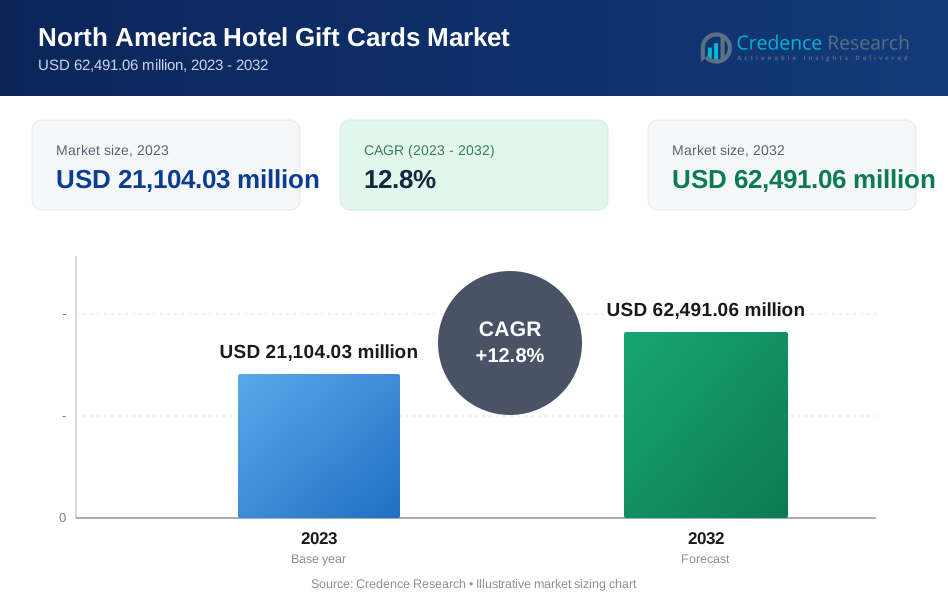
North America Hotel Gift Cards market size was valued at USD 21,104.03 million in 2023 and is anticipated to reach USD 62,491.06 million by 2032, at a CAGR of 12.8% during the forecast period (2023-2032).
The North America Hotel Gift Cards market is driven by several factors, including the growing demand for convenient and flexible payment options, particularly among tech-savvy consumers. Gift cards are increasingly favored for their ease of use, making them popular for gifting purposes, corporate incentives, and promotional offers. Additionally, the rise in domestic and international travel, spurred by post-pandemic recovery, has further fueled market growth. As consumers seek personalized travel experiences, hotel gift cards offer a versatile solution that can be redeemed for accommodations, services, and experiences, enhancing customer satisfaction. Trends such as the integration of digital gift cards and the expansion of loyalty programs by major hotel chains are also contributing to market growth. The increasing penetration of e-commerce and the adoption of digital payment systems are shaping the future of the hotel gift card market, providing both consumers and businesses with greater flexibility and reach.
The North America hotel gift cards market is primarily driven by the U.S., followed by Canada and Mexico, with each region showing unique growth patterns influenced by local consumer preferences and travel trends. In the U.S., the market is fueled by a strong tourism sector, high consumer spending, and the increasing popularity of digital payment methods. Canada follows suit with steady demand for hotel gift cards, particularly for domestic travel and loyalty programs. Mexico’s market is growing rapidly, with an increasing number of international tourists driving demand. Key players in the region include prominent hotel chains like Hyatt, Marriott International, Hilton, and Wyndham Hotels & Resorts, which offer hotel gift cards as part of their loyalty programs and promotional campaigns. Additionally, digital platforms such as Gyft, Hotelgift, and Prezzee Inc. are emerging as important contributors, providing consumers with a wide range of hotel gift card options.
Market Insights
- The North America hotel gift cards market was valued at USD 21,104.03 million in 2023 and is projected to reach USD 62,491.06 million by 2032, growing at a CAGR of 12.8% during the forecast period (2023-2032).
- The increasing preference for digital and e-gift cards is a major driver of the market, offering greater convenience and flexibility for consumers.
- Integration of hotel gift cards with loyalty programs enhances customer retention and engagement, fueling market growth.
- Personalization and customization of gift cards are gaining traction, meeting consumer demand for unique gifting experiences.
- The market faces challenges such as security concerns related to digital transactions and rising instances of fraud.
- Regional growth is driven by the U.S., followed by Canada and Mexico, with distinct trends in each country's tourism and gifting behavior.
- Key players include major hotel chains like Hyatt, Marriott, and Hilton, along with digital platforms such as Gyft and Hotelgift.
Market Drivers
Increasing Consumer Demand for Convenience
One of the primary drivers of the North American hotel gift cards market is the growing consumer preference for convenience. In an era where digital payment methods are becoming more widespread, hotel gift cards provide a straightforward and efficient way for consumers to purchase and redeem services. These gift cards eliminate the need for cash transactions, allowing customers to easily pay for their hotel stays or additional services such as dining, spa treatments, or experiences. As customers increasingly seek streamlined and hassle-free purchasing options, hotel gift cards have gained popularity, becoming a practical choice for both consumers and businesses in the hospitality industry.
Rising Popularity of Gifting and Corporate Incentives
The trend of giving gift cards as presents has contributed significantly to the market’s growth. Hotel gift cards are particularly popular during holidays, birthdays, anniversaries, and special occasions, as they offer recipients the flexibility to choose how and when to redeem their value. Furthermore, many businesses in North America are incorporating hotel gift cards into corporate incentive programs, allowing companies to reward employees, clients, and partners with travel experiences. For instance, businesses use gift certificates and cards to recruit, recognize, and motivate employees, reward workplace safety, forge relationships with dealers and distributors, build trade show traffic, and spur consumers to buy their products. These programs not only improve employee motivation but also strengthen relationships with clients. The growing use of gift cards for personal gifting and corporate incentives is expected to continue fueling the demand for hotel gift cards in the region.
Growth of the Travel and Hospitality Industry
Another crucial driver is the recovery and expansion of the travel and hospitality industry, particularly following the pandemic's impact. As travel restrictions ease and consumer confidence rebounds, more people are booking hotel stays and experiencing domestic and international tourism. Hotel gift cards offer an attractive option for those looking to purchase travel experiences in advance or as part of a broader travel package. For instance, a Hotelgift survey indicates that hotel gift cards are flexible corporate gifts, allowing recipients to choose their preferred date and destination from over 750,000 hotels across 170 countries. Many consumers are opting for pre-paid hotel stays, where gift cards serve as an ideal financial tool. Additionally, as hotel chains expand their offerings and create unique, personalized experiences for guests, hotel gift cards have become an essential part of marketing and customer loyalty strategies, further boosting their adoption.
Digital Transformation and Integration of E-commerce
The increasing integration of e-commerce and digital platforms is transforming the hotel gift cards market. More consumers are shopping online and using mobile devices for purchases, driving the demand for digital gift cards. Hotels and travel agencies are capitalizing on this trend by offering electronic gift cards that can be instantly delivered to recipients via email or mobile apps. These digital gift cards allow for greater flexibility and ease of use, as they can be redeemed instantly or saved for future use. As the trend of digitalization continues, with greater adoption of digital payment systems, the market for hotel gift cards is expected to grow rapidly. This digital shift not only enhances the consumer experience but also enables businesses to reach a broader audience, including tech-savvy travelers seeking the convenience of online purchasing.
Market Trends
Shift Towards Digital and E-Gift Cards
A key trend in the North America hotel gift cards market is the growing shift toward digital and e-gift cards. With the increasing reliance on smartphones and digital wallets, consumers now prefer receiving gift cards electronically, making them more convenient and accessible. Digital gift cards can be instantly delivered via email or mobile apps, allowing for a seamless user experience. This trend aligns with the overall movement toward cashless and contactless transactions in the travel and retail industries. As more hotel chains and third-party sellers embrace this technology, the adoption of e-gift cards is expected to grow, catering to the preferences of tech-savvy consumers.
Integration of Loyalty Programs
Another significant trend is the integration of hotel gift cards into loyalty programs. Many hotel chains are now offering gift cards as part of their loyalty and rewards initiatives, allowing customers to redeem points for gift cards that can be used for stays, dining, and additional services. For instance, hotel chains present co-branded credit cards with their loyalty programs to strengthen commitment to the brand, provide additional data, and elevate partner relationships. Hotel gift cards are becoming a critical element in customer retention strategies, as they help foster a sense of personalization and reward, while also driving engagement with the brand.
Personalization and Customization Options
The trend of personalization and customization is also gaining momentum in the hotel gift card market. Consumers are increasingly seeking personalized experiences, and this extends to gift cards as well. Many hotels now offer options to customize gift cards with messages, themes, or specific values tailored to individual preferences. Whether for a special occasion or a business incentive, these personalized gift cards add a unique touch that enhances the consumer experience. Customization options can also include the ability to select specific services, such as spa treatments or dining experiences, making hotel gift cards more attractive to a wide range of customers.
Expansion of Gift Card Usage Beyond Hotel Stays
Hotel gift cards are evolving beyond their traditional use for accommodation bookings. Increasingly, these cards are being used for a wide array of hotel services, including dining, spa treatments, recreational activities, and even merchandise purchases. This trend reflects the growing consumer desire for a comprehensive experience when using gift cards. Hotels are expanding the range of redeemable services to cater to a broader market, allowing customers to create more customized and rewarding travel experiences. By positioning gift cards as a versatile tool for various hotel services, businesses are able to attract a wider customer base and encourage higher spending.
Market Challenges Analysis
Security and Fraud Concerns
One of the primary challenges facing the North America hotel gift cards market is the increasing risk of security breaches and fraud. As digital and e-gift cards gain popularity, the potential for cybercrime also rises. Consumers and businesses alike are concerned about the security of online transactions, particularly with the rising incidence of data breaches, phishing attacks, and unauthorized card usage. Fraudulent activities, such as the theft of card information or the resale of stolen gift cards, can significantly undermine consumer trust in the market. Hotel brands must invest in robust cybersecurity measures and develop strategies to educate consumers about secure usage to mitigate these risks and protect both the business and the customer.
Market Saturation and Competition
Another challenge the North America hotel gift cards market faces is market saturation and intense competition. With a growing number of hotels offering gift cards, both major chains and smaller boutique hotels must find ways to differentiate themselves in a crowded marketplace. While gift cards are increasingly popular, they must stand out to capture consumer interest. For instance, hotels are exploring collaborations with airlines, travel agencies, and retail brands to expand their reach. This saturation has led to price wars and promotional campaigns that may undermine the profitability of hotel gift cards. Additionally, with the rise of alternative gift options, such as pre-paid Visa or Mastercard gift cards, hotels must compete not only within the hospitality sector but also against broader retail markets. To remain competitive, hotel chains must offer unique incentives, such as exclusive services or personalized experiences, to attract and retain customers.
Market Opportunities
The North America hotel gift cards market presents several opportunities for growth, particularly as consumer preferences shift towards digital solutions and personalized experiences. As more consumers embrace digital payment methods, the demand for e-gift cards is expected to increase, offering hotel brands a chance to enhance their offerings. The rise in mobile wallet usage and the adoption of digital wallets such as Apple Pay and Google Pay further support the transition to digital gift cards. By leveraging these technologies, hotels can reach a wider audience, including tech-savvy travelers who seek convenient, fast, and secure payment options. This presents an opportunity for hotel chains to expand their digital presence, integrating gift cards seamlessly into their online booking systems and mobile apps to enhance customer engagement.
Furthermore, the growing trend of experiential gifting presents an opportunity for hotel gift cards to capture more market share. As consumers seek unique and personalized experiences over traditional material gifts, hotel gift cards can be marketed as a way to give the gift of travel, relaxation, or exclusive hotel services. Offering customized experiences such as spa packages, fine dining, or adventure activities through gift cards can attract a diverse customer base. Additionally, the rise of corporate incentive programs that reward employees with travel-related benefits further fuels demand. Hotels can capitalize on this by partnering with businesses to offer gift cards as part of their employee recognition programs. By expanding the scope of gift card use beyond accommodation to include a wide range of hotel services, brands can tap into a broader market and strengthen customer loyalty.
Market Segmentation Analysis:
By Product Type:
The North America hotel gift cards market is segmented into two primary types: Universal Accepted Open Loop and Hotel Closed Loop. Universal Accepted Open Loop cards are versatile and can be used across multiple brands and locations, providing greater flexibility for consumers. These cards are ideal for individuals who prefer to have more options when redeeming their gift cards, as they are not tied to a specific hotel chain. This type of card is gaining popularity as it allows recipients to choose from a wider range of accommodations and services. On the other hand, Hotel Closed Loop cards are exclusive to a specific hotel brand or chain. These cards typically offer more tailored experiences and can be used for booking stays or redeeming services within the hotel network. Hotel Closed Loop cards are often part of loyalty programs, enabling hotels to strengthen customer engagement and drive repeat business. While both types of cards have their own advantages, the market demand for each is influenced by consumer preferences for flexibility or brand loyalty.
By Price Range:
The hotel gift card market is also segmented by price range, with the most common categories being low (0-1000 USD) and medium (1000-3000 USD). Low-priced gift cards are the most popular, particularly for casual gifting or small incentives. These cards are ideal for short stays, spa treatments, dining, or other smaller services, and are typically used for personal gifting during holidays or celebrations. The medium-price range offers more flexibility, allowing recipients to enjoy extended stays, premium services, or packages. These cards are often used for corporate gifting or as part of larger promotional campaigns. As businesses and consumers increasingly seek higher-value experiences, medium-priced gift cards are becoming a key segment in the market. Both low and medium-price range segments offer growth opportunities, but the choice between them depends on the type of consumer, occasion, and level of personalization desired.
Segments:
Based on Product Type:
- Universal Accepted Open Loop
- Hotel Closed Loop
Based on Price Range:
- Low (0-1000 US$)
- Medium (1000-3000 US$)
Based on Sales Channel:
- Online
- Offline
Based on End User:
- Business
- Individuals
Based on Application:
- Holiday Packages
- Bar & Spa Services
- Sports Activities
- Travel & Transportation
- Others
Based on the Geography:
- U.S.
- Canada
- Mexico
Regional Analysis
U.S.
U.S., accounting for a substantial market share of approximately 75% in 2023. This can be attributed to the country's robust travel and tourism industry, high consumer spending, and the increasing adoption of digital payment solutions. The U.S. market benefits from the presence of numerous hotel chains offering gift cards, as well as the high demand for both leisure and business travel. Furthermore, the expanding trend of digital gift cards, driven by advancements in mobile payment technologies and e-commerce, has fueled the growth of this market in the U.S. The popularity of corporate gifting, holiday gifting, and loyalty programs in the region also supports the demand for hotel gift cards.
Canada
Canada holds a significant share in the North American hotel gift card market, representing around 15% of the overall market in 2023. The Canadian market is influenced by the increasing focus on travel, leisure activities, and a growing preference for digital and personalized gift options. While not as large as the U.S. market, Canada continues to show steady growth in the adoption of hotel gift cards, particularly for domestic travel. Gift cards are often used as gifts for vacations, spa packages, and accommodations. The trend of integrating loyalty programs with hotel gift cards is also gaining traction in Canada, driving further demand for these products. Canada's market growth is expected to continue as the tourism and hospitality sectors recover and expand.
Mexico
Mexico's share of the North America hotel gift card market is smaller, comprising about 10% in 2023. However, the market is experiencing growth due to the rising demand for travel within the country and a shift towards digital solutions. As Mexico’s tourism industry flourishes, both domestic and international travelers are increasingly using gift cards as convenient payment tools for hotel stays and experiences. With a growing middle class and an increasing number of international tourists, Mexico presents a developing opportunity for hotel gift cards. The introduction of digital gift cards and their use in loyalty programs by Mexican hotel brands are expected to drive further growth in the coming years.
Key Player Analysis
- Hyatt
- Airbnb
- Expedia Group
- Four Seasons & Hotels Resorts
- Marriott International
- Choice Hotels International
- Wyndham Hotels & Resorts
- Hilton
- Best Western
- Gyft
- Coast Hotels Limited
- Hotelgift
- Cardly
- Blackhawk Network
- Prezzee Inc.
- Others
Competitive Analysis
The North America hotel gift cards market is highly competitive, with several key players dominating the landscape. Leading hotel chains such as Hyatt, Marriott International, Hilton, Wyndham Hotels & Resorts, Four Seasons & Hotels Resorts, and Choice Hotels International have incorporated gift cards as a part of their loyalty programs and customer retention strategies. For instance, Hilton gift cards can be redeemed at on-property restaurants, retail shops, golf courses, spas, or for any charge to your room. These brands offer both physical and digital gift cards, catering to a wide range of customer preferences. Their established reputations and expansive hotel networks allow them to capture a significant market share. Large hotel brands have integrated gift cards into their loyalty and promotional programs, offering both physical and digital gift cards to cater to varying customer preferences. These established players leverage their expansive hotel networks to attract a broad consumer base, offering convenience and a wide selection of accommodations and services for redemption. In parallel, digital platforms have gained significant traction by providing consumers with the ability to purchase and redeem hotel gift cards across multiple hotel brands. These platforms focus on enhancing customer convenience through seamless online transactions, easy integration with mobile wallets, and a diverse range of offerings. The increasing adoption of mobile payments and digital wallets further supports the rise of these digital platforms, making them a strong competitor in the market. To stay competitive, players differentiate themselves by offering personalized and customizable gift card options, exclusive experiences, and unique value-added services. The market is also seeing growth in loyalty programs and targeted promotional campaigns to build brand loyalty and drive repeat business, creating a dynamic environment for market players.
Recent Developments
- In November 2024, Four Seasons Silicon Valley highlighted their gift cards as a way to give unforgettable experiences, such as exceptional stays, wellness treatments, and dining.
- In October 2024, Four Seasons Hotels and Resorts promoted their gift cards as a versatile gift option, redeemable at any Four Seasons location.
- In September 2024, the Marriott Bonvoy HDFC Bank Credit Card offered a limited-time INR 1,500 gift voucher for new cardholders on their first spend and enrollment.
- In March 2024, Hyatt implemented hotel category adjustments that impact the number of points required for free night redemptions.
Market Concentration & Characteristics
The North America hotel gift cards market exhibits a moderate to high level of concentration, driven by a few dominant hotel chains and emerging digital platforms. Major hotel brands hold a significant share of the market, leveraging their well-established customer bases, loyalty programs, and extensive networks of properties to attract consumers. These players often offer a range of gift cards, both physical and digital, tailored to different consumer needs, such as accommodation, dining, and spa services. On the other hand, digital platforms are gaining ground by providing consumers with the ability to purchase and redeem gift cards across various hotel chains, offering flexibility and convenience. The market is characterized by increased competition among both traditional hotel chains and digital players, with a focus on customer personalization, seamless digital integration, and exclusive experiences. As consumer demand for convenience and customized gifting experiences grows, market players continue to innovate and expand their offerings.
Report Coverage
The research report offers an in-depth analysis based on Product Type, Price Range, Sales Channel, End User, Application and Geography. It details leading market players, providing an overview of their business, product offerings, investments, revenue streams, and key applications. Additionally, the report includes insights into the competitive environment, SWOT analysis, current market trends, as well as the primary drivers and constraints. Furthermore, it discusses various factors that have driven market expansion in recent years. The report also explores market dynamics, regulatory scenarios, and technological advancements that are shaping the industry. It assesses the impact of external factors and global economic changes on market growth. Lastly, it provides strategic recommendations for new entrants and established companies to navigate the complexities of the market.
Future Outlook
- The North America hotel gift cards market is expected to experience steady growth, driven by increasing consumer demand for digital and e-gift cards.
- Integration with mobile wallets and online payment platforms will continue to enhance the convenience of purchasing and redeeming hotel gift cards.
- Personalized and customizable hotel gift cards will become more popular as consumers seek unique gifting experiences.
- Corporate gifting will play a larger role, with businesses using hotel gift cards for employee incentives and rewards.
- Hotel chains will expand their loyalty programs, offering more benefits through gift card purchases to increase customer retention.
- Digital platforms will gain market share by offering multi-brand gift card solutions that provide greater flexibility for consumers.
- Growing consumer interest in experiential gifting will fuel demand for hotel gift cards tied to unique experiences like spa treatments or dining packages.
- The rise in travel and tourism post-pandemic will contribute to the increasing popularity of hotel gift cards as a convenient payment option for travelers.
- Security measures will continue to improve as brands focus on protecting consumer data and preventing fraud in digital transactions.
- Competitive differentiation will increase as hotel brands and digital platforms offer exclusive deals, personalized services, and targeted promotions.
Request a Free Sample
Fill in your details and we'll send you a free sample report.
- Sample data tables & charts
- Research methodology
Need a Custom Version of This Report?
Tailor the scope, geography, or segments to your exact requirements.
- Custom geography or segment scope
- Direct access to our analyst team
Frequently Asked Questions
What is the current size of the North America Hotel Gift Cards market?
What factors are driving the growth of the North America Hotel Gift Cards market?
What are some challenges faced by the North America Hotel Gift Cards market?
Who are the major players in the North America Hotel Gift Cards market?
Table of Content
Chapter 1. Report Introduction
- 1.1 Report Description & Purpose
- 1.1.1 Report Title & Market Definition
- 1.1.2 Unique Selling Propositions (USP) & Key Differentiators
- 1.1.3 Value Proposition for Stakeholders
- 1.2 Research Objectives
- 1.2.1 Market Sizing Objectives (Volume & Revenue)
- 1.2.2 Segmentation Objectives
- 1.2.3 Competitive Intelligence Objectives
- 1.2.4 Forecast & Scenario Objectives
- 1.3 Report Scope
- 1.3.1 North America Hotel Gift Cards Scope – Types & Subtypes Covered
- 1.3.2 Geographic Scope – Regions & Countries Covered
- 1.3.3 Historical Period, Base Year & Forecast Period (2023; forecast to 2032)
- 1.3.4 Inclusions & Exclusions
- 1.4 HS Code & Classification Framework
- 1.5 Currency, Units & Pricing Basis
- 1.6 Target Stakeholders
- 1.7 Limitations & Assumptions
Chapter 2. Executive Summary
- 2.1 Global North America Hotel Gift Cards Market Snapshot
- 2.1.1 Market Size – Historical (2023) & Forecast (2023-2032) (2023: USD 21,104.03 million → 2032: USD 62,491.06 million)
- 2.1.2 Volume & Revenue – Global Totals
- 2.1.3 Key Market Highlights – Top Five Facts
- 2.2 North America Hotel Gift Cards Market Segmentation Snapshot
- 2.2.1 Market Split by Region – 2023 vs. 2032
- 2.3 Competitive Snapshot
- 2.3.1 Top 10 Players by Revenue Share – 2023
- 2.3.2 Top 10 Players by Volume Share – 2023
- 2.3.3 Recent Strategic Developments (18-Month Summary)
- 2.4 Key Investment Highlights & Strategic Conclusions
Chapter 3. North America Hotel Gift Cards Market Dynamics & Industry Analysis
- 3.1 Market Overview & Context
- 3.1.1 North America Hotel Gift Cards Market Position in the Broader Automotive Value Chain
- 3.1.2 OEM vs. Replacement Market Dynamics
- 3.1.3 Market Maturity & Development Stage by Region
- 3.2 North America Hotel Gift Cards Market Drivers
- 3.3 North America Hotel Gift Cards Market Restraints & Challenges
- 3.4 North America Hotel Gift Cards Market Opportunities
- 3.5 Porter's Five Forces Analysis
- 3.5.1 Threat of New Entrants
- 3.5.2 Bargaining Power of Suppliers
- 3.5.3 Bargaining Power of Buyers
- 3.5.4 Threat of Substitutes
- 3.5.5 Competitive Rivalry – Intensity Assessment
- 3.6 North America Hotel Gift Cards Value Chain Analysis
- 3.6.1 Upstream – Raw Material/Input Suppliers
- 3.6.1.1 Raw Material/Input 1
- 3.6.1.2 Raw Material/Input 2
- 3.6.1.3 Raw Material/Input 3
- 3.6.2 Midstream – Production/Manufacturing/Service Delivery
- 3.6.2.1 Production/Process Overview
- 3.6.2.2 Key Facility Locations & Capacity by Manufacturer
- 3.6.3 Downstream – Distribution & End Consumer
- 3.6.3.1 Primary Channel – B2B/OEM
- 3.6.3.2 Secondary Channels – Dealer, Retail, Online, Direct
- 3.6.4 Value Chain Profitability Analysis
- 3.6.1 Upstream – Raw Material/Input Suppliers
- 3.7 PESTEL Analysis
- 3.7.1 Political Factors
- 3.7.2 Economic Factors
- 3.7.3 Social Factors
- 3.7.4 Technological Factors
- 3.7.5 Environmental Factors
- 3.7.6 Legal Factors
- 3.8 North America Hotel Gift Cards Supply Chain Analysis
- 3.8.1 Raw Material/Input Supply Risk Assessment
- 3.8.2 Manufacturing Concentration Risk (Geographic Exposure)
- 3.8.3 Trade Disruption Impact Analysis
- 3.9 Regulatory & Policy Landscape
Note: The regulatory and policy landscape section covers regulations based on their applicability to the market, North America Hotel Gift Cards category, geography, and scope of the study. Only regulatory frameworks with a material impact on operations, compliance, trade, sustainability, or market access are analyzed in detail.
Chapter 4. Key Investment Pockets & Opportunity Analysis
- 4.1 North America Hotel Gift Cards Market Attractiveness Analysis
- 4.1.1 By Region – Investment Attractiveness Matrix (Volume × CAGR)
- 4.2 Absolute Revenue Growth Opportunity
- 4.2.1 By Region – Absolute USD Growth Through 2032
- 4.3 Incremental Volume Opportunity
- 4.3.1 By Region – Incremental Volume Through 2032
- 4.3.2 Segment – Incremental Volume
- 4.4 Emerging Submarket Opportunity Deep Dive (Subject to Applicability)
- 4.5 Emerging Market Opportunity Scorecards
- 4.5.1 United States
- 4.5.2 Europe
- 4.5.3 Asia
- 4.5.4 Middle East & Africa
Note: Emerging Market Opportunity Scorecards will be included based on relevance and strategic importance. Regions listed are indicative and may vary depending on data availability and market dynamics.
Chapter 5. North America Hotel Gift Cards Import-Export Analysis & Trade Flows
- 5.1 Global Trade Overview
- 5.1.1 Global Export Value by Country (2023)
- 5.1.2 Global Export Volume by Country (2023)
- 5.1.3 Global Import Value by Country (2023)
- 5.1.4 Global Import Volume by Country (2023)
- 5.1.5 Net Trade Balance by Country (2023)
- 5.2 Export Analysis – Segment
- 5.2.1 Type 1 (HS Code)
- 5.2.2 Type 2 (HS Code)
- 5.2.3 Type 3 (HS Code)
- 5.2.4 Type 4 (HS Code)
- 5.2.5 Type 5 (HS Code)
- 5.3 Import Analysis – Segment
- 5.3.1 Type 1 (HS Code)
- 5.3.2 Type 2 (HS Code)
- 5.3.3 Type 3 (HS Code)
- 5.3.4 Type 4 (HS Code)
- 5.3.5 Type 5 (HS Code)
- 5.4 Average Unit Trade Prices
- 5.4.1 Average Export Price – Segment & Country
- 5.4.2 Average Import Price – Segment & Source Country
- 5.4.3 Price Trends (2023)
- 5.5 Key Trade Route Analysis
- 5.5.1 Trade Route 1
- 5.5.2 Trade Route 2
- 5.5.3 Trade Route 3
- 5.5.4 Trade Route 4
- 5.5.5 Trade Route 5
- 5.6 Trade Policy Impact Assessment
- 5.6.1 US Anti-Dumping & Section 301 Tariffs
- 5.6.2 EU Customs Union Impact
- 5.6.3 Major Free Trade Agreements
- 5.6.4 USMCA Rules of Origin
Note: Trade policy analysis will be included only where relevant to the North America Hotel Gift Cards market.
Chapter 6. Competitive Landscape & Company Benchmarking
- 6.1 North America Hotel Gift Cards Market Concentration & Structure
- 6.1.1 Herfindahl-Hirschman Index (HHI) – vs. 2023
- 6.1.2 Tier 1, Tier 2 & Tier 3 Market Structure
- 6.1.3 Global, Regional & Local Player Dynamics
- 6.2 North America Hotel Gift Cards Market Share Analysis – 2023
- 6.2.1 Global Revenue Share by Company
- 6.2.2 Global Volume Share by Company
- 6.2.3 Regional Revenue Share
- 6.2.4 Market Share Evolution ( vs. 2023)
- 6.2.5 OEM Segment Share by Company
- 6.2.6 Replacement Segment Share by Company
- 6.3 Production/Delivery Capacity & Facility Analysis
- 6.3.1 Global Installed Capacity
- 6.3.2 Capacity Utilization Rates
- 6.3.3 Production/Output Volume
- 6.3.4 Facility Locations & Capacity Map
- 6.3.5 Planned Capacity Additions
- 6.4 North America Hotel Gift Cards Competitive Benchmarking Matrix
- 6.4.1 Revenue, Volume, CAGR & Profitability Comparison
- 6.4.2 Channel Revenue Mix
- 6.4.3 Geographic Revenue Exposure
- 6.4.4 R&D Intensity
- 6.4.5 Sustainability Maturity
- 6.5 Strategic Developments in North America Hotel Gift Cards (Last 24 Months)
- 6.5.1 Mergers, Acquisitions & Divestments
- 6.5.2 New North America Hotel Gift Cards Launches
- 6.5.3 Facility Expansions
- 6.5.4 Strategic Alliances, Joint Ventures & Partnerships
- 6.5.5 Distribution Expansion & Market Entry
- 6.5.6 Sustainability & ESG Initiatives
- 6.6 Competitive Strategy Mapping
- 6.6.1 Leader, Challenger, Follower & Niche Classification
- 6.6.2 Pricing Strategy Comparison
- 6.6.3 Channel Strategy Matrix
Note: Strategic developments are included based on their materiality and the availability of reliable information.
Chapter 7. Global North America Hotel Gift Cards Market – By Distribution Channel
- 7.1 Segment Overview
- 7.1.1 Volume & Revenue Split by Channel (2023 & 2032)
- 7.1.2 Channel Mix Evolution (2023-2032)
Chapter 8. Regional Market Analysis – Global Overview
- 8.1 Global Regional Overview
- 8.1.1 Regional Volume Share
- 8.1.2 Regional Revenue Share
- 8.1.3 Regional Volume by Region
- 8.1.4 Regional Revenue by Region
- 8.1.5 Regional Forecast Through 2032
- 8.2 Cross-Regional Segment Analysis
- 8.2.1 By Distribution Channel
- 8.2.2 By Brand/Price Tier
Chapter 9. North America North America Hotel Gift Cards Market
- 9.1 United States
- 9.2 Canada
- 9.3 Mexico
Chapter 10. Europe North America Hotel Gift Cards Market
- 10.1 Germany
- 10.2 France
- 10.3 Italy
- 10.4 United Kingdom
- 10.5 Spain
- 10.6 Poland
- 10.7 Russia
- 10.8 Netherlands
- 10.9 Belgium
- 10.10 Sweden
- 10.11 Denmark
- 10.12 Norway
- 10.13 Rest of Europe
Chapter 11. Asia Pacific North America Hotel Gift Cards Market
- 11.1 China
- 11.2 India
- 11.3 Japan
- 11.4 South Korea
- 11.5 Thailand
- 11.6 Indonesia
- 11.7 Vietnam
- 11.8 Malaysia
- 11.9 Australia
- 11.10 Rest of Asia Pacific
Chapter 12. Latin America North America Hotel Gift Cards Market
- 12.1 Brazil
- 12.2 Argentina
- 12.3 Colombia
- 12.4 Chile
- 12.5 Rest of Latin America
Chapter 13. Middle East North America Hotel Gift Cards Market
- 13.1 Saudi Arabia
- 13.2 United Arab Emirates
- 13.3 Turkey
- 13.4 Israel
- 13.5 Iran
- 13.6 Rest of the Middle East
Chapter 14. Africa North America Hotel Gift Cards Market
- 14.1 South Africa
- 14.2 Egypt
- 14.3 Nigeria
- 14.4 Morocco
- 14.5 Rest of Africa
Chapter 15. North America Hotel Gift Cards Company Profiles
- 15.1 [Company 01]
- 15.1.1 Company Overview
- 15.1.2 Key Management Personnel
- 15.1.3 Products & Services Portfolio
- 15.1.4 Financial Performance
- 15.1.5 Key Market Focus & Geographic Presence
- 15.1.6 Recent Developments & Strategic Initiatives
Note: The company profile list is preliminary and may change based on research findings, market developments, data availability, and client requirements.
Chapter 16. Appendices
- Appendix A – List of Abbreviations & Acronyms
- Appendix B – Industry Classification Code Reference – Full Series
- Appendix C – Production & Capacity Data Tables
- Appendix D – End-Use & Demand Base Tables
- Appendix E – Consumption & Replacement Rate Assumptions
- Appendix F – ASP Reference Tables
- Appendix G – Manufacturing & Facility Database
- Appendix H – Import-Export Data Tables
- Appendix I – Regulatory Summary Tables
- Appendix J – Primary Research Participant List (Anonymized)
- Appendix K – Primary Research Questionnaire Framework
- Appendix L – Data Sources & Bibliography
- Appendix M – Market Size Divergence & Source Comparison
Chapter 17. Research Methodology
- 17.1 Research Framework & Philosophy
- 17.2 Secondary Research – Sources, Hierarchy & Data Extraction
- 17.3 Data Modeling – Bottom-Up & Top-Down Market Sizing
- 17.4 Primary Research – Stakeholder Framework, LOI & Sample Sizes
- 17.5 Forecast Methodology – Regression, Scenario & Sensitivity Analysis
- 17.6 Quality Control – Four-Layer Validation Framework
- 17.7 Limitations & Standard Assumptions
- 17.8 Disclaimer
