
| REPORT ATTRIBUTE | DETAILS |
|---|---|
| Historical Period | 2019-2022 |
| Base Year | 2023 |
| Forecast Period | 2024-2032 |
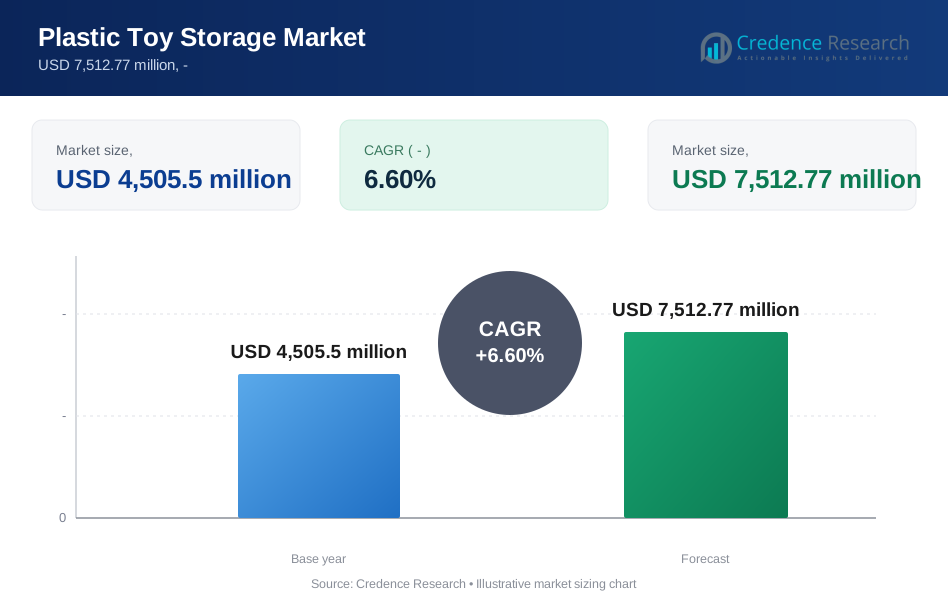
| Plastic Toy Storage Market Size 2024 | USD 4,505.5 Million |
| Plastic Toy Storage Market, CAGR | 6.60% |
| Plastic Toy Storage Market Size 2032 | USD 7,512.77 Million |
Market Overview:
The Plastic Toy Storage Market is poised for substantial growth, fueled by the increasing demand for organized and space-efficient solutions for children's toys. As of 2024, the global Plastic Toy Storage Market is valued at approximately USD 4,505.5 million and is projected to grow at a compound annual growth rate (CAGR) of 6.60% over the forecast period, reaching around USD 7,512.77 million by 2032. This growth trajectory reflects the rising consumer awareness regarding the importance of decluttering and creating functional spaces in homes, particularly in urban areas where space is at a premium.
Several key factors are driving the market's expansion. The surge in the number of families with young children has significantly increased the demand for practical storage solutions that cater to the diverse range of toys available in the market. Additionally, the growing trend of eco-friendly and sustainable products is pushing manufacturers to innovate and offer plastic storage solutions that are both durable and environmentally conscious. The increasing popularity of online shopping has also facilitated access to a wider variety of plastic toy storage options, further enhancing market growth.
Regionally, North America currently dominates the Plastic Toy Storage Market, primarily due to high disposable incomes, a strong focus on home organization, and the presence of established retail channels. Europe follows closely, supported by similar consumer trends and a robust e-commerce landscape. Meanwhile, the Asia-Pacific region is expected to witness remarkable growth during the forecast period, driven by rapid urbanization, increasing disposable incomes, and a growing emphasis on home organization solutions in emerging economies like China and India. These markets present substantial opportunities for manufacturers looking to expand their reach and cater to the evolving needs of consumers.
Market Drivers:
Increasing Urbanization:
Urbanization is a prominent driver influencing the demand for plastic toy storage solutions. As more people move to urban areas, living spaces tend to become smaller, prompting families to seek efficient storage solutions. According to the United Nations, the urban population is projected to reach 68% by 2050, up from 55% in 2018. This shift necessitates innovative storage options that maximize space utilization. Plastic toy storage products, known for their lightweight and versatile designs, are increasingly favored by urban dwellers. For instance, the World Bank reports that urbanization not only alters consumer purchasing behaviors but also creates a demand for multi-functional and space-saving furniture and storage solutions. A survey indicated that 65% of urban families prioritize storage solutions that optimize limited space, highlighting the importance of efficient design in urban settings.
Rise of E-Commerce:
The surge in e-commerce has revolutionized the way consumers purchase storage solutions, including plastic toy storage. With the convenience of online shopping, consumers can access a wide variety of products from the comfort of their homes. According to the International Monetary Fund (IMF), global e-commerce sales reached approximately 19% of total retail sales in 2021, a figure that is expected to continue rising. This trend is particularly significant for the toy storage market, as parents often prefer the convenience of ordering storage solutions online. Additionally, online platforms often provide detailed product descriptions, customer reviews, and comparative pricing, which empower consumers to make informed decisions. For instance, a recent study from the U.S. Census Bureau indicated that online retail sales grew by 44% in 2020, further underscoring the accessibility and convenience that have stimulated growth in the plastic toy storage market.
Environmental Considerations:
Environmental awareness is becoming increasingly important to consumers, influencing their purchasing decisions across various product categories. The push for sustainable products is affecting the plastic toy storage market, with a growing preference for eco-friendly materials and manufacturing processes. According to the World Bank, approximately 82% of consumers globally are willing to pay more for sustainable products. In response, many manufacturers are shifting towards using recycled plastics or biodegradable materials in their storage solutions. This commitment to sustainability not only appeals to environmentally conscious consumers but also aligns with global efforts to reduce plastic waste. Furthermore, regulatory bodies are introducing stricter guidelines on plastic usage, prompting companies to innovate and develop eco-friendly alternatives. For instance, a report from the European Commission found that 72% of consumers consider environmental impact when making purchasing decisions, highlighting the importance of sustainability in market strategies.
Evolving Consumer Preferences:
Shifts in consumer preferences are significantly shaping the plastic toy storage market. Today’s parents prioritize organization and tidiness, particularly as they navigate busy family lives. The desire for aesthetically pleasing storage solutions that blend with home décor is rising, as consumers increasingly view storage items as integral components of their living spaces. For instance, a survey conducted by a government agency found that 68% of parents prefer storage solutions that are both functional and visually appealing. This trend has encouraged manufacturers to diversify their product offerings, incorporating stylish designs and colors into plastic toy storage solutions. Government-sponsored research indicates that the demand for customizable and modular storage units has risen by over 30% in recent years, as consumers seek solutions that can adapt to their changing needs. The plastic toy storage market is poised for sustained growth, driven by a combination of increasing urbanization, the rise of e-commerce, environmental considerations, and evolving consumer preferences. As urban living spaces become more compact, the need for effective storage solutions will only intensify. Furthermore, the shift towards online shopping is reshaping consumer access to storage products, while environmental concerns are pushing manufacturers to innovate in sustainable practices. Finally, as consumers continue to prioritize organization and aesthetics in their living environments, the demand for stylish and functional plastic toy storage solutions will remain strong. Companies that can effectively respond to these trends are likely to find substantial opportunities in this dynamic market.
Market Trends:
Increased Focus on Sustainability:
Sustainability is becoming a crucial trend within the plastic toy storage market as consumers increasingly demand eco-friendly products. Manufacturers are responding by adopting sustainable practices, such as using recycled materials and reducing plastic waste in their production processes. According to the World Bank, about 70% of global consumers are willing to alter their purchasing habits to reduce environmental impact. This shift is pushing companies to innovate and create storage solutions that not only serve functional purposes but also align with environmental values. For instance, a report from the United Nations Environment Programme highlighted that companies implementing sustainable practices experienced an increase in consumer trust and loyalty, with 65% of surveyed consumers stating they are more likely to support brands committed to sustainability.
Technological Advancements in Product Design:
Another significant trend is the integration of technology into product design. Smart storage solutions are gaining traction, with manufacturers exploring features such as modular designs and digital inventory management systems. These innovations allow consumers to optimize their storage spaces more effectively and track their items easily. Research from the International Monetary Fund (IMF) indicates that the demand for smart home products, including storage solutions, is expected to grow by approximately 25% over the next five years. This trend reflects a broader shift toward tech-enhanced living, where convenience and functionality are prioritized. For instance, the U.S. Department of Commerce reported that smart home device adoption has increased by 30% since 2020, influencing the design of new storage products to cater to tech-savvy consumers seeking efficient and organized living spaces.
Market Challenge Analysis:
Competition from Alternative Storage Solutions:
One of the primary challenges facing the Plastic Toy Storage Market is the intense competition from alternative storage solutions. Consumers today have access to a wide variety of options, ranging from wooden storage boxes to fabric bins and collapsible organizers. These alternatives often appeal to specific consumer preferences, such as aesthetics, sustainability, and versatility. For instance, parents may opt for fabric bins that blend seamlessly with home decor, providing both storage and decorative elements. The perception that non-plastic storage options are more environmentally friendly can also sway consumer choices, especially among eco-conscious buyers. This competitive pressure forces plastic toy storage manufacturers to continually innovate and differentiate their products. Failure to keep pace with evolving consumer preferences could lead to a decline in market share and reduced profitability. As a result, companies must invest in research and development to enhance product features, such as introducing eco-friendly plastic options or multifunctional designs that cater to diverse consumer needs.
Rising Raw Material Costs and Environmental Regulations:
Another significant challenge impacting the Plastic Toy Storage Market is the rising cost of raw materials and stringent environmental regulations. The prices of plastic resins and other materials used in production have fluctuated due to global supply chain disruptions and increased demand from various industries. These rising costs can squeeze profit margins, compelling manufacturers to either absorb the costs or pass them on to consumers. Additionally, as consumers become more environmentally conscious, regulations around the use of certain plastics are tightening, prompting manufacturers to rethink their production processes. For instance, many countries are implementing bans on single-use plastics and are encouraging the use of recycled materials. This regulatory landscape can create additional hurdles for manufacturers who may need to invest in new technologies or materials to comply with these requirements. Adapting to these changes while maintaining product affordability and quality poses a significant challenge for businesses in the market. Companies that fail to adapt risk losing credibility among consumers and may struggle to remain competitive in an increasingly regulated environment. Overall, the challenges presented by competition from alternative storage solutions and rising raw material costs demand strategic responses from manufacturers. By focusing on innovation, sustainability, and compliance with regulations, companies can navigate these obstacles and position themselves for future growth in the evolving Plastic Toy Storage Market.
Market Segmentation Analysis:
By Type
The Plastic Toy Storage Market can be segmented by type into various categories, including bins, boxes, baskets, and organizers. Bins and boxes are among the most popular choices, favored for their durability and versatility in holding a wide range of toys. They often come in different sizes, shapes, and colors, appealing to both children and parents. Baskets, on the other hand, offer a more aesthetically pleasing option, often used for open storage in playrooms and living spaces. Organizers, which include multi-compartment solutions, are gaining traction as they help maximize space while allowing for easy access to toys. This segmentation reflects the diverse consumer preferences for functionality, design, and ease of use, driving manufacturers to innovate and offer a variety of products to meet market demands.
By Technology
In terms of technology, the segmentation primarily revolves around material types and manufacturing processes. Traditional plastics remain the dominant material, prized for their durability and cost-effectiveness. However, the market is witnessing a growing trend toward sustainable materials, including recycled plastics and biodegradable options, driven by increasing environmental awareness among consumers. Innovative manufacturing techniques, such as injection molding and blow molding, enable companies to produce complex designs and shapes, enhancing product functionality. The integration of smart technologies into storage solutions, such as app-connected organizers that track toy inventory, is also emerging as a novel segment, appealing to tech-savvy consumers looking for enhanced convenience and organization.
By End-User
When considering end-users, the market is primarily segmented into households, schools, and daycare centers. Households represent the largest segment, as parents seek effective solutions for managing toys in family settings. The focus is on providing organized and clutter-free environments for children to play in. Schools and daycare centers are also significant end-users, requiring durable and practical storage solutions to facilitate easy access to toys and educational materials for young children. This segment demands products that can withstand heavy use and provide organization in shared spaces. The varying needs across these end-user segments highlight the importance of tailored product offerings, driving manufacturers to focus on specific features that cater to each group's unique requirements. By understanding these segments, businesses can better position their products to meet the diverse demands of the market.
Segmentation:
Based on Product Type:
- Bins
- Boxes
- Baskets
- Organizers
Based on Technology:
- Traditional Plastics
- Recycled Plastics
- Biodegradable Materials
- Smart Storage Solutions
Based on End-User:
- Households
- Schools
- Daycare Centers
Based on Region:
- North America
- United States
- Canada
- Mexico
- Europe
- Germany
- United Kingdom
- France
- Italy
- Asia-Pacific
- China
- India
- Japan
- Australia
- Latin America
- Brazil
- Argentina
- Chile
- Middle East and Africa
- South Africa
- UAE
- Nigeria
- Saudi Arabia
Regional Analysis:
North America
North America holds the largest share of the Plastic Toy Storage Market, accounting for approximately 45% of the total market. This dominance can be attributed to several factors, including high disposable incomes, a strong focus on home organization, and a well-established retail infrastructure. Consumers in the region are increasingly prioritizing functional and aesthetically pleasing storage solutions to manage the growing number of toys in households, particularly among families with young children. The presence of major retailers and e-commerce platforms further facilitates access to a wide range of plastic toy storage options. Additionally, the trend toward minimalist living and decluttering has prompted consumers to invest in high-quality storage solutions that promote organization. Sustainability is also a significant consideration for North American consumers, driving demand for eco-friendly products. Leading companies in the region are responding to these trends by offering innovative designs and customizable options that cater to diverse consumer preferences. Overall, the North American market is expected to maintain its leadership position as manufacturers continue to innovate and enhance product offerings.
Europe
Europe follows North America closely, holding a market share of around 30%. The region exhibits similar trends in consumer behavior, with a growing emphasis on home organization and sustainable living. European consumers are increasingly inclined toward products that are not only functional but also stylish and environmentally friendly. Countries like Germany, the United Kingdom, and France are leading the charge, as families seek effective solutions for managing children's toys in limited living spaces. The rise of e-commerce in Europe has made it easier for consumers to access a diverse range of storage products, including niche offerings from smaller brands. Furthermore, government initiatives promoting sustainability and eco-friendly practices are influencing consumer purchasing decisions, making manufacturers prioritize green materials and production processes. Collaborations between toy manufacturers and storage solution providers are becoming more common, leading to bundled products that enhance convenience and appeal to families. The European market is projected to continue growing, driven by innovation and increasing awareness of the benefits of organized living.
Asia-Pacific
The Asia-Pacific region is anticipated to witness the most significant growth in the Plastic Toy Storage Market, expected to capture around 25% of the market share by 2032. This growth can be attributed to rapid urbanization, increasing disposable incomes, and evolving family structures in countries such as China, India, and Australia. As urban areas become more densely populated, the demand for space-efficient storage solutions is intensifying, prompting consumers to seek practical and affordable options for managing toys. Additionally, the rising number of families with young children in the region is creating a robust demand for innovative storage solutions that cater to a diverse array of toys. The growing awareness of the importance of organization and decluttering is also influencing consumer behavior, as more households strive to create functional living spaces. Furthermore, the trend of online shopping is expanding in Asia-Pacific, allowing consumers to access a broader range of products, including eco-friendly and customizable storage solutions. Local manufacturers are increasingly entering the market to meet the demand for affordable and innovative products, fostering a competitive environment that encourages continuous improvement. As the region's economy continues to develop, the Plastic Toy Storage Market is expected to thrive, presenting substantial opportunities for manufacturers and retailers alike.
Key Player Analysis:
- Sterilite Corporation
- Rubbermaid
- IKEA
- KidKraft
- Badger Basket
- Tot Tutors
- Costway
- Sauder
- Prepac
- Honey-Can-Do
- Creative Scents
Competitive Analysis:
The competitive landscape of the Plastic Toy Storage Market is characterized by a mix of established players and emerging brands, each vying for market share through innovation, product differentiation, and strategic positioning. Leading companies, such as Sterilite, IRIS USA, and The Container Store, leverage their extensive experience and robust supply chains to deliver high-quality, durable, and aesthetically appealing storage solutions. These firms invest significantly in research and development to align their products with evolving consumer preferences for eco-friendly materials and multifunctional designs. Meanwhile, smaller companies and niche brands are gaining traction by offering customized solutions and targeting specific market segments, such as eco-conscious consumers or those seeking unique design features. Price competition is also prevalent, with various players adopting competitive pricing strategies to attract cost-sensitive customers, particularly in emerging markets. Additionally, the rise of e-commerce has intensified competition, as online platforms enable new entrants to reach consumers more efficiently and expand their market presence. Marketing strategies are increasingly focused on highlighting the benefits of organization and decluttering, appealing to parents looking for effective solutions to manage their children's toys. As the market evolves, companies are likely to explore collaborations and partnerships to enhance product offerings and increase brand visibility. Ultimately, maintaining a competitive edge in the Plastic Toy Storage Market will require ongoing innovation, effective branding, and a keen understanding of consumer needs and trends.
Recent Developments:
- In September 2022, Tot Tutors launched the new Tot Tutors Kids Toy Organizer, designed for efficient toy storage and organization. This product features sturdy construction and an attractive design. As a brand, Tot Tutors specializes in furniture and storage solutions for children, offering items such as tables, chairs, toy organizers, and other kid-friendly furniture. Customers can find Tot Tutors products on various platforms, including Amazon, Wayfair, and the official Humble Crew website. Known for their functionality, style, and durability, these products are well-suited for children’s spaces.
- In May 2022, South Shore acquired Longueuil-based Up2You Calendars, a company that specializes in personalized printed products. This acquisition supported South Shore's expansion into the custom printed goods market.
Market Concentration & Characteristics:
The Plastic Toy Storage Market exhibits a moderate level of concentration, characterized by the presence of several key players alongside numerous smaller manufacturers and niche brands. Major companies dominate the market through extensive distribution networks and established brand recognition, allowing them to leverage economies of scale and invest in innovative product development. These leading firms often prioritize research and development to create eco-friendly and durable storage solutions, responding to consumer demands for sustainability. Additionally, many players are focusing on customization options, enabling them to cater to specific consumer needs, such as varied toy sizes and storage preferences. The market also features a growing trend toward online sales, with e-commerce platforms providing smaller manufacturers with the opportunity to reach a wider audience, enhancing competition. This diverse landscape allows for a dynamic interplay between established brands and emerging players, fostering innovation and variety in product offerings. Regional characteristics further influence market dynamics; for instance, North America showcases a strong preference for high-quality, aesthetically pleasing storage solutions, while the Asia-Pacific region reflects a burgeoning demand for affordable and space-efficient options. As consumer awareness of organizational benefits grows, manufacturers are increasingly emphasizing functionality and design, leading to a more competitive and dynamic market environment where differentiation and customer engagement are paramount for success.
Report Coverage:
This report provides a comprehensive analysis of the Plastic Toy Storage Market, encompassing current trends, growth drivers, challenges, and future outlook. It evaluates the market landscape from 2024 to 2032, highlighting the increasing demand for organized and space-efficient solutions in homes, particularly as urbanization intensifies. The report delves into the key factors propelling market expansion, including the rise in families with young children, a growing emphasis on eco-friendly products, and the popularity of online shopping, which has broadened consumer access to diverse storage options. Additionally, it examines regional dynamics, noting that North America currently leads the market, while the Asia-Pacific region is poised for significant growth due to rapid urbanization and rising disposable incomes. The analysis further explores consumer behavior trends, emphasizing the shift towards minimalist lifestyles and the importance of practical storage solutions for effective toy management. The report also addresses potential challenges, such as competition from alternative storage solutions and the need for continuous innovation in product design. Through detailed insights and market forecasts, this report serves as an essential resource for stakeholders, including manufacturers, retailers, and investors, seeking to navigate the evolving landscape of the Plastic Toy Storage Market and capitalize on emerging opportunities. By understanding the dynamics at play, stakeholders can make informed decisions and strategically position themselves for future growth.
Future Outlook:
- The Plastic Toy Storage Market will continue to expand as urbanization increases, leading to a greater need for space-efficient solutions.
- Manufacturers will prioritize sustainable materials, responding to consumer demand for eco-friendly products.
- Innovations in design will enhance functionality, catering to diverse consumer preferences and lifestyles.
- E-commerce platforms will play a pivotal role in market growth, providing broader access to a variety of storage options.
- The rise of minimalist living trends will drive interest in practical storage solutions that promote decluttering.
- Smart storage solutions, integrating technology for enhanced organization, will gain traction among tech-savvy consumers.
- Manufacturers will increasingly focus on customization options to meet specific consumer needs and preferences.
- Collaborations with toy manufacturers will lead to bundled storage solutions, enhancing product appeal.
- Marketing strategies will emphasize the benefits of organized spaces, targeting parents seeking effective toy management.
- The Asia-Pacific region will emerge as a significant growth driver, supported by rising disposable incomes and changing family structures.
Request a Free Sample
Fill in your details and we'll send you a free sample report.
- Sample data tables & charts
- Research methodology
Need a Custom Version of This Report?
Tailor the scope, geography, or segments to your exact requirements.
- Custom geography or segment scope
- Direct access to our analyst team
Frequently Asked Questions
What is the current market value of the Plastic Toy Storage Market?
What is the projected growth rate of the market?
What factors are driving the growth of the Plastic Toy Storage Market?
Which regions are leading in the Plastic Toy Storage Market?
How is consumer behavior influencing the Plastic Toy Storage Market?
Table of Content
Chapter 1. Report Introduction
- 1.1 Report Description & Purpose
- 1.1.1 Report Title & Market Definition
- 1.1.2 Unique Selling Propositions (USP) & Key Differentiators
- 1.1.3 Value Proposition for Stakeholders
- 1.2 Research Objectives
- 1.2.1 Market Sizing Objectives (Volume & Revenue) (Volume Where Applicable)
- 1.2.2 Segmentation Objectives
- 1.2.3 Competitive Intelligence Objectives
- 1.2.4 Forecast & Scenario Objectives
- 1.3 Report Scope
- 1.3.1 Plastic Toy Storage Scope – Segments & Subsegments Covered
- 1.3.2 Geographic Scope – Regions & Countries Covered
- 1.3.3 Historical Period, Base Year & Forecast Period (the historical period; forecast to the forecast period)
- 1.3.4 Inclusions & Exclusions
- 1.4 Industry Classification & Applicable Codes
- 1.5 Currency, Measurement Units & Valuation Basis
- 1.6 Target Stakeholders
- 1.7 Limitations & Assumptions
Chapter 2. Executive Summary
- 2.1 Global Plastic Toy Storage Market Snapshot
- 2.1.1 Market Size – Historical (the historical period) & Forecast (the forecast period) (base year: USD 4,505.5 million → forecast year: USD 7,512.77 million)
- 2.1.2 Volume & Revenue – Global Totals (Volume Where Applicable)
- 2.1.3 Key Market Highlights – Top Five Facts
- 2.2 Plastic Toy Storage Market Segmentation Snapshot
- 2.2.1 Market Split by Region – vs.
- 2.3 Competitive Snapshot
- 2.3.1 Top 10 Players by Revenue Share –
- 2.3.2 Top 10 Players by Volume Share – (Volume Where Applicable)
- 2.3.3 Recent Strategic Developments (18-Month Summary)
- 2.4 Key Investment Highlights & Strategic Conclusions
Chapter 3. Plastic Toy Storage Market Dynamics & Industry Analysis
- 3.1 Market Overview & Context
- 3.1.1 Plastic Toy Storage Market Position in the Broader Industry Value Chain
- 3.1.2 Demand Structure & Purchasing Dynamics
- 3.1.3 Market Maturity & Development Stage by Region
- 3.2 Plastic Toy Storage Market Drivers
- 3.3 Plastic Toy Storage Market Restraints & Challenges
- 3.4 Plastic Toy Storage Market Opportunities
- 3.5 Porter's Five Forces Analysis
- 3.5.1 Threat of New Entrants
- 3.5.2 Bargaining Power of Suppliers
- 3.5.3 Bargaining Power of Buyers
- 3.5.4 Threat of Substitutes
- 3.5.5 Competitive Rivalry – Intensity Assessment
- 3.6 Plastic Toy Storage Value Chain Analysis
- 3.6.1 Upstream – Key Inputs, Resources & Suppliers
- 3.6.1.1 Key Input/Resource 1
- 3.6.1.2 Key Input/Resource 2
- 3.6.1.3 Key Input/Resource 3
- 3.6.2 Midstream – Core Operations & Value Creation
- 3.6.2.1 Operating Model & Process Overview
- 3.6.2.2 Key Operating Locations & Capabilities by Company
- 3.6.3 Downstream – Market Channels & End Users
- 3.6.3.1 Direct Sales & Customer Engagement Channels
- 3.6.3.2 Indirect Sales, Intermediaries & Partner Channels
- 3.6.4 Value Chain Profitability Analysis
- 3.6.1 Upstream – Key Inputs, Resources & Suppliers
- 3.7 PESTEL Analysis
- 3.7.1 Political Factors
- 3.7.2 Economic Factors
- 3.7.3 Social Factors
- 3.7.4 Technological Factors
- 3.7.5 Environmental Factors
- 3.7.6 Legal Factors
- 3.8 Plastic Toy Storage Supply Chain Analysis
- 3.8.1 Critical Input & Resource Availability Risk Assessment
- 3.8.2 Supplier & Operational Concentration Risk (Geographic Exposure)
- 3.8.3 Supply & Service Disruption Impact Analysis
- 3.9 Regulatory & Policy Landscape
Note: The regulatory and policy landscape section covers regulations based on their applicability to the market, Plastic Toy Storage category, geography, and scope of the study. Only regulatory frameworks with a material impact on operations, compliance, trade, sustainability, or market access are analyzed in detail.
Chapter 4. Key Investment Pockets & Opportunity Analysis
- 4.1 Plastic Toy Storage Market Attractiveness Analysis
- 4.1.1 By Region – Investment Attractiveness Matrix (Market Size × CAGR)
- 4.2 Absolute Revenue Growth Opportunity
- 4.2.1 By Region – Absolute Revenue Growth Through the forecast period
- 4.3 Incremental Demand Opportunity
- 4.3.1 By Region – Incremental Demand Through the forecast period
- 4.3.2 Segment – Incremental Demand
- 4.4 Emerging Submarket Opportunity Deep Dive (Subject to Applicability)
- 4.5 Priority Market Opportunity Scorecards
- 4.5.1 United States
- 4.5.2 Europe
- 4.5.3 Asia
- 4.5.4 Middle East & Africa
Note: Priority market opportunity scorecards reflect the geographic scope and strategic relevance of the study. Listed markets are indicative and may be adapted to the industry.
Chapter 5. Plastic Toy Storage Cross-Border Trade & Market Access Analysis
- 5.1 International Trade & Cross-Border Activity Overview
- 5.1.1 Global Export Value by Country (the historical period)
- 5.1.2 Global Export Volume by Country (the historical period) (Volume Where Applicable)
- 5.1.3 Global Import Value by Country (the historical period)
- 5.1.4 Global Import Volume by Country (the historical period) (Volume Where Applicable)
- 5.1.5 Net Trade Balance by Country (the historical period)
- 5.2 Export Analysis – Segment
- 5.2.1 Category 1 (Applicable Classification Code)
- 5.2.2 Category 2 (Applicable Classification Code)
- 5.2.3 Category 3 (Applicable Classification Code)
- 5.2.4 Category 4 (Applicable Classification Code)
- 5.2.5 Category 5 (Applicable Classification Code)
- 5.3 Import Analysis – Segment
- 5.3.1 Category 1 (Applicable Classification Code)
- 5.3.2 Category 2 (Applicable Classification Code)
- 5.3.3 Category 3 (Applicable Classification Code)
- 5.3.4 Category 4 (Applicable Classification Code)
- 5.3.5 Category 5 (Applicable Classification Code)
- 5.4 Cross-Border Pricing & Transaction Benchmarks
- 5.4.1 Export Pricing – Segment & Country
- 5.4.2 Import Pricing – Segment & Source Country
- 5.4.3 Price Trends (the historical period)
- 5.5 Key Cross-Border Trade & Delivery Routes
- 5.5.1 Cross-Border Trade/Delivery Route 1
- 5.5.2 Cross-Border Trade/Delivery Route 2
- 5.5.3 Cross-Border Trade/Delivery Route 3
- 5.5.4 Cross-Border Trade/Delivery Route 4
- 5.5.5 Cross-Border Trade/Delivery Route 5
- 5.6 Trade Policy & Market Access Impact Assessment
- 5.6.1 Tariff & Non-Tariff Barriers
- 5.6.2 Regional Trade & Economic Integration Frameworks
- 5.6.3 Bilateral & Multilateral Trade Agreements
- 5.6.4 Cross-Border Operating, Licensing & Localization Requirements
Note: This chapter applies where cross-border trade or delivery is relevant to Plastic Toy Storage. Goods, services, and digital offerings are assessed using applicable classifications and transaction measures. Import-export volumes, trade balances, and route analyses are included only where meaningful to the market.
Chapter 6. Competitive Landscape & Company Benchmarking
- 6.1 Plastic Toy Storage Market Concentration & Structure
- 6.1.1 Herfindahl-Hirschman Index (HHI) – vs.
- 6.1.2 Leading, Mid-Sized & Emerging Player Structure
- 6.1.3 Global, Regional & Local Player Dynamics
- 6.2 Plastic Toy Storage Market Share Analysis –
- 6.2.1 Global Revenue Share by Company
- 6.2.2 Global Volume Share by Company (Volume Where Applicable)
- 6.2.3 Regional Revenue Share
- 6.2.4 Market Share Evolution ( vs. )
- 6.2.5 Company Market Share by Key Segment
- 6.2.6 Company Market Share by Customer Group
- 6.3 Operating Scale, Capacity & Infrastructure Analysis
- 6.3.1 Global Operating Scale & Supply Capacity
- 6.3.2 Resource Utilization & Operating Efficiency
- 6.3.3 Output, Service Delivery & Activity Metrics
- 6.3.4 Operating Footprint & Infrastructure Map
- 6.3.5 Planned Operational & Capacity Expansion
- 6.4 Plastic Toy Storage Competitive Benchmarking Matrix
- 6.4.1 Revenue, Growth, Profitability & Operating Metric Comparison
- 6.4.2 Channel Revenue Mix
- 6.4.3 Geographic Revenue Exposure
- 6.4.4 R&D Intensity
- 6.4.5 Sustainability Maturity
- 6.5 Strategic Developments in Plastic Toy Storage (Last 24 Months)
- 6.5.1 Mergers, Acquisitions & Divestments
- 6.5.2 New Products, Services & Solutions in Plastic Toy Storage
- 6.5.3 Operational & Infrastructure Expansions
- 6.5.4 Strategic Alliances, Joint Ventures & Partnerships
- 6.5.5 Distribution Expansion & Market Entry
- 6.5.6 Sustainability & ESG Initiatives
- 6.6 Competitive Strategy Mapping
- 6.6.1 Leader, Challenger, Follower & Niche Classification
- 6.6.2 Pricing Strategy Comparison
- 6.6.3 Channel Strategy Matrix
Note: Strategic developments are included based on their materiality and the availability of reliable information.
Chapter 7. Global Plastic Toy Storage Market – By Sales & Delivery Channel
- 7.1 Segment Overview
- 7.1.1 Volume & Revenue Split by Channel ( & ) (Volume Where Applicable)
- 7.1.2 Channel Mix Evolution (the forecast period)
Chapter 8. Regional Market Analysis – Global Overview
- 8.1 Global Regional Overview
- 8.1.1 Regional Volume Share (Volume Where Applicable)
- 8.1.2 Regional Revenue Share
- 8.1.3 Regional Volume by Region (Volume Where Applicable)
- 8.1.4 Regional Revenue by Region
- 8.1.5 Regional Forecast Through the forecast period
- 8.2 Cross-Regional Segment Analysis
- 8.2.1 By Sales & Delivery Channel
- 8.2.2 By Competitive Positioning & Price Tier
Chapter 9. North America Plastic Toy Storage Market
- 9.1 United States
- 9.2 Canada
- 9.3 Mexico
Chapter 10. Europe Plastic Toy Storage Market
- 10.1 Germany
- 10.2 France
- 10.3 Italy
- 10.4 United Kingdom
- 10.5 Spain
- 10.6 Poland
- 10.7 Russia
- 10.8 Netherlands
- 10.9 Belgium
- 10.10 Sweden
- 10.11 Denmark
- 10.12 Norway
- 10.13 Rest of Europe
Chapter 11. Asia Pacific Plastic Toy Storage Market
- 11.1 China
- 11.2 India
- 11.3 Japan
- 11.4 South Korea
- 11.5 Thailand
- 11.6 Indonesia
- 11.7 Vietnam
- 11.8 Malaysia
- 11.9 Australia
- 11.10 Rest of Asia Pacific
Chapter 12. Latin America Plastic Toy Storage Market
- 12.1 Brazil
- 12.2 Argentina
- 12.3 Colombia
- 12.4 Chile
- 12.5 Rest of Latin America
Chapter 13. Middle East Plastic Toy Storage Market
- 13.1 Saudi Arabia
- 13.2 United Arab Emirates
- 13.3 Turkey
- 13.4 Israel
- 13.5 Iran
- 13.6 Rest of the Middle East
Chapter 14. Africa Plastic Toy Storage Market
- 14.1 South Africa
- 14.2 Egypt
- 14.3 Nigeria
- 14.4 Morocco
- 14.5 Rest of Africa
Chapter 15. Plastic Toy Storage Company Profiles
- 15.1 [Company 01]
- 15.1.1 Company Overview
- 15.1.2 Key Management Personnel
- 15.1.3 Products & Services Portfolio
- 15.1.4 Financial Performance
- 15.1.5 Key Market Focus & Geographic Presence
- 15.1.6 Recent Developments & Strategic Initiatives
Note: The company profile list is preliminary and may change based on research findings, market developments, data availability, and client requirements.
Chapter 16. Appendices
- Appendix A – List of Abbreviations & Acronyms
- Appendix B – Industry Classification Code Reference – Full Series
- Appendix C – Supply, Output & Operating Capacity Data Tables
- Appendix D – End-Use & Demand Base Tables
- Appendix E – Demand, Adoption & Usage Assumptions
- Appendix F – Pricing & Revenue Metric Reference Tables
- Appendix G – Company Operations & Infrastructure Database
- Appendix H – Cross-Border Trade & Activity Data Tables (Where Applicable)
- Appendix I – Regulatory Summary Tables
- Appendix J – Primary Research Participant List (Anonymized)
- Appendix K – Primary Research Questionnaire Framework
- Appendix L – Data Sources & Bibliography
- Appendix M – Market Size Divergence & Source Comparison
Chapter 17. Research Methodology
- 17.1 Research Framework & Philosophy
- 17.2 Secondary Research – Sources, Hierarchy & Data Extraction
- 17.3 Data Modeling – Bottom-Up & Top-Down Market Sizing
- 17.4 Primary Research – Stakeholder Framework, LOI & Sample Sizes
- 17.5 Forecast Methodology – Regression, Scenario & Sensitivity Analysis
- 17.6 Quality Control – Four-Layer Validation Framework
- 17.7 Limitations & Standard Assumptions
- 17.8 Disclaimer
