
| REPORT ATTRIBUTE | DETAILS |
|---|---|
| Historical Period | 2019-2022 |
| Base Year | 2023 |
| Forecast Period | 2024-2032 |
| Turkey Managed Services Market Size 2023 | USD 2,108.26 million |
| Turkey Managed Services Market, CAGR | 4.95 |
| Turkey Managed Services Market Size 2032 | USD 3,264.77 million |
Market Overview
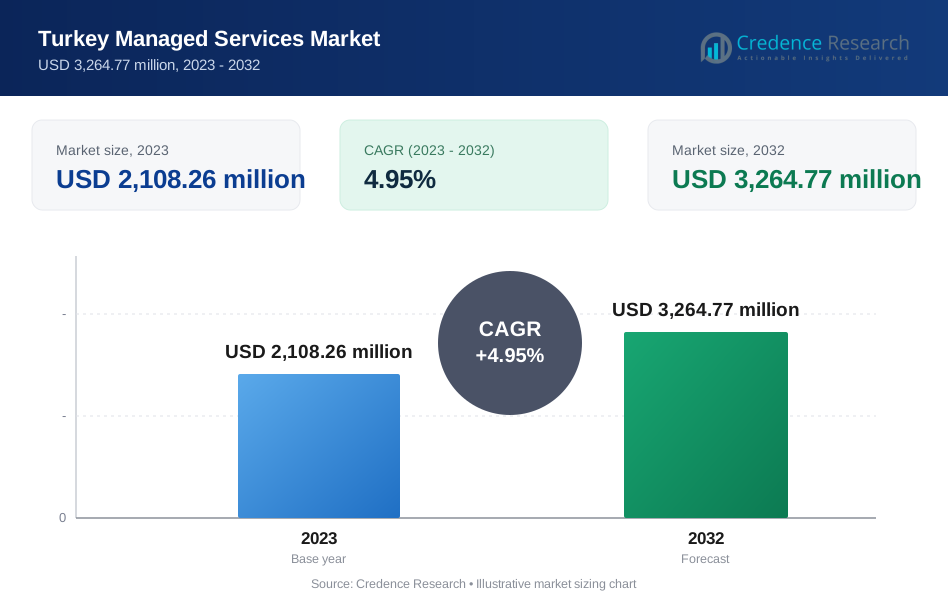
The Turkey Managed Services Market is projected to grow from USD 2,108.26 million in 2023 to USD 3,264.77 million by 2032, at a CAGR of 4.95%.
The Turkey Managed Services market is driven by the growing demand for IT infrastructure optimization, cloud adoption, and digital transformation across industries. Companies are increasingly outsourcing their IT management to focus on core business functions and reduce operational costs. The rise in cybersecurity concerns also pushes businesses to rely on managed services providers for enhanced data protection and compliance with regulatory requirements. Additionally, the rapid adoption of advanced technologies such as artificial intelligence, machine learning, and automation is fostering the need for specialized managed services to maintain these complex systems. Trends like the shift toward hybrid and multi-cloud environments, coupled with the growing reliance on remote work, further boost the demand for managed services. As businesses seek greater flexibility, scalability, and innovation, managed services are becoming a key component of their long-term IT strategies, driving market growth in Turkey.
The Turkey Managed Services market is geographically concentrated in major cities such as Istanbul, Ankara, and Izmir, where businesses and government agencies increasingly rely on outsourced IT services to support digital transformation and enhance operational efficiency. Istanbul, as the economic hub, leads the demand for managed services, followed by Ankara, which is driven by public sector requirements, and Izmir, known for its growing manufacturing and logistics sectors. Key players in the market include global technology giants such as IBM Corporation, Accenture, Microsoft Corporation, and Google LLC, along with regional providers like NTT Data, Fujitsu, and Equinix. These companies offer a wide range of services, from IT infrastructure management and cloud solutions to cybersecurity and data analytics. The presence of these key players is fostering competition and driving innovation, making Turkey a competitive market for managed services.
Market Insights
- The Turkey Managed Services market is valued at USD 2,108.26 million in 2023 and is expected to reach USD 3,264.77 million by 2032, growing at a CAGR of 4.95%.
- The growing demand for digital transformation and cloud adoption is a key driver in the market.
- Increasing cybersecurity threats and the need for data protection are driving the demand for managed security services.
- The trend towards hybrid and multi-cloud environments is gaining momentum, with businesses seeking flexible IT solutions.
- Competition among key players like IBM, Accenture, and Microsoft is intensifying, leading to the introduction of innovative service offerings.
- SMEs in Turkey are increasingly adopting managed services, especially for cloud and network management, to reduce operational costs.
- The market is concentrated in major cities like Istanbul, Ankara, and Izmir, where demand for IT infrastructure and digital solutions is highest.
Market Drivers
Growing Demand for IT Infrastructure Optimization
One of the primary drivers of the Turkey Managed Services market is the increasing need for businesses to optimize their IT infrastructure. Organizations are under pressure to improve operational efficiency and reduce costs, leading many to outsource the management of their IT systems. Managed services providers help streamline IT operations, offering businesses the expertise and support required to maintain and upgrade their infrastructure without significant in-house investment. As businesses focus on their core competencies, the demand for managed services to handle IT functions such as network management, system monitoring, and hardware maintenance continues to rise.
Adoption of Cloud Technologies
The rapid adoption of cloud technologies is another significant driver for the managed services market in Turkey. As businesses increasingly migrate to cloud-based environments for enhanced flexibility and scalability, there is a rising need for professional management services to ensure seamless cloud operations. Managed service providers assist organizations with cloud deployment, monitoring, and security, ensuring a smooth transition while reducing the burden on internal IT teams. For instance, the Türkiye Public Cloud Computing Strategy and Action Plan aims to enhance cloud adoption among public institutions, highlighting the growing trend towards cloud solutions. The growing trend of hybrid and multi-cloud environments further fuels this demand, as businesses require specialized managed services to optimize their cloud strategies and performance.
Cybersecurity Concerns and Compliance
With the growing frequency of cyberattacks and data breaches, cybersecurity has become a top priority for businesses across Turkey. Managed services providers are essential in offering robust security solutions, including real-time monitoring, threat detection, and data protection. Companies rely on these services to safeguard sensitive information and comply with industry-specific regulations. For instance, a report by the Turkish Data Protection Authority emphasized the importance of compliance with data privacy laws to avoid penalties and protect sensitive information. As data privacy laws become more stringent, businesses are increasingly turning to managed service providers to ensure compliance and avoid costly penalties, further driving the market for cybersecurity-focused managed services.
Rise of Digital Transformation and Technological Advancements
The ongoing digital transformation across industries in Turkey is fueling the demand for advanced managed services. As companies implement new technologies such as artificial intelligence, machine learning, and automation, the complexity of their IT systems increases, making it more challenging to manage in-house. Managed service providers offer specialized expertise to maintain these cutting-edge technologies, ensuring businesses can leverage their full potential. The need for innovation and staying competitive in a digital-first world is driving the continued adoption of managed services, helping organizations keep pace with rapid technological advancements.
Market Trends
Shift Toward Hybrid and Multi-Cloud Environments
A prominent trend in the Turkey Managed Services market is the increasing shift toward hybrid and multi-cloud environments. Businesses are adopting a mix of on-premises, private, and public cloud solutions to enhance flexibility and scalability. This transition is driven by the need to optimize workloads, improve cost efficiency, and support remote work. Managed service providers play a critical role in facilitating this transition, offering expertise in cloud integration, data migration, and ongoing management of multi-cloud environments. As companies seek to harness the full potential of cloud technologies, the demand for managed services to ensure seamless operation across diverse cloud platforms continues to rise.
Focus on Advanced Security Solutions
As cybersecurity threats evolve, organizations in Turkey are increasingly prioritizing advanced security solutions, making security a key trend in the managed services market. With rising concerns over data breaches, ransomware, and cyberattacks, businesses are turning to managed service providers for comprehensive cybersecurity services, such as proactive threat monitoring, real-time data protection, and vulnerability management. For instance, a report by the Turkish Cybersecurity Market highlighted that many organizations are investing in advanced cybersecurity solutions to protect their assets and data. The growing regulatory pressure for compliance with data protection laws also contributes to the rising demand for managed security services. Managed service providers are continuously enhancing their security offerings to meet the growing need for robust defense mechanisms against sophisticated cyber threats.
Increased Adoption of Automation and AI in IT Management
Another trend shaping the Turkey Managed Services market is the adoption of automation and artificial intelligence (AI) in IT management. As businesses strive for greater operational efficiency and reduced manual intervention, managed service providers are leveraging AI and automation to streamline IT processes. From network management to incident response and system optimization, AI-driven tools are helping providers deliver faster and more accurate services. For instance, Turkey's AI strategy outlines a comprehensive roadmap to integrate AI and automation across various sectors, enhancing efficiency and reducing operational costs. This trend is particularly valuable for businesses looking to scale operations, reduce downtime, and enhance productivity. The integration of AI and automation is becoming a differentiating factor for managed service providers, boosting their competitiveness in the market.
Rising Demand for End-to-End IT Solutions
A growing trend in the Turkey Managed Services market is the increasing demand for end-to-end IT solutions. Businesses are seeking comprehensive managed services that cover a wide range of IT functions, from infrastructure management to software development and data analytics. By offering all-inclusive solutions, managed service providers help businesses reduce vendor management complexity and achieve better integration across their IT operations. This trend is particularly evident among large enterprises and SMEs looking for streamlined, cost-effective solutions that address their full spectrum of IT needs. The rise of end-to-end managed services reflects the growing preference for holistic, tailored IT solutions in Turkey.
Market Challenges Analysis
Talent Shortage and Skill Gaps
One of the significant challenges facing the Turkey Managed Services market is the shortage of skilled professionals. As the demand for advanced IT services, such as cloud management, cybersecurity, and automation, continues to grow, businesses are finding it increasingly difficult to source qualified personnel. The rapid pace of technological advancements further exacerbates this issue, as there is a constant need for experts with updated knowledge and specialized skills. Managed service providers are struggling to attract and retain talent capable of managing complex IT infrastructures, leading to higher recruitment costs and potential service quality gaps. To address this challenge, many companies are investing in training and development programs or partnering with educational institutions to cultivate a skilled workforce, but the talent shortage remains a major hurdle for market growth.
Cost Pressures and Budget Constraints
Cost pressures and budget constraints are another challenge for the Turkey Managed Services market. Many small and medium-sized enterprises (SMEs) in particular are reluctant to invest in managed services due to concerns about affordability. While managed services offer long-term cost savings by improving operational efficiency and reducing the need for in-house IT teams, the upfront costs can be a barrier for businesses with limited budgets. Moreover, managed service providers face increasing competition, driving down pricing and potentially affecting profit margins. Balancing competitive pricing with delivering high-quality, customized services remains a critical challenge for managed service providers in Turkey, especially in a market where businesses are often focused on reducing operational expenditures while seeking value for money.
Market Opportunities
Growing Demand for Cloud and Digital Transformation
Turkey’s ongoing digital transformation presents significant opportunities for the managed services market. As more businesses across various sectors embrace cloud computing, big data, and IoT, the need for specialized managed services to ensure seamless integration, security, and optimization is rising. Companies are increasingly adopting cloud-first strategies, driving demand for services such as cloud migration, management, and security. Managed service providers are well-positioned to capitalize on this trend by offering tailored solutions that address businesses’ unique cloud and IT needs. As digital transformation accelerates, particularly in industries such as retail, manufacturing, and finance, the opportunity for managed service providers to become integral partners in businesses’ growth strategies continues to expand.
Cybersecurity and Compliance Services Expansion
The growing threat of cyberattacks and the rising complexity of data protection regulations offer another significant opportunity for managed services in Turkey. As businesses face mounting pressure to secure their data and comply with stringent regulatory frameworks, demand for cybersecurity and compliance services is increasing. Managed service providers can leverage their expertise to offer comprehensive security solutions, including threat detection, risk assessment, and compliance management, to safeguard businesses against evolving cyber threats. Additionally, as companies move more operations online and collect sensitive customer data, the need for specialized managed services to ensure secure and compliant IT operations grows. This trend provides managed service providers with an opportunity to expand their service offerings and position themselves as trusted partners in safeguarding business continuity and data integrity.
Market Segmentation Analysis:
By Service Type:
The Turkey Managed Services market is segmented by service type, with key categories including Managed IT Infrastructure & Data Center, Managed Network, Managed Communication & Collaboration, Managed Information, Managed Security, and Others. Among these, Managed IT Infrastructure & Data Center services dominate, as businesses increasingly outsource their IT infrastructure management and data center operations to improve efficiency and reduce costs. Managed Network services are also growing rapidly, driven by the need for businesses to optimize their network performance and enhance connectivity. Managed Security services are another crucial segment, reflecting the growing concerns over cybersecurity threats, with companies seeking outsourced solutions to secure their data and IT assets. Managed Communication & Collaboration services, particularly in cloud-based platforms, are in demand due to the rise in remote work and collaboration tools. The "Others" segment includes specialized services tailored to specific business needs, such as disaster recovery and managed database solutions, which are gaining traction as businesses look for comprehensive IT support.
By Deployment Type:
The Turkey Managed Services market is further segmented by deployment type into On-premise and Cloud-based solutions. Cloud deployment is witnessing rapid growth, driven by the increasing adoption of cloud computing technologies, offering businesses enhanced scalability, flexibility, and cost-efficiency. Cloud-based managed services are particularly attractive for small and medium-sized enterprises (SMEs), as they reduce the need for capital investment in infrastructure. On-premise solutions, however, continue to cater to larger enterprises or industries with strict data privacy requirements, offering more control over IT systems. The shift toward cloud deployment is expected to accelerate, with businesses seeking more agile, scalable, and cost-effective solutions. As digital transformation initiatives gain momentum, cloud-based managed services are likely to dominate, providing opportunities for managed service providers to expand their offerings and deliver tailored cloud solutions that meet the diverse needs of businesses across Turkey.
Segments:
Based on Service Type:
- Managed IT Infrastructure & Data Center
- Managed Network
- Managed Communication & Collaboration
- Managed Information
- Managed Security
- Others
Based on Deployment Type:
- On-premise
- Cloud
Based on Enterprise Size:
- Large Enterprises
- SME’s
Based on End User:
- IT & Telecom
- BFSI
- Manufacturing
- Retail
- Government
- Others
Based on the Geography:
- Istanbul
- Ankara
- Izmir
- Other
Regional Analysis
Istanbul
Istanbul stands as the key region for managed services in Turkey, largely due to its status as the country’s financial and commercial capital. The city hosts numerous multinational corporations, tech companies, and large businesses across various sectors, creating a high demand for specialized managed services such as IT infrastructure management, cybersecurity, and cloud computing. Istanbul’s market share is approximately 45%, reflecting the strong emphasis on digital transformation, data security, and technological advancements among businesses. The region’s continued growth in sectors like finance, technology, and manufacturing further propels the demand for managed services. The city’s well-developed infrastructure, combined with a highly skilled workforce, makes it an attractive location for managed service providers seeking to cater to the needs of both domestic and international clients.
Ankara
Ankara, as the political capital and a key administrative center, captures around 25% of the market share in Turkey’s managed services industry. The city’s demand for managed services is primarily driven by government agencies, public institutions, and defense contractors, all of which require highly secure IT systems to manage sensitive data and ensure smooth operations. Managed security services are in high demand in this region due to the increasing need for compliance with government regulations and data protection laws. Additionally, as public sector entities embrace digital transformation, the demand for cloud services and managed IT solutions is growing. Ankara’s strategic position in political governance and its evolving technological landscape make it an essential player in the managed services market.
Izmir
Izmir, one of Turkey’s largest cities on the Aegean coast, accounts for around 15% of the managed services market. Known for its dynamic manufacturing and logistics sectors, Izmir is increasingly adopting IT-driven solutions, fostering demand for managed services in areas like network management, communication, and collaboration. As the city embraces digital technologies, businesses in Izmir are looking for ways to enhance operational efficiency through outsourced IT management. Other regions, including smaller cities and rural areas, contribute the remaining 15% to the market. While the demand in these areas is not as high as in Istanbul or Ankara, the growing trend of digital adoption across industries is creating new opportunities for managed service providers in these regions. Additionally, the expansion of internet connectivity and the rise of tech startups are expected to further drive managed services growth in these regions.
Key Player Analysis
- IBM Corporation
- Accenture
- Microsoft Corporation
- Correos Telecom, S.A
- Fujitsu
- Google LLC
- GTT Communications
- NTT Data
- Equinix
- Nokia
- Deloitte
- Wipro
- BAE System
- Others
Competitive Analysis
The Turkey Managed Services market is highly competitive, with several global and regional players offering a diverse range of IT solutions. Leading companies such as IBM Corporation, Accenture, Microsoft Corporation, Google LLC, Fujitsu, NTT Data, Equinix, and Wipro are at the forefront, providing comprehensive managed services including cloud solutions, cybersecurity, network management, and IT infrastructure support. The competition is driven by the growing demand for cloud computing, cybersecurity, and IT infrastructure management. Leading players leverage their technological expertise, established client relationships, and global presence to maintain a competitive edge in the market. For instance, a report by the Digital Transformation Office of the Presidency of Turkey highlighted that many organizations are adopting advanced IT solutions to enhance operational efficiency and security. Many companies are also investing heavily in research and development to introduce innovative solutions that cater to the increasing demand for digital transformation and data protection. As the market matures, competition is intensifying, with firms focusing on offering comprehensive, end-to-end services. Smaller, regional providers are also gaining traction by offering niche solutions, such as AI-powered analytics, advanced cybersecurity measures, and customized cloud solutions. This dynamic competitive landscape is pushing all players to constantly adapt and enhance their service offerings to meet the growing needs of businesses across various industries. The expansion of digital transformation initiatives, the increasing need for secure and scalable IT solutions, and the drive towards cost optimization are the main factors shaping the competitive environment in Turkey’s managed services sector.
Recent Developments
- In January 2024, Accenture acquired NaviSite to strengthen its managed services offerings, particularly in application and infrastructure management. The acquisition will enhance Accenture’s ability to assist US and Canadian clients in modernizing their digital infrastructure, focusing on AI, cloud, and data-driven solutions for digital transformation.
- In September 2024, TCS launched two AI-powered cybersecurity solutions - Managed Detection and Response (MDR) and Secure Cloud Foundation - in collaboration with Google Cloud. The MDR service was intended to offer continuous, managed threat detection and response, while Secure Cloud Foundation aimed to enhance cloud security posture and governance across hybrid environments. Both solutions leverage Google Cloud’s security tools to provide proactive enterprise protection.
- In June 2024, DXC Technology and Dell partnered to establish Enterprise Intelligence Services (EIS). This service aimed to improve managed services by combining artificial intelligence, data analytics, and cloud technology. EIS’s multi-cloud strategy was expected to help organizations streamline operations, make smarter decisions, and improve customer experiences, proving DXC’s position as the leader in managed multi-cloud solutions.
- In October 2023, technology services provider Logicalis launched an Intelligent Connectivity suite that includes solutions such as SASE, SSE, SD-WAN, and Private 5G powered by Cisco Systems, Inc. This will enable Logicalis customers to access digitally managed services developed using Cisco technology and supported by the Logicalis Digital Fabric Platform.
- In September 2023, communications & technology solution provider Cloud5 Communications launched its new managed services division. The division is designed to support the IT-related requirements & challenges in various markets, such as the hospitality industry, student housing, and senior living, among others. This division will assist consumers in efficiently managing IT operations, technology infrastructures, and security.
- In May 2023, Alfar Capital and Walter Capital Partners completed the acquisition of MSP Corp, a managed IT service provider in Canada. The MSP Corp would merge with Groupe Access, an MSP of IT and cybersecurity solutions. The acquisition would help company to deliver cutting-edge solutions and strengthen its position in Canada.
- In January 2023, Rackspace Technology, a multi-cloud technology solutions provider, launched Rackspace Technology Modern Operations, a managed service for public cloud for customers across Azure, AWS, and GCP. The service will provide benefits including 24x7x365 managed support, cloud expertise, cloud resiliency, and innovation with cloud services which help the company’s customers manage complex cloud environments.
Market Concentration & Characteristics
The Turkey Managed Services market is characterized by moderate to high concentration, with a mix of global and regional players dominating the landscape. Major cities, including Istanbul, Ankara, and Izmir, are central to market activity, as they host a large proportion of Turkey's businesses and government institutions, which increasingly rely on managed services to optimize IT operations. The market is highly competitive, driven by the need for businesses to adopt cloud solutions, enhance cybersecurity measures, and streamline IT infrastructure. Large multinational companies, equipped with advanced technological capabilities and extensive resources, account for a significant portion of the market share. However, regional players are carving out niches by offering specialized services tailored to local business needs, providing opportunities for growth and differentiation. The managed services market in Turkey is evolving rapidly as organizations seek comprehensive IT solutions that ensure operational efficiency, security, and scalability. Increasing demand for cloud-based services, data analytics, and automation technologies is driving service innovation. Additionally, the rising focus on cybersecurity in response to growing digital threats has led to a surge in demand for managed security services. As digital transformation accelerates, market players are adapting their offerings to meet the specific needs of various industries, contributing to a dynamic, competitive, and evolving market landscape in Turkey.
Report Coverage
The research report offers an in-depth analysis based on Service Type, Deployment Type, Enterprise Size, End User and Geography. It details leading market players, providing an overview of their business, product offerings, investments, revenue streams, and key applications. Additionally, the report includes insights into the competitive environment, SWOT analysis, current market trends, as well as the primary drivers and constraints. Furthermore, it discusses various factors that have driven market expansion in recent years. The report also explores market dynamics, regulatory scenarios, and technological advancements that are shaping the industry. It assesses the impact of external factors and global economic changes on market growth. Lastly, it provides strategic recommendations for new entrants and established companies to navigate the complexities of the market.
Future Outlook
- The growth of the e-commerce and fintech sectors in Turkey will drive additional demand for managed IT and security services.
- As remote work continues to rise, managed communication and collaboration solutions will become more essential for businesses.
- Increasing reliance on data-driven decision-making will lead to a surge in demand for managed data and analytics services.
- Cloud service providers will expand their offerings, leading to greater market penetration for cloud-based managed services.
- The need for compliance with data protection regulations will fuel demand for managed security and compliance services.
- Turkey’s expanding startup ecosystem will create new opportunities for managed services tailored to innovative tech companies.
- Regional players will focus on offering personalized, localized solutions to compete with global players.
- Increased adoption of Internet of Things (IoT) devices will require more robust managed services to ensure connectivity and security.
- Managed network services will see higher demand as businesses seek to optimize their network performance and reduce downtime.
- The growing integration of 5G technology will drive advancements in managed services, especially in areas like network management and IoT.
Request a Free Sample
Fill in your details and we'll send you a free sample report.
- Sample data tables & charts
- Research methodology
Need a Custom Version of This Report?
Tailor the scope, geography, or segments to your exact requirements.
- Custom geography or segment scope
- Direct access to our analyst team
Frequently Asked Questions
What is the current size of the Turkey Managed Services market?
What factors are driving the growth of the Turkey Managed Services market?
What are the key segments within the Turkey Managed Services market?
Who are the major players in the Turkey Managed Services market?
Table of Content
Chapter 1. Report Introduction
- 1.1 Report Description & Purpose
- 1.1.1 Report Title & Market Definition
- 1.1.2 Unique Selling Propositions (USP) & Key Differentiators
- 1.1.3 Value Proposition for Stakeholders
- 1.2 Research Objectives
- 1.2.1 Market Sizing Objectives (Volume & Revenue) (Volume Where Applicable)
- 1.2.2 Segmentation Objectives
- 1.2.3 Competitive Intelligence Objectives
- 1.2.4 Forecast & Scenario Objectives
- 1.3 Report Scope
- 1.3.1 Turkey Managed Services Scope – Segments & Subsegments Covered
- 1.3.2 Geographic Scope – Selected Country & Subnational Markets Covered
- 1.3.3 Historical Period, Base Year & Forecast Period (2023; forecast to 2032)
- 1.3.4 Inclusions & Exclusions
- 1.4 Industry Classification & Applicable Codes
- 1.5 Currency, Measurement Units & Valuation Basis
- 1.6 Target Stakeholders
- 1.7 Limitations & Assumptions
Chapter 2. Executive Summary
- 2.1 Turkey Managed Services Snapshot
- 2.1.1 Market Size – Historical (2023) & Forecast (2023-2032) (2023: USD 2,108.26 million → 2032: USD 3,264.77 million)
- 2.1.2 Volume & Revenue – National Totals (Volume Where Applicable)
- 2.1.3 Key Market Highlights – Top Five Facts
- 2.2 Turkey Managed Services Segmentation Snapshot
- 2.2.1 Market Split by Subnational Area – 2023 vs. 2032
- 2.3 Competitive Snapshot
- 2.3.1 Top 10 Players by Revenue Share – 2023
- 2.3.2 Top 10 Players by Volume Share – 2023 (Volume Where Applicable)
- 2.3.3 Recent Strategic Developments (18-Month Summary)
- 2.4 Key Investment Highlights & Strategic Conclusions
Chapter 3. Turkey Managed Services Dynamics & Industry Analysis
- 3.1 Market Overview & Context
- 3.1.1 Turkey Managed Services Position in the Broader Industry Value Chain
- 3.1.2 Demand Structure & Purchasing Dynamics
- 3.1.3 Market Maturity & Development Stage Across Domestic Markets
- 3.2 Turkey Managed Services Drivers
- 3.3 Turkey Managed Services Restraints & Challenges
- 3.4 Turkey Managed Services Opportunities
- 3.5 Porter's Five Forces Analysis
- 3.5.1 Threat of New Entrants
- 3.5.2 Bargaining Power of Suppliers
- 3.5.3 Bargaining Power of Buyers
- 3.5.4 Threat of Substitutes
- 3.5.5 Competitive Rivalry – Intensity Assessment
- 3.6 Turkey Managed Services Value Chain Analysis
- 3.6.1 Upstream – Key Inputs, Resources & Suppliers
- 3.6.1.1 Key Input/Resource 1
- 3.6.1.2 Key Input/Resource 2
- 3.6.1.3 Key Input/Resource 3
- 3.6.2 Midstream – Core Operations & Value Creation
- 3.6.2.1 Operating Model & Process Overview
- 3.6.2.2 Key Operating Locations & Capabilities by Company
- 3.6.3 Downstream – Market Channels & End Users
- 3.6.3.1 Direct Sales & Customer Engagement Channels
- 3.6.3.2 Indirect Sales, Intermediaries & Partner Channels
- 3.6.4 Value Chain Profitability Analysis
- 3.6.1 Upstream – Key Inputs, Resources & Suppliers
- 3.7 PESTEL Analysis
- 3.7.1 Political Factors
- 3.7.2 Economic Factors
- 3.7.3 Social Factors
- 3.7.4 Technological Factors
- 3.7.5 Environmental Factors
- 3.7.6 Legal Factors
- 3.8 Turkey Managed Services Supply Chain Analysis
- 3.8.1 Critical Input & Resource Availability Risk Assessment
- 3.8.2 Supplier & Operational Concentration Risk (Geographic Exposure)
- 3.8.3 Supply & Service Disruption Impact Analysis
- 3.9 National & Subnational Regulatory Landscape
Note: The regulatory and policy landscape section covers regulations based on their applicability to the market, Turkey Managed Services category, geography, and scope of the study. Only regulatory frameworks with a material impact on operations, compliance, trade, sustainability, or market access are analyzed in detail.
Chapter 4. Key Investment Pockets & Opportunity Analysis
- 4.1 Turkey Managed Services Attractiveness Analysis
- 4.1.1 By Subnational Area – Investment Attractiveness Matrix (Market Size × CAGR)
- 4.2 Absolute Revenue Growth Opportunity
- 4.2.1 By Subnational Area – Absolute Revenue Growth Through 2032
- 4.3 Incremental Demand Opportunity
- 4.3.1 By Subnational Area – Incremental Demand Through 2032
- 4.3.2 Segment – Incremental Demand
- 4.4 Emerging Submarket Opportunity Deep Dive (Subject to Applicability)
- 4.5 Priority Domestic Market Opportunity Scorecards
- 4.5.1 Priority Domestic Market 1
- 4.5.2 Priority Domestic Market 2
- 4.5.3 Priority Domestic Market 3
- 4.5.4 Priority Domestic Market 4
Note: Domestic market scorecards cover relevant states, provinces, territories, cities, or economic zones within the selected country. Numbered entries are populated with market names suited to the national administrative structure and research scope. Geographic share tables use one consistent, nonoverlapping set of areas.
Chapter 5. Turkey Managed Services Cross-Border Trade & Market Access Analysis
- 5.1 National Trade & International Partner Overview
- 5.1.1 Export Value by Destination Country (2023)
- 5.1.2 Export Volume by Destination Country (2023) (Where Applicable)
- 5.1.3 Import Value by Source Country (2023)
- 5.1.4 Import Volume by Source Country (2023) (Where Applicable)
- 5.1.5 National & Partner-Country Trade Balances (2023)
- 5.2 Export Analysis – Segment
- 5.2.1 Category 1 (Applicable Classification Code)
- 5.2.2 Category 2 (Applicable Classification Code)
- 5.2.3 Category 3 (Applicable Classification Code)
- 5.2.4 Category 4 (Applicable Classification Code)
- 5.2.5 Category 5 (Applicable Classification Code)
- 5.3 Import Analysis – Segment
- 5.3.1 Category 1 (Applicable Classification Code)
- 5.3.2 Category 2 (Applicable Classification Code)
- 5.3.3 Category 3 (Applicable Classification Code)
- 5.3.4 Category 4 (Applicable Classification Code)
- 5.3.5 Category 5 (Applicable Classification Code)
- 5.4 Cross-Border Pricing & Transaction Benchmarks
- 5.4.1 Export Pricing – Segment & Destination Country
- 5.4.2 Import Pricing – Segment & Source Country
- 5.4.3 Price Trends (2023)
- 5.5 Key Cross-Border Trade & Delivery Routes
- 5.5.1 Cross-Border Trade/Delivery Route 1
- 5.5.2 Cross-Border Trade/Delivery Route 2
- 5.5.3 Cross-Border Trade/Delivery Route 3
- 5.5.4 Cross-Border Trade/Delivery Route 4
- 5.5.5 Cross-Border Trade/Delivery Route 5
- 5.6 Trade Policy & Market Access Impact Assessment
- 5.6.1 Tariff & Non-Tariff Barriers
- 5.6.2 National Participation in Regional Trade & Economic Frameworks
- 5.6.3 Bilateral & Multilateral Trade Agreements
- 5.6.4 Cross-Border Operating, Licensing & Localization Requirements
Note: This chapter covers international trade relevant to Turkey Managed Services in the selected country. Exports are analyzed by destination and imports by source. Domestic interregional flows are excluded from international trade totals. Goods, services, and digital offerings use applicable classifications; volume and route analyses apply only where meaningful.
Chapter 6. Competitive Landscape & Company Benchmarking
- 6.1 Turkey Managed Services Concentration & Structure
- 6.1.1 Herfindahl-Hirschman Index (HHI) – vs. 2023
- 6.1.2 Leading, Mid-Sized & Emerging Player Structure
- 6.1.3 Multinational, National & Local Player Dynamics
- 6.2 Turkey Managed Services Share Analysis – 2023
- 6.2.1 National Revenue Share by Company
- 6.2.2 National Volume Share by Company (Volume Where Applicable)
- 6.2.3 Company Revenue Share by Subnational Area
- 6.2.4 Market Share Evolution ( vs. 2023)
- 6.2.5 Company Market Share by Key Segment
- 6.2.6 Company Market Share by Customer Group
- 6.3 Operating Scale, Capacity & Infrastructure Analysis
- 6.3.1 National Operating Scale & Supply Capacity
- 6.3.2 Resource Utilization & Operating Efficiency
- 6.3.3 Output, Service Delivery & Activity Metrics
- 6.3.4 Operating Footprint & Infrastructure Map
- 6.3.5 Planned Operational & Capacity Expansion
- 6.4 Turkey Managed Services Competitive Benchmarking Matrix
- 6.4.1 Revenue, Growth, Profitability & Operating Metric Comparison
- 6.4.2 Channel Revenue Mix
- 6.4.3 Revenue Exposure Across Domestic Markets
- 6.4.4 R&D Intensity
- 6.4.5 Sustainability Maturity
- 6.5 Strategic Developments in Turkey Managed Services (Last 24 Months)
- 6.5.1 Mergers, Acquisitions & Divestments
- 6.5.2 New Products, Services & Solutions in Turkey Managed Services
- 6.5.3 Operational & Infrastructure Expansions
- 6.5.4 Strategic Alliances, Joint Ventures & Partnerships
- 6.5.5 Distribution Expansion & Market Entry
- 6.5.6 Sustainability & ESG Initiatives
- 6.6 Competitive Strategy Mapping
- 6.6.1 Leader, Challenger, Follower & Niche Classification
- 6.6.2 Pricing Strategy Comparison
- 6.6.3 Channel Strategy Matrix
Note: Strategic developments are included based on their materiality and the availability of reliable information.
Chapter 7. Turkey Managed Services – By Sales & Delivery Channel
- 7.1 Segment Overview
- 7.1.1 Volume & Revenue Split by Channel (2023 & 2032) (Volume Where Applicable)
- 7.1.2 Channel Mix Evolution (2023-2032)
Chapter 8. Subnational Market Analysis – Country Overview
- 8.1 Domestic Geographic Market Overview
- 8.1.1 Subnational Volume Share (Where Applicable)
- 8.1.2 Subnational Revenue Share
- 8.1.3 Market Volume by Subnational Area (Where Applicable)
- 8.1.4 Market Revenue by Subnational Area
- 8.1.5 Subnational Forecasts Through 2032
- 8.2 Cross-Area Segment Analysis Within the Country
- 8.2.1 By Sales & Delivery Channel
- 8.2.2 By Competitive Positioning & Price Tier
Chapter 9. Turkey Managed Services – Priority Domestic Market 1
Chapter 10. Turkey Managed Services – Priority Domestic Market 2
Chapter 11. Turkey Managed Services – Priority Domestic Market 3
Chapter 12. Turkey Managed Services – Priority Domestic Market 4
Chapter 13. Turkey Managed Services Company Profiles
- 13.1 [Company 01]
- 13.1.1 Company Overview
- 13.1.2 Key Management Personnel
- 13.1.3 Products & Services Portfolio
- 13.1.4 Financial Performance
- 13.1.5 Domestic Market Focus & Local Operating Presence
- 13.1.6 Recent Developments & Strategic Initiatives
Note: The company profile list is preliminary and may change based on research findings, market developments, data availability, and client requirements.
Chapter 14. Appendices
- Appendix A – List of Abbreviations & Acronyms
- Appendix B – Industry Classification Code Reference – Full Series
- Appendix C – Supply, Output & Operating Capacity Data Tables
- Appendix D – End-Use & Demand Base Tables
- Appendix E – Demand, Adoption & Usage Assumptions
- Appendix F – Pricing & Revenue Metric Reference Tables
- Appendix G – Company Operations & Infrastructure Database
- Appendix H – Cross-Border Trade & Activity Data Tables (Where Applicable)
- Appendix I – Regulatory Summary Tables
- Appendix J – Primary Research Participant List (Anonymized)
- Appendix K – Primary Research Questionnaire Framework
- Appendix L – Data Sources & Bibliography
- Appendix M – Market Size Divergence & Source Comparison
Chapter 15. Research Methodology
- 15.1 Research Framework & Philosophy
- 15.2 Secondary Research – Sources, Hierarchy & Data Extraction
- 15.3 Data Modeling – National Market Sizing & Subnational Allocation
- 15.4 Primary Research – Stakeholder Framework, LOI & Sample Sizes
- 15.5 Forecast Methodology – Regression, Scenario & Sensitivity Analysis
- 15.6 Quality Control – Four-Layer Validation Framework
- 15.7 Limitations & Standard Assumptions
- 15.8 Disclaimer
