
| REPORT ATTRIBUTE | DETAILS |
|---|---|
| Historical Period | 2019-2022 |
| Base Year | 2023 |
| Forecast Period | 2024-2032 |
| U.S. Stem Cell Contract Manufacturing Market Size 2024 | USD 761.62 Million |
| U.S. Stem Cell Contract Manufacturing Market, CAGR | 12.5% |
| U.S. Stem Cell Contract Manufacturing Market Size 2032 | USD 1,954.28 Million |
Market Overview:
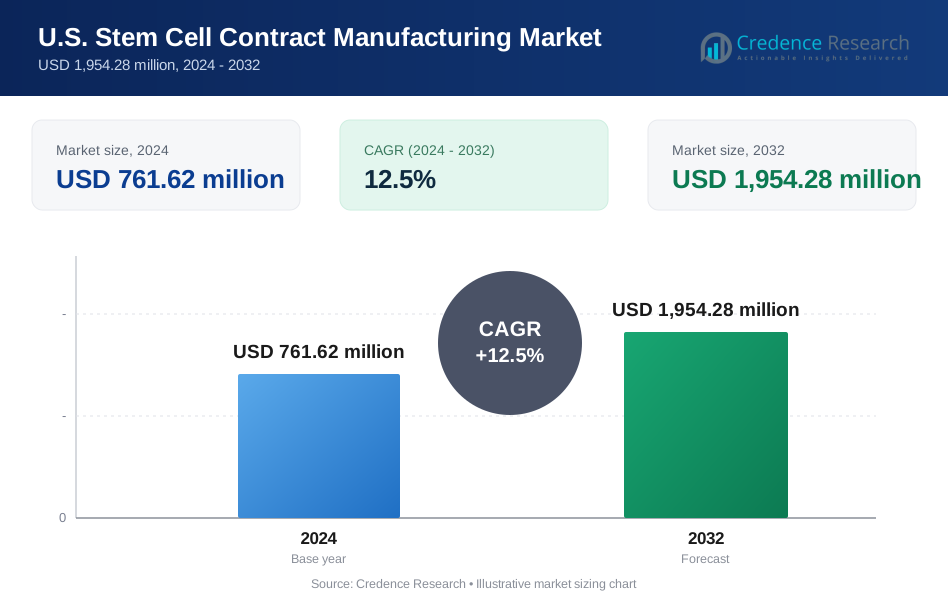
The U.S. Stem Cell Contract Manufacturing Market is projected to grow from USD 761.62 million in 2024 to an estimated USD 1,954.28 million by 2032, with a compound annual growth rate (CAGR) of 12.5% from 2024 to 2032.
Several key drivers are propelling the U.S. stem cell contract manufacturing market forward. The burgeoning interest in regenerative medicine and cell-based therapies is a primary factor, as stem cells offer transformative potential in treating various conditions, including neurodegenerative diseases, cardiovascular disorders, and orthopedic injuries. Additionally, increasing government and private sector funding for stem cell research and manufacturing infrastructure is enhancing production capabilities and fostering innovation. The growing emphasis on personalized medicine further accelerates market growth, as contract manufacturers play a critical role in scaling up production while ensuring compliance with stringent regulatory standards. Technological advancements, such as automation and bioreactor systems, are also streamlining manufacturing processes, thereby improving efficiency and reducing production costs.
The U.S. dominates the global stem cell contract manufacturing market, owing to its well-established biotechnology sector, advanced healthcare infrastructure, and a strong focus on research and development. States like California, Massachusetts, and North Carolina are key hubs for stem cell manufacturing, benefiting from a concentration of biopharmaceutical companies, academic institutions, and skilled professionals. The presence of leading contract development and manufacturing organizations (CDMOs) ensures that the region remains at the forefront of innovation and production capacity. Furthermore, favorable regulatory frameworks and proactive government initiatives, such as the 21st Century Cures Act, have created a supportive environment for market growth. These factors, combined with a growing demand for cell-based therapies in clinical trials, underscore the U.S. as a global leader in stem cell contract manufacturing.
Market Insights:
- The U.S. stem cell contract manufacturing market is expected to grow from USD 761.62 million in 2024 to USD 1,954.28 million by 2032, registering a CAGR of 12.5% during the forecast period.
- Rising prevalence of chronic diseases like neurodegenerative disorders and cardiovascular conditions drives the adoption of regenerative medicine, boosting demand for stem cell manufacturing.
- Advanced technologies, including automation and closed-system bioreactors, are enhancing efficiency and scalability, streamlining production processes, and reducing costs.
- Increasing investments by government bodies, such as through the 21st Century Cures Act, and private sector funding are expanding manufacturing infrastructure and fostering innovation.
- The U.S. regulatory environment, with supportive FDA policies, accelerates therapy approval while maintaining stringent quality standards, creating a favorable landscape for market expansion.
- Key hubs like California and Massachusetts dominate the market due to robust biotechnology ecosystems, advanced facilities, and a highly skilled workforce, accounting for a significant market share.
- Challenges such as high manufacturing costs, regulatory complexity, and a limited skilled workforce underscore the need for continuous technological advancement and strategic collaboration.
Market Drivers:
Increasing Demand for Regenerative Medicine and Cell-Based Therapies
The rising prevalence of chronic and degenerative diseases such as neurodegenerative disorders, cardiovascular conditions, and orthopedic injuries is driving the demand for regenerative medicine. Stem cell-based therapies offer transformative potential in treating these conditions, fostering their rapid adoption. For instance, Mesoblast's stem cell therapy for heart failure has shown promising results in clinical trials. Contract manufacturers play a crucial role in scaling up production to meet clinical and commercial needs, ensuring the availability of high-quality products. The U.S., with its advanced biotechnology sector, is particularly well-positioned to capitalize on this growing demand, reinforcing its leadership in stem cell manufacturing.
Advancements in Manufacturing Technologies
The integration of advanced technologies in stem cell production is significantly driving market growth. Innovations such as automation, closed-system bioreactors, and real-time monitoring systems are improving efficiency, scalability, and consistency in manufacturing processes. For example, Lonza has implemented automated bioreactor systems to enhance production efficiency. These advancements reduce contamination risks, enhance product quality, and lower production costs. Manufacturers adopting these technologies are better equipped to meet stringent regulatory standards and cater to the increasing complexity of stem cell therapies, giving them a competitive edge in the market.
Growing Investment and Funding
Substantial funding from government bodies, private investors, and biopharmaceutical companies is fueling the growth of the U.S. stem cell contract manufacturing market. Initiatives such as the 21st Century Cures Act and state-led programs like California’s CIRM provide financial support for research, infrastructure development, and commercialization of stem cell therapies. For instance, the National Institutes of Health (NIH) has allocated significant grants for stem cell research, including a $190 million investment in regenerative medicine projects. Additionally, private sector investment in contract development and manufacturing organizations (CDMOs) is expanding production capacities and fostering innovation, further strengthening the market’s growth trajectory.
Favorable Regulatory Environment
The U.S. regulatory landscape has been instrumental in supporting stem cell research and manufacturing. Proactive policies from the FDA, such as accelerated approval pathways for regenerative medicine therapies, encourage innovation and investment. For instance, the FDA has granted Regenerative Medicine Advanced Therapy (RMAT) designation to over 50 products, expediting their development and review..These frameworks reduce time-to-market for advanced therapies while ensuring product safety and efficacy. The regulatory support, coupled with the country’s commitment to maintaining high compliance standards, reinforces the U.S. as a global hub for stem cell contract manufacturing. The combination of robust infrastructure and supportive policies continues to attract international collaboration and investment, amplifying the market's growth potential.
Market Trends:
Expansion of Personalized Medicine
The growing focus on personalized medicine has significantly influenced the U.S. stem cell contract manufacturing market. Stem cell therapies tailored to individual patients require customized manufacturing processes, creating demand for scalable and flexible production capacities. As more therapies advance toward commercialization, manufacturers are increasingly investing in patient-specific production technologies. For instance, in January 2024, Pluri, an Israel-based developer of cell therapies, launched its Contract Development and Manufacturing Organization (CDMO) operations to assist other companies in the production of stem cell therapies. These advancements align with the broader shift toward precision medicine, enabling contract manufacturers to capitalize on high-value, customized therapeutic solutions.
Technological Integration in Manufacturing
The adoption of advanced technologies such as 3D bioprinting, closed-system manufacturing, and artificial intelligence (AI) is reshaping production processes. These innovations streamline workflows, enhance efficiency, and improve product consistency while reducing contamination risks. For example, automated cell culture systems allow for precise monitoring and control, ensuring reproducibility and scalability. Manufacturers leveraging such technologies are gaining a competitive edge by offering high-quality products and faster turnaround times, which are critical for clinical and commercial applications.
Rising Investment in Biopharmaceutical Infrastructure
The U.S. government and private sector are heavily investing in infrastructure to support the expanding biopharmaceutical industry. Stem cell contract manufacturing facilities are benefiting from these investments, which aim to bolster production capabilities and foster innovation. States like California and Massachusetts are at the forefront of these efforts, with dedicated funds and initiatives to enhance R&D and manufacturing ecosystems. For example, in August 2024, the UK government announced an investment of 'up to £400 million' to support clinical trials and improve drugs manufacturing. These investments not only support the current market demand but also position the U.S. as a global hub for stem cell manufacturing excellence.
Growing Focus on Allogenic Therapies
Allogenic stem cell therapies are gaining prominence due to their scalability and cost-effectiveness compared to autologous therapies. Unlike patient-specific autologous treatments, allogenic products can be manufactured in bulk, reducing production costs and enabling off-the-shelf availability. This trend is driving demand for advanced bioreactor systems and large-scale production facilities. As clinical trials for allogenic therapies continue to show promising results, contract manufacturers are increasingly shifting their focus toward this segment, recognizing its potential to dominate the market. For instance, Gamida Cell achieved FDA approval for their allogeneic cell therapy Omisirge, which hopes to reduce the risk of infection in blood cancer patients
Market Challenges Analysis:
Regulatory Complexity
The stringent regulatory environment in the U.S. poses a significant challenge for stem cell contract manufacturing. The need for compliance with FDA regulations, coupled with the evolving landscape of stem cell therapy approvals, can lead to delays in production and commercialization. Navigating these regulatory hurdles requires substantial expertise, resources, and time, which can impede the market’s growth.
High Manufacturing Costs
Stem cell manufacturing is capital-intensive, involving the use of specialized facilities, advanced technologies, and highly skilled personnel. The high cost of bioreactors, automation systems, and quality control measures further escalates production expenses. These costs create barriers for small- and mid-sized manufacturers, limiting their ability to compete effectively in the market.
Lack of Standardization
The absence of standardized protocols for stem cell production and characterization creates variability in product quality and efficacy. This lack of uniformity can hinder the scalability of manufacturing processes and pose risks to clinical outcomes, affecting market credibility and adoption rates.
Limited Skilled Workforce
The industry faces a shortage of skilled professionals with expertise in stem cell biology, advanced manufacturing techniques, and regulatory compliance. This talent gap impacts the efficiency of production and the ability to meet growing demand, particularly for personalized and complex therapies.
Ethical Concerns
Ethical debates surrounding the use of embryonic stem cells (HESCs) continue to pose challenges. Public and political opposition to certain stem cell sources can impact funding, research, and acceptance of related therapies, limiting market potential.
Market Opportunities:
The U.S. stem cell contract manufacturing market presents significant opportunities, fueled by the rising demand for regenerative medicine and cell-based therapies. As stem cells continue to gain traction for treating conditions such as neurodegenerative diseases, cardiovascular disorders, and orthopedic injuries, the need for scalable and efficient manufacturing solutions has become increasingly critical. Advances in bioreactor systems, automation, and 3D cell culture technologies are paving the way for higher productivity and reduced costs, enabling contract development and manufacturing organizations (CDMOs) to meet the growing demand. Moreover, the increasing number of clinical trials involving stem cell-based products underscores the need for reliable and compliant production capacities, providing a lucrative avenue for market players to expand their offerings.
Additionally, favorable regulatory frameworks, such as the 21st Century Cures Act, and increased funding from both government and private sectors create a supportive environment for growth. The trend toward personalized medicine presents a unique opportunity for CDMOs to offer specialized, patient-specific manufacturing services. Collaborations between biopharmaceutical companies, academic institutions, and research organizations further enhance innovation and market potential. Regional hubs like California and Massachusetts, with their concentration of advanced facilities and skilled professionals, are poised to lead this growth. As the adoption of cell-based therapies accelerates globally, the U.S. is well-positioned to solidify its dominance in stem cell contract manufacturing, providing opportunities for technological advancements and strategic partnerships.
Market Segmentation Analysis:
The U.S. stem cell contract manufacturing market is segmented by scale of operation, size of contract manufacturer, source of stem cells, type of stem cells, and end-user, each contributing uniquely to market growth.
By Scale of Operation
The market is divided into commercial, clinical, and preclinical operations. The commercial segment dominates due to the rising adoption of cell-based therapies and large-scale manufacturing. The clinical segment follows closely, driven by increasing clinical trials for stem cell therapies.
By Size of Contract Manufacturer
Large and very large manufacturers hold the majority share, leveraging advanced infrastructure and compliance capabilities. Mid-sized and small manufacturers are gaining traction by offering specialized services and flexible production options for niche applications.
By Source of Stem Cells
The market is categorized into allogenic and autologous sources. Allogenic stem cells dominate due to their scalability and application in off-the-shelf therapies. However, autologous stem cells are increasingly used in personalized medicine.
By Type of Stem Cells
Adult stem cells (ASCs) lead the segment due to their established use in regenerative medicine and minimal ethical concerns. Human embryonic stem cells (HESCs) and induced pluripotent stem cells (iPSCs) are witnessing growth, supported by advancements in research and therapeutic applications.
By End-User
Biopharmaceutical companies represent the largest end-user segment, driving demand for scalable and high-quality production. Research institutes and others, including academic centers, contribute significantly by fueling innovation and early-stage development.
Segmentation:
By Scale of Operation
- Commercial
- Clinical
- Preclinical
By Size of Contract Manufacturer
- Large/Very Large
- Mid-sized
- Small-sized
By Source of Stem Cells
- Allogenic
- Autologous
By Type of Stem Cells
- Adult Stem Cells (ASCs)
- Human Embryonic Stem Cells (HESCs)
- Induced Pluripotent Stem Cells (iPSCs)
By End-user
- Biopharmaceutical companies
- Research Institutes
- Others
Regional Analysis:
The U.S. stem cell contract manufacturing market exhibits significant regional variations, with key contributions from the West Coast, East Coast, Midwest, and Southern regions. Each region plays a vital role in the market's growth, driven by its unique infrastructure, investments, and focus areas.
West Coast
The West Coast, primarily California, accounts for approximately 40% of the market share, making it the largest contributor. California’s dominance stems from its robust biotechnology ecosystem, extensive academic and research institutions, and a concentration of biopharmaceutical companies. The state benefits from initiatives like the California Institute for Regenerative Medicine (CIRM), which drives funding and innovation in stem cell research and manufacturing. Advanced facilities and a highly skilled workforce further strengthen the region's leadership in the market.
East Coast
The East Coast holds about 30% of the market share, with Massachusetts and New York being the primary contributors. Massachusetts, home to the renowned Boston biotechnology cluster, boasts a strong presence of leading biopharmaceutical companies, academic institutions, and research organizations. The region's advanced healthcare infrastructure and government support for R&D position it as a key hub for stem cell manufacturing and development.
Midwest
The Midwest contributes approximately 15% of the market share, with states like Illinois and Minnesota at the forefront. The region is emerging as a competitive player due to its focus on cost-effective manufacturing, growing investments in biotechnology infrastructure, and collaborations between research institutions and industry players.
Southern Region
The Southern region, encompassing states like North Carolina and Texas, represents around 15% of the market share. North Carolina’s Research Triangle Park serves as a significant hub for biopharmaceutical innovation and stem cell manufacturing, supported by strong partnerships between academia and industry. Texas is also gaining prominence with increased investments in biotechnology and a growing focus on advanced manufacturing capabilities.
Key Regional Characteristics
Each region emphasizes adherence to stringent regulatory standards, advanced manufacturing technologies, and fostering innovation through collaboration. The concentration of skilled professionals and infrastructure in these areas provides a competitive edge to the U.S. market.
Key Player Analysis:
- Lonza Group
- WuXi AppTec
- Boehringer Ingelheim
- Catalent Inc.
- FUJIFILM Diosynth Biotechnologies
- Samsung Biologics
- Thermo Fisher Scientific Inc.
- Cytovance Biologics
- Cytiva
Competitive Analysis:
The U.S. stem cell contract manufacturing market is highly competitive, driven by the presence of established players and emerging companies with advanced capabilities. Leading contract development and manufacturing organizations (CDMOs) differentiate themselves through their expertise in scalable production processes, compliance with stringent regulatory standards, and adoption of cutting-edge technologies such as bioreactors and automation. For instance, FUJIFILM Cellular Dynamics has developed innovative cell culture techniques to enhance the production of induced pluripotent stem cells (iPSCs). Strategic partnerships between CDMOs, biopharmaceutical companies, and research institutions play a pivotal role in driving innovation and meeting the growing demand for personalized and cell-based therapies. Market leaders maintain a strong focus on expanding their infrastructure, enhancing R&D capabilities, and streamlining operations to reduce costs and improve efficiency. Regional hubs like California and Massachusetts house a dense concentration of skilled professionals and high-tech facilities, giving U.S.-based manufacturers a global competitive edge. Intensifying competition and the potential for industry consolidation underscore the importance of technological advancements and strategic collaboration in shaping market dynamics.
Recent Developments:
- Boehringer Ingelheim, in September 2024, announced plans to advance a potential new treatment for Geographic Atrophy following positive Phase I results. The company, in collaboration with CDR-Life, is preparing for a Phase II trial expected to start in early 2025. This development underscores Boehringer Ingelheim's commitment to tackling serious chronic diseases.
- Catalent Inc. completed its acquisition by Novo Holdings in December 2024, with a total enterprise value of approximately $16.5 billion. This acquisition included the sale of three of Catalent's manufacturing sites to Novo Nordisk, enhancing its manufacturing capacity for biologics and other therapies.
- In November 2024, FUJIFILM Diosynth Biotechnologies celebrated the completion of an expansion at its California cell therapy facility, adding new production suites and upgrading development labs. This expansion supports the growing demand for cell therapies, particularly for allogeneic and late-phase autologous treatments.
- Thermo Fisher Scientific launched the Accelerator™ Drug Development platform in October 2024 at CPHI Milan, aimed at simplifying and speeding up the drug discovery and development process. This platform integrates Thermo Fisher's CDMO and CRO services to support customers from pre-clinical to commercialization stages.
Market Concentration & Characteristics:
The U.S. stem cell contract manufacturing market is characterized by a moderate to high level of concentration, with key players dominating through advanced capabilities, strong infrastructure, and extensive expertise in biopharmaceutical production. Leading contract development and manufacturing organizations (CDMOs) leverage cutting-edge technologies, including automation and bioreactor systems, to enhance efficiency and scalability. The market exhibits robust collaboration between academic institutions, biopharmaceutical companies, and research organizations, fostering innovation and expanding production capacities. Regional hubs like California, Massachusetts, and North Carolina drive growth with their dense concentration of industry players, skilled workforce, and supportive regulatory frameworks. Market participants focus on maintaining high compliance with stringent regulatory standards, ensuring product quality and safety for clinical and commercial applications. The sector’s competitive nature, coupled with increasing demand for cell-based therapies, is likely to encourage consolidation, strategic partnerships, and continued investment in advanced manufacturing solutions.
Report Coverage:
The research report offers an in-depth analysis based on By Scale of Operation, By Size of Contract Manufacturer, By Source of Stem Cells, By Type of Stem Cells and By End-user It details leading market players, providing an overview of their business, product offerings, investments, revenue streams, and key applications. Additionally, the report includes insights into the competitive environment, SWOT analysis, current market trends, as well as the primary drivers and constraints. Furthermore, it discusses various factors that have driven market expansion in recent years. The report also explores market dynamics, regulatory scenarios, and technological advancements that are shaping the industry. It assesses the impact of external factors and global economic changes on market growth. Lastly, it provides strategic recommendations for new entrants and established companies to navigate the complexities of the market.
Future Outlook:
- The U.S. stem cell contract manufacturing market is expected to witness robust growth, driven by advancements in regenerative medicine and cell-based therapies.
- Increased investments from government and private sectors will expand research capabilities and manufacturing infrastructure.
- Demand for scalable, cost-effective production processes will accelerate the adoption of automation and bioreactor technologies.
- Growing focus on personalized medicine will boost the need for customized stem cell production solutions.
- Rising clinical trials for cell-based therapies will fuel market expansion and innovation.
- The presence of leading biopharmaceutical companies and CDMOs will sustain the U.S.'s global dominance in the sector.
- Favorable regulatory policies, such as the 21st Century Cures Act, will create a conducive environment for market development.
- Key manufacturing hubs like California and Massachusetts will continue to attract skilled professionals and investment.
- Partnerships between academic institutions and biopharma companies will drive R&D in novel stem cell applications.
- Overcoming challenges like high production costs and regulatory hurdles will be crucial to fully realizing market potential.
Request a Free Sample
Fill in your details and we'll send you a free sample report.
- Sample data tables & charts
- Research methodology
Need a Custom Version of This Report?
Tailor the scope, geography, or segments to your exact requirements.
- Custom geography or segment scope
- Direct access to our analyst team
Frequently Asked Questions
What is the projected growth of the U.S. stem cell contract manufacturing market by 2032?
What are the key drivers of market growth?
Which states are key hubs for stem cell manufacturing in the U.S.?
What are the main challenges faced by the market?
Table of Content
Chapter 1. Report Introduction
- 1.1 Report Description & Purpose
- 1.1.1 Report Title & Market Definition
- 1.1.2 Unique Selling Propositions (USP) & Key Differentiators
- 1.1.3 Value Proposition for Stakeholders
- 1.2 Research Objectives
- 1.2.1 Market Sizing Objectives (Volume & Revenue)
- 1.2.2 Segmentation Objectives
- 1.2.3 Competitive Intelligence Objectives
- 1.2.4 Forecast & Scenario Objectives
- 1.3 Report Scope
- 1.3.1 U.S. Stem Cell Contract Manufacturing Scope – Types & Subtypes Covered
- 1.3.2 Geographic Scope – Regions & Countries Covered
- 1.3.3 Historical Period, Base Year & Forecast Period (2024; forecast to 2032)
- 1.3.4 Inclusions & Exclusions
- 1.4 HS Code & Classification Framework
- 1.5 Currency, Units & Pricing Basis
- 1.6 Target Stakeholders
- 1.7 Limitations & Assumptions
Chapter 2. Executive Summary
- 2.1 Global U.S. Stem Cell Contract Manufacturing Market Snapshot
- 2.1.1 Market Size – Historical (2024) & Forecast (2024-2032) (2024: USD 761.62 million → 2032: USD 1,954.28 million)
- 2.1.2 Volume & Revenue – Global Totals
- 2.1.3 Key Market Highlights – Top Five Facts
- 2.2 U.S. Stem Cell Contract Manufacturing Market Segmentation Snapshot
- 2.2.1 Market Split by Region – 2024 vs. 2032
- 2.3 Competitive Snapshot
- 2.3.1 Top 10 Players by Revenue Share – 2024
- 2.3.2 Top 10 Players by Volume Share – 2024
- 2.3.3 Recent Strategic Developments (18-Month Summary)
- 2.4 Key Investment Highlights & Strategic Conclusions
Chapter 3. U.S. Stem Cell Contract Manufacturing Market Dynamics & Industry Analysis
- 3.1 Market Overview & Context
- 3.1.1 U.S. Stem Cell Contract Manufacturing Market Position in the Broader Automotive Value Chain
- 3.1.2 OEM vs. Replacement Market Dynamics
- 3.1.3 Market Maturity & Development Stage by Region
- 3.2 U.S. Stem Cell Contract Manufacturing Market Drivers
- 3.3 U.S. Stem Cell Contract Manufacturing Market Restraints & Challenges
- 3.4 U.S. Stem Cell Contract Manufacturing Market Opportunities
- 3.5 Porter's Five Forces Analysis
- 3.5.1 Threat of New Entrants
- 3.5.2 Bargaining Power of Suppliers
- 3.5.3 Bargaining Power of Buyers
- 3.5.4 Threat of Substitutes
- 3.5.5 Competitive Rivalry – Intensity Assessment
- 3.6 U.S. Stem Cell Contract Manufacturing Value Chain Analysis
- 3.6.1 Upstream – Raw Material/Input Suppliers
- 3.6.1.1 Raw Material/Input 1
- 3.6.1.2 Raw Material/Input 2
- 3.6.1.3 Raw Material/Input 3
- 3.6.2 Midstream – Production/Manufacturing/Service Delivery
- 3.6.2.1 Production/Process Overview
- 3.6.2.2 Key Facility Locations & Capacity by Manufacturer
- 3.6.3 Downstream – Distribution & End Consumer
- 3.6.3.1 Primary Channel – B2B/OEM
- 3.6.3.2 Secondary Channels – Dealer, Retail, Online, Direct
- 3.6.4 Value Chain Profitability Analysis
- 3.6.1 Upstream – Raw Material/Input Suppliers
- 3.7 PESTEL Analysis
- 3.7.1 Political Factors
- 3.7.2 Economic Factors
- 3.7.3 Social Factors
- 3.7.4 Technological Factors
- 3.7.5 Environmental Factors
- 3.7.6 Legal Factors
- 3.8 U.S. Stem Cell Contract Manufacturing Supply Chain Analysis
- 3.8.1 Raw Material/Input Supply Risk Assessment
- 3.8.2 Manufacturing Concentration Risk (Geographic Exposure)
- 3.8.3 Trade Disruption Impact Analysis
- 3.9 Regulatory & Policy Landscape
Note: The regulatory and policy landscape section covers regulations based on their applicability to the market, U.S. Stem Cell Contract Manufacturing category, geography, and scope of the study. Only regulatory frameworks with a material impact on operations, compliance, trade, sustainability, or market access are analyzed in detail.
Chapter 4. Key Investment Pockets & Opportunity Analysis
- 4.1 U.S. Stem Cell Contract Manufacturing Market Attractiveness Analysis
- 4.1.1 By Region – Investment Attractiveness Matrix (Volume × CAGR)
- 4.2 Absolute Revenue Growth Opportunity
- 4.2.1 By Region – Absolute USD Growth Through 2032
- 4.3 Incremental Volume Opportunity
- 4.3.1 By Region – Incremental Volume Through 2032
- 4.3.2 Segment – Incremental Volume
- 4.4 Emerging Submarket Opportunity Deep Dive (Subject to Applicability)
- 4.5 Emerging Market Opportunity Scorecards
- 4.5.1 United States
- 4.5.2 Europe
- 4.5.3 Asia
- 4.5.4 Middle East & Africa
Note: Emerging Market Opportunity Scorecards will be included based on relevance and strategic importance. Regions listed are indicative and may vary depending on data availability and market dynamics.
Chapter 5. U.S. Stem Cell Contract Manufacturing Import-Export Analysis & Trade Flows
- 5.1 Global Trade Overview
- 5.1.1 Global Export Value by Country (2024)
- 5.1.2 Global Export Volume by Country (2024)
- 5.1.3 Global Import Value by Country (2024)
- 5.1.4 Global Import Volume by Country (2024)
- 5.1.5 Net Trade Balance by Country (2024)
- 5.2 Export Analysis – Segment
- 5.2.1 Type 1 (HS Code)
- 5.2.2 Type 2 (HS Code)
- 5.2.3 Type 3 (HS Code)
- 5.2.4 Type 4 (HS Code)
- 5.2.5 Type 5 (HS Code)
- 5.3 Import Analysis – Segment
- 5.3.1 Type 1 (HS Code)
- 5.3.2 Type 2 (HS Code)
- 5.3.3 Type 3 (HS Code)
- 5.3.4 Type 4 (HS Code)
- 5.3.5 Type 5 (HS Code)
- 5.4 Average Unit Trade Prices
- 5.4.1 Average Export Price – Segment & Country
- 5.4.2 Average Import Price – Segment & Source Country
- 5.4.3 Price Trends (2024)
- 5.5 Key Trade Route Analysis
- 5.5.1 Trade Route 1
- 5.5.2 Trade Route 2
- 5.5.3 Trade Route 3
- 5.5.4 Trade Route 4
- 5.5.5 Trade Route 5
- 5.6 Trade Policy Impact Assessment
- 5.6.1 US Anti-Dumping & Section 301 Tariffs
- 5.6.2 EU Customs Union Impact
- 5.6.3 Major Free Trade Agreements
- 5.6.4 USMCA Rules of Origin
Note: Trade policy analysis will be included only where relevant to the U.S. Stem Cell Contract Manufacturing market.
Chapter 6. Competitive Landscape & Company Benchmarking
- 6.1 U.S. Stem Cell Contract Manufacturing Market Concentration & Structure
- 6.1.1 Herfindahl-Hirschman Index (HHI) – vs. 2024
- 6.1.2 Tier 1, Tier 2 & Tier 3 Market Structure
- 6.1.3 Global, Regional & Local Player Dynamics
- 6.2 U.S. Stem Cell Contract Manufacturing Market Share Analysis – 2024
- 6.2.1 Global Revenue Share by Company
- 6.2.2 Global Volume Share by Company
- 6.2.3 Regional Revenue Share
- 6.2.4 Market Share Evolution ( vs. 2024)
- 6.2.5 OEM Segment Share by Company
- 6.2.6 Replacement Segment Share by Company
- 6.3 Production/Delivery Capacity & Facility Analysis
- 6.3.1 Global Installed Capacity
- 6.3.2 Capacity Utilization Rates
- 6.3.3 Production/Output Volume
- 6.3.4 Facility Locations & Capacity Map
- 6.3.5 Planned Capacity Additions
- 6.4 U.S. Stem Cell Contract Manufacturing Competitive Benchmarking Matrix
- 6.4.1 Revenue, Volume, CAGR & Profitability Comparison
- 6.4.2 Channel Revenue Mix
- 6.4.3 Geographic Revenue Exposure
- 6.4.4 R&D Intensity
- 6.4.5 Sustainability Maturity
- 6.5 Strategic Developments in U.S. Stem Cell Contract Manufacturing (Last 24 Months)
- 6.5.1 Mergers, Acquisitions & Divestments
- 6.5.2 New U.S. Stem Cell Contract Manufacturing Launches
- 6.5.3 Facility Expansions
- 6.5.4 Strategic Alliances, Joint Ventures & Partnerships
- 6.5.5 Distribution Expansion & Market Entry
- 6.5.6 Sustainability & ESG Initiatives
- 6.6 Competitive Strategy Mapping
- 6.6.1 Leader, Challenger, Follower & Niche Classification
- 6.6.2 Pricing Strategy Comparison
- 6.6.3 Channel Strategy Matrix
Note: Strategic developments are included based on their materiality and the availability of reliable information.
Chapter 7. Global U.S. Stem Cell Contract Manufacturing Market – By Distribution Channel
- 7.1 Segment Overview
- 7.1.1 Volume & Revenue Split by Channel (2024 & 2032)
- 7.1.2 Channel Mix Evolution (2024-2032)
Chapter 8. Regional Market Analysis – Global Overview
- 8.1 Global Regional Overview
- 8.1.1 Regional Volume Share
- 8.1.2 Regional Revenue Share
- 8.1.3 Regional Volume by Region
- 8.1.4 Regional Revenue by Region
- 8.1.5 Regional Forecast Through 2032
- 8.2 Cross-Regional Segment Analysis
- 8.2.1 By Distribution Channel
- 8.2.2 By Brand/Price Tier
Chapter 9. North America U.S. Stem Cell Contract Manufacturing Market
- 9.1 United States
- 9.2 Canada
- 9.3 Mexico
Chapter 10. Europe U.S. Stem Cell Contract Manufacturing Market
- 10.1 Germany
- 10.2 France
- 10.3 Italy
- 10.4 United Kingdom
- 10.5 Spain
- 10.6 Poland
- 10.7 Russia
- 10.8 Netherlands
- 10.9 Belgium
- 10.10 Sweden
- 10.11 Denmark
- 10.12 Norway
- 10.13 Rest of Europe
Chapter 11. Asia Pacific U.S. Stem Cell Contract Manufacturing Market
- 11.1 China
- 11.2 India
- 11.3 Japan
- 11.4 South Korea
- 11.5 Thailand
- 11.6 Indonesia
- 11.7 Vietnam
- 11.8 Malaysia
- 11.9 Australia
- 11.10 Rest of Asia Pacific
Chapter 12. Latin America U.S. Stem Cell Contract Manufacturing Market
- 12.1 Brazil
- 12.2 Argentina
- 12.3 Colombia
- 12.4 Chile
- 12.5 Rest of Latin America
Chapter 13. Middle East U.S. Stem Cell Contract Manufacturing Market
- 13.1 Saudi Arabia
- 13.2 United Arab Emirates
- 13.3 Turkey
- 13.4 Israel
- 13.5 Iran
- 13.6 Rest of the Middle East
Chapter 14. Africa U.S. Stem Cell Contract Manufacturing Market
- 14.1 South Africa
- 14.2 Egypt
- 14.3 Nigeria
- 14.4 Morocco
- 14.5 Rest of Africa
Chapter 15. U.S. Stem Cell Contract Manufacturing Company Profiles
- 15.1 [Company 01]
- 15.1.1 Company Overview
- 15.1.2 Key Management Personnel
- 15.1.3 Products & Services Portfolio
- 15.1.4 Financial Performance
- 15.1.5 Key Market Focus & Geographic Presence
- 15.1.6 Recent Developments & Strategic Initiatives
Note: The company profile list is preliminary and may change based on research findings, market developments, data availability, and client requirements.
Chapter 16. Appendices
- Appendix A – List of Abbreviations & Acronyms
- Appendix B – Industry Classification Code Reference – Full Series
- Appendix C – Production & Capacity Data Tables
- Appendix D – End-Use & Demand Base Tables
- Appendix E – Consumption & Replacement Rate Assumptions
- Appendix F – ASP Reference Tables
- Appendix G – Manufacturing & Facility Database
- Appendix H – Import-Export Data Tables
- Appendix I – Regulatory Summary Tables
- Appendix J – Primary Research Participant List (Anonymized)
- Appendix K – Primary Research Questionnaire Framework
- Appendix L – Data Sources & Bibliography
- Appendix M – Market Size Divergence & Source Comparison
Chapter 17. Research Methodology
- 17.1 Research Framework & Philosophy
- 17.2 Secondary Research – Sources, Hierarchy & Data Extraction
- 17.3 Data Modeling – Bottom-Up & Top-Down Market Sizing
- 17.4 Primary Research – Stakeholder Framework, LOI & Sample Sizes
- 17.5 Forecast Methodology – Regression, Scenario & Sensitivity Analysis
- 17.6 Quality Control – Four-Layer Validation Framework
- 17.7 Limitations & Standard Assumptions
- 17.8 Disclaimer
