
| REPORT ATTRIBUTE | DETAILS |
|---|---|
| Historical Period | 2019-2022 |
| Base Year | 2023 |
| Forecast Period | 2024-2032 |
| Dubai Luxury Villa Remodeling Renovation Market Size 2023 | USD 12664 Million |
| Dubai Luxury Villa Remodeling Renovation Market, CAGR | 7.70% |
| Dubai Luxury Villa Remodeling Renovation Market Size 2032 | USD 24689.5 Million |
Market Overview:
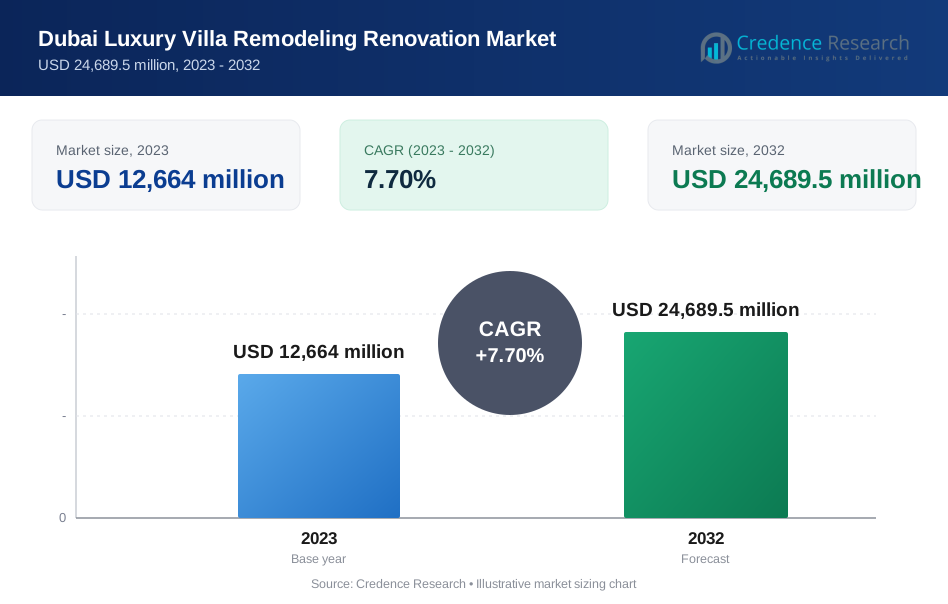
Dubai Luxury Villa Remodeling Renovation Market size was valued at USD 12664 million in 2023 and is anticipated to reach USD 24689.5 million by 2032, at a CAGR of 7.70% during the forecast period (2023-2032).
Key drivers of the market include rising disposable incomes, the influx of foreign investors, and Dubai’s positioning as a global luxury real estate hub. The demand for high-end renovations is fueled by property owners aiming to enhance the aesthetic appeal and functionality of their residences, incorporating modern design elements and sustainable construction materials. Government initiatives supporting real estate development and interior design trends focusing on smart home integration and energy efficiency further propel the market. Additionally, the upcoming global events and increased tourism influence property owners to upgrade their villas to maintain high rental and resale values. The expansion of luxury hospitality offerings and branded residences in Dubai further stimulates demand for premium remodeling solutions as homeowners seek to align their properties with evolving global luxury standards.
Regionally, prime locations such as Palm Jumeirah, Emirates Hills, and Jumeirah Golf Estates dominate the luxury villa remodeling sector due to their high concentration of premium properties. These areas attract high-profile investors and residents who frequently renovate to maintain exclusivity and modernity in their homes. The market also benefits from demand in emerging residential districts where new luxury developments drive renovation activities. The presence of specialized renovation firms and international design influences further strengthen the growth trajectory of the Dubai luxury villa remodeling and renovation market. Additionally, luxury villa renovations in these prime locations often set new benchmarks for design excellence, inspiring further investment in high-end architectural enhancements and bespoke interior solutions. With an increasing emphasis on personalized living experiences, many homeowners in these districts seek tailored renovations that incorporate artisanal craftsmanship, rare materials, and cutting-edge technology to enhance both prestige and functionality.
Market Insights:
- The market size was valued at USD 12,664 million in 2023 and is projected to reach USD 24,689.5 million by 2032, growing at a CAGR of 7.70% during the forecast period.
- Rising disposable incomes and foreign investments continue to drive demand for luxury villa renovations, with homeowners seeking personalized, high-end design solutions.
- Smart home integration and sustainability trends are reshaping the market, with increased adoption of AI-driven automation, energy-efficient solutions, and eco-friendly materials.
- Dubai’s luxury real estate hub status and the influx of expatriates fuel remodeling activities, as investors enhance properties for high rental yields and resale value.
- High renovation costs and supply chain constraints for premium materials pose challenges, impacting project timelines and affordability for large-scale refurbishments.
- Prime locations such as Palm Jumeirah (35%), Emirates Hills (25%), and Jumeirah Golf Estates (15%) dominate the market, setting benchmarks for luxury villa remodeling.
- Government-backed sustainability initiatives and urban development plans encourage eco-friendly remodeling solutions, boosting demand for energy-efficient and green-certified renovations.
Market Drivers:
Rising Affluent Population and Investment in Premium Properties
Dubai's luxury villa remodeling and renovation market is driven by the increasing number of high-net-worth individuals (HNWIs) and affluent expatriates seeking to upgrade their residences to match contemporary luxury standards. The city’s favorable tax policies, high quality of life, and status as a global investment hub continue to attract wealthy buyers who prioritize exclusivity and personalization in their homes. Many villa owners invest significantly in remodeling projects to integrate high-end design elements, advanced automation technologies, and bespoke interiors that align with modern luxury trends. The continuous influx of foreign investors and entrepreneurs further stimulates demand for customized renovations, as they seek to enhance the functionality and aesthetics of their residential properties. For instance, Over the last ten years, sales of luxury Dubai villas and apartments valued above AED15 million have risen dramatically, reaching AED 71 billion in 2024, an increase of almost 688% since 2015.
Evolving Architectural Trends and Demand for Smart Homes
The luxury remodeling sector in Dubai is witnessing a transformation as homeowners increasingly opt for sophisticated designs, open layouts, and premium materials that reflect global architectural influences. Contemporary villa renovations focus on creating seamless indoor-outdoor living spaces, integrating sustainable features such as energy-efficient lighting and climate control systems. For instance, according to recent studies by the UAE's Ministry of Energy and Infrastructure, smart homes in the region are reported to consume 30-40% less energy compared to traditional residences. Smart home technologies, including AI-powered security systems, voice-activated controls, and automated lighting, are becoming integral to renovation projects as homeowners seek enhanced convenience and efficiency. The market is further supported by real estate developers and interior design firms introducing high-end renovation solutions to cater to the evolving preferences of luxury property owners. The convergence of technology and design ensures that high-value properties remain relevant in an increasingly competitive real estate landscape.
Government Initiatives and Sustainable Development Regulations
The Dubai government’s focus on sustainable development and energy efficiency plays a crucial role in shaping the luxury villa renovation market. Regulations promoting green building practices encourage homeowners to adopt eco-friendly materials, solar panels, and smart energy management systems during remodeling projects. Incentives such as reduced utility costs and certification programs for sustainable villas further accelerate the adoption of environmentally conscious renovation solutions. For instance, Dubai's long-term urban development plans, including initiatives such as the Dubai 2040 Urban Master Plan, support the enhancement of residential infrastructure, influencing property owners to invest in renovation projects that align with the city’s vision of sustainability and innovation. With a growing emphasis on reducing carbon footprints, homeowners are increasingly integrating eco-conscious elements without compromising luxury and comfort.
High Rental and Resale Value of Renovated Luxury Villas
Luxury villa remodeling in Dubai is also fueled by the market’s strong rental and resale potential, as high-end renovations significantly enhance property value and marketability. Homeowners invest in premium refurbishments to attract discerning tenants, particularly international business executives and long-term expatriates looking for opulent living spaces. Renovated villas with modern interiors, state-of-the-art home automation, and premium finishes command higher rental yields and competitive resale prices. The demand for aesthetically appealing and technologically advanced residences continues to grow, as buyers and tenants prioritize properties that offer exclusivity, comfort, and sustainability. Additionally, as Dubai remains a prime location for real estate investment, well-renovated villas maintain strong appreciation rates, ensuring long-term returns for property owners and investors. For instance, Dubai offers some of the highest rental yields globally, ranging from 6% to 10%, compared to global cities such as London and New York, where yields average around 2% to 4%.
Market Trends:
Rising Demand for Bespoke and Custom-Designed Interiors
Dubai's luxury villa remodeling market is witnessing a shift towards bespoke and highly customized interiors, as homeowners seek unique design elements that reflect their personal tastes and lifestyles. High-net-worth individuals are increasingly opting for exclusive materials such as rare marble, handcrafted woodwork, and designer furnishings to enhance the opulence of their living spaces. For instance, a Dubai-based interior design firm created a unique indoor-outdoor living space for a villa in Jumeirah, featuring retractable glass walls and a temperature-controlled winter garden with exotic plants. The demand for renowned international interior designers and architectural firms has also grown, as villa owners look to incorporate global design influences into their homes. This trend is driving the expansion of high-end renovation services, with specialized firms offering tailored solutions that cater to the preferences of elite homeowners.
Integration of Smart and Automated Living Solutions
The adoption of smart home technologies continues to gain traction in Dubai's luxury villa remodeling sector. Homeowners are prioritizing automation systems that enhance security, energy efficiency, and convenience, incorporating features such as AI-driven climate control, voice-activated lighting, and advanced surveillance systems. The demand for fully integrated home automation solutions is further fueled by the rise of digitalization and an increasing preference for seamless connectivity within residential spaces. For instance, AI-powered virtual assistants like Alexa and Google Assistant are being integrated into Dubai's smart homes, serving as personal butlers capable of controlling various aspects of the home environment. High-end renovations now focus on incorporating these technologies without compromising the elegance of traditional luxury aesthetics, creating sophisticated yet functional living environments that appeal to affluent buyers.
Growth in Sustainable and Eco-Friendly Renovations
Sustainability has become a central focus in the luxury villa renovation market, with homeowners emphasizing eco-friendly materials and energy-efficient solutions. The adoption of green building practices, such as solar panel installations, water conservation systems, and thermal insulation, has grown as villa owners seek to align their properties with Dubai’s sustainability initiatives. High-performance glass, recycled wood, and non-toxic paints are increasingly being used to enhance indoor air quality and reduce environmental impact. The growing awareness of sustainable luxury has led to the rise of renovation firms that specialize in environmentally responsible remodeling, catering to the demand for eco-conscious yet opulent living spaces. For instance, as of 2024, Dubai is home to over 400 LEED-certified buildings, with expectations for this number to reach over 500 by 2025. These certifications not only help reduce the environmental impact of construction but also increase the property's value.
Increasing Popularity of Outdoor Living and Wellness Spaces
Luxury villa renovations in Dubai are increasingly focused on enhancing outdoor living areas, reflecting a growing preference for open-air leisure spaces. High-end remodeling projects now prioritize landscaped gardens, infinity pools, and outdoor entertainment areas that seamlessly blend with the villa’s overall aesthetic. The demand for wellness-oriented renovations is also rising, with homeowners incorporating private spa facilities, meditation rooms, and fully equipped home gyms into their properties. As luxury buyers place greater emphasis on holistic well-being and relaxation, these upgrades are becoming essential components of villa remodeling, further shaping the market’s growth trajectory. For instance, some high-end villas now feature sunken majlis areas with uninterrupted views of the pool and mesmerizing wall water features, enhanced by central fire pits for a tranquil atmosphere.
Market Challenges Analysis:
High Renovation Costs and Limited Availability of Premium Materials
One of the primary challenges in Dubai's luxury villa remodeling and renovation market is the high cost associated with premium renovations. The use of bespoke materials, high-end finishes, and advanced smart home technologies significantly increases project expenses, making large-scale renovations a costly investment. Additionally, the limited availability of exclusive materials, such as rare marble, exotic woods, and custom-designed fixtures, leads to supply chain constraints and extended project timelines. Importing these materials further adds to the overall costs, as shipping delays and fluctuating currency exchange rates impact pricing. These factors make luxury villa renovations a complex and resource-intensive process, limiting accessibility for some high-net-worth homeowners.
Regulatory Approvals and Project Delays
Navigating the regulatory landscape in Dubai presents another challenge for villa remodeling projects, as obtaining permits and approvals for structural modifications can be time-consuming. Strict zoning laws, heritage preservation regulations, and compliance with sustainability mandates often require multiple levels of approval, leading to delays in project execution. Additionally, labor shortages and dependency on skilled craftsmen can slow down renovation timelines, particularly for intricate and highly customized projects. The availability of specialized contractors and design firms also impacts project completion, as high demand for their expertise can result in longer waiting periods. These operational challenges contribute to increased project costs and scheduling uncertainties, making efficient project management a crucial aspect of the luxury villa remodeling sector.
Market Opportunities:
Dubai’s luxury villa remodeling and renovation market presents significant opportunities driven by the continuous demand for high-end residential upgrades. The rising number of ultra-high-net-worth individuals and expatriate investors seeking exclusive and personalized living spaces fuels the demand for bespoke renovations. With the increasing preference for contemporary architectural designs, smart home integration, and energy-efficient solutions, renovation firms have the opportunity to expand their service offerings. The growing popularity of branded residences and luxury developments further drives the need for premium remodeling services, as homeowners aim to enhance property value and align their villas with evolving market trends. Additionally, Dubai’s position as a global real estate hub attracts international investors, creating a steady demand for refurbishment projects that enhance both aesthetics and functionality.
The shift towards sustainable and wellness-focused living also presents a lucrative opportunity for renovation firms specializing in eco-friendly upgrades and wellness-centric designs. The growing adoption of green building materials, solar power installations, and smart energy management systems allows businesses to cater to environmentally conscious homeowners looking to modernize their villas while reducing their carbon footprint. Additionally, the increasing emphasis on outdoor luxury spaces, including landscaped gardens, infinity pools, and private wellness retreats, offers growth potential for renovation companies that provide specialized high-end exterior enhancements. With government initiatives promoting real estate development and sustainability, the Dubai luxury villa remodeling and renovation market is well-positioned for continued expansion, attracting both local and international stakeholders.
Market Segmentation Analysis:
The Dubai luxury villa remodeling and renovation market is segmented by type, price, renovation type, and communities, each catering to distinct homeowner preferences and investment trends.
By Type, luxury villas dominate the market, driven by high-net-worth individuals seeking opulent, bespoke renovations. Family villas also contribute significantly as expatriates and long-term residents prioritize functional upgrades. The growing focus on sustainability has increased demand for eco-friendly villas, integrating energy-efficient systems and sustainable materials.
By Price, the luxury segment holds the largest share, with homeowners investing in high-end finishes, advanced technology, and premium craftsmanship. The mid-range segment is expanding, offering modern and functional renovations at competitive costs. The affordable segment is emerging as more homeowners seek cost-effective remodeling solutions that enhance property value.
By Renovation Type, villa exteriors are classified into modern, classic, Arabian designs, and lighting enhancements, reflecting Dubai’s architectural diversity. Villa interiors are evolving, with trends such as traditional-modern fusion, minimalism, smart home integration, sustainability, and personalized designs influencing renovation choices.
By Communities, premium districts such as Palm Jumeirah, Emirates Hills, Jumeirah Golf Estates, Meydan, and District One lead the market, attracting affluent homeowners investing in high-end remodeling projects. These areas set benchmarks for luxury living, with renovation firms offering tailored solutions to maintain exclusivity and property value.
Segmentation:
By Type
- Luxury Villas
- Family Villas
- Eco-Friendly Villas
By Price
- Luxury
- Mid-Range
- Affordable
By Renovation Type
- Villa Exterior
- Modern Villa Exterior Design
- Classic Villa Exterior Design
- Arabian Villa Exterior Design
- Villa Exterior Lighting Design
- Villa Interior
- Traditional Elegance with a Modern Twist
- Embracing Minimalism and Functional Design
- Integrating Smart Home Technology
- Sustainability and Eco-Friendly Design
- Personalization and Customization
By Communities
- Emirates Hills
- Meydan
- Palm Jumeirah
- Jumeirah Golf Estates
- District One
Regional Analysis:
Dubai's luxury villa remodeling and renovation market is primarily concentrated in high-end residential districts where affluent homeowners and investors seek premium upgrades to enhance property value and aesthetic appeal. The market is segmented into prime locations, including Palm Jumeirah, Emirates Hills, Jumeirah Golf Estates, Al Barari, and Downtown Dubai, each contributing differently to the overall market landscape. These areas dominate the sector due to their high density of luxury properties and the continuous demand for modernization and bespoke renovations.
Palm Jumeirah (35% Market Share)
Palm Jumeirah holds the largest share of the luxury villa remodeling and renovation market, accounting for approximately 35% of the total market. As one of Dubai’s most prestigious waterfront communities, it attracts ultra-high-net-worth individuals who invest in high-end refurbishments to maintain exclusivity. Homeowners prioritize extensive structural modifications, modern interior redesigns, and smart home automation to align with evolving luxury standards. Additionally, the strong rental market in Palm Jumeirah encourages investors to undertake premium renovations to increase property value and rental yields.
Emirates Hills (25% Market Share)
Emirates Hills contributes 25% of the luxury villa renovation market, driven by its status as an ultra-exclusive gated community known for its expansive villas and elite residents. The demand for bespoke renovations in this area is particularly high, with homeowners frequently upgrading interiors with high-end materials, custom furnishings, and state-of-the-art home automation. The focus on sustainability and energy-efficient designs is also prominent, as affluent homeowners seek to integrate eco-friendly solutions while maintaining opulence.
Jumeirah Golf Estates (15% Market Share)
Jumeirah Golf Estates holds 15% of the market, benefiting from its position as a luxury residential community with high-end villas set around championship golf courses. The demand for renovations in this region is centered around expanding outdoor living spaces, integrating wellness features such as private gyms and spas, and upgrading interiors with contemporary designs. With an increasing number of international buyers investing in Jumeirah Golf Estates, remodeling activities continue to rise, particularly among those looking to customize properties to suit personal preferences.
Al Barari and Downtown Dubai (10% and 8% Market Share, Respectively)
Al Barari accounts for 10% of the luxury villa remodeling market, known for its focus on sustainable and nature-inspired living. Homeowners in this area prioritize eco-friendly renovations, including energy-efficient lighting, water-saving solutions, and green landscaping to align with the district’s commitment to sustainability. Downtown Dubai holds an 8% share, with luxury penthouses and townhouses undergoing high-end refurbishments to match modern design trends. The demand in this region is driven by property investors and high-profile business executives who seek premium renovations for short-term rentals and resale purposes.
The remaining 7% of the market is distributed across emerging luxury residential districts, where ongoing real estate development is stimulating demand for bespoke villa renovations. These areas present growth opportunities for remodeling firms as Dubai continues to attract high-end property buyers seeking exclusivity and modernized living spaces.
Key Player Analysis:
- Algebra Contracting LLC
- Haifa Renov8
- Yalla Renovation
- Smart Renovation Dubai
- RBIC Home Building Contracting
- Multi Build Renovation & Fit Out Contracto
- Best Renovation
- Grout King Technical Services
- Oakmont Group
- Ray Fitout
- Spanish Concept Home
- Settlecreate
Competitive Analysis:
The Dubai luxury villa remodeling and renovation market is highly competitive, with a mix of established renovation firms, specialized interior design companies, and international contractors catering to high-net-worth clients. Leading companies differentiate themselves through bespoke design solutions, premium material sourcing, and advanced technological integrations. For instance, Cherwell, a design company active in Dubai's design district, specializes in bespoke design products and furnishings. In a recent project for a private villa in Nad Al Sheba, they designed and constructed custom-made furnishings for the entire villa, including a striking three-dimensional wall paneling covering the double-height wall of the living room. Firms that offer end-to-end services, including architectural modifications, smart home installations, and sustainable renovations, maintain a strong competitive edge. Local and international players compete to secure high-profile projects in premium districts such as Palm Jumeirah and Emirates Hills, where demand for luxury upgrades remains strong. Reputation, craftsmanship, and the ability to deliver customized, high-quality renovations within tight timelines are key factors influencing market leadership. Additionally, the rising preference for eco-friendly and wellness-focused renovations has led to increased competition among firms specializing in sustainable luxury solutions. As demand grows, market players continue to invest in innovation, exclusive design partnerships, and high-end service offerings to maintain their competitive position.
Recent Developments:
- In June 2024, Oakmont Group launched a new turnkey property investment and renovation solution for Dubai's luxury real estate market. The company now offers comprehensive services spanning architecture, interior design, renovation, construction, and real estate brokerage. This integrated approach aims to streamline the investment process for clients looking to capitalize on Dubai's lucrative property market.
- In February 2025, Bond Interiors Group launched Bond Habitat, a new firm specializing in luxury property renovation services in Dubai. The company aims to cater to the thriving luxury residential market by providing comprehensive tailored renovation solutions. Bond Habitat has already worked on homes in exclusive buildings and communities.
Market Concentration & Characteristics:
The Dubai luxury villa remodeling and renovation market is moderately concentrated, with a mix of well-established renovation firms, boutique interior design studios, and international contractors competing for high-end projects. The market is characterized by high customization levels, as affluent homeowners demand bespoke designs, premium materials, and cutting-edge technology integration. Leading firms operate in prime districts such as Palm Jumeirah, Emirates Hills, and Jumeirah Golf Estates, where demand for large-scale renovations remains consistently strong. Market players differentiate themselves through expertise in luxury design, sustainability-focused remodeling, and seamless project execution. The sector is also defined by evolving consumer preferences, with increasing emphasis on smart home automation, energy efficiency, and wellness-oriented living spaces. Additionally, high entry barriers exist due to the specialized skills, premium material sourcing, and regulatory approvals required for large-scale villa renovations. As demand continues to rise, companies that offer innovative, high-quality, and time-efficient remodeling solutions maintain a competitive advantage.
Report Coverage:
The research report offers an in-depth analysis based on by type, price, renovation type, and communities It details leading market players, providing an overview of their business, product offerings, investments, revenue streams, and key applications. Additionally, the report includes insights into the competitive environment, SWOT analysis, current market trends, as well as the primary drivers and constraints. Furthermore, it discusses various factors that have driven market expansion in recent years. The report also explores market dynamics, regulatory scenarios, and technological advancements that are shaping the industry. It assesses the impact of external factors and global economic changes on market growth. Lastly, it provides strategic recommendations for new entrants and established companies to navigate the complexities of the market.
Future Outlook:
- The Dubai luxury villa remodeling and renovation market is expected to witness steady growth, driven by increasing investments from ultra-high-net-worth individuals and expatriates.
- Advancements in smart home automation and AI-driven home management systems will shape future renovation trends, enhancing convenience and security for luxury homeowners.
- Sustainability will play a key role in remodeling projects, with a growing emphasis on energy-efficient designs, solar installations, and eco-friendly materials.
- The rise of wellness-centric renovations, including private spas, meditation rooms, and fitness spaces, will cater to the increasing demand for holistic luxury living.
- Demand for fully customized interiors and high-end craftsmanship will increase as homeowners seek unique, personalized living environments that reflect global luxury trends.
- Government initiatives supporting sustainable urban development and real estate expansion will provide opportunities for renovation firms specializing in green building solutions.
- The integration of outdoor living enhancements, such as landscaped gardens, infinity pools, and entertainment spaces, will drive further investment in villa remodeling.
- Increasing foreign investment in Dubai’s luxury real estate sector will create sustained demand for premium refurbishment services to enhance property value and marketability.
- The emergence of branded residences and ultra-luxury developments will push renovation firms to innovate and offer exclusive, high-end design solutions.
- Competition among renovation companies will intensify, leading to greater specialization, innovative design partnerships, and the adoption of advanced construction technologies.
Request a Free Sample
Fill in your details and we'll send you a free sample report.
- Sample data tables & charts
- Research methodology
Need a Custom Version of This Report?
Tailor the scope, geography, or segments to your exact requirements.
- Custom geography or segment scope
- Direct access to our analyst team
Frequently Asked Questions
What is the current size of the Dubai Luxury Villa Remodeling Renovation Market?
What factors are driving the growth of the Dubai Luxury Villa Remodeling Renovation Market?
What are the key segments within the Dubai Luxury Villa Remodeling Renovation Market?
What are some challenges faced by the Dubai Luxury Villa Remodeling Renovation Market?
Which segment is leading the Dubai Luxury Villa Remodeling Renovation Market?
Table of Content
Chapter 1 Market Segmentation
- 1.1 Segmentation Framework
- 1.1.1 Product and Service Classification
- 1.1.2 Application and End-Use Classification
- 1.1.3 Technology and Solution Classification
- 1.1.4 Customer and Distribution Channel Classification
- 1.1.5 Geographic Segmentation
- 1.1.6 Market Segment Definitions and Boundaries
Chapter 2 Introduction
- 2.1 Report Objectives and Scope
- 2.2 Product Definition and Industry Terminology
- 2.3 Market Inclusions and Exclusions
- 2.4 Research Process
- 2.4.1 Primary Research and Expert Interviews
- 2.4.2 Secondary Research and Source Review
- 2.4.3 Top-Down and Bottom-Up Estimation
- 2.4.4 Data Triangulation and Verification
- 2.5 Market Size Measurement Basis
- 2.5.1 2023: USD 12,664 million → 2032: USD 24,689.5 million
- 2.6 Historical and Forecast Reference Periods
- 2.6.1 Base Year: 2023
- 2.6.2 Forecast Period: 2023-2032
- 2.7 Research Assumptions and Limitations
Chapter 3 Executive Summary
- 3.1 Market Snapshot and Key Findings
- 3.2 Base-Year Market Size, 2023
- 3.3 Forecast Market Size, 2032
- 3.4 Revenue and Volume Growth Outlook
- 3.5 Key Demand and Supply Indicators
- 3.6 Leading Market Segments
- 3.7 Fastest-Growing Market Opportunities
- 3.8 Regional Performance Highlights
- 3.9 Technology and Industry Transformation
- 3.10 Competitive Landscape Summary
- 3.11 Analyst View and Strategic Implications
Chapter 4 Dubai Luxury Villa Remodeling Renovation Market Trends and Developments
- 4.1 Historical Industry Development
- 4.2 Recent Market Trends and Developments
- 4.3 Demand and Customer Behavior Trends
- 4.4 Technology and Product Innovation
- 4.5 Artificial Intelligence, Automation and Digitalization
- 4.6 Local Manufacturing and Supply Chain Realignment
- 4.7 Industry Partnerships, Mergers and Acquisitions
- 4.8 Sustainability and Circular Economy Developments
- 4.9 Government and Private Sector Investment Trends
- 4.10 Emerging Business Models and Commercialization
- 4.11 Industry Developments and Announcements
Chapter 5 Dubai Luxury Villa Remodeling Renovation Market Production, Supply and Demand Analysis
- 5.1 Demand Trend and Consumption Analysis
- 5.2 Demand Forecast, 2023-2032
- 5.3 Production and Output Trend
- 5.4 Production and Output Forecast, 2023-2032
- 5.5 Installed Capacity and Capacity Utilization
- 5.6 Company-Wise Production Plants and Statistics
- 5.6.1 Installed Production Capacity
- 5.6.2 Actual Production
- 5.6.3 Planned Capacity and Expansion Targets
- 5.7 Supply Chain Structure and Procurement Trends
- 5.8 Supply-Demand Gap and Bottlenecks
- 5.9 Import Dependence and Sourcing Structure
- 5.10 Contract Manufacturing and Outsourcing
- 5.11 Regional Supply and Demand Concentration
Chapter 6 Dubai Luxury Villa Remodeling Renovation Market Pricing Analysis
- 6.1 Pricing Structure and Measurement
- 6.2 Historical Pricing Trends
- 6.3 Pricing Outlook, 2023-2032
- 6.4 Average Selling Price and Unit Economics
- 6.5 Pricing by Product and Market Segment
- 6.6 Geographic Pricing Differences
- 6.7 Key Input, Energy, Labor and Logistics Costs
- 6.8 Contract Pricing and Purchasing Models
- 6.9 Pricing Sensitivity and Competitive Positioning
- 6.10 Price, Margin and Profitability Implications
Chapter 7 Dubai Luxury Villa Remodeling Renovation Market Dynamics
- 7.1 Market Growth Drivers
- 7.1.1 Demand-Side Drivers
- 7.1.2 Technology and Innovation Drivers
- 7.1.3 Infrastructure and Investment Drivers
- 7.1.4 Regulatory and Policy Drivers
- 7.2 Market Restraints
- 7.2.1 Cost and Affordability Constraints
- 7.2.2 Technology and Adoption Barriers
- 7.2.3 Supply Chain and Operational Constraints
- 7.3 Market Challenges
- 7.3.1 Competitive Pressure and Margin Erosion
- 7.3.2 Skills, Infrastructure and Implementation Gaps
- 7.4 Emerging Market Opportunities
- 7.5 Market Dynamics Impact and Time-Horizon Assessment
Chapter 8 Dubai Luxury Villa Remodeling Renovation Value Chain Analysis
- 8.1 Industry Value Chain Overview
- 8.2 Upstream Suppliers and Critical Inputs
- 8.3 Technology and Component Providers
- 8.4 Manufacturing or Service Delivery
- 8.5 Distribution, Channel Partners and Integrators
- 8.6 Downstream Applications and End Users
- 8.7 Value Addition and Profit Pools
- 8.8 Vertical Integration and Outsourcing
- 8.9 Supplier Concentration and Risk
- 8.10 Supply Chain Localization and Resilience
Chapter 9 Dubai Luxury Villa Remodeling Renovation Market Regulations and Policies
- 9.1 Relevant Laws, Standards and Compliance Frameworks
- 9.2 Product, Service, Safety and Quality Requirements
- 9.3 Government Policies, Incentives and Subsidies
- 9.4 Imports, Exports and Trade Barriers
- 9.5 Public Procurement and Local Content Requirements
- 9.6 Environmental and Sustainability Compliance
- 9.7 Upcoming Policy Changes and Market Implications
Chapter 10 Dubai Luxury Villa Remodeling Renovation Market Hotspots and Opportunities
- 10.1 Market Opportunity Mapping and Growth Hotspots
- 10.2 High-Growth Applications and Customer Groups
- 10.3 Underserved Markets and White-Space Opportunities
- 10.4 Emerging Technology and Product Opportunities
- 10.5 New Capacity and Investment Hotspots
- 10.6 Market Entry and Expansion Opportunities
- 10.7 Distribution and Partnership Opportunities
- 10.8 Near-Term and Long-Term Commercial Potential
- 10.9 Opportunity Attractiveness and Execution Risks
Chapter 11 Dubai Luxury Villa Remodeling Renovation Market Outlook, 2023-2032
- 11.1 Market Size and Analysis
- 11.1.1 Revenue (Market Measurement: 2023: USD 12,664 million → 2032: USD 24,689.5 million)
- 11.1.2 Market Volume and Quantity Sold
- 11.1.3 Historical Market Size
- 11.1.4 Base-Year Market Size, 2023
- 11.2 Market Forecast, 2023-2032
- 11.2.1 Revenue Forecast to 2032
- 11.2.2 Volume Forecast to 2032
- 11.2.3 CAGR and Year-on-Year Growth
- 11.2.4 Incremental Revenue Opportunity
- 11.3 Forecast Assumptions and Scenario Analysis
- 11.3.1 Base-Case Forecast
- 11.3.2 Optimistic and Conservative Scenarios
- 11.3.3 Technology, Pricing and Policy Sensitivities
- 11.4 Market Attractiveness and Growth Outlook
Chapter 12 Dubai Luxury Villa Remodeling Renovation Market Segmentation and Outlook
- 12.1 Segmentation Summary and Market Shares, 2023
- 12.2 Largest and Fastest-Growing Segments
- 12.3 Segment Growth Comparison
- 12.4 Segment Attractiveness and Priority Matrix
Chapter 13 Dubai Luxury Villa Remodeling Renovation Geographic Market Outlook, 2023-2032
- 13.1 Domestic Market Distribution and Demand Clusters
- 13.2 State- or Province-Wise Market Size and Forecast, 2023-2032
- 13.3 City and Metropolitan Market Outlook
- 13.4 Industrial, Manufacturing and Commercial Clusters
- 13.5 Geographic Concentration of Key End Users
- 13.6 Local Pricing and Purchasing Differences
- 13.7 Domestic Production Facilities and Capacity Map
- 13.8 Local Infrastructure and Project Pipeline
- 13.9 State-Level Policy and Incentive Differences
- 13.10 Subnational Investment Hotspots and Opportunities
- 13.11 Distribution and Logistics Networks
- 13.12 Domestic Competitive Footprint
Chapter 14 Dubai Luxury Villa Remodeling Renovation Technology, Innovation and Sustainability Outlook
- 14.1 Technology Landscape and Maturity
- 14.2 Product, Process and Service Innovation
- 14.3 AI, Automation and Digital Tools in the Industry
- 14.4 Technology Adoption and Performance Benchmarking
- 14.5 Innovation Pipeline and R&D Investment
- 14.6 Patent and Intellectual Property Trends
- 14.7 Energy Efficiency and Resource Management
- 14.8 Sustainability, Recycling and Circularity
- 14.9 Technology Roadmap, 2023-2032
- 14.10 Risks of Obsolescence and Technology Substitution
Chapter 15 Dubai Luxury Villa Remodeling Renovation Market Key Strategic Imperatives
- 15.1 Growth and Market Entry Priorities
- 15.2 High-Return Products and Segments
- 15.3 Pricing, Profitability and Cost Optimization
- 15.4 Technology Investment and Product Differentiation
- 15.5 Supply Chain Localization and Resilience
- 15.6 Distribution and Customer Acquisition
- 15.7 Partnership, Acquisition and Capacity Strategy
- 15.8 Regional Expansion Priorities
- 15.9 Short-, Medium- and Long-Term Actions
Chapter 16 Competition Outlook
- 16.1 Industry Competition Characteristics
- 16.2 Market Structure and Concentration
- 16.3 Market Share and Competitive Positioning, 2023
- 16.4 Company-Wise Revenue and Product Benchmarking
- 16.5 Production and Service Capacity Benchmarking
- 16.6 Technology, Pricing and Differentiation
- 16.7 Regional Footprint and Distribution Strength
- 16.8 Mergers, Acquisitions and Strategic Alliances
- 16.9 New Entrants and Competitive Threats
- 16.10 Porter's Five Forces and Industry Attractiveness
- 16.11 Competitive Outlook, 2023-2032
Chapter 17 Company Profiles
- 17.1 Company Coverage and Selection Criteria
- 17.2 Leading Market Participants – Standard Profile Structure
- 17.2.1 Business Description
- 17.2.2 Company Ownership and Geographic Presence
- 17.2.3 Product and Service Portfolio
- 17.2.4 Manufacturing and Operating Footprint
- 17.2.5 Production Capacity and Expansion Plans
- 17.2.6 Financial Performance and Investment
- 17.2.7 Market Share and Competitive Position
- 17.2.8 Technology and Innovation Capabilities
- 17.2.9 Strategic Alliances or Partnerships
- 17.2.10 Recent Developments
- 17.2.11 Growth Strategy and Outlook
- 17.3 Other Relevant Market Participants
Note: Every listed company is profiled on the structure shown under the first company. The company list is preliminary and may change based on research findings, market developments, data availability and client requirements.
Chapter 18 Disclaimer
- 18.1 Research and Forecast Disclaimer
- 18.2 Data Source and Estimation Limitations
Note: The depth of individual sections depends on data availability for this market. Volume, capacity, trade and other unit-based metrics are included where applicable.
