
| REPORT ATTRIBUTE | DETAILS |
|---|---|
| Historical Period | 2020-2023 |
| Base Year | 2024 |
| Forecast Period | 2025-2032 |
| UK Cartilage Repair Regeneration Market Size 2024 | USD 224.21 million |
| UK Cartilage Repair Regeneration Market, CAGR | 5.40% |
| UK Cartilage Repair Regeneration Market Size 2032 | USD 341.43 million |
Market Overview
The UK Cartilage Repair Regeneration Market is projected to grow from USD 224.21 million in 2024 to an estimated USD 341.43 million by 2032, with a compound annual growth rate (CAGR) of 5.40% from 2025 to 2032. This growth is attributed to advancements in cartilage repair technologies and the increasing prevalence of joint-related disorders, such as osteoarthritis.
The market is fueled by key drivers such as the rising geriatric population, increasing incidences of sports injuries, and growing awareness regarding advanced cartilage repair procedures. Additionally, technological advancements in medical devices and regenerative medicines are enhancing the effectiveness of cartilage repair treatments. Trends such as minimally invasive surgeries, coupled with the increasing adoption of biologics and regenerative medicine, are contributing to market growth. The shift towards personalized treatments and innovations like gene therapy also play a crucial role in this market's development.
Geographically, the UK market is expected to maintain steady growth due to robust healthcare infrastructure and supportive government initiatives. Key players such as Smith & Nephew, Zimmer Biomet, and Arthrex are pivotal in driving market innovation and introducing advanced products in cartilage repair. These companies are increasingly focusing on research and development to enhance the quality and efficiency of treatments.
Market Insights
- The UK Cartilage Repair Regeneration Market is projected to grow from USD 224.21 million in 2024 to USD 341.43 million by 2032, with a CAGR of 5.40% from 2025 to 2032.
- The Global Cartilage Repair Regeneration Market reached USD 5,599.25 million in 2024 and will grow at a 5.58 % CAGR to USD 8,648.13 million by 2032.
- The rising geriatric population, increasing sports injuries, and advancements in regenerative medicine are major factors fueling market expansion.
- Innovations in stem cell therapies, tissue engineering, and minimally invasive procedures are driving the demand for advanced cartilage repair solutions.
- There is an increasing focus on personalized treatments and biologics, encouraging more patients to seek advanced cartilage repair options.
- High treatment costs, limited insurance coverage, and regulatory hurdles may pose challenges to market growth in the short term.
- The UK benefits from a strong healthcare infrastructure and government support for regenerative therapies, positioning it as a key player in the market.
- Major companies like Smith & Nephew, Zimmer Biomet, and Arthrex are leading the market, with strong R\&D initiatives to improve treatment effectiveness.
Report Scope
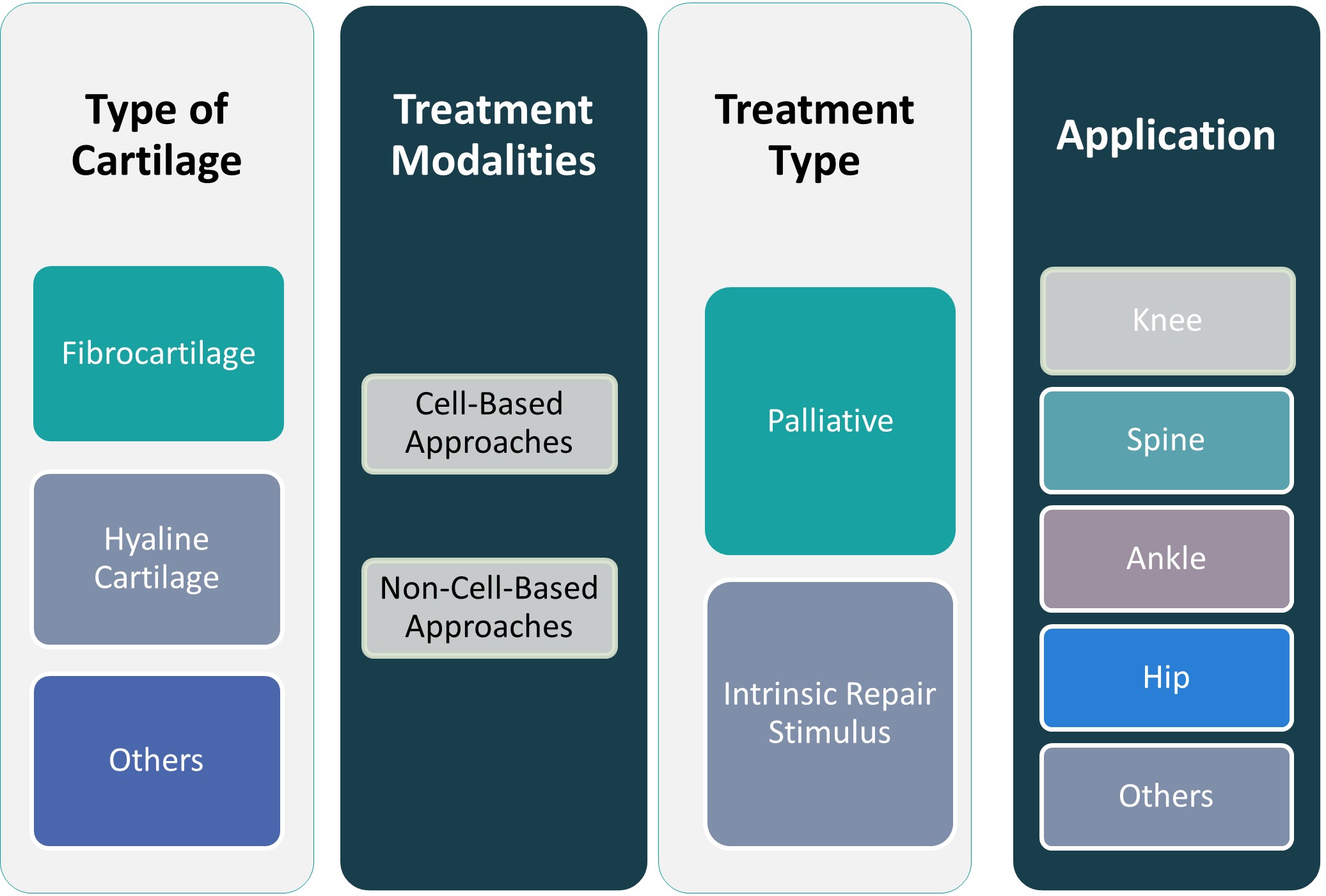
This report segments the UK Cartilage Repair Regeneration Market as follows:
Market Drivers
Increasing Prevalence of Osteoarthritis and Joint Disorders
The UK Cartilage Repair Regeneration Market is driven by the increasing prevalence of osteoarthritis and other joint disorders, particularly among the aging population. Osteoarthritis is one of the most common forms of arthritis in the UK, affecting a significant portion of the elderly population. With a growing geriatric demographic, the demand for effective cartilage repair and regeneration treatments is expected to rise. Joint-related conditions like these not only affect quality of life but also lead to long-term disability, making early intervention crucial. This rising healthcare burden encourages the development of advanced treatment options, providing a favorable environment for market growth.
- For instance, over 8 million people in the UK suffer from osteoarthritis, highlighting the increasing need for cartilage repair solutions
Advancements in Regenerative Medicine and Stem Cell Technologies
Regenerative medicine and stem cell-based therapies play a pivotal role in the growth of the UK Cartilage Repair Regeneration Market. Stem cell therapies, tissue engineering, and biologics have shown promising results in regenerating damaged cartilage and improving joint function. These technological advancements provide patients with less invasive options compared to traditional treatments like joint replacement surgeries. It allows for faster recovery times and more natural healing processes. Research into stem cell therapies continues to expand, further boosting its potential in cartilage repair, thereby supporting the market's growth trajectory.
- For instance, the UK has seen a rise in regenerative medicine research, with over 150 clinical trials currently investigating stem cell-based therapies for cartilage repair
Favorable Government Initiatives and Healthcare Infrastructure
The UK government’s support for healthcare innovation significantly impacts the UK Cartilage Repair Regeneration Market. Increased funding for medical research, particularly in regenerative medicine, and the push for new treatment options in the NHS create a favorable market environment. The country’s advanced healthcare infrastructure ensures accessibility to cutting-edge treatments, making it easier for patients to access cartilage repair solutions. The government’s focus on improving healthcare services further contributes to the market’s expansion, encouraging both domestic and international players to invest in the region.
Rising Consumer Awareness and Adoption of Minimally Invasive Treatments
Consumer awareness regarding cartilage repair treatments has significantly increased in the UK. Patients are more informed about the benefits of minimally invasive procedures, which reduce recovery times and improve treatment outcomes. With a greater emphasis on patient-centered care, individuals are increasingly opting for less invasive and more effective cartilage repair options. The UK Cartilage Repair Regeneration Market benefits from this shift in patient preferences as the demand for procedures such as arthroscopic surgeries and biologic treatments continues to grow. This trend is expected to shape the future of cartilage repair therapies in the country
Market Trends
Adoption of Advanced Biologic Treatments
The UK Cartilage Repair Regeneration Market is witnessing a growing trend toward the adoption of advanced biologic treatments. These therapies, including stem cell-based approaches, platelet-rich plasma (PRP) injections, and gene therapies, offer patients promising alternatives to traditional surgery. By harnessing the body’s natural healing mechanisms, biologics aim to regenerate cartilage and restore joint function with minimal intervention. Such treatments are particularly appealing for patients seeking to avoid joint replacements, leading to a rise in demand for biologic solutions. This trend aligns with the broader shift toward personalized medicine, where treatment plans are tailored to individual patients based on their unique needs and biological responses. As research continues to validate the efficacy of these treatments, the market for biologics is expected to expand further.
- For instane, over 12,000 stem cell-based cartilage repair procedures were performed in the UK, reflecting the increasing adoption of regenerative treatments
Shift Towards Minimally Invasive Procedures
Another notable trend in the UK Cartilage Repair Regeneration Market is the increasing preference for minimally invasive procedures. Traditional open surgeries are being replaced by less invasive techniques, such as arthroscopic surgery, which offers shorter recovery times and fewer complications. These procedures not only improve patient outcomes but also reduce healthcare costs by minimizing hospital stays and rehabilitation periods. With advancements in surgical technologies and enhanced patient education, more individuals are opting for minimally invasive options for cartilage repair. This trend is supported by both patients’ desire for quicker recoveries and healthcare systems’ emphasis on reducing operational costs while maintaining high-quality care.
- For instance, over 8,500 arthroscopic cartilage repair surgeries were conducted in the UK, demonstrating the growing preference for minimally invasive procedures
Market Challenges
High Treatment Costs and Limited Insurance Coverage
One of the key challenges facing the UK Cartilage Repair Regeneration Market is the high cost of advanced treatments. Regenerative therapies, such as stem cell-based treatments and tissue engineering, require significant investment in research, development, and patient care. These costs often limit accessibility, especially for individuals without sufficient insurance coverage. The limited coverage for such therapies in some healthcare plans further exacerbates the issue, making it difficult for many patients to afford these cutting-edge treatments. This financial barrier could slow the widespread adoption of advanced cartilage repair solutions, limiting the market’s potential.
- For instance, the average cost of cartilage repair procedures in the UK ranges between £14,000 and £18,000, whereas total knee replacement surgeries typically cost around £12,000
Regulatory Hurdles and Market Fragmentation
The regulatory environment for cartilage repair treatments in the UK presents another challenge. While the Medicines and Healthcare products Regulatory Agency (MHRA) ensures the safety and efficacy of treatments, the approval process can be lengthy and complex. This delays the introduction of innovative therapies to the market and may prevent smaller players from entering the market due to the high cost of regulatory compliance. Furthermore, market fragmentation, with numerous small and large players, makes it difficult for companies to differentiate themselves in a highly competitive environment. This can lead to slower market growth and innovation.
Market Opportunities
Expansion of Personalized Cartilage Repair Solutions
The UK Cartilage Repair Regeneration Market presents significant opportunities for the development of personalized cartilage repair solutions. With the growing focus on precision medicine, there is increasing demand for treatments tailored to individual patient profiles. Personalized therapies can provide better outcomes by addressing the specific needs of patients, such as their age, level of joint degeneration, and genetic factors. This shift toward customized treatments opens doors for innovation in regenerative medicine and biologic therapies, creating a competitive advantage for companies that can provide tailored solutions. Investment in research and development of these personalized therapies can further drive market growth.
Integration of Artificial Intelligence in Cartilage Repair
Another promising opportunity in the UK Cartilage Repair Regeneration Market lies in the integration of artificial intelligence (AI) in treatment planning and patient care. AI can help optimize cartilage repair strategies by analyzing patient data, predicting outcomes, and enhancing surgical precision. By using AI to assist in diagnosing cartilage damage and monitoring recovery, healthcare providers can offer more accurate and efficient treatments. This technological integration can not only improve patient outcomes but also reduce the risk of complications, offering an opportunity for market expansion through the adoption of AI-driven solutions in cartilage repair procedures.
Market Segmentation Analysis
By Type of Cartilage
The UK Cartilage Repair Regeneration Market is segmented by type of cartilage, primarily including fibrocartilage, hyaline cartilage, and others. Fibrocartilage is typically found in joints such as the knee and spine and is often targeted in repair treatments. Hyaline cartilage, the most common type found in articular joints, plays a critical role in joint movement and function. The market sees significant focus on hyaline cartilage due to its involvement in high-demand areas like knee and hip cartilage repair. Treatments targeting both types of cartilage focus on enhancing regenerative capacities and ensuring long-term joint health.
By Treatment Modalities
Treatment modalities in the UK Cartilage Repair Regeneration Market include cell-based approaches and non-cell-based approaches. Cell-based approaches, such as stem cell therapy and tissue engineering, are gaining traction due to their potential to regenerate cartilage and restore joint function. Non-cell-based approaches focus on methods like scaffold implants and biomaterials to facilitate cartilage repair. Both modalities offer different advantages, with cell-based therapies offering regenerative capabilities while non-cell-based treatments provide more immediate repair solutions. The market is poised to expand as both approaches evolve with technological advancements.
Segments
Based on Type of Cartilage
- Fibrocartilage
- Hyaline Cartilage
- Others
Based on Treatment Modalities
- Cell-Based Approaches
- Non-Cell-Based Approaches
Based on Treatment Type
- Palliative
- Intrinsic Repair Stimulus
Based on Application
- Knee
- Spine
- Ankle
- Hip
- Others
Based on Region
- England
- Scotland
- Wales
- Northern Ireland
Regional Analysis
Market Landscape in the UK
The UK Cartilage Repair Regeneration Market is characterized by a well-established healthcare infrastructure and a robust demand for advanced medical treatments. The country’s growing aging population and increasing prevalence of joint-related disorders such as osteoarthritis contribute significantly to the market's expansion. The National Health Service (NHS) plays a key role in providing healthcare solutions, including cartilage repair treatments, making these therapies accessible to a large portion of the population. The UK’s strong research and development landscape further supports market growth, as numerous institutions and companies focus on advancing cartilage repair technologies and regenerative treatments.
Investment in Advanced Technologies
The UK Cartilage Repair Regeneration Market benefits from substantial investment in healthcare technology and innovation. The region has seen a rise in the adoption of cell-based therapies, such as stem cell treatments and tissue engineering, which are revolutionizing the cartilage repair landscape. This growing interest in regenerative medicine aligns with the country's commitment to improving healthcare outcomes through innovation. The demand for minimally invasive treatments is increasing, with a focus on techniques that reduce recovery times and improve patient satisfaction. These technological advancements position the UK as a key player in the global cartilage repair market.
Competitive and Regulatory Environment
The UK Cartilage Repair Regeneration Market is highly competitive, with a range of local and international players contributing to its growth. Companies such as Smith & Nephew, Zimmer Biomet, and Arthrex are at the forefront, offering cutting-edge solutions for cartilage repair. The regulatory environment in the UK is supportive of new medical technologies, with the Medicines and Healthcare products Regulatory Agency (MHRA) overseeing the approval and monitoring of such treatments. This regulatory framework ensures the safety and efficacy of cartilage repair solutions, bolstering consumer confidence and facilitating market growth.
Key players
- Orthox Ltd
- Innotec Healthcare
- Smith & Nephew
- DePuy Synthes
- Anika Therapeutics
Competitive Analysis
The UK Cartilage Repair Regeneration Market is highly competitive, with several key players leading the way in innovation and market share. Companies like Smith & Nephew, DePuy Synthes, and Anika Therapeutics have established strong positions due to their extensive product portfolios, which include advanced regenerative solutions for cartilage repair. Orthox Ltd and Innotec Healthcare are also emerging players, focusing on cutting-edge treatments and technologies. These companies differentiate themselves through their unique approaches, such as stem cell-based therapies and minimally invasive surgical options. With continuous advancements in medical technology and a focus on research and development, these players aim to cater to the increasing demand for effective and efficient cartilage repair solutions. The competitive landscape remains dynamic, driven by ongoing efforts to enhance treatment outcomes and patient recovery times.
Recent Developments
- In April 2024, Zimmer Biomet and Arthrogenics entered a partnership to co-develop next-generation biologic medicines for cartilage repair, aiming to leverage Arthrogenics’ cell-therapy expertise alongside Zimmer Biomet’s orthopedic portfolio.
- In February 2024, the U.S. FDA granted 510(k) clearance for Zimmer Biomet’s ROSA Shoulder System, the first robotic-assisted solution cleared for total and reverse shoulder arthroplasty, signaling enhanced precision in joint restoration procedures.
- In June 2024, Askel Healthcare Ltd presented first clinical-trial results of its COPLA knee cartilage implant at the 9th Joint Preservation Congress in Warsaw, demonstrating early safety and functional gains in focal cartilage repair.
- On September 17, 2024, Sparta Biomedical announced treatment of the first patients with its Ormi™ partial-knee resurfacing device, a biomimetic implant designed to restore cartilage function and slow osteoarthritis progression.
- On December 18, 2024, Mesoblast’s Ryoncil (remestemcel-L) received U.S. FDA approval as the first mesenchymal stromal cell therapy for pediatric steroid-refractory acute graft-versus-host disease, paving the way for broader MSC applications-including potential off-label exploration in cartilage repair contexts.
- On May 8, 2025, Smith + Nephew published 4-year follow-up data showing that patients treated with its CARTIHEAL™ AGILI-C™ implant experienced an 87% lower risk of eventual knee arthroplasty or osteotomy, underscoring long-term implant durability and functional improvement.
- In February 2025, Mesoblast reported financial and operational results confirming advancement of its proprietary mesenchymal-cell platform; the report noted ongoing preparation for pivotal trials in orthopedic indications, including chronic low back pain and osteoarthritis models.
Market Concentration and Characteristics
The UK Cartilage Repair Regeneration Market is moderately concentrated, with a few dominant players holding substantial market share. Leading companies such as Smith & Nephew, DePuy Synthes, and Anika Therapeutics drive innovation through continuous research and product development, establishing themselves as key contributors to market growth. The market is characterized by rapid technological advancements in regenerative treatments, including stem cell therapies and tissue engineering. Competition is intense, with companies focusing on improving the effectiveness of treatments and reducing recovery times for patients. Smaller players, like Orthox Ltd and Innotec Healthcare, also contribute to the market by introducing niche solutions and targeting specific patient needs. The market’s dynamics are shaped by the balance between established market leaders and innovative startups, each striving to provide the most effective cartilage repair solutions. This competition fuels ongoing advancements and ensures a wide range of treatment options for patients.
Report Coverage
The research report offers an in-depth analysis based on Type of Cartilage, Treatment Modalities, Treatment Type, Application and Region. It details leading market players, providing an overview of their business, product offerings, investments, revenue streams, and key applications. Additionally, the report includes insights into the competitive environment, SWOT analysis, current market trends, as well as the primary drivers and constraints. Furthermore, it discusses various factors that have driven market expansion in recent years. The report also explores market dynamics, regulatory scenarios, and technological advancements that are shaping the industry. It assesses the impact of external factors and global economic changes on market growth. Lastly, it provides strategic recommendations for new entrants and established companies to navigate the complexities of the market.
Future Outlook
- As the prevalence of osteoarthritis and other joint disorders increases, there will be a continued rise in demand for regenerative treatments. Innovations in stem cell therapy and tissue engineering will drive the market forward.
- The market will see significant advancements in minimally invasive treatments, including robotic-assisted surgeries and advanced imaging techniques, leading to improved patient outcomes and shorter recovery times.
- With the growing focus on personalized healthcare, treatment plans tailored to individual patient needs will gain popularity. Customized cartilage repair therapies will improve the effectiveness of interventions and patient satisfaction.
- While knee cartilage repair currently dominates, other areas such as the hip, spine, and ankle will see increased treatment adoption. This broadening of application areas will open new market opportunities.
- There will be a rise in strategic partnerships and collaborations between pharmaceutical companies, biotechnology firms, and healthcare providers. These alliances will help advance the development and commercialization of new cartilage repair solutions.
- The UK government’s focus on healthcare innovation will continue to provide a favorable environment for market growth. Policies supporting research in regenerative medicine will contribute to the development of cutting-edge treatments.
- As patient awareness of advanced cartilage repair options grows, more individuals will seek out these treatments. Educational campaigns and greater access to information will drive market adoption.
- Biologic treatments, including PRP (platelet-rich plasma) and gene therapies, will gain wider acceptance in the UK. These therapies offer less invasive and more sustainable solutions compared to traditional surgery.
- The integration of artificial intelligence in treatment planning and recovery monitoring will enhance the precision and efficacy of cartilage repair procedures, improving patient outcomes and overall satisfaction.
- As the market for cartilage repair expands, insurance companies will increase coverage for regenerative treatments. This will make these advanced therapies more accessible to a broader patient base.

Request a Free Sample
Fill in your details and we'll send you a free sample report.
- Sample data tables & charts
- Research methodology
Market Dynamics
Increasing Prevalence of Osteoarthritis and Joint Disorders
The growing aging population in the UK is leading to a higher incidence of osteoarthritis and other joint disorders, which significantly increases the demand for effective cartilage repair and regeneration treatments.
Advancements in Regenerative Medicine and Stem Cell Technologies
Innovations in stem cell therapies, tissue engineering, and biologics are providing less invasive and more effective options for cartilage repair, driving adoption among both patients and healthcare providers.
Favorable Government Initiatives and Healthcare Infrastructure
The UK government’s support for medical research and innovation, combined with a robust healthcare infrastructure, ensures accessibility to advanced cartilage repair solutions and encourages investment in new technologies.
Rising Consumer Awareness and Adoption of Minimally Invasive Treatments
Patients in the UK are increasingly aware of the benefits of minimally invasive procedures, such as shorter recovery times and improved outcomes, leading to greater demand for advanced cartilage repair options.
Expansion of Personalized Cartilage Repair Solutions
The shift toward precision medicine and personalized therapies is enabling more tailored and effective cartilage repair treatments, improving patient satisfaction and driving market growth.
Need a Custom Version of This Report?
Tailor the scope, geography, or segments to your exact requirements.
- Custom geography or segment scope
- Direct access to our analyst team
Frequently Asked Questions
What is the market size of the UK Cartilage Repair Regeneration Market in 2023 and 2032?
What are the key drivers of growth in the UK Cartilage Repair Regeneration Market?
Which treatment modalities are gaining traction in the UK Cartilage Repair Regeneration Market?
How is the UK Cartilage Repair Regeneration Market expected to evolve in terms of technological advancements?
Table of Content
Chapter 1 Market Segmentation
- 1.1 Segmentation Framework
- 1.1.1 Product and Service Classification
- 1.1.2 Application and End-Use Classification
- 1.1.3 Technology and Solution Classification
- 1.1.4 Customer and Distribution Channel Classification
- 1.1.5 Geographic Segmentation
- 1.1.6 Market Segment Definitions and Boundaries
- 1.2 By Application
- 1.2.1 Knee
- 1.2.2 Spine
- 1.2.3 Ankle
- 1.2.4 Hip
- 1.2.5 Others
- 1.3 By Type of Cartilage
- 1.3.1 Fibrocartilage
- 1.3.2 Hyaline Cartilage
- 1.3.3 Others
- 1.4 By Treatment Modalities
- 1.4.1 Cell-Based Approaches
- 1.4.2 Non-Cell-Based Approaches
Chapter 2 Introduction
- 2.1 Report Objectives and Scope
- 2.2 Product Definition and Industry Terminology
- 2.3 Market Inclusions and Exclusions
- 2.4 Research Process
- 2.4.1 Primary Research and Expert Interviews
- 2.4.2 Secondary Research and Source Review
- 2.4.3 Top-Down and Bottom-Up Estimation
- 2.4.4 Data Triangulation and Verification
- 2.5 Market Size Measurement Basis
- 2.5.1 2024: USD 224.21 million → 2032: USD 341.43 million
- 2.6 Historical and Forecast Reference Periods
- 2.6.1 Base Year: 2024
- 2.6.2 Forecast Period: 2024-2032
- 2.7 Research Assumptions and Limitations
Chapter 3 Executive Summary
- 3.1 Market Snapshot and Key Findings
- 3.2 Base-Year Market Size, 2024
- 3.3 Forecast Market Size, 2032
- 3.4 Revenue and Volume Growth Outlook
- 3.5 Key Demand and Supply Indicators
- 3.6 Leading Market Segments
- 3.7 Fastest-Growing Market Opportunities
- 3.8 Regional Performance Highlights
- 3.9 Technology and Industry Transformation
- 3.10 Competitive Landscape Summary
- 3.11 Analyst View and Strategic Implications
Chapter 4 UK Cartilage Repair Regeneration Market Trends and Developments
- 4.1 Historical Industry Development
- 4.2 Recent Market Trends and Developments
- 4.3 Demand and Customer Behavior Trends
- 4.4 Technology and Product Innovation
- 4.5 Artificial Intelligence, Automation and Digitalization
- 4.6 Local Manufacturing and Supply Chain Realignment
- 4.7 Industry Partnerships, Mergers and Acquisitions
- 4.8 Sustainability and Circular Economy Developments
- 4.9 Government and Private Sector Investment Trends
- 4.10 Emerging Business Models and Commercialization
- 4.11 Industry Developments and Announcements
Chapter 5 UK Cartilage Repair Regeneration Market Production, Supply and Demand Analysis
- 5.1 Demand Trend and Consumption Analysis
- 5.2 Demand Forecast, 2024-2032
- 5.3 Production and Output Trend
- 5.4 Production and Output Forecast, 2024-2032
- 5.5 Installed Capacity and Capacity Utilization
- 5.6 Company-Wise Production Plants and Statistics
- 5.6.1 Installed Production Capacity
- 5.6.2 Actual Production
- 5.6.3 Planned Capacity and Expansion Targets
- 5.7 Supply Chain Structure and Procurement Trends
- 5.8 Supply-Demand Gap and Bottlenecks
- 5.9 Import Dependence and Sourcing Structure
- 5.10 Contract Manufacturing and Outsourcing
- 5.11 Regional Supply and Demand Concentration
Chapter 6 UK Cartilage Repair Regeneration Market Pricing Analysis
- 6.1 Pricing Structure and Measurement
- 6.2 Historical Pricing Trends
- 6.3 Pricing Outlook, 2024-2032
- 6.4 Average Selling Price and Unit Economics
- 6.5 Pricing by Product and Market Segment
- 6.6 Geographic Pricing Differences
- 6.7 Key Input, Energy, Labor and Logistics Costs
- 6.8 Contract Pricing and Purchasing Models
- 6.9 Pricing Sensitivity and Competitive Positioning
- 6.10 Price, Margin and Profitability Implications
Chapter 7 UK Cartilage Repair Regeneration Market Dynamics
- 7.1 Market Growth Drivers
- 7.1.1 Demand-Side Drivers
- 7.1.2 Technology and Innovation Drivers
- 7.1.3 Infrastructure and Investment Drivers
- 7.1.4 Regulatory and Policy Drivers
- 7.2 Market Restraints
- 7.2.1 Cost and Affordability Constraints
- 7.2.2 Technology and Adoption Barriers
- 7.2.3 Supply Chain and Operational Constraints
- 7.3 Market Challenges
- 7.3.1 Competitive Pressure and Margin Erosion
- 7.3.2 Skills, Infrastructure and Implementation Gaps
- 7.4 Emerging Market Opportunities
- 7.5 Market Dynamics Impact and Time-Horizon Assessment
Chapter 8 UK Cartilage Repair Regeneration Value Chain Analysis
- 8.1 Industry Value Chain Overview
- 8.2 Upstream Suppliers and Critical Inputs
- 8.3 Technology and Component Providers
- 8.4 Manufacturing or Service Delivery
- 8.5 Distribution, Channel Partners and Integrators
- 8.6 Downstream Applications and End Users
- 8.7 Value Addition and Profit Pools
- 8.8 Vertical Integration and Outsourcing
- 8.9 Supplier Concentration and Risk
- 8.10 Supply Chain Localization and Resilience
Chapter 9 UK Cartilage Repair Regeneration Market Regulations and Policies
- 9.1 Relevant Laws, Standards and Compliance Frameworks
- 9.2 Product, Service, Safety and Quality Requirements
- 9.3 Government Policies, Incentives and Subsidies
- 9.4 Imports, Exports and Trade Barriers
- 9.5 Public Procurement and Local Content Requirements
- 9.6 Environmental and Sustainability Compliance
- 9.7 Upcoming Policy Changes and Market Implications
Chapter 10 UK Cartilage Repair Regeneration Market Hotspots and Opportunities
- 10.1 Market Opportunity Mapping and Growth Hotspots
- 10.2 High-Growth Applications and Customer Groups
- 10.3 Underserved Markets and White-Space Opportunities
- 10.4 Emerging Technology and Product Opportunities
- 10.5 New Capacity and Investment Hotspots
- 10.6 Market Entry and Expansion Opportunities
- 10.7 Distribution and Partnership Opportunities
- 10.8 Near-Term and Long-Term Commercial Potential
- 10.9 Opportunity Attractiveness and Execution Risks
Chapter 11 UK Cartilage Repair Regeneration Market Outlook, 2024-2032
- 11.1 Market Size and Analysis
- 11.1.1 Revenue (Market Measurement: 2024: USD 224.21 million → 2032: USD 341.43 million)
- 11.1.2 Market Volume and Quantity Sold
- 11.1.3 Historical Market Size
- 11.1.4 Base-Year Market Size, 2024
- 11.2 Market Forecast, 2024-2032
- 11.2.1 Revenue Forecast to 2032
- 11.2.2 Volume Forecast to 2032
- 11.2.3 CAGR and Year-on-Year Growth
- 11.2.4 Incremental Revenue Opportunity
- 11.3 Forecast Assumptions and Scenario Analysis
- 11.3.1 Base-Case Forecast
- 11.3.2 Optimistic and Conservative Scenarios
- 11.3.3 Technology, Pricing and Policy Sensitivities
- 11.4 Market Attractiveness and Growth Outlook
Chapter 12 UK Cartilage Repair Regeneration Market Segmentation and Outlook
- 12.1 Segmentation Summary and Market Shares, 2024
- 12.2 Largest and Fastest-Growing Segments
- 12.3 By Application - Market Size and Forecast, 2024-2032
- 12.3.1 Segment Definition and Scope
- 12.3.2 Historical Market Size
- 12.3.3 Revenue Forecast, 2024-2032
- 12.3.4 Volume Forecast, 2024-2032
- 12.3.5 Base-Year Market Share, 2024
- 12.3.6 Segment CAGR and Growth Drivers
- 12.3.7 Subsegment Market Size and Forecast
- 12.3.7.1 Knee
- 12.3.7.2 Spine
- 12.3.7.3 Ankle
- 12.3.7.4 Hip
- 12.3.7.5 Others
- 12.3.8 Subsegment Pricing and Adoption Trends
- 12.3.9 Leading Suppliers and Competition
- 12.3.10 Regional Demand and Opportunities
- 12.4 By Type of Cartilage - Market Size and Forecast, 2024-2032
- 12.4.1 Segment Definition and Scope
- 12.4.2 Historical Market Size
- 12.4.3 Revenue Forecast, 2024-2032
- 12.4.4 Volume Forecast, 2024-2032
- 12.4.5 Base-Year Market Share, 2024
- 12.4.6 Segment CAGR and Growth Drivers
- 12.4.7 Subsegment Market Size and Forecast
- 12.4.7.1 Fibrocartilage
- 12.4.7.2 Hyaline Cartilage
- 12.4.7.3 Others
- 12.4.8 Subsegment Pricing and Adoption Trends
- 12.4.9 Leading Suppliers and Competition
- 12.4.10 Regional Demand and Opportunities
- 12.5 By Treatment Modalities - Market Size and Forecast, 2024-2032
- 12.5.1 Segment Definition and Scope
- 12.5.2 Historical Market Size
- 12.5.3 Revenue Forecast, 2024-2032
- 12.5.4 Volume Forecast, 2024-2032
- 12.5.5 Base-Year Market Share, 2024
- 12.5.6 Segment CAGR and Growth Drivers
- 12.5.7 Subsegment Market Size and Forecast
- 12.5.7.1 Cell-Based Approaches
- 12.5.7.2 Non-Cell-Based Approaches
- 12.5.8 Subsegment Pricing and Adoption Trends
- 12.5.9 Leading Suppliers and Competition
- 12.5.10 Regional Demand and Opportunities
- 12.6 Segment Growth Comparison
- 12.7 Segment Attractiveness and Priority Matrix
Chapter 13 UK Cartilage Repair Regeneration End-Use and Application Market Outlook
- 13.1 End-Use Industry and Customer Demand Structure
- 13.2 Leading Applications and Customer Groups
- 13.3 End-Use Market Size, Share and Forecast
- 13.4 Major End-Use Industry Deep Dives
- 13.4.1 Customer Requirements and Use Cases
- 13.4.2 Demand and Replacement Cycles
- 13.4.3 Technical and Regulatory Considerations
- 13.4.4 Purchasing and Procurement Models
- 13.4.5 Leading Vendors and Distribution Channels
- 13.4.6 Forecast and Commercial Opportunities
- 13.5 Emerging Applications and Cross-Segment Demand
- 13.6 End-Use Industry Investment Priorities
Chapter 14 UK Cartilage Repair Regeneration Geographic Market Outlook, 2024-2032
- 14.1 Domestic Market Distribution and Demand Clusters
- 14.2 State- or Province-Wise Market Size and Forecast, 2024-2032
- 14.3 City and Metropolitan Market Outlook
- 14.4 Industrial, Manufacturing and Commercial Clusters
- 14.5 Geographic Concentration of Key End Users
- 14.6 Local Pricing and Purchasing Differences
- 14.7 Domestic Production Facilities and Capacity Map
- 14.8 Local Infrastructure and Project Pipeline
- 14.9 State-Level Policy and Incentive Differences
- 14.10 Subnational Investment Hotspots and Opportunities
- 14.11 Distribution and Logistics Networks
- 14.12 Domestic Competitive Footprint
Chapter 15 UK Cartilage Repair Regeneration Technology, Innovation and Sustainability Outlook
- 15.1 Technology Landscape and Maturity
- 15.2 Product, Process and Service Innovation
- 15.3 AI, Automation and Digital Tools in the Industry
- 15.4 Technology Adoption and Performance Benchmarking
- 15.5 Innovation Pipeline and R&D Investment
- 15.6 Patent and Intellectual Property Trends
- 15.7 Energy Efficiency and Resource Management
- 15.8 Sustainability, Recycling and Circularity
- 15.9 Technology Roadmap, 2024-2032
- 15.10 Risks of Obsolescence and Technology Substitution
Chapter 16 UK Cartilage Repair Regeneration Market Key Strategic Imperatives
- 16.1 Growth and Market Entry Priorities
- 16.2 High-Return Products and Segments
- 16.3 Pricing, Profitability and Cost Optimization
- 16.4 Technology Investment and Product Differentiation
- 16.5 Supply Chain Localization and Resilience
- 16.6 Distribution and Customer Acquisition
- 16.7 Partnership, Acquisition and Capacity Strategy
- 16.8 Regional Expansion Priorities
- 16.9 Short-, Medium- and Long-Term Actions
Chapter 17 Competition Outlook
- 17.1 Industry Competition Characteristics
- 17.2 Market Structure and Concentration
- 17.3 Market Share and Competitive Positioning, 2024
- 17.4 Company-Wise Revenue and Product Benchmarking
- 17.5 Production and Service Capacity Benchmarking
- 17.6 Technology, Pricing and Differentiation
- 17.7 Regional Footprint and Distribution Strength
- 17.8 Mergers, Acquisitions and Strategic Alliances
- 17.9 New Entrants and Competitive Threats
- 17.10 Porter's Five Forces and Industry Attractiveness
- 17.11 Competitive Outlook, 2024-2032
Chapter 18 Company Profiles
- 18.1 Company Coverage and Selection Criteria
- 18.2 Smith & Nephew
- 18.2.1 Business Description
- 18.2.2 Company Ownership and Geographic Presence
- 18.2.3 Product and Service Portfolio
- 18.2.4 Manufacturing and Operating Footprint
- 18.2.5 Production Capacity and Expansion Plans
- 18.2.6 Financial Performance and Investment
- 18.2.7 Market Share and Competitive Position
- 18.2.8 Technology and Innovation Capabilities
- 18.2.9 Strategic Alliances or Partnerships
- 18.2.10 Recent Developments
- 18.2.11 Growth Strategy and Outlook
- 18.3 Zimmer Biomet
- 18.4 Arthrex
- 18.5 DePuy Synthes
- 18.6 Anika Therapeutics
- 18.7 Orthox Ltd
- 18.8 Innotec Healthcare
- 18.9 Stryker
- 18.10 Medtronic
- 18.11 Askel Healthcare
- 18.12 Other Relevant Market Participants
Note: Every listed company is profiled on the structure shown under the first company. The company list is preliminary and may change based on research findings, market developments, data availability and client requirements.
Chapter 19 Disclaimer
- 19.1 Research and Forecast Disclaimer
- 19.2 Data Source and Estimation Limitations
Note: The depth of individual sections depends on data availability for this market. Volume, capacity, trade and other unit-based metrics are included where applicable.

