
| REPORT ATTRIBUTE | DETAILS |
|---|---|
| Historical Period | 2019-2022 |
| Base Year | 2023 |
| Forecast Period | 2024-2032 |
| U.S. Industrial Design Market Size 2023 | USD 13,862.09 million |
| U.S. Industrial Design Market, CAGR | 4.99% |
| U.S. Industrial Design Market Size 2032 | USD 21,487.23 million |
Market Overview
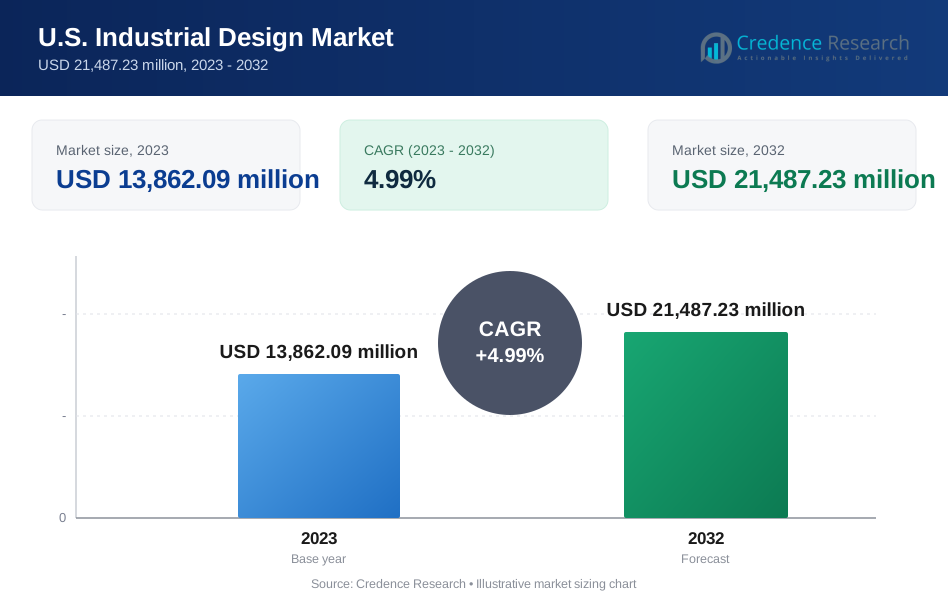
The U.S. Industrial Design Market is projected to grow from USD 13,862.09 million in 2023 to an estimated USD 21,487.23 million by 2032, registering a compound annual growth rate (CAGR) of 4.99% from 2024 to 2032. This growth underscores the increasing demand for innovative and user-centric product designs across various industries, including consumer electronics, automotive, and healthcare.
Key drivers of the U.S. industrial design market include the rising need for aesthetically pleasing and functional products, technological advancements such as 3D printing and CAD software, and the growing focus on sustainability. Trends such as the integration of smart technologies into product design and an emphasis on eco-friendly materials are shaping the market. Additionally, the increasing investments in research and development by companies to stay ahead in a competitive landscape are fostering innovation and accelerating market growth.
Geographically, the market is concentrated in regions with a robust industrial base, including states such as California, Texas, and Michigan, which host a significant number of design firms and manufacturing units. Key players in the U.S. industrial design market include IDEO, Frog Design, Ammunition Group, and Ziba Design, among others. These companies focus on offering innovative solutions to meet evolving consumer needs while driving sustainable design practices to cater to environmental concerns.
Market Insights
- The U.S. industrial design market is projected to grow from USD 13,862.09 million in 2023 to USD 21,487.23 million by 2032, at a CAGR of 4.99% from 2024 to 2032.
- Key growth drivers include rising demand for user-centric and functional designs, advancements in technologies like 3D printing and CAD, and the growing focus on sustainability.
- Challenges include high competition, cost pressures on design firms, and the need to adapt to rapid technological advancements and evolving consumer preferences.
- California leads the market with its strong tech ecosystem, while Michigan and Texas dominate in automotive and manufacturing-based design innovation.
- Sectors like healthcare and renewable energy are driving demand for innovative designs, particularly in ergonomic medical devices and sustainable energy solutions.
- The market sees a strong shift toward eco-friendly materials and sustainable design practices, driven by consumer awareness and regulatory requirements.
- The adoption of digital tools like virtual reality and 3D prototyping is transforming the design process, improving efficiency and reducing costs across industries.
Market Drivers
Growing Demand for User-Centric and Aesthetic Product Designs
The U.S. industrial design market is significantly influenced by the increasing consumer focus on product functionality, usability, and aesthetics. Businesses are prioritizing customer-centric designs to differentiate their offerings and attract a loyal consumer base. For instance, the design of the Apple iPhone exemplifies how a focus on user experience and aesthetics can drive market success. Its intuitive interface and sleek design have set a standard in the smartphone industry, demonstrating that consumers prioritize both functionality and visual appeal in their purchasing decisions. Similarly, Dyson vacuum cleaners have been designed to address common user pain points, such as suction power and ease of use, showcasing how ergonomic design can enhance user satisfaction. This growing emphasis on design excellence not only enhances brand identity but also propels investments in industrial design services, contributing to market growth.
Technological Advancements and Integration in Design Processes
Technological advancements are revolutionizing industrial design practices in the U.S., with tools like 3D printing, computer-aided design (CAD), and virtual reality (VR) reshaping the landscape. These technologies enable designers to experiment with intricate product models, accelerate prototyping processes, and ensure precision in execution. For instance, Ford Motor Company has integrated VR into its vehicle design process, allowing teams to collaborate in real-time across different locations. This technology facilitates visualization and manipulation of 3D models before physical prototypes are created, significantly reducing development time and costs. Additionally, 3D printing technology has transformed prototyping by allowing rapid iteration and customization of designs across various industries. These advancements streamline the design process while fostering innovation, enabling designers to explore complex ideas without traditional manufacturing constraints.
Rising Sustainability and Eco-Friendly Design Practices
Sustainability has emerged as a defining factor in modern industrial design, with companies increasingly integrating eco-friendly materials and processes into their strategies. For instance, the automotive industry is adopting sustainable practices by designing lighter vehicles that improve fuel efficiency. Companies like Volvo lead the way by remanufacturing parts to reduce raw material consumption and energy use. Furthermore, innovative packaging solutions, such as biodegradable materials developed for automotive components, reflect a shift towards environmentally responsible practices across industries. This emphasis on sustainability not only meets regulatory requirements but also aligns with consumer expectations for eco-friendly products. As industrial designers create sustainable solutions that address environmental concerns, this shift becomes a market necessity and an opportunity for innovation.
Expansion of Industry Applications and Emerging Sectors
The U.S. industrial design market is experiencing growth due to its expanding applications across diverse industries beyond traditional sectors like consumer goods and automotive. For instance, the healthcare sector is witnessing a surge in demand for ergonomic medical devices designed with patient comfort in mind. Products such as intuitive insulin pens simplify diabetes management for users. Additionally, industrial design is being applied to renewable energy technologies like solar panels and wind turbines, showcasing its versatility across sectors. This diversification broadens the market’s scope while driving demand for specialized design services. As industries recognize the importance of innovative design solutions, industrial design emerges as a critical driver of efficiency and innovation across various fields.
Market Trends
Integration of Smart Technologies into Product Design
One of the most prominent trends shaping the U.S. industrial design market is the growing incorporation of smart technologies into products. Consumers increasingly demand devices that combine functionality with connectivity, driving designers to integrate Internet of Things (IoT) capabilities, artificial intelligence (AI), and advanced sensors into their designs. For instance, smart home devices have evolved to include features that not only serve practical purposes but also enhance user experience. Smart thermostats, such as the Nest Learning Thermostat, utilize machine learning to adapt to users' schedules, optimizing energy consumption by learning when to adjust temperatures based on occupancy patterns. Smart refrigerators, like Samsung's Bespoke models, are equipped with AI capabilities that identify food items, alert users about expiration dates, and suggest recipes based on available ingredients. Additionally, smart security systems, such as the Ring Video Doorbell, combine video surveillance with motion detection and smartphone alerts, allowing homeowners to monitor their property remotely. These examples illustrate how industrial designers leverage smart technologies to create products that meet functional needs while engaging consumers through intuitive interfaces and seamless integration into their daily lives. This trend reflects a broader digital transformation across various industries, emphasizing the importance of connectivity and user-centric design in modern product development.
Emphasis on Sustainable and Eco-Friendly Design Practices
Sustainability continues to be a central focus in the U.S. industrial design market, driven by increasing environmental awareness among consumers and regulatory pressures. Designers are adopting eco-friendly materials, such as biodegradable plastics, recycled metals, and organic fabrics, to minimize environmental impact. For instance, the automotive industry is witnessing a rise in lightweight and energy-efficient designs that prioritize sustainability without sacrificing performance.Leading manufacturers are now integrating materials like carbon fiber and aluminum to reduce vehicle weight while enhancing fuel efficiency. Moreover, companies like Tesla are at the forefront of this trend by producing electric vehicles that not only minimize emissions but also promote sustainable energy use through solar charging options. In packaging design, brands are focusing on reducing material waste by utilizing innovative solutions like compostable packaging for food products or reusable containers that encourage consumers to reduce single-use plastics.This emphasis on sustainable practices aligns with global sustainability goals and enhances brand reputation. Environmentally conscious consumers are increasingly inclined to support companies that demonstrate a commitment to green practices, further driving the demand for eco-friendly designs across various sectors.
Increasing Use of Advanced Design Tools and Digital Prototyping
The adoption of cutting-edge technologies in the design process is transforming the industrial design landscape in the U.S. Tools such as computer-aided design (CAD), 3D printing, and virtual reality (VR) are enabling designers to create detailed models, test prototypes, and refine designs with unprecedented precision. Digital prototyping significantly reduces time-to-market by streamlining the iterative design process and minimizing production errors. Furthermore, the rise of generative design, powered by AI, allows designers to explore numerous design iterations automatically, optimizing for specific parameters such as weight, strength, or aesthetics. These advancements not only enhance creativity but also improve efficiency, enabling companies to deliver innovative products that meet evolving consumer demands.
Focus on Personalization and Customization in Design
Personalization has emerged as a key trend in the U.S. industrial design market, reflecting the shift towards consumer-centric products. Modern consumers value unique and tailored experiences, prompting businesses to offer customizable options in their product lines. From furniture to consumer electronics, industrial designers are creating designs that can be adapted to individual preferences in terms of style, color, functionality, and features. The rise of digital manufacturing technologies, such as 3D printing, further supports this trend by enabling on-demand production and customization at scale. This focus on personalization not only enhances customer satisfaction but also strengthens brand loyalty, as consumers perceive personalized products as more valuable and relevant to their needs.
Market Challenges
High Competition and Cost Pressures
For instance, many design firms are compelled to invest heavily in advanced technologies to stay competitive, such as 3D printing and CAD software, which can be prohibitively expensive for smaller firms. The financial strain is compounded by the need to maintain quality while managing tight project timelines. As a result, firms often find themselves in a position where they must deliver innovative designs without exceeding budget constraints, leading to a precarious balance between creativity and financial viability.Moreover, the competitive landscape has intensified due to an influx of new entrants into the market. This saturation has made it increasingly difficult for established firms to differentiate their offerings. For example, automotive companies have reported significant reductions in prototyping costs—up to 25%—by integrating VR and AR technologies into their design processes, highlighting how technological adoption is essential for maintaining a competitive edge in a crowded marketplace.
Adapting to Rapid Technological Advancements
Additionally, the rapid pace of technological change poses a significant challenge for designers. Emerging technologies such as AI and IoT require continuous skill upgrades and adaptation of new tools. Many design teams report experiencing skill gaps that hinder project timelines and innovation. For instance, companies that fail to incorporate user-centered design principles often struggle with product relevance, as consumer preferences shift towards more personalized and sustainable options.As consumer expectations evolve, designers face the pressure of not only keeping up with these trends but also ensuring that their products meet diverse demands. This constant need for innovation can stretch resources thin, making it difficult for firms to sustain long-term strategic growth while navigating these complexities.
Market Opportunities
Growing Demand for Sustainable and Eco-Friendly Designs
The increasing focus on sustainability is reshaping consumer preferences and business practices across various industries. For instance, many companies are now adopting eco-friendly materials such as recycled plastics and sustainably sourced wood in their product designs. This shift is not merely a trend; it reflects a fundamental change in how products are conceived and manufactured, with an emphasis on reducing environmental impact throughout the product lifecycle. Designers who prioritize sustainable practices are finding themselves at the forefront of innovation, addressing both consumer demand and regulatory pressures aimed at minimizing carbon footprints.Moreover, industries like automotive and consumer goods are actively seeking design solutions that align with corporate sustainability goals. This includes the development of products that are not only functional but also contribute to a circular economy by being recyclable or biodegradable. The integration of sustainable design principles allows companies to differentiate themselves in a competitive market while contributing positively to global environmental initiatives.
Expanding Applications Across Emerging Industries
The industrial design sector is witnessing a diversification of applications into burgeoning fields such as healthcare and renewable energy. For example, the healthcare industry is increasingly focused on creating ergonomic medical devices that enhance user experience and patient safety. This is evident in the design of intuitive interfaces for wearables and telehealth devices that facilitate remote patient monitoring.In renewable energy, innovative designs for solar panels and wind turbines are crucial as the demand for clean energy solutions grows. Companies are investing in research to develop more efficient energy systems that not only meet current needs but also anticipate future challenges posed by climate change. By embracing these emerging applications, industrial design firms can expand their service offerings and tap into new revenue streams, ensuring they remain relevant in an evolving marketplace.Furthermore, the rise of smart technology presents unique opportunities for industrial designers to create products that integrate seamlessly with IoT systems. This trend fosters enhanced functionality and user engagement, as seen in smart home devices that offer both aesthetic appeal and practical benefits.
Market Segmentation Analysis
By Product
The market is categorized into automotive, furniture, and packaging segments. The automotive segment holds a significant share, driven by the need for innovative, lightweight, and energy-efficient vehicle designs. Industrial designers are increasingly focusing on sustainability and user experience, aligning with the automotive industry's electrification trends. The furniture segment is also growing, fueled by demand for ergonomic and aesthetically appealing designs in both residential and commercial spaces. Meanwhile, the packaging segment is experiencing robust growth due to the rising focus on eco-friendly and functional designs, particularly in the consumer goods and e-commerce sectors.
By Application
Key applications include transportation, consumer goods, and medical devices. The transportation segment, encompassing automotive, aviation, and rail systems, benefits from advancements in materials and smart technologies. In the consumer goods segment, the growing demand for personalized and visually appealing products drives innovation. The medical devices segment is gaining traction, as healthcare providers prioritize user-friendly, ergonomic, and portable device designs that enhance patient outcomes and operational efficiency.
Segments
Based on Product
- Automotive
- Furniture
- Packaging
Based on Application
- Transportation
- Consumer Goods
- Medical Devices
Based on End-User
- Automotive
- Electronics
- Healthcare
- Aerospace
Based on Region
- California
- Texas
- Michigan
Regional Analysis
Western Region (35%)
The Western region is the largest contributor to the U.S. industrial design market, accounting for approximately 35% of the market share. California, in particular, is a major hub for innovation, with its concentration of tech companies, design firms, and manufacturing industries. The region benefits from a thriving consumer electronics sector, with companies such as Apple, Google, and Tesla driving demand for cutting-edge product designs. Additionally, the region's focus on sustainability and green design has fueled growth in eco-friendly product development, particularly in industries like automotive, technology, and packaging. Washington and Oregon also contribute to the region's strong market position, with a focus on sustainable design and a growing tech industry.
Midwest Region (28%)
The Midwest region holds around 28% of the U.S. industrial design market, primarily due to its historic dominance in automotive manufacturing. Michigan, home to Detroit—the epicenter of the U.S. automotive industry—remains a critical player in automotive industrial design. As the automotive industry transitions towards electric vehicles and autonomous technologies, demand for innovative and sustainable designs continues to rise. Additionally, the Midwest is also prominent in sectors such as healthcare, with design firms working on medical devices and equipment. The region's rich manufacturing base and well-established design firms make it a key contributor to industrial design in the U.S.
Key players
- RKS Design
- Busse Design
- Designworks
- Accenture
- BlueFocus Intelligent Communications Group Co.
- IDEO LLC
- GK Design
- Altran Technologies SA
- PDD Group Ltd
- Ziba Design
Competitive Analysis
The U.S. industrial design market is highly competitive, with a mix of established players and emerging firms striving to differentiate themselves through innovation, quality, and service. Companies like IDEO LLC and Designworks are recognized for their innovative and user-centric approaches, offering comprehensive design solutions across various industries. Accenture and BlueFocus Intelligent Communications Group Co. leverage their technological expertise to integrate advanced tools and processes into industrial design, ensuring efficiency and precision. On the other hand, firms such as RKS Design and Ziba Design focus on creating visually appealing and sustainable solutions that cater to evolving consumer preferences. The competition intensifies as players invest in cutting-edge technologies like 3D printing, AI, and virtual reality to enhance their capabilities. Additionally, companies are expanding their portfolios and collaborating with diverse industries to address niche requirements, further driving innovation and market growth.
Recent Developments
- In September 2024, RKS Design announced the launch of their new product design methodology, *Psycho-Aesthetics®*, which emphasizes human-centered design principles. This innovative approach aims to enhance user experience by integrating emotional resonance into product development. Their recent projects include the design of a mobile ventilator for emergency medical services, showcasing their commitment to addressing critical healthcare needs through advanced industrial design techniques.
- In December 2024, Busse Design revealed plans to expand their service offerings by integrating UX/UI design with their traditional product development processes. This strategic move aims to create more holistic solutions for clients by enhancing user interaction and engagement across various platforms. Their recent collaboration with a leading consumer electronics brand focuses on developing intuitive interfaces that improve user accessibility and satisfaction.
- On January 6, 2025, Accenture launched its *AI Refinery for Industry*, a suite of industry-specific AI solutions designed to streamline operations and enhance productivity for businesses across various sectors. This initiative aims to accelerate the adoption of generative AI technologies, enabling organizations to deploy customized AI agents rapidly. Accenture's focus on digital transformation is set to reshape industrial processes and improve efficiency in the US market.
- In January 2025, BlueFocus announced its strategic pivot towards integrating generative AI into its core operations. This move is aimed at enhancing creative processes within marketing and communication services. The company has begun replacing traditional outsourcing methods with AI-generated content solutions, reflecting a significant shift in how creative services are delivered in the industry.
- As of January 1, 2025, IDEO has reaffirmed its commitment to sustainability by launching a new initiative focused on redesigning everyday products with eco-friendly materials. This initiative aims to address consumer demand for sustainable options while maintaining high aesthetic standards. IDEO's recent projects include collaborations with major brands to innovate packaging solutions that reduce environmental impact.
- In December 2024, GK Design announced an expansion of their research-based design innovation services. They are focusing on creating products that not only meet user needs but also resonate culturally with diverse consumer bases. Their recent work includes developing packaging designs for sustainable products aimed at environmentally conscious consumers.
- On January 7, 2025, Altran Technologies introduced *Code Detect AI*, an innovative tool designed to help software developers identify bugs more efficiently using machine learning algorithms. This tool represents a significant advancement in Altran's digital design services, enhancing their ability to support complex software development projects across various industries.
- In January 2025, Ziba Design launched a new service focused on behavioral design aimed at improving consumer engagement through strategic messaging campaigns. Their recent project involved redesigning retail experiences for outdoor gear brands, emphasizing sustainability and customer interaction as key drivers for brand loyalty and market differentiation.
Market Concentration and Characteristics
The U.S. industrial design market is moderately concentrated, with a mix of well-established firms and emerging players driving innovation across various industries. Prominent companies such as IDEO LLC, RKS Design, and Designworks hold significant market shares due to their expertise, extensive portfolios, and ability to adapt to evolving trends like sustainability and smart technology integration. Smaller firms also contribute by catering to niche markets and offering specialized design services. The market is characterized by intense competition, driven by the need for differentiation, rapid technological advancements, and a growing emphasis on user-centric and eco-friendly designs. Collaboration between industrial designers and manufacturers is a key feature, enabling the seamless transformation of concepts into practical, aesthetically appealing products. This competitive landscape encourages innovation, fosters diverse design approaches, and supports the creation of value-driven products that meet dynamic consumer demands.
Report Coverage
The research report offers an in-depth analysis based on Product, Application, End-User and Region. It details leading market players, providing an overview of their business, product offerings, investments, revenue streams, and key applications. Additionally, the report includes insights into the competitive environment, SWOT analysis, current market trends, as well as the primary drivers and constraints. Furthermore, it discusses various factors that have driven market expansion in recent years. The report also explores market dynamics, regulatory scenarios, and technological advancements that are shaping the industry. It assesses the impact of external factors and global economic changes on market growth. Lastly, it provides strategic recommendations for new entrants and established companies to navigate the complexities of the market.
Future Outlook
- The market will increasingly prioritize eco-friendly designs, driven by consumer demand for sustainable products and stricter environmental regulations.
- Emerging technologies like AI, IoT, and AR will become integral to industrial design, enhancing product functionality and creating immersive user experiences.
- The rising adoption of smart devices across industries will fuel demand for designs that seamlessly integrate connectivity and intuitive user interfaces.
- Healthcare, renewable energy, and electric vehicles will offer significant growth opportunities for industrial design, requiring innovative and ergonomic solutions.
- The focus on personalized and customizable products will drive designers to create flexible designs catering to individual consumer preferences.
- Enhanced collaboration between design firms and manufacturers will streamline prototyping and production processes, ensuring faster time-to-market.
- Regions like California and Michigan will maintain leadership roles, while emerging areas will leverage local expertise to drive growth in niche sectors.
- The adoption of advanced tools like 3D printing and CAD software will grow, improving efficiency, reducing costs, and fostering design innovation.
- As global competition intensifies, U.S. design firms may expand operations overseas or outsource to optimize costs and gain access to diverse talent pools.
- The market will adapt to rapidly changing consumer trends, ensuring designs remain relevant, aesthetically pleasing, and aligned with technological advancements.
Request a Free Sample
Fill in your details and we'll send you a free sample report.
- Sample data tables & charts
- Research methodology
Need a Custom Version of This Report?
Tailor the scope, geography, or segments to your exact requirements.
- Custom geography or segment scope
- Direct access to our analyst team
Frequently Asked Questions
What is the market size of the U.S. industrial design market in 2023 and 2032, and what is its CAGR?
What are the key drivers of growth in the U.S. industrial design market?
How is technology influencing the U.S. industrial design market?
Which industries contribute most to the U.S. industrial design market?
What are the prominent regions and key players in the U.S. industrial design market?
Table of Content
Chapter 1. Report Introduction
- 1.1 Report Description & Purpose
- 1.1.1 Report Title & Market Definition
- 1.1.2 Unique Selling Propositions (USP) & Key Differentiators
- 1.1.3 Value Proposition for Stakeholders
- 1.2 Research Objectives
- 1.2.1 Market Sizing Objectives (Volume & Revenue)
- 1.2.2 Segmentation Objectives
- 1.2.3 Competitive Intelligence Objectives
- 1.2.4 Forecast & Scenario Objectives
- 1.3 Report Scope
- 1.3.1 U.S. Industrial Design Scope – Types & Subtypes Covered
- 1.3.2 Geographic Scope – Regions & Countries Covered
- 1.3.3 Historical Period, Base Year & Forecast Period (2023; forecast to 2032)
- 1.3.4 Inclusions & Exclusions
- 1.4 HS Code & Classification Framework
- 1.5 Currency, Units & Pricing Basis
- 1.6 Target Stakeholders
- 1.7 Limitations & Assumptions
Chapter 2. Executive Summary
- 2.1 Global U.S. Industrial Design Market Snapshot
- 2.1.1 Market Size – Historical (2023) & Forecast (2023-2032) (2023: USD 13,862.09 million → 2032: USD 21,487.23 million)
- 2.1.2 Volume & Revenue – Global Totals
- 2.1.3 Key Market Highlights – Top Five Facts
- 2.2 U.S. Industrial Design Market Segmentation Snapshot
- 2.2.1 Market Split by Region – 2023 vs. 2032
- 2.3 Competitive Snapshot
- 2.3.1 Top 10 Players by Revenue Share – 2023
- 2.3.2 Top 10 Players by Volume Share – 2023
- 2.3.3 Recent Strategic Developments (18-Month Summary)
- 2.4 Key Investment Highlights & Strategic Conclusions
Chapter 3. U.S. Industrial Design Market Dynamics & Industry Analysis
- 3.1 Market Overview & Context
- 3.1.1 U.S. Industrial Design Market Position in the Broader Automotive Value Chain
- 3.1.2 OEM vs. Replacement Market Dynamics
- 3.1.3 Market Maturity & Development Stage by Region
- 3.2 U.S. Industrial Design Market Drivers
- 3.3 U.S. Industrial Design Market Restraints & Challenges
- 3.4 U.S. Industrial Design Market Opportunities
- 3.5 Porter's Five Forces Analysis
- 3.5.1 Threat of New Entrants
- 3.5.2 Bargaining Power of Suppliers
- 3.5.3 Bargaining Power of Buyers
- 3.5.4 Threat of Substitutes
- 3.5.5 Competitive Rivalry – Intensity Assessment
- 3.6 U.S. Industrial Design Value Chain Analysis
- 3.6.1 Upstream – Raw Material/Input Suppliers
- 3.6.1.1 Raw Material/Input 1
- 3.6.1.2 Raw Material/Input 2
- 3.6.1.3 Raw Material/Input 3
- 3.6.2 Midstream – Production/Manufacturing/Service Delivery
- 3.6.2.1 Production/Process Overview
- 3.6.2.2 Key Facility Locations & Capacity by Manufacturer
- 3.6.3 Downstream – Distribution & End Consumer
- 3.6.3.1 Primary Channel – B2B/OEM
- 3.6.3.2 Secondary Channels – Dealer, Retail, Online, Direct
- 3.6.4 Value Chain Profitability Analysis
- 3.6.1 Upstream – Raw Material/Input Suppliers
- 3.7 PESTEL Analysis
- 3.7.1 Political Factors
- 3.7.2 Economic Factors
- 3.7.3 Social Factors
- 3.7.4 Technological Factors
- 3.7.5 Environmental Factors
- 3.7.6 Legal Factors
- 3.8 U.S. Industrial Design Supply Chain Analysis
- 3.8.1 Raw Material/Input Supply Risk Assessment
- 3.8.2 Manufacturing Concentration Risk (Geographic Exposure)
- 3.8.3 Trade Disruption Impact Analysis
- 3.9 Regulatory & Policy Landscape
Note: The regulatory and policy landscape section covers regulations based on their applicability to the market, U.S. Industrial Design category, geography, and scope of the study. Only regulatory frameworks with a material impact on operations, compliance, trade, sustainability, or market access are analyzed in detail.
Chapter 4. Key Investment Pockets & Opportunity Analysis
- 4.1 U.S. Industrial Design Market Attractiveness Analysis
- 4.1.1 By Region – Investment Attractiveness Matrix (Volume × CAGR)
- 4.2 Absolute Revenue Growth Opportunity
- 4.2.1 By Region – Absolute USD Growth Through 2032
- 4.3 Incremental Volume Opportunity
- 4.3.1 By Region – Incremental Volume Through 2032
- 4.3.2 Segment – Incremental Volume
- 4.4 Emerging Submarket Opportunity Deep Dive (Subject to Applicability)
- 4.5 Emerging Market Opportunity Scorecards
- 4.5.1 United States
- 4.5.2 Europe
- 4.5.3 Asia
- 4.5.4 Middle East & Africa
Note: Emerging Market Opportunity Scorecards will be included based on relevance and strategic importance. Regions listed are indicative and may vary depending on data availability and market dynamics.
Chapter 5. U.S. Industrial Design Import-Export Analysis & Trade Flows
- 5.1 Global Trade Overview
- 5.1.1 Global Export Value by Country (2023)
- 5.1.2 Global Export Volume by Country (2023)
- 5.1.3 Global Import Value by Country (2023)
- 5.1.4 Global Import Volume by Country (2023)
- 5.1.5 Net Trade Balance by Country (2023)
- 5.2 Export Analysis – Segment
- 5.2.1 Type 1 (HS Code)
- 5.2.2 Type 2 (HS Code)
- 5.2.3 Type 3 (HS Code)
- 5.2.4 Type 4 (HS Code)
- 5.2.5 Type 5 (HS Code)
- 5.3 Import Analysis – Segment
- 5.3.1 Type 1 (HS Code)
- 5.3.2 Type 2 (HS Code)
- 5.3.3 Type 3 (HS Code)
- 5.3.4 Type 4 (HS Code)
- 5.3.5 Type 5 (HS Code)
- 5.4 Average Unit Trade Prices
- 5.4.1 Average Export Price – Segment & Country
- 5.4.2 Average Import Price – Segment & Source Country
- 5.4.3 Price Trends (2023)
- 5.5 Key Trade Route Analysis
- 5.5.1 Trade Route 1
- 5.5.2 Trade Route 2
- 5.5.3 Trade Route 3
- 5.5.4 Trade Route 4
- 5.5.5 Trade Route 5
- 5.6 Trade Policy Impact Assessment
- 5.6.1 US Anti-Dumping & Section 301 Tariffs
- 5.6.2 EU Customs Union Impact
- 5.6.3 Major Free Trade Agreements
- 5.6.4 USMCA Rules of Origin
Note: Trade policy analysis will be included only where relevant to the U.S. Industrial Design market.
Chapter 6. Competitive Landscape & Company Benchmarking
- 6.1 U.S. Industrial Design Market Concentration & Structure
- 6.1.1 Herfindahl-Hirschman Index (HHI) – vs. 2023
- 6.1.2 Tier 1, Tier 2 & Tier 3 Market Structure
- 6.1.3 Global, Regional & Local Player Dynamics
- 6.2 U.S. Industrial Design Market Share Analysis – 2023
- 6.2.1 Global Revenue Share by Company
- 6.2.2 Global Volume Share by Company
- 6.2.3 Regional Revenue Share
- 6.2.4 Market Share Evolution ( vs. 2023)
- 6.2.5 OEM Segment Share by Company
- 6.2.6 Replacement Segment Share by Company
- 6.3 Production/Delivery Capacity & Facility Analysis
- 6.3.1 Global Installed Capacity
- 6.3.2 Capacity Utilization Rates
- 6.3.3 Production/Output Volume
- 6.3.4 Facility Locations & Capacity Map
- 6.3.5 Planned Capacity Additions
- 6.4 U.S. Industrial Design Competitive Benchmarking Matrix
- 6.4.1 Revenue, Volume, CAGR & Profitability Comparison
- 6.4.2 Channel Revenue Mix
- 6.4.3 Geographic Revenue Exposure
- 6.4.4 R&D Intensity
- 6.4.5 Sustainability Maturity
- 6.5 Strategic Developments in U.S. Industrial Design (Last 24 Months)
- 6.5.1 Mergers, Acquisitions & Divestments
- 6.5.2 New U.S. Industrial Design Launches
- 6.5.3 Facility Expansions
- 6.5.4 Strategic Alliances, Joint Ventures & Partnerships
- 6.5.5 Distribution Expansion & Market Entry
- 6.5.6 Sustainability & ESG Initiatives
- 6.6 Competitive Strategy Mapping
- 6.6.1 Leader, Challenger, Follower & Niche Classification
- 6.6.2 Pricing Strategy Comparison
- 6.6.3 Channel Strategy Matrix
Note: Strategic developments are included based on their materiality and the availability of reliable information.
Chapter 7. Global U.S. Industrial Design Market – By Distribution Channel
- 7.1 Segment Overview
- 7.1.1 Volume & Revenue Split by Channel (2023 & 2032)
- 7.1.2 Channel Mix Evolution (2023-2032)
Chapter 8. Regional Market Analysis – Global Overview
- 8.1 Global Regional Overview
- 8.1.1 Regional Volume Share
- 8.1.2 Regional Revenue Share
- 8.1.3 Regional Volume by Region
- 8.1.4 Regional Revenue by Region
- 8.1.5 Regional Forecast Through 2032
- 8.2 Cross-Regional Segment Analysis
- 8.2.1 By Distribution Channel
- 8.2.2 By Brand/Price Tier
Chapter 9. North America U.S. Industrial Design Market
- 9.1 United States
- 9.2 Canada
- 9.3 Mexico
Chapter 10. Europe U.S. Industrial Design Market
- 10.1 Germany
- 10.2 France
- 10.3 Italy
- 10.4 United Kingdom
- 10.5 Spain
- 10.6 Poland
- 10.7 Russia
- 10.8 Netherlands
- 10.9 Belgium
- 10.10 Sweden
- 10.11 Denmark
- 10.12 Norway
- 10.13 Rest of Europe
Chapter 11. Asia Pacific U.S. Industrial Design Market
- 11.1 China
- 11.2 India
- 11.3 Japan
- 11.4 South Korea
- 11.5 Thailand
- 11.6 Indonesia
- 11.7 Vietnam
- 11.8 Malaysia
- 11.9 Australia
- 11.10 Rest of Asia Pacific
Chapter 12. Latin America U.S. Industrial Design Market
- 12.1 Brazil
- 12.2 Argentina
- 12.3 Colombia
- 12.4 Chile
- 12.5 Rest of Latin America
Chapter 13. Middle East U.S. Industrial Design Market
- 13.1 Saudi Arabia
- 13.2 United Arab Emirates
- 13.3 Turkey
- 13.4 Israel
- 13.5 Iran
- 13.6 Rest of the Middle East
Chapter 14. Africa U.S. Industrial Design Market
- 14.1 South Africa
- 14.2 Egypt
- 14.3 Nigeria
- 14.4 Morocco
- 14.5 Rest of Africa
Chapter 15. U.S. Industrial Design Company Profiles
- 15.1 [Company 01]
- 15.1.1 Company Overview
- 15.1.2 Key Management Personnel
- 15.1.3 Products & Services Portfolio
- 15.1.4 Financial Performance
- 15.1.5 Key Market Focus & Geographic Presence
- 15.1.6 Recent Developments & Strategic Initiatives
Note: The company profile list is preliminary and may change based on research findings, market developments, data availability, and client requirements.
Chapter 16. Appendices
- Appendix A – List of Abbreviations & Acronyms
- Appendix B – Industry Classification Code Reference – Full Series
- Appendix C – Production & Capacity Data Tables
- Appendix D – End-Use & Demand Base Tables
- Appendix E – Consumption & Replacement Rate Assumptions
- Appendix F – ASP Reference Tables
- Appendix G – Manufacturing & Facility Database
- Appendix H – Import-Export Data Tables
- Appendix I – Regulatory Summary Tables
- Appendix J – Primary Research Participant List (Anonymized)
- Appendix K – Primary Research Questionnaire Framework
- Appendix L – Data Sources & Bibliography
- Appendix M – Market Size Divergence & Source Comparison
Chapter 17. Research Methodology
- 17.1 Research Framework & Philosophy
- 17.2 Secondary Research – Sources, Hierarchy & Data Extraction
- 17.3 Data Modeling – Bottom-Up & Top-Down Market Sizing
- 17.4 Primary Research – Stakeholder Framework, LOI & Sample Sizes
- 17.5 Forecast Methodology – Regression, Scenario & Sensitivity Analysis
- 17.6 Quality Control – Four-Layer Validation Framework
- 17.7 Limitations & Standard Assumptions
- 17.8 Disclaimer
