
| REPORT ATTRIBUTE | DETAILS |
|---|---|
| Historical Period | 2019-2022 |
| Base Year | 2023 |
| Forecast Period | 2024-2032 |
| Hummus Market Size 2023 | USD 4,286.98 million |
| Hummus Market, CAGR | 11.35% |
| Hummus Market Size 2032 | USD 10,131.48 million |
Market Overview
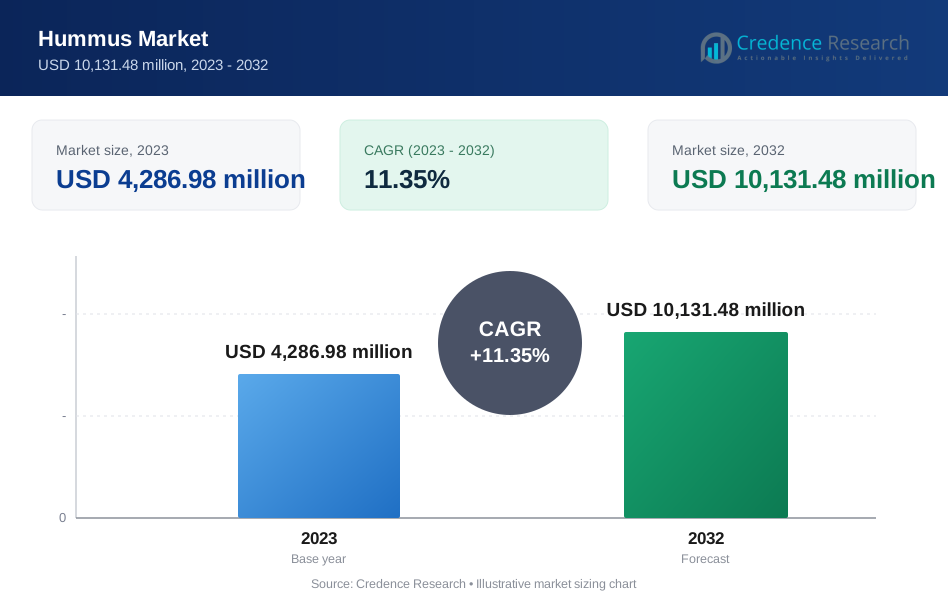
The Global Hummus Market is projected to grow from USD 4,286.98 million in 2023 to an estimated USD 10,131.48 million by 2032, reflecting a robust compound annual growth rate (CAGR) of 11.35% from 2024 to 2032. This growth is attributed to the rising popularity of plant-based and Mediterranean diets, as well as increasing consumer awareness about the nutritional benefits of hummus.
The market growth is driven by evolving dietary preferences and a shift toward healthier eating habits. Trends such as the growing demand for vegan and gluten-free products have positioned hummus as a versatile and appealing food choice. Additionally, the introduction of innovative flavors and packaging formats has broadened its appeal among younger demographics and convenience-seeking consumers. An increasing emphasis on natural and organic ingredients further enhances its market demand globally.
Geographically, North America leads the market due to high consumption rates and established retail networks, while Europe follows closely, driven by the popularity of Mediterranean cuisine. The Asia-Pacific region is expected to witness significant growth due to rising health consciousness and an expanding middle-class population. Key players shaping the market include Nestlé, Sabra Dipping Co., Cedar's Mediterranean Foods, Boar’s Head Brand, and Hope Foods, among others, who actively focus on product innovation and strategic partnerships to maintain their competitive edge.
Market Insights
- The Global Hummus Market is projected to grow from USD 4,286.98 million in 2023 to USD 10,131.48 million by 2032, with a CAGR of 11.35% from 2024 to 2032.
- Rising demand for plant-based, vegan, and gluten-free products is driving hummus' popularity among health-conscious consumers.
- The introduction of diverse flavors, organic variants, and convenient packaging formats is broadening hummus' appeal to a wider demographic.
- Key players such as Sabra Dipping Co., Nestlé, and Cedar's Mediterranean Foods dominate the market with strong brand recognition and extensive distribution networks.
- North America leads the market, followed by Europe, while the Asia-Pacific region is seeing significant growth due to increased health awareness and evolving dietary habits.
- Price sensitivity and competition from alternative snacks are significant challenges limiting market growth, particularly in emerging economies.
- Increasing demand for clean-label, sustainable, and organic products is shaping the future of the hummus market globally.
Market Drivers
Rising Consumer Demand for Healthy and Plant-Based Foods
The increasing global focus on health and wellness is significantly influencing consumer choices, particularly in the realm of snacks. For instance, as more individuals transition to plant-based diets, products like hummus are gaining traction due to their nutritional benefits. Hummus is not only rich in protein and fiber but also contains essential vitamins that cater to health-conscious consumers. The rise in awareness surrounding the Mediterranean diet, which emphasizes whole foods and healthy fats, has further propelled hummus into the spotlight as a versatile option for various dietary preferences, including vegan and gluten-free diets. This shift is reflected in the growing number of consumers actively seeking out healthier snacking alternatives, with hummus emerging as a favored choice that aligns with their lifestyle goals.
Product Innovation and Flavor Diversification
Moreover, the hummus market is thriving due to continuous product innovation and flavor diversification. For instance, manufacturers are expanding their offerings beyond traditional flavors like classic and roasted garlic to include unique variations such as spicy sriracha and dessert hummus. This innovation caters to diverse consumer palates and enhances the overall appeal of hummus as a snack option. Additionally, new packaging formats, such as single-serve cups and squeezable pouches, have made it more convenient for on-the-go consumers. The adaptability of hummus-serving as a dip, spread, or ingredient in various recipes-has further solidified its position in the market, allowing it to be enjoyed across different meal occasions while appealing to a broader audience.
Expanding Distribution Channels and Marketing Strategies
The rise of omnichannel retailing has significantly contributed to the growth of the hummus market. Supermarkets, hypermarkets, online platforms, and specialty stores have widened access to hummus products. Online retail channels, in particular, have witnessed a surge in popularity due to the growing e-commerce trend, enabling consumers to conveniently purchase their preferred hummus variants. Effective marketing strategies, including celebrity endorsements, social media campaigns, and collaborations with health influencers, have amplified brand visibility and consumer engagement. This widespread availability and aggressive marketing have fueled the market’s growth trajectory.
Increasing Focus on Natural and Organic Ingredients
The preference for clean-label and organic food products has gained momentum, encouraging manufacturers to use high-quality, minimally processed ingredients in hummus production. The inclusion of organic chickpeas, tahini, and olive oil resonates with health-conscious consumers who prioritize ingredient transparency and quality. Moreover, the market has seen an increasing number of non-GMO and preservative-free product launches to align with consumer preferences for natural and sustainable products. This trend not only drives the sales of premium hummus but also supports overall market growth by appealing to a more discerning customer base.
Market Trends
Diversification of Flavors and Formats
The hummus market is witnessing a remarkable transformation, particularly in flavor and format diversification. For instance, Lantana Foods has recently rebranded its product line to introduce "Fusion Hummus," featuring unique combinations like Sriracha Carrot and Dill Pickle Hummus. This innovative approach caters to the growing consumer demand for adventurous flavors, appealing to one in three consumers seeking variety in their food choices. Additionally, the trend extends to dessert hummus varieties, such as Dark Chocolate Hummus, which broadens the traditional savory applications of hummus. Moreover, brands are increasingly offering convenient packaging options like single-serve packs and squeezable pouches. This shift not only enhances portability but also aligns with the busy lifestyles of modern consumers. The introduction of products like Ithaca's Lemon Beet Hummus and Cedar's Hot Honey Hommus exemplifies how brands are pushing boundaries by experimenting with unexpected flavor profiles. These innovations not only attract younger demographics but also cater to health-conscious consumers looking for nutritious yet exciting snacks, ensuring that hummus remains a versatile staple in kitchens across the globe.
Rising Demand for Organic and Clean-Label Products
The hummus market is significantly influenced by the rising consumer preference for organic and clean-label products. Brands like Little Sesame have gained attention for their commitment to ingredient transparency, achieving Clean Label Certification that ensures their hummus is free from artificial additives and preservatives. This certification resonates with health-conscious consumers who prioritize natural ingredients in their diets. Little Sesame's dedication to using organic chickpeas sourced from regenerative farms further emphasizes the growing trend towards sustainability in food production.As shoppers become more discerning about what they consume, the demand for organic hummus options has surged. In response, manufacturers are launching new organic varieties that not only meet consumer expectations but also align with broader health trends emphasizing plant-based diets. The popularity of certifications such as USDA Organic has become a key differentiator for brands, helping them capture market share among premium segments. This shift reflects a societal movement towards healthier eating habits and environmental responsibility, making organic and clean-label hummus an essential part of the evolving food landscape.
Growth of Online Retail and Direct-to-Consumer Channels
The expansion of e-commerce and direct-to-consumer (DTC) models has reshaped the distribution landscape for hummus products. Online grocery platforms and brand-specific websites have made it easier for consumers to access a wide range of hummus options, including specialty and niche varieties. This trend has been accelerated by the pandemic-induced shift in shopping behaviors, with more consumers opting for online purchases. Subscription-based models and personalized product recommendations offered by DTC platforms have further enhanced the consumer experience. Brands are leveraging digital marketing, social media, and influencer partnerships to build stronger connections with their target audience, boosting brand loyalty and visibility.
Focus on Sustainability and Eco-Friendly Packaging
Sustainability has become a critical focus in the global hummus market as consumers increasingly value eco-friendly practices. Brands are adopting environmentally responsible production processes and packaging solutions to appeal to sustainability-conscious buyers. The use of recyclable, biodegradable, or reusable packaging materials has gained momentum, reducing the environmental footprint of hummus products. Some companies are also exploring innovative packaging designs, such as plant-based plastics and compostable materials, to meet consumer expectations for sustainable packaging. This trend not only aligns with global sustainability goals but also enhances brand reputation and customer loyalty.
Market Challenges
Price Sensitivity and Competition from Alternative Snacks
One significant challenge in the global hummus market is the price sensitivity exhibited by consumers, particularly in emerging economies. While hummus is perceived as a healthy and nutritious snack, it often comes at a premium compared to traditional alternatives like chips and crackers. For instance, in regions where these snacks are more affordable, consumers may hesitate to purchase hummus due to its higher price point. The cost of high-quality ingredients such as organic chickpeas, tahini, and olive oil contributes to increased production costs, which ultimately leads to higher retail prices.Additionally, the competitive landscape is intensified by the presence of alternative plant-based snacks that offer similar taste profiles and nutritional benefits at lower prices. Brands producing guacamole or bean dips often capture the attention of price-conscious consumers. This situation compels hummus manufacturers to innovate while maintaining cost-effectiveness, necessitating a strategic balance between product quality and pricing. To remain competitive in a crowded snack environment, brands must focus on product innovation while also finding ways to reduce costs without compromising on quality.
Limited Awareness and Adoption in Certain Regions
Despite hummus's rising popularity in North America and Europe, its adoption remains limited in various regions due to cultural barriers and unfamiliarity with Mediterranean cuisine. In countries where hummus is not traditionally consumed, there is often a reluctance to try new food products that do not align with local culinary practices. For instance, consumers may be hesitant to incorporate hummus into their diets if they are unfamiliar with its flavor profile or health benefits.Educational initiatives highlighting the versatility and nutritional advantages of hummus are crucial for fostering acceptance. In regions with underdeveloped distribution networks, such as rural areas in developing countries, limited access to hummus further exacerbates this challenge. Manufacturers are thus encouraged to engage in localized marketing efforts that resonate with regional tastes and preferences. By developing region-specific flavors and improving distribution channels, brands can enhance product visibility and consumer interest effectively, ultimately expanding their customer base in these untapped markets.
Market Opportunities
Expansion into Emerging Markets
The global hummus market is poised for significant growth in emerging economies, particularly in regions such as Asia-Pacific, Latin America, and parts of Africa. As consumer awareness of healthy eating habits rises, there is a noticeable increase in demand for nutritious snack options like hummus. For instance, cultural shifts towards Westernized diets and the growing popularity of Mediterranean cuisine among younger consumers are driving this trend. Market players can capitalize on these emerging markets by introducing affordable, regionally tailored hummus variants that incorporate local spices or flavors to cater to regional tastes. This strategy not only enhances product appeal but also fosters brand loyalty through strong distribution networks and partnerships with local retailers. Companies that invest in understanding local consumer preferences and establish robust supply chains will be better positioned to meet the rising demand for healthy snacks. Additionally, promoting the health benefits of hummus-such as its high fiber and protein content-can further entice health-conscious consumers. By leveraging these opportunities, brands can effectively penetrate these developing regions and build a loyal customer base.
Product Innovation and Health-Conscious Offerings
Innovation within the hummus market presents substantial opportunities, particularly in developing specialized product variants that align with health-conscious consumer preferences. With consumers increasingly seeking gluten-free, organic, low-calorie, and high-protein alternatives, manufacturers are focusing on launching innovative hummus products that cater to these needs. For example, the introduction of protein-enriched hummus or plant-based variations featuring unique superfoods like chia seeds and quinoa can capture the attention of fitness enthusiasts and health-conscious individuals.Moreover, offering ready-to-eat, single-serve packaging for on-the-go consumption can significantly enhance consumer engagement. Pairing hummus with complementary products such as vegetable snacks or baked chips not only increases market penetration but also provides consumers with convenient snack options that align with their dietary preferences. By tapping into these trends and focusing on product innovation, brands can strengthen their market presence and meet the evolving demands of today's health-focused consumers. This approach not only drives sales but also positions companies as leaders in a competitive market landscape.
Market Segmentation Analysis
By Product
The Latin American hummus market offers a diverse range of products, with the Classic Latin America Hummus segment being the most popular due to its simple and familiar flavors of chickpeas, tahini, and olive oil, making it an ideal entry point for first-time buyers. Roasted Garlic Latin America Hummus is gaining traction, driven by consumers' growing preference for robust and flavorful variations, as well as garlic’s health benefits and savory appeal. Meanwhile, the White Bean Latin America Hummus variant is increasingly favored by health-conscious individuals due to its higher fiber content, creamier texture, and suitability for gluten-free and low-fat diets. Black Olive Latin America Hummus provides a bold, briny twist on traditional hummus flavors, appealing to adventurous eaters interested in Mediterranean-inspired tastes. Additionally, the Others category includes innovative variants such as spicy hummus (e.g., harissa, jalapeño) and dessert hummus (e.g., chocolate, vanilla), catering to evolving consumer preferences for novel flavors, including low-fat, sugar-free, and vegan options. These diverse product offerings reflect the growing interest in hummus as a versatile and health-focused snack across the region
By Packaging Type
Hummus packaging comes in various formats to cater to diverse consumer needs. Tubs and cups are the most widely used due to their convenience, portability, and ease of storage, making them ideal for ready-to-eat snacks, with tubs often available in larger sizes for families and single-serve cups designed for on-the-go consumers. These formats are especially popular in North America and Europe, driven by the increasing demand for convenient food options. Jars and bottles offer a premium alternative, appealing to consumers seeking freshness and longer shelf life, often used for larger quantities or organic varieties that emphasize product integrity. While less convenient than tubs and cups, they cater to those looking for high-quality or specialty products. The "Others" category includes packaging types like pouches and sachets, which are gaining popularity for their eco-friendly appeal and convenience, especially among health-conscious consumers. These alternative packaging solutions, including recyclable and biodegradable options, address the growing demand for sustainable products, contributing to the diversification of packaging formats in the hummus market.
Segments
Based on product
- Classic Latin America Hummus
- Roasted Garlic Latin America Hummus
- White Bean Latin America Hummus
- Black Olive Latin America Hummus
- Others
Based on Packaging type
- Tubs & Cups
- Jars & Bottles
- Others
Based on Ingredient type
- Chickpeas
- Tahini
- Olive Oil
- Garlic
- Others
Based on Distribution channel
- Supermarkets & Hypermarkets
- Convenience Stores
- Grocery Stores
- Online Retailers
- Others
Based on region
- North America
- Europe
- Asia-Pacific
- Latin America
- Middle East and Africa
Regional Analysis
North America (40%):
North America dominates the global hummus market, holding approximately 40% of the market share. The United States, in particular, is a key contributor, accounting for the largest portion of the regional market. The popularity of plant-based diets, growing health-consciousness, and increasing consumer preference for natural and organic foods have been key drivers behind this dominance. Additionally, the wide availability of hummus in supermarkets, convenience stores, and online platforms has enhanced consumer accessibility. The rise of single-serve packaging options and innovative flavors has further bolstered the market. Given the well-established retail network and a high level of consumer awareness, North America remains a crucial region for hummus producers.
Europe (30%):
Europe holds the second-largest market share, with around 30% of the global hummus market. The United Kingdom, Germany, and France are the major markets driving growth in this region. The European consumer base is increasingly embracing Mediterranean diets, with hummus being a key component due to its health benefits and versatility. The shift towards plant-based and gluten-free products, coupled with rising interest in ethnic and international cuisines, has fueled the market's expansion. Additionally, growing demand for organic and premium hummus varieties aligns with European consumers' preference for clean-label, natural products. Europe’s mature retail landscape and strong distribution networks further facilitate market penetration.
Key players
- Bakkavor Group Plc
- Cedar’s Mediterranean Foods, Inc.
- Haliburton International Foods
- Strauss Group
- Tribe Hummus
- Hope Foods, LLC
- Fountain of Health
- Hummus Goodness
- Boar’s Head Brand
- Lantana Foods
- Sabra Dipping Company, LLC
- Blue Moose of Boulder
- Hormel Foods Corporation
- Fontaine Santé Foods Inc.
- Ithaca Cold-Crafted
- Mediterranean Organic
- Roots Hummus
- Delighted By Hummus
Competitive Analysis
The global hummus market is highly competitive, with a mix of well-established players and emerging brands vying for market share. Sabra Dipping Company, LLC and Tribe Hummus are dominant players, leveraging extensive distribution networks and brand recognition to maintain a strong market presence. Bakkavor Group Plc and Strauss Group are also influential due to their broad product portfolios and strategic market positioning across various regions. Smaller, innovative brands such as Hope Foods, LLC and Roots Hummus are carving out niches with clean-label products and unique flavor offerings that cater to health-conscious consumers. The competitive landscape is marked by product innovation, with brands diversifying into organic, gluten-free, and plant-based options. Moreover, marketing strategies focusing on sustainability, transparency, and local sourcing are becoming increasingly important as companies look to differentiate themselves and appeal to eco-conscious consumers.
Market Concentration and Characteristics
The global hummus market exhibits a moderate level of concentration, with a few dominant players holding significant market share, particularly in North America and Europe. Major companies like Sabra Dipping Company, LLC, Tribe Hummus, and Bakkavor Group Plc lead the market, benefiting from strong brand recognition, extensive distribution networks, and large-scale production capabilities. However, the market also features a wide array of smaller, innovative players that focus on niche segments such as organic, gluten-free, or region-specific varieties, providing a high degree of product diversity. The market is characterized by increasing product innovation, with manufacturers continually introducing new flavors, packaging formats, and healthier options to meet the evolving demands of health-conscious and environmentally aware consumers. Additionally, growing competition in emerging markets, particularly in Asia-Pacific and Latin America, is fostering further diversification and regional customization of products. As consumer preferences shift towards clean-label, sustainable, and plant-based foods, companies are adapting to these trends to maintain their competitive edge.
Report Coverage
The research report offers an in-depth analysis based on product, Packaging type, Ingredient type, Distribution channel and Region. It details leading market players, providing an overview of their business, product offerings, investments, revenue streams, and key applications. Additionally, the report includes insights into the competitive environment, SWOT analysis, current market trends, as well as the primary drivers and constraints. Furthermore, it discusses various factors that have driven market expansion in recent years. The report also explores market dynamics, regulatory scenarios, and technological advancements that are shaping the industry. It assesses the impact of external factors and global economic changes on market growth. Lastly, it provides strategic recommendations for new entrants and established companies to navigate the complexities of the market.
Future Outlook
- The demand for healthy and nutritious food will continue to drive hummus consumption, especially among younger and health-conscious consumers.
- With the global rise in plant-based diets, hummus will be increasingly adopted as a staple snack for those seeking alternative protein sources.
- Companies will expand their product offerings, introducing innovative flavors, formats, and premium variants to cater to evolving consumer tastes and preferences.
- As consumers demand greater transparency, clean-label, organic, and preservative-free hummus options will see increased demand across all regions.
- Eco-friendly packaging and sustainable sourcing of ingredients will become critical factors for market leaders to differentiate themselves and appeal to environmentally-conscious consumers.
- The Asia-Pacific and Latin American regions will experience significant growth, driven by rising disposable incomes and growing awareness of Mediterranean diets.
- Single-serve and on-the-go packaging formats will continue to gain traction, particularly in urban areas and for consumers with busy lifestyles.
- The preference for organic and premium products will increase, as consumers seek healthier, higher-quality alternatives in their food choices.
- E-commerce platforms will play a more significant role in hummus sales, providing convenience and access to a broader range of products.
- As the market matures, new entrants and small-scale brands focusing on niche segments will create more competition, further driving innovation and market growth.
Request a Free Sample
Fill in your details and we'll send you a free sample report.
- Sample data tables & charts
- Research methodology
Need a Custom Version of This Report?
Tailor the scope, geography, or segments to your exact requirements.
- Custom geography or segment scope
- Direct access to our analyst team
Frequently Asked Questions
What is the market size of the Global Hummus Market in 2023 and 2032?
What factors are driving the growth of the Global Hummus Market?
Which regions are leading the Global Hummus Market?
What trends are influencing the Global Hummus Market?
Who are the key players in the Global Hummus Market?
Table of Content
Chapter 1. Report Introduction
- 1.1 Report Description & Purpose
- 1.1.1 Report Title & Market Definition
- 1.1.2 Unique Selling Propositions (USP) & Key Differentiators
- 1.1.3 Value Proposition for Stakeholders
- 1.2 Research Objectives
- 1.2.1 Market Sizing Objectives (Volume & Revenue)
- 1.2.2 Segmentation Objectives
- 1.2.3 Competitive Intelligence Objectives
- 1.2.4 Forecast & Scenario Objectives
- 1.3 Report Scope
- 1.3.1 Hummus Scope – Types & Subtypes Covered
- 1.3.2 Geographic Scope – Regions & Countries Covered
- 1.3.3 Historical Period, Base Year & Forecast Period (2023; forecast to 2032)
- 1.3.4 Inclusions & Exclusions
- 1.4 HS Code & Classification Framework
- 1.5 Currency, Units & Pricing Basis
- 1.6 Target Stakeholders
- 1.7 Limitations & Assumptions
Chapter 2. Executive Summary
- 2.1 Global Hummus Market Snapshot
- 2.1.1 Market Size – Historical (2023) & Forecast (2023-2032) (2023: USD 4,286.98 million → 2032: USD 10,131.48 million)
- 2.1.2 Volume & Revenue – Global Totals
- 2.1.3 Key Market Highlights – Top Five Facts
- 2.2 Hummus Market Segmentation Snapshot
- 2.2.1 Market Split by Region – 2023 vs. 2032
- 2.3 Competitive Snapshot
- 2.3.1 Top 10 Players by Revenue Share – 2023
- 2.3.2 Top 10 Players by Volume Share – 2023
- 2.3.3 Recent Strategic Developments (18-Month Summary)
- 2.4 Key Investment Highlights & Strategic Conclusions
Chapter 3. Hummus Market Dynamics & Industry Analysis
- 3.1 Market Overview & Context
- 3.1.1 Hummus Market Position in the Broader Automotive Value Chain
- 3.1.2 OEM vs. Replacement Market Dynamics
- 3.1.3 Market Maturity & Development Stage by Region
- 3.2 Hummus Market Drivers
- 3.3 Hummus Market Restraints & Challenges
- 3.4 Hummus Market Opportunities
- 3.5 Porter's Five Forces Analysis
- 3.5.1 Threat of New Entrants
- 3.5.2 Bargaining Power of Suppliers
- 3.5.3 Bargaining Power of Buyers
- 3.5.4 Threat of Substitutes
- 3.5.5 Competitive Rivalry – Intensity Assessment
- 3.6 Hummus Value Chain Analysis
- 3.6.1 Upstream – Raw Material/Input Suppliers
- 3.6.1.1 Raw Material/Input 1
- 3.6.1.2 Raw Material/Input 2
- 3.6.1.3 Raw Material/Input 3
- 3.6.2 Midstream – Production/Manufacturing/Service Delivery
- 3.6.2.1 Production/Process Overview
- 3.6.2.2 Key Facility Locations & Capacity by Manufacturer
- 3.6.3 Downstream – Distribution & End Consumer
- 3.6.3.1 Primary Channel – B2B/OEM
- 3.6.3.2 Secondary Channels – Dealer, Retail, Online, Direct
- 3.6.4 Value Chain Profitability Analysis
- 3.6.1 Upstream – Raw Material/Input Suppliers
- 3.7 PESTEL Analysis
- 3.7.1 Political Factors
- 3.7.2 Economic Factors
- 3.7.3 Social Factors
- 3.7.4 Technological Factors
- 3.7.5 Environmental Factors
- 3.7.6 Legal Factors
- 3.8 Hummus Supply Chain Analysis
- 3.8.1 Raw Material/Input Supply Risk Assessment
- 3.8.2 Manufacturing Concentration Risk (Geographic Exposure)
- 3.8.3 Trade Disruption Impact Analysis
- 3.9 Regulatory & Policy Landscape
Note: The regulatory and policy landscape section covers regulations based on their applicability to the market, Hummus category, geography, and scope of the study. Only regulatory frameworks with a material impact on operations, compliance, trade, sustainability, or market access are analyzed in detail.
Chapter 4. Key Investment Pockets & Opportunity Analysis
- 4.1 Hummus Market Attractiveness Analysis
- 4.1.1 By Region – Investment Attractiveness Matrix (Volume × CAGR)
- 4.2 Absolute Revenue Growth Opportunity
- 4.2.1 By Region – Absolute USD Growth Through 2032
- 4.3 Incremental Volume Opportunity
- 4.3.1 By Region – Incremental Volume Through 2032
- 4.3.2 Segment – Incremental Volume
- 4.4 Emerging Submarket Opportunity Deep Dive (Subject to Applicability)
- 4.5 Emerging Market Opportunity Scorecards
- 4.5.1 United States
- 4.5.2 Europe
- 4.5.3 Asia
- 4.5.4 Middle East & Africa
Note: Emerging Market Opportunity Scorecards will be included based on relevance and strategic importance. Regions listed are indicative and may vary depending on data availability and market dynamics.
Chapter 5. Hummus Import-Export Analysis & Trade Flows
- 5.1 Global Trade Overview
- 5.1.1 Global Export Value by Country (2023)
- 5.1.2 Global Export Volume by Country (2023)
- 5.1.3 Global Import Value by Country (2023)
- 5.1.4 Global Import Volume by Country (2023)
- 5.1.5 Net Trade Balance by Country (2023)
- 5.2 Export Analysis – Segment
- 5.2.1 Type 1 (HS Code)
- 5.2.2 Type 2 (HS Code)
- 5.2.3 Type 3 (HS Code)
- 5.2.4 Type 4 (HS Code)
- 5.2.5 Type 5 (HS Code)
- 5.3 Import Analysis – Segment
- 5.3.1 Type 1 (HS Code)
- 5.3.2 Type 2 (HS Code)
- 5.3.3 Type 3 (HS Code)
- 5.3.4 Type 4 (HS Code)
- 5.3.5 Type 5 (HS Code)
- 5.4 Average Unit Trade Prices
- 5.4.1 Average Export Price – Segment & Country
- 5.4.2 Average Import Price – Segment & Source Country
- 5.4.3 Price Trends (2023)
- 5.5 Key Trade Route Analysis
- 5.5.1 Trade Route 1
- 5.5.2 Trade Route 2
- 5.5.3 Trade Route 3
- 5.5.4 Trade Route 4
- 5.5.5 Trade Route 5
- 5.6 Trade Policy Impact Assessment
- 5.6.1 US Anti-Dumping & Section 301 Tariffs
- 5.6.2 EU Customs Union Impact
- 5.6.3 Major Free Trade Agreements
- 5.6.4 USMCA Rules of Origin
Note: Trade policy analysis will be included only where relevant to the Hummus market.
Chapter 6. Competitive Landscape & Company Benchmarking
- 6.1 Hummus Market Concentration & Structure
- 6.1.1 Herfindahl-Hirschman Index (HHI) – vs. 2023
- 6.1.2 Tier 1, Tier 2 & Tier 3 Market Structure
- 6.1.3 Global, Regional & Local Player Dynamics
- 6.2 Hummus Market Share Analysis – 2023
- 6.2.1 Global Revenue Share by Company
- 6.2.2 Global Volume Share by Company
- 6.2.3 Regional Revenue Share
- 6.2.4 Market Share Evolution ( vs. 2023)
- 6.2.5 OEM Segment Share by Company
- 6.2.6 Replacement Segment Share by Company
- 6.3 Production/Delivery Capacity & Facility Analysis
- 6.3.1 Global Installed Capacity
- 6.3.2 Capacity Utilization Rates
- 6.3.3 Production/Output Volume
- 6.3.4 Facility Locations & Capacity Map
- 6.3.5 Planned Capacity Additions
- 6.4 Hummus Competitive Benchmarking Matrix
- 6.4.1 Revenue, Volume, CAGR & Profitability Comparison
- 6.4.2 Channel Revenue Mix
- 6.4.3 Geographic Revenue Exposure
- 6.4.4 R&D Intensity
- 6.4.5 Sustainability Maturity
- 6.5 Strategic Developments in Hummus (Last 24 Months)
- 6.5.1 Mergers, Acquisitions & Divestments
- 6.5.2 New Hummus Launches
- 6.5.3 Facility Expansions
- 6.5.4 Strategic Alliances, Joint Ventures & Partnerships
- 6.5.5 Distribution Expansion & Market Entry
- 6.5.6 Sustainability & ESG Initiatives
- 6.6 Competitive Strategy Mapping
- 6.6.1 Leader, Challenger, Follower & Niche Classification
- 6.6.2 Pricing Strategy Comparison
- 6.6.3 Channel Strategy Matrix
Note: Strategic developments are included based on their materiality and the availability of reliable information.
Chapter 7. Global Hummus Market – By Distribution Channel
- 7.1 Segment Overview
- 7.1.1 Volume & Revenue Split by Channel (2023 & 2032)
- 7.1.2 Channel Mix Evolution (2023-2032)
Chapter 8. Regional Market Analysis – Global Overview
- 8.1 Global Regional Overview
- 8.1.1 Regional Volume Share
- 8.1.2 Regional Revenue Share
- 8.1.3 Regional Volume by Region
- 8.1.4 Regional Revenue by Region
- 8.1.5 Regional Forecast Through 2032
- 8.2 Cross-Regional Segment Analysis
- 8.2.1 By Distribution Channel
- 8.2.2 By Brand/Price Tier
Chapter 9. North America Hummus Market
- 9.1 United States
- 9.2 Canada
- 9.3 Mexico
Chapter 10. Europe Hummus Market
- 10.1 Germany
- 10.2 France
- 10.3 Italy
- 10.4 United Kingdom
- 10.5 Spain
- 10.6 Poland
- 10.7 Russia
- 10.8 Netherlands
- 10.9 Belgium
- 10.10 Sweden
- 10.11 Denmark
- 10.12 Norway
- 10.13 Rest of Europe
Chapter 11. Asia Pacific Hummus Market
- 11.1 China
- 11.2 India
- 11.3 Japan
- 11.4 South Korea
- 11.5 Thailand
- 11.6 Indonesia
- 11.7 Vietnam
- 11.8 Malaysia
- 11.9 Australia
- 11.10 Rest of Asia Pacific
Chapter 12. Latin America Hummus Market
- 12.1 Brazil
- 12.2 Argentina
- 12.3 Colombia
- 12.4 Chile
- 12.5 Rest of Latin America
Chapter 13. Middle East Hummus Market
- 13.1 Saudi Arabia
- 13.2 United Arab Emirates
- 13.3 Turkey
- 13.4 Israel
- 13.5 Iran
- 13.6 Rest of the Middle East
Chapter 14. Africa Hummus Market
- 14.1 South Africa
- 14.2 Egypt
- 14.3 Nigeria
- 14.4 Morocco
- 14.5 Rest of Africa
Chapter 15. Hummus Company Profiles
- 15.1 [Company 01]
- 15.1.1 Company Overview
- 15.1.2 Key Management Personnel
- 15.1.3 Products & Services Portfolio
- 15.1.4 Financial Performance
- 15.1.5 Key Market Focus & Geographic Presence
- 15.1.6 Recent Developments & Strategic Initiatives
Note: The company profile list is preliminary and may change based on research findings, market developments, data availability, and client requirements.
Chapter 16. Appendices
- Appendix A – List of Abbreviations & Acronyms
- Appendix B – Industry Classification Code Reference – Full Series
- Appendix C – Production & Capacity Data Tables
- Appendix D – End-Use & Demand Base Tables
- Appendix E – Consumption & Replacement Rate Assumptions
- Appendix F – ASP Reference Tables
- Appendix G – Manufacturing & Facility Database
- Appendix H – Import-Export Data Tables
- Appendix I – Regulatory Summary Tables
- Appendix J – Primary Research Participant List (Anonymized)
- Appendix K – Primary Research Questionnaire Framework
- Appendix L – Data Sources & Bibliography
- Appendix M – Market Size Divergence & Source Comparison
Chapter 17. Research Methodology
- 17.1 Research Framework & Philosophy
- 17.2 Secondary Research – Sources, Hierarchy & Data Extraction
- 17.3 Data Modeling – Bottom-Up & Top-Down Market Sizing
- 17.4 Primary Research – Stakeholder Framework, LOI & Sample Sizes
- 17.5 Forecast Methodology – Regression, Scenario & Sensitivity Analysis
- 17.6 Quality Control – Four-Layer Validation Framework
- 17.7 Limitations & Standard Assumptions
- 17.8 Disclaimer
